Tag: programmes

  • Asianet to air Vishu-Easter special programmes

    Asianet to air Vishu-Easter special programmes

    MUMBAI: Leading GEC in Kerala Asianet has come up with an array of special programmes for Vishu on 14 April.

    The day begins with superhit movie Ittimani made in China starring Mohanlal, Radhika Sarath Kuma , KPAC Lalitha and Honey Rose at 9 am, followed by another box office hit movie Android Kunjappan  starring Saubin and Suraj Venjaramood at 12noon. 

    Afternoon programmes include special programme Veendum Chila Veettu Viseshangal , a chat show with Jayaram, Ramesh Pisharodi, Tini Tom, Kalabhavan Prajod and singers  Sujatha Mohan and Swetha Mohan and  musical game show Sarigama  hosted by M G Sreekumar at 3PM.

    Mass thriller movie Thrissurpooram  starring Jayasoorya, Swathi Reddy, Indrans, Sabumon and Mallika Sukumaran at 4pm and historical period action thriller mega hit movie Mamangam starring Mammootty, Unni MUkundan, Siddique, Prachi, Anu Sithara, Kaniha and Iniya at 6.30PM

  • India’s UK TV content imports rise to Rs 125 crore in 2015-2016

    MUMBAI: India is the second fastest growing market for the UK content. That’s the findings of the latest TV export report for 2015-2016 released by the Producers Alliance for Cinema & Television (PACT). The report states that imports of British content by Indian broadcasters grew a handsome 43 per cent in the year to pounds sterling 15 million (Rs 125 crore) as against pounds sterling 10 million last year.

    The highest growth came from Japan which imported 48 per cent more of UK content at 15 million pounds in 2015-2016, whereas China saw a 40 per cent rise in the same period to 23 million pounds (16 million in the corresponding period). South Korea registered a growth of 39 per cent to 8.1 million pounds (5.8 million pounds).

    The US continued to occupy its premier position of the leader by shipping in 16 per cent more British content to account for 497 million pounds of the UK TV sector’s revenue. Next in line was the Australia and New Zealand market with content imports of 131 million pounds. France with imports of 73 million pounds and a growth of five per cent came next In line.

    Overall, the UK TV content export sector grew by 10 per cent to 1.33 million pounds in 2015-2016 as against pounds 1.21 billion pounds in 2014-2015, when sales fell by 0.6 per cent.

    Exports of finished TV programmes were flat at pounds 668 million whereas digital sales seem to be exploding. The growth to these outlets was a hurricane like 79 per cent to £248 million. Digital sales accounted for almost 19 per cent of the total British TV content sales.

    North America accounted for 41 per cent of revenue that UK’s content makers make selling their programmes to the world, while Europe contributed 31 per cent and the rest of the world 29 per cent.

    Shows such as Deutschland 83 and The Returned have gone global while the ever so popular Sherlock and Dr Who have travelled beyond 200 countries

    One wonders whether India’s TV content creating community will start looking at programme syndication deals as a good source of revenue, especially in times when subscription revenue is not budging too much northwards. India is estimated to be distributing between Rs 350 crore to Rs 400 crore of its content annually. Which is much lower than Turkish drama exports which notched up some $320 million exports and is targeting $1 billion in exports of its TV content by 2020 and $2 billion by 2023.

    Clearly, India has a lot headroom to grow.

  • Govt. considering ways to check hoax calls and their sensationalization on electronic media: Rathore

    Govt. considering ways to check hoax calls and their sensationalization on electronic media: Rathore

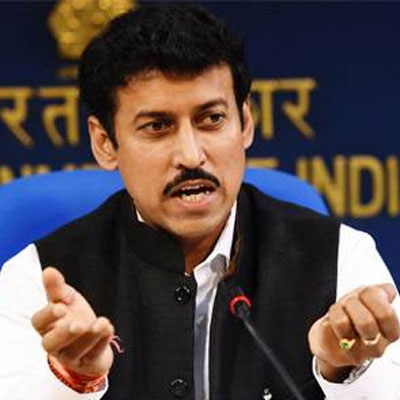
    New Delhi, 20 March: The Government is examining ways to ensure that hoax calls about planting of bombs etc and sensationalizing of such news by the electronic media can be checked.

    Minister of State for Information and Broadcasting Rajyavardhan Rathore said in reply to a question in the Rajya Sabha recently that the matter was ‘under consideration’.

    The question also related to the I and B Ministry planning concrete steps in consultation with the Home Ministry in this regard.

    In response to a similar question relating to anti-India messages on television channels asked in the Lok Sabha, the Minister said action is taken whenever any report is received by the Ministry about any anti-India messages.

    He stressed that programmes and advertisements telecast on private satellite TV channels are governed by the Programme and Advertising Codes prescribed under the Cable Television Network (Regulation) Act 1995 and the rules framed thereunder.

    The Act does not provide for pre-censorship of the programmes and advertisements aired on these channels. However, all these channels are required to adhere to the Programme and Advertisement codes which provide for a whole range of parameters to be adhered to for programmes on TV channels.

    Rule 6(1) of the Proqramme Code is clear that no programme should be transmitted/retransmitted on any cable service if it contains attack on religions or communities or visuals or words contemptuous of religious groups or which promote communal attitudes.

  • Govt. considering ways to check hoax calls and their sensationalization on electronic media: Rathore

    Govt. considering ways to check hoax calls and their sensationalization on electronic media: Rathore

    New Delhi, 20 March: The Government is examining ways to ensure that hoax calls about planting of bombs etc and sensationalizing of such news by the electronic media can be checked.

    Minister of State for Information and Broadcasting Rajyavardhan Rathore said in reply to a question in the Rajya Sabha recently that the matter was ‘under consideration’.

    The question also related to the I and B Ministry planning concrete steps in consultation with the Home Ministry in this regard.

    In response to a similar question relating to anti-India messages on television channels asked in the Lok Sabha, the Minister said action is taken whenever any report is received by the Ministry about any anti-India messages.

    He stressed that programmes and advertisements telecast on private satellite TV channels are governed by the Programme and Advertising Codes prescribed under the Cable Television Network (Regulation) Act 1995 and the rules framed thereunder.

    The Act does not provide for pre-censorship of the programmes and advertisements aired on these channels. However, all these channels are required to adhere to the Programme and Advertisement codes which provide for a whole range of parameters to be adhered to for programmes on TV channels.

    Rule 6(1) of the Proqramme Code is clear that no programme should be transmitted/retransmitted on any cable service if it contains attack on religions or communities or visuals or words contemptuous of religious groups or which promote communal attitudes.

  • Q3-2016: Balaji revenue up 8%; reports higher programming hours

    Q3-2016: Balaji revenue up 8%; reports higher programming hours

    BENGALURU: Balaji Telefilms Limited reported eight per cent YoY growth in total income from operations (TIO) at Rs 78.65 for the quarter ended 31 December, 2015 (Q3-2016, current quarter) as compared to Rs 71.54 crore and 43.8 per cent QoQ jump from Rs 52.85 crore.

    Note:  (1)100,00,000 = 100 lakh = 10 million = 1 crore

    Commissioned programs in the current quarter increased 24.4 per cent YoY to 712.2 hours as compared to 572.7 hours and increased 47.6 per cent as compared to 482.6 hours in the immediate trailing quarter. Net realisation per hour of commissioned programs increased 17.5 per cent YoY to Rs 24.2 lakh as compared to Rs 20.6 lakh, and was almost flat QoQ as compared to Rs 24.3 lakh.

    The company’s revenue from commissioned programs segment in Q3-2016 increased 16.2 per cent YoY to Rs 72.01 crore as compared to Rs 61.97 crore and rose 40.7 per cent QoQ as compared to Rs 51.18. The segment’s operating profit in the current quarter more than doubled (by 2.5 times) YoY to Rs 18.94 crore and increased 45.7 per cent QoQ to Rs 13 crore.

    Balaji’s other segment – Films, reported revenue of just Rs 1.12 crore in the current quarter as compared to Rs 0.13 crore in Q3-2015 and Rs 1.64 in the immediate trailing quarter. The Films’ segment reported operating loss of Rs 1.91 crore in the current quarter as compared to an operating loss of Rs 2.83 crore in Q3-2015 and an operating profit of Rs 0.06 crore in Q2-2016.

    Other consolidated numbers reported by Balaji Telefilms

    Total Expenditure in the current quarter declined 16.1 per cent YoY to Rs 68.68 crore as compared to Rs 81.81 crore, but increased 49.8 per cent as compared to Rs 45.85 crore in the immediate trailing quarter.

    The company’s cost of production/acquisition and telecast fees increased 5.7 per cent YoY to Rs 68.04 crore as compared to Rs 64.39 crore, but declined 15.3 per cent QoQ as compared to Rs 80.22 crore.

    Staff cost increased 16.9 per cent YoY to Rs 4.89 crore as compared to Rs 4.19 crore but reduced 1.2 per cent QoQ as compared to Rs 4.95.

    Balaji Telefilms standalone numbers

    Balaji Telefilms’ YoY standalone profit after tax (PAT) catapulted more than six-fold at Rs 20.66 crore (28.7 per cent margin) as compared to Rs 3.09 crore (5.4 per cent margin) and was double QoQ as compared to Rs 10.31 crore (20.2 per cent standalone margin) in the immediate trailing quarter. 
    The company reported 26 per cent YoY increase in standalone total income from operations (TIO) in the current quarter to Rs 72.3 crore from Rs 57.27 crore and 41 per cent jump from Rs 51.11 crore in Q2-2016.

    Standalone EBIDTA more than quadrupled (by 4.24 times) YoY in Q3-2016 at Rs 18.05 crore as compared to Rs 4.25 crore and almost doubled (up 94 per cent) as compared to Rs 9.32 crore in the immediate trailing quarter.

  • Q3-2016: Balaji revenue up 8%; reports higher programming hours

    Q3-2016: Balaji revenue up 8%; reports higher programming hours

    BENGALURU: Balaji Telefilms Limited reported eight per cent YoY growth in total income from operations (TIO) at Rs 78.65 for the quarter ended 31 December, 2015 (Q3-2016, current quarter) as compared to Rs 71.54 crore and 43.8 per cent QoQ jump from Rs 52.85 crore.

    Note:  (1)100,00,000 = 100 lakh = 10 million = 1 crore

    Commissioned programs in the current quarter increased 24.4 per cent YoY to 712.2 hours as compared to 572.7 hours and increased 47.6 per cent as compared to 482.6 hours in the immediate trailing quarter. Net realisation per hour of commissioned programs increased 17.5 per cent YoY to Rs 24.2 lakh as compared to Rs 20.6 lakh, and was almost flat QoQ as compared to Rs 24.3 lakh.

    The company’s revenue from commissioned programs segment in Q3-2016 increased 16.2 per cent YoY to Rs 72.01 crore as compared to Rs 61.97 crore and rose 40.7 per cent QoQ as compared to Rs 51.18. The segment’s operating profit in the current quarter more than doubled (by 2.5 times) YoY to Rs 18.94 crore and increased 45.7 per cent QoQ to Rs 13 crore.

    Balaji’s other segment – Films, reported revenue of just Rs 1.12 crore in the current quarter as compared to Rs 0.13 crore in Q3-2015 and Rs 1.64 in the immediate trailing quarter. The Films’ segment reported operating loss of Rs 1.91 crore in the current quarter as compared to an operating loss of Rs 2.83 crore in Q3-2015 and an operating profit of Rs 0.06 crore in Q2-2016.

    Other consolidated numbers reported by Balaji Telefilms

    Total Expenditure in the current quarter declined 16.1 per cent YoY to Rs 68.68 crore as compared to Rs 81.81 crore, but increased 49.8 per cent as compared to Rs 45.85 crore in the immediate trailing quarter.

    The company’s cost of production/acquisition and telecast fees increased 5.7 per cent YoY to Rs 68.04 crore as compared to Rs 64.39 crore, but declined 15.3 per cent QoQ as compared to Rs 80.22 crore.

    Staff cost increased 16.9 per cent YoY to Rs 4.89 crore as compared to Rs 4.19 crore but reduced 1.2 per cent QoQ as compared to Rs 4.95.

    Balaji Telefilms standalone numbers

    Balaji Telefilms’ YoY standalone profit after tax (PAT) catapulted more than six-fold at Rs 20.66 crore (28.7 per cent margin) as compared to Rs 3.09 crore (5.4 per cent margin) and was double QoQ as compared to Rs 10.31 crore (20.2 per cent standalone margin) in the immediate trailing quarter. 
    The company reported 26 per cent YoY increase in standalone total income from operations (TIO) in the current quarter to Rs 72.3 crore from Rs 57.27 crore and 41 per cent jump from Rs 51.11 crore in Q2-2016.

    Standalone EBIDTA more than quadrupled (by 4.24 times) YoY in Q3-2016 at Rs 18.05 crore as compared to Rs 4.25 crore and almost doubled (up 94 per cent) as compared to Rs 9.32 crore in the immediate trailing quarter.

  • There is more to January than Republic Day, DD Bharati programmes show

    There is more to January than Republic Day, DD Bharati programmes show

    NEW DELHI: The onset of the Basant Panchami festival and the month of Magh in the Hindu calendar will be marked by DD Bharati with the launch of its special series “Maihar Gharana.”


    The series features four stars of Ustad Baba Allaudin Khan Maihar Gharana: sitar maestro Pt. Ravi Shankar, Ali Akbar Khan, Sharan Rani Backlliwal and Pt. Vishwa Mohan Bhatt.


    Ustad Baba Allauddin was regarded throughout India as a musician saint and remained a student of music till the age of 70 completely mastering the Dhrupad and instrumental compositions of the Seni Gharana and adding innumerable new compositions and many new Ragas, such as Hemant, Shobhavati, Durgeshwari etc.


    Basant Panchami, announces the arrival of spring (Basant), the bosom friend of Kamdev – the god of love. DD Bharati commences the series with a special archival performance of sitar player of country and abroad, Pt. Ravi Shankar, followed by Ali Akbar Khan in the next week. The series commences on 24 January at 9 pm and repeat telecast at 5 am and 1 pm.


    President Pranab Mukherjee’s broadcast to the nation will be telecast on 25 January from 07:30 pm to 8 pm on all DD channels. 


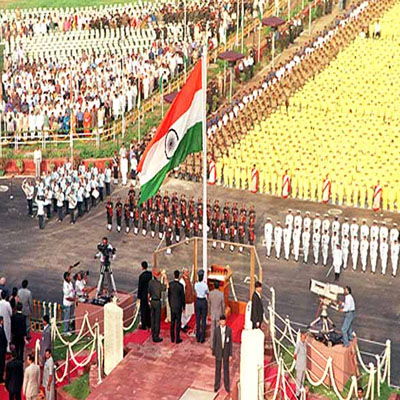
    The 66th Republic Day Parade will be telecast from 9 am on 26 January on all DD channels.


    The Beating Retreat ceremony, which officially denotes the end of Republic Day festivities, will also be telecast live. It is conducted on the evening of 29 January, the third day after the Republic Day. It is performed by the bands of the three wings of the Defence forces: the Army, Navy and the Indian Air Force. The venue is Raisina Hills starting from Rashtrapati Bhavan and the adjacent Vijay Chowk, flanked by the north and south blocks of the Central Secretariat towards the end of Rajpath from 04:45 pm to 06:15pm. It concludes with the lighting of the entire Central Secretariat and all Government buildings on both sides of Rajpath.

  • BCCC directs Sony to run apology scroll on 30 Dec

    BCCC directs Sony to run apology scroll on 30 Dec

    MUMBAI: On 17 December, the Broadcasting Content Complaint Council (BCCC) had held a meeting in Mumbai to discuss the 30 – 40 complaints received against numerous channels and what action should be taken.

    One of the biggest decisions taken from it was for Sony. The channel management has been asked by the council to run an apology scroll on 30 December. The complaint was filed with regards to the display of a board promoting abortion in Madana Khurd village during an episode of Kaun Banega Crorepati (KBC) aired on 19 August.

    However, sources from BCCC said that the issue was raised against the show’s producers a couple of months back on a complaint by the Haryana Health Department. As per reports, the board read “500 rupees me garbhpaat karwao aur 5 lakh ka dahej bachao (Get the abortion done in Rs 500 and save dowry of Rs 5 lakh).”

    As per the directive, the channel has to run an apology scroll in Hindi and English during now-off-air KBC’s time slot i.e. from 8.30 pm to 9 pm on 30 December.

    Of the numerous complaints, the independent council, set up by the Indian Broadcasting Foundation (IBF) to examine complaints about television programmes received to ensure that the programmes are within the self-regulatory content guidelines, also discussed complaints against Zee TV amongst other networks as well.

    “One of the episodes of Zee’s popular programme Qubool Hai showed a woman being tortured and hence, a complaint was filed against it,” informs the source from the council while adding that an explanation has been asked from the channel and the decision on what should be done next will be taken on 20 January.

    Similarly, south India’s Asianet also received complaints against its two programmes out of which one was disposed off while the other’s decision will be taken on 20 January as well.


  • DD Bharati commences cultural and religious season

    DD Bharati commences cultural and religious season

    NEW DELHI: The public broadcaster Doordarshan’s channel DD Bharati has slated several programmes to establish its identity as the television channel reflecting the art and culture of the country.


    Jewels of Hindustani Classical Music, a programme specially curated from the archives of stalwarts of Hindustani vocal and instrumental musicians who are alive and are virtually legends is commencing this evening.


    The first telecast at 9.00 pm with repeat telecast at 5.00 am and 1.00 pm features Begum Parveen Sultana of the Patiala Gharana followed by Vidushi Kishori Amonkar of the Jaipur- Atrauli Gharana. The legendary Pt Jasraj will be featured tomorrow at the same time.


    The programme, especially curated by Kumud Diwan and Yatindra Mishra, delves into their gharana, their musical genius, and their musical journey etc.   


    Coinciding with Dussehra and Diwali next month, DD Bharati will commence telecast of Ramayana from 27 September at 10.30 pm with repeat the next day at 6.30 am and 2.30 pm. It will be a series of presentation of ballets and documentary on the Ramkatha traditions prevalent in India.


    The Ramayana or Ramkatha tradition is pervasive not only in India but throughout South East Asia. Stories revolving around Ram, Sita and Lakshman penetrate through rural and urban, mundane and religious, sacred and secular domains. They defy categorization of art as folk or classical, rural or urban, textual or oral. Literary, oral, kinetic and pictorial aspects intermingle to generate multiple renditions of the text in different locales and contexts; each rendition with unique local flavour and linguistic distinction. The performative aspect of the text makes it fluid, accessible and adaptable. It accounts for its preservation, survival, transmission and mobility, cutting across boundaries of time and space. Every region has its own particular form and style of singing and reciting the story.


    Earlier this week with the start of Mahalaya, DD Bharati in association with the Girnar Kendra of Doordarshan presented ‘Maa Ni Chundari Lehrai’ from its rich collection of archives. A series of Garba presentation especially done and performed during the Navratra Festival was telecast with repeats the next day.


    DD Bharati also presented Devi Darshan from 24 September at 10.30 pm through a series of dance ballets and documentary celebrating the festivities of Durgaostav. Durga Puja festival is a 10-day long festival that starts off on Mahalaya (the day of the new moon) – the first day when Goddess Durga is believed to come into the world to destroy the evil.  The festival ends up in Dashumi- the last day when the Goddess Durga is believed to go back to her heavenly home, leaving behind the trails of happiness, goodness and purity. This is the day of the Lord’s victory over evil and is celebrated as Vijay Dashami or Dussehra. The salient ritual of Durga Puja spans a five days period Maha Sashti, Maha Saptami, Maha Ashtami, Maha Nabami and Vijaya Dashami.

  • Sun TV Network signs ‘pay per view’ deal with iTunes and YouTube

    Sun TV Network signs ‘pay per view’ deal with iTunes and YouTube

    MUMBAI: In a major initiative, the south Indian broadcasting giant Sun TV has signed a mega deal with YouTube and iTunes to monetise its vast content libraries. The group’s proprietary content will be available to people across the globe on a ‘pay per view’ basis.


    “Sun TV has a wide ranging repertoire of content, with its channels offering almost every genre of entertainment with the exception of sports and business news,” Sun TV group CFO SL Narayanan told indiantelevision.com. He also added that a total of more than 25,000 hours of content would be available for viewing on both the platforms.


    In a growing internet world, Sun TV is looking at creating a mark for itself through its variety of programming.


    “This initiative positions Sun TV very well and much ahead of the shifts anticipated in buyer behavior with regard to consumption of entertainment services. More and more people are accessing content through mobile devices while on the move and over the internet. We believe that the revenues from these new formats could accelerate rapidly once smart phone penetration picks up in India,” says Narayanan.


    Apart from these two distribution platforms, Sun TV has also inked a deal with Mumbai based Purple IFE to license its popular Tamil, Kannada, Malayalam and Telugu programmes as in-flight entertainment on leading airlines such as Emirates, Singapore Airlines, Air India, Etihad, Jet Airways, Oman Air, British Airways, Cathay Pacific, Gulf Air and Qatar Airways.


    The broadcaster says these airlines carry a lot of south Indians who would consume its content.


    According to industry sources, the network would be looking at making approximately Rs 15 to Rs 20 crore through both the deals depending upon the kind of content that it offers to viewers  and its currency.


    “What’s called as catch up TV – which is episodes being uploaded as soon as they go on air – has good revenue generating potential as compared to catalogue content which adds to the volumes,” says a media observer. “Many of the TV shows are available on torrent sites online at no cost, which viewers download and watch. Sun TV can optimise its revenues on Youtube if it can attract viewers to its legitimate content – and away from these torrent sites.”