Tag: Programmatic advertising

  • Nitin Bhatnagar rises to VP – programmatic ad ops at Sony Pictures Networks

    Nitin Bhatnagar rises to VP – programmatic ad ops at Sony Pictures Networks

    MUMBAI: Sony Pictures Networks India (SPNI) has dialled up its programmatic firepower with the elevation of Nitin Bhatnagar as vice president – programmatic advertising & digital advertising operations. The move solidifies SPNI’s commitment to sharpening its data-driven advertising game across OTT and digital platforms.

    With over 15 years under his belt, Bhatnagar is no stranger to the fast-changing digital ad terrain. Having joined Sony in 2021, he steadily climbed the ranks—from handling programmatic ops to now helming the entire digital ad stack, including video, analytics, and monetisation models.

    Prior to Sony, he spent six action-packed years at NDTV Digital, managing ad ops and client servicing. His resume reads like a guided tour through India’s digital media evolution—with stints at BBC Worldwide, Sizmek, Starcom, and Aidem Ventures for Microsoft Online Advertising.

    From launching BBC campaigns across APAC to running MSN’s trafficking team pan-India, Bhatnagar’s worked across everything from banner ads to BTL activations, Wap to programmatic pipes, with a sharp eye for optimisation and delivery.

    His style? Quietly methodical. His rep? A fixer who knows his SSPs from his DMPs and can troubleshoot like a pro.

  • India’s ad spend set to hit Rs 1.64 trillion in 2025, growing by 7 per cent

    India’s ad spend set to hit Rs 1.64 trillion in 2025, growing by 7 per cent

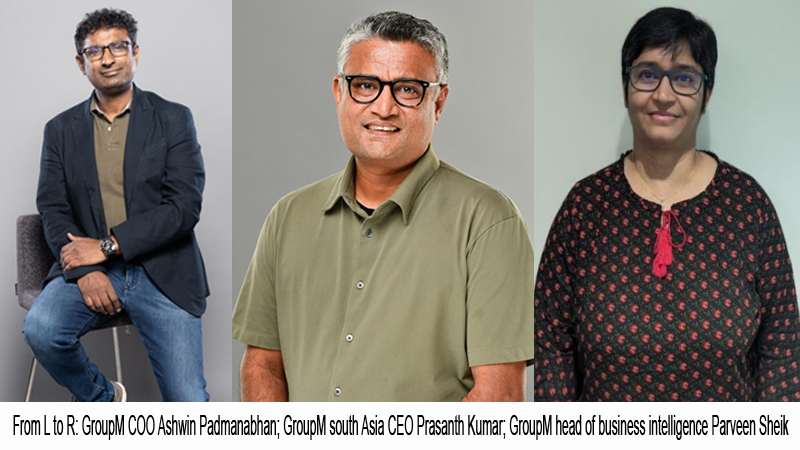
    MUMBAI: India’s advertising industry isn’t just growing; it’s strutting down the marketing runway like a star-studded campaign launch. The media investment giant under WPP, GroupM has unveiled its latest This Year, Next Year (TYNY) report, forecasting a seven per cent boost in India’s ad market, pumping total spend up to Rs 1,64,137 crore in 2025. That’s a jaw-dropping Rs 10,730 crore more—now that’s what we call an ROI worth bragging about!

    Digital is the undisputed king, now commanding a hefty 60 per cent of ad revenues. As brands compete for attention, they are diving deep into AI-driven marketing, immersive content, and hyper-personalised engagement to stay ahead.

    GroupM south Asia CEO Prasanth Kumar stated, “India is at the forefront of a marketing revolution driven by AI and data privacy. As global ad spend surpasses $1 trillion, India emerges as a top 4 growth market, with digital now accounting for over 60 per cent of ad spend. With a shift to personalised engagement, commerce-driven marketing, and responsible innovation, mixed reality and immersive tech fuel experiential content. While TV remains vital, AI agents are transforming customer interactions, and emerging formats like programmatic CTV and AI-driven retail media are redefining brand-audience connections. All of this positions India for unprecedented innovation and impact in the modern marketing era.”

    TV and digital together are the powerhouses of India’s ad industry, contributing a colossal 86 per cent of total ad spend. Streaming TV is no longer an afterthought either, now making up 12.6 per cent of total TV ad revenue.

    “India’s advertising ecosystem is being reshaped by digital dominance and shifting consumer behaviours,” said GroupM COO Ashwin Padmanabhan. “Key sectors like SMEs, real estate, education, BFSI, and tech/telco—contributing 60 per cent of total advertising—are set to grow at around 10 per cent, further accelerating market expansion. Additionally, rising investments from EVs, fintech, and gaming are fuelling the market’s momentum.”

    Despite economic fluctuations across the globe, India’s GDP is projected to expand by 6.5 per cent in 2025, keeping its advertising sector resilient and strong. GroupM head of business intelligence Parveen Sheik highlighted, “With India’s GDP projected to grow by 6.5 per cent in 2025, its advertising market remains strong, ranking 9th globally. Digital ad spend is now close to Rs 1 lakh crore, driven by AI, commerce, retail media, and hyper-personalisation marketing. As the economy grows, brands must embrace agility, data intelligence, and sustainable strategies to maximise impact in this dynamic landscape.”

    Trends shaping 2025: What’s hot in advertising?

    GroupM’s TYNY report reveals a host of transformative trends set to redefine India’s advertising scene in 2025. Here’s what brands should keep an eye on:

    ●   AI agents take over: Marketing campaigns are being revolutionised with AI-driven customer interactions.

    ●   Immersive experiences explode: Mixed reality, immersive tech, and smartphones are fuelling India’s surge in experiential content.

    ●   Privacy takes centre stage: Data clean rooms are shaping India’s privacy-first marketing landscape.

    ●   Retail media booms: Omnichannel strategies are redefining India’s e-commerce future.

    ●   Quick commerce accelerates: The e-commerce sector is shifting gears with lightning-fast commerce solutions.

    ●   Generative AI rules search: Traditional search and SEO are evolving as AI takes the lead.

    ●   AI influencers rise: Forget traditional celebrities; AI-driven brand storytelling is taking centre stage.

    ●   Chief prompt officers arrive: India’s content marketers are leading a global transformation in AI-driven campaigns.

    ●   CTV goes big: Streaming TV’s rise is ushering in an era of hyper-personalisation and programmatic ads.

    ●   Data privacy & AI converge: New integrated measurement frameworks are addressing fragmentation and privacy concerns.

    With AI shaping every facet of marketing, India’s advertising industry is on an unstoppable trajectory—like a viral ad campaign that refuses to be skipped. Brands that embrace this digital-first, AI-powered landscape will thrive, riding the Rs 1.64 trillion wave of opportunity. Those that don’t? Well, they’ll be the advertising equivalent of a banner ad—ignored, blocked, and eventually forgotten. 

  • AET Displays: Redefining LED brilliance and leading India’s DOOH revolution

    AET Displays: Redefining LED brilliance and leading India’s DOOH revolution

    MUMBAI: Marketing isn’t just getting smarter; it’s getting flashier—and DOOH is proof that advertising is no longer a static affair. According to recent market reports, India’s DOOH (Digital Out-of-Home) market is currently valued at around USD 282.6 million in 2024, with expectations to reach USD 630 million by 2030 at a CAGR of 13.8 per cent.

    Forget peeling billboards that fade into the background; today, LED-powered displays are turning streets into visual feasts. Bright lights, big impressions, and data-driven campaigns—what’s not to love? AET Displays, the wizards of outdoor advertising, are leading this transformation.

    Curious why India’s DOOH market is shining brighter than ever, with a staggering 13.8 per cent CAGR? Want to know how AET Displays is capturing eyeballs (and wallets)? Keep reading for insights, strategies, and a touch of LED magic that’s redefining advertising.

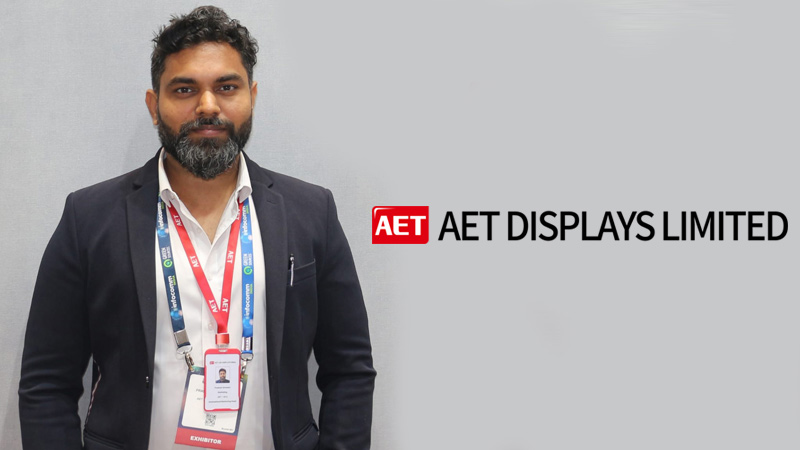
    Indian Television’s Suman Baidh and Sreeyom Sil recently sat down with AET Global’s international marketing head, Prashant Srivastava for a candid chat on India’s buzzing DOOH advertising market. From billion-dollar projections to the latest LED wizardry, Srivastava didn’t hold back. Want to know how AET Displays plans to light up the competition, one screen at a time? Let’s dive into the trends, the opportunities, and maybe even a few trade secrets (if we’re lucky!).

    Edited Excerpts

    The DOOH market in India seems to be on fire right now. What’s fuelling this growth?

    India’s DOOH market is witnessing a transformative phase, growing at an estimated CAGR of 14 per cent and poised to reach $1 billion by 2027. Key trends include the integration of programmatic advertising, real-time analytics, and the rise of interactive displays. However, challenges such as infrastructure gaps and regulatory inconsistencies persist. The opportunities lie in expanding to Tier 2 and Tier 3 cities, where the adoption of digital solutions is accelerating, and in catering to smart city initiatives that demand high-quality, weather-resistant displays.

    Challenges and opportunities always go hand in hand. What’s your strategy for tackling them?

    Our AET Spark Program is a transformative initiative designed to elevate the LED display industry by providing a seamless, end-to-end experience for our partners. This program goes beyond just supporting our clients; it also focuses on skill development by training employees to enhance their expertise in the LED display industry.

    With a strong network of over 80 partners and distributors across 34 countries, the program helps extend AET’s global footprint while addressing local market needs. We also offer comprehensive product training to empower customers to fully utilise their LED displays and maximise their potential. The program ensures high-performance maintenance and minimal downtime while committing to sustainability with advanced packaging technologies like MIP and COB.

    That’s a solid approach. So, what makes AET’s displays stand out in this competitive market?

    AET is not just a seller of LED products, but a leader in LED technology. Our displays stand out due to their technological superiority, durability, and customisation options. We incorporate cutting-edge technologies such as Micro LED (COB & MIP Technology), Quantum Dot Chip on Board (QCOB), and Transparent LED with AM Technology.

    Our products are built to withstand India’s diverse climates, from Rajasthan’s searing 49°C heat to the monsoon-heavy Mumbai. They’re dustproof, waterproof, UV-resistant, and consume 20 per cent less energy than industry standards. This aligns with global sustainability goals while delivering top-notch quality.

    Advertisers must love that level of innovation. How do they leverage AET’s displays for campaigns?

    Advertisers leveraging AET displays understand that times have changed, and today’s campaigns demand real-time insights to ensure their ads are capturing consumer attention. Our LED displays are not just products but a promise of quality, consistency, and innovation. From seamless installations to ongoing support, we provide a comprehensive service that sets us apart.

    With AET, advertisers gain more than just a display; they gain a dedicated partner committed to their success. Our displays integrate real-time analytics and interactive features, ensuring maximum engagement and deepening consumer relationships.

    Let’s talk tech—how is AET revolutionising outdoor advertising in India?

    AET Displays is at the forefront of revolutionising digital outdoor advertising in India by driving a significant shift from traditional static advertising to dynamic, interactive, and data-driven solutions.

    Our transparent LED displays are a prime example of innovation, offering visually captivating mediums for high-traffic areas while maintaining the surroundings’ aesthetic. Additionally, our Quantum series, built on cutting-edge MIP technology, delivers superior image quality and energy efficiency for large-scale installations.

    We empower brands with real-time analytics, allowing for campaign optimisation on the go. By integrating interactive features, advertisers can create unforgettable experiences for their audiences. We’re also contributing to smart city projects, ensuring our displays enhance urban connectivity and innovation.

    Sustainability seems to be a buzzword across industries. How is AET walking the talk?

    At AET Displays, sustainability is at the core of our business strategy. Our LED displays consume up to 20 per cent less energy compared to industry standards, reducing carbon emissions while cutting operational costs for our clients.

    Our advanced packaging technologies like MIP and COB ensure safer deliveries while minimising waste. Additionally, our displays are designed for durability, reducing the need for replacements and cutting down on electronic waste. These efforts align our operations with global sustainability standards, ensuring a greener and more sustainable future.

    Looking ahead, what does the future hold for India’s DOOH industry and AET Displays?

    The future of the Digital Out-of-Home (DOOH) industry in India looks extremely promising. The market is projected to double by 2030, driven by advancements in technologies such as AI, IoT, and 5G connectivity. These innovations will enable more personalised, dynamic, and interactive advertising experiences.

    As for AET Displays, 2024 was a landmark year with 40 per cent growth in India. In 2025, we plan to expand aggressively into Tier 2 and Tier 3 cities, launch new product lines with enhanced capabilities, and strengthen our partnerships through initiatives like the AET Spark Program. Our mission is to remain at the forefront of this transformation and help brands captivate audiences like never before.

    As AET Displays paves the way with tech-savvy brilliance and sustainability-driven innovation, India’s DOOH market is truly lighting up—literally. The future of outdoor advertising is bright, and it’s undoubtedly LED-powered. So, the next time you walk past an LED display, don’t just admire its shine—wonder if it’s plotting world domination with programmatic ads and AI analytics. Will the old-school billboard ever make a comeback? Doubtful. But as Srivastava cheekily puts it, “In the battle of the billboards, it’s clear—LED always outshines paper. It’s bright, it’s dynamic, and most importantly, it’s the future of how we connect with audiences.”

  • IAB Tech Lab launches programmatic CTV genre guidance for public review

    IAB Tech Lab launches programmatic CTV genre guidance for public review

    MUMBAI: After a quiet pause since its 2020 retirement, the Interactive Advertising Bureau (IAB) Tech Lab is back with a roar, reimagining the digital advertising playbook.

    Known for its pivotal role in shaping online advertising standards, the global body has unveiled an ambitious update to its programmatic connected TV (CTV) guidance, powered by the advanced frameworks of Content Taxonomy 2.0 and 3.1.

    Like a phoenix rising, these updates signal a bold comeback, aiming to eliminate inefficiencies, unify the industry, and set a new benchmark for digital advertising clarity.

    Open for public review until 31 January 2025, the move invites the advertising ecosystem to shape the future of programmatic innovation together.

    The updates, developed by the Taxonomy & Mapping Working Group and Programmatic Supply Chain Working Group, introduce key features:

    . New OpenRTB attributes: genres and gtax

    .  Updated genres list in Content Taxonomy 3.1

    . Specific implementation guidance for CTV genres

    .  Bi-directional mapping between Content Taxonomy 1.0 and Ad Product Taxonomy 2.0

    These enhancements address inefficiencies caused by free-text genre descriptions, which complicate bidstream data interpretation for DSPs. By adopting standardised genres and the gtax framework, the industry can achieve better contextual targeting and more tailored campaigns.

    Content Taxonomy 1.0, deprecated in 2020, still poses challenges for companies relying on older systems, leading to inefficiencies and risks like content misclassification. The new mapping guidance bridges the gap, allowing compatibility between older and newer systems. This ensures DSPs using older taxonomies can effectively read and interpret labels from SSPs leveraging Content Taxonomy 2.0.

    IAB Tech Lab CEO, Anthony Katsur emphasised the significance of these updates, “We’re tackling the complexity head-on. This work is about simplifying the way the industry connects and operates, so businesses can spend less time dealing with friction and more time creating value. It’s a step toward making programmatic advertising smarter, faster, and more reliable for everyone.”

    The updated taxonomies empower publishers and advertisers to categorise content more precisely, enabling curated inventory and privacy-respecting advertising experiences. Features like genres and gtax provide actionable data, making contextual buying strategies more effective.

    Taxonomy & Mapping Working Group associate product manager & co-lead, Katie Shell highlighted the benefits, “This update builds on the foundation of our existing taxonomies, addressing opportunities to enhance efficiency and streamline processes. By introducing these new resources, we’re equipping the industry to work more efficiently and build toward the next generation of taxonomies.”

    IAB Tech Lab invites industry stakeholders to review and provide feedback on the guidance during the public comment period, which closes on 31 January 2025. The input will help refine these tools to align with evolving industry needs.

    “This initiative solves a fundamental challenge for our industry—ensuring that taxonomies integrate effortlessly across platforms,” said Subtextive CEO & principal, Temese Szalai. “By offering these mappings and implementation guidance, we’re addressing inefficiencies and creating real, measurable impact for publishers, advertisers, and platforms alike.”

    For further details and participation in the public comment process, visit IAB Tech Lab’s official page.

  • “Bad ads are spam but good ads are content”: Moloco India’s Siddharth Jhawar

    “Bad ads are spam but good ads are content”: Moloco India’s Siddharth Jhawar

    Mumbai: Ad personalisation isn’t just about tailored ads, it’s about transforming them into engaging content for enhanced user experience. Moloco, a multinational adtech company pioneering machine learning, is at the forefront of this revolution. In a strategic partnership with Viacom18 and JioCinema, Moloco’s advanced capabilities are reshaping the landscape of Indian advertising.

    From combating ad fraud to leveraging 5G for programmatic innovation, Moloco is driving tangible results for advertisers while prioritising user privacy. With success stories like Zupee’s 5x growth and significant user jumps for Rummytime, Moloco’s vision for India extends beyond market growth—it’s about fostering innovation and empowering businesses to thrive in a dynamic digital ecosystem.

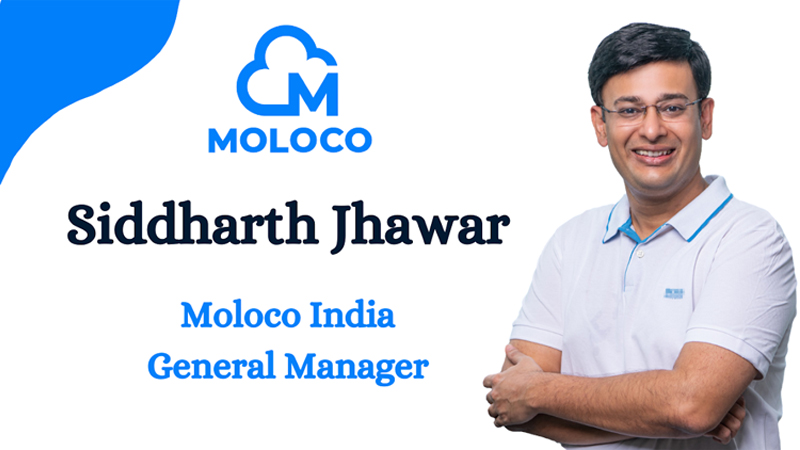
    Indiantelevision.com caught up with Moloco India general manager Siddharth Jhawar to talk about growing concerns about ad fraud and privacy in the Indian market, the future of programmatic advertising in India, and much more…

    Edited Excerpts:

    On Moloco addressing growing concerns about ad fraud and privacy in the Indian market

    We believe that complete transparency, constant vigilance, & working with trusted partners are critical to ensuring that advertisers and customers are protected from fraud and privacy concerns.

    Moloco ads reports advertising spends to the most granular level, which empowers advertisers to pressure-test the quality of their traffic for any suspicious activity. For instance, we capture timestamp data and then analyze whether the time taken between viewing an ad, clicking on it, installing an app, and making a purchase are coherent with expected customer behaviour. It certainly helps if an advertiser works only with reputed channels, because it minimizes the risk of fraudulent activity.

    First-party data is critical for a machine learning engine to become intelligent in identifying high-value users of an advertiser. Hence it becomes even more important to adopt the highest standards of safety and privacy to help companies grow while ensuring their customers’ privacy.

    On Moloco envisioning the future of programmatic advertising in India, with the advent of 5G

    Moloco ads processes seven million requests per second. We take 14 milliseconds to make a deep neural network prediction. Building this kind of infrastructure has taken us more than a decade, and it helps that network speeds are improving. The advent of 5G will support the nature of innovation that we do in terms of speed and efficiency of computational infrastructure.

    On Moloco’s approach to ad personalisation and its impact on user experience

    Bad ads are spam but good ads are content. If an ad can be hyper-personalised to a user and their context, it improves the customer experience and also gives better returns to an advertiser.

    The trends we see today are that customers want great but inexpensive service without being bombarded with ads, advertisers want maximum returns on every rupee spent, and platforms want to grow fast while also being profitable. Personalized ads address these needs by enhancing the customer experience, delivering measurable outcomes to advertisers, and boosting advertising revenue for platforms. But this is easier said than done. There are almost five billion internet users in the world today. We can not expect any two customers to be exactly the same. But when the scale is massive, 1-1 targeting becomes computationally tough. This is when companies need world-class machine learning systems to support them. Moloco uses machine learning that works on an advertiser’s first-party data and helps them show hyper-personalised ads to users while also optimising bid prices and probabilities in real-time – that is tough, but when done right, can be valuable to both advertisers and customers.

    On the strategies that Moloco employs to effectively integrate in-game and mobile advertising for maximum engagement

    Showing relevant and hyper-personalised ads to a user on a gaming app improves their engagement levels on the app. India’s gaming industry makes about one-fifth of its revenue from in-app advertising, and this trend is expected to grow further.

    On Moloco’s approach to operational machine learning and its significance in optimising ad campaigns

    Operational machine learning is special in four ways – it is autonomous, it involves real-time predictions, it can work at massive scale, and it is highly adaptable to the context. While machine learning and artificial intelligence have become household terms now, building an operational machine learning system at scale is a problem that very few companies in the world have effectively cracked.

    We use this operational machine learning system to train on an app’s first party data, identify high-value users, and efficiently bid for them on the open internet – this helps the app acquire more high-value users which can grow their revenue and profitability.

    On Moloco’s partnership with Viacom18 and JioCinema exemplifying its commitment to revolutionising the ecosystem in India

    Viacom18 is building one of the largest streaming platforms in the world and we are proud to be their ad-tech partners. The platform has immense scale and saw 32 million concurrent users during IPL 2023 – we use Moloco’s machine learning and ad-serving capabilities to serve relevant ads at astronomical scale on JioCinema.

    On any success stories or case studies where Moloco’s solutions have driven tangible results for advertisers in India

    Within a matter of 18 months, we have created a measurable impact on several industries and digital platforms in India. Moloco ads works with nine of the ten largest gaming apps in India and we have driven high-quality user growth for them. Our partner Zupee attained 5x growth and 3x return on ads spend targets using our ML engine. Rummytime from the Gameskraft group saw a significant jump in their high-value users. We also used our monetisation solution for CityMall to help them build an in-house advertising business and increase ROAS by 900 per cent. There are over 40 apps who have benefited from Moloco’s machine learning in India.

    On Moloco’s plan to further expand its footprint and partnerships in the Indian market moving forward

    India is a unique region for Moloco. Not only is the India market a small yet fast-growing region, India is also emerging as an innovation hub of Moloco. The entrepreneurial activity and scale in India make it an exciting place to develop machine learning products. For this reason, we are also building a global engineering centre in Bangalore, so that we can build products in India that can be scaled to the rest of the world.

  • “GenAI is going to play a key role in programmatic advertising”: mediasmart’s Noelia & Nikhil

    “GenAI is going to play a key role in programmatic advertising”: mediasmart’s Noelia & Nikhil

    Mumbai: mediasmart, an Affle Company, is a unified programmatic platform that provides advertisers, trading desks, and agencies ways to integrate consumer journeys across screens.

    Recently, Affle has made significant advancements in programmatic advertising by leveraging Gen AI. Through mediasmart, this technology has been implemented in CTV advertising, enhancing the user journey and creating a seamless experience.

    Noelia Amoedo has extensive experience in the mobile, internet and social  media, with a proven track record of success in developing profitable  business from scratch in international markets. Before becoming CEO at mediasmart, she held multiple  executive positions such as VP of Marketing and Business Development  for EMEA at Palm (acquired by HP), VP of Mobile for the social  network Hi5 and managing director for Buongiorno USA (acquired by  NTT DOCOMO).

     Similarly, Nikhil Kumar currently is the chief growth officer for mediasmart, an Affle company. He is a Consumer Marketing professional with over a decade of experience working in FMCG, Retail, F&B  & Ad-Tech set-ups with global brands like Puma, L’Oreal, Cafe Coffee Day and recently Bytedance  & InMobi. He was voted & awarded as one of India’s Most innovative Mar-Tech leaders in 2019  by World Marketing Congress. With a career spanning over 14+ years – Nikhil has worked across  multiple functions with his domain expertise primarily being Brand Marketing (digital & offline),  Business strategy/ Sales & Go-To Market plan/ execution across consumer goods, retail & startup ecosystem.

    Indiantelevision.com had the opportunity to connect with both Amoedo and Kumar, where they discussed the latest trends in CTV advertising, the innovative strides made in programmatic advertising through the utilisation of Gen AI, and a plethora of other insightful topics…

    Edited excerpts

    On specific advancements has Affle made in programmatic advertising through the integration of Gen AI technology within mediasmart’s platform

    [Noelia] – At Affle and mediasmart, we have a strong focus on R&D to drive innovation for the future of advertising. To strengthen these efforts and vision, we recently filed 15 new patents in India that cover futuristic applications in interaction, training, and integration of GenAI agents. The patents span advanced AI areas such as personalization, recommendation systems, predictive analysis, privacy, and enhanced fraud detection. Our GenAI-powered innovations differentiate us from the rest of the industry, to go beyond cost efficiencies to enable long-term revenue growth and competitive advantages.

    We are also working to enhance the learning and application of GenAI across connected devices. One of the steps in this direction is on our AI CTV Safe feature that assesses ad suitability of CTV traffic to automatically filter out risk categories. This ensures that advertisers benefit from a secure and brand-appropriate environment. Imagine tools based on Gen AI that automatically discard showing ads on entertainment content intended for kids or shows that a brand considers too violent. With GenAI being a fairly new technology, we’re continuing to innovate more use cases around vernacular creatives, interpretation of campaign data, and how to improve the context and relevance of ads

    On elaborating Gen AI technology enhancing the user journey and creating a seamless experience in Connected TV (CTV) advertising, particularly through the mediasmart platform

    [Noelia] – Programmatic technology on CTV, utilizing AI, has powered measurement, targeting, and optimization on a format like television advertising for years. While AI-driven programmatic advertising has made the medium efficient by using sophisticated algorithms that can predict and make their own decisions using a set of rules/predefined goals, GenAI is based on LLMs and,  in addition to the capabilities of AI, it can also create new content. This makes it more trans-formative to allow advertisers to create contextual ads depending on the audiences. For instance, a sports apparel brand can easily create multiple ads featuring visually captivating video of runners in different settings: rural, urban, with friends, in different seasons, etc, depending on where the ad is shown and what kind of household it is targeting. Making sense of unstructured language based information is another area where GenAI can make an impact to offer a seamless experience. For instance, GenAI can identify contexts and create new ones by analyzing the transcript of any given show, which in turn can reduce the dependency on pre-defined content categorization for campaign targeting. While some of this will take time, the personalization possibilities represent a leap in CTV advertising experience.

    On GenAI contributing to optimising ad campaigns

    [ Noelia ] – I think Gen AI could be quite disruptive in the area of campaign optimization mainly in two ways. On one hand, by becoming a tool that can empower media traders to set up their campaigns for optimum performance: imagine an assistant that is guiding you along the way while you configure your advertising campaign based on how other similar campaigns with good results have been set up. On the other hand, Gen AI could dramatically change how campaign intelligence is presented and analyzed: imagine being able to ask questions like “how is my campaign performing across cities?” “or “which is the audience that most engages with my video ads during weekends?”. The more time you invest analyzing versus configuring or manipulating data, the more you will learn and the more you can do for the success of your campaign. All this, combined with content generated by AI to make your ads most relevant to the audience, can have a dramatic impact on campaign performance.

    On the recent GroupM’s TYNY 2024 report on CTV’s growth to reach 45 million homes with a YoY growth of 21 per cent in India

    [Nikhil] – It’s undeniable that CTV has cemented its status as a primary source for content consumption for the Indian television viewers across cities and towns. We’re already looking at an accelerated growth rate of CTV’s adoption among Indian households having surpassed previous indications. Interestingly, while CTV viewing is a cord-cutting phenomenon among the millennial’s, for many younger audiences who were cord-nevers, CTV is their primary preferred screen for content consumption. The explosive growth of OTT platforms – 46 and growing – and the appeal of a wide variety of content have also contributed to CTV’s wider adoption. So, CTV is not the future, it is the present!

    This has also reflected in the speed at which advertisers have adopted CTV advertising. With its broad reach, diverse user base, and dynamic content consumption patterns, CTV is an essential component for any planning exercise for an advertiser. Advertisers across industry verticals like FMCG, retail, automotive, electronics, as well as high-end luxury brands are using CTV advertising to deliver targeted, contextual messages. More brand verticals are likely to confidently invest in CTV as ROAS-driven advertising becomes a key focus area and draw efficiency from CTV advertising’s innovative features like Household Sync that offer more synchronized and immersive experiences to integrate consumer journeys.

    On the current global and local implementations of Gen AI in Connected TV and shaping the future outlook for CTV and multi-screen journeys

    [Nikhil] – Globally, major streaming platforms and advertisers are likely to harness the power of GenAI to deliver personalized content recommendations and dynamically insert ads based on user preferences. This not only enhances the user experience but also allows for real-time optimization of ad campaigns, improving efficiency and engagement. On a local level, broadcasters and advertisers are customizing their approaches, leveraging GenAI to adapt to regional preferences and cultural nuances. This localization ensures that campaigns resonate with diverse audiences, establishing a deeper connection between brands and viewers. Looking forward, the future outlook for CTV and multi-screen journeys appears to be shaped by the continued advancement of Gen AI. This includes the promise of even more personalized and targeted experiences, seamless multi-screen interactions, and the integration of interactive elements that make ads not just viewable, but truly engaging and memorable. As Gen AI continues to evolve, it is poised to play a pivotal role in creating a dynamic and data-driven advertising landscape that responds to the ever-changing expectations of viewers.

    On envisioning the role of Gen AI evolving in the future of programmatic advertising, and further opportunities you foresee for further innovation and growth in this space

    Noelia: GenAI is going to play a key role in programmatic advertising. GenAI can be expected to have a significant impact around increasing productivity across many functions, including creatives, media buying, and extracting campaign insights. It can also reduce production costs for creatives and maximize ad relevance, not only through custom creatives but also by segmenting contexts in a much more granular way. I expect a lot of innovation around these areas in the future.

    Nikhil: The possibilities of GenAI’s impact in programmatic advertising is of course exciting and the industry is looking forward to the innovations in this space. We’ve come a long way from the manual RFPs for placing ads on specific publishers. Programmatic has made the media buying process automated, real-time and measurable. With GenAI, we are looking at further efficiency and impact on media buying through dynamic bidding and AI agents will be trained to interact and integrate to improve how media is bought, ads are placed, and data is stored. Specifically within the CTV ecosystem, GenAI has the potential to not only transform the advertising experience, but also elevate the way viewers experience CTV. With the intersection of technology, creativity, and innovation, we are looking at a brighter future for digital advertising.

  • Disney Advertising & The Trade Desk sign a significant advertising deal

    Disney Advertising & The Trade Desk sign a significant advertising deal

    Mumbai: Disney Advertising and global advertising technology company The Trade Desk have reached a landmark agreement to power greater audience activation at scale programmatically.

    This deal enables brands to target automated ads across Disney’s linear and streaming properties – Hulu, ESPN+, Freeform, ESPN, National Geographic and FX. This announcement comes ahead of Disney’s launch of an ad-supported tier for Disney+ that would likely be another target for the deal.

    This expanded deal marks yet another step toward transforming how advertisers access Disney’s portfolio of premium supply, rooted in secure data collaboration and powered by automation through Disney’s Clean Room technology. By offering clients more flexibility, choice and control across all deal types, Disney is delivering on its commitment to support addressability at scale.

    This agreement will enable a first-of-its-kind integration between Disney’s proprietary Audience Graph and the open-source identity framework, Unified ID 2.0, within a secure environment. As a result, buyers will be able to discover more addressable, biddable inventory across the Disney portfolio, all validated by Disney’s proprietary Audience Graph.

    “Disney Advertising had a bold vision backed by proven results from the start, and we’re thrilled to continue to deliver on our commitment to power greater automation and addressability for our customers through this expanded deal with The Trade Desk,” said Disney Media and Entertainment Distribution president advertising sales Rita Ferro. “We have spent years investing in our data and technology strategy to create innovative solutions for advertisers to engage their audiences with greater precision and accuracy in a privacy-focused way. This first-to-market capability sets the stage to empower access to the Disney portfolio, validated by powerful audience insights, in a way that’s automated and accessible.”

    Disney continues to advance its efforts towards a data-informed, tech-enabled future rooted in audience innovation. For example, more than 40 clients and most major agencies across all major categories have engaged in Clean Room strategies in collaboration with Disney leveraging its Audience Graph.

    Disney’s agreement with The Trade Desk is a key milestone in enabling greater interoperability with the programmatic ecosystem while setting the stage to power better audience activation and measurement. Moreover, it provides a path for advertisers to leverage their first-party data in biddable environments as the industry faces new disruption caused by the deprecation of third-party cookies.

    “Disney is reimagining our advertising platform to support a global and addressable future. We are uniquely positioned to match the world’s greatest content with next-generation products and technologies, through a secure and unified ad platform, and one-of-a-kind first-party data. The growth of our relationship with The Trade Desk is a milestone in addressability and automated buying at scale, and the latest step as we use technology to enable advertisers to buy once to deliver everywhere across Disney,” said Disney Media and Entertainment Distribution president and chief technology officer Aaron LaBerge.

    “With this agreement, Disney and The Trade Desk are pioneering a new approach to audience addressability in a post-cookie environment. By creating interoperability between Unified ID 2.0 and Disney’s Audience Graph, we are unlocking the opportunity for our customers to activate their first-party data at scale programmatically, against some of the world’s most premium content, across all channels. As a result, advertisers will be able to deliver relevant advertising, while ensuring consumers have more control of their privacy,” said The Trade Desk chief revenue officer Tim Sims.

    Disney Advertising is implementing this expanded capability with advertisers over the next several months, while setting the stage to support interoperability across all demand partners and platforms.

  • MiQ partners with Samsung Ads to reach Samsung Connected TVs

    MiQ partners with Samsung Ads to reach Samsung Connected TVs

    Mumbai: Programmatic partner MiQ has announced a partnership with Samsung Ads DSP (demand-side platform) to bolster the reach of its solutions and video campaigns across Samsung’s current device ecosystem. Through this partnership, brands and advertisers would have access to CTV inventory, as well as access to targeted audiences across Samsung TVs.

    “By partnering with Samsung Ads’ DSP, advertisers working with MiQ can target audiences against more data-driven insights through online programmatic channels,” said the statement. “The partnership comes at a time when digital media prepares to move away from cookie-based targeting.”

    This partnership allows MiQ to deterministically reach interest-based audiences as well as premium video inventory on Samsung TV Plus. Advertisers can understand and manage the campaign reach and frequency across linear TV and connected TV (CTV).

    “We are thrilled to partner with Samsung to be a trusted partner in helping advertisers to buy smarter, focussed, impactful solutions, enabling a superior return on their investment,” said MiQ MD Siddharth Dabhade. “We are constantly building innovative solutions to empower our clients with accurate data sets and intelligence. The opportunity to partner with Samsung Ads across its TV platforms provides us with an extraordinarily unique position in the market as we now have the ability to analyse the impact of current TV campaigns. We are confident of forging more such partnerships to help organisations extract optimum benefits from their advertising spend.”

    “We look forward to working closely with MiQ, a company known to combine industry knowledge with excellent technology and analytics solutions,” said Samsung DSP senior director India and Southeast Asia Prabhvir Sahmey. “Global brands can now have widespread reach across device platforms. It is now for the first time that along with MIQ; we are able to bring deep TV insights programmatically via the Samsung DSP.”

  • Nazara acquires majority in ad tech company Datawrkz

    Nazara acquires majority in ad tech company Datawrkz

    Mumbai: Sports media company Nazara Technologies has entered an agreement to acquire 55 per cent stake in programmatic advertising and monetisation company Datawrkz valuing the company at Rs 255 crore (~$30 million) linked to CY 22 EBITDA performance.

    “Datawrkz tech offerings will enhance in-house capabilities of Nazara for optimising its customer acquisition spends as well as enhance yields on ad monetisation of its large consumer base,” the company said in a statement on Tuesday. “The ad revenue monetisation is expected to assist many of the companies in the ‘Friends of Nazara’ network.”

    Nazara will acquire 33 per cent stake (Rs 60 crore payable of which Rs 35 crore is partly payable in cash and the balance consideration of Rs 25 crore will be paid either in cash or swap of shares) in the first tranche by 22 April. Nazara has reserved an option to acquire an additional 22 per cent in the second tranche that is expected to close in Q4 FY23.

    “We, at Nazara, are looking to build strong gaming ad tech offerings globally with the partnership with Datawrkz,” said Nazara Technologies CEO Manish Agarwal. “We strongly believe that growth of gaming-focused ad tech will be exponential in the coming decade across geographies with the growth of gamers and game publishers across freemium, web 3.0 and skill-based real money gaming.”

    He further added, “Ad tech companies with deep data processing capabilities and first-party data ownership will emerge as winners in gaming-focused ad tech and will help Datawrkz to create value for itself as well as for Nazara shareholders.”

    Datawrkz was founded in 2013 by IIM Ahmedabad alumnus Senthil Govindan and is a global advertising technology firm focused on accelerating user and revenue growth for clients through highly optimised digital advertising. It has offices in the US, Singapore, and India and functions as an independent trading desk to power digital media strategy, planning and execution.

    Datawrkz’s self-service product suite for advertisers – Vizibl includes a demand-side platform as well as a customer data platform. On the supply side, Datawrkz generates revenue for publishers through AdPrimus, its supply-side product that drives user engagement, mediates between demand sources and enables audience segmentation.

    For the calendar year 2021, Datawrkz posted combined revenue of Rs 90.7 crore (~$12.1 million) and EBIDTA margin of 12 per cent with around 70 per cent of its revenue coming from the US as per CY 2021 unaudited financial statements.

    “We had started this company with a vision to disrupt the digital advertising space,” said Datawrkz founder Senthil Govindan. “Datawrkz was already on a fast track to achieve our objective with rapid growth and satisfied clients around the world. Through our partnership with Nazara, I see our pace accelerating further. While Datawrkz will be able to immediately bring our natural strengths to bear within the existing Nazara fold, this also gives both sides a tremendous opportunity to build global advertising and publisher monetization products with a sharp focus on the gaming vertical.”

    “As always, it’s a great moment for us to welcome a new friend to our ‘Friends of Nazara’ network and I believe Senthil and the entire Datawrkz team will add great value to what we are building at Nazara over the next few years,” added Nazara Technologies founder and joint MD Nitish Mittersain.

  • Zapr, PubMatic partner for integrated TV and digital media buying

    Zapr, PubMatic partner for integrated TV and digital media buying

    Mumbai: Media-tech startup Zapr has partnered with programmatic advertising company PubMatic.

    This partnership will enable media buyers to build integrated TV and digital plans by leveraging rich audience segments across all digital screens and channels including mobile, connected TV, and the open web – on PubMatic’s premium inventory.

    The direct integration, via PubMatic’s Audience Encore, allows buyers to activate data at the supply level, said the company in a statement.

    The integrated marketing solutions backed by India’s largest offline media consumption data can help brands and agencies achieve targeted engagement more efficiently, it added.

    Audience Encore is an audience data platform designed to improve how marketers and data owners transact by giving more control to the data owner and better ROI for the advertiser. Publishers with first-party data and data providers can simply upload their segments to Audience Encore, generate a deal ID for single, recurring, or customised use, and then transact programmatically alongside premium PubMatic inventory in private or open marketplaces.

    “There is significant adoption of programmatic advertising in the Indian market, where it has become an integral part of most brands’ digital plans,” said Zapr, senior vice president – revenue and ad operations, Bhavna Saincher. “This collaboration with PubMatic will expand the accessibility footprint of Zapr’s unique TV and behavioural segments for agency and brand partners.”