Tag: production

  • Elizabeth Raposo exits Paramount Pictures

    Elizabeth Raposo exits Paramount Pictures

    MUMBAI: Paramount Pictures president of production Elizabeth Raposo has exited the studio. This move comes after Emma Watts has taken the leadership of the motion picture group.

    Raposo had served in the top role for three years. Her departure from the company was announced in a note to staff authored by Emma Watts, the studio's newly installed motion picture group president under Paramount CEO Jim Gianopulos.

    Raposo played a pivotal role in movies like  Rocketman, A Quiet Place, Mission: Impossible—Fallout and Bumblebee. She has also been part of the latest Star Trek films and the upcoming Top Gun: Maverick. She took over as production president following the exit of Marc Evans.

    "With her great taste and incredible talent relationships, Liz has been instrumental in many of the company’s past and recent successes," Watts wrote in a note to staff that referenced the many films Raposo has been involved with. "We thank Liz wholeheartedly for her many years of service and countless contributions to the studio, and wish her the very best," Watts continued.

    Raposo has been part of the studio for 15 years. Prior to this, she worked at Darren Aronofsky's Protozoa Pictures as director of development.

  • BBC elevates Charlotte Moore as chief content officer

    BBC elevates Charlotte Moore as chief content officer

    In her new role, Moore will be the senior leader for BBC content and audiences across all genres and platforms, with the exception of news and nations and regions. Her responsibilities include television commissioning for all BBC network TV channels and BBC iPlayer, radio commissioning and production for all ten national radio networks and BBC Sounds, multiplatform commissioning and production for all children’s and education content, and BBC Proms and Orchestras.

    BBC chairman Sir David Clementi said: “It is a great pleasure to welcome Charlotte Moore to the BBC Board. Charlotte has made a huge success of bringing audiences to our television portfolio—resulting in record-breaking figures for iPlayer and ensuring the BBC can reach audiences beyond the critical linear channels. She will do a brilliant job as Chief Content Officer and be an important asset to the BBC Board.”

    Moore joined the BBC in 2006 as commissioning executive for documentaries. She has held such roles as acting controller of BBC Daytime Television, controller of BBC One and controller of TV channels and iPlayer. Since 2009, she was the commissioning editor for documentaries where she was responsible for strategy and commissioning for in-house and independents across all four channels. Charlotte transformed the genre to produce a huge breadth of original programming, seeking out the best talent to bring the most compelling and inspiring documentary content to a broad audience. From Bafta-winning titles Protecting Our Children, 7/7 One Day In London, Between Life and Death, The Great British Bake Off, Terry Pratchett’s Choosing To Die, The Choir and Welcome To Lagos to hit series like Inside Claridges, The Call Centre, Lambing Live and The Tube.

    In January 2016, she was appointed as controller of TV channels and iPlayer, where she was the creative, editorial and strategic lead for BBC One, BBC Two, BBC Four and BBC iPlayer, ensuring the channels work in a complementary way while enhancing their distinctive positioning. In July 2016, Moore was elevated as the director of BBC content and controller of BBC One. She was responsible for the creative vision across the portfolio of channels, BBC iPlayer and genres and took on oversight of BBC Sport.

    Prior to joining the BBC, Charlotte was director of contemporary factual at IWC Media focusing on high-profile contemporary narrative documentaries and series for all major UK channels, including BBC Two’s landmark series Stephen Fry: The Secret Life Of A Manic Depressive.  

  • Where Mike Hopkins is taking Amazon Prime Video

    Where Mike Hopkins is taking Amazon Prime Video

    Amazon Prime Video and Amazon Studios SVP Mike Hopkins is a 30-year vet old in streaming veteran, having overseen the developed of products such as  BTN2GO and Fox Now as head of Fox distribution and later led Hulu on a rapid growth path as its CEO. He spent a short stint at Sony Pictures Television Networks as its chairman before being lured away by Jeff Bezos to lead Prime Video just before the pandemic hit the world.

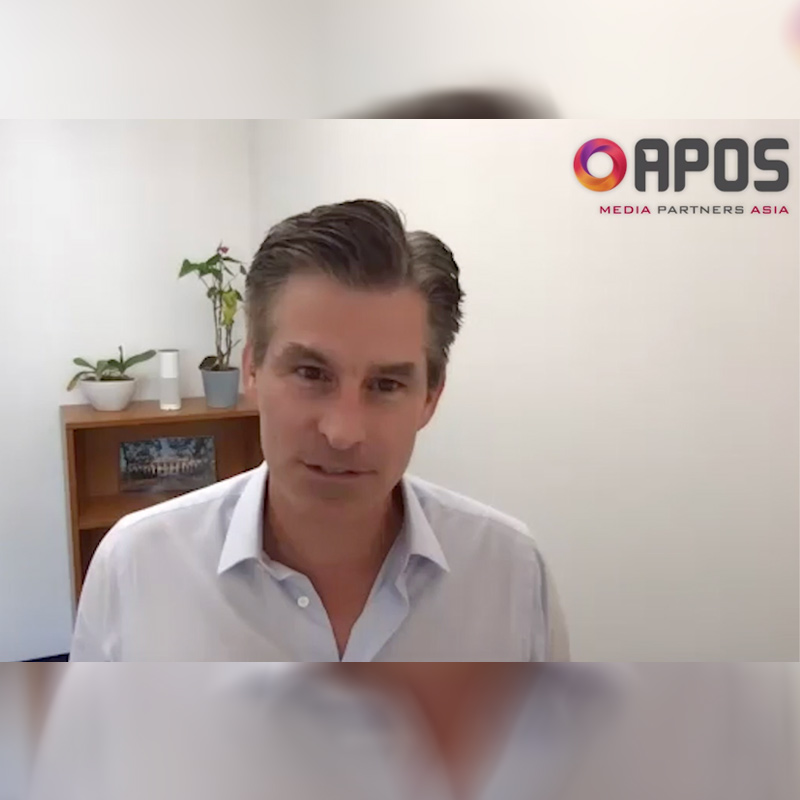
    Hopkins is quite charged up about the opportunity that lies ahead with Prime Video. Speaking at APOS he said that Amazon has 150 million plus Prime members globally and Prime Video is a key driver of the service.

    Hopkins expressed that growth for Prime Video lies primarily in international territories. “Before I arrived the company had made some really smart investments in serving customers around the world,” he said. “And we intend to double down on that investment over the next couple of years. We will continue to invest in local and global content and that is very critical,”

    Most of the investments are going towards creating originals in 15 of the 200 markets Prime Video is available outside the US. “People in many countries have an affinity to US content,” Hopkins added. “But increasingly customers also want to see stories about them their culture and issues written and produced by people in their countries and played out by actors who look like and speak like them. Our teams have been building a home for talent and attracting the top creators all over the world.”

    The content acquisition teams, Hopkins revealed are also  making smart bets and doubling down on investments in acquiring SVOD content and TVOD catalogues. This apart, Hopkins, stated that Amazon’ sports team has also been inventing and reinventing spots, taking bets in properties and that is going to increase going forward.

    Hopkins went on to add that the second big opportunity for Amazon Prime Video lies in improving customer experience. “We have probably the most complicated business model of the SVoD players, so that makes the customer experience more important for us,” he expressed.

    He revealed that members can look forward to improvements in how they can navigate and use the service over the next year or two. “Customers can rent and buy movies and TV shows and they can also subscribe to  TV channels in many markets,” he highlighted. “Making it easier for them to understand what’s what and how they can get to the content is important and we will prioritise this along with content investments.”

    He explained that he sees Prime Video offering a variety of content to its users, right from the SVOD content to TVOD to channels. “We want to offer them a one-stop-shop for their entertainment needs and (adding) channels is going to be a major focus for us.”

    Hopkins stated the pandemic has not impacted its pipeline of content going forward. “We have about 40 shows in various stages of production,” he said. “We have a very deep library, we have licensed content. We have a lot of originals. We are going to launch the second season of The Voice and several other shows. But what we will see is a slowdown in terms of premieres in the first half of next year. The thinning of these shows will be more than made up by the TVOD content in movies and the channels members can subscribe to.”

    He pointed out that Amazon Prime Video had gone in early into India as an SVOD service  and the way forward is becoming be super aggressive in the market from an originals. “We will have more than a dozen originals in each of the markets we are investing in by next year or so” he revealed. “And India is one of our priority markets.”

  • Raj Malik joins Miraj Group as business head

    Raj Malik joins Miraj Group as business head

    MUMBAI: Raj Malik, the producer of the acclaimed film Madaari has now joined Miraj Group as film production and acquisition business head.

    Miraj Group’s recent release was Pati Patni Aur Woh starring Riya Sen. The show was launched on MX Player. The organisation wants to accelerate its efforts towards producing engaging content that would find resonance with audiences across revenue streams. Malik will be leading the film production business for Miraj Group and build a slate of films, and OTT offerings.

    With a career spanning over 22 years in the M&E sector, Malik in his earlier assignments has held senior positions at Rhiti Group, Cinestaan, Krian Media, Walt Disney, Eros and Warner Bros.

    Miraj Group is a 34-year-old organisation with a diverse portfolio of businesses like food snacks, printing, and packaging, pipes and fittings, engineering, hospitality, retail, real estate and film production besides the award-winning “Miraj Cinemas”, India’s fifth-largest multiplex chain with 121 Screens across 33 cities.

  • VOOT Select subscribers coming mainly from top 6 metros: Ferzad Palia

    VOOT Select subscribers coming mainly from top 6 metros: Ferzad Palia

    KOLKATA: Production houses have been able to resume the shooting schedule for shows since July, four months after the lockdown, but the fate of large scale projects still remains cloudy. Amid the backdrop of this uncertainty, the OTT players are innovating to churn out content.

    VOOT Select, the subscription-based premium service of  VOOT, that was introduced a few days before the lockdown, has launched a new show – The Gone Game. Interestingly, the show has been shot remotely and entirely in isolation during the lockdown. Directed by Nikhil Nagesh Bhat, The Gone Game is a one of a kind and a never-seen-before concept that puts creative freedom in the hands of the cast of the series to innovate while shooting from their homes. 

    Although some of the projects have been delayed during the lockdown, VOOT Select, Viacom18 Youth, Music, and English Entertainment head Ferzad Palia is confident of its content pipeline thanks to the mix of originals, international content and before TV.

    The lockdown has given a huge surge to all streaming services. VOOT Select did not have a chance to compare its traffic to pre-Covid period but shelter-at-home directive has helped it to beat in terms of subscription, watch time.

    Palia said the subscribers are consuming all sort of content with its originals like Asur, The Raikar Case, and Illegal creating a good buzz. Talking about the subscribers, Palia mentioned that they are mostly coming from top six metro cities followed by significant inflow from the top 15 cities as well.

    While lockdown has created an opportunity for streaming services, it has also impacted the marketing strategy due to the absence of the outdoor medium. Palia said while they have not been able to effectively use the outdoors after the first few days of launch, they have diverted marketing spends towards digital and TV. VOOT Select is evaluating all options around the outdoor medium with lockdown ending in a few parts of the country but currently keeping the focus on digital and television.

    During these last four-five months, many of the large OTT platforms have struck deals with movies lined up for theatrical release. Palia said the platform needs to focus on its own product now as it has a strong original slate and international content slate. He mentioned that no opportunity is off the table but timing is important.

    “We are very clear that our distribution strategy is not to be necessarily available with every single partner. We are very selective about the partner that we choose and Tata Sky Binge is the first announcement that we have made. There are others in the pipeline. It's important for us to build reach and for that distribution to increase. While the heart of our business is d2c, if there are opportunities which will help consumers access us through partners and that is relevant for them, we will take a call,” Palia commented on distribution strategy.

    As several parts of the country are reopening, experts believe there might be a slowdown in the growth of OTTs. But Palia said that subscribers have discovered new content and a new way of consumption. Hence, they are not seeing any slowdown in subscription growth or any reduction in time spend; both are growing day-by-day.      

  • Mukta A2 Cinemas enhances hygiene measures in preparation for lockdown end

    Mukta A2 Cinemas enhances hygiene measures in preparation for lockdown end

    MUMBAI: Mukta A2 Cinemas has announced its readiness to resume nationwide operations once the ongoing lockdown comes to an end. In order to guarantee the safety of its patrons, Mukta A2 has further enhanced its existing health & public safety measures across India and ensured that all of its locations are compliant with the enhanced safety and precautions plan for cinemas as per guidelines followed across the globe.

    Under this plan, a series of stringent SOP’s on sanitation for health and public safety norms will be implemented for the first few months of operations upon reopening. The newly implemented mandates include:

    ·   The prioritisation of new standards of hygiene and sanitisation. This will include the disinfection of all areas within a cinema’s premise, including the box office, security area, lobby, restrooms, and food and beverage stands. This measure will further be strengthened by daily deep cleaning and sanitisation of strategic locations within the cinema including auditorium seats.

    ·    The implementation of social distancing norms. This will be achieved through compulsory body temperature checks upon entry to the theatre for all guests, employees, and visitors, making masks mandatory, and the proper demarcation of all queues. Patrons will be encouraged to book tickets, food and beverages online and digital, contactless transactions to maintain social distancing.

    ·   Social distancing will be enforced in auditoriums with Matrix Seating, in line with global cinema standards as per the directives received from the government of India. All entry and exits will be done row-wise and monitored to maintain one metre space between guests during this time.

    ·   All cinema employees will be held to the highest standards of cleanliness, with only medically certified staff, permitted to work. The usage of masks, gloves and the Aarogya Setu app will be mandatory.

    Mukta A2 Cinemas managing director Rahul Puri said, “The spread of the COVID2019 pandemic has had an unprecedented impact on the world, confining millions of families to their homes. At Mukta A2 Cinemas, we understand the passion and love that people in our country have for cinema and remain confident that they will return to the big screen once operations resume,”

    Puri added, “In order to ensure our patrons a safe and stress-free cinematic experience, we have implemented the health and hygiene guidelines in accordance with Global Standards. With these measures in place, we stand ready to resume business and look forward to welcoming all our guests back at the earliest.”

    Mukta A2 Cinemas business head Sachidanand Shetty said, “We at Mukta A2 Cinemas have always believed that our guests' safety and well-being matter the most to us. Hence, when the current pandemic scenario drastically changed the way we look at the future, Mukta A2 Cinemas has during this downtime period geared up for the new normal hereafter.”

    He further added, “The new normal will consist of proactive measures taken to increase public health & safety by ensuring disinfection, increased pest control, and repetitive sanitation processes along with social distancing will be the action plan for us to move forward. We at Mukta A2 Cinemas pray that all our guests take care of themselves in these trying times and look forward to hosting them once we re-open."

  • TV actors on resuming work and challenges faced while shooting

    TV actors on resuming work and challenges faced while shooting

    MUMBAI: Now that most shows have resumed on TV, the entertainment is back on. However, the new experience of shooting is something that even actors are getting used to. While Kumkum Bhagya’s Mugdha Chaphekar is excited to meet her unit and the cast after three months, Guddan Tumse Na Ho Payega actor Nishant Singh Malkani is most concerned about performing the same as before.
     
    Malkani further adds that currently the biggest challenge before every producer, actor or technician is to ensure safety. He says, “We need to wear masks and gloves after each shot. We use a sanitiser before removing or wearing the mask and gloves. There are very intricate details which we have to follow to avoid any mishap. It is easy to take precautions while you are at home but it is difficult when you are in a group of 50 to 60 people. And seeing everyone in PPE kits makes me feel like I’m entering a laboratory.”

    Maddam Sir actress Bhavika Sharma finds it difficult to shoot with less number of crew members. She mentions that earlier a lot of work was done by other people, but it is not possible now considering the Covid2019 situation. It’s also necessary to sit far away from each other on the set and so the fun element is reduced.

    According to Chaphekar people are alert about what they touch all the time. She also thinks that maintaining distance while shooting with everyone is also tough, but till now everything has been going smooth on the set.

    Most of the crew members are staying on the set, and actors are preferably using their own vehicle to travel to ensure the least number of people come from outside. “I take the care myself, so I don't have to worry about it. In fact, I clean my car every day and sanitise everything and take all the necessary precautions to ensure safe travel to and fro from the set,” Chaphekar further adds.

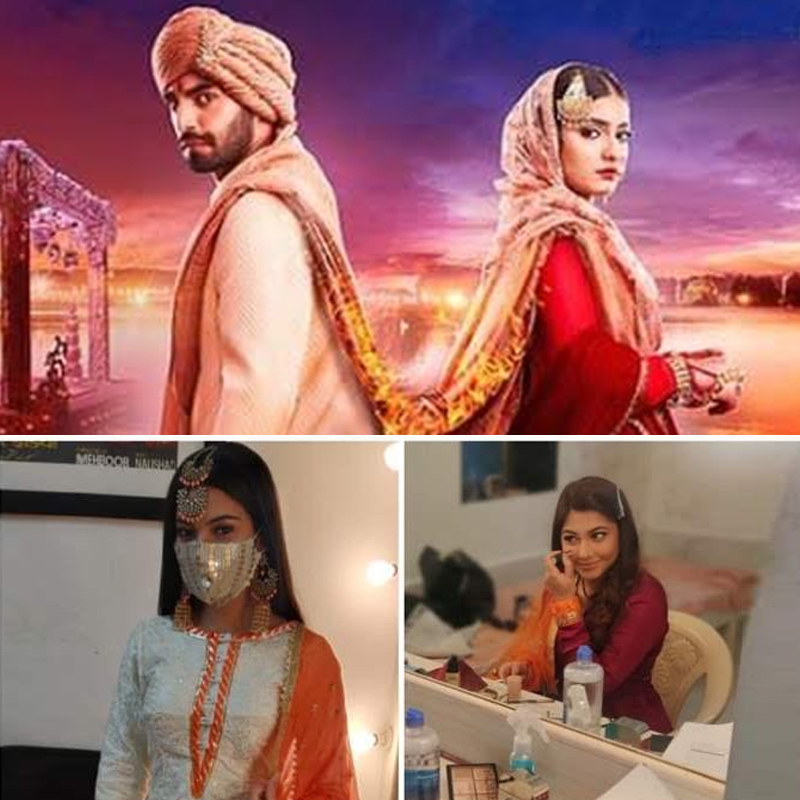
    Actors highlight that they prefer to do their own makeup. Malkani shares that earlier, each actor used to have a separate hair and makeup artist but now there are only two makeup artists available on set. They just supervise the actors and if there is any mistake, they sanitise their hand and follow all the guidelines before fixing it.

    While most of the actors are getting scripts digitally to avoid any contact through papers Chaphekar points out that she gets her script on the set itself. She adds, “We get our scripts in our rooms when we arrive. So straight away, I spray my script with a sanitizer and keep it aside for a bit. After that, I read it out and prepare all my lines. Furthermore, I do not carry it to the set, so it is always safe to touch.” However, the actors are not allowed to share their mobile phones.

    Despite all the changes, the only thing that has remained constant is the shift timings which stays from 7 am to 7 pm.
     

  • TV show production efficiency impacted by Covid2019: Swastik Productions’ Rahul Kumar Tewary

    TV show production efficiency impacted by Covid2019: Swastik Productions’ Rahul Kumar Tewary

    MUMBAI: A month since TV production resumed, the ride has been bumpy. With sets rigorously sanitised, makeup and hair artists wearing PPE kits, it’s still better than no shoots at all. Swastik Productions producer Rahul Kumar Tewary says that it took a lot of planning to resume shooting.

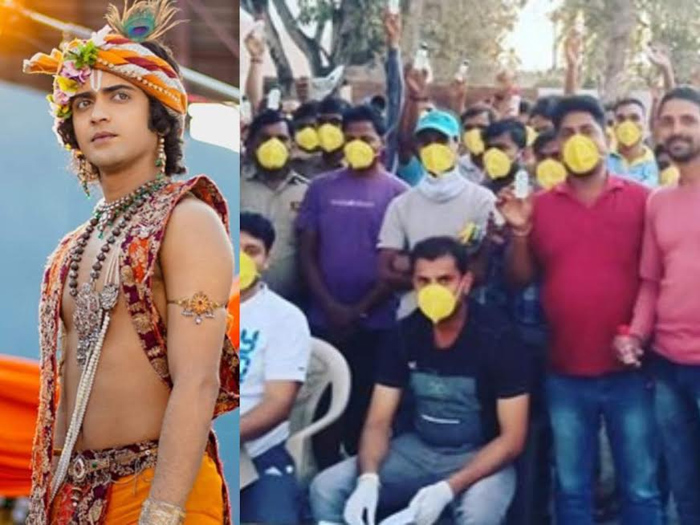
    “Before beginning the shoot, the cast and crew members of Devi Aadi Parashakti and RadhaKrishn reached Umbergaon, Gujarat, on 8 and 10 June where they were quarantined. There was regular check-up conducted within premises. The labours and crew members are living at the studio itself while artists are living at nearby apartments,” he shares.

    He highlights that the production has created a Covid2019 team that looks after sanitisation and fumigation of the entire set and the places where technicians, crew and artists are living. He clarifies that while shooting there is no contact from the outside world. There are multiple checkpoints on the set to ensure safety and security of people.

    To maintain the grandeur and bring larger-than-life feel in the episodes, Tewary is relying more on VFX than having real people on the set.

    Tewary elaborates, “It is a very difficult ride, the whole production planning, writing of episodes, consumes a lot of time. We are also focusing a lot on the VFX side to showcase more people in the story or a crowd scene. The script is written in a way that no body contact is involved. Massive sets are also avoided. So, all the departments, from the writers to creators, production, execution and technicians, are extremely careful.”

    The production house is using two camera setups and for proper lighting, the DOP is responsible for creating the entire set-up a day or a night prior to save time. Post that only actors are available for the shot sans technicians and camerapersons. This move is to ensure that at any given time there are a smaller number of people available on the set. However, this is making it difficult to get episodes out in time. The production efficiency has been compromised due to the SOP measures.

    Apart from that Tewary praises broadcasters for their constant support and encouragement. He says, “Broadcasters have been hugely impacted by this pandemic. The broadcasters worked hand in hand with producers to ensure we create a bank of episodes.”

    He adds that as the shows are on air, banks are the main thing that will drive momentum on the floor. Every show will initially have the capsule of kahani ab tak to engage audiences.

    The 12-hour shift timing remains the same as it was before the Covid2019. The studio also uses various tools to transmit data.

    Tewary notes that during the pandemic, digital mediums have gained traction. But, he says that the market audience for television and digital are completely different. Both the mediums may overlap to a certain extent, but in the end these are two different market segments. “I believe the digital is growing, but TV will also remain the same. I don’t think there will be too much of an impact on TV programming. There is a certain age group of consumers for the digital content; there is a trend that the youth of India is moving towards the digital side,” he shares.

    He is optimistic that as new content has started airing, TV audiences will be once again glued to the small screen.

  • Without grandeur, audiences will focus on the storyline: Full House Films’ Amir Jaffer

    Without grandeur, audiences will focus on the storyline: Full House Films’ Amir Jaffer

    MUMBAI: It has been close to one month since the state government allowed film and television shooting in Maharashtra. This was a sigh of relief to several new shows that were left in the lurch due to the lockdown including Zee TV’s Qurbaan Hua, which had just started on 25 February. 

    In a special chat with indiantelevision.com, Full House Films founder and Tujhse Hai Raabta, Qurbaan Hua producer Amir Jaffer says, “We are implementing the guidelines laid by the state government and TV channels. We have insured everybody on the set against Covid2019. Everybody is working with face masks and face shields. Apart from that, make up artists and camerapersons are using PPE kits. As a smaller number of people are allowed on the set, we are planning our shooting on that basis. To showcase a greater number of people in the scene we are using separate footages and cuts of people.”

    To maintain social distancing and safety Jaffer is ensuring cast and crew members are carrying their own meal while only tea is served on the set. Food cost is being incurred by the production house itself. The studio is currently working with 60 members and no junior artists are called on the set.

    For Jaffer the biggest concern is to safeguard the health of cast and crew. As a practice, the studio is recording the temperature of cast and crew when they arrive and after the pack up.

    He also mentions that outdoor shoots are not happening currently, as it will require permission from district collectors and state authorities. The scenes are being shot with different camera angles. Family gathering, weddings and crowd scenes are not happening at all.

    Jaffer thinks that the look of the show will be compromised because there will be no grandeur. Special episodes of parties, weddings and dancing used to garner more traction which is not possible now. The stories are designed only considering the main actors. However, it will allow audiences to concentrate more on the storyline.  

    He also points out that there is no lag in the output of shows. Time-consuming scenes are avoided to meet the deadline. “We are also incorporating pandemic situations in our scripts. We also did a lockdown show with our actors. Everybody did the shooting by themselves in their own home.”

    Meanwhile, Jaffer has reopened his office with just four to five people.  Instead of calling people at the office for auditions, the casting is happening online.

    The working hour shift remains the same. Considering the curfew rule in Maharashtra, shift timings are 7 am to 7 pm so that cast and crew members can reach home before 9 pm. A 12-hour shift for the production unit and actors are called on the set only when required.

  • Film, TV, digital series shoots to begin in Madhya Pradesh

    Film, TV, digital series shoots to begin in Madhya Pradesh

    MUMBAI: Film, television and digital series shooting can resume in Madhya Pradesh after complying with measures in place to contain the coronavirus outbreak, said an advisory from the state's tourism board. The board's additional managing director Sonia Meena said a set of rules has been prepared for the resumption of shoots as per guidelines laid down by the state and CENTRE. Meena said several filmmakers had approached the board seeking permission for shooting, which can now start after they adhere to the advisory issued by the Film Facilitation Cell of MP Tourism Board.

    The guidelines lay down that only 15 crew members can be involved in indoor shooting, and 30 for outdoor ones, while equipment will need to be sanitised daily. Meena said the shooting crew will need to submit health declarations in a prescribed form and would need to vacate the location in case someone is detected with Covid2019.

    Crowding at the shoot locations will not be allowed, she further added. Sanitiser, hand-washing, masks, thermal scanner etc should be in place during shoots. Meanwhile, an official said shooting of about 25 digital series, films, serials, music videos is likely to start soon in different locations of Bhopal, Gwalior, Maheshwar, Orchha, Ujjain, Madhai (Hoshangabad), Khajuraho, Panna, Jabalpur and Indore.

    They include Tamil, Telugu and Bengali films and at least five digital series.