Tag: production houses

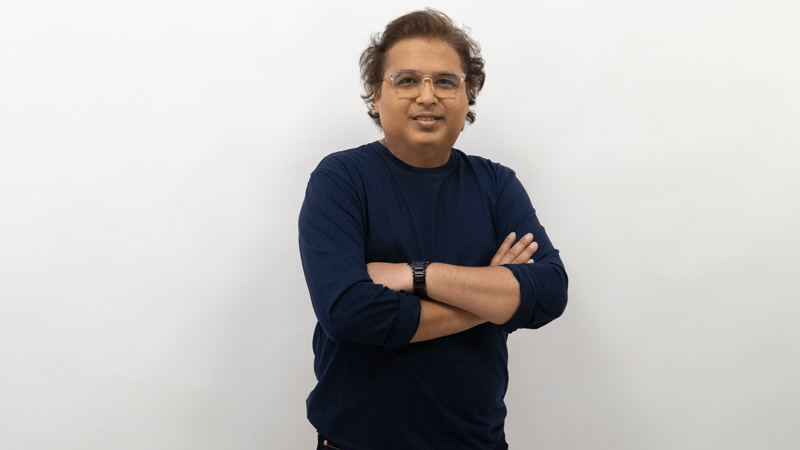
  • “VisualDub has been built in India by NeuralGarage using its own original research”: Mandar Natekar

    “VisualDub has been built in India by NeuralGarage using its own original research”: Mandar Natekar

    Mumbai: NeuralGarage is a technology startup in GenAI & is the brainchild of IIT Kanpur alumni Subhabrata Debnath, Subhashish Saha, Anjan Banerjee, and media & entertainment veteran Mandar Natekar. It is one of the few startups from India that is building core tech with original research and developing its own models in the audio-visual domain. The startup’s flagship technology, VisualDub, addresses a significant challenge in dubbed content — the synchronization of visual and audio cues – ensuring a harmonious viewing experience across languages through visual dubbing and lipsync.

    Since its inception in July 2021, NeuralGarage has evolved strategically. After a year dedicated to research and development, and building the technology for commercial use, the company launched VisualDub in May 2023. A successful fundraising round in October 2022 paved the way for building a robust core engineering team, leading to collaborations with more than 10 large global clients.

    Building for the world, the company targets a diverse clients & partner base, including film studios, directors, production houses, advertising agencies, OTT players, broadcast networks, and media entertainment companies. Additionally, the company engages with media outlets covering the AI space, technology, and deep tech, establishing a comprehensive outreach and strategy.

    NeuralGarage has an ambition to take VisualDub to a global audience by refining its go-to-market strategy and securing further rounds of capital to fuel expansion and innovation. The company has received notable recognition, including being ranked No. 2 at ‘Pitch Fest’ during TechSparks’23 and was a part of YourStory’s Tech30 for 2023. Other accolades include NASSCOM Emerge50 (ranked No. 1 in the media category 2023), Amazon AWS ML Elevate 2023 cohort, and NASSCOM GenerativeAI Foundry. Currently, NeuralGarage has a dedicated team of 20 professionals driving its vision and mission forward.

    Indiantelevision.com had the pleasure of conversing with Neural Garage co-founder & CEO Mandar Natekar. In this interview, he offered plenty of valuable insights into the company’s operations and vision.

    Edited excerpts

    On identifying the need for VisualDub in the audio-visual domain

    Consider for a moment that you are watching a Korean film with English audio. Your audio input is English while your visual input remains Korean since the visual spoke expression does not match the audio. VisualDub solves for this visual discord, so now when you watch a Korean film with English audio, you feel as if you are actually watching a film shot in English itself. With localization content becoming the biggest currency for the content creation industry, this problem of Visual Discord is amplified exponentially. VisualDub was built to specifically solve this at scale and make content accessible seamlessly to every single person in the world in a language of their choice and which looks truly native and authentic visually in every language.

    On the technological innovations behind VisualDub that differentiate it from existing solutions in the market

    VisualDub has been built in India by NeuralGarage using its own original research and foundation models and without using third party wrappers. This tech is completely proprietary and is patent filed. It has been built specifically to cater to high impact industries like Films, Streaming, Broadcast Networks and Advertising where preservation of resolution and sync of the original is of paramount important across temporal and spatial movements including background and talent IP. The technology delivers at 2k resolution on pre shot footage without the need to create 3D models or avataars and works across screens of every size from theatrical to mobile phones. This differentiates it completely from any other tech available.

    On the role does original research play in the development of NeuralGarage’s models for VisualDub

    Original research ensures that you are building the tech from a top-down approach, and it’s built with a single focus of specifically meeting the high capability demands of the industries you are building for. Unlike horizontal tech that meets some requirements of many industries with generalized models, VisualDub has been built as vertical SaaS to meet all mandatory requirements of key industries like Films, Streaming Platforms and Advertising. We ensure that we are at the forefront at innovation by staying focused on original research that leads to differentiated tech innovations.

    On considering the diverse applications of VisualDub in the entertainment and content creation industry

    Currently we are offering it as a service to select large customers to ensure that technology is used correctly to deliver the right results and creates a playbook for the industry. Our ultimate goal is to create a desktop version of our VisualDub that can be licensed across both individual and enterprise level solutions depending on the size of the business and the annual contracts. We are currently raising capital to be able to move in the direction.

    On NeuralGarage anticipating VisualDub revolutionizing the content creation landscape and some potential impact you foresee it having on the overall quality of dubbed content across languages

    The biggest problem in dubbed content is the visual discord that makes it unrelatable and unauthentic. Content today is monetized across multiple revenue streams, and this is achieved through dubbing. This opens up massive global geographies for content monetization. With VisualDub, dubbed content as we know it ceases to exist. Now with technology it actually gives studios, streaming platforms to create content in every language without incurring additional production cost! VisualDub will allow you to shoot in one language and recreate it authentically in every language on earth without making it look like dubbed content.

    On your aspirations in terms of market penetration and becoming the go-to solution for audio-visual synchronization in dubbed content

    VisualDub has been made in Bharat for the globe. It solves a very pertinent problem for the entire Entertainment, Media & Content industries across the world and we intend to be the default technology for the post production pipeline across these industries. We are creating a new category “Visual Dubbing” in the post production workflow and VisualDub will define this through original innovation and globally scalable use cases.

  • Planetcast launches content production facility in Mumbai

    Planetcast launches content production facility in Mumbai

    Mumbai: Planetcast Media Services has announced the launch of a content production facility in Mumbai to offer best-in-class content services to the film industry, production houses, and all the media content-intensive industries.

    Planetcast aims to offer services across the media value chain through its Mumbai facility to India, Middle East, and Southeast Asia. Its Mumbai facility is equipped with state-of-the-art infrastructure to offer, post-production, and distribution services to the entire range of content owners, the company said in a statement on Monday.

    The facility has large studios to execute live & recorded shows also include the latest augmented reality facilities, video walls, and presenting sets along with editing suites to ensure timely delivery of content to the end-user. It provides various post-production-related services along with S&P edit to various broadcasters & OTT platforms. Planetcast links and powers the whole media supply chain, from procuring to creating video.

    Planetcast’s VP – business development, Suresh Varghese, said, “Planetcast has a rich experience of over two decades in handling content flow for reputed global and Indian broadcasters. We have poured our experience and legacy into this facility which makes this facility the most experienced center for content-related services in India. Our talented technical staff and experienced editors are capable of delivering broadcast-ready content in a matter of hours after the shoot. We welcome the content owners to experience the superior services of our Mumbai center.”

  • IFTPC urges producers to follow Covid2019 guidelines to check spread

    IFTPC urges producers to follow Covid2019 guidelines to check spread

    MUMBAI: India on Thursday recorded its highest single-day addition of Covid2019 cases in 2021 so far — total cases rose by 35,871, which is the highest daily rise since 6 December 2020. On the other hand Maharashtra, on the same day, reported 25,833 new Covid2019 cases, the hightest one-day spike since last March when the first Sars-Cov-2 infection was detected. Various stakeholders of the Indian entertainment industry have taken measures to prevent the spread of the pandemic.

    In view of the epidemic spread of Covid0919 virus throughout the world, including India, an urgent meeting by IFTPC held on 18 March 2021 had advised all production houses to strictly abide by all the Covid2019 protocols.

    IFTPC CEO Suresh Amin said in a letter addressed to all the producers: “Last year exactly on this date the industry had ceased shootings unilaterally as a precaution against the Covid2019. Today the industry is functioning to near capacity. Unfortunately, fatigue and carelessness has crept into our system rather exponentially which needs to be rectified immediately.”

    He further mentioned that the growing cases recently are not only worrisome, but have pushed the state government on the back foot and there is talk in the administration to take some drastic measures to hold back the spread of the virus. Amin feared that the media and entertainment industry will be the first target.

    To thwart the possibility of a crackdown, IFTPC at a producers meeting held yesterday has decided to start a special drive to implement the government guidelines with renewed vigour. It is advised that all the producers should personally visit their sets and ensure that SOPs are implemented meticulously.

    Below are the guidelines:

    a.       Please avoid outdoor shoots immediately

    b.       Restrict the number of junior artists and avoid shooting scenes requiring large crowds.

    c.       Do not fall to pressures of the creative team to include extravagant scenes

    d.       Producer shall visit the sets personally in the next two days and send photographs of the set to IFTPC

    e.       Follow the SOP meticulously without making any exceptions

    f.        Ensure that all crew members are insured as directed earlier.

    g.       Restrict the crew size to 33 per cent as prevailing in July 2020.

    Amin shared, “Today we are at the September 2020 situation and the wrath of the virus continues. We urge you to kindly ensure the implementation of the above in right earnest and oblige.”

  • Entertainment production to stay on hiatus until mid-January: SAG-AFTRA

    Entertainment production to stay on hiatus until mid-January: SAG-AFTRA

    MUMBAI: SAG-AFTRA leaders have informed their members that most entertainment production houses will remain on hiatus through at least the middle of January. The details come a day after the Los Angeles County Department of Public Health requested the film and TV industry to consider pausing production for a few weeks during the ongoing surge in new Covid2019 cases throughout the county.

    SAG-AFTRA president Gabrielle Carteris and national executive director David White said, “We are closely monitoring the recent surge in Covid2019 infections along with the reported lack of intensive care unit beds throughout the state of California and particularly in Los Angeles County. This is deeply concerning to us all and we have taken immediate action to connect with our epidemiologists and public health experts regarding the surge in cities across the nation.”

    Production of films and TV shows will stay on hiatus until the second or third week of January if not later. This means that the number of its member performers working on sets right now will be reduced. They stressed adherence to safety protocols to ensure appropriate precautions for the holiday hiatus period, including additional time for testing prior to the resumption of production.

    “To ensure the utmost safety, we are in close contact with our sister unions and guilds, the industry, our expert epidemiologists, industrial sanitation specialists, public health officials, member leaders and staff. We remain focused on ensuring the safest possible work environment and protocols for SAG-AFTRA members,” Carteris and White stated.

    They added that SAG-AFTRA will continue to monitor the situation and its impact on production and employment in all contract areas, and take appropriate measures as needed to ensure the continued safety of members and others.

    In the meantime, studios have been urged to remain vigilant and adhere to the safety principles to protect themselves, their families, communities and colleagues.

  • Top TV producers weigh in on OTT challenge, formats & IP rights

    Top TV producers weigh in on OTT challenge, formats & IP rights

    MUMBAI: Content creators today cannot rely on daily soaps to attract viewers. With OTT looming large, production houses have to broaden their content nexus. Indiantelevision.com’s The Content Hub hosted a session – ‘The TV production Story: Reality, Non-fiction’, with the panellists Contiloe Pictures producer and founder Abhimanyu Singh, Endemol Shine CEO Abhishek Rege, SOL India – Banijay Group founder and MD Fazila Allana. The session was moderated by Bodhitree Multimedia co-founder and director Mautik Tolia

    The panel discussed the hot topic of IP rights, whether it should be given to the broadcaster or kept with the creator. To this, Singh said that it is valuable for every production house to hold its IP rights, where one can syndicate and get certain revenues on a recurring basis. "If the ecosystem thinks of it then I think the law needs to protect creators just as the musicians are protected," he said and Allana agreed with him.

    Rege said that retaining IPs means financial risks for the producer. He further explained, "If we have commissioned a show in Hindi, why would you have the IP of all the languages go with the network? But while we think all this to happen, are we ready to take all the risk?”

    Discussion on the potential of content, Rege said that scripted shows are platform-agnostic. He said that the challenge here is making attractive content for the viewers and targeting the right TG. "With OTT, I don’t think it’s easy to do as many talents shows that we do on linear," he added.

    The new tariff order will bring about a change in content creation, according to Rege. With customers choosing individual channels, broadcasters need unique content to attract people. “This fight is based on non-scripted or premium scripted property," he said.  

    Allana said that non-fiction producers have a bigger challenge as opposed to fiction producers because there has been a saturation of ideas. But she added that non-fiction content is going to evolve in the OTT platform but the future belongs to scripted shows. “On OTT there will be a lot of social experimentation as well as lifestyle programming.  Earlier we all used to chase formats now we chase stories,” she said.

    The deluge of daily content has thwarted premium content from growing. Rege said, "In creating premium content, you will have to spend time in writing. Apart from that, as far as production is concerned, you will have to have the discipline of pre-producing the series and this doesn’t exist on our television. The whole ecosystem needs to move in this direction." 

  • Bengali TV industry witnesses an uptick

    Bengali TV industry witnesses an uptick

    MUMBAI: West Bengal has been one of the strong bastions of the film and TV industry in India. While fears of the regional industry facing tough financial times are not unfounded, Bengal’s TV industry is well and truly in the black despite the speculation that viewership of TV shows is dipping.

    Both local and national names have set themselves up in the state. Viewership allows them to rake in the moolah to survive. Moreover, top brands and advertisers choose regional TV channels to reach particular audiences.

    Bengali dramas aren’t immune to the age-old mix of shows and the saas bahu sagas reign even today. Despite content experimentation, soap operas continue to thrive because of their ability to pull viewers and, in turn, advertising revenue.

    For instance, many shows such as Bhutu, Icchenodi started with the promise of different content but soon kitchen politics took centre stage. A popular show, Ganer Opare, also succumbed to family politics despite being committed to the main idea. The dramatic element can be termed as a necessary evil as they can bring in good viewership that channels desperately need. If producers don’t agree to change the story’s plot, there are several instances of being moved to a different time slot. 

    Giving a tough fight to family dramas, however, is the highly popular Kusum Dola, Rasmoni, a periodic drama and Saat Bhai Chompa, a fantasy drama, topping many viewership charts. A Bengali show named Taranath Trantrik has even been dubbed for an Odia channel.

    Other than dubbing, many Bengali shows are being remade in several languages. “Almost 8 of our shows are being remade in different languages.  Star Plus next big launch “Kulfi Kumar Baajewala is a remake of one of our path breaking show on Star Jalsha “Patol Kumar Gaanwala”, SVF Entertainment’s director and co founder Mahendra Soni commented when he was asked about Bengali content’s potential to be marketed to other regions. 

    The Bengal entertainment industry has a large number of production houses. The big production houses are SVF, Magic Moments Motion Pictures, Surinder Films and Raj Chakraborty Production House which invest for both films and television shows. SVF invests 2.5 lakh per episode for a daily soap from the house. ” We have done shows at as high as 4 lakh per episode too. In fact our last limited series “Mahanayak” was costlier,” Mahendra Soni said.

    However, few players have a good control over the industry. The medium level and small production houses are not able to compete with the biggies and sometimes the big production houses buy a slot for whole year.

    Over the top (OTT) has taken hold of people’s imaginations in West Bengal as well. Everyone is trying to catch the young audience by investing in web-series. In a short time, Hoichoi, and Addatimes have gained a good amount of popularity. New shows are constantly on the launch. Many theatre groups are starting to enter the OTT industry with their own content.

    With the ongoing changes in the entertainment industry, regional players are also embracing new technology and new media content. The TV industry in Bengal, despite facing a potential threat from OTT platforms, has gained viewership in spite of all the odds.

    Also Read :

    Regional to be at the forefront of content

    COLORS Bangla launches new period drama ‘Prothom Protisruti’

  • DD favours big production houses, lament N-E producers; seek sops

    DD favours big production houses, lament N-E producers; seek sops

    MUMBAI: The Producers’ Council, a north-eastern states association of the empanelled private producers of Doordarshan, has accused  Doordarshan of uploading on its website two controversial notifications that could spell disaster for the local programme producers.

    The association lamented that the notifications, that were biased against programme producers of the region, had been planned to benefit big production houses of Mumbai and Delhi, the Assam Tribune reported.

    In a communique released to the press in Guwahati, the council alleged that the first of the two DD notifications announces a fresh set of guidelines for commissioned programmes for telecast on North East DD-channels in which it was mentioned that only half of the programmes made in this category would be reserved for the residents o the North-Eastern states. The organisation mentioned that there were previous attempts to work in the interests of the so-called big production houses, and has demanded that the previously agreed formula of reserving 75 per cent programmes for producers of the North East should be retained.

    As reported by indiantelevision.com earlier, though DD Doordarshan mentioned in its notifications that it would adopt a communication strategy that would attract viewership through a content mix which would be sensitive to the aspirations of the local population, the association maintained, it would not be possible to ensure this if producers from outside the region are assigned programmes.

    Doordarshan had also hiked the non-refundable processing fees payable by producers by a whopping 500 per cent from Rs 5,000 to Rs 25,000. Since Doordarshan’s operations in the North East were part of its social commitment and are specially funded by the Government of India, the council reasoned, that processing fees payable by producers of the North East should be unchanged.

    It said that it had no objection if producers from outside the region were charged at the enhanced rate.

    The association also mentioned of the DD notification inviting proposals for its upcoming 24×7 satellite channel DD-Arunprabha in the Commissioned Programmes Category.

    DD-Arunprabha had been operating from DDK, Itanagar, and DD claimed the channel would attract young people of NE with contemporary entertainment shows embedded with informative content.

    However, the programme content, the council claimed, would be affected if producers were not provided reasonable time to conceive and formulate the same, stating that producers had been provided only 20 days to formulate programmes and dispatch them by mail to reach Delhi by 17 January, 2017.

    As reported by indiantelevision.com earlier, proposals had been invited for subjects as myriad as thrillers, mythological serials, daily soap operas, telefilms, quiz shows and travelogues either in English or in Hindi with preference being given to programmes based on themes and subjects relevant to the region. The council has sought that the local producers should be given at least a month additional time and that the last date be extended up to 28 February, 2017.

    Also Read:

    DD Arunprabha invites proposals in seven categories

    Rs 100 million added to DD & N-E regional units’ allocation

    DD catering to N-E states’ language & culture


  • DD favours big production houses, lament N-E producers; seek sops

    DD favours big production houses, lament N-E producers; seek sops

    MUMBAI: The Producers’ Council, a north-eastern states association of the empanelled private producers of Doordarshan, has accused  Doordarshan of uploading on its website two controversial notifications that could spell disaster for the local programme producers.

    The association lamented that the notifications, that were biased against programme producers of the region, had been planned to benefit big production houses of Mumbai and Delhi, the Assam Tribune reported.

    In a communique released to the press in Guwahati, the council alleged that the first of the two DD notifications announces a fresh set of guidelines for commissioned programmes for telecast on North East DD-channels in which it was mentioned that only half of the programmes made in this category would be reserved for the residents o the North-Eastern states. The organisation mentioned that there were previous attempts to work in the interests of the so-called big production houses, and has demanded that the previously agreed formula of reserving 75 per cent programmes for producers of the North East should be retained.

    As reported by indiantelevision.com earlier, though DD Doordarshan mentioned in its notifications that it would adopt a communication strategy that would attract viewership through a content mix which would be sensitive to the aspirations of the local population, the association maintained, it would not be possible to ensure this if producers from outside the region are assigned programmes.

    Doordarshan had also hiked the non-refundable processing fees payable by producers by a whopping 500 per cent from Rs 5,000 to Rs 25,000. Since Doordarshan’s operations in the North East were part of its social commitment and are specially funded by the Government of India, the council reasoned, that processing fees payable by producers of the North East should be unchanged.

    It said that it had no objection if producers from outside the region were charged at the enhanced rate.

    The association also mentioned of the DD notification inviting proposals for its upcoming 24×7 satellite channel DD-Arunprabha in the Commissioned Programmes Category.

    DD-Arunprabha had been operating from DDK, Itanagar, and DD claimed the channel would attract young people of NE with contemporary entertainment shows embedded with informative content.

    However, the programme content, the council claimed, would be affected if producers were not provided reasonable time to conceive and formulate the same, stating that producers had been provided only 20 days to formulate programmes and dispatch them by mail to reach Delhi by 17 January, 2017.

    As reported by indiantelevision.com earlier, proposals had been invited for subjects as myriad as thrillers, mythological serials, daily soap operas, telefilms, quiz shows and travelogues either in English or in Hindi with preference being given to programmes based on themes and subjects relevant to the region. The council has sought that the local producers should be given at least a month additional time and that the last date be extended up to 28 February, 2017.

    Also Read:

    DD Arunprabha invites proposals in seven categories

    Rs 100 million added to DD & N-E regional units’ allocation

    DD catering to N-E states’ language & culture