Tag: Product

  • Why AAP Lost Delhi & Why BJP gained it: A Marketing Analysis

    Why AAP Lost Delhi & Why BJP gained it: A Marketing Analysis

    MUMBAI: The BJP’s victory over AAP in Delhi can be examined through key marketing principles – product lifecycle, distribution strategy, and competitive positioning.

    Product Failure:
    * AAP as a ‘product’ failed to deliver on its core promises
    * The brand reached the end of its lifecycle without significant evolution
    * Core issues like pollution, garbage management and infrastructure remained unresolved
    * The product (AAP leadership) faced credibility issues with leaders facing legal challenges

    Distribution Strategy:
    * BJP outperformed in distribution through: 
    o RSS volunteers conducting extensive door-to-door campaigns
    o Thousands of drawing-room meetings across demographics
    o Strong presence in traditional AAP strongholds including slums and unauthorised colonies
    o Superior ground-level connect with voters

    Competitive Positioning:
    * BJP successfully countered AAP’s ‘freebie’ positioning by: 
    o Offering higher monetary benefits (Rs 2,500 vs AAP’s Rs 2,100 for women)
    o Matching and exceeding welfare schemes
    o Promising continuation of existing benefits while adding new ones
    o Building a stronger narrative around development and governance

    Brand Messaging:
    * BJP controlled the narrative effectively through: 
    o Consistent messaging on AAP’s unfulfilled promises
    o Focus on corruption allegations
    o Strong leadership projection
    o Clear communication of enhanced welfare measures

    Marketing Lessons for AAP:
    * Need for product reinvention and clear deliverable promises
    * Importance of maintaining brand credibility
    * Necessity of strong distribution network
    * Requirement for effective counter-narrative
    * Focus on tangible achievements rather than just promises

    The defeat highlights that tactical promotional offers (freebies) work only until a competitor provides better alternatives, emphasising the need for sustainable competitive advantages in political marketing.

    [Based on insights from Jayshree Sundar, author of “Don’t Forget 2004” and Meenakshi Menon, advertising veteran]
     

  • Prasidha Menon elevated to APAC brand, product,  communications  head  at Airbnb

    Prasidha Menon elevated to APAC brand, product, communications head at Airbnb

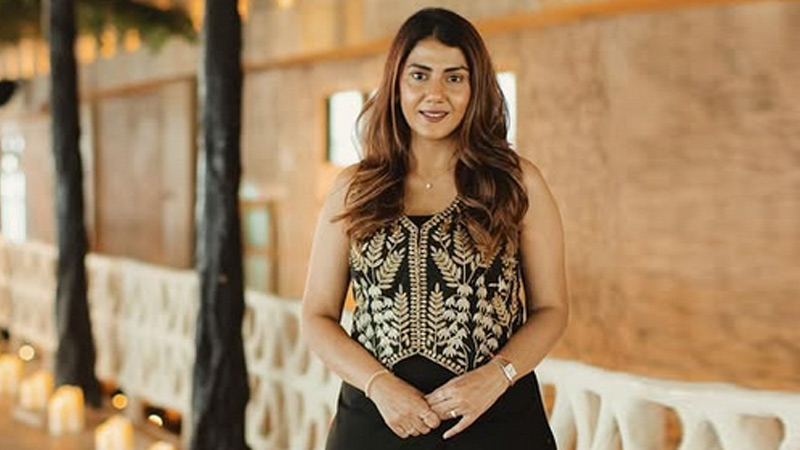
    MUMBAI: Her’s has been a 20 year  plus journey. Prasidha Menon began her career as a graduate trainee with HRD Coonsultants In Kolkata. She quietly worked there for a little over two years. Little did she imagine at that stage she would be leading brand, product communications for the Asia Pacific regions for one of the top global home sharing brand  platforms– Airbnb.

    Prasidha accepted her promotion from her position as regional head of communications for Airbnb for India & south east Asia  gleefully.  

    Said she: “It’s an absolute honour and privilege to step into this regional leadership position at a time when Asia Pacific is uniquely positioned to drive Airbnb’s growth and expansion globally, and I am excited to play an integral role in this journey.”

    Prior to Airbnb, Prasidha had a year log stay at Optum as director & head, brand, marketing & communications. Oyo Hotels was another stop for a couple of years vice-president & global head of communications, which was preceded by a short stint at Uber India where her last appointment was as head of communications -India and south Asia. 

    Her first exposure to communications was at Positive Communications for a year, which was followed by editorial jobs at two firms where she honed her writing and subbing skills. She then moved into Genesis Burson -Marsteller, following which she spent four years at Edelman in India, and in the Bay area.


  • Xiaomi unveils latest 360° CGI Home Security Camera 2K

    Xiaomi unveils latest 360° CGI Home Security Camera 2K

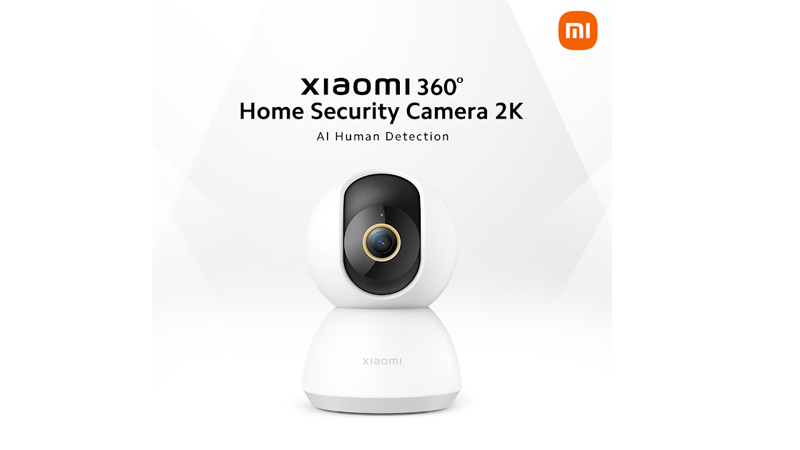
    Mumbai: The emergence of computer generated imagery (CGI) technology has transcended brands to devise disruptive campaigns with immersive experiences. Xiaomi has embarked on this CGI journey with its recently launched Xiaomi 360° Home Security Camera 2K.

    The brand has been pushing the boundaries of innovation, and their latest CGI campaign showcases cutting-edge features of the product while exploring new dimensions in the realm of social media marketing.


    A post shared by Xiaomi India (@xiaomiindia)


    Embarking on an imaginative journey, the campaign transforms the Xiaomi 360° Home Security Camera 2K into a dynamic and whimsical character—a life-size CGI camera meandering through the lively streets of Mumbai. The CGI camera takes on a persona of its own, complimenting oblivious citizens with a charming nod to the remarkable features of the Xiaomi 360° Home Security Camera 2K. As it whimsically engages with its surroundings, the campaign artfully spotlights standout features such as AI human detection.

    Adding an element of surprise and entertainment, the streets come alive with the resonating sound of conversations facilitated by the two-way audio feature. The CGI camera engages in lighthearted banter, bringing interactivity to the concept of surveillance. The high-resolution video captures crystal-clear footage, ensuring every detail is vividly portrayed for enhanced security. With 360° panorama view capabilities, the camera eradicates blind spots, offering unparalleled security coverage. 
     

  • realme is all set to ‘Make it real’ with its revamped strategy

    realme is all set to ‘Make it real’ with its revamped strategy

    Mumbai: realme smartphone service provider announced their new slogan ‘Make it real’ in an open letter, Sky Li, Founder and CEO of realme, emphasised that this year will redefine realme’s brand standards. The letter highlights realme’s new mission, brand positioning, and spirit. Transitioning from an “opportunity-oriented” to a “brand-oriented” approach, realme is shifting its focus towards becoming a tech brand that resonates with young users.

    A tech brand that better understands young users

    Since its inception, realme has established its position with development strategy: to bring technologies and designs to young users worldwide. The brand aims to connect with more young users across various markets, leveraging its recognition among this demographic to elevate its standards even higher.

    Building on five years of success, realme is broadening its scope rather than changing direction. Leveraging its deep understanding of young users and steering the company’s development, realme is transitioning its strategy from trendy-based to a more inclusive and expansive one. This will steer its long-term investment and growth, enabling the brand to enhance its connection with a larger number of young users across various markets and global regions.

    As such, realme’s mission is to more concisely capture its future development aspirations: “To let young users around the world enjoy tech experiences that exceed expectations.” With increased focus and ambition, realme is poised to explore new possibilities and make breakthroughs.

    From “opportunity-oriented” to “brand-oriented”

    realme places the youth at its core and adheres to a user-centric approach, driving its competitiveness in three areas: product, technology, and brand strengths. This ideology will guide realme towards achieving long-term, high-quality growth.

    By planning to partner with over 30 leading tech companies and investing heavily in R&D in 2024, realme aims to bring the latest technology to its users. The brand aims to refine its customer insight process for a more dynamic experience. Focusing on the younger generation, realme will integrate user insights into ongoing brand and product development, creating a fluid and multi-dimensional brand experience.

    realme’s focus on product, technology, and brand strengths allows the brand to bring the latest technological advances directly to young users. This approach transforms its positioning as a tech brand that better understands young users from an idea into reality.

    Moreover, realme has also introduced a new slogan: “Make it real” that retains the spirit of “Dare to Leap” while placing greater emphasis on young users, aiming to bring real, clear, and tangible benefits to their lives.  

    As it moves into the next five years, realme pledges to stay true to its original intentions and grow alongside young people, aiming to be a tech brand that better understands their needs and aspirations to make it real

    For more information, please visit www.realme.com/in/  

  • Nissan India names Mohan Wilson as the new director of marketing

    Nissan India names Mohan Wilson as the new director of marketing

    Mumbai: Nissan India has appointed Mohan Wilson as director marketing, product & customer experience, for business transformation for the India market. Mohan Wilson replaces Sriram Padmanabhan and has taken over the position effective 1 July 2022.

    Sriram Padmanabhan, who has overseen the successful launch of the Nissan Magnite in India as director marketing, product & customer experience has been appointed director marketing, product & customer experience for Nissan Motor Australia, the company announced. In this newly created role, Padmanabhan will report to Adam Paterson, managing director Nissan Australia and will be based in Australia.

    Wilson has worked across geographies in Japan, HongKong, Germany and India with cross functional experience of over 20 years in sales and marketing with expertise in areas of brand building, marcom, product marketing, customer experience, corporate strategy and data driven marketing. Prior to this, Wilson was head of global marketing planning at Nissan Motor Corporation’s premium car brand INFINITI at Global HQ in Japan and was a part of new model launch introductions for INFINITI globally with all-new QX60 & QX55.  

    Mohan Wilson in his role will report to Nissan Motor India managing director Rakesh Srivastava, and will be based in Chennai. He will focus on the transformation of the business on future product strategy for India, build a strong brand with a focus on customer experience and will leverage his experience gained at Nissan Motor Corporation’s Global HQ office in Yokohama, Japan.

    On this announcement, Srivastava commented, “Sriram has been an asset for Nissan India with a strong contribution towards the successful launch of big, bold, beautiful Nissan Magnite under Nissan Next with Nissan Magnite generating a tremendous customer response with over one lakh bookings and receipt of the Global Nissan President’s Award. We welcome Mohan Wilson to Nissan Motor India, his global exposure on premium cars would be key to build the Nissan brand with focus on customer experience on Nissan NEXT transformation.“

  • HT Labs is a hub for all product, tech, and thought leadership: Avinash Mudaliar

    HT Labs is a hub for all product, tech, and thought leadership: Avinash Mudaliar

    Mumbai: Launched in April 2020, HT Media’s innovation hub for digital-first products – HT Labs has built a diverse portfolio of products spanning edtech (HT School), fintech (MintGenie), OTT (OTTplay), food (Slurrp), and digital publishing (Upublish) in the B2B and B2C domains in just 18 months.

    While OTTplay is a content discovery and recommendation platform that aggregates information from over 50 OTT platforms in Indian and Asia, HT Schools, with its focus on holistic learning and development, has nearly 40-45 courses in collaboration with well-known names such as Shaan and Sabrina Merchant among others.

    Digital Publishing platform Upublish, though catering to independent writers and journalists as well, is largely a B2B product targeting small and medium publishers. MintGenie is a fintech app intended as a ‘learn, earn, and grow ecosystem’ for those with little or no knowledge of investing.


    HT Labs is led by publishing industry veteran Avinash Mudaliar who is the company’s co-founder and CEO. He likes to describe it as “a start-up hub where all product, tech, and thought leadership happens.” His team comprises over 150 professionals across technology, product, design, content, and editorial. Earlier this month HT Labs launched its fifth brand Slurrp in the food space under Mudaliar’s leadership.

    How Slurrp was founded

    Slurrp, with its over three lakh recipes, was born out of the problem that there are a lot of recipes out there but it becomes very difficult to narrow down on that which fits one’s choice of cuisine, health consideration, regional choices, ingredient preferences, and allergy considerations, all at the same time.

    “During last year’s lockdowns the number of searches on things as elementary as “how to cook rice in a microwave or how to store vegetables” skyrocketed as people staying home became wary of ordering food online. The struggle to figure out these basics was compounded by the fact that there was no one place to find all related information. That’s when HT Labs decided to solve this problem using AI and launched India’s first recommendation engine for recipes – Slurrp,” shares Mudaliar.

    Slurrp’s TG includes all those who ‘live to eat’ and ‘eat to live,’ and therefore, it effectively serves the needs of all interested users across levels of proficiency in cooking. The app is currently being monetised through affiliate shopping models, sponsorships and ads.

    The recipe – just the right mix of content and technology

    Mudaliar tells us that Slurrp was launched with an equal focus on content and tech wherein apart from collating new and age-old recipes at one place the intent was to build conversations and stories around food. The app takes users on culinary trails charting the history of the most familiar as well as the most exotic of their favourite food and beverages.

    There are plans to launch a community feature in the next couple of weeks to provide a platform for chefs, influencers, and enthusiasts to exchange ideas. “Because not all information is documented, and a lot of hacks and interesting trivia – the grandmothers’ secrets – come out only during conversations, this information can later be integrated into the mother app and recipes or conversations with the end-users with the help of AI,” he says.

    More features in the offing include an AI-based personal assistant to take people through their cooking journey, enhanced filters, language personalisation, and voice recipes. At present, the app has only textual and video recipes in English.

    Some of the uniquely interesting filters that Mudaliar’s team is exploring include those around food combinations and mood-based recipes. “Food and music consumption are very similar in the sense that mood plays a very important role in how a person eats. We are exploring ways to offer personalised recommendations to satisfy these not-easily-definable features,” he states.

    Mudaliar’s most important consideration while designing the app was to solve for the barrier of entry by keeping the interface simple. “We didn’t want to change user behaviour or break any paradigms, so we incorporated features such as ‘swipe left, swipe right’ that most people are used to, and further simplified on that. The idea is to make users comfortable, enhance their cooking experience and get them to spend more time on the app by offering easy access to content,” he remarks.

  • CarDekho empowers Product and Tech leadership teams

    CarDekho empowers Product and Tech leadership teams

    MUMBAI:  The CarDekho Group has fortified its leadership team through five engineering and product leadership appointments at their Gurgaon office.

    Sandeep Singh and Mayank Kapoor joined as vice presidents – Engineering, Manjeet Dahiya is vice president – Artificial Intelligence, Machine Learning and Data Sciences, Dharmesh Gandhi joined as vice president – Products, and Aditya Kumar as vice president – Product Strategy and Analytics. They will all report directly to CarDekho Group’s chief product & technology officer, Vivek Srivastava.

    On the new appointments, CarDekho Group chief product & technology officer Vivek Srivastava said, “Customer delight and innovation are at the core of CarDekho. We are aggressively strengthening our product and tech teams to build world class technology products. We are strategically getting the right talent to achieve our vision of CarDekho. We welcome Sandeep Singh, Mayank Kapoor, Manjeet Dahiya, Dharmesh Gandhi, and Aditya Kumar to the CarDekho group.  Their experience and ability in anticipating market dynamics to create new products and segments will help us drive innovation at a higher velocity.”

    Sandeep Singh has 14 years of experience in building deep technology and highly scalable products. He possesses a unique combination of technical, business and analytical skills and has a rich experience of working in technology companies where he has built products from scratch. In the past, he has led products, grown teams and scaled up user base by hundreds of millions of users. Earlier, he was with Walmart Global Tech as director of Engineering in San Francisco. Sandeep is also a former entrepreneur and has also worked with Yahoo, AT&T and is an IIT Kanpur alumnus.

    Mayank Kapoor has more than a decade long experience in building and managing technology products. An engineering graduate from IIT Delhi and an MBA holder from MIT Sloan, Mayank has worked with Reliance Jio as VP, Engineering, where he led Cloud Consumer Products, Services and Cloud Platform. He has also worked at Apple, Amazon and Alstom Power. Mayank is highly experienced in engineering leadership, business expansion and project execution. He has developed large-scale products that are used by millions of people across the globe.

    With over 14 years of experience, Manjeet Dahiya is an expert in Artificial Intelligence, Machine Learning and Data Sciences. Before joining CarDekho he was the Head of Data Science and Machine Learning at Airtel Digital. Manjeet is skilled in studying data and deriving qualitative results from it that can help in forming result-oriented strategies by the company. Manjeet is a PhD in Computer Science from IIT Delhi and BTech from IIT Kanpur.

    Dharmesh Gandhi has over 16 years of experience in product management, marketing and engineering roles for e-commerce, digital advertising, video and smartphone products. Dharmesh has previously worked in product leadership roles at Rentomojo, Uber, Amazon and Cisco, where he took products from concept to market, covering aspects of monetization, product design, customer development and marketing. Dharmesh is an IIM Bangalore and IIT Kanpur alumnus.

    An IIM Ahmedabad and IIT Kanpur alumnus, Aditya Kumar has 13 years of experience in business strategy, data strategy, and operations strategy. Aditya was a co-founder of CliffJumper Technologies where he built a proximity marketing and sales platform for SMBs. He specializes in conducting research and building strategy with a data-led approach. Aditya has also worked with Gartner, IDG Ventures and A.T. Kearney.

  • Why OTT platforms focus on user feedback

    Why OTT platforms focus on user feedback

    KOLKATA: As the over-the-top ecosystem turns more cluttered and competitive, the platforms are gearing up to retain users. Along with building a robust content slate, all the streaming services are also ensuring seamless viewing experience for the users. To build a good product, these players are focusing on multiple aspects including easy sign up to smart recommendations, and hyper personalisation. For all of these players, the user feedback holds an important position in the development of a sound UI/UX strategy.  

    In a webinar hosted by Indiantelevision.com in association with Accedo and moderated by Indiantelevision.com founder, CEO and editor-in-chief Anil Wanvari , experts from the industry discussed about what UX strategy one should adapt to stay relevant and create a differentiation in the market.

    Epic On chief operating officer Sourjya Mohanty said the platform gives high importance to customer listening across the cities, across cohorts of age groups to understand what kind of technical changes are needed to be done on front end and back end. According to him, these constant improvisations have helped them to hit 3x-4x DAU compared to pre-Covid period.

    Read more news on OTT

    Arre GM technology Rohit Bapat highlighted how one bad experience can lead to losing users. “Over the past couple of years, internet access has become very easy for consumers. People are coming from lowest end devices to users accessing the internet from fancy phones or laptops, all these people are essentially consumers. The market is very crowded which means a combination of easy access to internet and a lot of available applications with consumers having very less patience. So, all it is going to take is one bad experience from your platform for the consumers to take off and perhaps switch to a competitor,” he added.

    According to him, most of the players approach UI from a human interaction perspective. Even if an interface might tick all the boxes of what makes great UI or UX, it may not be necessarily geared towards understanding the user journey on the website. He added that the exercise of trying to understand the target audience and what attention paths they could take is a good way to figure out how you want to build your app. But for existing apps, the right way to improve is benchmarking the current state of the app, mapping user journey, and tracing the blind spots.

    ALTBalaji chief technology officer Shahabuddin Sheikh agreed that there should be an empathy towards users while designing UX. He added that hyper personalisation is important. As he shared, when a user samples an episode for the first time on the platform, the user does not experience any intervention. “What user is looking for hyper personalisation where he can look for a content piece programmed for him in the easiest way. We capture a lot of data of user behaviours while they interact on the app. Accordingly, content can be personalized for them,” he added.

    Moreover, he is of the view that a user has to feel the worth of his money as ALTBalaji runs on SVoD model. “We have to program content in such a way through a recommendation engine that he gets most of the relevant content and it is served in the best buffer-free environment,” he noted.

    Arre’s Bapat said that they are in the process of mapping the site, figuring out which areas people tend to take off from. They have made simple changes like having a single sign up for the potential user, how content is being shown on the web page. However, he reminded that the changes should be slow and gradual because an entirely new UI may increase churn on the app.

    While the journey of upgrading product is continuous, the Bengali OTT platform Hoichoi has recently come up with a new prototype. Hoichoi technology lead Aloke Majumder said that they are going to develop it very soon. According to him, details like layout, thumbnail makes a huge difference. But the key to a good experience is to follow the user, Majumdar opined.

    However, along with regular user feedback, in-depth research should be looked at as a very important element to understand consumers, Accedo APAC UX and design director Nikki Perugini added. She noted that the industry is not looking at a purely VoD future. Hence, linear virtual channels could emerge in the future. While some of the panellists agreed to her, SSK Osmosis Pvt. Ltd. product head Somuik Solanki countered that linear steaming does not work for health and fitness apps. 

  • Industry experts to discuss how to differentiate and innovate OTT experience

    Industry experts to discuss how to differentiate and innovate OTT experience

    KOLKATA: The over-the-top (OTT) platforms across the world are developing robust content slate for viewers to keep them glued to the platforms. But what is more important to retain consumers is a seamless viewing experience.

    Indaintelevision.com in its next webinar in partnership with Accedo will host a discussion on how to differentiate and innovate OTT experience in the competitive landscape on 24 September at 12.00 pm.

    Some of the esteemed speakers include Accedo solution director Angus Kirkwood; Accedo UX & design director APAC Nikki Perugini; Accedo innovations director Niklas Bjorken; ALTBalaji CTO Shahabuddin Sheikh; SSK OSMOSIS PVT. LTD. product head Soumik Solanki; and EPIC ON COO Sourjya Mohanty.

    The panelists will discuss how to build a human-centered approach for product decisions, why innovation is important to differentiate the service, the considerable variables for platform strategy along with other related topics.

    Don’t forget to tune in to know more!

  • ZEE5 India bolsters product & tech team through key appointments

    ZEE5 India bolsters product & tech team through key appointments

    MUMBAI: ZEE5, today announced key appointments in their product and technology team. As part of the strategy to further drive the next stage of growth and innovation, ZEE5 has onboarded  Anjul Sachan as Adtech chief architect, Manit Kathuria as user experience head, Prateek Pant as video engineering head  and  Mandar Deodhar as technology (payments) director.

    Sachan, a graduate from IIT Bombay, will be leading the AdTech architects team at ZEE5. He will be responsible for the R&D as well as technical execution of all AdTech projects including adserver, self-serve, and optimization engine among others. He brings with him a rich experience in building and managing ad recommendations, content feed personalization, and a self-service portal for advertisers and publishers. In his previous avatar, Anjul has led AdTech growth strategies and product roadmap for Times Internet Limited Adtech division, while working on some solutions for ad platforms, data forecasting, audience data management, ad-blocker, ad-fraud identification, and so on.

    Kathuria brings over 14 years of design experience with him. In his new role, he will lead the CX experience from a product perspective. His key focus involves solving consumer problems across platforms effectively and quickly; building a seamless experience for both AVOD and SVOD users. He will lead the product design team to achieve these goals at ZEE5.  An alumnus of the University of Washington in Seattle, he has also been instrumental in building companies such as Rooja.com, Exclusively.com and Prophesee during his early days in the fashion and SAAS space. He has formerly worked as design and UX head of for companies like Snapdeal, Fabhotels among others. Before joining ZEE5, he was a part of Magicbricks as user experience head

    Pant, with an experience of over 18 years in technical leadership experience in video technologies has led the design and development of several multimedia CE products and OTT platforms. In his new role at ZEE5, he will be handling end to end video engineering from transcoding, encoding, CDN, and all player playability across platforms and will also be focussed on video pipelines for meta generation. He is passionate about IoT, video inferencing using AI/ML, AR/VR and cloud computing. Prior to this, he has worked with leading firms like Astro, Technicolor, Cisco, Maxim Integrated, Samsung Electronics, and DRDO.

    Deodhar joins as technology director. He will be responsible for end to end technology requirements for subscription, payments, and all third-party integrations. Mandar is an IIT Bombay alumni from MTech 2005 batch and has worked in different companies like Indiagames, Disney, Citrus Payments, Hotstar and HERE Maps