Tag: producers

  • Start-up Filmboard to address the pain points of producers

    Start-up Filmboard to address the pain points of producers

    MUMBAI: Filmboard prides itself as the only media and entertainment start-up that is out there to solve the problem of the producer (the content IP owner). More often, the content production budget tends to go beyond the predicted cost and estimated timeline. However hard it has been planned, it becomes difficult for producers to produce a TV show, OTT content or movies within the predicted budget. In fact, the producer has a “ten per cent rule”; if the budget doesn't go beyond ten per cent for a project, then it is not considered an over-budget project. Film Board, a media and entertainment start-up seeks to solve this problem faced by producers producing content for TV, OTT or films in India. With booming number of eyeballs and high growth rate, it’s a high time the Indian entertainment industry became world class in the way it makes its content and Filmboard aims to be the engine in that onward journey. 

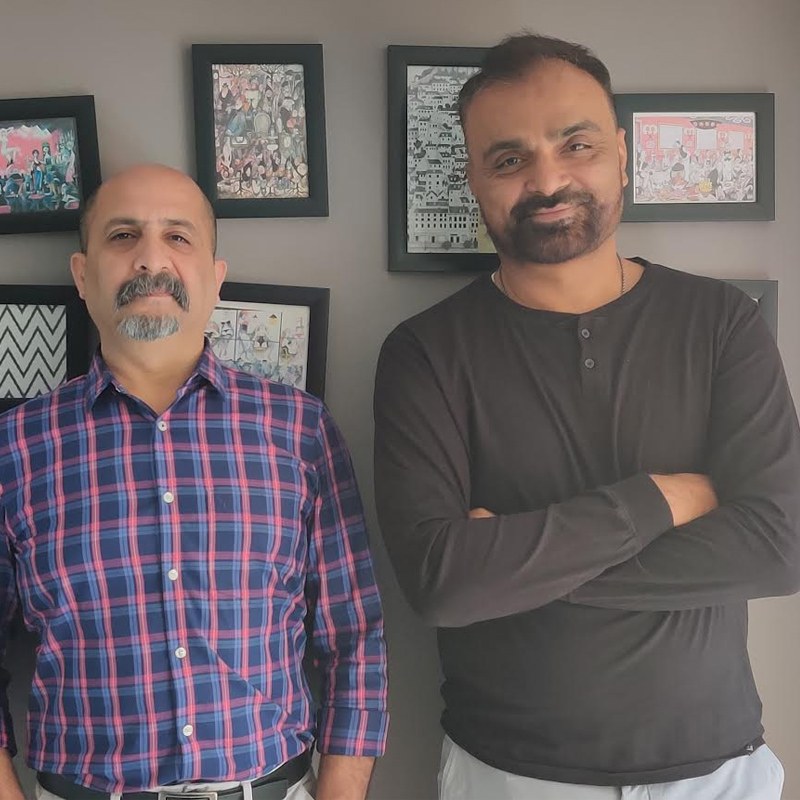
    Established in 2017, the company aims at addressing the pain points of producers in our country, from small producers to larger studios. It has launched services like BidnBuy which allows a producer to go beyond his/her immediate network to reach out to a larger set of vendors. In an interaction with Indiantelevision.com, the company's co-founder Sandeep Varma shares his views on the inspiration behind starting the company, its operations, revenue model, etc. 

    Excerpts:

    Why was the Filmboard founded? What is the vision of your company?

    Filmboard started operations in 2017, but we have been in stealth mode for beyond a year after starting. The way audio visual content is made in India is very archaic and has been ready for disruption. Most projects do not have predictability in terms of cost or timelines and go over budget and timeline overruns. Filmboard has unique insights on why this happens and is out to solve this and reduce this incidence. The overall vision is that with its booming number of eyeballs and high growth rate, it’s about time the Indian entertainment industry became world class in the way it makes its content. Filmboard will be the engine to do this.

    What is the unique selling point of your start-up?

    Filmboard is the only M&E startup that is looking to solve the problem of the producer (the content IP owner). It focuses on those areas that are probably the only ones that are out of the producer's control, ranging from the small new producer to the largest of studios, and puts them under the producer's control.

    What was the inspiration behind this startup?

    The first ad film I made went over budget by seven per cent. That was criminal for me since I'd come in from large consumer marketing firms where we could predict large-scale projects as a matter of course. Worse was when I was congratulated that it was achieved 'in budget'. Soon, I realised that the 10% rule in filmmaking in India – under 10 per cent, escalation is not even considered over budget.

    One of our key insights is that almost 70 per cent of the decisions affecting the budget are not creative in nature at all. For non-core areas, that's obvious – like where the cars will come from, or the hotel the unit will stay in, etc. But in even core areas, for example, the director may have a view on which camera to use, but not on which camera vendor to source it from. She/he would not know any better either. Or any equipment for that matter.

    Years later, I made Manjunath, my first feature film, based on the life of Manjunath Shanmugam, the IIM graduate who was killed for doing the right thing. It was made with Viacom and NFDC and the moral support of the Manjunath trust fighting his case and his parents. Clearly, it was a passion product and here again, we went over budget and I was told it’s a creative product. However, I was the director and writer of the film and I had not changed even one decision from what was planned. Clearly, there was something wrong, and clearly, it was time to do something about it.

    It was these pain points that created Filmboard. Along with an urge that our content creation process really needs to get world class. There are scores of overseas projects waiting to come into India, for all its talent and ability, but producers, and production studios abroad really need to have an easy, seamless and professional entry and exit. One of the key visions of Filmboard is to provide such a platform for overseas work to come in – this will lead to a surge in opportunities for the tremendous talent that exists in India.

    How exactly does the operational model work? Explain the model

    Filmboard is an omni channel B2B marketplace for filmmaking. All service providers in the market are verified, rated and reviewed (by past users of their service) so buyers (producers/filmmakers) can easily identify who they want to work with and why, figure out their availability, compare rates and book them end to end. Services include from equipment hire (camera, sound, lights), to locations (we have locations from Mumbai, Madh Island, to Uttraranchal to many more attractive locations adding up every day), to talent (actors, dancers etc) to crew (cameramen, sound recordist, writers etc).

    We believe this puts the power right back into the hands of the producers instead of them depending on the freelance Line producers. Since the industry currently is used to the turnkey model (project execution), Filmboard also offers premium line production services. This appears like the current freelance line producer execution, but it’s quite different.

    In this, all bookings are done on Filmboard; so a producer knows why our line producer is recommending one service provider over the other (basis ratings, reviews, rates). By introducing this kind of transparency, we are opening ourselves to being challenged by producers, which is part of the power we want to give the producers.

    Our insight is that with the influx of cleaner source of funding via international studios like Sony Pics, Viacom, Disney, etc., and now Netflix, Amazon, along with listed Indian entities like Alt Balaji and Zee5, accountability and transparency of production expenses is going to be more and more in demand.

    Therefore, we feel we are here at the right time, on the cusp of change.

    What are your products or services?

    Our solution is a marketplace portal which is buyer-facing with first ever verified, rated and reviewed database of service providers is completely transactional with the key features of- Convenience to book any service required for filmmaking categorized under talent, crew, services and locations; transparency on rates and availability of spot rates and bargains; discovery of vendor and price;  comprehensive to cover all that is needed for film production; and payment/service assurance.

    One key attribute to Filmboard is 'Innovation'. This means we will be constantly launching a series of innovations, the kind of which the industry has never seen before. For example, right now, we have already launched BidnBuy, which allows a buyer (producer) to go beyond his/her immediate network to reach out to a larger set of vendors to bid for a service he wants, or the execution of a whole project. Our first trial post, based on a genuine requirement, received almost 20 bids in the first two hours itself. This is when we have as yet hardly spent any money on promotion even on social media.

    Another innovation we are in the process of launching is a GPS-driven actor's app, given that a lot of actors miss out on auditions in a radius around them, and production houses/ casting directors miss out on good talent. Soon, we will upgrade this to a tech-innovation which allows live online auditions from anywhere in the world, customised so that the director/ assistant director can direct an actor on how to do an audition better.

    Another innovation we are working on is 'Spot Rate’. This uses the excess inventory available with a lot of vendors. For example, a camera vendor may have 10 cameras and we have seen that a lot of them have an average under 40 per cent utilisation. So, we have convinced many of them to drop rates on excess inventory for limited periods. Producers can then execute projects cheaper; excess inventory gets used (therefore maintained), and everyone's happy.

    We expect that such 'first time ever' innovations will brand Filmboard as a new-age innovative kid changing the way content is made.

    How much does your products / services cost to the buyer?

    In terms of charges/ revenue, for booking any service on the portal, there is a transaction fee to be charged from the service provider (seller). This is typical market place fee, and ranges between 8-15 per cent of the transaction value.

    However, the industry right now is more used to someone handling the project on turnkey basis, which is called line production. Filmboard offers line production services as well, where the whole project is planned, and executed by Filmboard. While this is done by existing freelance line producers as well, Filmboard uses technology and a lot of transparency in this.

    All bookings are done on the portal and Filmboard follows typical project management principles and is developing a unique proprietary software to execute projects. For line production, a fee is charged from the producer. Filmboard charges between 12-20 per cent of project value for line production.

    A third, and new fee that has emerged as an opportunity unique to Filmboard, is 'convenience fee' which may be charged in certain cases. For example, if there is a geographical distance between buyer and seller and Filmboard provides easy access which otherwise was not there, or a difficulty to find technology needed, which Filmboard because of its large database has access to and other such cases. In such cases, Filmboard will charge a convenience fee from the producer (buyer).

    Tell us about your target audience. How did you acquire first set of customers/clients? Name a few clients.

    On the supply side, Filmboard deliberately focuses on the non-glam side. No one has focussed on this, and the main business happens here. Equipment suppliers, location providers, service providers to talent and crew.

    On the demand side, while the total addressable market includes producers of feature films (all languages), digital videos, TV, music, ads & VFX/animation, we identified our early adopters to have two key attributes. One, need for financial accountability, and two, being tech-savvy/forward in business approach/willing to experiment. Therefore, ad film makers who need to report their commercials to brands and corporates/ have smaller ticket sizes, and those making short films/ web series became our first line of target and early adoption is already happening at their end.

    The highest and probably juiciest fruit is the well-entrenched production studios especially those that are family-oriented (like Nadiadwala/Dharma etc), and one of the visions of Filmboard is that in a few years, each and every project should have hired something from Filmboard. So, we expect the marketplace model to grow substantially for even the above players to fill their gap at Filmboard.

    Some of our clients on board and have used Filmboard's services include Rebel Foods (Faasos/Behrouz etc), Times Internet, Large Short Films (Royal Stag), Gaana.com, Radio Mirchi, British Council, IIM Lucknow etc. We are in active talks with companies like Josh Talks and One Network Entertainment (Suresh Menon’s company) for a long-term engagement.

    What is the business model and how has been the revenue growth? Please share revenue data, YoY, MoM growth data.

    The revenue projected at Filmboard is on these primary streams:-

    Line production revenue (premium service): This is a fee already existing in the industry where freelance line producers charge a fee ranging 12-20 per cent from producers for planning and executing a project.

    Transaction Fees: This is charged from service providers (sellers) to the opportunity to get business. Internationally, this ranges between 8-15 per cent of project value.

    These are already existing in the industry and so there is no concept selling involved in getting people to accept this.

    Convenience Fees: This is charged from buyer for a service rendered which is otherwise difficult to get like services in different geographical access.

    We have earned a total revenue of Rs 78 lakh out of which 61 lakh is from our premium line production services. We are going at about 10 per cent month on month growth. Our GMV (on marketplace portal) stands at Rs 17 lakh.

    What are the funding details? Are you planning to raise funding in the future?

    Filmboard has got seed capital from some internationally highly placed individuals to form a versatile board of strategic investors – Global HR head of ABB in Zurich; leading IT expert in the US; top supreme court lawyer; and ex-creative head of a top radio channel, ex-MD of Aditya Birla Group company, top executive of top FMCG company. We got in these strategic investors is because we feel credibility is the main thing missing in this industry.

    We are in the process of having a Pre-Series A round to raise $1 million and are in active discussion with a few early-stage funds. Having said that, there is also a fair amount of interest from more high networth individuals with high credibility. A lot of people seem to have been waiting for this industry to be disrupted.

    What challenges have you faced so far? How did you overcome them?

    Challenge is the archaic attitude especially of old timers in the industry. This shows up in:

    The 'Chalta hai' attitude towards film budgets constantly going over what was planned. This really puts off corporates coming in as well as overseas players. They just can’t understand it.

    Most new things in the industry are announced and nothing comes through. A lot of films are announced even in media and we never hear of them later. To ensure we don’t get into that trap, we took on a lot of high networth professionals who are achievers in their own fields to come in as strategic investors.

    None of the above challenges is unexpected – we knew there would be a lot of heavy lifting involved.

    Having said this, being a genuine pioneer throws up many other challenges.

    For example, even the formal investment community in India is more prone to easily fund the me-too's from the international market. We are creating a genuine intellectual property which we will then plan to take abroad to film-rich markets like the UK, the US and South East Asia (Hong Kong, Singapore). However, there is only a handful of investment teams who have the bandwidth to look seriously at something completely new and yet lucrative and with great potential. And we are very sure that we want only partners who not only are looking at a good, healthy exit but also would like to partner in creating something that's a 'first time ever' – with legacy.

    How do you think Filmboard will be especially relevant to the TV and OTT industries?

    TV series production tends to be tighter, more corporatised because of large players in India for a much longer time (TV channels), but high volume (lot of continuous production needs).  Feature films tends to be more individualistic, so possibly is more disorganised.

    OTT platforms are new but are actually building on the model of the way the TV industry operates. A lot of big TV producers are now big OTT producers, so the same knowledge/ways of working are being transferred. So we expect in the OTT also, there will be a few large players who are outsourcing creation of content to production companies.

    In TV, often, one popular series is produced by different companies all selected by the channel creative teams. So, the creative consistency is maintained by those.

     

  • TV strike threat: Producers expect to hire ‘outsiders’, talking to channels

    MUMBAI/NEW DELHI: Even as the Federation of Western India Cine Employees (FWICE) had threatened to go on strike from 15 August if their demands of salary increments and eight-hour shift for workers are not met by producers, producers say that they should have the freedom to hire outsiders.

    Indian Film and TV Producers Guild CEO Kulmeet Makkar said the strike was mala fide as the matter was sub judice before the Competition Commission of India. Once the CCI decided the case, Makkar added, the FWICE could submit its demands and those would be considered.

    Indian Film and TV Producers Council leader and a leading television producer JD Majethia told indiantelevision.com that 7.5 per cent increment had already been given to all the workers even in the absence of any binding legal contract. “Do you think, we (producers) would let our businesses paralyse for a mere 2.5% hike,” he countered.

    Indian Motion Pictures Producers Association president T P Agarwal and Makkar told indiantelevision.com that the matter was sub judice, and the FWICE demand was therefore unjustified.

    Agarwal has written a detailed letter to the police commissioner for protection of producers who hire experts who are not members of FWICE.

    The FWICE, which claims to have 2,50,000 members, has reportedly sent notices to the Film and Television Producers Guild of India Ltd, Indian Motion Picture Producers Association (IMPPA), Indian Film and TV Producers Council (IFTPC), and Western Indian Film Producers’ Association (WIFPA). The notice has also been reportedly issued to advertising companies, television channels and the police department as well.

    “We know well how to take care of all workers — as we are aware a happy worker works well,” he quipped. The workers (working in mostly air-conditioned studios) are provided the same food and comfort as a senior technician, Majethia said.

    About their other demands, Majethia categorically stated that insurance was compulsory and was done at each and every shoot and set. He also said that the workers union should first get each and every worker medically checked so that he could be assigned work in accordance with his capability — health-wise. Workers unions should also ensure qualified workers were sent on the sets. “For example, unions must ensure an electric fittings etc incharge has the required technical qualification and experience to supervise and control all operations,” Majethia said.

    FWICE had two years ago called a strike, demanding salary increment, eight-hour shift, accidental and medical insurance, safety and job security. Producers’ bodies had agreed to fulfill the demands, but, according to FWICE, the promises remained unfulfilled.

    “We are in talks with producers and channels to find a way out of this imbroglio,” Majethia said. Privately, however, he said, a number of workers told them that they were willing to work and were not in favour of strike. “Opinion is widely divided among the workers’ leaders,” Majethia said.

    ALSO READ :

    Sony Pictures Networks India ups safety bar on TV sets

    GST: TV prod biz bemoans lack of clarity and increased paperwork

    Maharashtra CM supports film industry’s demand for 18% GST

  • National Geographic Channel to undergo major rebranding

    National Geographic Channel to undergo major rebranding

    MUMBAI: Come 14 November and the National Geographic Channel will have a new shortened sobriquet. The word channel will disappear from its name and it will be simply known as National Geographic and a new tagline “Further.”

    The change is expected to take place simultaneously across all the 445 million households in 171 countries it is telecast in. The channels are expected to have a new distinctive on-air look, brand IDs, packaging and talent IDs.

    A new web series by the same name is expected to launch around the same time.

    Almost every property associated with the National Geographic – the magazine, nationalgeographic.com, its social and digital platforms, and its global Hq in Washington DC – will be part of the rebranding exercise. The “Further” tagline embodies “the aspirations of the National Geographic audience and serves as a rallying cry for its employees, explorers, photographers, producers and other constituencies as well as a promise to advertisers, affiliates, educators and other external partners.”

    NatGeo has been under the Twenty First Century Fox umbrella after it took majority control of its joint venture National Geographic Partners with the society.

    “This rebrand marks a significant turning point in the realization of our transformational new vision for National Geographic Channel,” said National Geographic Global Television Networks CEO Courteney Monroe to World Screen. “As a new brand positioning statement, ‘Further’ aligns perfectly with our new premium programming strategy, which is built on quality, distinctiveness and the relentless pursuit of creative excellence. The new visual design is sophisticated, contemporary and cinematic, and lives up to the promise of the National Geographic brand.”

  • National Geographic Channel to undergo major rebranding

    National Geographic Channel to undergo major rebranding

    MUMBAI: Come 14 November and the National Geographic Channel will have a new shortened sobriquet. The word channel will disappear from its name and it will be simply known as National Geographic and a new tagline “Further.”

    The change is expected to take place simultaneously across all the 445 million households in 171 countries it is telecast in. The channels are expected to have a new distinctive on-air look, brand IDs, packaging and talent IDs.

    A new web series by the same name is expected to launch around the same time.

    Almost every property associated with the National Geographic – the magazine, nationalgeographic.com, its social and digital platforms, and its global Hq in Washington DC – will be part of the rebranding exercise. The “Further” tagline embodies “the aspirations of the National Geographic audience and serves as a rallying cry for its employees, explorers, photographers, producers and other constituencies as well as a promise to advertisers, affiliates, educators and other external partners.”

    NatGeo has been under the Twenty First Century Fox umbrella after it took majority control of its joint venture National Geographic Partners with the society.

    “This rebrand marks a significant turning point in the realization of our transformational new vision for National Geographic Channel,” said National Geographic Global Television Networks CEO Courteney Monroe to World Screen. “As a new brand positioning statement, ‘Further’ aligns perfectly with our new premium programming strategy, which is built on quality, distinctiveness and the relentless pursuit of creative excellence. The new visual design is sophisticated, contemporary and cinematic, and lives up to the promise of the National Geographic brand.”

  • Q2-2016: Mukta Arts EBIDTA up 32%

    Q2-2016: Mukta Arts EBIDTA up 32%

    BENGALURU: Mukta Arts Limited EBIDTA increased 31.9 per cent YoY in the quarter ended 30 September, 2015 (Q2-2016, current quarter) to Rs 2.16 crore (13.8 per cent margin) as compared to Rs 1.64 crore (6.8 per cent margin), but declined 2.2 per cent QoQ from Rs 2.21 crore (14.5 per cent margin). The company’s net Total Income from Operations (TIO) in the current quarter fell 34.8 per cent YoY to Rs 15.61 crore from Rs 23.95 crore, but increased 2.5 per cent QoQ from Rs 15.23 crore.


    Note: 100,00,000 = 100 lakh = 10 million = 1 crore


    Mukta Arts reported a small Profit after Tax (PAT) for the current quarter at Rs 0.32 crore (2.1 per cent margin) as compared to a loss of Rs 0.03 crore in Q2-2015 and a loss of Rs 1.43 crore in the immediate trailing quarter.


    Segment performance


    Mukta Arts has four segments-Software Division; Equipment Division (including other income); Theatrical Exhibition Division and ‘Others.’


    Software Division reported revenue of just Rs 1.64 crore in Q2-2016 as compared to Rs 13.89 crore in Q2-2015 and Rs 0.03 crore in Q1-2016. The segment reported less than one fourth of operating profit YoY at Rs 0.08 crore as compared to Rs 0.33 crore. This division had reported an operating loss of Rs 1.94 crore for the immediate trailing quarter.


    Equipment Division reported revenue of Rs 0.09 crore in the current quarter as compared to Rs 0.1 crore each in Q2-2015 and Q1-2015. The segment reported operating profit of Rs 0.05 crore in Q2-2016 as compared to a loss of Rs 0.12 crore in Q2-2015 and a loss of Rs 0.04 crore in the immediate trailing quarter.


    Theatrical Exhibition Division reported revenue of Rs 12.02 crore in the current quarter as compared to Rs 0.07 crore in Q2-2015 and Rs 11.14 crore in Q1-2016. The segment reported operating profit of Rs 1.36 crore in Q2-2016; operating profit of Rs 0.07 crore in Q2-2015 and operating profit of Rs 0.49 crore in Q1-2016.


    ‘Others’ segment reported revenue of Rs 1.87 crore in Q2-2016; revenue of Rs 1.96 crore in Q2-2015 and revenue of Rs 1.97 crore in Q1-2016. The segment reported operating profit of Rs 0.53 crore in Q2-2016; operating profit of Rs 1.68 crore in Q2-2015 and operating profit of Rs 1.40 crore in Q1-2016.


    Let us look at the other numbers reported by Mukta Arts


    Mukta Arts’ Total Expenditure in Q2-2016 reduced 37.3 per cent YoY to Rs 14.89 crore (95.4 per cent of TIO) from Rs 23.74 crore (99.1 per cent of TIO), but increased 3.4 per cent QoQ from Rs 14.41 crore (94.6 per cent of TIO).


    Distributors and producers share in the current quarter reduced 31.1 per cent YoY to Rs 3.96 crore (25.3 per cent of TIO) from Rs 5.74 crore (24 per cent of TIO), but increased 11.9 per cent QoQ from Rs 3.53 crore (23.2 per cent of TIO).


    Employee Benefits Expense in Q2-2016 increased 38 per cent YoY to Rs 2.12 crore (13.6 per cent of TIO) from Rs 1.54 crore (6.4 per cent of TIO), but reduced 2.6 per cent QoQ from Rs 2.18 crore (14.3 per cent of TIO).


    Purchase of Food and Beverages cost increased 18.9 per cent YoY to Rs 0.85 crore (5.4 per cent of TIO) from Rs 0.71 crore (3 per cent of TIO) and increased 7.7 per cent QoQ from Rs 0.79 crore (5.2 per cent of TIO).


    Finance costs in Q2-2016 reduced 12.9 per cent YoY to Rs 1.83 crore (11.8 per cent of TIO) from Rs 2.11 crore (8.8 per cent of TIO), but increased 5.4 per cent QoQ from Rs 1.74 crore (11.4 per cent of TIO).

  • DD invites programmes for proposed rural-based Kisan Channel

    DD invites programmes for proposed rural-based Kisan Channel

    NEW DELHI: Noting that the proposed Doordarshan Kisan is a dedicated channel for the farmers to give them information targeted to address the wholesome edutainment needs of a farmer to adopt and adapt to modern scenario, the national broadcaster has invited proposals for programmes under the Self Financing Commissioned Scheme.

     
    DD says that the content expected for DD Kisan will primarily address the developmental needs of the farmer addressing ‘Core Agriculture’, ‘Critical Support’ and ‘Essential Ancillary’ areas, keeping in mind the varied agro-economic zones, climatic areas, different crops and the need to address the target audience spread across various states but will have to be entertaining and engaging.

     
    The content on DD Kisan will be in Hindi with regional dubbing.

     
    The genres for which it has invited proposals are: documentaries/features (field based); magazines/docu dramas (field based); cookery shows/biographies; daily soap/fiction serials/family serials/thrillers; film song based programmes; reality shows/game shows; and mandi bhav/bazar bhav/agro based bulletins.

     
    In addition, DD Kisan will have a new segment for iconic characters plus content packaging where animated characters will convey the agricultural themes and desired messaging. It is expected that the participants under this category will also provide layouts of the channel’s packaging.

     
    It will also have a segment for edited feature films where the entire film is expected to be capsuled with anchor based presentation for 60 minutes.

     
    In the ‘bazar bhav’/mandi bhav’ segments, updates from the mandis including the template will be required to be provided, which would be required to give the core audiences suitable direction and help in the agricultural productive activity.

     
    To begin with, each producer has to send in the synopsis of 26 episodes but this may be extended if necessary.

     
    Under the scheme of self financed commissioning, the producer will produce the programme at his own risk and cost and on the selection of the programme, Doordarshan will market it, telecast the same and pay the producer for his services after a specified period of time.

     
    Self financed commissioning of programmes through outside producers could be done for DD’s national channels, regional language channels, state networks, regional and local services.

     
    DD shall, at its discretion and in accordance with its programme requirements, select producers suo moto for production of programmes. DD may also consider proposals submitted by producers on their own.

     
    The proposals are to be submitted in complete accordance with the guidelines of SFC programmes for DD Kisan which have been placed on the website of Doordarshan – www.ddindia.gov.in


  • DD working to woo top producers for its nationals, Jaitley chairs meeting

    DD working to woo top producers for its nationals, Jaitley chairs meeting

    NEW DELHI: Several producers who have made some memorable series for Doordarshan have promised to return if certain changes are made in the pattern of the financial agreements with them.


    This assurance was given by the producers to Information and Broadcasting Minister Arun Jaitley, Minister of State (MOS) Col. Rajyavardhan Singh Rathore and secretary Bimal Julka at a meeting initiated by Doordarshan director general Vijaylaxmi Chhabra. Prasar Bharati CEO Jawhar Sircar and senior advisor Brig VAM Hussain were also present.


    The Minister said that the pubcaster wanted to revive the trust of the producers in DD and come back, and this was generally welcomed by those present.


    Hats Off Productions owner JD Majethia and also co-chairman of Association Of Motion Pictures & Television Programme Producers (AMPTPP) says, “The agenda of the meeting was that in the last 10-12 years with the birth of new general entertainment channels (GECs), DD had somewhere lost its glory. Now, DD wants to revive and expand its content portfolio with the help of top-line producers like us and bring back the long lost glory on DD.”


    The producers said that the revenue sharing model of DD was not acceptable to them as the marketing was handled by the broadcaster. Issues relating to Intellectual Property Rights were also raised since it was said that DD reserved the copyright of the works of the producers and they wanted an examination of this.


    On behalf of DD, they were assured that the pubcaster would examine the schemes under which serials are obtained since it has already stopped commissioning of programmes.


    It is learnt that consequent to the meeting, DD has re-drafted the guidelines relating to the self-financing scheme and will await the remarks of the producers before giving it a final shape.


    The meeting was attended by producers namely – BP Singh (Fireworks Productions), Sunjoy Wadhwa (Sphereorigins chairman and managing director), Abhimanyu Singh (Contiloe Entertainment) and others. It is also learnt that Chhabra visited Mumbai to meet some producers in this connection.

  • American, Canadian filmfests call for entries for features, documentaries

    American, Canadian filmfests call for entries for features, documentaries

    NEW DELHI: Several American and Canadian feature and documentary film festivals are calling for entries from across the world to compete their awards.


    The New York International Children’s Film Festival has set its final deadline for Feature Films as 10 November.


    The Festival is North America’s film festival for children and teens. Each year the Festival presents 100 animated, live action and experimental shorts and features from around the world plus retrospectives, filmmaker Q&As, workshops, audience voting and an annual Awards Ceremony.


    It wants creative, original, non-formulaic short and feature films that support the mission to create a more dynamic film culture for children and teens. It also often shows films that were not created with a young audience in mind, but are received passionately and enthusiastically by attendees aged 3 to 18.


    Members of the Festival jury include Susan Sarandon, Geena Davis, Bill Plympton, Christine Vachon, James Schamus, Henry Selick and Gus van Sant, among others.


    Meanwhile, the New York Festivals Awards 2015 ceremony will celebrate the World’s Best TV & Films, as well as present the Lifetime Achievement Award, Broadcaster of the Year, Production Company of the Year, and United Nations Department of Public Information Awards.


    The deadline to enter the 2015 Television & Film Awards competition is 15 October. All Entries in the 2015 competition will be judged online and screened by New York Festivals Television & Film Awards Grand Jury of 200 plus producers, directors, writers, and other creative media professionals from around the globe. Award-winning entries will be showcased on the NYF Television & Film Awards website.


    Meanwhile, the Nashville Film Festival will mark a celebration of the diversity of the human spirit expressed through the art of film. In year-round programs, NaFF helps build a more informed, collaborative and alive community. The call for entries for the 2015 Nashville Film Festival is open and cash and prizes valued at over $54,000 are given. Films that qualify are Live Action, Animated and Documentary Short Films for Academy Award. The deadline is 19 November.


    The Hot Docs, Canada’s largest documentary festival, conference and market, will present its 22nd annual edition from 23 April to 3 May 2015. An outstanding selection of approximately 200 documentaries from Canada and around the world will be presented to Toronto audiences and international delegates.


    Hot Docs will also mount a full roster of conference sessions and market events and services for documentary practitioners, including the renowned Hot Docs Forum, Hot Docs Deal Maker and The Doc Shop. In partnership with Blue Ice Group, Hot Docs operates the Bloor Hot Docs Cinema, a century-old landmark located in Toronto’s Annex neighbourhood.

  • MIP Digital Fronts to debut at MIPTV 2014

    MIP Digital Fronts to debut at MIPTV 2014

    CANNES: Reed MIDEM’s closing conference today saw the announcement of ‘Mip Digital Fronts’ at MipTV 2014.

    Effectively, Mip Digital Fronts will be the world’s first international screenings showcasing buyers, producers, distributers, advertisers and strategists from the global TV and digital entertainment ecosystem.

    MipTV 2014 (the 51st annual MipTV) will be held in Cannes from 7-10 April next year whereas the MIP Digital Fronts will be held at the Palais des Festivals on 9 April, 2014.

    With MipTV being the world’s longest running annual television content market, conference and exhibition event, Mip Digital Fronts is estimated to reach over 11,000 international executives from approximately 100 countries, which includes 4,000 buyers, of which 800 will be Video on Demand (VOD) and digital acquisition specialists.

    Significantly, Mip Digital Fronts aims to create the digital entertainment industry’s first true international marketplace for production, distribution and acquisition of high-quality original content produced exclusively for audiences on online web channels and app-based/OTT streaming video platforms.

    Reed Midem director television division Laurine Garaude said: “For 50 years, MipTV has been the global destination to acquire new programmes. As the quality of online video entertainment evolves, the critical mass of audiences and advertisers is being reached, creating a sustainable marketplace for digital online production and distribution.”

    “By introducing ‘Mip Digital Fronts’ at MipTV, we are simultaneously building a market for digital studios, while creating a platform for television and film studios to leverage their digital programming and production assets during the market.”

    ‘MIP Digital Fronts’ was conceived by Reed Midem, following the success of YouTube’s original online content showcase at MipTV 2013.

    It will feature a full-day programme of 45-minute curated screening from world-renowned platforms, digital studios and online channels, and cover all genres of original digital content, including scripted and non-scripted series, shorts, formats, games, animation and content targeting kids and young adults. Additionally, there will be on-stage interviews with producers, creative executives and talents behind the content.
     

  • NFDCs Film Bazaar13 invites entries for its Industry Screenings program

    NFDCs Film Bazaar13 invites entries for its Industry Screenings program

    MUMBAI: Film Bazaar 2013, NFDC’s (National Film Development Corporation) promotional arm, has begun calling for entries for its Industry Screenings program. In its seventh edition this year, South Asia’s Global Film Market will be held from 20-24 November, 2013 alongside IFFI at Marriott Resort, Goa. Qube Cinema Network (Real Image Media Technologies), associated with Film Bazaar since 2011, will be the Digital partner for the screenings this year too.


    Introduced in 2010, Industry Screenings has become an important segment of Film Bazaar, where filmmakers are given an opportunity to showcase and pitch their films to a select audience of sales agents, distributors, producers, festival programmers and directors through the market period. With digital theatres arranged at the market venue, filmmakers can either reserve their film screenings to a selected audience of international distributors and sales agents or open it for all attending delegates.


    Last year, Industry Screenings, saw twenty-six films screened through four days of the market. To name a few, The Bright Day (Hindi- English) by Mohit Takalkar; Pune 52 (Marathi) by Nikhil Mahajan; The Good Road (Gujarati) by Gyan Correa; Touring Talkies (Marathi) by Gajendra Aahire; Masala (Marathi) by Sandesh Kulkarni; Love Tomato (Japanese – English – Philippine) by Hideo Nanbu; Tasher Desh (Bengali) by Q; Kshay (Hindi) by Karan Gaur, were films that were screened in 2012.


    The last date for submission of entries for Industry Screenings is 15 November 2013.