Tag: Pro Kabaddi League

  • TVS Tyres  is co-presenter for Asian Champions Trophy 2016

    TVS Tyres is co-presenter for Asian Champions Trophy 2016

    MUMBAI: Continuing its strong connect with sports, TVS Tyres has associated with Asian Champions Trophy 2016 by becoming the co-presenter. The Asian Champions Trophy is one of the premier hockey tournaments, a much sought after annual international competition promising some great hockey action. This association adds on to the brand’s prestigious list of previous associations with other sporting events like; Indian Premier League, Indian Super League, Pro Kabaddi League, Hockey India League & Cricket All Star Series among others.

    TVS Srichakra director P. Vijayaraghavan said, “Through this partnership, we aim to elevate our brand recall to a much larger audience and feel that it will add value to both our brand as well as business. The association with Asian Champions Trophy aligns the brand with a premier sporting event and a dedicated fan base. Sporting platforms like these augment our strategy to reach out to our customers.”

    Top six Asian teams will be participating in this tournament and it will be a great season of hockey across the continent. Post the launch of new identity, TVS Tyres has associated with many such sporting events and this latest association with Asian Champions Trophy is in line with the brand’s strategy and ongoing engagement with sporting events to enhance brand visibility.

  • TVS Tyres  is co-presenter for Asian Champions Trophy 2016

    TVS Tyres is co-presenter for Asian Champions Trophy 2016

    MUMBAI: Continuing its strong connect with sports, TVS Tyres has associated with Asian Champions Trophy 2016 by becoming the co-presenter. The Asian Champions Trophy is one of the premier hockey tournaments, a much sought after annual international competition promising some great hockey action. This association adds on to the brand’s prestigious list of previous associations with other sporting events like; Indian Premier League, Indian Super League, Pro Kabaddi League, Hockey India League & Cricket All Star Series among others.

    TVS Srichakra director P. Vijayaraghavan said, “Through this partnership, we aim to elevate our brand recall to a much larger audience and feel that it will add value to both our brand as well as business. The association with Asian Champions Trophy aligns the brand with a premier sporting event and a dedicated fan base. Sporting platforms like these augment our strategy to reach out to our customers.”

    Top six Asian teams will be participating in this tournament and it will be a great season of hockey across the continent. Post the launch of new identity, TVS Tyres has associated with many such sporting events and this latest association with Asian Champions Trophy is in line with the brand’s strategy and ongoing engagement with sporting events to enhance brand visibility.

  • 121 million watch India-West Indies T20 match

    121 million watch India-West Indies T20 match

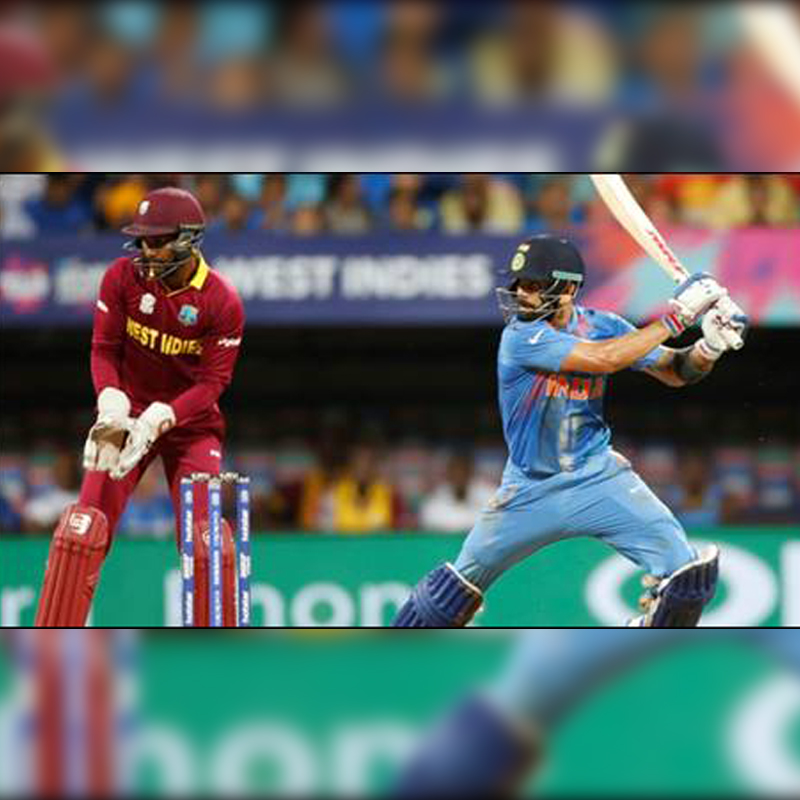
    MUMBAI: Cricket fever can never be out of season. The India vs West Indies T20 matches saw 121 million viewers tune in to watch the live telecasts on 27 and 29 August. It was almost as massive as the IPL viewership this year, according to ZAPR TV viewership data.

    india vs west indies two charts.jpg

    The preceding test matches in the same series garnered a huge viewership of 70 million, despite popular knowledge that test cricket has taken a backseat with the game’s gradual evolution to more fast-paced formats. Interestingly, a large portion of these viewers have also watched previous cricket tournaments. Do these viewers make up an audience loyal to cricket, regardless of the format in which the game is played?

    westindiesvsindia-test-21stjuly-08092016.jpg

    The first match in the test series received the highest viewership with 22 million viewers tuned in to watch the live telecast on 21 July.

    In all, 97 million watched the first T20 match played on 27 August. The telecast experienced a peak in viewership between 10pm and 11pm as the Indian team forfeited a win by  just a single run.

    INDIA VS WEST INDIES T20 HOURLY FINAL.jpg

    Of the individuals who watched the India vs West Indies matches, 86 per cent of them watched the T20 World Cup, and 83 per cent also watched the IPL matches this year. While T20 matches generally have higher viewership, the India vs Zimbabwe tour which consisted of three ODI matches also garnered significant viewership.

    westindiesvsIndia-30thJuly-crickettournamentsFINAL-06092016.jpg

    The same viewers also followed different kinds of sports on television: 61.8 per cent  of individuals who watched the India vs West Indies series watched the recent Rio 2016 Olympics.37.1 per cent of them watched the Pro-Kabaddi League and 15.2 per cent watched the famous football tournament UEFA Euro 2016.

    Untitled presentation (26).jpg

    In addition to general interest for sports content, the audience who is format-neutral and loyal to a particular sport are highly valuable. These individuals are most likely to have high affinity towards sport stars, and brands associated with that particular sport, making it conducive for brands to effectively engage with them

  • 121 million watch India-West Indies T20 match

    121 million watch India-West Indies T20 match

    MUMBAI: Cricket fever can never be out of season. The India vs West Indies T20 matches saw 121 million viewers tune in to watch the live telecasts on 27 and 29 August. It was almost as massive as the IPL viewership this year, according to ZAPR TV viewership data.

    india vs west indies two charts.jpg

    The preceding test matches in the same series garnered a huge viewership of 70 million, despite popular knowledge that test cricket has taken a backseat with the game’s gradual evolution to more fast-paced formats. Interestingly, a large portion of these viewers have also watched previous cricket tournaments. Do these viewers make up an audience loyal to cricket, regardless of the format in which the game is played?

    westindiesvsindia-test-21stjuly-08092016.jpg

    The first match in the test series received the highest viewership with 22 million viewers tuned in to watch the live telecast on 21 July.

    In all, 97 million watched the first T20 match played on 27 August. The telecast experienced a peak in viewership between 10pm and 11pm as the Indian team forfeited a win by  just a single run.

    INDIA VS WEST INDIES T20 HOURLY FINAL.jpg

    Of the individuals who watched the India vs West Indies matches, 86 per cent of them watched the T20 World Cup, and 83 per cent also watched the IPL matches this year. While T20 matches generally have higher viewership, the India vs Zimbabwe tour which consisted of three ODI matches also garnered significant viewership.

    westindiesvsIndia-30thJuly-crickettournamentsFINAL-06092016.jpg

    The same viewers also followed different kinds of sports on television: 61.8 per cent  of individuals who watched the India vs West Indies series watched the recent Rio 2016 Olympics.37.1 per cent of them watched the Pro-Kabaddi League and 15.2 per cent watched the famous football tournament UEFA Euro 2016.

    Untitled presentation (26).jpg

    In addition to general interest for sports content, the audience who is format-neutral and loyal to a particular sport are highly valuable. These individuals are most likely to have high affinity towards sport stars, and brands associated with that particular sport, making it conducive for brands to effectively engage with them

  • FICCI Frames 2016: Live Updates: Sports gets serious what’s next?

    FICCI Frames 2016: Live Updates: Sports gets serious what’s next?

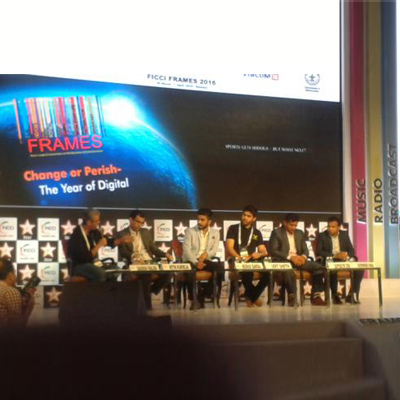
    MUMBAI: The sports ecosystem has seen a see of development in recent past. Non-cricket as a whole graduated from a flying bubble to a serious entity. Pro Kabaddi, from an un-orthodox experiment has become a case study. Cricket is a serious business for the broadcast ecosystem and has been from a long period of time, but now Sports as a whole has become serious business: But What’s next? and that is what the next session of FICCI Frames 2016 is all about.

    Indiantelevision.com will bring to you the updates of the session live and exclusive.

    The panelists will be quizzed by ESPN Cricinfo, Senior Editor: Gaurav Kalra
    Star Sports, President, Nitin Kukreja 
    Owner Gujrat Lions IPL franchise: Keshav Bansal
    USports CEO Supratik Sen
    SE TransStadia MD and CEO: Udit Sheth
    FC Goa CEO Sukhwinder Singh

    Kalra throws the ball at Nitin’s court. Asks him for his initial comment.

    “This Country is in verge of witnessing something special,” Nitin gets the ball rolling.

    “I still remember the morning we launched Kabaddi. We were still unsure. From there to now, we have learned a lot.” “We have learned that all stakeholders need to work together. Some stake holders need more convincing,” ‘collaboration is the key’ the biggest outcome from Nitin’s initial remarks. “Judging our success, it has come at the back of all our stake holders,” he gives credit to all the stake holders.

    Now Kalra goes to the CEO of the most successful PKL team, Supratik Sen narrates how the interest on PKL came. “Ronnie came and said we are going to invest on Kabaddi and that’s where it all started. It was quite a challenge, in the initial days we heard ab gilly danda kyun nhi khel lete, but when we spoke to the 40 plus age group, the women and men have played it in their lives, the answer became easier.”

    He further talks about the challenges, “Our challenge was to take it to the masses, so we reached out to them and got our talent, the we transformed these athheletes, into stars as we could mould them.

    Nitin now asked about the perception ‘Kabaddi won’t work’ He terms it ‘Outsiders view’ “The second season has completely changed the face of the game, the stakes are higher now. You need to go to Ranchi to know how big Hockey is, go to Hyderabad to see how popular Kabaddi is” he remarks.

    “Sporting has become even more local, even when it comes to sporrt revenuee. We were used to ccheer for team Inddia, but now there is a team Goa and team Kolkata” Nitin now talks about the paradigm shift.

    “We don’t expect to make profit from our IPL investment. This investemt is more about marking and building a brand that will reach to millions,” realistic Keshav narrates.

    Kalra quizzes on how to build interest on football to FC goa?

    Singh now has the mic, “While cricket remains the religion, but if we manage to package well and make it more and more engaging for the fans, and allow financial partneers to come forward and be a part pf the process, there is a way to sustain it.”

    “We are not sitting idle when the games are done. We are investing in the grassroots and keeping the aspiration about the game alive in the nine months when there is no league” Singh adds.

    Is there an area we need to pay urgent attention, which has been neglected, to develoe a culture around sport? — kalra

    Udit: Sport infrastructure wasnt thought of as a montisisng asset in our country. India has about 80 stadiums, but none of them are designed for television broadcast. When I was in talks with the Gujarat government, we told them we werent there to build a stadium, but to buld a sporting culture,” infrastructure is too a key, its not about getting them there but keeping them there and provide them quality experience……. great thoughts from Singh.

    What role can broadcasters play in developing a sports culture? A heavyweight question and there can be no one better than Nitin to answer this.

    Ratings are important,  from an advervenue perspective. But we realise that sport is not just a television product. We realise that grassroots play an important role too,” he is not done yet now he sheds light on the fact that the clubs too need to take a lot of responsibilities we can do it to a certain extent, but the clubs will have to take it upon themselves to build the culture foreward”

    Keshav now has the mic, “The success of any team worldwide largely depennds on how they perform, Brand building is important, and its a gradual process. The teams who have been in the league from thhe staart have an advantage. They had the time to build their legacy, and meerchandisisng followed. We are also working on building a brand, ut it will take time. Ultimately performance will speak.”

    Are you monetisisng kabaddi enough? shoots a delegate sitting in the ballroom……Well can there be enough monetising ever? ……… Karla diverts the question to Nitin, “As long as you are dong the right thing for the sport, as long as you are investing in the right areas, the money will follow. Its a question whether its in one year two year or three years,”…….. answers Nitin

    Karla now follows the ticker and wraps the session……

    It was Indiantelevision.com Reporter Papri Das sending all the live updates from the venue…

    Hope you liked the coverage….

    Please give us your feedback…. tweet us @ITVNewz…

    This is Anirban Roy Choudhury signing off for today……. 
  • FICCI Frames 2016: Live Updates: Sports gets serious what’s next?

    FICCI Frames 2016: Live Updates: Sports gets serious what’s next?

    MUMBAI: The sports ecosystem has seen a see of development in recent past. Non-cricket as a whole graduated from a flying bubble to a serious entity. Pro Kabaddi, from an un-orthodox experiment has become a case study. Cricket is a serious business for the broadcast ecosystem and has been from a long period of time, but now Sports as a whole has become serious business: But What’s next? and that is what the next session of FICCI Frames 2016 is all about.

    Indiantelevision.com will bring to you the updates of the session live and exclusive.

    The panelists will be quizzed by ESPN Cricinfo, Senior Editor: Gaurav Kalra
    Star Sports, President, Nitin Kukreja 
    Owner Gujrat Lions IPL franchise: Keshav Bansal
    USports CEO Supratik Sen
    SE TransStadia MD and CEO: Udit Sheth
    FC Goa CEO Sukhwinder Singh

    Kalra throws the ball at Nitin’s court. Asks him for his initial comment.

    “This Country is in verge of witnessing something special,” Nitin gets the ball rolling.

    “I still remember the morning we launched Kabaddi. We were still unsure. From there to now, we have learned a lot.” “We have learned that all stakeholders need to work together. Some stake holders need more convincing,” ‘collaboration is the key’ the biggest outcome from Nitin’s initial remarks. “Judging our success, it has come at the back of all our stake holders,” he gives credit to all the stake holders.

    Now Kalra goes to the CEO of the most successful PKL team, Supratik Sen narrates how the interest on PKL came. “Ronnie came and said we are going to invest on Kabaddi and that’s where it all started. It was quite a challenge, in the initial days we heard ab gilly danda kyun nhi khel lete, but when we spoke to the 40 plus age group, the women and men have played it in their lives, the answer became easier.”

    He further talks about the challenges, “Our challenge was to take it to the masses, so we reached out to them and got our talent, the we transformed these athheletes, into stars as we could mould them.

    Nitin now asked about the perception ‘Kabaddi won’t work’ He terms it ‘Outsiders view’ “The second season has completely changed the face of the game, the stakes are higher now. You need to go to Ranchi to know how big Hockey is, go to Hyderabad to see how popular Kabaddi is” he remarks.

    “Sporting has become even more local, even when it comes to sporrt revenuee. We were used to ccheer for team Inddia, but now there is a team Goa and team Kolkata” Nitin now talks about the paradigm shift.

    “We don’t expect to make profit from our IPL investment. This investemt is more about marking and building a brand that will reach to millions,” realistic Keshav narrates.

    Kalra quizzes on how to build interest on football to FC goa?

    Singh now has the mic, “While cricket remains the religion, but if we manage to package well and make it more and more engaging for the fans, and allow financial partneers to come forward and be a part pf the process, there is a way to sustain it.”

    “We are not sitting idle when the games are done. We are investing in the grassroots and keeping the aspiration about the game alive in the nine months when there is no league” Singh adds.

    Is there an area we need to pay urgent attention, which has been neglected, to develoe a culture around sport? — kalra

    Udit: Sport infrastructure wasnt thought of as a montisisng asset in our country. India has about 80 stadiums, but none of them are designed for television broadcast. When I was in talks with the Gujarat government, we told them we werent there to build a stadium, but to buld a sporting culture,” infrastructure is too a key, its not about getting them there but keeping them there and provide them quality experience……. great thoughts from Singh.

    What role can broadcasters play in developing a sports culture? A heavyweight question and there can be no one better than Nitin to answer this.

    Ratings are important,  from an advervenue perspective. But we realise that sport is not just a television product. We realise that grassroots play an important role too,” he is not done yet now he sheds light on the fact that the clubs too need to take a lot of responsibilities we can do it to a certain extent, but the clubs will have to take it upon themselves to build the culture foreward”

    Keshav now has the mic, “The success of any team worldwide largely depennds on how they perform, Brand building is important, and its a gradual process. The teams who have been in the league from thhe staart have an advantage. They had the time to build their legacy, and meerchandisisng followed. We are also working on building a brand, ut it will take time. Ultimately performance will speak.”

    Are you monetisisng kabaddi enough? shoots a delegate sitting in the ballroom……Well can there be enough monetising ever? ……… Karla diverts the question to Nitin, “As long as you are dong the right thing for the sport, as long as you are investing in the right areas, the money will follow. Its a question whether its in one year two year or three years,”…….. answers Nitin

    Karla now follows the ticker and wraps the session……

    It was Indiantelevision.com Reporter Papri Das sending all the live updates from the venue…

    Hope you liked the coverage….

    Please give us your feedback…. tweet us @ITVNewz…

    This is Anirban Roy Choudhury signing off for today……. 
  • Star Sports Pro Kabaddi League season 3 ratings rise by 36%

    Star Sports Pro Kabaddi League season 3 ratings rise by 36%

    MUMBAI: The third season of Star Sports Pro Kabaddi, which was flagged off on 30 January, recorded a surge in viewership with the opening week ratings 36 per cent higher than the week one viewership for its last season.

    This growth in viewership makes Star Sports Pro Kabaddi the only domestic Indian sports league to witness continued rise in viewership through its first three successive seasons.

    While viewership at All India Urban level increased by 36 per cent from 54.5 TVMs in season 2 to 74 TVMs in season 3, Rural India also joined the Star Sports Pro Kabaddi fan bandwagon, delivering a staggering 135 TVMs according to the BARC CS4+ Rural for its first week in season 3.

    Affluent young audiences continued to embrace Star Sports Pro Kabaddi, reflecting in a 33 per cent growth in total minutes viewed on hotstar, the digital platform of Star India, over the first 11 days of Star Sports Pro Kabaddi season 3. Opening day engagement for season 3 was twice that of season 2.

    Star Sports Pro Kabaddi has also gained momentum on social media, with Twitter announcing that the event hashtag #LePanga saw a 254 per cent growth vs. last season.

    Star India CEO Uday Shankar said, “No other sport has grown so fast and gained such wide and deep following with fans across urban and rural India, across audience segments – men, women and kids and across screens (television and digital). The sport has truly become a unifier in its appeal, second only to cricket. This brings us a great sense of pride and is a reflection of our commitment to promote a multi-sports culture in India.”

    International Kabaddi Federation president Janardan Singh Gehlot added, “The triumph of Pro Kabaddi League in its successive seasons is proof of the tremendous partnership between Amateur Kabaddi Federation of India, the broadcaster Star, and the league organiser Mashal Sports. Kabaddi is set to become India’s iconic sport under our partnership. I would also like to congratulate all the eight PKL teams in this achievement.” 

  • Star Sports Pro Kabaddi League season 3 ratings rise by 36%

    Star Sports Pro Kabaddi League season 3 ratings rise by 36%

    MUMBAI: The third season of Star Sports Pro Kabaddi, which was flagged off on 30 January, recorded a surge in viewership with the opening week ratings 36 per cent higher than the week one viewership for its last season.

    This growth in viewership makes Star Sports Pro Kabaddi the only domestic Indian sports league to witness continued rise in viewership through its first three successive seasons.

    While viewership at All India Urban level increased by 36 per cent from 54.5 TVMs in season 2 to 74 TVMs in season 3, Rural India also joined the Star Sports Pro Kabaddi fan bandwagon, delivering a staggering 135 TVMs according to the BARC CS4+ Rural for its first week in season 3.

    Affluent young audiences continued to embrace Star Sports Pro Kabaddi, reflecting in a 33 per cent growth in total minutes viewed on hotstar, the digital platform of Star India, over the first 11 days of Star Sports Pro Kabaddi season 3. Opening day engagement for season 3 was twice that of season 2.

    Star Sports Pro Kabaddi has also gained momentum on social media, with Twitter announcing that the event hashtag #LePanga saw a 254 per cent growth vs. last season.

    Star India CEO Uday Shankar said, “No other sport has grown so fast and gained such wide and deep following with fans across urban and rural India, across audience segments – men, women and kids and across screens (television and digital). The sport has truly become a unifier in its appeal, second only to cricket. This brings us a great sense of pride and is a reflection of our commitment to promote a multi-sports culture in India.”

    International Kabaddi Federation president Janardan Singh Gehlot added, “The triumph of Pro Kabaddi League in its successive seasons is proof of the tremendous partnership between Amateur Kabaddi Federation of India, the broadcaster Star, and the league organiser Mashal Sports. Kabaddi is set to become India’s iconic sport under our partnership. I would also like to congratulate all the eight PKL teams in this achievement.” 

  • Star India & franchises set for Pro Kabaddi League season 3

    Star India & franchises set for Pro Kabaddi League season 3

    MUMBAI: What Star India did for the Indian sport of Kabbadi is unprecedented. With the success that Pro Kabaddi League (PKL) has seen in a short span of time, it almost seems as if the game was a dark horse waiting to be saddled. From a flying bubble to an established entity, Star India CEO Uday Shankar and Mashal Sports director Charu Sharma’s PKL, which is all set for its third season, has clearly emerged as the undisputed second after cricket when it comes to sports in India.


    Even as the maiden season in 2014 got a first-rate response, with the second season in 2015, the interest level had only escalated amongst fans and advertisers alike. Unrecognised names and faces suddenly became household names as Kabaddi players from various PKL franchises posed for selfies with fans. Such prodigious was the response that stakeholders didn’t bat an eyelid before making the tourney a bi-yearly proposition.


    Smelling an attractive proposition, advertisers too queued up briskly. While the first season did not see brands on board, the second season snagged a hefty Rs 55 crore by roping in as many as eight associate sponsors and two partners.


    PKL franchises also saw the benefits with Ronnie Screwvala’s UMumba breaking even before the team’s first raid.


    With PKL season 3 set to kick-start from 3 February, the official broadcaster and title sponsor Star Sports has started unveiled its marketing trump cards. Amitabh Bachchan is back with the Le-Panga anthem with a few modifications. Salman Khan was spotted talking about the tournament getting bigger and better. Last year every match kick-started with a famous dignitary singing the Indian National Anthem. This year too, the trend will continue.


    Aamir Khan will mark open the third edition of PKL by singing the National Anthem. “The entire Le-panga campaign has been orchestrated by Star Sports’ in-house team. We are associating with  brand ambassadors and will have specific videos with specific brand ambassadors,” a source close to the development tells Indiantelevision.com.


    Multi-lingual telecast feed will also continue this year. However, the sportscaster has dropped the number of languages from five to four. While the English, Hindi, Kannada and Telegu feeds will continue, the Marathi coverage, which was there last year, has been dropped this year.


    Brands like TVS, Bajaj, Flipkart, State Bank of India and Gionee have been roped in as associate sponsors. Fair and Lovely Men has also come on board as a partner.


    “We are in talks with a few more brands and will soon be in a position to disclose more names. The brand interaction this year has been very good and we are expecting good numbers,” said a senior Star India official.


    Speaking on the advertising dynamics for PKL, a media planning expert on condition of anonymity says, “Anything equal to what they raked in last year will be a great achievement, because PKL will now be held twice a year. The ad revenue from this year’s tourney will be somewhere between Rs 40 – 50 crore. An associate sponsor inventory will be between Rs 3 – 5 crore, whereas ad rates for a 10 second slot will be somewhere in the range of Rs 60,000 to 65,000.”


    CAA KWAN COO Indranil Das Blah is of the opinion that the twice a year proposition is a progressive one. “The nature of the league is such that it ends very fast. So having such an expedition twice a year is a good move. It gives broadcasters as well as the franchises added room of monetisation. It is a positive move and will be beneficiary for all the stakeholders.”


    The franchises too welcome the decision of making PKL a bi-yearly affair. “We are very happy that it’s happening twice a year now. It gives an added advantage of building the connect, both with brands and the audience. Apart from the associations, with the tournament becoming a bi-yearly proposition, now we can have various value adds for brands associated with us, our team as well as fans. We plan to travel to various regions this year along with our team,” informs UMumba CEO Supratik Sen.


    UMumba is the defending champion of the tournament and the franchise’s performance has been equally good on the commercial front too. “This year we are eying a 140 per cent growth in our sponsorship revenues. Global player Adidas has associated with us as apparel partner. This only goes to show that the tournament is garnering global attention,” adds Sen.


    Close to 60 per cent of UMumba’s revenue comes from sponsorships, while ticketing contributes to 10 per cent of the overall revenue. The remaining 30 per cent comes from central revenue. 


    A sports media planning expert says, “Ronnie and his team have done a fantastic job to uplift their brand value. Any brand associating with them knows for a fact that there will be high ROI and that’s why they get considerably high sponsorship revenue. Smart monetisation is what they practice. When they know they charge more, they enhance the inventory. To my knowledge, for a chest spot UMumba would be charging somewhere close to Rs 3 crore, which is a great figure. Overall from this edition they can rake in close to Rs 12 crore, which is a great return given the investments are not more than Rs 4 crore.”


    Another franchise, which is optimistic about breaking even this year and has demonstrated constant growth is Bengaluru Bulls. The franchise rakes in 45 per cent of its revenue from sponsorship and ticketing, while the rest comes from central sponsorship. For a chest spot, the team charges close to Rs 2 crore. Bengaluru Bulls CEO Uday Sinh Wala says, “We are witnessing a 20 per cent growth, which I think should have been more but we have to understand the subdued nature of our economy at this stage and the enormous high profile cricket happening around us. However, I am sure that it will grow rapidly in the future.”


    “The response to the bi-yearly proposition will be clearer when more seasons unfold but at this stage I can say that it’s a great move as it gives us an opportunity to endeavour into long term association with our clients,” he adds.


    How the PKL juggernaut continues its sojourn over the coming years will be interesting to watch.

  • Star India & franchises set for Pro Kabaddi League season 3

    Star India & franchises set for Pro Kabaddi League season 3

    MUMBAI: What Star India did for the Indian sport of Kabbadi is unprecedented. With the success that Pro Kabaddi League (PKL) has seen in a short span of time, it almost seems as if the game was a dark horse waiting to be saddled. From a flying bubble to an established entity, Star India CEO Uday Shankar and Mashal Sports director Charu Sharma’s PKL, which is all set for its third season, has clearly emerged as the undisputed second after cricket when it comes to sports in India.


    Even as the maiden season in 2014 got a first-rate response, with the second season in 2015, the interest level had only escalated amongst fans and advertisers alike. Unrecognised names and faces suddenly became household names as Kabaddi players from various PKL franchises posed for selfies with fans. Such prodigious was the response that stakeholders didn’t bat an eyelid before making the tourney a bi-yearly proposition.


    Smelling an attractive proposition, advertisers too queued up briskly. While the first season did not see brands on board, the second season snagged a hefty Rs 55 crore by roping in as many as eight associate sponsors and two partners.


    PKL franchises also saw the benefits with Ronnie Screwvala’s UMumba breaking even before the team’s first raid.


    With PKL season 3 set to kick-start from 3 February, the official broadcaster and title sponsor Star Sports has started unveiled its marketing trump cards. Amitabh Bachchan is back with the Le-Panga anthem with a few modifications. Salman Khan was spotted talking about the tournament getting bigger and better. Last year every match kick-started with a famous dignitary singing the Indian National Anthem. This year too, the trend will continue.


    Aamir Khan will mark open the third edition of PKL by singing the National Anthem. “The entire Le-panga campaign has been orchestrated by Star Sports’ in-house team. We are associating with  brand ambassadors and will have specific videos with specific brand ambassadors,” a source close to the development tells Indiantelevision.com.


    Multi-lingual telecast feed will also continue this year. However, the sportscaster has dropped the number of languages from five to four. While the English, Hindi, Kannada and Telegu feeds will continue, the Marathi coverage, which was there last year, has been dropped this year.


    Brands like TVS, Bajaj, Flipkart, State Bank of India and Gionee have been roped in as associate sponsors. Fair and Lovely Men has also come on board as a partner.


    “We are in talks with a few more brands and will soon be in a position to disclose more names. The brand interaction this year has been very good and we are expecting good numbers,” said a senior Star India official.


    Speaking on the advertising dynamics for PKL, a media planning expert on condition of anonymity says, “Anything equal to what they raked in last year will be a great achievement, because PKL will now be held twice a year. The ad revenue from this year’s tourney will be somewhere between Rs 40 – 50 crore. An associate sponsor inventory will be between Rs 3 – 5 crore, whereas ad rates for a 10 second slot will be somewhere in the range of Rs 60,000 to 65,000.”


    CAA KWAN COO Indranil Das Blah is of the opinion that the twice a year proposition is a progressive one. “The nature of the league is such that it ends very fast. So having such an expedition twice a year is a good move. It gives broadcasters as well as the franchises added room of monetisation. It is a positive move and will be beneficiary for all the stakeholders.”


    The franchises too welcome the decision of making PKL a bi-yearly affair. “We are very happy that it’s happening twice a year now. It gives an added advantage of building the connect, both with brands and the audience. Apart from the associations, with the tournament becoming a bi-yearly proposition, now we can have various value adds for brands associated with us, our team as well as fans. We plan to travel to various regions this year along with our team,” informs UMumba CEO Supratik Sen.


    UMumba is the defending champion of the tournament and the franchise’s performance has been equally good on the commercial front too. “This year we are eying a 140 per cent growth in our sponsorship revenues. Global player Adidas has associated with us as apparel partner. This only goes to show that the tournament is garnering global attention,” adds Sen.


    Close to 60 per cent of UMumba’s revenue comes from sponsorships, while ticketing contributes to 10 per cent of the overall revenue. The remaining 30 per cent comes from central revenue. 


    A sports media planning expert says, “Ronnie and his team have done a fantastic job to uplift their brand value. Any brand associating with them knows for a fact that there will be high ROI and that’s why they get considerably high sponsorship revenue. Smart monetisation is what they practice. When they know they charge more, they enhance the inventory. To my knowledge, for a chest spot UMumba would be charging somewhere close to Rs 3 crore, which is a great figure. Overall from this edition they can rake in close to Rs 12 crore, which is a great return given the investments are not more than Rs 4 crore.”


    Another franchise, which is optimistic about breaking even this year and has demonstrated constant growth is Bengaluru Bulls. The franchise rakes in 45 per cent of its revenue from sponsorship and ticketing, while the rest comes from central sponsorship. For a chest spot, the team charges close to Rs 2 crore. Bengaluru Bulls CEO Uday Sinh Wala says, “We are witnessing a 20 per cent growth, which I think should have been more but we have to understand the subdued nature of our economy at this stage and the enormous high profile cricket happening around us. However, I am sure that it will grow rapidly in the future.”


    “The response to the bi-yearly proposition will be clearer when more seasons unfold but at this stage I can say that it’s a great move as it gives us an opportunity to endeavour into long term association with our clients,” he adds.


    How the PKL juggernaut continues its sojourn over the coming years will be interesting to watch.