Tag: Pro Kabaddi League

  • PKL 5 aids Star Sports First top chart in maiden week

    MUMBAI: It is a coup of sorts. Star India’s channel which recently became free to air with sports content has not only come up trumps in the Top 5 sports channels’ list but is leading the pack.

    Star Sports First has managed to pocket as much as 148506 Impressions (000s) sum in BARC India week 30 beating the second best channel by around 14000 Impressions.

    Star Sports First in its first week has gathered the viewership from Pro Kabaddi League (PKL) season 5 which has helped it to reach to numero uno position in sports genre.  

    The opening day of Season 5 of the tournament has registered a cumulative reach of over 50 million registering a jump of over 59 per cent over the inaugural day of Season 4 of the tournament.

    This has been a season of many firsts for Vivo PKL- four new franchises joining the existing eight this season, the geographical representation of the league has garnered reach across 11 states. More than 130+ matches spread across 13 weeks, strengthens Vivo PKL’s status as India’s biggest non-cricketing sports league.

    With the introduction of Star Sports First, India’s first free-to-air (FTA) private sports channel, and SS1 Tamil, a first of its kind dedicated regional sports channel in India,Star Sports has allowed for India’s own sport to reach out to the growing number of Kabaddi enthusiasts across the nation.

    A number of On-Ground activations have enabled the sport to achieve a deeper penetration even in the remote pockets of the country; contributing to a spike in the number of users consuming Kabaddi. Witnessing impressive growth over the last 4 seasons, Vivo PKL has emerged as a significant benchmark for sports leagues in India.

    Star India MD Sanjay Gupta said, “I believe this is the first big year for sports beyond cricket. The spectacular growth in viewership for Kabaddi is testament to this journey. It is heartening to see the response Vivo PKL has evoked from millions of fans across the country, cutting across geographies and demographics and I am overwhelmed by its success and rapid rise.”

    The state of Karnataka has contributed significantly with a viewership growth of 137 per cent for Season 5 as compared to Season 4. The average rating for day 1 showed an increase in other key markets as well with Andhra Pradesh and Maharashtra registering a growth of 48 per cent and 22 per cent respectively.

    In addition, Star Sports First, accounted for 23 per cent of the total viewership generated on the inaugural day of the season.

    ALSO READ :

    Samsung is presenting sponsor for Star broadcast of Premier League

    Star India’s PKL 5 telecast via 12 channels in five languages starts today

    Star to focus on school-level games via FTA sports channel

    Star Sports FTA to be aired on FreeDish from 21 July

  • PKL: sponsors adding up even as matches start

    MUMBAI: Pro-Kabaddi League (PKL) Season 5 has begun and is still seeing a lot of interest from the brands. PKL already has six sponsors and three partners which includes Vivo — the title sponsor. The latest entrant is Manyavar as an on-ground sponsor.

    The sponsorship for PKL Season 5 has increased by 12 per cent as compared to the sponsorship for Season 4, which was 59 per cent. On-ground sponsorship in 2015 and 2016 for PKL was Rs 480 million and Rs 1.23 billion, respectively.

    Vivo reportedly signed a Rs 3 billion deal for five years with the league. Associate sponsors — Gillette, TVS Motors, Association of Mutual Funds of India, Bajaj Electricals, Indo Nissin, RR Kabel and Manyavar have paid around Rs 120-150 million each, according to industry sources.

    Star India EVP Anil Jayaraj said, “Kabaddi has been clearly established as the number two sport in India after cricket.” With 10-second spots selling at an average of Rs 1.5 lakh, media buyers said that the rates are just lower than the Indian Premier League as far as sports events are concerned.

    Each match has around 3,000 seconds of inventory, and with more than 50 per cent  of the inventory sold, Star India is “already in a good place.” PKL’s sponsorship revenue is up by 320 per cent from a “battery of new advertisers,” with 12 teams competing for Rs 80 million worth of prize money.

    Also Read :

    Star India’s PKL 5 telecast via 12 channels in five languages starts today

    How brands are reaching out to wide PKL audience

    PKL 5 advertisers grow three-fold, sponsorships rise 320%

    Pro Kabaddi: Mashal Sports invites tenders to own & manage new team


  • DoIT Sports forms strategic partnership with InsideSport.co

    MUMBAI: DoIT Sports, a private sector company working for promotion and commercial growth of sports in India, and InsideSport.co, a sports business intelligence platform, formed a partnership. InsideSport, as part of the deal, shall be the Business Intelligence partner of DoIT Sports for its kabaddi and table tennis ventures.

    DoIT Sports has been successfully running the Delhi Dabang franchisee in the Pro Kabaddi League ever since its inception three years ago. The company has also acquired a franchisee – Dabang Smashers – for the forthcoming Ultimate Table Tennis league. DoIT Sports have also been the proud owners of the Hockey India League Mumbai Franchisee – Dabang Mumbai – ever since 2014.

    InsideSport.co, as DoIT Sports’ business intelligence partner, shall work towards promotion of the company’s sporting ventures, initiatives and achievements with a view to enable the company cultivate these initiatives and achievements into commercial success for commercial ventures under the aegis of DoIT sports.

    The sports business news intelligence platform will also advise the company in media and promotional content aggregation.
    “DoIT Sports has always looked for opportunities engage with the sports fans across this country. In fact our Kabaddi club, Dabang Delhi KC is the first team to cross a million fans on Facebook and we don’t want to just stop there. Throughout the partnership with InsideSport.co, DoIT Sports aims to reach and share with its hardcore fans and other stakeholders an in-depth knowledge and understanding of all sports and ventures that we are a part of,” says DoIT Sports Management India CEO Saumya Khaitan.

    “DoIT sports has an extremely professional approach for promotion of sports and the stars who make sport worth talking points. Their professional commitment towards sports and sportspersons is measured, crucial step contributing towards making India a sporting nation. These initiatives need as much mention as the success of the players on the field if sport in India has to grow professionally. These initiatives, commitments and investments shouldn’t go unnoticed. InsideSport is committed to highlight DoIT’s professional initiatives helping India become a commercially successful sporting nation,” says InsideSport.co founder director Ashish Chadha.

    “The company is contributing to Indian sports ecosystem with massive investments by way of franchisee acquisition of kabaddi and Table Tennis leagues. The whole world has seen the transformation of kabaddi from the rural Indian sport to the best non-cricketing commercial sporting venture in the country. TT holds similar potential,” adds Chadha.

  • PKL 5 advertisers grow three-fold, sponsorships rise 320%

    MUMBAI: Pro Kabaddi League (PKL) sponsorship revenue, in the fifth year, rose 320 per cent in 2017 and there was three times increase in the number of advertisers, Star India EVP and head – ad sales Anil Jayaraj said at the Mumbai event announcing the PKL 5. Star India owns the on-ground sponsorship and broadcast rights for Vivo PKL.

    Mashal Sports, the pioneers of Vivo Pro Kabaddi, and Star Sports, India’s leading sports broadcaster, began the countdown to the much-anticipated Season 5 of the league, with the unveiling of the new format and fixtures for the season. The league’s four new teams have been supported by JSW Sports and Adani Wilmar.

    The increase in sponsorship revenue and advertisers, Jayaraj said, was owing to spurt in viewership. “Season 4 of PKL witnessed higher ratings than IPL in three states — Maharashtra, Karnataka and Andhra Pradesh, that is 41 per cent as compared to IPL’s 21 per cent (as per Star’s internal analysis),” Star India EVP and head – marketing Shubhranshu Singh said.

    Jayaraj added:  “Around 50 per cent of our existing advertisers have advertised at least in one of the previous seasons, and 90 per cent realised that competition gained and as a result decided to advertise.” Looking at the sponsors from PKL 1, Fevicol was the first brand to be associated with PKL. In the second season PKL got some traction, and nine brands came on board.

    PKL has also roped in film and sports personalities such as Virender Sehwag, Shikhar Dhawan, Saina Nehwal, and Amitabh and Abhishek Bachchan to spike PKL’s visibility.

    With only four years of play, PKL is the second most popular sports after IPL in India. Overall, around Rs 47 crore (Rs 470 million) was invested on over 260 players for the fifth season. “The sponsors investing in sports these days get 15x RoI (returns on investment),” Jayaraj said.

    There was a 12 per cent increase in consideration for sponsorships from 59 per cent after PKL 4, Jayaraj informed. Brand such as Flipkart, Bajaj, TVS, Amazon India, Castrol Active, Gionee, Coca Cola and SBI, among other are associated with PKL 5. “And, I’m expecting a total of around 24 brands to be on board for this season,” Jayaraj added.

    The challenge Star India faced in the beginning was how to revive the ancient Indian sport. “Kabaddi World Cup got a viewership of 114 million which consumed around 11 billion minutes of TV,” Singh said. PKL is no doubt on the growth path.

    The on-ground sponsorship in kabaddi grew by 13 per cent year-on-year in 2016 and that cricket’s contribution in the overall sports revenue fell. “Around 61% of 2016’s on-ground sponsorship was contributed by three deals, one of which is Vivo’s title sponsor deal with Pro Kabaddi,” said media investment management company Group M business head – entertainment, sports & live events Vinit Karnik. On-ground sponsorship in 2015 and 2016 for cricket were Rs 529.5 crore (Rs 5295 million) and Rs 562.7 crore, respectively, and that for kabaddi were Rs 48.0 crore and Rs 122.0 crore, respectively.

    Vivo Pro Kabaddi Season 5 will begin on 28 July in Hyderabad and will travel across 12 host cities, culminating in Chennai with the ultimate battle of Kabaddi supremacy taking place on 28 October. The first match will see Rahul Chaudhari-led Telugu Titans clash with Tamil Thalaivas, which boasts of marquee player, Ajay Thakur.

    The 12 teams have been divided into two zones of six teams each, where each of them will be playing 15 intra-zone and seven inter-zone matches, prior to the play-offs. The play-offs stage will comprise three qualifiers and two eliminators scheduled to take place in Mumbai and Chennai.

    Vivo Pro Kabaddi league commissioner Anupam Goswami said, “For Season 5, our goal was to create a high-impact tournament which evokes euphoric sentiment among fans for their favourite teams. Strong contenders will be seen clashing in the action-packed 3 months of the league. The longer duration of the league, in addition to 12 teams battling in 138 matches, will give fans an exciting season of kabaddi to cheer for.”

    International Kabaddi Federation CEO Deoraj Chaturvedi said, “It is our foremost priority to tirelessly work towards nurturing and developing an evocative and engaging Kabaddi culture in India. The International Kabaddi Federation worked with Mashal Sports to create a dynamic schedule for Vivo  Pro Kabaddi Season 5 which will thrill the audiences. We are proud to see that the league, which is uniquely driven by innovation, has grown into one of the biggest in Indian sports.”

    Team sponsors are also gung-ho, and are investing in training. U Mumba, for example, has started a training academy in Kerala to develop talent. “We will train 50 boys each year and will also be venturing into E-sports,” U Mumba CEO Supratik Sen said.

    Click here for detailed schedule

  • Top notch Pro Kabaddi League auction commences; top player bid Rs 93 lakh

    MUMBAI: India’s second most watched sports  league – Pro Kabaddi League (PKL) – has begun the countdown to its fifth season. With Vivo fixed as the title sponsor for the next five seasons, the player auction got underway on 22 May and will end on 23 May. The 12 teams began bidding for players yesterday to constitute their teams who will battle over 130 matches and 13 weeks of matches for the title. Teams have been allowed to keep aside a team purse of Rs 4 crore each for the bidding, taking the 12 teams kitty to Rs 48 crore – 10 teams the scale it was when it commenced in the first season.

    Like earlier, the entire tournament – created by Mashal Sports in which Star India has a 74 per cent stake –  is to be telecast on the Stat Sports bouquet.

    With the older eight teams permitted  to retain only one player, the view was that the bidding would touch new highs. And the team owners did not disappoint. While the figures coughed up for the players have some way to go before they touch the cheques which are written out for the IPL, the numbers are only growing.

    Team Uttar Pradesh paid out Rs 93 lakh for Nitin Tomar, even as the Bengaluru Bulls signed up Rohit Kumar for Rs 81 lakh and the Jaipur Pink Panthers bid Rs 75.5 lakh for Manjeet Chillar.

    Surjeet Singh sold to Bengal Warriors for Rs 73 lakh

    Selvamani K sold to Jaipur Pink Panther for Rs 73 lakh

    Rajesh Narwal sold to team UP for Rs 69 lakh

    Sandeep Narwal sold to Puneri Paltan for Rs 66 lakh

    Amit Hooda sold to Tamil Nadu for Rs 63 Lakh

    Jeeva Kumar sold to UP for Rs 52 Lakh

    Kuldeep Singh sold to U-Mumba for Rs 51.5 lakh

    Ravinder Pahal sold to Bangluru for Rs 50 Lakh

    Abozar Mohajermighani sold to Team Gujarat for RS 50 lakh

    Ran Singh sold to Bengaluru Bulls for Rs 47.5 lakh

    Mohit chillar sold to Haryana for Rs 46.5 Lakh

    Dharamraj Cheralathan sold to Pune for Rs 46 Lakh

    Rakesh Kumar sold to Telugu Titans for Rs 45 lakh

    Sachin Shingade was sold to Patna Pirates for Rs 42.5 lakh

    Vishal Mane sold to Patna Pirates for Rs 36.5 lakh

    Nilesh Shinde sold to Delhi for Rs 35.5 Lakh

    Girish Ernak sold to Pune for Rs 33.5 Lakh

    Joginder Narwal sold to Mumbai for RS 32 Lakh

    AbuFazal sold to Dabang Delhi for Rs 31.8 lakh

    Farhad Rahimi sold to Telugu Titans for Rs 29 lakh

    Rohit Rana sold to Telugu for Rs 27.5 Lakh

    Anil Kumar sold to team Tamil Nadu for Rs 25.50 lakh

    Khomsan Thoingkam sold to team Haryana for Rs 20.4 lakh

    Dongiu Hong sold to U-Mumba for Rs 20 lakh

    Hadi Oshtorok sold to U-Mumba for Rs 18.6 lakh

    Ziaur Rehman sold to Puneri Paltan for Rs 16.6 lakh

    Suliema Kabir sold to team UP for Rs 12.6 lakh

    Yung Kono sold to U-Mumba for Rs 8.1 lakh

    Mohammad Maghsoudlou sold to Patna Pirates for Rs 8 lakh

    Takamitsu Kono sold to Puneri Paltan for Rs 8 lakh

    The auction is showcasing more than 400 players, including over 60 overseas players from Poland, Republic of Korea, England, Sri Lanka, Iran, Thailand, Japan, Pakistan, Mauritius, Malaysia, Bangladesh, China, Taipei, Kenya, Indonesia, Nepal and Oman. 

    PKL season 5 will start in the month of July till October with the new geographies for VIVO Pro Kabaddi – Tamil Nadu, Haryana, Uttar Pradesh and Gujarat have been  chosen primarily for their high affinity towards Kabaddi.

    This expansion adds to an already impressive line-up of 8 franchises based out of the major kabaddi centres  in the country – Delhi, Mumbai, Bengaluru, Kolkata, Hyderabad, Patna, Pune and Jaipur.

    The new franchises are:

    Team Tamil Nadu: Iquest Enterprises – a consortium) owned by N Prasad & Sachin Tendulkar

    Team Haryana: JSW Sports, JSW Group

    Team Uttar Pradesh: GMR League Games Pvt Ltd, GMR Group

    Team Gujarat: Adani Wilmar, Adani Group

    Star India chairman & CEO Uday Shankar said, “I am delighted to welcome some of India’s finest corporates to our Mission Kabaddi. We believe that with the support of existing and new partners we are well on our course to realizing a socially transformative sports agenda. The interest shown by these corporates is evidence of the immense potential of Kabaddi.”

    International Kabaddi Federation President Janardan Singh Gehlot said, “We laud Star India and Mashal Sports for uniquely transforming and renewing Kabaddi, and their relentless efforts to scale it even higher. The addition of 4 new teams to the ever-growing VIVO Pro Kabaddi League signifies a promising road ahead for the sport in India as well as over the world.”

  • Rise of Indian sports leagues: South India loves Kabbadi

    BENGALURU: Broadcast Audience Research Council of India (BARC), in thelatest edition of its newsletter – THiNKreveals how sports other than cricket have gained popularity amongst television audiences in India. The newsletter has looked at six properties – two major global events in 2016 – RioOlympics and Kabaddi World Cup, inaddition to all Indian origindomestic leagues – Pro KabaddiLeague, Premier Badminton League,Indian Super League (Football), andHockey India League. Using its own data for the periodspanning week 01 to week 52 of 2016: All India; TG: Universe, BARChas attempted to demystify the new entrant on theviewership block – sports propertiesbeyond cricket.

    Only live matches have been considered for analysis by BARC.

    According to BARC,overall non-cricket properties contributeto 20 percent of the Live matches viewership.Within this, approx. 80 percent of theviewership contribution came from the 6 properties mentioned above.Kabbadi, played in two of the properties, was the most popular sport amongst the six properties considered by BARC, and South Indian markets loved kabbadi and sports. Read on…

    Here are some conclusions revealed by the newsletter:

    (1) Pro Kabaddi League is the most popular non-cricket propertywithashare of 61 percent,followedby Indian Super League.

    (2) Indian Super League, with one of the bestImpressions/Reach ratio, has extremely high stickiness amongs itsviewers.Broadcasterscouldtargetadvertisers lookingfor engagement space.

    (3) The popular properties-Pro KabaddiLeague, Kabaddi WorldCup2016 and Indian IndianLeague, haveacontributionshare from Female viewers and lower NCCSviewers.Broadcastercould safely havepopular FMCG brandsin these properties.

    (4) Close to 80 percentof the Pro KabaddiLeagueviewershipfrom the telecaston Movie channels,and this share is increasing.

    (5) Ad sectors targeting Females&Youthcan look at presenceon Pro KabaddiLeague given its relatively higherviewership baseon the property.

    (6) Home matches see aviewership as comparedto theAway Awaymatches in theteam’s Home market. This might help regional advertisers.

    The popularity of Kabbadi

    Though Pro Kabaddi League was clearly the most popular property followed by Indian Super League, it must be noted that this was in part due to the fact that Pro Kabaddi League has had 2 seasons in 2016, Season 3 in January-February 2016 and Season 4 in June-July 2016. All the other properties have had only one season each.

    Please refer to the figure below:

    public://111111111111.jpg

    Based on the average viewership for each property, Pro Kabaddi League continued tolead. In addition to that, Kabaddi turned out to be the most popular sport with Kabaddi World Cup2016 overtaking Indian Super League for the second highest viewership spot.Conversely, Rio Olympics 2016 saw a drop in position when it comes to average viewership. Hockey India League had the lowest viewership within all these properties.

    Please refer to the figure below:

    public://2222222222222.jpg

    Here are some colcusions drawn by the author based on BARC India data in its newsletter on which markets contributed to viewership:

    Sports, and more so Kabbadi, are loved by audiences from the four Southern markets comprising of 5 states and one union territory- Andhra Pradesh/Telangana Karnataka, Kerala, Tamil Nadu/Pondicherry. They contributed to 50 percent of the viewership of the Pro Kabbadi League, with AP/Telangana contributing a lion’s share of 39 percent (the highest by any market in India) followed by Karnataka with 12 percent, Kerala with 5 percent and Tamil Nadu with 1 percent.

    In the case of the Kabbadi World Cup 2016, the viewership share from the south was even higher – 61 percent. AP/Telangana contributed 39 percent (the highest by any market in India)followed by Karnataka with 15 percent, Kerala with 5 percent and Tamil Nadu with 2 percent.

    Comparative data for the Indian Super League – the south contributed 39 percent to its viewership with Kerala contributing the largest viewership in the country– 30 percent followed by Tamil Nadu with 7 percent and Karnataka and AP/Telangana contributing 1 percent each. West Bengal contributed the second most viewership across all markets with 28 percent.

    The South contributed 31 percent to the viewership of the Rio Olympics 2016 and the Premier Badminton League and 30 percent to the viewership of Hockey League India.


  • Star’s five marketing strategies that helped sports grow in 2016

    Star’s five marketing strategies that helped sports grow in 2016

    “Business has only two functions: marketing and innovation,” is a lesser known observation of Milan Kundera, the Czech-born French writer who’s more famous for Unbearable Lightness of Being and more such thought-provoking novels.

    Why are we cross referencing Kundera in a write-up for sports marketing campaigns? Simply because Star India and its bouquet of sports channels, marketed under brand Star Sports, are following Kundera’s words to a T— and successfully too.

    In a dynamic world of sports broadcasting where events are now held and telecast almost round the year — at times various big ticket events held and aired live the same day in different part of the globe in different time zones — it is difficult to ensure the success of every league or tournament in terms of advertising revenue. Behind the numbers’ game, lot of research is done to finalise marketing strategies, which are aimed to ensure that audiences are given exactly what they want, where they want and how they want.

    With some smart packaging, marketing and advertising, Star India has managed not only to acquire broadcast rights for the region for some of the big sporting events, but also get the eyeballs — and advertising revenue — to justify the millions of dollars it is sinking into Indian sports. A business newspaper reported last year that Star India has bet Rs. 200 billion (Rs. 20,000 crore) on sports. This money has been ploughed into not only getting the rights for Indian cricket, Summer Olympics and sundry other games, but also into building lesser sports like kabaddi and cash in on football’s popularity by creating an Indian football league with participation of retired international stars.

    We look at five marketing strategies of Star India, helmed by Chairman and CEO Uday Shankar and his deputy Sanjay Gupta, which helped the respective sports aired on Star Sports grow in terms of viewership in India.

    1. India vs. England Test Series

    In an age where T20 and slam-bang form of cricket is being aggressively promoted and vastly followed, it has been a refreshing change to see Test cricket getting good viewership. India had been itching to take revenge over England, a side which had defeated the Indian cricket gladiators in three consecutive Test series prior to this.

    Building up the tension with #scoretosettle, Star Sports network used the Virat Kohli factor very effectively and the response was satisfying. The five-match Test series had a reach of 159 million viewers. BARC recorded a total of 728 million impressions in the India urban market and a total of 1,217 impressions in the all-India market. The fourth Test had the highest rating with 4.9, proving the series was the biggest of the year.

    Virat Kohli scored a brilliant 235 in the fourth Test and the rise of Karun Nair and Jayant Yadav had Indian viewers glued to their TV screens. There would have been additional viewers reached via Star’s digital platform Hotstar that too streamed the matches. The series was won 4-0. It was not only Team Virat that put on a sterling performance in recent times, but also Star Sports in terms of viewership.

    2. ICC Cricket T20 World Cup

    In a heavily marketed campaign of the year, the T20 World Cup was being played on the Indian soil for the first time in its history. Quirky, gripping and nationally-emotional TVCs were made and beamed on national television starting early 2016. With #T20WC as easy and relatable as ever, the match between India vs. Pakistan trended with #maukamauka, setting the tone for brilliant support for the Men in Blue. India defeated Pakistan comfortably, riding on Virat Kohli’s brilliant half century after the team, at one time, was tottering at 23/3 due to a fearful Mohammed Amir spell. India reached the semi-finals, only to be defeated by eventual winners West Indies.

    The tournament reached 393 million people in India, one of the highest viewed tournaments in 2016. The India vs. Pakistan game got a rating of 17.3 across the Star Sports network, becoming the most watched T20 game ever since the 2007 WC final played between the arch-rivals.

    While the cricket on display was high quality, credit must be given to the marketers who too did their job magnificently. Video snippets and memes capturing Mauka-man’s reactions were also pushed in real-time during the match and after it, which contributed to #IndvsPak overtaking the tournament’s official hash tag during the game.

    The Mauka Mauka campaign, originally devised in 2015 by Ranchi-born Suresh Triveni for Star Sports, not only connected with cricket fans instantly, but also got featured in a Forbes’ list of five best sports marketing campaigns that went viral in 2015. Even as the campaign’s character still connects with viewers when used by Star Sports, writing about it in 2015 Forbes said, “Occasionally, a campaign hits a nerve and it catches the attention of a whole country. For India, this is that campaign.”

    3. Rio Summer Olympics 

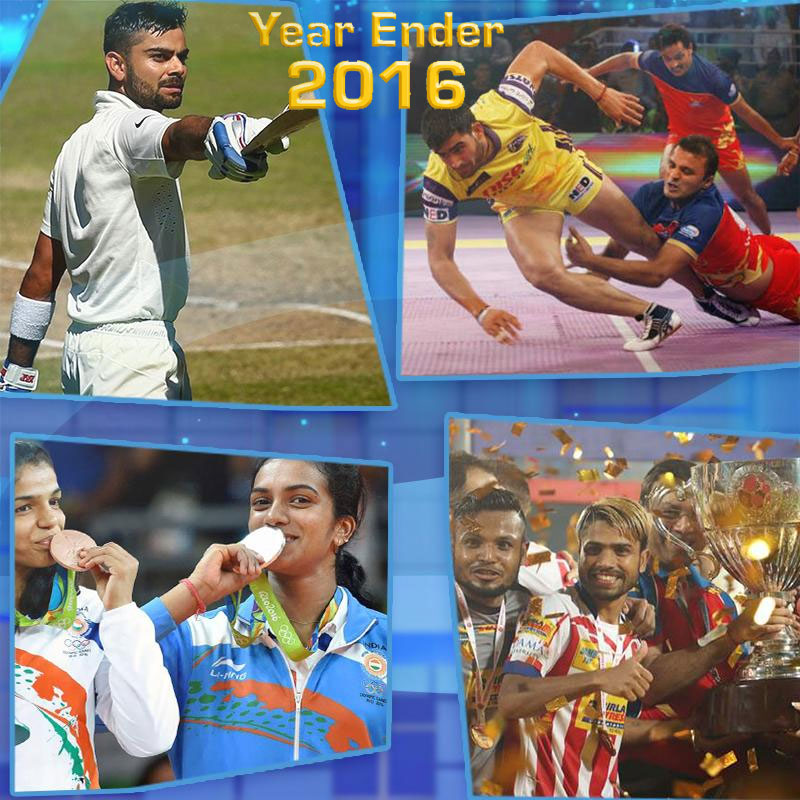
    It doesn’t get bigger than the Olympics, does it? In one of the most apt hash tags in Indian markets last year, Star Sports used #issebadakuchnahi in the build up to the Rio Olympics 2016. Rest as they say, is history. Female badminton player PV Sindhu reached the finals and was part of an extensive marketing programme by the Star network.

     The tall and powerful Indian, who catapulted overnight as a superwoman in an overtly patriarchal country, lost to Spain’s Caroline Marin in a well-fought three-set final 21-19, 21-12 and 21-15. The match recorded 17.2 million impressions, the most viewed programme on that day across all genres in India. In total, 202 million viewers tuned in to watch the Rio Games on television and 10 million (Star’s internal figures) watched the live streaming on Star’s digital sibling, Hotstar.

    The whole scenario of Indian alternative sports or non-cricket games has changed after the Rio Olympics. Fans found new heroes in gymnast Dipa Karmakar, Sindhu, wrestler and bronze medallist Sakshi Malik, Aditi Ashok and various other sports personalities. As part of the story-telling, Star Sports brought their stories to fans via videos, images and content and ensured continuous engagement with fans throughout the tournament with conversations peaking when India clinched two medals (badminton and wrestling). So thought out was the marketing engagement unleashed by Star Sports that it even dug out the noodle-haired Indo-Canadian Kamal Sidhu, one of India’s fav music veejays and TV anchors during the mid 1990s and early 2000s, as the host for pre-live Olympics programmes.

    #BillionCheers, a 360-degree campaign that happened before, during and after the Olympics helped #Rio2016 become one of the top trending hash tags in India in 2016.

     4. India Super League

    The Indian football extravaganza was one of the hottest tournaments in 2016 in terms of viewership. The league saw the arrival of 2010 World Cup Golden Ball winner Diego Forlan join hands with Mumbai City FC, taking the side to the semi-finals for the first time in three editions. The league was won by Atletico de Kolkata, which defeated fellow first season finalists Kerala Blasters at a wildly-cheering houseful Kochi Stadium in Kerala.

    Using the Diwali fervour as a peg to enhance viewership, Star Sports network used a tagline of ‘Ye Diwali Football wali’ to connect the game to the audiences and the soccer culture of the nation. While 41 million fans tuned in to television to watch the final, it was a rise of 41 per cent viewership compared to the final of ISL 2015. In Kerala, the ISL matches were viewed more than the 2016 T20 cricket WC semi-final between India and West Indies and the Euro 2016 final.

    In West Bengal, the match had a higher viewership than the IPL 9 final. The league saw a total viewership of 216 million and a steep growth in rural viewership, cumulatively reaching 101 million viewers in a new high for the sport. This edition of the league also registered double view-time as compared to 2015 on the digital platform Hotstar.

    5. Kabaddi World Cup

    Arguably the alternative sport of 2016, kabaddi grew manifold with two editions of Pro Kabaddi League (PKL) and the men’s World Cup in the same year. The viewership of every event grew as time progressed and the game can now boast of having a dedicated audience, both on ground and on TV and digital platforms. The fourth edition of the PKL posted 10 million average BARC impressions and is the only league in the country to have registered a growth trend in four editions. The league has shown a growth of 51 per cent in the last four seasons and has been one of the key reasons for India’s good performance in the World Cup.

    As India snapped up the World Cup, the men’s edition clocked a whopping 114 million impressions spread across 33 matches over 16 days. Star helped building its audience with #readytoraid and a TVC that captured well rural India, the topography the game is primarily associated with.

    The women’s kabbadi challenge was even better. In the marketing strategy, Star Sports highlighted that women regularly challenge gender stereotypes in the society and can cross the line in kabaddi as well – the hash tag being an apt #crosstheline. After women’s kabaddi in PKL IV, the first two matches got a viewership of 38 million, the highest any women’s sport has got in India ever. The tournament had a total viewership of 90.4 million, with an average of 6.7 million impressions as per BARC data. This number is 2.3 times higher than the second semi-final between New Zealand and West Indies, the highest rated women’s game till date. Thus, women’s kabaddi Challenge features amongst the top 10 sporting events watched on Indian television over the last one year.

  • Star’s five marketing strategies that helped sports grow in 2016

    Star’s five marketing strategies that helped sports grow in 2016

    “Business has only two functions: marketing and innovation,” is a lesser known observation of Milan Kundera, the Czech-born French writer who’s more famous for Unbearable Lightness of Being and more such thought-provoking novels.

    Why are we cross referencing Kundera in a write-up for sports marketing campaigns? Simply because Star India and its bouquet of sports channels, marketed under brand Star Sports, are following Kundera’s words to a T— and successfully too.

    In a dynamic world of sports broadcasting where events are now held and telecast almost round the year — at times various big ticket events held and aired live the same day in different part of the globe in different time zones — it is difficult to ensure the success of every league or tournament in terms of advertising revenue. Behind the numbers’ game, lot of research is done to finalise marketing strategies, which are aimed to ensure that audiences are given exactly what they want, where they want and how they want.

    With some smart packaging, marketing and advertising, Star India has managed not only to acquire broadcast rights for the region for some of the big sporting events, but also get the eyeballs — and advertising revenue — to justify the millions of dollars it is sinking into Indian sports. A business newspaper reported last year that Star India has bet Rs. 200 billion (Rs. 20,000 crore) on sports. This money has been ploughed into not only getting the rights for Indian cricket, Summer Olympics and sundry other games, but also into building lesser sports like kabaddi and cash in on football’s popularity by creating an Indian football league with participation of retired international stars.

    We look at five marketing strategies of Star India, helmed by Chairman and CEO Uday Shankar and his deputy Sanjay Gupta, which helped the respective sports aired on Star Sports grow in terms of viewership in India.

    1. India vs. England Test Series

    In an age where T20 and slam-bang form of cricket is being aggressively promoted and vastly followed, it has been a refreshing change to see Test cricket getting good viewership. India had been itching to take revenge over England, a side which had defeated the Indian cricket gladiators in three consecutive Test series prior to this.

    Building up the tension with #scoretosettle, Star Sports network used the Virat Kohli factor very effectively and the response was satisfying. The five-match Test series had a reach of 159 million viewers. BARC recorded a total of 728 million impressions in the India urban market and a total of 1,217 impressions in the all-India market. The fourth Test had the highest rating with 4.9, proving the series was the biggest of the year.

    Virat Kohli scored a brilliant 235 in the fourth Test and the rise of Karun Nair and Jayant Yadav had Indian viewers glued to their TV screens. There would have been additional viewers reached via Star’s digital platform Hotstar that too streamed the matches. The series was won 4-0. It was not only Team Virat that put on a sterling performance in recent times, but also Star Sports in terms of viewership.

    2. ICC Cricket T20 World Cup

    In a heavily marketed campaign of the year, the T20 World Cup was being played on the Indian soil for the first time in its history. Quirky, gripping and nationally-emotional TVCs were made and beamed on national television starting early 2016. With #T20WC as easy and relatable as ever, the match between India vs. Pakistan trended with #maukamauka, setting the tone for brilliant support for the Men in Blue. India defeated Pakistan comfortably, riding on Virat Kohli’s brilliant half century after the team, at one time, was tottering at 23/3 due to a fearful Mohammed Amir spell. India reached the semi-finals, only to be defeated by eventual winners West Indies.

    The tournament reached 393 million people in India, one of the highest viewed tournaments in 2016. The India vs. Pakistan game got a rating of 17.3 across the Star Sports network, becoming the most watched T20 game ever since the 2007 WC final played between the arch-rivals.

    While the cricket on display was high quality, credit must be given to the marketers who too did their job magnificently. Video snippets and memes capturing Mauka-man’s reactions were also pushed in real-time during the match and after it, which contributed to #IndvsPak overtaking the tournament’s official hash tag during the game.

    The Mauka Mauka campaign, originally devised in 2015 by Ranchi-born Suresh Triveni for Star Sports, not only connected with cricket fans instantly, but also got featured in a Forbes’ list of five best sports marketing campaigns that went viral in 2015. Even as the campaign’s character still connects with viewers when used by Star Sports, writing about it in 2015 Forbes said, “Occasionally, a campaign hits a nerve and it catches the attention of a whole country. For India, this is that campaign.”

    3. Rio Summer Olympics 

    It doesn’t get bigger than the Olympics, does it? In one of the most apt hash tags in Indian markets last year, Star Sports used #issebadakuchnahi in the build up to the Rio Olympics 2016. Rest as they say, is history. Female badminton player PV Sindhu reached the finals and was part of an extensive marketing programme by the Star network.

     The tall and powerful Indian, who catapulted overnight as a superwoman in an overtly patriarchal country, lost to Spain’s Caroline Marin in a well-fought three-set final 21-19, 21-12 and 21-15. The match recorded 17.2 million impressions, the most viewed programme on that day across all genres in India. In total, 202 million viewers tuned in to watch the Rio Games on television and 10 million (Star’s internal figures) watched the live streaming on Star’s digital sibling, Hotstar.

    The whole scenario of Indian alternative sports or non-cricket games has changed after the Rio Olympics. Fans found new heroes in gymnast Dipa Karmakar, Sindhu, wrestler and bronze medallist Sakshi Malik, Aditi Ashok and various other sports personalities. As part of the story-telling, Star Sports brought their stories to fans via videos, images and content and ensured continuous engagement with fans throughout the tournament with conversations peaking when India clinched two medals (badminton and wrestling). So thought out was the marketing engagement unleashed by Star Sports that it even dug out the noodle-haired Indo-Canadian Kamal Sidhu, one of India’s fav music veejays and TV anchors during the mid 1990s and early 2000s, as the host for pre-live Olympics programmes.

    #BillionCheers, a 360-degree campaign that happened before, during and after the Olympics helped #Rio2016 become one of the top trending hash tags in India in 2016.

     4. India Super League

    The Indian football extravaganza was one of the hottest tournaments in 2016 in terms of viewership. The league saw the arrival of 2010 World Cup Golden Ball winner Diego Forlan join hands with Mumbai City FC, taking the side to the semi-finals for the first time in three editions. The league was won by Atletico de Kolkata, which defeated fellow first season finalists Kerala Blasters at a wildly-cheering houseful Kochi Stadium in Kerala.

    Using the Diwali fervour as a peg to enhance viewership, Star Sports network used a tagline of ‘Ye Diwali Football wali’ to connect the game to the audiences and the soccer culture of the nation. While 41 million fans tuned in to television to watch the final, it was a rise of 41 per cent viewership compared to the final of ISL 2015. In Kerala, the ISL matches were viewed more than the 2016 T20 cricket WC semi-final between India and West Indies and the Euro 2016 final.

    In West Bengal, the match had a higher viewership than the IPL 9 final. The league saw a total viewership of 216 million and a steep growth in rural viewership, cumulatively reaching 101 million viewers in a new high for the sport. This edition of the league also registered double view-time as compared to 2015 on the digital platform Hotstar.

    5. Kabaddi World Cup

    Arguably the alternative sport of 2016, kabaddi grew manifold with two editions of Pro Kabaddi League (PKL) and the men’s World Cup in the same year. The viewership of every event grew as time progressed and the game can now boast of having a dedicated audience, both on ground and on TV and digital platforms. The fourth edition of the PKL posted 10 million average BARC impressions and is the only league in the country to have registered a growth trend in four editions. The league has shown a growth of 51 per cent in the last four seasons and has been one of the key reasons for India’s good performance in the World Cup.

    As India snapped up the World Cup, the men’s edition clocked a whopping 114 million impressions spread across 33 matches over 16 days. Star helped building its audience with #readytoraid and a TVC that captured well rural India, the topography the game is primarily associated with.

    The women’s kabbadi challenge was even better. In the marketing strategy, Star Sports highlighted that women regularly challenge gender stereotypes in the society and can cross the line in kabaddi as well – the hash tag being an apt #crosstheline. After women’s kabaddi in PKL IV, the first two matches got a viewership of 38 million, the highest any women’s sport has got in India ever. The tournament had a total viewership of 90.4 million, with an average of 6.7 million impressions as per BARC data. This number is 2.3 times higher than the second semi-final between New Zealand and West Indies, the highest rated women’s game till date. Thus, women’s kabaddi Challenge features amongst the top 10 sporting events watched on Indian television over the last one year.
  • Sports Minister lauds b’casters, other stakeholders in promoting sports

    Sports Minister lauds b’casters, other stakeholders in promoting sports

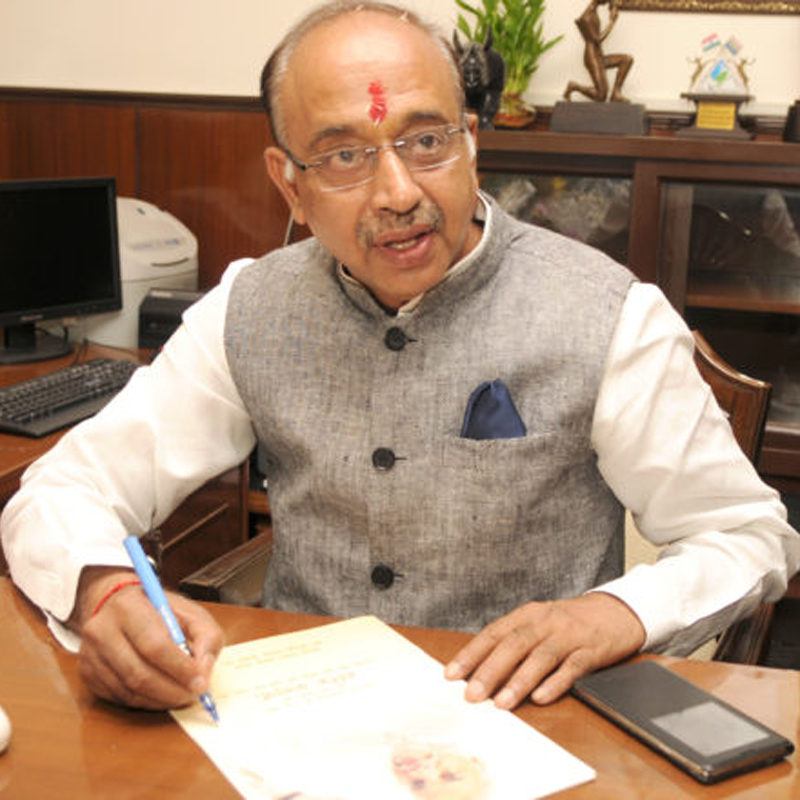
    NEW DELHI: India’s Sports Minister Vijay Goel said on Wednesday that digital media broadcasting will play a critical role in bringing about change in sports broadcasting in India but broadcasters must also focus on how sports as a product is delivered to audiences in rural areas so as to popularise the culture of sports.

    Addressing the CII Big Picture Summit 2016 here, he said increasing penetration of internet, mobile devices and cheaper data services, especially in rural areas, will prove a game changer in this direction.

    Interacting with the panellists on a session on `Sports Broadcasting in India: A Game Changer’, which meandered most of its time period all over the place despite having good representation from various segments of sports broadcasting and marketing, the Sports Minister said media has helped promote sports in the country and has also given a fillip to less popular sports like kabaddi.

    A majority of sports leagues have been made possible, including football, kabaddi, wrestling, hockey, tennis and badminton, by persistent efforts by various stakeholders, leading to cascading effects on tourism and infrastructure sectors, Goel, added.

    Pointing out that slick packaging of the sports leagues as entertainment by TV channels in India has been a game changer, the Minister said, “This is reflected in more than 450 million viewers of Indian Super League (football) with the most interesting revelation being the Pro Kabaddi League with a viewership of more than 500 million.”

    To make sports more catchy and interesting for an average man, some games can also learn few tricks from cricket’s bosses who invented shorter formats of the game to keep the viewer and on-field spectators hooked on, while creating a new business model.

    However, the Minister did admit that the sports as a culture is yet to percolate down to every Indian home and to rectify it an all out effort has to be made not only by the government, but also the people of the country.

    “Playgrounds in schools and residential areas are being trimmed because of scarce availability of land and such actions don’t help,” Goel said, adding the government is committed to working towards building a culture of sports and improving infrastructure but all stakeholders, including corporate and sponsors, must work towards this common objective.

  • Sports Minister lauds b’casters, other stakeholders in promoting sports

    Sports Minister lauds b’casters, other stakeholders in promoting sports

    NEW DELHI: India’s Sports Minister Vijay Goel said on Wednesday that digital media broadcasting will play a critical role in bringing about change in sports broadcasting in India but broadcasters must also focus on how sports as a product is delivered to audiences in rural areas so as to popularise the culture of sports.

    Addressing the CII Big Picture Summit 2016 here, he said increasing penetration of internet, mobile devices and cheaper data services, especially in rural areas, will prove a game changer in this direction.

    Interacting with the panellists on a session on `Sports Broadcasting in India: A Game Changer’, which meandered most of its time period all over the place despite having good representation from various segments of sports broadcasting and marketing, the Sports Minister said media has helped promote sports in the country and has also given a fillip to less popular sports like kabaddi.

    A majority of sports leagues have been made possible, including football, kabaddi, wrestling, hockey, tennis and badminton, by persistent efforts by various stakeholders, leading to cascading effects on tourism and infrastructure sectors, Goel, added.

    Pointing out that slick packaging of the sports leagues as entertainment by TV channels in India has been a game changer, the Minister said, “This is reflected in more than 450 million viewers of Indian Super League (football) with the most interesting revelation being the Pro Kabaddi League with a viewership of more than 500 million.”

    To make sports more catchy and interesting for an average man, some games can also learn few tricks from cricket’s bosses who invented shorter formats of the game to keep the viewer and on-field spectators hooked on, while creating a new business model.

    However, the Minister did admit that the sports as a culture is yet to percolate down to every Indian home and to rectify it an all out effort has to be made not only by the government, but also the people of the country.

    “Playgrounds in schools and residential areas are being trimmed because of scarce availability of land and such actions don’t help,” Goel said, adding the government is committed to working towards building a culture of sports and improving infrastructure but all stakeholders, including corporate and sponsors, must work towards this common objective.