Tag: Priya Ranjan Dasmunsi

  • Disappearance of Arab channels as no permission sought: Indian govt

    Disappearance of Arab channels as no permission sought: Indian govt

    NEW DELHI: The Indian government today clarified that no channel has been banned, especially Arab TV channels.

    Disappearance of Arab TV channels from Indian cable networks has got more to do with them not conforming to new media norms like getting landing rights from New Delhi, the government stated today officially.

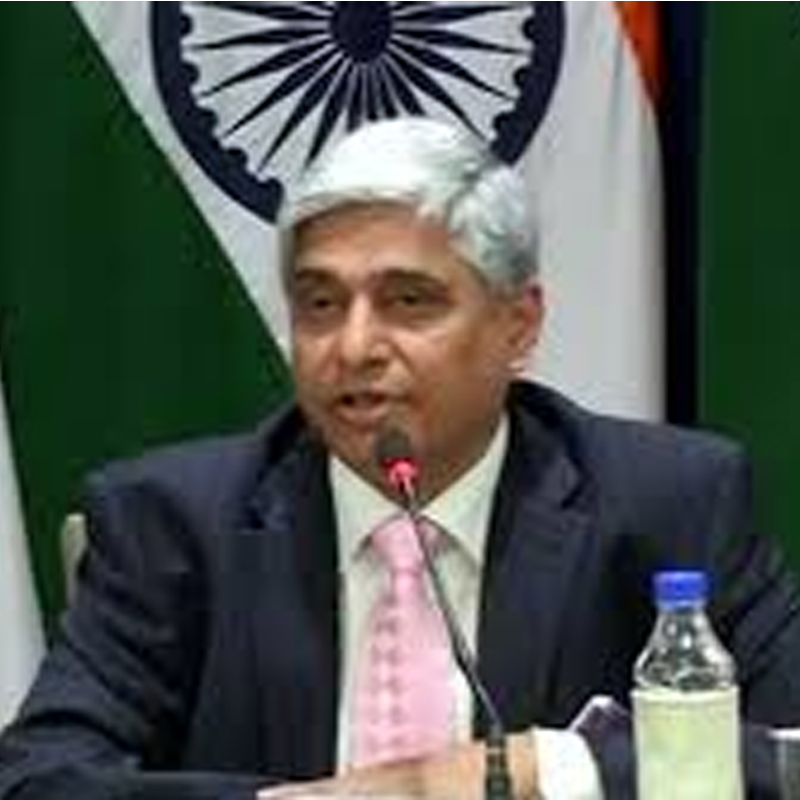
    “(The) government reiterates that Arab TV channels like Al-Jazeera, Al-Arabia (and) Q TV have not yet applied to be downlinked in India till date. Hence they cannot be transmitted/re-transmitted through cable networks/DTH in India, for public viewing,” information and broadcasting minister Priya Ranjan Dasmunsi said in a statement today.

    The information and broadcasting ministry statement added, “Arab channels are still free to apply afresh for registration under the downlinking guidelines, if they so desire and they will have similar opportunities like others.”

    Dasmunsi said in Lok Sabha (Lower House of Parliament) today, “In order to strengthen the mechanism of regulation over the content of television channels, which are being transmitted/re-transmitted through cable networks/DTH in India, for public viewing, the government has notified downlinking guidelines on 11 November, 2005.

    “All private TV channels, which are beamed into India and are being transmitted/re-transmitted through cable networks/DTH in India for public viewing, have to get themselves registered under the said guidelines. To facilitate smooth implementation, six months time (up to 10 May, 2006) was provided to all TV channels to comply with the provisions of the downlinking guidelines and get themselves registered.”

    The government has allowed TV channels, which were uplinked from abroad and had made an application for registration to the federal government up to 11 May, 2006, to be re-transmitted in India for a period of six months or till the time registration has been granted or refused, Dasmunsi said.

    Private TV channels, which were uplinking from India, in accordance with the permission for uplinking granted before 2 December, 2005, were treated as “registered” television channels under the downlinking guidelines, the government said today.

    The government also clarified that no Arab TV channels have been banned, as reported in a section of the media, under pressure from Israel.

    “The government of India denies this vehemently as it is contrary to facts. No channel in particular has been `banned’ recently by the ministry of information and broadcasting. This is a malicious and baseless accusation against the government by interested quarters,” Dasmunsi said.

    Under the downlinking norms, 65 TV channels, uplinked from abroad, have applied for landing rights.

    In a bylined report from Mumbai a correspondent of Arab News blared: “In a country widely referred to as the world’s largest democracy, the Indian government has succumbed to mounting Israeli pressure and ordered a nationwide ban on the broadcast of Arab television channels.”

    The report further added that New Delhi’s ban on Arab television stations “is in complete contrast to the friendship that Arab countries imagine exists with their neighbor across the Arabian Sea.”

    It seems the ban is a move to ensure that Indians do not get to see the atrocities that are presently being committed by Israel in Lebanon and the occupied territories, the report said.

    The lopsided report quoted one Nabila Al-Bassam, a Saudi businesswoman on a trip to Mumbai, as saying she became exasperated at not being able to watch Arab channels at Mumbai’s leading five-star Oberoi Hotel. When she took up the issue with the hotel manager, she was told that Arab television channels had been banned across India.

    What the hotel management and many like them did not know was that the so-called disappearance of Arab TV channels like Al Arabiya was because those TV channels had failed to apply for landing rights in India.
  • 2 new DD satellite channels for North-East India mulled

    2 new DD satellite channels for North-East India mulled

    NEW DELHI: Pubcaster Doordarshan is likely to set up uplinking facility for two new North East Indian channels in about a year and a half.

    These would, however, commence when adequate number of suitable programmes is ready, information and broadcasting minister Priya Ranjan Dasmunsi said today.

    The minister said that Rs. 27.9 million and under Rs. 1 million have been earmarked for the launch of these channels and their inclusion in Ku-Band under the North East special package phase-II, which was approved in May, 2006.

  • 2 new DD satellite channels for North-East India mulled

    2 new DD satellite channels for North-East India mulled

    NEW DELHI: Pubcaster Doordarshan is likely to set up uplinking facility for two new North East Indian channels in about a year and a half.

    These would, however, commence when adequate number of suitable programmes is ready, information and broadcasting minister Priya Ranjan Dasmunsi said today.

    The minister said that Rs. 27.9 million and under Rs. 1 million have been earmarked for the launch of these channels and their inclusion in Ku-Band under the North East special package phase-II, which was approved in May, 2006.

  • Government defers decision on TV channels’ apology

    Government defers decision on TV channels’ apology

    NEW DELHI: The Indian government deferred a decision on cracking the whip on TV channels airing surrogate liquor and tobacco advertisements.

    A communiqué from the information and broadcasting ministry to TV channels said that the decision on airing a public apology from 18-21 August has been deferred.
    The ministry communication also added that a decision on airing of surrogate ads relating to liquor and tobacco companies would be taken by a “competent authority” at a later date.

    The ministry of Information and Broadcasting had earlier this month issued a warning to 43 channels directing them to carry a scroll for three days regretting airing surrogate advertisements of liquor and tobacco products in violation of rules.

    The ministry, however, did not elaborate on the competent authority that will decide on such matters or when would such an authority come into existence.

    Broadcasting industry sources said that this was an outcome of effective lobbying with the ministry.

    On Monday, broadcast industry representatives met up with I&B minister Priya Ranjan Dasmunsi and ministry’s secretary SK Arora to discuss various aspects of a proposed broadcast legislation, a draft of which has been dubbed “draconian” by stakeholders.

    One of the issues discussed that day was airing of an apology by ‘errant’ TV channels, which was described as public humiliation.

    Interestingly, when confronted with the apology issue, Dasmunsi had told some of the media companies’ representatives that he wasn’t aware of such a diktat.

    The Indian Broadcasting Foundation (IBF) had also written to the ministry expressing member-TV channels’ reservations on the issue of scrolling an apology.

    The scroll that was to be aired 24-hours for three days read thus: “Ministry of information & broadcasting issues a warning to X (name) channel for telecasting surrogate advertisements of liquor/tobacco products in violation of advertising code. X (name) channel regrets this and apologies for the same. We assure to be more careful in future.”

    Meanwhile, a government-industry meeting on coverage of terrorism and related issues by TV news channels, slated to be held 18 August, was postponed.

    No further date has been intimated to TV channels presently.

    The meeting, called in the aftermath of bomb blasts in Mumbai recently, was to deliberate on the modalities of coverage of terrorism-related events.

    At least two Indian news channels had been issued show-cause notices by the I&B ministry for airing programmes, which have been “objected” to by security forces and the home ministry.

  • DD Urdu channel starts beaming

    DD Urdu channel starts beaming

    MUMBAI: Doordarshan’s Urdu channel — DD Urdu — was officially launched on 15 August to coincide with India’s 60th Independence Day.

    With its launch, DD Urdu now becomes the second service after ETV Urdu, managed by the Hyderabad based Eenadu TV, to have a 24-hour channel dedicated to the language.

    DD Urdu was officially launched by Prime Minister Dr Manmohan Singh, who said that with the combined force of globalization and television, which would reach every nook and corner of the world.

    The advent of this channel will strengthen the civilisational foundations of the country and would promote unity, Singh said.

    Urdu is a symbol of rich, cultural and literary mosaic of our country and the new channel would help take this role of Urdu language further forward, he added.

    In a speech laced with poetry and erudition, the PM dwelled on the social and literary achievements of Urdu and celebrated the language’s contribution in the cultural journey of the nation, according to an official release.

    Information & broadcasting minister Priya Ranjan Dasmunsi said the new channel will fulfill the media needs of over 50 million Urdu speaking people in the country. The UPA government is committed to this cause and will provide all support in this regard, Dasmunsi stated.

    Referring to great Urdu poets like Mirza Ghalib, Mir Taqi Mir and Firaq Ghorakpuri, Dasmunsi said that Urdu language and literature have had a deep impact on our culture. “During the freedom struggle, famous Urdu slogans motivated and inspired the youth. Urdu had brought about a new culture and promoted the concept of unity in diversity,” he added.

    In his welcome address, Prasar Bharti chairman MV Kamath described Urdu as a pan Indian language. He said that DD Urdu would preserve and promote the great cultural heritage and literary aspect of this rich language.

    UPA chairperson Sonia Gandhi, several Union ministers, personalities and senior officials of the I&B ministry and Prasar Bharti were present on the occasion.

    DD Urdu channel has been conceived as a heritage channel, which will have segments on entertainment and enrichment for culture and information. It will initially have a daily transmission of seven hours which would subsequently be extended to 24 hours per day.

    It is worth noting here that the British Broadcasting Corporation (BBC), has been scouting for joint venture partners for launching television news channel services in Urdu, beside Hindi, in India.

    Sahara news network, which manages a bouquet of news channels, had also targeted to launch a Urdu news and information channel on 15 August. But, the channel is likely to be on air by the end of the current year.

  • DD to be available now in Canada, US

    DD to be available now in Canada, US

    NEW DELHI: Finally pubcaster Doordarshan will be available in the US and Canada.

    Prasar Bharati, which manages DD, has said that it has entered into agreements for the distribution of DD India channel in Canada and the US.

    Briefing fellow parliamentarians, information and broadcasting minister Priya Ranjan Dasmunsi said earlier in the week that a similar distribution agreement for the UK is under finalization.

    In the UK, DD is negotiating to be on the News Corp-controlled BSkyB’s pay platform.

    DD India carries news bulletins, features on topical events, entertainment programmes, feature films, music and dance shows, including children programmes in some regional languages.

    Dasmunsi said that the content medley of DD India is expected to serve the interests and needs of the Indian diaspora.

    A study on the reach and impact of DD India channel in Middle-East countries is also on the anvil.

    DD, AIR INITIATIVES ON REVENUE EARNINGS

    All India Radio (AIR) is charging tower rentals (including maintenance charges) for the infrastructures being offered to private broadcasters during Phase-II FM service as part of revenue generating prospects.

    The rentals for category A+, A, B, C and D cities are Rs. 1.3 million, Rs 0.8 million, Rs 0.4 million, Rs. 0.3 million and Rs. 0.18 million respectively.

    According to the I&B minister, Doordarshan has also decided to charge a carriage fee amounting to Rs. 10 million per annum from private channels that are interested in becoming part of the bouquet of channels carried on its DD Direct Plus subscription free DTH service.

    What’s more, AIR has introduced on line computerized booking system (Central Window Booking) at its Central Sales Unit, Mumbai, which has been linked to all its 15 Commercial Broadcasting Service (CBS) centres for all advertisers and clients.

    The minister said AIR is constantly devising new programming formats to suit local audiences. Local variation components of Vividh Bharati stations on AM frequencies are being increased to augment listenership and attract more
    advertisers.

    AIR has also introduced 1:1 bonus scheme for spot booking to attract more advertisers.

    For the fiscal ended 31 March 2006, AIR generated revenues of over Rs 1oo crore.

    Doordarshan too has taken various steps with a view to increase revenues, including opening marketing divisions in Mumbai, Chennai, Hyderabad, Delhi, Kolkata and Bangalore and setting up of Development Communication Division
    for securing business and catering to the publicity requirements of various government agencies and public sector undertakings.

    Cable operators have now been given the option to download signals either in analog or digital mode to improve the transmission quality as digitalization increases.

    DD’s commercial rate card is being constantly reviewed and revised to bring it in tune with market practices and the amount of bank guarantee to be submitted by accredited agencies increased from Rs 300,000 to Rs. 25 lakhs.

    Dasmunsi also said that an empowered committee, comprising Prasar Bharati CEO and other senior members of the board have been constituted for quick decisions in commercial matters and payment behaviour is regularly
    monitored.

    For FY06 DD’s total revenue earnings were over Rs. 10 billion.

  • No sole sport rights to Doordarshan: Govt

    No sole sport rights to Doordarshan: Govt

    NEW DELHI: The Indian government today clarified that it was not working towards a mechanism to give pubcaster Doordarshan the sole rights to sporting events in the country.

    The government, however, has issued an order on 5 April 2006 that mandates live feeds of a number of specified sporting events of national importance held in India or abroad to be shared with Prasar Bharati by private broadcasters.

    In case of cricket events, these shall include all matches featuring India and the finals and semi finals of international events, information and broadcasting minister Priya Ranjan Dasmunsi informed Lok Sabha (Lower House of Parliament) today.

    He also said that the government has no proposal to set up a regulatory authority to monitor and regulate earnings through telecasting of sporting events.

    However, the government is contemplating establishment of an autonomous authority to regulate the broadcasting sector.

    The minister, however, did not give any time frame to bring about legislation to regulate the broadcasting sector. Earlier, Dasmunsi had said that his ministry was working towards introducing a Broadcasting Bill in Parliament in the monsoon session, which started on24 July.

    Severe criticism of a draft Bill, doing the rounds of various ministries for feedback on it, has prompted the I&B ministry for the moment from not listing it on the agenda of Parliament’s present session that will close on 30 August.

  • Broadcast Bill still has minefields to clear before becoming law

    Broadcast Bill still has minefields to clear before becoming law

    So the government again renews its long-in-the-trying attempt to get broadcast regulation in place. Is it just us or is this feeling of déj? vu that it may be another exercise in futility shared by the industry as well?

    Still, that doesn’t take away the importance of having a comprehensive legislation for the sector that is estimated to be worth Rs 427 billion in 2010 according to the PricewaterhouseCoopers report presented at this year’s Ficci Frames convention.

    The Broadcasting Bill has been dangling on an uncertain thread for close to a decade now. Several information and broadcasting (I&B) ministers in several governments, who have tried to maneuver it past the corridors of the houses of Parliament and into law, have come and gone. All have failed; none have had the drive to push it through. It has proved to be an untouchable piece of legislation; a hot potato that is dropped every time an effort is made.

    The Bill tries to address the issue of encouraging domestic originating content on TV channels by mandating a 15 per cent share for it.
    _____****_____

    Another attempt is being made to enact the covered-with-dust Bill. A draft has been prepared for the Union Cabinet’s persual and initial indications are that it is going to impact almost everyone in the broadcasting food chain. It is slated to be introduced in Parliament during the Monsoon session by not-even-a-year-in-the-seat I&B minister Priya Ranjan Dasmunsi.

    I&B ministry secretary SK Arora has been working for a long time on putting together the document. Help has been sought from several quarters while drafting the Bill: the US FCC, Casbaa in Hong Kong, other consultants, consumer groups and interested parties.

    The Bill tries to address the issue of encouraging domestic originating content on TV channels by mandating a 15 per cent share for it. Then it caps cross media ownership at 20 per cent, and even share of voice for a TV channel or cable TV network nationally at 15 per cent. A Broadcasting Regulatory Authority of India (Brai) is to be set up (have we not heard this one before?), which will monitor the content on TV channels and oversee the broadcast industry in all its aspects the same way as the Telecom Regulatory Authority of India does in the telecom sector.

    No broadcaster or cable TV operator is going to cede power and control they have acquired over the years they have been operating in India.
    _____****_____

    The first piece of legislation is more than welcome and should in the medium to long term give a boost to local TV production and more so animation. Of course, it goes without saying that it is in the interest of local broadcasters to create local content that appeals to audiences and there’s no running away from it if they are seeking to make money out of the market. That they have so largely shied away from doing so, may be part of their business plan. There will be some bickering about this by some of the players.

    Of course, the government will have to specify whether the 15 per cent content cap relates to fresh domestic prime time content or to recycled content. Remember some broadcasters might buy garbage worthy shows dirt cheap and put them on air late at night in order to fulfil the legislative norms.

    Additionally, a transition period will have to be specified so that the domestic production industry gears up to deliver the quality animation and programming that is demanded internationally, so that international broadcasters can – if they want – buy worldwide rights.

    On the whole, over time the 15 per cent imposition could well catapult TV documentary makers and animation studios into the next level. Though some argue that the cap should be higher, it is a good start.

    That is just the soft part of the Bill though. Trying to control share of voice and restricting cross media ownership are two clauses that are arguably going to get the entire Bill stuck in a quagmire; lot of it political. Reason: hectic lobbying is going to commence to do away with them. It is these clauses which in the past have prevented the Bill from becoming a law. And, it is quite likely to do the same once again.

    No broadcaster or cable TV operator is going to cede power and control they have acquired over the years they have been operating in India. Many of their business models are based on this power.

    The setting up of Brai is another moot point. It’s about time a content watchdog was set up. The other option is that the industry kowtows to a xenophobic government’s every content concern and censorship demand.

    Additionally, the draft Bill fails to clearly address broadcasting in a converged era to hand held devices and mobile phones.

    A key question everyone is asking: will the Bill go through this time? It looks unlikely to have an easy ride and, in all probability, will be knocked into another shape and form. Or, it may end up being still born. Its passage will depend on how much pressure the I&B mandarins — and the Congress-led coalition government — are willing to withstand not only from the Opposition, but also allies, some of whose sympathisers have big media dreams in East and South India.

  • Government mulls USO Fund for Prasar Bharati

    Government mulls USO Fund for Prasar Bharati

    NEW DELHI: Private broadcasters and big MSOs in the country might soon be called to lend a helping hand in the financial restructuring of pubcaster Prasar Bharati.

    According to one of the options relating to funding of Prasar Bharati, suggested by a government panel, a corpus can be created from contributions from the broadcast and cable industry on the lines of the universal service obligation (USO) fund in the telecom sector.

    Five per cent of a private telecom operator’s annual revenues go towards the USO fund, which is used to finance new rural telephony projects identified by the government.

    The panel on Prasar Bharati’s financial restructuring has suggested that private broadcasters and MSOs can be asked to contribute between 5-10 per cent of their annual revenues for a USO fund-type corpus, which can be used to support the over 45,000 workforce of the pubcaster.

    Prasar Bharati, which manages Doordarshan and All India Radio, is in the middle of a debate over ways to augment its earnings.

    This recommendation, along with others in a nearly 300-page report, is being presently studied by a group of ministers (GoM) before the issue is taken to the Union Cabinet for a formal okay.
    The GoM met briefly last week, information and broadcasting minister Priya Ranjan Dasmunsi told Indiantelevision.com. He did not give any time frame on taking the Prasar Bharati matter to the Cabinet.

    However, industry players observe whether there would be increased accountability of Prasar Bharati if a USO fund is created via private sector players’ contribution to partly fund pubcaster’s activities. More importantly, whether the funds would be properly used.

    According to Hindu Business Line, of the Rs 107.53 billion collected by the government from telecom companies in the form of USO fund since its inception in 2002-03, a staggering Rs. 70 billion is yet to be disbursed.

    The newspaper quoted the Telecom Regulatory Authority of India as saying that undisbursed amount is estimated to cross Rs 250 billion by 2010 against a total collection of Rs. 375 billion, which means only 48 per cent of the fund is expected to be utilised for extending telephone services in the rural areas. The numbers assume significance even as the digital divide between rural and urban is ever increasing.

    Meanwhile, letting the pubcaster tap the capital markets and levying a cess on sale of every TV and radio set in the country are amongst some of the other options suggested by the committee on financial rejig of Prasar Bharati.

    Though Prasar Bharati closed FY 2006 with record-breaking revenues of over Rs 12 billion, its expenses are so huge that the government is finding it difficult to bridge the chasm between income and expenditure.

  • Prasar Bharati financial rejig awaits GoM nod

    Prasar Bharati financial rejig awaits GoM nod

    NEW DELHI: A group of ministers (GoM) looking into a possible financial restructuring of pubcaster Prasar Bharati to boost its revenue generation capacity has said no final decision has been taken on various options.

    On Thursday, Prasar Bharati, which manages Doordarshan and All India Radio, made a presentation to the GoM highlighting its plus and negative points, including possible ways to augment revenue generation that is lagging far behind annual expenses incurred.

    While confirming that a presentation was made to the GoM, Prasar Bharati CEO KS Sarma told indiantelevision.com that it was made clear to him that the ministers would look into the issue before taking the package to the Cabinet for a final approval. Sarma added amongst the many options presented before the GoM were levying a one-time cess on TV and radio sets in the country and tapping the capital market.

    These options, Sarma said, were in line with a report prepared by a panel, headed by information and broadcasting secretary, set up to look into the financial restructuring. The report is now being studied by the GoM.

    Asked whether the GoM and then the government are likely to okay the financial restructuring of Prasar Bharati during his tenure, which ends 30 June 2006, Sarma replied in the negative, hinting that the issue is likely to take more time.

    Amongst the options, as has been reported by indiantelevision.com last year, is also one that envisages the government holding equity in the pubcaster against assets, which will facilitate a capital restructuring of the financially beleaguered Prasar Bharati or Broadcasting Corporation of India.

    A government official added that media reports on financial restructuring of Prasar Bharati were “premature.”

    In the meanwhile, reports on levying a cess on TV and radio sets to give a fillip to Prasar Bharati revenue has almost set the cat the pigeon with stiff opposition coming from consumer electronics manufacturers.

    However, present I&B minister Priya Ranjan Dasmunsi’s predecessor Jaipal Reddy had been against levying a cess on TV and radio sets. His justification: the cost of collecting this cess from all over the country would be more than the actual amount collected.

    British broadcaster BBC is partly funded through this mode where Englanders pay a nominal amount at the time of buying of a TV or radio set. A recent proposal of the Tony Blair government to hike this amount has been widely resisted British citizens.