Tag: Priya Ranjan Dasmunsi

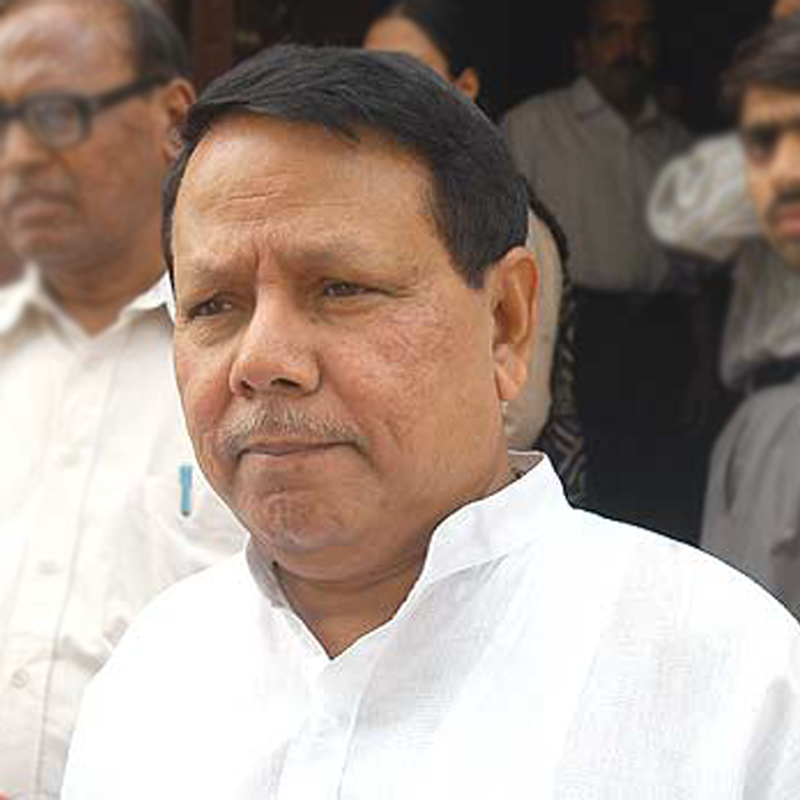
  • Former I&B minister Priya Ranjan Dasmunsi passes away

    Former I&B minister Priya Ranjan Dasmunsi passes away

    NEW DELHI: Former Information and Broadcasting (I&B) minister Priya Ranjan Dasmunsi, who took several unpopular decisions during his tenure, died after being in a coma since 2008. He was 72.

    He had suffered a massive stroke in 2008 leaving him paralysed and unable to speak and lapsed into a coma during treatment. He had been critically ill over the past month, according to the Apollo hospital, and died at 12.10 pm on 20 November.

    As I&B minister during the first term of the Manmohan Singh-led government from 2004-2008, Dasmunsi was instrumental in passing a law in 2007 which resulted in all broadcasters holding rights to sporting events having to forcibly share signals with Prasar Bharati. His term also saw several bans on western television networks, including a three-month ban on the Sony-owned television network AXN and Fashion TV following the broadcast of programs deemed “obscene” by him.

    In 2006, Dasmunsi was the first Indian to be a match commissioner in a FIFA World Cup game between Australia and Croatia. He was heading the Indian football governing body at the time of his stroke in 2008, which led to Praful Patel taking over as president. Dasmunsi served as the president of the All India Football Federation for almost 20 years.

  • Government concerned over content in TV news channels

    NEW DELHI: Information and broadcasting minister Priya Ranjan Dasmunsi today wondered why news channels tended to sensationalise entertainment news, and said he would meet editors of the news channels next month in this connection.

    The minister expressed his concern on two occasions, first while addressing a seminar on gender parity in the media on the occasion of World Press Freedom Day, and then in his reply in the Lok Sabha to the Cable TV Networks (Regulation) Amendment Bill 2007 making it mandatory for all cable operators to show Lok Sabha TV and two terrestrial channels of Doordarshan.

    He said 60 per cent of the time on news channels was taken by entertainment news, and very
    little time was given to serious news. There was also a tendency to sensationalise, and gave the example of the ’28 seconds of Shilpa Shetty kissing’ which was shown by channels throughout the day. Noting that the ‘poor woman’ (Shilpa Shetty) was suffering, the minister said ’28
    seconds of Shilpa Shetty kissing was shown 28 times, 48 times, 88 times, even 100 times. Is it for commercial purposes, TRP purposes? In a country of 1 billion people, I don’t know how this becomes breaking news.”

    Dasmunsi was referring to the kissing incident between Hollywood actor Richard Gere and filmstar Shilpa Shetty at a function here to raise AIDS awareness among truckers last month, which had led to a case in Rajasthan and demands for Gere’s arrest for “violating Indian culture”.

    He also said while Indian media barons and employers were enjoying ‘freedom of press’, they did not allow ‘freedom of journalists’. “In India we have freedom of press – yes; but freedom of journalists – not yet. Sometimes journalists work in most pitiable conditions,” commented the minister. He alleged, “75 per cent journalists in India are voucher paid (as against regular salaried employees). Does this reinforce the freedom of press?”

  • Star TV office in Mumbai ransacked

    MUMBAI: An irate mob belonging to a little known organisation called Hindu Rashtriya Sena ransacked the Star TV office in Mumbai today, smashing cars parked outside the office and also damaging the office itself. The motive: anger over a programme showing a Muslim youth and a Hindu minor girl who had eloped.

    Star News issued a statement condemning the incident: “We condemn this attack on our office by certain anti-social elements. They completely ransacked the Star News Office in Mumbai today, injuring our security & other staff and causing huge financial damage. It is alarming that people are using such means to register their protests. We believe that this is in reaction to our coverage about a young eloped couple from Surat. As a responsible news channel we have factually reported the situations surrounding the same. We will cooperate fully with the authorities to ensure that necessary action is taken.”

    Meanhwile, Mumbai Police Commissioner of DN Jhadav said, “A little known group Hindu Rashtriya Sena was behind the attack. We have detained 35 people in the case. We will take all legal action.”

    Maharashtra Deputy CM and Home Minister RR Patil promised to get tough against the miscreants stating that “such strict action would be taken against these people (to ensure) that such an action is never repeated.”

    Star News CEO Uday Shankar, however, remained unconvinced by Patil’s assurances. Shankar lambasted the role of the authorities such incidents when he pointed out that such acts were becoming increasingly common because there has never been any serious action taken in the past against any of these groups.

    Said Shankar, “The most disturbing part of this whole episode is the kind of intolerance that political groups can resort to and the kind of dispute resolution mechanism that is becoming increasingly popular across India where anything that a media organisation says or prints that is remotely unpalatable to an organisation or individual and you will see their supporters and goons ransacking everything.”

    Information and Broadcasting Minister Priya Ranjan Dasmunsi also weighed in, terming the attack on Star as an assault on democracy and demanded that the state government bring the culprits to book.

    It is worth noting here that on 9 February, 2006, a mob of over 100 Shiv Sainiks, raising slogans of Shiv Sena chief Bal Tackeray, had pelted stones at a Zee News office and had ransacked the property in protest against the telecast of a play on Zee Alpha Marathi channel.

    In that attack several Zee News employees were also injured, with a few of them having been rushed to a nearby hospital.

  • Delayed feed: I&B issues showcause to Nimbus

    Delayed feed: I&B issues showcause to Nimbus

    NEW DELHI: The information & broadcasting ministry has issued a notice to Nimbus Communications to show cause why Neo Sports owned by it has failed to comply with the provisions of the ordinance issued recently for mandatory sharing of live sports feed with Prasar Bharati.

    Nimbus Communications has been given time till tomorrow to reply to the notice, which was issued yesterday, failing which the government is “free to take action as permissible under the ordinance”. The showcause was issued on the orders of I&B minister Priya Ranjan Dasmunsi.

    What has irked the mandarins in the ministry is that for the ongoing One-Day International series involving Sri Lanka, as well as the earlier one that pitted the Boys in Blue against the West Indies, DD has been forced to telecast the matches with a seven minute delayed feed.

    The Sports Broadcasting Signals (Mandatory Sharing with Prasar Bharati) Ordinance 2007 has a clause embedded in it that states that television channels that fail to comply with the terms of the ordinance for compulsory sharing of live feeds with the national broadcaster Prasar Bharati would have to pay a penalty up to Rs 10 million and also face possible revocation or suspension of license.

    The ordinance promulgated on 3 February has retrospective affect from 11 November, 2005, which was when the government had issued its guidelines for downlinking of TV channels. The Uplinking Guidelines had been issued on 12 December, 2005. It has also been stipulated that no action of the government could be challenged in any court of law.

    With the Guidelines coming in the ambit of the Ordinance which is expected to be replaced by an Act of Parliament in the ensuing Budget session, the government has taken upon itself the powers to enforce them with retrospective effect. The guidelines are already the subject matter of two petitions in the Delhi High Court.

    It may be recalled that the Delhi High Court had on 12 February refused to stay the operation of the ordinance asking private sports channels to share live feed of cricket and other sports events with the pubcaster.

    A High Court division bench headed by Justice Vikramajit Sen has posted the matter for further hearing tomorrow.

  • Nimbus-DD talks fail, I&B may issue ordinance

    Nimbus-DD talks fail, I&B may issue ordinance

    NEW DELHI: The information and broadcasting ministry is likely to issue an ordinance by the end of the week, making it mandatory for Neo Sports to share its cricket telecast feed with Prasar Bharati.

    Ministry sources told Indiantelevision.com that as the minister Priya Ranjan Dasmunsi was not in Delhi, deliberations on drafting an ordinance can only commence on Tuesday.

    If an ordinance is finalized, it will be sent to the law ministry for clearance and only then referred to the union cabinet for approval. As this process is unlikely to be complete by Thursday when the cabinet meets, a special meeting may be held later to clear the ordinance.

    Negotiations had earlier broken down with Nimbus which owns Neo Sports when the private channel insisted that Doordarshan should either encrypt the channel or show the matches as a deferred telecast. After almost three days of negotiations, Prasar Bharati officials said the conditions set by Nimbus was not in conformity with the uplinking/downlinking guidelines issued by the government.

  • Action against TV channels for insulting Mahatama Gandhi

    Action against TV channels for insulting Mahatama Gandhi

    NEW DELHI / MUMBAI: Two Indian news channels IBN-7 and Sahara showing a controversial clip showing Mahatma Gandhi wielding an AK 47 and then doing a modern dance jig aired by a foreign website have earned the ire of the Information and Broadcasting Minister Priya Ranjan Dasmunsi.

    The Minister has taken serious exception to the two channels trying to copy the website youtube.com to denigrate Mahatma Gandhi, ‘tantamounting to an assault to the dignity of the Father of the Nation’ according to a press release.

    The Minister has directed the Ministry to give due cognizance to the matter and take necessary action as per law. The Minister wanted the channels to express profound apology to the nation by both the channels in their telecast during prime time today.

    CHANNELS EXPRESS REGRET

    Just hours after the minister’s warning, both the channels went into damage control. “…our intention is not to denigrate the honour of our father of the nation, but to ensure action on the vulgar and cheap act which is available for public view on the website for quite some time,” the Press Trust of India news agency quoted a spokesman for Sahara as saying.

    Emphasising that the channel had “immense respect and affection” towards Gandhi, the channel said, “Even then if this news has hurt some of our brethren and countrymen, we from the core of our heart regret it.”

    Taking a similar tack, IBN 7 managing Editor Ashutosh said, “We are equally hurt and disturbed and share the outrage of fellow countrymen. We are clarifying our outrage over the incident to the viewers.”

  • Indian film industry to target 5% of global market share

    Indian film industry to target 5% of global market share

    NEW DELHI: The Information and Broadcasting Ministry has set a target of over five per cent from the present two per cent for as the global share of the Indian film market in 2007.

    I and B Minister Priya Ranjan Dasmunsi told the India chapter of the US-Asia Business Forum at its inauguration here today that there are plans to strengthen and further develop the film industry in India. He said that the five core groups set up for the purpose are expected to submit their recommendations shortly and necessary action will be initiated after that.

    Steps are also under consideration to increase the global visibility and acceptability of Indian cinema, including increased presence at various film festivals like Cannes. Dasmunsi added that in order to improve the quality of film scripts, plans are afoot to upgrade two film training institutes. He said censorship is still needed in films though filmmakers enjoy considerable freedom in the treatment of their subjects.

    Though China is presently ahead of India in the economic sense, the minister said he was hopeful of matching up to any developed country by the end of the 11th Five Year Plan. He felt that the business fora can act as a facilitating agent in further developing Indian interests abroad.

    Dasmunsi said India and the United States have also agreed to advance mutually beneficial bilateral trade and investment flows by holding a high-level public-private investment summits and continuing with the efforts to facilitate and promote foreign direct investment and eliminate impediments to it.

    Chairman of the Federation of Indian Export Organisations RK Dhawan said India has gained visibility and recognition as a high-quality, low-cost production and research and development destination. The Government’s inclination towards reforms has also created an investment friendly atmosphere. India can be used as a base for third country exports and also targeting Indian consumers. A total of 237 SEZs have already been approved and 51 of them have been notified, he added.

  • Guild seeks tax sops, to submit pre-Budget memorandum to I&B ministry

    Guild seeks tax sops, to submit pre-Budget memorandum to I&B ministry

    NEW DELHI: The film industry wants abolition of customs/excise duty, countervailing duty on import of broadcasting/post-production and animation equipment, set-top boxes (STBs) and removal of octroi on raw stock and exemption of service tax on duplication of prints to be removed on export sales.

    The Film and Television Producers Guild of India is meeting information and broadcasting minister Priya Ranjan Dasmunsi shortly to submit the Pre-Budget Memorandum highlighting issues concerning the entertainment industry.
    The demands will include an increase in proportion of foreign direct investment in media from 26 per cent to 74 per cent for Direct to Home (DTH).

    Subsidies and incentives will be sought for boosting export of animation content being driven out of India on the lines of tax benefits provided by Canadian Government for creating local animation content.

    There is also a demand for creation of Special Export Zones (SEZs) for the entertainment media to facilitate promotion of Indian exports content, and widening the definition of industrial undertaking under Section 72A of the Income Tax Act, 1961 to include electronic media (TV broadcasting).

    Another demand is for reduction of the base for fringe benefit tax from 20 per cent to 5 per cent for the broadcasting industry, as in the case of computer software industry and exemption for broadcasting industry from service tax as in the case of print media.

  • FFI up in arms against Goa as festival venue

    FFI up in arms against Goa as festival venue

    NEW DELHI: The Film Federation of India (FFI) will shortly meet information and broadcasting minister Priya Ranjan Dasmunsi to urge him to scrap Goa as a venue for future International Film Festivals of India (IFFI).

    FFI has decided to launch an agitation ‘that should sound the death knell for Goa as the festival venue’. It will write to the ministry soon citing its grievances in this regard prior to meeting the minister.Goa was declared as the permanent venue in 2004 for the annual IFFI by the previous National Democratic Alliance government, and the 37th IFFI – the third in Goa – was held from 23 November to 3 December. The organization of the festival was taken up on behalf of the directorate of film festivals of the I&B ministry by the Entertainment Society of Goa, set up specially for this purpose.

    The reaction of the film industry was on the cards, as it alleged utter ‘apathy and complete indifference that the festival organizers were showing to the Indian film industry’ and said this was bound to have its backlash.

    The annnual general meeting of Film Federation if India, the apex body with constituents strewn across the country, adopted a united and unanimous decision to put all its might behind the ouster of Goa as the venue for IFFI.

    The film industry under the aegis of the Film and Television Producers Guild had held a party for the festival delegates, and film industry observers at the spot alleged that the authorities did not extend any helping hand in this. Furthermore, several film personalities alleged that they had to run from pillar to post to get their entry cards for the festival.

    The FFI meet felt that “IFFI is a very sacred name for the Indian film industry. It is the nation’s recognition to the outside world as its definitive film festival. But for the past three years since the time the festival has shifted to Goa, the industry is being treated like a pariah. From being confronted with embarrassing questions at the registration desks to being literally reduced to begging for function passes, it was as if this is not the industry’s programme but an outside event where the industry has come in as an uninvited guest’.

    The FFI quoted several examples which it termed as ‘howlers’: Shakti Samanta was asked whether he has made any film; and renowned producer Dr D Rama Naidu was asked to prove his credentials. ‘These are but a few of the remarkable gaffes that kept on happening for the last three years with great impunity. The sheer neglect and unfriendliness that the industry has seen since the festival shifted to Goa might have ignited this tempest last year itself.’

    ‘Can anyone imagine that for the inaugural this year, out of some 5000 capacity, the industry was allocated only 225 seats? And that too with great reluctance on the morning of the function which made it virtually impossible for FFI officials to distribute the cards properly. Is this a film festival or a private function? Not to mention the complete chaos and inefficiency that accompanied the whole organizational process.’

    FFI noted that the concerned officials for the festivals were mostly greenhorns. Neither were they cinema savvy nor did they have any knowledge on how a festival should be conducted. “It is as if all of them were on some different trip that had no connection with a film festival. Otherwise, can anyone explain why additional and much needed infrastructure (screens with larger capacity) was not on the priority list? Why should a festival not have the basic amenities? India’s reputation is at stake in such international gatherings and the complete confusion that prevailed surely made us a laughing stock in the eyes of the world,” the FFI said.

    For the past 30 years, there is a co-ordination system that was in existence between FFI and the festival authorities which was one of the prime reasons why it operated smoothly. Come Goa and all of that has gone up in smoke. In fact, there is a coordination committee that is set up before each edition of the festival which meets regularly before the festival and important decisions are taken. Subsequently, these decisions are passed on to the organizing committee for implementation.

    For the past 3 years, the coordination committee was set up, and they met but nothing was put into practice. Most decisions were unceremoniously rejected by the organizing committee. And to put things into perspective, the coordination committee consists of presidents of all film trade bodies . When decisions taken at such a high level is derided, the entire Indian film industry feels insulted.

  • CAS: Govt populism may force low prices

    CAS: Govt populism may force low prices

    NEW DELHI: Popular pay TV channels at prices below Rs. 10 (Rs. 47=1US$) each for Indian cable TV subscribers?

    Might be hard to believe, but may become a reality if the Indian broadcast regulator succumbs to pressures from the government to keep cable TV prices at present level in a CAS-enabled regime.

    According to information available, Telecom Regulatory Authority of India (Trai) is likely to announce later today prices of pay channels that may look ridiculously low.

    Sources in the regulatory body indicated that there’s immense pressure from the government (read the information and broadcasting ministry) to keep cable TV subscription at affordable levels when addressability is rolled out from 1 January 2007.

    Presently, an Indian household shells out between Rs. 150 to Rs. 400 on an average per month for cable TV channels ranging between 30 to 100 depending on the locality of residence.

    The present mantra is simple: posh-er the area, higher the subscription fee.

    It is leant that the I&B ministry is in favour of pricing popular pay channels (Star Plus, Zee TV, Sony, HBO, Star Movies, ESPN and Star Sports, for example) at prices that would be affordable and keep the average monthly outflow to around Rs. 170 (exclusive of free to air channels).

    If this formula is taken into account, then most popular TV channels — most of which are pay — have to be priced around Rs. 5 or below Rs. 10 to cater to the varied taste.

    Out of the 265 TV channels that the government recognizes — 65 have applied for landing rights and the rest uplink from India — approximately 70 are pay channels.

    As per a court mandate, agreed upon by the government and industry stakeholders, CAS is to be implemented in the south zones of Kolkata, Delhi and Mumbai from midnight of 31 December 2006.

    Sector regulator, buffeted between demands from the government and the industry, has to announce prices of pay and free-to-air channels (basic tier in an addressable regime) by the evening of 31 August to adhere to a Delhi court-mandated sequencing of CAS rollout.

    It needs to be seen whether Trai will give a go-ahead to the prices submitted by various pay channels (most bouquets have given wholesale prices) or decides to go in for a maximum retail price (MRP) in case it finds them unreasonable.

    According to a report put out by the Press Trust of India (PTI) on 10 August, I&B minister Priya Ranjan Dasmunsi informed Rajya Sabha (Upper House) that television viewers will have to pay less under a CAS regime.

    There would be no charges on free-to air channels, the minister had said, adding the viewers would pay according to pay channels they opt for instead of paying a fixed tariff varying from Rs. 150 to Rs. 300 per month currently.