Tag: Privacy

  • “Bad ads are spam but good ads are content”: Moloco India’s Siddharth Jhawar

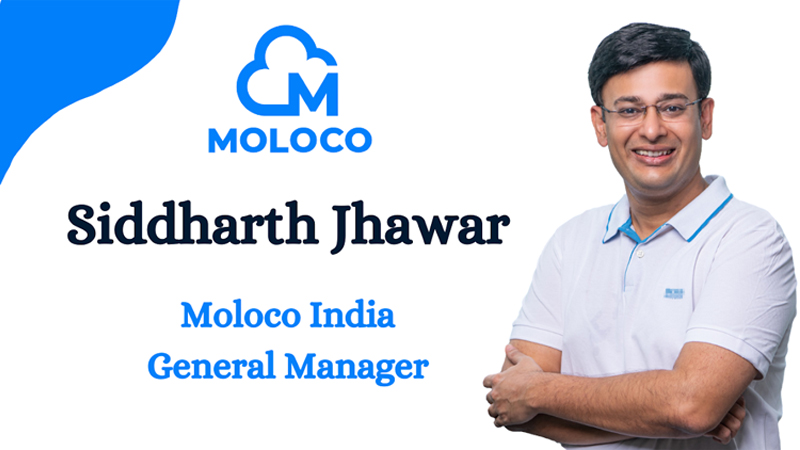
    “Bad ads are spam but good ads are content”: Moloco India’s Siddharth Jhawar

    Mumbai: Ad personalisation isn’t just about tailored ads, it’s about transforming them into engaging content for enhanced user experience. Moloco, a multinational adtech company pioneering machine learning, is at the forefront of this revolution. In a strategic partnership with Viacom18 and JioCinema, Moloco’s advanced capabilities are reshaping the landscape of Indian advertising.

    From combating ad fraud to leveraging 5G for programmatic innovation, Moloco is driving tangible results for advertisers while prioritising user privacy. With success stories like Zupee’s 5x growth and significant user jumps for Rummytime, Moloco’s vision for India extends beyond market growth—it’s about fostering innovation and empowering businesses to thrive in a dynamic digital ecosystem.

    Indiantelevision.com caught up with Moloco India general manager Siddharth Jhawar to talk about growing concerns about ad fraud and privacy in the Indian market, the future of programmatic advertising in India, and much more…

    Edited Excerpts:

    On Moloco addressing growing concerns about ad fraud and privacy in the Indian market

    We believe that complete transparency, constant vigilance, & working with trusted partners are critical to ensuring that advertisers and customers are protected from fraud and privacy concerns.

    Moloco ads reports advertising spends to the most granular level, which empowers advertisers to pressure-test the quality of their traffic for any suspicious activity. For instance, we capture timestamp data and then analyze whether the time taken between viewing an ad, clicking on it, installing an app, and making a purchase are coherent with expected customer behaviour. It certainly helps if an advertiser works only with reputed channels, because it minimizes the risk of fraudulent activity.

    First-party data is critical for a machine learning engine to become intelligent in identifying high-value users of an advertiser. Hence it becomes even more important to adopt the highest standards of safety and privacy to help companies grow while ensuring their customers’ privacy.

    On Moloco envisioning the future of programmatic advertising in India, with the advent of 5G

    Moloco ads processes seven million requests per second. We take 14 milliseconds to make a deep neural network prediction. Building this kind of infrastructure has taken us more than a decade, and it helps that network speeds are improving. The advent of 5G will support the nature of innovation that we do in terms of speed and efficiency of computational infrastructure.

    On Moloco’s approach to ad personalisation and its impact on user experience

    Bad ads are spam but good ads are content. If an ad can be hyper-personalised to a user and their context, it improves the customer experience and also gives better returns to an advertiser.

    The trends we see today are that customers want great but inexpensive service without being bombarded with ads, advertisers want maximum returns on every rupee spent, and platforms want to grow fast while also being profitable. Personalized ads address these needs by enhancing the customer experience, delivering measurable outcomes to advertisers, and boosting advertising revenue for platforms. But this is easier said than done. There are almost five billion internet users in the world today. We can not expect any two customers to be exactly the same. But when the scale is massive, 1-1 targeting becomes computationally tough. This is when companies need world-class machine learning systems to support them. Moloco uses machine learning that works on an advertiser’s first-party data and helps them show hyper-personalised ads to users while also optimising bid prices and probabilities in real-time – that is tough, but when done right, can be valuable to both advertisers and customers.

    On the strategies that Moloco employs to effectively integrate in-game and mobile advertising for maximum engagement

    Showing relevant and hyper-personalised ads to a user on a gaming app improves their engagement levels on the app. India’s gaming industry makes about one-fifth of its revenue from in-app advertising, and this trend is expected to grow further.

    On Moloco’s approach to operational machine learning and its significance in optimising ad campaigns

    Operational machine learning is special in four ways – it is autonomous, it involves real-time predictions, it can work at massive scale, and it is highly adaptable to the context. While machine learning and artificial intelligence have become household terms now, building an operational machine learning system at scale is a problem that very few companies in the world have effectively cracked.

    We use this operational machine learning system to train on an app’s first party data, identify high-value users, and efficiently bid for them on the open internet – this helps the app acquire more high-value users which can grow their revenue and profitability.

    On Moloco’s partnership with Viacom18 and JioCinema exemplifying its commitment to revolutionising the ecosystem in India

    Viacom18 is building one of the largest streaming platforms in the world and we are proud to be their ad-tech partners. The platform has immense scale and saw 32 million concurrent users during IPL 2023 – we use Moloco’s machine learning and ad-serving capabilities to serve relevant ads at astronomical scale on JioCinema.

    On any success stories or case studies where Moloco’s solutions have driven tangible results for advertisers in India

    Within a matter of 18 months, we have created a measurable impact on several industries and digital platforms in India. Moloco ads works with nine of the ten largest gaming apps in India and we have driven high-quality user growth for them. Our partner Zupee attained 5x growth and 3x return on ads spend targets using our ML engine. Rummytime from the Gameskraft group saw a significant jump in their high-value users. We also used our monetisation solution for CityMall to help them build an in-house advertising business and increase ROAS by 900 per cent. There are over 40 apps who have benefited from Moloco’s machine learning in India.

    On Moloco’s plan to further expand its footprint and partnerships in the Indian market moving forward

    India is a unique region for Moloco. Not only is the India market a small yet fast-growing region, India is also emerging as an innovation hub of Moloco. The entrepreneurial activity and scale in India make it an exciting place to develop machine learning products. For this reason, we are also building a global engineering centre in Bangalore, so that we can build products in India that can be scaled to the rest of the world.

  • WhatsApp’s new campaign highlights interlocking layers of protection for user privacy

    WhatsApp’s new campaign highlights interlocking layers of protection for user privacy

    Mumbai: WhatsApp has launched the India edition of its global brand campaign to create awareness about its interlocking layers of protection that offer people more privacy and control over their conversations while messaging.

    The campaign focuses on educating users on WhatsApp’s built-in layers of privacy protection that have been added over the years, including three new privacy features: leaving groups silently; controlling who can see when you’re online; and screenshot blocking for ‘view once’ messages.

    The new features were announced earlier this month as part of a global campaign, adding to a host of existing privacy features and demonstrating how WhatsApp’s multiple layers of privacy controls come together to provide users more protection when having a truly private conversation when messaging.

    Conceptualised by BBDO India and directed by Prakash Varma, the campaign film brings alive a heartwarming exchange between a father and son in an intensely personal moment, showing how WhatsApp’s built-in layers of protection allow them the privacy and security to have a meaningful conversation when it matters the most. 

    Embed Link: https://youtu.be/EcEZCWyfFCc

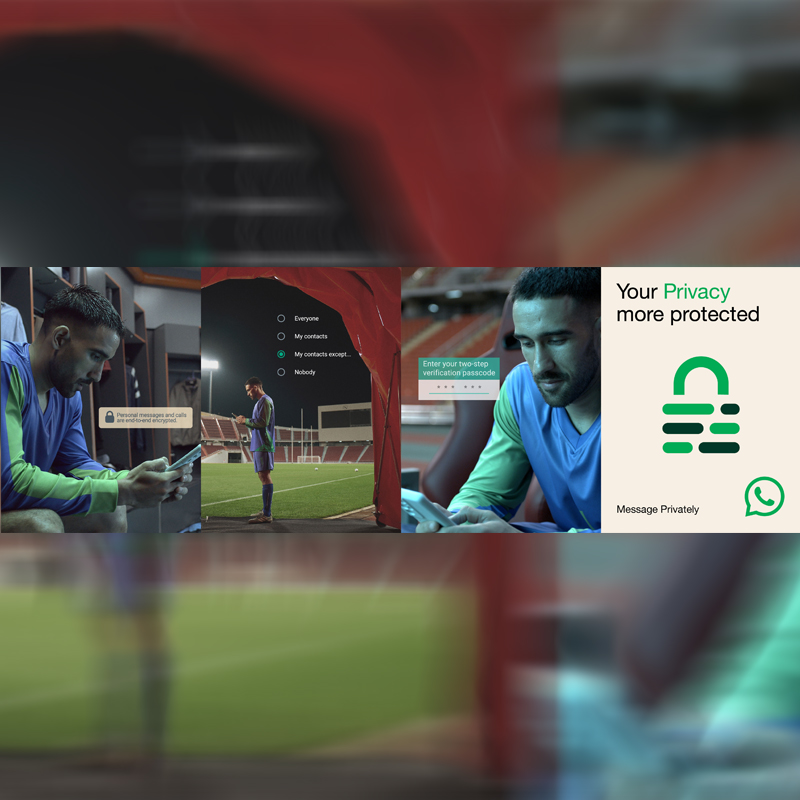
    The film depicts WhatsApp’s promise and strength of “privacy” through features like end-to-end encryption, two-step verification, and hidden online presence, enabling the duo to express themselves freely despite being surrounded by crowds in a restaurant or football stadium.

    Talking about the campaign, Meta India director-marketing Avinash Pant said, “At WhatsApp, privacy is in our DNA and over the years, we have consistently added layers of protection through product-features that empower people with more control over their messages. This is our way of extending awareness and assurance to our users on how the new and existing built-in layers of protection help you message freely without compromising on your privacy.” 

    He added, “We want users to know that they always have a safe and private space on WhatsApp, no matter where they are! We feel it’s a great privilege that two billion people around the world trust WhatsApp to deliver their personal messages every day, and this campaign is an affirmation of WhatsApp’s continued commitment to protecting their private conversations.”

    Commenting on the campaign and its creative treatment, BBDO India chair and chief creative officer Josy Paul said, “WhatsApp’s mission is to connect the world privately, and this campaign captures the essence of people feeling empowered to have private conversations even during vulnerable moments because their messages remain protected and secure.” 

    Speaking on the film, he said, “The film demonstrates WhatsApp being that ‘safe space’ for people like the father and son who have a very private and emotional conversation amidst hordes of people. You don’t know the exact exchange between the characters, you can’t see their messages because they’re private, but the simple shots of crowds disappearing, doors locking, CCTVs turning away, demonstrate how WhatsApp’s privacy features continue to provide the much-needed intimacy and protection throughout their most private moments.”

    Over the coming weeks, WhatsApp aims to educate users on each privacy feature through short films, which will highlight their benefits and the steps to activate them, so that users can take advantage of WhatsApp’s built-in layers of protection. 

  • GUEST ARTICLE: How web 3.0 can take full advantage of streaming’s potential making it accessible to all users

    GUEST ARTICLE: How web 3.0 can take full advantage of streaming’s potential making it accessible to all users

    Mumbai: Web3 promises to be the renaissance for how we use internet services. It is fundamentally an idea for a more open, decentralised, and secure internet, governed by anti-monopoly and pro-privacy norms. Naturally, the scale and allure of OTT services’ revenue and seemingly insatiable demand make it a prime industry to attempt to ‘disrupt’. The proposition boils down to ‘what value addition does this new technology and ownership structure bring’. It’s an idea we have experimented with for a few years now being on both 1.0 and 2.0 versions of the web.

    Web3 splitting the pie

    There are broadly three models that can exist at scale with web3 characteristics—one, where users are owners [I own a piece of Netflix and I watch it], two, where creators are owners [the studios or the producers or the individuals], and three, where ownership is split between creators, users, and intermediaries [marketers, platforms, other intermediaries, etc.]. Depending on the market this hypothetical business operates in, some of the business models become viable based on the negotiable split amongst these many stakeholders.

    Cutting the middlemen

    The promise of web3 essentially posits ‘cutting the middlemen’ who supposedly ‘do not add value to the flow of creation to consumption, or at least reduce their ‘cut’. “Hey, why is the app store taking 30 per cent?” and “Wait, XYZ label makes millions of dollars off her song, but my favourite artist lives in a rented house?” are the kinds of questions that can be approached two ways. First, since the relationship between creator and consumer is paramount, and since the audience makes someone famous by consuming created content, the value should primarily be distributed between these two.

    Second, stars and hits are made, not born. So, the backers, marketers, technology developers, and distributors (who work thanklessly behind the stage, risking their time and money) deserve a large part of the credit (aka value).

    Therefore, the model of web3 works well for already established creators who can rely on fanfare and loyalty to create subsequent work. However, they will have to choose between their audience’s capital or the existing pool of professional backers. They do acknowledge that the former carrier risks additional work in raising capital, but with the benefit of doing it on their own terms.

    For the new and upcoming creators, it offers them better terms, but at the risk of losing mainstream system support that has proven its success so far.

    Race to the start

    There is now an increasing list of examples of creators across movies, music, social media content, and TV experimenting with the web3 path, which has led to a crop of new web3-only services. Even incumbent studios, distributors, and platforms are making investments in web3 businesses. Following sufficient examples, existing incumbents will further adapt to offering web3-based models as well.

    The fact remains that the entertainment industry overall has very clear risk-reward profiles. If creators take the risk simultaneously with their hopeful audience, they can all potentially gain from it, but will then be on opposite sides of the table. And to create what we deem “hits,” large-scale distribution is still a professional industry, the providers of which will always demand a high fee for their services.

    The web3 model’s adoption will thus grow at the rate that the creators are willing to take it—and help create more stars and hits than the “industry” has allowed since it offers an alternative path to grow. To the end audience, for any type of content, the key criteria remain quality, price, and on-demand. Adding the proposition of being an earning shareholder makes the deal sweeter depending on the potential earnings. What could eventually emerge is a model where audiences contribute to a diversified pool of creators of their choice, while creators will choose who provides intermediary services to them. Some may argue that this is not too different from existing models, but the creatives are pathbreakers by nature.

    The author of the article is Vistas Media Capital & Fantico chief strategy officer Dhruv Saxena.

  • Dentsu sets out timeframe for brands to be ‘cookie free’ in new global guide

    Dentsu sets out timeframe for brands to be ‘cookie free’ in new global guide

    Mumbai: The media arm of dentsu international has published its first in-depth review, ‘The Cookieless World: A Guide for the New Era of Digital Marketing’ which aims to provide a deep dive into the impact on brands due to major changes in web tracking capabilities and enhanced privacy legislation. Earlier in January 2020, Google had announced that it will phase out supporting third-party cookies.

    This new report from dentsu explores the knock-on implications for both consumers and brands, as well as the solutions its media agencies Carat, iProspect, and dentsuX can leverage to support the change, the agency said in a statement. It will explore a range of areas including data management,  audience activation & first-party data usage, performance measurement and preparing for the deprecation of third-party cookies, it added.

    On launching the report, dentsu international’s global product officer-media, Rohan Philips said, “Across the globe, 91% of consumers are concerned about the amount of data companies can collect about them, and 42 per cent have taken steps to reduce the amount of data they share online. So, it’s no wonder all eyes are focused on this fundamental change in the way we all operate on the web. We now have the time and opportunity to make sure what comes next is the best solution it can be for our clients.”

    “With such a major upheaval to the long-established status quo, we understand there’s uncertainty and a lot of questions. The Cookieless World report is there to provide answers for marketers who need to wrestle with the big challenges facing their brands now and in the coming years,” he added.

    dentsu Asia Pacific CEO-media, Prerna Mehrotra said, “With the most popular browsers ending support for third party cookies and the rise of other types of tracking prevention, the ability for brands to target consumers and measure campaign effectiveness will be impacted. This, coupled with the rise of global and local privacy legislations, will significantly change the fabric of digital marketing in the coming future. Brands will now need to relook at how they engage people online, while limiting some of the most widespread digital marketing tactics, such as personalised 1:1 targeting. The time is ripe for brands to rethink the next lap of their marketing practices.”

  • Delhi HC dismisses WhatsApp, Facebook pleas against CCI order

    Delhi HC dismisses WhatsApp, Facebook pleas against CCI order

    New Delhi: The Delhi high court on Thursday dismissed the plea filed by Facebook and WhatsApp challenging the Competition Commission of India (CCI) order directing a probe into its controversial new privacy policy. The court said it found no merits in the petition and refused to quash the CCI probe.

    The CCI had launched an investigation into WhatsApp’s updated privacy policy on 24 March, amid the raging debate over users’ data and privacy on social media platforms. The antitrust body had taken a prima facie view that the messaging app’s new terms of use are in contravention of India’s Competition Act. 

    WhatsApp and its parent company Facebook had challenged the CCI's order through two separate petitions, and the court had decided to reserve its judgement during a hearing on 13 April.

    According to CCI,  WhatsApp's new privacy policy would lead to excessive data collection and "stalking" of consumers for targeted advertising to bring in more users and is therefore an alleged abuse of dominant position. On the other hand, the two social media platforms had contended that when the top court and the Delhi high court were looking into the privacy policy, then CCI ought not to have intervened in the issue. They also argued that the CCI's decision was an abuse of the commission's suo motu jurisdiction. WhatsApp also told the court that private conversations continued to be protected by end to end encryption and the messaging app cannot read the texts or see the media files that people send each other.

    The controversial policy was initially expected to come into effect on 8 February but was later deferred to 15 May amid severe backlash from users. The app plans to make it mandatory for users to agree to its new data-sharing norms, a key point of which is allegedly sharing data from WhatsApp business chats with Facebook. 

    On 19 January, the CCI took suo motu cognisance of the potential impact of the policy and terms for WhatsApp’s users and the market. In its statement, WhatsApp had stated that it “remains committed to protecting people’s personal communications with end-to-end encryption and providing transparency about how these new optional business features work.”

  • Personal data of 53.3 crore Facebook users leaked online

    Personal data of 53.3 crore Facebook users leaked online

    KOLKATA: Social media giant Facebook has become embroiled in yet another privacy breach controversy, as the personal data of around 53.3 crore users has been allegedly leaked. The breach includes data of 60 lakh users in India as well.

    According to reports, phone numbers, Facebook IDs and bios, full names, birth dates, locations, even email addresses in some cases have been exposed. “A database of that size containing the private information such as phone numbers of a lot of Facebook’s users would certainly lead to bad actors taking advantage of the data to perform social engineering attacks [or] hacking attempts,” said cybercrime intelligence firm Hudson Rock CTO Alon Gal, who spotted the leak on Saturday.

    Facebook claimed in an email statement that this is old data that was previously reported on in 2019 and the issue has already been fixed. However, the company has not taken any steps yet to notify users if their data has been compromised. Even if the data is outdated, it could provide valuable information to cybercriminals. Moreover, a lot of old data may remain relevant given that many of the phone numbers or email ids associated with the account could be the same as earlier.

    In January, a user in a hacking forum advertised an automated bot that sold phone numbers of millions of Facebook users. Now the entire dataset has been posted online for free on low level hacking forums making users more vulnerable to cybercrimes.

    Facebook has been grappling with data security issues for years. In 2018, the platform disabled a feature that allowed users to search for one another via phone number following revelations that the political firm Cambridge Analytica had accessed information on up to 87 million Facebook users without their knowledge or consent.

    In December 2019, a Ukrainian security researcher reported finding a database with the names, phone numbers and unique user IDs of more than 267 million Facebook users — nearly all US-based — on the open internet. It is unclear if the current data dump is related to this database.