Tag: Priti Nair

  • Nagessh’s SilverEdge looking to stir the D2C market; eyes Rs 25 mn revenue

    Nagessh’s SilverEdge looking to stir the D2C market; eyes Rs 25 mn revenue

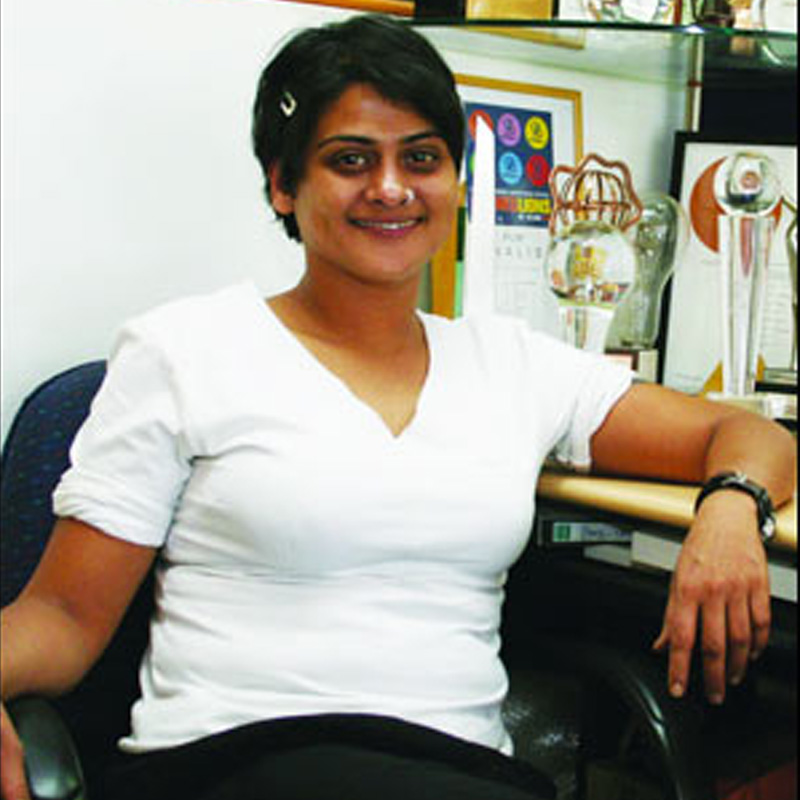
    Mumbai: He might have contemplated his thoughts and decisions prior to this story, but not anymore. Curry Nation Brand Conversations (CNBC) co-founder Nagessh Pannaswami (a first-generation entrepreneur, an ad veteran along with famous ad woman, Priti Nair) has now made a move to the brand side by launching SilverEdge. SilverEdge is the country’s first ever personal care and wellness brand to specifically target adults aged 40 and above (generally known as mature adults).

    After working at agencies such as Clarion (now Bates Chi & Partners), Lowe Lintas (now part of the Mullenlowe Lintas Group), McCann Erickson (now McCann World Group), and BBDO, and spending a significant portion of his career managing FMCG and telecom businesses, Nagessh founded Curry Nation, which is now a creative powerhouse, having created brands from the ground up to make them formidable in the categories in which they operate.

    Eventually, the brand entrepreneurial bug bit him, and he incorporated Really Useful Enterprise in December 2021. The brand SilverEdge was born in May 2022, with Nagessh’s innate need and desire to do something different. It was his personal experience of suitable products being unavailable that led him to give shape to an idea whose time had come. “Having built so many brands for clients, I wanted to give shape to a brand of my own. Today, D2C has opened up a lot of avenues. I wanted to utilise this opportunity and a latent need to plug the gap in the market,” quipped SilverEdge CEO & founder Nagessh.

    But why a name such as SilverEdge? The broad age group of 40 to 60 is called the “silver age,” and the silver economy is a thing of the near immediate future. The current population of people aged 40 to 60 is 310 million, and it is expected to grow by 37 per cent to 426 million by 2040 (source: Statistica). It is growing faster than the youth segment, but no brand addresses their age-specific needs. “SilverEdge as a brand gives you the edge in your silver years. That’s how the brand has been conceptualised,” stated Nagessh.

    Revenue, market size and competition

    Talking about revenue numbers, SilverEdge is eyeing approximately Rs 25 million in the first year of the brand’s operations. Considering strategy, the brand wants to be the go-to ‘destination’ for mature adults in the wellness and personal care space. Eventually, the platform will provide them with tips across a spectrum of ageing solutions. Nagessh specified, “Our ultimate vision is to lead the pro-age solution in India by providing specially curated age-specific products for mature adults.”

    SilverEdge, the mother brand, has six variants: SilverEdge Beauty Elixir (age defence), SilverEdge Joint Care, SilverEdge Immuno Enhance, SilverEdge Energy Booster, SilverEdge She Power, and SilverEdge Lung Defence.

    The Indian nutraceutical market will be an approximately Rs 18 billion market by 2025. There are a host of players in this industry, such as Wow Health, Bbetter, Prorganiq, Bionova, Bodywise—a slew of D2C brands, and also legacy brands like Himalaya.

    Also, the Indian skin care market is estimated to be worth Rs 11 billion by 2025. SilverEdge will not lag behind—very soon it will be launching its skin care range for mature adults, and also a few more nutraceutical products by the turn of 2023. Accessories are also on the horizon, confirmed Nagessh.

    The fact is, SilverEdge has embarked on a behaviour change mission. On one hand, there are no direct competitors to the brand since nobody is targeting the group that SilverEdge is talking to. But on the other hand, every brand in the wellness and personal care segment is a competition for it, said Nagessh.

    Digital, influencer marketing and advertising

    Digital has been the keyword for all brands starting in 2019. Considering that a person like my mum had a tough time handling and learning how to use a smartphone when it was launched, one tends to wonder how responsive this group of mature adults is to the digital medium. Nagessh revealed that SilverEdge’s website has been up and running for some time, and the response has been encouraging. The mature adults segment is active on social media, with Facebook being the lead medium, followed by WhatsApp and LinkedIn. Covid has advanced technology adoption across all population strata, and this segment isn’t lagging behind either.

    Like most brands adopting the influencer marketing route in a robust manner, SilverEdge is likely to follow suit. All the levers of digital marketing will be pushed at various points in time. Influencer marketing is an essential part of the brand’s marketing mix for specific targeting of the audience. SilverEdge is looking at influencers, but of a different sort. Aged 45 years and above, this is a whole new segment of influencers who are gaining traction in the social media space—they have a lower number of followers, but their bond with and traction from their followers is strong.

    SilverEdge is obviously targeting the followers of these influencers, so that there is less wastage of advertising money and more traction for the brand.

    The spectrum of marketplaces is another opportunity that the brand has leveraged. SilverEdge is listed on many and will soon be available at various touch points where its customers exist in the digital purchase journey.

    Nagessh stated that they would go brand first when describing SilverEdge’s advertising and marketing strategy. They would focus solely on brand building and behaviour change communication. These are the two pillars of the brand’s communication strategy. “We understand the need to create a lighthouse brand and be the beacon of change in this category,” he said.

    Targeting mature adults – a decision

    India has the world’s largest youth population, with nearly 66 per cent of the total (more than 808 million) under the age of 35, and nearly 40 per cent between the ages of 13 and 35. Despite the fact that targeting this age group would have been more profitable, Nagesh stuck to his decision to target mature adults. He emphasised, “There isn’t a single brand that speaks to the desires and aspirations of mature adults. Can you beat that? It’s almost as if this age cohort doesn’t exist for the marketeers! The mature adult segment in India is a neglected and underrepresented market from a product and services perspective.”

    Mature adults, by the time they turn 40, are well settled in life. A large chunk of their worldly responsibilities are almost taken care of (EMI’s, children’s basic education, stability in their jobs). They have all the time in the world to pursue their passion and do things that they would have probably sacrificed in their youth to pursue career stability.

    “With the cultural changes happening around us, men and women are now responding to ageing with a drive to improve aspects of their lives that they’ve been unhappy about over the years. Some are even willing to uproot their lives for betterment. They are also looking for specific curated products and services that cater to their aspirations. All this led us to walk on a path where no one had ventured in the past and guided the launch of SilverEdge,” pointed out Nagessh.

    Backed by research

    A lot of research, data collection, testing, checking responses, etc., was involved in bringing out the final product. The team at SilverEdge did a lot of consumer listening and ethnographic studies. It was how, on their probing, most of the consumers comprehended that there were no brands targeting them. The latter also realised that they had been using the same legacy products for a long time and that they may no longer be serving their purpose.

    One of SilverEdge’s most essential and obvious findings was that India is undergoing a cultural change. Mature adults are no longer resigned to living a life of seclusion or minimalism. More and more mature adults are picking up passion projects, whether it’s singing, travelling, adventure sports, etc. The retirement corpus, which was stashed away for some unforeseen event and as an inheritance for the younger generation, is now being used for self-fulfilment and self-gratification.

    Additionally, children are egging their parents to live a fuller life. Now, as people are ageing, they realise that they don’t want to turn back the body clock or hinder the natural progression of ageing. However, they want to ensure that they remain healthy for the long run. Today, more and more mature adults are taking their health into their own hands. Nagessh calls them the ‘proactive healthy agers.’ And that is the audience SilverEdge is singling out and catering to through the range of its products.

    “Doesn’t this audience of mature adults have aspirations? desires? need to be fulfilled? Why should they be using the same set of products that they have been using for years? It’s a proven fact that as people age, their nutrition and skin care needs change. They need age-specific solutions, and that’s where SilverEdge steps in,” explained Nagessh.

    Trends and innovations

    Noting the recent trends, increasingly in nutraceuticals, consumers are taking health into their own hands. They want to prolong their good health and keep illnesses and niggles away. They are willing to pick these products off the shelf. These are the proactive health-seekers. They believe in the power of preventive health management.

    In personal care, consumers are looking for targeted solutions. Consumers today are content with their appearance and their skin. In fact, most don’t want to cycle through the natural process of ageing. They know that the biological clock is ticking. And they won’t get the same youthful look back ever again. But what they really want to do is to extend their good skin health a few more years to retain their natural radiance. Any product willing to do this is welcome in their kitty.

    Speaking about the innovations that one can look forward to in the beauty, wellness, and personal care market, which caters to mature adults, Nagessh signed off, “There will be ingredient-led and claim-led innovations.”

  • #TouchThePickle shouts out loud P&G’s Whisper

    #TouchThePickle shouts out loud P&G’s Whisper

    MUMBAI: Like the two sides of a coin, India too is divided into two mindsets. While a certain part is moving towards modernisation, there are still a few things that are holding us back to be culturally liberal.

    P&G Whisper’s new advertising campaign brings out the painful truth of our society.

    According to market experts, the Rs 2,100 crore sanitary napkin market in India is growing at the rate of 19 per cent year on year. Whisper is one of the dominating brands in the category that has worked smartly on its pricing strategy over the years.

    The brand, in the past, has taken up various corporate social responsibilities (CSR) as part of its marketing initiatives.

    It can be recalled that P&G’s ‘Parivartan’ program has been protecting millions of adolescent girls in India from getting trapped in traditional practices of using unhygienic cloth for sanitary protection by providing menstrual education.

    The program has been improving the lives of over two million girls annually across 15,000 schools in India. The objective of the program is to help adolescent girls embrace womanhood positively and enable them to adopt the right feminine hygiene practices to stay healthy and stay in school. ‘Parivartan’ ensures that adolescent girls do not miss school on account of periods and initiates a series of cascading effects leading to a more equal gender status in the state.

    P&G’s ‘Shiksha’ that was launched in 2005 was aimed at enabling consumers to contribute towards the cause of education of under-privileged children through simple brand choices. It is considered to be one of the most successful CSR campaigns initiated by a multinational corporation in India.

    Taking a step further and breaking the stereotypical communication thoughts, Whisper has rolled out a movement titled #TouchThePickle to try and put an end to period taboos that still haunt many Indian girls and women. The movement is initiated under the brand campaign called ‘Kadam Badhaye Ja’.

    Click here to watch the TVC

    The TVC already has got over 22,600 views in five days. The video which was shared on the brand’s You Go Girl page has received over 17, 908 likes and 494 shares.

    On the communication strategy by the brand, the Elephant Strategy+Design founder director and principal designer Ashwini Deshpande wished the TVC was done 25 years ago, but feels it is never too late.

    “A global brand with real alignment to Indian culture is a rare sight yet delightful,” adds Desphande.

    On the other hand Curry Nation co-founder Priti Nair has a different observation. “When I first heard about the movement I really thought that is a fantastic concept, very radical and memorable. I was genuinely happy and proud that a brand like Whisper has taken this stance. I thought we are finally getting rid of the stereotypical commercials from this category and someone is busting the conservative regressive cultural myths attached to a natural cycle of a woman and wished I could have done something similar. My perception changed after I saw the ad,” says Nair.  

    She believes that the brand diluted the huge idea to tick all the points of research work.  According to her, the brand should have taken on the regressive thoughts on menstrual cycle and break them first and then taken on more myths that exist in our society.

    “A brand like Whisper which worldwide is doing large mind set alteration would have succeeded doing that in India as well,” concludes Nair.

  • #LikeAGirl, is not an abuse

    #LikeAGirl, is not an abuse

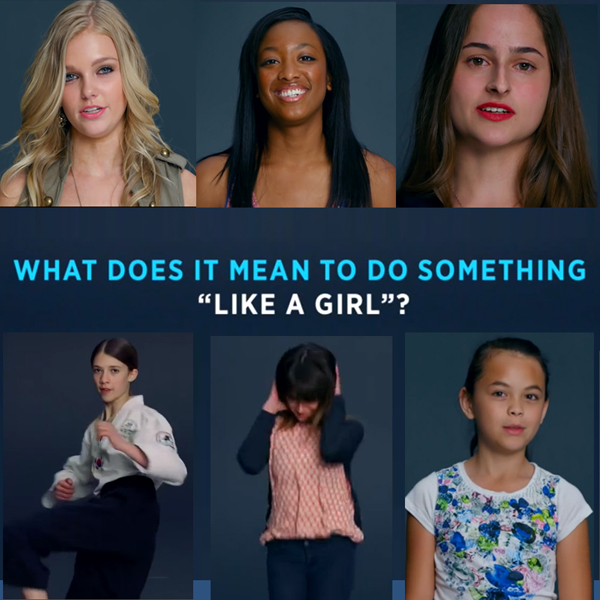
    MUMBAI: ‘Like A Girl.’ When did those three words become an insult?  

    This thought provoking question has been floating on various social media platforms for a couple of weeks now. Thanks to Procter & Gamble’s (P&G) new campaign, this thought is being heard loud and clear across the globe.

    The campaign which has different phases on digital is supported with a power packed video filmed by P&G’s ‘Always’, a leader in feminine hygiene products with a market valuation of $3.4 billion.

    Though the film might appear to look just like many other feminist-themed videos, there is a lot that it brings across the table. As part of the campaign, ‘Always’ has partnered with award-winning documentary filmmaker Lauren Greenfield to conduct a social experiment to illustrate how people of all ages interpret the phrase ‘Like A Girl.’

    Wondering why this campaign?

    On the official YouTube channel of P&G Lauren Greenfield, filmmaker and director of the #LikeAGirl video explained, “In my work as a documentarian, I have witnessed the confidence crisis among girls and the negative impact of stereotypes first-hand. When the words ‘Like A Girl’ are used to mean something bad, it is profoundly disempowering. I am proud to partner with ‘Always’ to shed light on how this simple phrase can have a significant and long-lasting impact on girls and women. I am excited to be a part of the movement to redefine ‘Like A Girl’ into a positive affirmation.”

    The video has already been viewed over 29 million times on YouTube, shared approximately 300,000 times on Facebook and tweeted around 40,000 times on Twitter. According to various media reports, P&G spends about $10 billion annually on marketing in the US. Of this, 25-35 per cent is spent on digital.

    This percentage of digital spends will soon get somewhere near in an emerging market like India. Last year P&G’s Pantene released a digital video which was also championed by Facebook chief operating officer Sheryl Sandberg who showed how the same behaviour by men and women is viewed differently by the society.

    With this campaign from ‘Always’, the company is taking a step further to strike social conversations and impressions for a good change.

    Click here to watch the campaign

    We at Indiantelevision.com, asked Indian creative fraternity of the challenges of creating campaigns on the digital platform and how much did the ‘Always’ campaign touch their hearts. 

    “It is a brilliant effort“

    According to Bang in the Middle managing partner and chief creative officer Prathap Suthan this particular campaign from P&G, shows how major advertisers in the world look at the criticality and importance of the digital space. And as usual, focus is in on universal insight.

    “The fact that physical weakness is often attributed to ‘being a girl quality.’ It pries open a lot of areas. It opens up a conversation into giving girls more liberty, comfort, reality, and empowerment. It is a brilliant effort. It squashes down on the global habit of seeing a girl’s natural and general lack of brawn as deficiency. Instead, the campaign applauds the differences, caliber, mettle and a whole lot superior attributes that only women possess.”

    According Suthan the campaign hits the right chord. “It’s a truth. Every girl, woman, daughter, mother, sister, aunt etc. will relate to it and so will all the men, especially fathers. I think it radiates a lot of optimism, positivity and reinforces confidence.  #LikeAGirl is one of the most common insults and demeaning expressions that have been going around until now. It has been used to not just debase and abuse women, but also used as an expression that’s widely used to lash out at boys and men when they don’t physically and even mentally push the bar,” says Suthan.

    With #LikeAGirl now trending across the world, and with every woman synching with the thought, hopefully this will initiate and propel a movement to help women across the world gain even more confidence, stature, self-esteem and happiness mentions Suthan.  “We need that for a better, healthier and more peaceful world,” he says.  

    Origin Beanstalk co-Founder Upendra Singh Thakur thinks in India, discrimination against girls starts at birth. It is way beyond than just making fun of ‘being like a girl’. “However, keeping the affluent consumer in mind that the brand caters to and the notion of silly being associated with girls, to me the brand has definitely hit the right chord and really made us think that in many ways, jokingly, we do tend to discriminate even though we don’t realise it,” says Thakur.

    “If you are not creative on digital then it is criminal”

    Curry Nation founder Priti Nair believes in the above statement. She says, “It is not being creative that is a challenge on digital, but it is how much more creative can you be. That is the real challenge. It is not your typical 30 seconder shot on location or set. It is an audition and the audition is the advertisement.”

    “In the #LikeAGirl campaign everything lies in the music and the casting. It takes you through an emotional graph. I think it is really insightful and I love the way it is connected to the product. Most of the times you have lofty philosophical stuff floating for causes that does not really have any connection to the brand. But to connect confidence ebb and fall with puberty is excellent and also true. It is good to know that someone is thinking harder,” opines Nair.

    Infectious director Nisha Singhania has similar thoughts about the campaign. She believes, “#LikeAGirl taps into a fantastic insight on how without realising it, we create norms on how girls and boys are supposed to behave. Often I’ve heard boys being told to stop behaving ‘like a girl’ as if it was an insult.” Since most clients want the campaign to go ‘viral’ Singhania thinks they buy braver work for the digital medium. 

    “How I wish, this gets translated into different languages. Or it needs a global version with multi-cultural and multi-ethnic representation. There’s so much truth going waste otherwise,” concludes Suthan.

  • Everybody loves the Amul girl!

    Everybody loves the Amul girl!

    MUMBAI: April was an eventful month or so for Amul, the iconic brand marketed by Gujarat Cooperative Milk Marketing Federation (GCMMF).

    On the one hand, GCMMF crossed Rs 18,000 crore in 2013-14; a jump of 32 per cent from the previous year, apart from posting the fastest growth ever for a four decade-old dairy cooperative. On the other hand however, Amul has been served legal notice by the Sahara Group for its hoarding ‘Besahara Parivar’ where Sahara employees are shown begging to collect Rs 5,000 crore for group chief Subrata Roy’s bail.

    Indeed, Amul has built a reputation for its witty but unflinching stance on a wide range of issues of national importance. At the same time, it has also come under fire for force-fitting itself. Indiantelevision spoke to some industry experts for their views on the Amul brand of marketing.

    “Amul advertising is today iconic in its genre. A powerful set of topical creatives gives this brand high scale visibility across a relatively small set of hoardings and selective print vehicles across the country. It can be noted that sometimes, due to the pressure of wanting new creatives, the brand has been force-fitting itself. I do believe it needs to set a standard that it will not fall below,” said Harish Bijoor Consults CEO and brand expert Harish Bijoor. According to him, the creative around the Sahara Group is a terrific one, as usual. “The brand is used to receiving legal notices I am sure. This is all part of the game”, he said.


    Tata Housing head of marketing services Rajeeb Dash, pointed out that Amul has always rolled out ads that are a break-through of sorts. “Sometimes, taking a strong stance helps brands create break-through via communication strategies. Amul seems to have taken that route since a while.”

    Curry-Nation founder Priti Nair, expressed the view, “Amul usually puns on something and connects it to the butter. Sometimes good, sometimes not so good. I don’t think this deserves a legal notice.” For Nair, the hoardings are iconic. “Amul as a brand has used a spin on current happenings as its communication strategy. Be it other brands or cricket or politics or Bollywood. Whatever is in the news and has eyeballs, Amul always does a spin on that and nobody minds cause it is always in good spirit.”

    One thing that came across was that the fraternity loves the li’l Amul girl and everything about her. No matter the challenges, she looks set to win hearts…

  • Made for each other

    Made for each other

    MUMBAI: Times have changed considerably, couples no longer share the same equation they once did. In this age and time when independence is craved for by both men and women, couples who work together open new vistas for them. Not only does working together keep them connected through out the day but also streghtens the understanding of each other as individuals.

    On this Valentine Day, let’s have a look at the copuples who celebrate their lives togehter; professionally and persoanlly.


    Discovering love at work


    He was her boss and she was just starting her career, and now after 15 years, they are a couple to reckon with. One is a proud owner of an independent advertising agency while the other with over three decades of experience is an industry veteran.

    Priti Nair and KS Chakravarthy aka Chax recently celebrated their fifteenth wedding anniversary. They’ve been around for decades now and what started as a fan’s devotion for her idol turned way serious as time progressed.

    “What I am today in my profession is all thanks to Chax. He taught me everything about advertising,” says Priti, who feels that if a couple are in the same industry, it becomes easier to understand each other.

    Priti Nair and KS Chakravarthy, advertising professionals

    “Our industry is very demanding and schedules can go haywire anytime so if the other person doesn’t understand that, it can cause issues. A couple needs to understand and respect what each person does, no matter in which field because unless there is respect for each other, a relationship will never work,” she says.

    Like any other couple, Priti and Chax too went through their share of ups and downs. The seven-year itch hit them hard and they both decided to live separately to sort out issues rather than complicate things further. However, after seven years of separation, they got back together last year. Ask if there are any special plans for V-Day and Priti laughs it off saying she’s been celebrating V-Day for the last seven years with her family and so the two of them will spend it with family this year as well…

    The two make it a point to spend some time with family and watch a movie or a series together every week to keep work out of the equation.


    Keeping monotony out for a life-long affair


    He’s Bengali and she’s Maharashatrian but Maximum City seems to have diminished the regional divide.

    Pranali and Soumya Sarkar met 10 years back while working in the same media agency. They were part of the same team but their clients were different. But it didn’t matter as they dated each other for a year before tying the knot.

    Working the same hours with the same set of colleagues can be a boon for many but Soumya feels it is the understanding between the couple which helps strengthen a relationship. Working in the same industry can have its pros and cons, especially when the industry is a demanding one. “One cannot ignore personal life as one can interconnect their personal and professional lives as they work in the same space,” he says, stressing one can’t take the other for granted, thinking he/she will ‘understand’.

    Pranali and Soumya Sarkar, media planners

    The media planners will celebrate their ninth wedding anniversary in March with a vacation abroad. A vacation every year and an outing every month is a norm for this couple which feels the busy work-home schedule leaves one with little or no time for weekly recreation. They have a daughter and firmly believe spending time outside of work is a must for every couple else life will become monotonous.


    Living dreams together


    21 years of teasing, fighting, mood swings, grudges… but they’re still together. We’re talking about Sumeet and Shashi Mittal, founders of Shashi Sumeet Productions aka Two’s Company.

    It was love at first sight for Shashi who was but 15 years of age and in class Xth. The duo studied in the same school in Ahmedabad. Shashi proposed Sumeet and they got hitched in 1991.

    Sumeet Mittal and Shashi Mittal

    In 1998, they shifted base to Mumbai to foray into the entertainment industry. Sumeet, who had always wanted to become an actor, went on to launch his own production house. For Sumeet, Shashi has been his biggest support.

    With V-Day almost upon us, we asked them how they find time for each other while working in this industry.

    “Nowadays when you are working together for more than 18 hours a day, we don’t get quality time to spend with each other. You become more kind of co-workers rather than a couple. We have always kept our professional lives higher than our personal lives. There are differences at times,” says Sumeet. How do they keep a work-life balance? “At work, you should be a good acquaintance and at home, a good husband-wife. We have struggled to maintain that for ages,” says Sumeet. “She has been a great support throughout. She has stood by me always. I am happy and lucky to have her in my life.”

    About keeping the romance alive after all these years, he says: “Now we argue also smilingly. We have learnt to deal with things now. This is our new funda to keep ourselves charged up during work,” he laughs.

    This V-Day is very special for them. “We have our home in Mumbai, so this year on V-Day, it is our new home’s first anniversary. We are very excited about it. In a way we are renewing our relationship. In a way celebrating our first anniversary,” he signs off.


    Mutual respect makes it easier


    She is one of the few women behind a successful news channel and a TV production house while her husband is into journalism, TV production and the political scene. BAG MD and chairperson Anurradha Prasad still manages to balance her personal and professional life with hubby Rajeev Shukla. Dismissing V-Day as a marketing gimmick, Prasad says that with such a busy schedule, the quality rather than quantity of time matters. Having been in the same field, both of them understand the busy nature of their lives and refrain from cribbing about it. “It was difficult to explain to my family as to why I had odd work hours but Rajeev understood it. It’s necessary to respect each other as well as your professions,” says Prasad.

    Anurradha Prasad and Rajeev Shukla, media professionals

    Earlier, going out on ‘dates’ was common but now, quality time is all about spending time at home with daughter Vaanya. “We dedicate an hour or two every morning, before we leave for work, to talking about home and office affairs because once you leave home, you never know what time you will be back,” she says, adding that V-Day shouldn’t be restricted only to couples. She signs off advising those in love to keep the respect in the relationship intact and always be happy…


    Love at first sight became a life-long affair


    She had returned from London and got herself enrolled in Miranda House, Delhi University, where she got actively involved in theatre. He, on the other hand, was completing his Master’s at St. Stephen’s College, DU. He, who was popular for his good looks besides his wittiness, was the star of the theatre circuit organising auditions for The Serpent – a biblical play. She was driven by her close friend Mira Nair for the auditions, who thought the guy was worthy of checking out. He was already in love with her before she could check him out.

    Siddhartha and Anita Kaul Basu, TV personalities

    It was love at first sight for Siddhartha Basu and his wife Anita Kaul Basu. The couple, who got married in 1983 after eight years of courtship, is still as much in love as they were when they started their relationship. “The little things of life haven’t shaken the bond that we share,” says Anita while talking about her relationship with her husband, with whom she spends almost her entire day at the Big Synergy Media office.

    It’s been more than 25 years that the production house was started and the couple still manages to churn out amazing stuff. While Siddhartha made a mark in the TV industry as a quiz master in the early eighties, Anita made a name in journalism. It was their diverse knowledge that became the back-bone of the production house where Siddhartha works as the Chairman and Managing Director and Anita is the Director.

    The good work from Big Synergy has all been because of the understanding that the couple shares, believes Anita. “What has kept us strong is that for both of us, money, power, popularity, etc. comes much later. Our understanding is of the utmost importance and that helps us in our work also,” she says.

    They both go to office together and come back together. Except a few outstation trips that keep them apart for a little while, the Basus are always together. “While I use my organizational skills, Sid uses his managerial skills to keep the company going ahead,” she says.


    Sky is the limit with love around


    They are almost the rulers of the television world with credit to some of the most popular and interesting drama series on the tube. Their stories touch the emotional chords of the masses.

    We are talking about the owners of DJ’s Creative Unit – Tony and Deeya Singh, who set out to live their dreams together. It was the summer of 91 when the two started working together, which also started a new chapter of in their lives. The cupid struck them while they were busy meeting the work deadlines. Nobody could guess the romance that was brewing but the feeling was so strong that they got engaged within six months and married by December 91. In 1993, the couple launched their own production house and delivered hit shows like Jassi Jaissi Koi Nahin, Banegi Apni Baat, Just Mohabbat, Left Right Left among many others.


    Tony and Deeya Singh

    As love is in the air, we asked them about their way to celebrate love amid work and the pressure to meet deadlines and if working in the same industry is a boon? “We celebrate Valentine’s Day on our shows. It keeps us bonded,” says Deeya.

    Their kids also play a major role in keeping the love and affection intact. Spending quality time with kids is of more importance to the couple now. “My kids do a lot for us on this day. It’s more about family love now,” she laughs.

    Her best moments are when in the middle of work, they take out time for each other. “Sometimes, eating at the road side is more fun than at the five star hotels. A quite candle light dinner on the terrace with the entire family also becomes a great moment,” she remembers.

    There are quite a few pros of working in the same industry, believes Deeya as she thinks there’s always someone to back you. “There are more pros to it because in an industry like this you need a very strong support system. The vision and goals are the same. However, it’s not fun to think similar. It’s good to be a little contrary and think differently,” she concludes.

  • Life in the digital era: food, shelter, clothing and Internet

    Life in the digital era: food, shelter, clothing and Internet

    MUMBAI: As the lines blur between the real and virtual, many brands are making an effort to create a virtually real world to reach out to the audiences/consumers. Especially, when technology allows them a two-way communication with their target audience unlike before when they were left doing only the talking.


    Not only do consumers respond in real time on the digital platform, it is a faster, more measurable and result-driven medium that helps brands understand their user base, increase revenue and reward loyalty.


    Says Priti Nair of Curry Nation: “A good digital campaign can reach out far and wide as compared to any other medium and that too at a throwaway price. Also, the longevity of a good campaign is far more on the digital platform than any other medium. All these make digital a medium worth checking out.”


    Recently, the agency created a digital campaign for Nirlep – Khaate peete desh ka rakhwala – which revolves round Indians’ love for food, sending out a tongue-in-cheek message that healthy eating is still possible with Nirlep non-stick cookware.


     “The best part about a viral video is it gives you a lot of space to play around. Interesting characters, situations can be explored. Using the slogan of ‘Yes We can’ with food was both, entertaining enough as well as informative,” says Nair about the campaign.


    Says NeoNiche Integrated Solutions MD and CEO Prateek N Kumar: “With digital and technology, the sky’s the limit. If you can dream it, you can build around platforms to really make those elements come to life in real time. A well thought of digital plan also has the capacity of creating WOM and going viral, the ROI is literally exponential compared to traditional media.”


    While digital and social media is constantly evolving and is still uncharted territory for most marketers, the basic principles of communication remain the same: Who are you trying to reach, where are they and what excites them?


    Not so long ago, FoxyMoron launched a digital campaign – No Pimples, No Marks – for Garnier Pure Active. A fun take on popular movies, posters were released titled Rowdy Pimple, The Dirty Pimple, Pimple Tum Kab Jaaogey and I Hate Pimple Storys which conveyed how pimples haven’t spared Bollywood either.


    FoxyMoron co-founder and online strategist Harshil Karia believes one should use a medium which requires you to ‘only’ spend to achieve success. “This is a slightly touchy topic as social media increasingly spawns ideas from scaling organically. For instance, on YouTube, the organic percentage of video views or on Facebook, the organic percentage of fans has considerably reduced. Since both these are dominant mediums, it’s a challenge but try to find holes within the mediums where organic percentages are high and capitalize on them. For example, on Facebook, there was a time when video organic views were extremely high because Facebook was pushing a video agenda. Similarly, as Google pushes a social agenda, its propensity to help brands scale organically will be higher,” he explains.


    The brand must know its audience even better than itself. Otherwise, whatever be the strategy, it will never be seen or heard by the right people who matter.


    Karia gives the example of HUL’s Lifebuoy campaign, ‘Help a child reach 5’, which tells the story of how a father celebrates his son completing five years of age and has a heart-warming and thought-provoking concept at its core. The YouTube video went viral and garnered over 10 million views.


    Digital gurus believe that in the era of smart devices and social handles, the basic necessities of mankind have changed from “Food, Shelter and Clothing” to “Food, Shelter, Clothing and Internet”. With brands latching onto this trend, it will only help them garner user intelligence in real time – something the traditional marketing mix can’t help them achieve.

  • Curry Nation executes first commercial for Netsurf Communications

    Curry Nation executes first commercial for Netsurf Communications

    MUMBAI: Curry Nation has come out with Netsurf Communication‘s first television commercial. The first commercial went air on 28 July. The creative agency had won the creative mandate for Netsurf two months back with the aim to leverage its brand proposition.

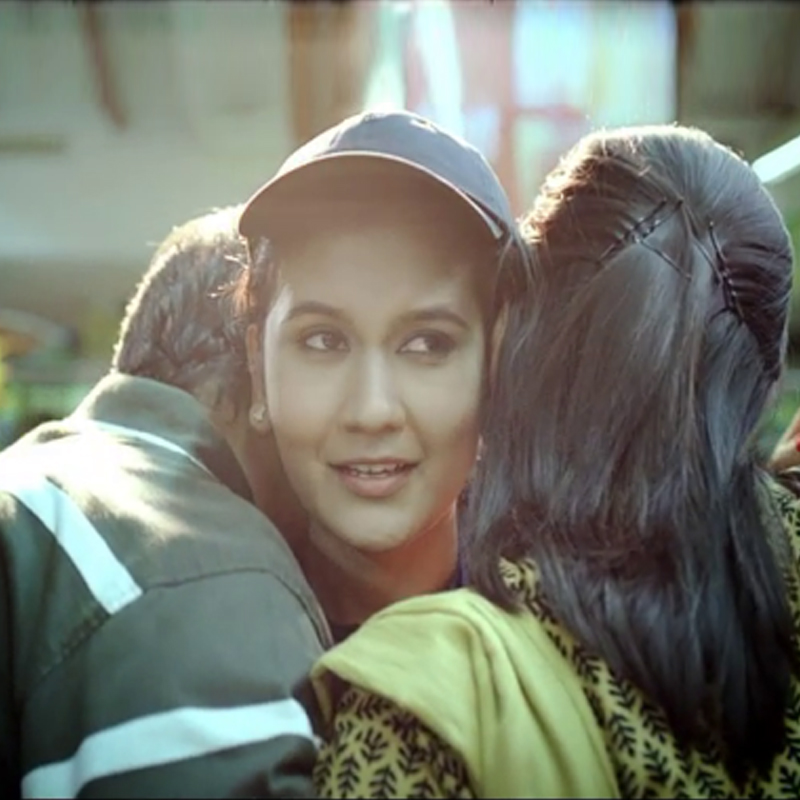
    The ad establishes an emotional connect with consumers and promotes Netsurf amongst existing distributors and consumers while building up on the new base attracting others. On the campaign, Curry Nation creative head Priti Nair said, “Through the TVC we have attempted to showcase how people connect with one another by touching each and influencing others lives. This is similar to the philosophy of Netsurf which goes out connecting with its audience while building an emotional connect with them.”

    The tagline for the campaign is Sehat, Barkat, Muskurahat. “This communication was designed to ensure that the brand stays in the mind of the consumers and distributors. We want to create a recall value for the brand. When it comes to executing a commercial for a client like Netsurf, the brand and branding becomes more important than the product as it is a company which engages in a cooperative selling concept,” added Nair.

    The total ad spent allocated to marketing Netsurf Network‘s is Rs five crore with heavy focus on the television and digital medium. BTL would be used as a support medium where the brand would promote itself via mall activations.

    Headquartered in Pune, Netsurf has consumers majorly situated in the states of Maharashtra and Gujarat. “We have plans to establish our office in Karnataka, Rajasthan, Madhya Pradesh, Chhattisgarh, Delhi, Uttar Pradesh, Haryana and West Bengal with our presence in more than 300 districts across India,” said Netsurf Network Limited chairman Sujit Jain.

    Netsurf jointly with Curry Nation plans to set up new standard concrete platforms in the field of network marketing in India. “The communication task was to establish Netsurf as a serious player in the business by leveraging the core truth of the product offering. We aim at empowering people and touching lives. The gift of health, wealth and prosperity is what the network offers to the people,” he added.

    “The challenge we faced while executing the commercial was that we had to alter the process of showcasing our product portfolio and creating an emotional connect on the product lines. I think Curry Nation has done an excellent job to communicate the same,” said Jain.

    The film has been conceptualised by Priti Nair and directed by Shimit Amin of the Chak De India fame.

  • Curry Nation picks up Indica dye creative biz

    MUMBAI: Mumbai-based advertising outfit Curry Nation has walked away with the creative duties for CavinKare‘s hair dye brand Indica. The win is the outcome of a multi agency pitch called by the brand earlier this year in January.

    This is the fourth brand from the Chennai headquartered FMCG stable that the indie agency has won the creative mandate for. Curry Nation already handles the creative duties for Fairever, Hi5 and Spinz (talcs and deos).

    The immediate mandate for the agency is to create a brand personality that appeals to a national audience.

    “The brand Indica has prominent presence in the south and our goal is to take the brand national. We have done some research and will work towards fortifying the brand identity and make it consistent to suit a national coverage,” informs Curry nation founder and director Priti Nair.

    There will be a 360 degree campaign in order to achieve this goal, including focus on digital and retail. The campaign will break sometime in early June. The media agency on record for the entire brand portfolio of CavinKare is MEC.

    Some of the other creative agencies that work on CavinKare diverse range of products/brands include Leo Burnett, Orchard and Contract Advertising.

  • Curry Nation to consolidate creative biz in 2013

    MUMBAI: For Priti Nair and Naggesh Pannaswami, it wasn‘t the best of times to start their entrepreneurial journey. The Indian economic growth story was getting stained by a slowdown and harsh winds were blowing from Europe, the US and other parts of the world.

    A contrarian mood was, however, ruling the agency world. Media professionals were chucking their jobs and taking the plunge to become masters of their destinies. Agnello Dias and Santosh Padhi had started Taproot while Manish Bhatt, Raghu Bhat and Joy Sengupta had set up their own agency Scarecrow and Raj Kurup had flown solo with Creativeland Asia.

    The infection spread to Nair and Pannaswami and they founded Curry Nation in January 2011. “It is always scary when you start on your own. But we knew we had to do it,” Nair recalls as we settle for a chat in the conference room of the new office at Mahim.

    For the duo, there was no need to get the early frights. They had a founding client in Emami and they were clear that they could tap the small and medium-sized Indian clients.

    “Yes, we were fortunate in having Emami right from the start,” says Nair.

    Then the whole thing was about drawing in talented people. “Fortunately for us, we had a good bunch of people joining us in the first year itself. Even before we went into a formal proper office, we already had three people on board apart from Naggesh and I,” says Nair.

    Along the journey, Emami‘s other brands got added and so did other personal care brands. Today, Curry Nation lends its creative services to brands like Borosil, 18 Again, Emami (personal care brands) and Himani.

    Having completed two years, the homegrown advertising agency Curry Nation is where its wants to be – in the thick of things, doing the kind of work it always wanted to.

    The team at Curry Nation has also grown to 18 people working out of a new office in Mahim. Happy to talk about her team, Nair says “they are a bunch of happy people doing the kind of work they like and believe in”.

    Curry Nation ended 2012 with one of the most visible and controversial campaigns of 2012 – the ‘18 Again‘ project. The communication about 18 Again, a brand of vaginal tightening cream, attracted a lot of attention and the campaign was pulled out by ASCI following complaints regarding its social effect.

    Nair describes ‘18 Again‘ as one of the highlights and challenges of the year. “As a product, there was always going to be a challenge considering the client wanted to market a vaginal tightening cream as just that and not under the veil of anything else. As far as the communication goes, I am very proud of it. It is something that will stay in our show reel for long. I am proud that we did not succumb to clichés while charting out the communication and made the ads about celebration instead of showing the Indian woman as downtrodden and distressed till the product came along,” she explains.

    About the controversy that surrounds the ad, Nair believes that even a 10 second placement with the term ‘vaginal tightening cream’ would have evoked the same reaction. “We have been in the business long enough to know that you have to be sensitive with these kind of products. It’s a country that is still hidden under morals and notions like that and it is hypocritical at times. We have gone through the whole process of doing Balbeer Pasha and Liril. Increasingly now the case is that people jump to conclusions and start having issues with everything. If you see the kind of commercials that have been pulled up, even chocolates and sauces commercials are pulled up. All because somebody wakes up and objects because now they have the right to voice their opinion,” she points out.

    The year 2012 also saw Curry Nation start its own media division with their first client Weikfield. The agency also handled the media duties for ‘18 Again‘.

    Looking ahead at the year 2013, Nair and Pannaswami have their eyes set on two goals – consolidate the creative business and enhance and grow the media division.

    Explaining further, Pannaswani says, “It will be a phase of consolidation for us and for organic growth. Most of our growth has been organic. What has happened is that our existing clients have been giving us more business while we have added few clients. We do want to spread ourselves into other categories as well. But, again, there are only so many categories that are opening up in terms of ad spends. So this year, we would like to consolidate the brands that we have and focus on the media division which needs support and growth.”

    Looking at Curry Nation’s client roster, one observes two things – most of the clients are from the personal care/ health care category and all the clients are Indian companies.

    Nair explains that while neither has been a conscious occurrence, Curry Nation as a creative force lends itself well in both cases. “The DNA of Curry Nation is Indian-ness. We are very clear that we want to create communication that is relevant to contemporary India. India is a bit of a macro country and the people are very dimensional in their emotions. It is not like a single layer, there are multiple nuances to our culture. We always look for an Indian insight to employ in our communication and this is what makes us a good fit with Indian brands which is evident in our roster of clients.”

    On the acquisition front, Curry Nation is happy going solo as of now. “We are happy to be in a new and bigger office. It gives a feeling of growing. And it is satisfying. We are where we wanted to be as of now,” signs off Nair.

  • Curry-Nation wins Borosil’s creative biz

    Curry-Nation wins Borosil’s creative biz

    MUMBAI: Borosil has awarded its creative duties to Curry- Nation following a multi-agency pitch.

    The size of the account is estimated to be Rs 60-70 million.

    Curry-Nation director Priti Nair said, “There exists an opportunity to carve a niche for the brand. And Borosil‘s equity in the market was an added advantage. It‘s a brand that we have grown up with and it makes me proud to be associated with its stature.”

    Pannaswami added, “Glassware is usually seen through the paradigm of design. But there are so many more facets that are relevant in a consumer‘s life space which haven‘t been leveraged as yet. It is these consumer insights that we wish to leverage and reposition other glass brands in the market today.”

    Borosil is a glassware company based in Gujarat, India. The company mainly produces laboratory glassware and microwavable kitchenware.