Tag: Print media

  • National Media Award 2022: ECI invites entries for best campaign on voter’s education & awareness

    National Media Award 2022: ECI invites entries for best campaign on voter’s education & awareness

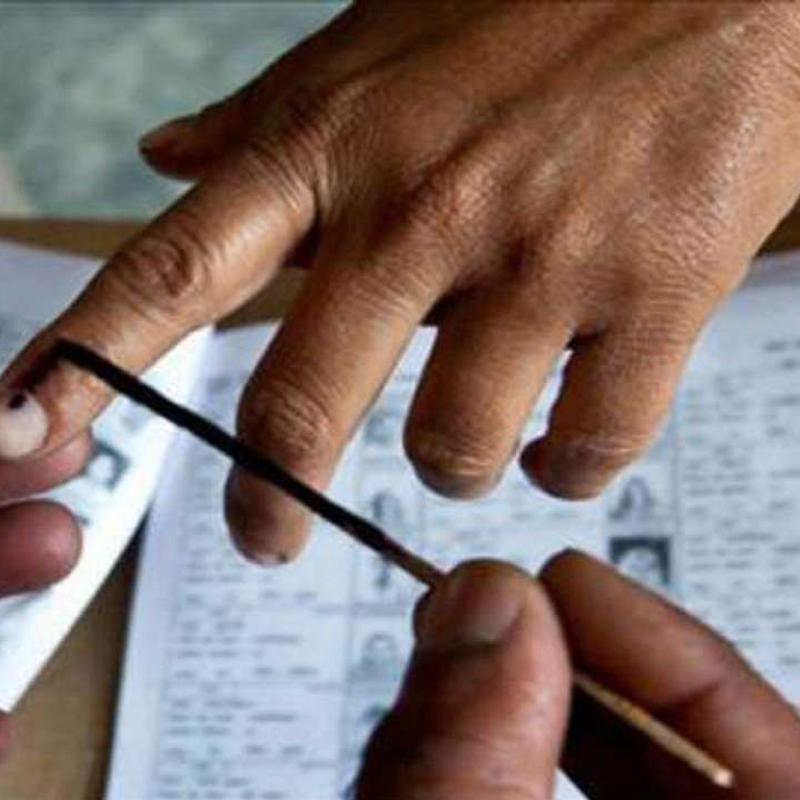
    Mumbai: The Election Commission of India has invited entries from media houses for the National Media Award for the best campaign on voter’s education and awareness during the year 2022. The last date to submit the entries is 30 November 2022.

    The awards are given to recognise the great work done by media organisations to encourage voter turnout by raising knowledge of accessible elections, educating the public on the electoral process, and encouraging people to vote and register to vote.

    There will be four awards given out, one for each of the following: print media, television (electronic), radio (electronic), and online (internet)/social media. The honours will be given on National Voters Day and will consist of a citation, a plaque, and cash prize (25 January 2023).

    The jury’s decision will be based on the following criteria: the quality of the voter awareness campaign; the extent of coverage/quantity; evidence of impact on the public; and coverage of accessibility issues.

  • Pallaw Kumar joins prestigious Indian Express Group

    Pallaw Kumar joins prestigious Indian Express Group

    Mumbai: The Indian Express Group has appointed Pallaw Kumar in a key role in the online division. In his new role, Pallaw will primarily be responsible for special projects, brand solutions, and strategic partnerships for the group’s bouquet of online brands.

    Graduated in International Business & Marketing, Pallaw brings with him 11 years of rich experience in brand & marketing management of leading electronic & print media brands.

    Known for his in-depth research, detailed analysis and perfect planning, Pallaw is an expert in strategic campaigning. He has conceived and developed 360° campaigns and content strategies for the brands such as ZEE News, Outlook, Amar Ujala, UNICEF, etc.

    Prior to joining The Indian Express, he has been associated with Outlook Group as Assistant Vice President – Brand & Marketing. The national campaigns, ‘Outlook Poshan 2.0’ and ‘Outlook Speakout’ were particularly commendable during his tenure.

    During his tenure at ZEE Media, the success of the brand campaign, ‘Aaj Aapne ZEE News Dekha Kya?’ led ZEE News becoming No.1 National News Channel. In his numerous brand campaigns, ‘ZEE News Ab Desh Ke Kone Kone Tak’ and ‘Yes To India’ are particularly noteworthy. Abby Award winning campaign ‘The Misunderstood Scoreboard’, held simultaneously in India and Pakistan, set new benchmarks in outdoor innovations. He has also been instrumental in launching several national and regional channels of Zee Media Group. Pallaw has also been part of the Abby Award winning brand campaign ‘Beti Hi Bachayegi’ during his stint at ‘Amar Ujala’.

  • #Retrace2021: A look back at print ad campaigns that stood out in 2021

    #Retrace2021: A look back at print ad campaigns that stood out in 2021

    Mumbai: Reeling under the aftermath of the pandemic, the Indian print industry began its road to recovery in 2021. According to the latest Magna Global Forecasting Report released in December, overall, the print industry grew +12 per cent from a low base (2020: -40 per cent), despite the slowdown in business in 2021. Maximum growth came from Retail, Durables, Finance, Real Estate, and Government spending.

    After witnessing a tumultuous period of plummeting circulation, and advertising revenue, the industry also began pivoting fast to strengthen its digital presence. The projections paint a heathier picture, with 2022 growth expected to be broad-based, with most categories increasing spends and elections in a few large states helping to drive an increase of +14 per cent. However, a rise in cases of the new Covid variant could prove to be dampener.

    Nonetheless, Print remains one of the most trusted mediums to influence brand perceptions on critical factors like quality, price, and trust. This explains why 2021 saw the return of traditional, as well as newer brands, and advertisers to print to create some stand-out campaigns. As we begin 2022, we take a look back at some of these campaigns …

    TRUECALLER

    While the businesses were beginning to reopen, the Truecaller print ad in January 2021 set the tone for the rest of the year. The in-your-face, unmissable ad carried by the app on the front pages of leading national dailies, talked about the issue of phone harassment women face. It mentioned how women could block these numbers on the app and should step forward and report these callers. The campaign #ItsNotOk has been running for four years now. But it caught everyone’s attention, courtesy of the latest print ads. Thinkstr, the Gurgaon-based independent agency for the campaign said they were “a little jittery about spending money on print” because they “knew the circulation was down”. But the print ads outdid itself “more than any other medium we’ve advertised on.” 

    NESTLE

    When in doubt, choosing ‘Print’ seems to be the mantra of marketers. Whenever there was a need to emphasise a brand’s credibility or build trust it was the go-to medium. Nestlé India’s print campaign launched in June 2021 did just that- reinforce the brand’s assurance of offering quality products, while talking about its long-standing legacy of 100 years and ‘family-like’ trust. The FMCG conglomerate switched to the damage control mode, coming out with the print ad campaign to rebuild consumers’ faith in the brand, only days after news reports questioning the ‘healthiness’ of the company’s products surfaced.

    FORTUNE

    A similar approach was followed by the Adani Wilmar Group’s Fortune oil brand. The brand’s claims of ‘a healthy oil for a healthy heart’ suffered a beating after Sourav Ganguly, the brand’s endorser, suffered a heart attack. Prior to this, he was seen in an ad for the brand’s Rice Bran oil which promotes the oil’s heart health benefits. Fortune faced severe trolling on social media as netizens chose to highlight the irony of the situation. To salvage the situation, the brand came out with front-page ads across leading publications with the caption ‘Today seems to be a good day to talk about the heart’, which had a fit-looking Ganguly dismissing the talk about his ill-health and tackling the subject of heart health head-on. The long format copy presented as a signed letter from the former cricketer himself, pushed heart health conversation to the fore, was the brand’s comeback after the stretch of online trolling.

    INDIAN OIL

    Nothing beats the traditional medium when you want to create an impactful awareness about a social cause. Indian Oil wanted to create awareness around the ill effects of excessive honking ahead of World Environment Day 2021 (5 June). It came out with a creative print campaign, conceptualised and executed by Mumbai-based agency, Grey Group that showed the life-threatening impact honking had on other living creatures. The artwork by Vaibhav Bhilare replaced the body parts of various animals with sound waves to depict the hazardous effect the loud noise had on them.

    MANFORCE

    That Print media allows a brand to tell its brand story effectively with no excessive drama is a known fact. To simply and effectively convey its message of protected sex and to educate people to use condoms as against ‘messy’ scenarios related to the consequences of indulging in unprotected sex, the Condom brand come up with a campaign, #DontMessAround. The series of tongue-in-cheek ads which appeared in leading newspapers creatively nudged people not to engage in unprotected intercourse as it can come with bigger problems such as STDs and unwanted pregnancy, even as it drove its brand message through.

    SEBAMED

    After the famed Cola ad wars, this year saw the battle of the soaps, with major soap brands taking on one another, directly targeting their rival brands in their ads. Sebamed kickstarted the creative sledge-fest at the outset of 2021, going after other popular brands like Lux, Santoor, and Dove, by comparing them to a detergent bar. The German skincare brand made quite a splash launching a series of print ads in leading dailies, with shocking claims alleging that each of these leading soaps had pH factors (ranging from 7 to 10) that rivaled that of the detergent soap Rin, to highlight the harshness of these skincare products, as against its own which it claimed stood at ‘an ideal 5.5’.

    The brand has launched another campaign ‘Conditions apply’ with print ads taking on other anti-hair loss shampoos. The campaign sought to discredit the ubiquitous disclaimer ‘Conditions apply’ used by these products while making tall claims. It has, however, refrained from naming any brand this time.

    DOVE

    The HUL brand of skincare, Dove chose to respond to Sebamed’s ‘pH’ allegations with a print campaign that reiterated its gentleness, falling back upon its familiar messaging –that the soap is mild and comprised of one fourth ‘moisturising milk’. The print ad seen in major newspapers Dove responded to the jabs that Sebamed’s ads have taken at it, coming hot on the heels of the Sebamed campaign. The ad copy in a prominent font stresses that ‘Dermatologists have put something strong in Dove’s bar – their trust’.

    The beauty soap launched another print campaign titled ‘Stop The Beauty Test’ that attempts to call out the stereotypes associated with Indian matchmaking and goes against unrealistic stereotypes of beauty in our society. Conceptualised by Ogilvy India, the campaign urges one to look at the beautiful aspects of a person’s personality and not their shortcomings. “Khoobiyan dekho, khaamiyan nahin” says the ad released across print and other media. The print ad, written in a long format, tackles in-depth how a girl is subjected to these beauty stereotypes and biases right from childhood, only getting worse as she becomes of marriageable age.

    And it is not just traditional categories that see the profit in the printed word. Newer advertiser categories like the edtech, crypto, and several digital-first brands are also opting for the mass medium, even going full-throttle with full pager, front-page displays in major dailies. For newer categories like crypto exchanges who are in their next phase of growth in India, it becomes even more crucial to target beyond the early adopters of this digital world by associating with traditional mediums like television and print, the study noted. Thus, making print a viable medium to build credibility and trust.

    COINSWITCH KUBER

    One such platform, which has been investing heavily in print is CoinSwitch Kuber. Building trust is key to the category as a lot of uncertainty and risk have been associated with cryptos in the past. The crypto brand came out with full front-page ads in leading newspapers in the last few days. “While digital media enables us to target a certain set of audiences, print has the accessibility to the most basic audience group which finds credibility in the print news,” said CoinSwitch Kuber chief business officer Sharan Nair explaining the brand’s decision to go aggressive on print advertising.

    UpGRAD

    With eye-catching full-page ads in leading dailies, edtech brand, upGrad launched the campaign for its online MBA programs to ‘fast-forward your career’ because ‘CAT is so yesterday’. The two-page managed to grab eyeballs for the brand with its effective use of empty spaces and an attention-grabbing caption.

    TINDER INDIA

    In another resounding endorsement, a millennial and Gen Z brand like Tinder released a series of print ads, acknowledging that print still carries ‘trust and maturity’ which digital is yet to achieve. The new age dating app’s ad is indicative of how serious it is about educating its existing and potential users about consent, serving as a lesson on how many times we misinterpret our partner’s words to consider it a ‘Yes’. Tinder India’s front page Bombay Times ad is a primer on consent and what all doesn’t equate to a ‘Yes’. This ad is the latest installment from the dating app’s ongoing campaign around consent, emphasising that only a ‘Yes’ means a ‘Yes’. Nothing more, nothing less.

  • Print media will reach only 75 % of its pre-pandemic revenue this fiscal, says report

    Print media will reach only 75 % of its pre-pandemic revenue this fiscal, says report

    New Delhi: Despite 35 per cent on-year growth this fiscal on a low base, the country’s print media sector will reach only three-fourths of its fiscal 2020 revenue, according to a new CRISIL report.

    While the cost of newsprint continues to remain high, there is a good probability that profitability will revive to 9-10 per cent driven by sharp cost rationalisation measures and digitalisation of content, shows the report. The analysis assumes the impact of the second wave to continue to subside, as is seen currently.

    According to CRISIL, the credit profiles of large print media companies will be resilient, cushioned by healthy liquidity and strong balance sheets, while for the remaining ones, liquidity management will be crucial, shows an analysis of CRISIL-rated companies that account for roughly 40 per cent of the sector’s revenue.

    The sector’s revenue of Rs 31,000 crore in fiscal 2020, split 70:30 between advertisement (ad) and subscription revenue, had declined 40 per cent last fiscal amid the first wave. However, it is expected to reach to Rs 24,000-25,000 crore this fiscal, notwithstanding the second wave.

    “The second wave has impacted ad revenues in the last quarter, as it correlates strongly with economic activity,” CRISIL Ratings, director Nitesh Jain said, “We expect ad revenues to recover from the current quarter as economic activity revives. But it would still reach only 75 per cent of the pre-pandemic level this fiscal, as seen during January-March 2021, before the second wave took hold.

    As for subscription revenue, the sector is witnessing a structural change with a shift in consumer preference towards digital news, from physical newspapers. This is more prominent for English newspapers, which have a higher share in metros and Tier-1 cities, where digital adoption is also higher. These companies are, therefore, focusing on monetisation of content by putting premium news behind paywalls and pushing digital subscription along with print subscription. Non-English newspapers, on the other hand, had relatively resilient subscription revenue even in the first wave because of their strong roots in the hinterland.

    “We believe, unlike western countries, print media will remain popular in India. Besides low cover price and the convenience of home delivery, it benefits from the ability to provide original and credible content, and people’s habit of reading physical newspapers,” stated the report, according to which, the overall sector’s subscription revenue loss this fiscal should be restricted to 12-15 per cent of the pre-pandemic level.

    That said, printing physical copies of a newspaper requires newsprint – a key raw material that accounts for 30-35 per cent of the total cost for print media companies. Over the past six months, newsprint prices have risen 20-30 per cent

    The run-up in cost notwithstanding, the operating margin is expected to reach 9-10 per cent this fiscal, or 100-200 basis points lower than the pre-pandemic low of fiscal 2020. This is because of sharp cost rationalisation measures undertaken by the companies, such as reduction in pagination, employee cost and other expenses.

    Last fiscal, retailers strengthened their balance sheets through equity infusions of Rs 2,000 crore, which reduced overall debt for CRISIL-rated apparel retailers by 30 per cent.

    CRISIL Ratings associate director, Rakshit Kachhal said, “Credit profiles of large print media companies will continue to be supported by ample liquidity and sustained strong balance sheets, with most being net-debt free. However, for the smaller ones, whose interest cover has declined to 1.6 times as on 31 March from 2.1 times a year ago, ability to manage liquidity amid the second wave and rising newsprint prices will still be crucial.”

  • DB Corp q4 PAT grows by 158 %, circulation revenue dips

    New Delhi: Print media company, DB Corp Limited (DBCL), which is home to flagship newspapers – Dainik Bhaskar, Divya Bhaskar, Divya Marathi and Saurashtra Samachar has announced its financial results for the quarter ended 31 March, 2021.

    Despite the strong pandemic led headwinds, the company said its carefully calibrated editorial, circulation and ad revenue strategies continued to help it outperform the industry performance in both circulation as well as ad revenue fronts.

    The consolidated profit after tax (PAT) for Q4FY21 grew by 158 per cent YOY at Rs. 619 million as against Rs. 241 million. For Q4, the advertising revenue for Q4 stood at Rs. 3084 million as against Rs. 3303 million, while the circulation revenue stood at Rs. 1104 million as against Rs. 1200 million.

    The continued efforts of the circulation teams have yielded results with the Group managing to salvage a challenging year. “The on-ground calibrations done by local teams have helped Dainik Bhaskar achieve almost 95 per cent of pre-Covid levels in select cities and towns. The recoveries have been significant in the key states of Madhya Pradesh, Rajasthan, Gujarat,” it said on Thursday.

    The financials results showed that the circulation revenue of the company for FY21 dropped to Rs. 4146 million as against Rs. 5122 million in FY20, while the advertising revenue stood at Rs. 10,084 million as against Rs. 15,640 million.

    The total revenue came in at Rs. 15222 million as against Rs. 22363 million the previous fiscal. The EBITDA stood at Rs. 3193 million as against Rs. 4940 million and PAT stood at Rs. 1414 million as against Rs. 2750 million.

    “The unprecedented year has reaffirmed the changing dynamics of the Print Industry,” said DB Corp Ltd, managing director, Sudhir Agarwal. “The Indian language newspapers performed significantly better than our English counterparts and outstripped them not only in circulation numbers, but in advertising revenues as well. We are happy to reiterate that the un-metro path chosen by our founder and solidified by the company over the past few years is continuing to fructify. Our digital efforts are also beginning to see traction and we are confident that we will continue to deliver quality journalism through all mediums. The local content has further strengthened the franchise.”

    On the advertising front, the Group published over 20 ‘Mega Editions’ across its major markets, despite challenging fiscal, re-affirming its strategy of operating in the Tier-II, Tier-III cities and beyond. 

  • Print faced setback in advertising & circulation in 2020, could re-grow this year

    Print faced setback in advertising & circulation in 2020, could re-grow this year

    NEW DELHI: Who could have known that a microscopic organism would disrupt the global economy and adversely impact businesses across the board in a single year – but the Coronavirus did. And the media industry was no exception to its rampage. In 2020, print media de-grew 36 per cent, and this unexpected plummet came at a time when the industry has been ceding ground to digital media. 

    Advertising and circulation impacted

    A recent FICCI-EY study report indicates that advertising revenues for newspapers in 2021 fell by 41 per cent in 2020. Subscription revenues for print media also plummeted by 24 per cent last year. Compared to regional newspapers, it was English newspapers that witnessed a more pronounced decline. 

    Advertising revenues of English news publications fell by 52 per cent in 2020, while revenues of Hindi and other regional language contents dropped by 35 per cent. 

    As the world limps back to normalcy, industry experts believe that advertising and subscription revenues could increase in 2021. According to the study report, advertising revenues will grow by 25 percent in 2021, thus elevating the revenue share to Rs 152.1 billion. The subscription revenues are also showing signs of revival, and it is expected to grow 25 per cent in 2021 and exceed 2019 levels by 2023. Meanwhile, magazine revenues that were halved in 2020 may not recover until 2023. 

    Print companies adopting measures to stay financially afloat

    To combat the ongoing crisis, print media companies have implemented significant cost reduction measures to achieve between 25 per cent and 40 per cent efficiencies, and this trend is expected to continue in the upcoming years as well. 

    Some of the noted cost-cutting measures adopted by print media include shutting down unprofitable editions, downsizing the employee base, curtailing the rental of leased properties, and giving work from home options to certain employees. Some publications pulled the plug on low-cost subscription packages, while a few others implemented salary reductions and abeyances. 

    Even though most of these measures are reversible when the business environment picks up again, industry experts believe that some of these reductions may be here to stay and could eventually enable print companies to stay financially afloat. 

    Print ad revenues rely on FMCG, auto, and education

    Further, the report suggests that the top five categories that contributed to print ad revenue in 2020 were FMCG, auto, education, retail and real estate, and home improvement. These five categories contributed 59 per cent of ad revenues, up from 50 per cent in 2019. 

    Almost all categories showed de-growth as advertisers fear that print media circulation has not returned back to pre-Covid levels. 

    Due to the Coronavirus outbreak, digital hands of print media gained massive popularity in 2020. Online news viewership has surged to 454 million unique visitors in 2020, much greater than 394 million unique visitors in 2019. Many print companies have now started to give importance to digital news publications as well, and they are focusing on products like websites, apps, and e-papers. Amid these positive signs, monetisation remained an issue with most print companies, as they generated only five percent of their revenues from their digital handles. 

    Contribution by ad-volumes

    Amid the Covid pandemic, Hindi has continued as the largest contributor to ad volumes with the largest reach of any language in India, growing its share by four per cent. In 2019, the ad volume generated by Hindi newspapers was 37 per cent, and it grew to 41 per cent in 2020. English language publications had slight degrowth in 2020 and have lost two per cent volume share since 2018. 

  • Mathrubhumi delivers a special Diwali edition to its readers

    Mathrubhumi delivers a special Diwali edition to its readers

    NEW DELHI: Always delivering something different to its readers and clients, Mathrubhumi conceptualised yet another special edition, this time for Diwali 2020. Despite Diwali not being a big festival in Kerala, the publisher tried something different to stand out in the market by creating a hugely successful additional 10-page supplement and delivering it on 12 November. 

    The paper was curated with enriching content and advertising support, in addition to also ensuring the main issue of the day itself looks great. It covered ads from a variety of categories such as consumer goods, mobiles, local retailers, hospitality segment, OTC medicines, and educational institutions. 

    Mathrubhumi Group MD Shreyams Kumar said, “This is in line with the various innovations the group is embarking on, all with a view to offer our readers richer content in every aspect and the advertisers with relevant environment to connect with our readers. We have created history by inventing a new season after Onam.  I congratulate our entire team behind this for the stupendous success.  Taking the opportunity to also thank all our advertisers who saw the merit in being part of the special issue.”

    The publisher claimed in a press statement that the initial reactions from the market seem to suggest that this has indeed worked towards providing a sudden boost of energy and confidence to both the consumers as well as the merchants in Kerala.

  • Partha Sinha & the art of monetisation at The ToI

    Partha Sinha & the art of monetisation at The ToI

    NEW DELHI: As the government imposed strict lockdown restrictions for close to three months, the print industry was one of the worst-hit. If various reports are to be believed, they lost around 60-80 per cent of their revenues. A lot of them shut down editions, most of them let go of their employees, shaved salaries, and almost all of them dealt with a painful period where their resources just bled.

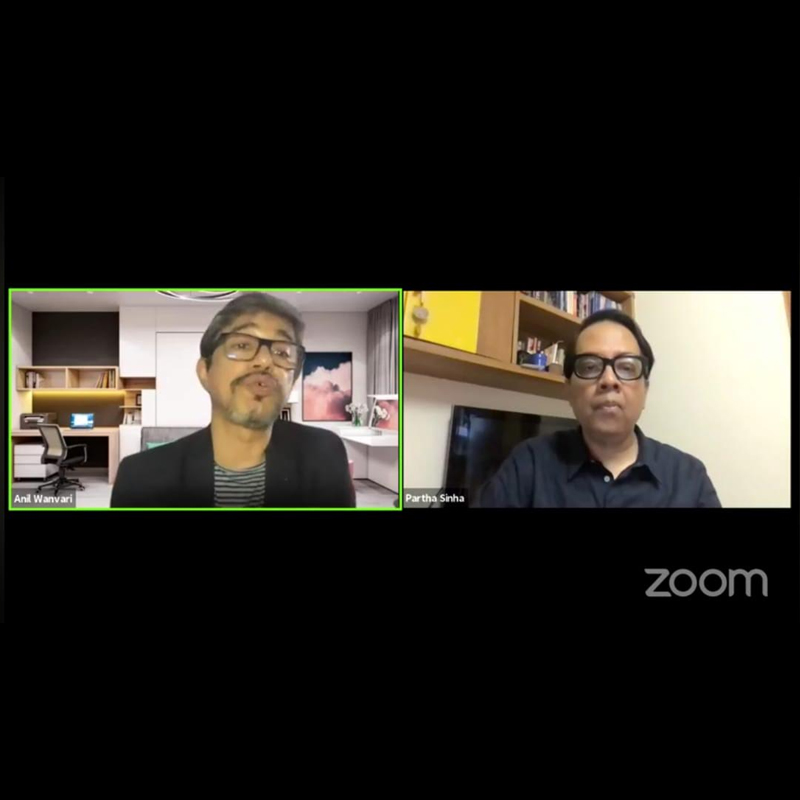
    However, as the world starts getting back to normal and a new world order sets in, the print industry is looking forward to a better tomorrow, lined up with new opportunities and relevancy, Bennet Coleman & Co Ltd (BCCL)  president–responses Partha Sinha shared in a virtual fireside chat with Indiantelevision.com founder, CEO, and editor-in-chief Anil Wanvari. On Monday evening, the duo sat across screens to discuss the impact of Covid2019 on print and the way ahead for the industry. 

    Sinha noted that the print industry has already reached a 70 per cent recovery in terms of the number of copies being delivered. “I think in some markets it has gone up to 90 per cent because, in the south or states like Kolkata, there was never a massive problem of circulation. Cities like Delhi, Mumbai, and a few more in the north were hit badly and I guess it has revived now, not just for us but for all the players.”

    He indicated that it is a good sign for the industry and debugs the myth that print will shut down. “For three to four months, our main concern was consumer demand that was severely impacted. But coming out of it so quickly is absolutely brilliant.”

    So, was it a knee-jerk reaction on the part of the industry to shut down some of the editions and let go of a number of employees, or as some of the unions say, an excuse, Wanvari questioned. 

    “I don’t think it was a knee-jerk reaction or an excuse. Even it was not for Covid2019 and something else would have happened, you would have got a consultant like McKinsey or BCG and asked them to optimise, right? This optimisation tells you if there is any cost reduction required and how can you improve profitability. Honestly speaking, as much as it's being talked about but it's quite a routine activity. Every organisation has optimised; when you find a new revenue opportunity, you hire people and if you find a revenue opportunity drying up, you optimise. I think this is a regular organization life cycle,” Sinha cleared the air. 

    So, what does the future of print seems like to him as digital and other mediums take centre stage? 

    Sinha insisted that there can’t be any substitute for the content that print generates and therefore the medium will stay here, but it might take just a slightly different role going ahead.  

    “I want to debug the myth that digital can replace or surpass print, or TV is a challenge to print. What is happening with both these mediums is that they are creating fragmented opinions, which lack credibility for the source and even for the brands. The news on television is so polarised, that it is sickening now. And obviously, if fake news becomes the business model, the credibility is hampered. Therefore, no amount of user-generated content or no amount of hair pulling on the camera will be able to substitute the credibility that print offers. Journalism will always remain about how deep you go, how sincere you are  and whether you are you're taking all the points of views,” Sinha elaborated. 

    He added that the role of print, going ahead, will move on from being a medium of discovery of product to being involved in its purchase by the customer too because of the credibility associated with the medium. He cited the instance of a real estate developer Casa Gold out of Chennai. It sold 120 apartments during the peak of Covid over four days. The Times of India Chennai response team managed everything from the webinar, to virtual expo, to get the potential buyers to take part in the virtual display of the advertisements to front page jackets of the physical newspapers.

    Sinha revealed that print media plays a big role in cultural marketing. "Cultural marketing works by creating truth and opinion and rallying people around the truth and opinion or finding emergent truth and opinion in society and making it bigger,” he explained. “Many branded efforts have almost become culture: Lead India, Teach India, Lead India led to Anna Hazare and the birth of AAP. Print can create a better narrative than any other medium. Another example is organ donation which has been driven by the Times of India.. The Times of India is the only way to create a culture with the affluent.

    “With so much fragmentation, there is a lack of credibility in the domain now. Due to fake news being so prevalent, print has started playing a significant role in building credibility and a path to purchase. The advantage of the printed word is it doesn't come with a picture. Therefore, you are forced to use your brain, you're forced to use your opinion. And that's how culture gets created. The beauty of culture creation is that eventually  brands will pay a premium to be closer to culture. Everything else is just a matter of discount because that's why the most popular method of advertising on the internet is programmatic led,” he shared. 

    He highlighted that cultural authority is the biggest asset a brand can ever own, because with that comes credibility. “These are the things that print media have to start thinking about, some like the New York Times has already done so,” he pointed out.

    Further, to help the brands gain the maximum out of the exposure and credibility that print offers Bennet and Coleman has come up with a pricing engine, which is based on artificial intelligence and machine learning. It can make an umpteen number of parameters and churn out a very specific notation for the time, helping the brands understand the right channels and the right strategy to advertise. “We are backing culture creation with data and analytics and have huge amount of data analysis,” he revealed.

    Sinha highlighted that all the assets of the Times of India group are brought into play while offering solutions to clients, whether its digital or TV or print or the social handles of these. “Thanks to the fact that we have all these assets, we can bring in 20 of our group assets or 30 of them,” he disclosed. “Let me also tell you we are open to look at assets outside the group to provide solutions to clients.”

    Times have indeed changed things at The Times. As many clients and marketers say, the change has happened for the better. 

  • Print advertising registered 325% rise in avg ad volume per day in June: TAM AdEx

    Print advertising registered 325% rise in avg ad volume per day in June: TAM AdEx

    NEW DELHI: It seems that print media will soon be back on track as print advertising registered 325 per cent rise in average ad volume per day in June 2020 when compared to April 2020, cites the recently released data by AdEx India, a division of TAM Media research.

    The report highlights that the month of March and April were worst hit by the lockdown but the average ad volume per day rose by 0.47 per cent in May and by 3.2 times in June.

    The report says that 75 per cent of the ads in April-June were in Hindi and English and 11 other languages accounted for a 25 per cent share of ad space of April-June. With almost similar ad language share of 5 per cent ads in Kannada, Marathi and Tamil ranked 3rd, 4th and 5th in the ad language share during the period.

    Cars category topped the list with eight per cent share of ad space followed by coaching/exam centres. with six per cent share in April 2020-June 2020, as per the TAM AdEx report.

    Top 10 categories covered 38 per cent ad volume share in both Apr-Jun’20. Out of this, four categories were from the education sector and together accounted for 16 per cent share. It also stated that multiple courses claimed the second position in Apr-Jun’20, from thirteenth it occupied in Jan-Mar’20. Similarly, ecom-education moved up by 20 positions to perch on the ninth position in Apr-Jun’20 compared to Jan-Mar’20.

    While the automobile industry was badly hit, Maruti Suzuki was the second-biggest spender in print with a three per cent share of ad space in April -June.

    Coaching institute Fiitjee witnessed 4.8x rise on print ads in
    April–June. Top 10 advertisers accounted for 22 per cent in April-June 2020 compared to 16 per cent in January-March of this year.

    Fiitjee topped brands in print with 2.2 per cent share of ad space followed by Maruti Car Range with two per cent share. Interestingly, Ghadi Detergent Cake/Powder moved up by 592 positions to achieve the fifth spot in April-June 2020 when compared to January-March 2020. Utkarsh Classes in a similar scenario climbed up the ladder by 244 positions and bagged the eighth-most advertised brand in Apr-Jun’20.

    Household Cleaners was one of the fastest-growing categories in Apr-Jun’20 recording over 9000x growth. Household UPS and Inverter Batteries accounted for over 300x growth in Apr-Jun’20 as compared to Jan-Mar’20. Interestingly, advertisements of Home Insecticides saw a 30x rise in Apr-Jun’20.

    71 per cent of advertisers preferred figured outline while 16 per cent opted for teasers for innovative ad layouts. The L spared layouts claimed seven per cent share of the ad space with masthead integration taking five per cent. As per the data, 12 categories used the Innovative Ad Layouts in Print during Apr-Jun’20.

  • FICCI FRAMES 2020 postponed

    FICCI FRAMES 2020 postponed

    MUMBAI: FICCI has decided to postpone its annual conference FICCI FRAMES 2020 in view of the public health concerns over coronavirus and the recent advisory from the Ministry of Health & Family Welfare, which has recommended to avoid mass gatherings.

    The three-day global convention was scheduled to be held from 18 to 20 March 2020 at the Grand Hyatt Hotel in Mumbai. It was to cover the entire gamut of media and entertainment segments such as films, TV & radio, print media, digital entertainment, advertisement, live entertainment events, digital and new media.

    A release said that FICCI will soon announce the new dates for the event.