Tag: Print advertising

  • Print leads jewellery ad spend as digital gains: Insights from 2024 report

    Print leads jewellery ad spend as digital gains: Insights from 2024 report

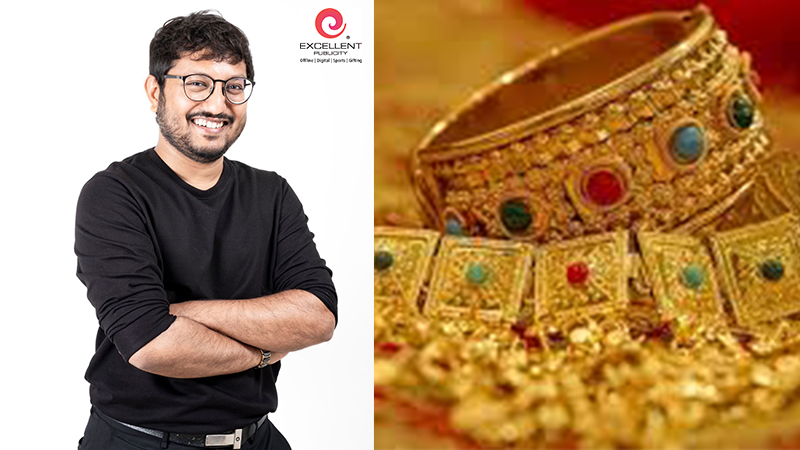
    MUMBAI: Print media isn’t ready to hand over its crown just yet. Despite the digital surge, print advertising still ruled the jewellery sector in 2024, capturing 73 per cent of total ad spend, according to Excellent Publicity’s Jewellery Ad Spend Report. Released in collaboration with data from TAM Media Research, the report unpacks how jewellery brands distributed their ad budgets across print, TV, radio, and digital platforms.

    Print remained the undisputed leader, with Titan Company claiming 11 per cent of print ad spend, followed by Malabar Group at 8 per cent and Kalyan Jewellers at 7 per cent. Regional publications were pivotal, with South Indian newspapers commanding 28 per cent of print investments. Eenadu topped the list, closely followed by The Times of India.

    Television, another heavy hitter, accounted for 45 per cent of the total ad spend, with general entertainment channels (GECs) leading the charge. News and sports channels captured 36 per cent and nine per cent, respectively. Indian cinema stardom played a big role here, with Janhvi Kapoor and Alia Bhatt boosting Kalyan Jewellers to the top TV advertiser spot, contributing 20 per cent of TV ad spend.

    Digital platforms made their presence felt, reflecting a shift in consumer behaviour. Display ads dominated with 87 per cent of digital ad volume, while video content contributed 13 per cent. Facebook led the digital pack, commanding 75 per cent of digital ad spend, followed by YouTube at 11 per cent. Notably, August Jewellery was the top digital advertiser, responsible for 34 per cent of the sector’s digital spend.

    Excellent Publicity co-founder & director, Vaishal Dalal noted the evolution, “Television, radio, and print media have always been reliable mediums for the jewellery industry’s advertising. However, the technological revolution has brought about a remarkable change in people’s content-viewing habits. This behavioural change has opened up new avenues of online advertising formats for brands to connect with their audiences. The jewellery sector is no exception, embracing digital media to stay relevant and engage with its target consumers. With the endless possibilities digital offers, the future holds immense potential for growth and innovation in this space.”

    The report highlighted regional nuances in advertising. South India contributed 28 per cent to the overall national ad spend, with North India leading at 30 per cent. Southern publications and Radio Mirchi emerged as key platforms for brands targeting specific demographics, especially in South India’s thriving jewellery market.

    As the wedding season draws near, jewellery brands are expected to ramp up advertising across traditional and digital platforms. With a mix of celebrity endorsements, targeted regional campaigns, and innovative digital formats, the sector is poised to capitalise on increased consumer demand.

    Read the full report at www.excellentpublicity.com

  • TAM AdEx: Auto sector advertising sees shift in H1 2024 across media platforms

    TAM AdEx: Auto sector advertising sees shift in H1 2024 across media platforms

    Mumbai: According to the latest TAM AdEx half-yearly report for January to June 2024, advertising trends in the Auto sector show a marked shift in media preferences. While TV ad volumes for the Auto industry saw a decline of 14 per cent compared to the same period in 2023, the digital space grew significantly, with a 55 per cent rise in ad impressions. Print media also saw a resurgence, with ad space growing by 25 per cent, demonstrating a renewed interest in this traditional medium.

    Key highlights from the report:

    1.Two-wheelers dominated TV ad volumes, capturing a 39 per cent share in H1 2024, surpassing the Cars category, which held a 37 per cent share.

    2.Print advertising saw a notable 25 per cent increase in ad space, with Honda Shine 100 leading as the top brand, accounting for seven per cent of the ad space.

    3.On radio, the Auto sector’s ad volumes grew by 14 per cent over the previous year, with Cars contributing to 72 per cent of ad volumes. Maruti Suzuki India maintained its top spot with an 18 per cent share.

    4.The digital medium witnessed the most substantial growth, with a 55 per cent increase in ad impressions. Maruti Suzuki India led digital advertising, holding a 26 per cent share, followed by Hyundai Motor India at 14 per cent.

    Top performing brands and categories:

    Honda Shine 100, Maruti Suzuki Brezza and Nissan Magnite were among the leading brands across various platforms.

    The cars category dominated both Radio and Digital platforms, contributing to over 45 per cent of total ad volumes.

    Sales promotions constituted 54 per cent of ad space in print, with discount promotions being the most preferred method.

    Regional trends and insights:

    The north zone led print advertising, contributing 32 per cent of the total ad space, with Delhi and Mumbai as the top cities.

    For Radio, Gujarat emerged as the leading state, capturing 17 per cent of ad volumes.

    Hindi publications dominated print ads, accounting for 41 per cent of ad space, indicating a strong regional focus.

    The Auto sector’s shift towards digital platforms highlights an evolving advertising landscape, where brands are increasingly investing in online engagement. The significant growth in digital impressions suggests a strategic pivot to reach tech-savvy consumers, especially in the Cars and Two-Wheelers segments.

    The rise in print advertising also suggests that despite the digital boom, traditional media holds substantial value, particularly for localized and regional advertising. With news channels leading TV ad volumes and programmatic buying dominating digital transactions, advertisers are leveraging diverse media strategies to maximize reach and engagement.

  • TAM AdEx: FMCG ad volumes shift as print & TV decline, digital & radio grow in H1 2024

    TAM AdEx: FMCG ad volumes shift as print & TV decline, digital & radio grow in H1 2024

    Mumbai: The latest TAM AdEx report for January-June 2024 shows a six per cent decline in print ad space for the fast-moving consumer goods (FMCG) sector compared to the same period last year. January held the highest share of print ad space at 20 per cent, with March following closely at 18 per cent.

    Toilet soaps topped the print ad space with a 10 per cent share, while digestives held onto their leading position from the previous year. Spices, OTC products, vitamins, and health supplements also contributed notably to the ad space, highlighting FMCG’s focus on daily essentials and health-related items.

    Hindustan Unilever commanded an 18 per cent share of FMCG ad volumes in print, followed by SBS Biotech and GCMMF(Amul). New additions to the top advertiser list included Munimjee & Sons, Mankind Pharma, and Vicco Laboratories. Leading brands in the period were Dr. Ortho Oil, Pet Saffa Range, and Roop Mantra Ayur Face Cream, with the top 10 brands collectively contributing 16 per cent of the overall print ad space.

    The North Zone led regional ad distribution, capturing 38 per cent of the total FMCG print ad space, with the West, South, and East zones following. Delhi and Mumbai ranked as top cities for FMCG print ads, alongside regional leaders Kolkata and Bangalore. Sales promotions made up 22 per cent of ad space, with volume promotions holding 35 per cent and discount promotions at 29 per cent.

  • TAM AdEx: TV ads for consumer durables surge, print drops by six per cent in H1 2024

    TAM AdEx: TV ads for consumer durables surge, print drops by six per cent in H1 2024

    Mumbai: TAM AdEx’s latest report for Jan-Jun 2024 reveals significant growth in TV ad volumes for the consumer durables/home appliances category, showing a 2.9 times increase compared to the same period in 2022, and 11 per cent higher than H1 2023. In contrast, print ad space for the category continued its downward trend, falling by six per cent compared to the first half of 2023.

    Godrej & Boyce Mfg Co led the category on TV, holding a 33 per cent share of ad volumes, while Usha International and Voltas joined as exclusive top advertisers in 2024. Print advertising saw TTK Prestige India and Stovekraft maintain their top spots with 41 per cent and 21 per cent share of ad space, respectively. The South Zone dominated print ads, accounting for 33 per cent of ad space, closely followed by the North Zone.

    On Radio, ad volumes dropped 52 per cent in 2024 compared to 2023, but Samsung India Electronics led with 28 per cent of ad volumes. Digital ad impressions grew by five per cent in H1 2024, with Samsung again topping the list at 25 per cent share of impressions. Programmatic advertising accounted for 81 per cent of digital impressions.

    The report highlights that the consumer durables/home appliances category continues to prioritise TV advertising, with prime time being the preferred slot. The news and GEC (general entertainment channels) genres captured 65 per cent of ad volumes.

    In the print sector, Hindi and English publications together contributed over 64 per cent of the ad space. The preference for promotional offers remains strong, comprising 81 per cent of total print ads, with multiple promotions being the most utilised form.

  • TAM AdEx: Education leads print ad space with 19 per cent in Jan-Jun’24

    TAM AdEx: Education leads print ad space with 19 per cent in Jan-Jun’24

    Mumbai: According to the latest report from TAM AdEx India for the period Jan-Jun’24, print ad space saw a five per cent growth compared to the same period in 2023.

    The education sector was the biggest contributor, accounting for 19 per cent of the total ad space, followed by services with 15 per cent and the auto sector with 13 per cent. Together, the top three sectors captured over 47 per cent of total ad space. Notably, the telecom products sector made its entry into the top 10 sectors in print advertising.

    Cars led the way in terms of ad space growth, with a 25 per cent increase compared to last year. The cellular phones/smartphones category saw the highest growth rate, expanding by 2.9 times. Other growing categories included two-wheelers (plus 29 per cent) and multiple courses (plus 21 per cent).

    Among advertisers, Maruti Suzuki India maintained its leadership position, followed by SBS Biotech and Honda Motorcycle & Scooter India. A significant rise was noted for Samsung India Electronics, which moved from 30th place in 2023 to sixth place in 2024. Eight of the top 10 advertisers from last year remained in the top rankings for 2024, with newcomers Samsung and Kent RO System making the list.

    In terms of brands, Honda Shine 100 topped the print ad charts, followed by Aakash Medical/IIT-JEE/Foundation and Allen Career Institute. The top 10 brands together contributed six per cent of the total print ad space, with a strong representation from the auto and education sectors.

    On the language front, Hindi and English publications together accounted for more than 60 per cent of total ad space in both 2023 and 2024. Hindi publications took the largest share at 38 per cent, followed by English at 26 per cent.

    Lastly, sales promotion ads made up 28 per cent of the total print ad space, with discount promotions leading the way at 44 per cent, followed by multiple promotions at 41 per cent.


  • TAM AdEx: Top 10 advertisers contributed 16 per cent share of ad space in print

    TAM AdEx: Top 10 advertisers contributed 16 per cent share of ad space in print

    Mumbai: TAM AdEx India has released a print advertising quarterly report for Jan-Mar’24.

    In print, ad space per publication witnessed growth of seven per cent and 17 per cent during Jan-Mar’23 and Jan-Mar’24 respectively, compared to Jan-Mar’22. Also, compared to Jan-Mar’23, ad space per publication observed growth of 10 per cent in Jan-Mar’24.

    The top five sectors retained their respective positions in print advertising during Jan-Mar’24 over Jan-Mar’23. The top ten sectors collectively added 82 per cent share of ad space. Compared to Jan-Mar’23, telecom products was the only new entrant among the top sectors in Jan-Mar’24.

    Among the top 10 categories present in Jan-Mar’24, three belonged to the education sector. The top 10 categories together covered 40 per cent share of ad space. During Jan-Mar’24, multiple courses and cellular phones smartphones entered the top 10 categories and secured ninth and tenth positions compared to their 11th and 21st positions respectively in Jan-Mar’23.

    Top 10 advertisers contributed 16 per cent share of ad space in print. On print, SBS Biotech ascended to first position during Jan-Mar’24 compared to Jan-Mar’23. Whereas, Maruti Suzuki India descended to fourth position in Jan-Mar’24, compared to its first position in Jan-Mar’23. In print advertising, more than 57K advertisers were present during Jan-Mar’24.

    Top 10 brands contributed seven per cent share of print ad space. Among the top 10 brands present, six of them were new entrants during Jan-Mar’24 over Jan-Mar’23. Honda Shine 100 was the leading brand for print advertising in Jan-Mar’24. Fiitjee shifted down to eighth position in Jan-Mar’24, compared to its first position in Jan-Mar’23.

    Cellular phones – smart phones witnessed the highest growth of three times in terms of both ad space difference and growth per cent, followed by cars with 17 per cent growth in Jan-Mar’24 over Jan-Mar’23.

    33 K plus advertisers & 43 K plus brands exclusively promoted during Jan-Mar’24 in print compared to Jan-Mar’23. Shri Ram Janmabhoomi Teerth Kshetra and Honda Shine 100 were the top exclusive advertiser and brand respectively in Jan-Mar’24.

    Sales promotion advertising covered 29 per cent share of ad space in print during Jan-Mar’24. Among sales promotions, discount promotion obtained first position with 44 per cent share of ad space followed by multiple promotion. The top two promotions covered more than 85 per cent share of ad space during Jan-Mar’24.

  • PubNation: The ink shall never dry

    PubNation: The ink shall never dry

    NEW DELHI: Newspapers in the developed world have long lost their sheen in the face of alternative media. Print businesses, both in terms of readership and ad revenues, continue to decline there. However, the scenario in India is quite different. Despite many challenges that loomed on the horizon for print players here, the media has only continued to grow and is expected to reach Rs 338 billion by 2021 (FICCI 2019 report). 

    It definitely wobbled on its feet a little in 2020 because of the pandemic and the speculations around papers being a carrier of the virus, but if experts are to be believed, things have started going back to pre-Covid days, both in terms of subscriptions and ad revenues. The prime reason: the credibility of print media. 

    The point was raised by a distinguished panel of experts speaking on the topic of “Advertising on Ink & Its Future” on day two of the recently concluded PubNation (print & digital) virtual conference. Moderated by Bennet Coleman & Co Ltd SVP & head – creative strategy & planning, trade marketing & innovations Malcolm Raphael, the panel was graced by Dentsu Impact Pvt Ltd president Amit Wadhwa, Zenith India COO Jai Lala, VLCC Personal Care Ltd CBO Manish Jha, and Forevermark India director – marketing Toranj Mehta. 

    Starting off, Raphael pointed out that the low of early 2020 had filled the entire print industry with doubt and uncertainty. Their approach was of cautious speculation in dealing with the situation. However, the past three months have pushed the medium on a path of accelerated recovery. 

    Lala noted, “These were absolutely unprecedented times and very challenging. But we realised that there were a lot of opportunities too. Personally, for us, we hosted a number of internal forums with the editors of these newspapers and started understanding the market. Secondly, the willingness to innovate and look beyond things helped us.”

    He illustrated with an example: “One of our clients Hero has always maintained print as the bedrock of their marketing strategies. And we researched a lot for them to find out how to turn print from an insertion medium to an engagement medium. Because brands today are willing to buy more engagement and not more media space.” 

    However, another important factor that remains at the heart of media planning for any brand, is the credibility of the medium. 

    Mehta stated that Forevermark is always very careful in picking the media they want their brand to be present on. “The credibility of the media also impacts how the consumer perceives your brand.” 

    She insisted that digital media still hasn’t been able to create that amount of credibility and trustworthiness. That’s why the brand sticks to advertising on print media. “Starting Akshay Tritya and all the way through Diwali, we advertised on print media and are continuing to do so. We had to negotiate hard for the ad rates, but we are very much present on the print.”

    As per an Ormax Media research report, print remains the most credible medium of information for Indians, scoring 62 per cent on the news credibility index, followed by radio with 57 per cent and TV news with 56 per cent.

    Wadhwa reflected that credibility for print was never an issue, but it got highlighted very recently with all the fake news gaining traction because of “dangerous level of consumption on the digital medium.” 

    Now, it is the responsibility of the brands and marketers to make better use out of this information, he stressed. “The medium will stay here for a long time. People trust every word that is written in print. The industry has to let go of the set notions and mindset that they have towards print that it is only good for a big announcement or a launch and use the medium more effectively.”

    Jha agreed and added that it is never about print versus digital, but using both mediums cautiously and smartly with a focus on ROI. No brand would want to be present on a medium that doesn’t deliver good ROI. “My observation is very clear — that ink shall never dry.”

    Raphael highlighted that Times Group is already working on a number of solutions with their in-house teams to make print a more ROI-driven advertising instrument, and technology like QR codes are helping achieve that. “With our in-house teams, we have also inspired many brands to change or modify their piece of communication and helped them achieved better results.”

  • Scope of Innovation in Print Advertising

    Scope of Innovation in Print Advertising

    On 16 April, 2000, The Times of India arrived on the doorsteps of millions of Indian households with its front page blank! It carried only the masthead, but no editorial. Blank!! That was the surprise of all surprises. It was our way of telling the world that the dot com revolution had arrived with the launch of indya.com. It took the country by shock! It hit newsreaders right between their disbelieving eyes. You couldn’t help but notice it. Unbelievable, even to us! 

    When we thought of the idea, we didn’t use fancy words like ‘innovation in print’. All we wanted to do was dominate the news! Take over everything. To shell-shock the world, to be remembered! Nobody had dared mess with the front page of Times of India until then. It took a great client like Sunil Lulla, the then CEO of Indya.com, to inspire, appreciate and see this idea right through. 

    Today we see a lot of messy stuff on the front pages of most newspapers. These are not innovations, but desperations. If we want to truly break through, we’ll have to do much better than what we currently see. More importantly, we’ll have to have the inventive fire of a madman and the inspired blessing of a visionary client. Else all we’ll get is paper pulp.

    It is getting harder for advertising to stand out in print. Because editorial is so much more exciting. And it’s being generated at the speed of life. So forget about creating print ads like we did before. We are competing with gripping news. And the only way to fight news is to make news. 

    Which explains the work many of us have seen for Benetton a few years ago. The ‘Unhate’ campaign. It dared to create news. A childlike argument for peace and reconciliation, it created huge buzz. The big pictures of world leaders kissing each other in the print ads incited strong reactions. The campaign was withdrawn but the brand’s point was made. The work won worldwide accolades and the Grand Prix at Cannes.

    To truly innovate in print advertising, it’s important to remember that we are not competing with other ads, we are competing with news. What’s your news? If you have inspired guts, you’ll find the answer. Innovation in print is not a topic of discussion. It’s not an ad… it’s an act!

    (These are purely personal views of BBDO India chairman and chief creative office Josy Paul and Indiantelevision.com does not necessarily subscribe to these views.)

  • Education was big on Print advertising in 2007

    Education was big on Print advertising in 2007

    The curtains have fallen on 2007, the all important data is also out — that of the Top 10 categories of advertisers on television, print and radio and their growth in ad spends in 2007 as compared to 2006, as estimated by AdEx India.


    Product
    2007* (Jan-Nov ’07)
    Rank Product Group Ad volumes (in ‘000)
    1 Educational Institutions 14,123
    2 Properties/Real Estates 5,992
    3 Corporate/Brand Image 5,974
    4 Independent Retailers 5,770
    5 Cars/Jeeps 5,495
    6 Cellular Phone Service 3,467
    7 Two Wheelers 3,441
    8 Events 2,948
    9 Coaching Centre/Competitive Exam 2,759
    10 Hospital/Clinics 2,709
     
    2006…
    Rank Product Group Ad volumes (in ‘000)
    1 Educational Institutions 13,395
    2 Properties/Real Estates 6,862
    3 Corporate/Brand Image 6,517
    4 Cars/Jeeps 5,523
    5 Independent Retailers 5,348
    6 Two Wheelers 5,251
    7 Social Advertisements 4,158
    8 Cellular Phone Service 3,838
    9 Events 3,421
    10 Travel & Tourism 3,223
     

    ————————————****———————————-


    Advertisers
    2007* (Jan-Nov ’07)
    Rank Advertisers Ad volumes (in ‘000)
    1 Maruti Suzuki Ltd 2,209
    2 LG Electronics India Ltd 1,551
    3 Tata Motors Ltd 1,192
    4 Nokia Corporation 1,192
    5 BSNL 1,181
    6 Reliance Communications Ltd 1,089
    7 Planman Consultant India Pvt Ltd 1,073
    8 Hewlett Packard India Ltd 1,072
    9 Bajaj Auto Ltd 931
    10 Hero Honda Motors Ltd 894
     
    2006…
    Rank Advertisers Ad volumes (in ‘000)
    1 Maruti Suzuki Ltd 1,777
    2 Bajaj Auto Ltd 1,670
    3 Tata Motors Ltd 1,565
    4 Hewlett Packard India Ltd 1,530
    5 Reliance Communications Ltd 1,524
    6 Hero Honda Motors Ltd 1,394
    7 LG Electronics India Ltd 1,265
    8 TVS Motor Company 1,146
    9 BSNL 1,049
    10 Planman Consultant India Pvt Ltd 945
     

    ————————————****———————————-


    Brands
    2007* (Jan-Nov ’07)
    Rank Brands Ad volumes (in ‘000)
    1 IIPM (The Indian Institute Of Planning and Management) 974
    2 Tata Sky 803
    3 Range of Maruti Car 642
    4 Reliance Mobile Prepaid 551
    5 Maruti Suzuki Zen Estilo 515
    6 Royal Government Of Bhutan Lotteries 500
    7 Onida Pure Flat 382
    8 Big Bazaar 370
    9 LG Group (Electronics) 363
    10 Bajaj Platina 330
     
    2006…
    Rank Brands Ad volumes (in ‘000)
    1 IIPM (The Indian Institute Of Planning and Management) 883
    2 Ministry Of Health & Family Welfare 860
    3 Reliance Mobile 810
    4 TVS Star City 730
    5 Range of Maruti Car 664
    6 Royal Government Of Bhutan Lotteries 648
    7 Sikkim/Royal Government Of Bhutan 565
    8 Hero Honda Motorcycles 516
    9 Range of Bajaj Motorcycle 462
    10 IncredibleIndia 447
     
    ————————————****———————————-


    Period: Year 2006 & 2007 (Jan – Nov’07)

    Note: Ranking based on ad volumes (Col*Cm) in thousands

    Source: AdEx India – A Division of TAM Media Research Bitmap