Tag: Prime Minister

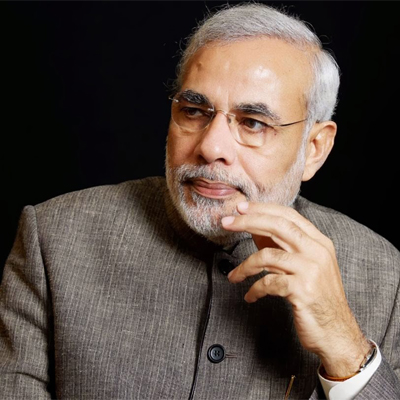
  • Narendra Modi speaks to Fareed Zakaria on India’s world relations

    Narendra Modi speaks to Fareed Zakaria on India’s world relations

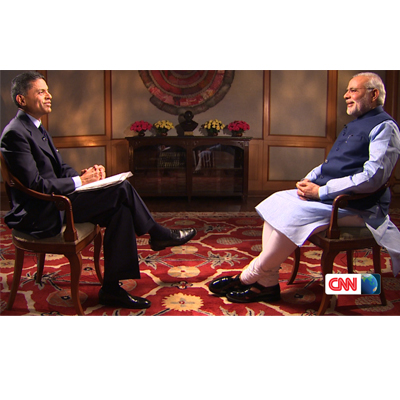
    MUMBAI: Narendra Modi’s much awaited interview with CNN International took place on 21 September 2014. Here is the transcript of the interview with CNN’s Fareed Zakaria.


    Fareed Zakaria, Host, CNN GPS: Prime Minister thank you so much for doing this.


    Narendra Modi, Prime Minister, India:  Thank you.


    Zakaria: After your election people have begun asking again a question that has been asked many times for the last two decades, which is, will India be the next China. Will India be able to grow at 8-9% a year consistently and transform itself and thus transform the world?


    Modi: See, India does not need to become anything else. India must become only India. This is a country that once upon a time was called ‘the golden bird’. We have fallen from where we were before. But now we have the chance to rise again. If you see the details of the last five or ten centuries, you will see that India and China have grown at similar paces. Their contributions to global GDP have risen in parallel, and fallen in parallel. Today’s era once again belongs to Asia. India and China are both growing rapidly, together.


    Zakaria: But people would still I think wonder can India achieve the kind of 8 & 9% growth rates that China has done consistently for 30 years and India has only done for a short period.


    Modi: It is my absolute belief that Indians have unlimited talent. I have no doubt about our capabilities. I have a lot of faith in the entrepreneurial nature of our 1.25 billion people. There is a lot of capability. And I have a clear road-map to channel it.


    Zakaria: China’s behavior in the East China Sea and the South China Sea over the last two years has worried many of its neighbors. The head of the governments in Philippines and Vietnam have made very sharp statements worrying about it. Do you worry about it?


    Modi: India is different. It is a country of 1.25 billion people. We can’t run our country if we get worried about every small thing. At the same time, we can’t close our eyes to problems. We are not living in the eighteenth century. This is an era of partnership. Everyone will have to seek and extend help mutually.  China is also a country with an ancient cultural heritage. Look at how it has focused on economic development. It’s hardly the sign of a country that wants to be isolated.  We should have trust in China’s understanding and have faith that it would accept global laws and will play its role in cooperating and moving forward.


    Zakaria: Do you look at China and feel that it has been able to develop as fast as it has, really the fastest development in human history, because it is an authoritarian government, because the government has the power to build great infrastructure, to create incentives for investment. Do you look at that and think to yourself that that would be — that there is a price to democracy that you have to do things a little bit more slowly.


    Modi: If China is one example, then democratic countries provide another example. They have also grown fast. You can’t say that growth is not possible because of democracy.  Democracy is our commitment. It is our great legacy, a legacy we simply cannot compromise. Democracy is in our DNA.


    Zakaria: So you don’t look at the power of the Chinese government and wish you had some of that authority.


    Modi: See, I have seen the strength of democracy. If there were no democracy then someone like me, Modi, a child born in a poor family, how would he sit here? This is the strength of democracy.


    Zakaria: From the strength of democracy to the strength or weakness of the crucial relationship between the US and India. Mr. Modi goes to the White House next week.  This after he was actually banned from even stepping on U.S. soil for many years. How does he see relations between the two nations?  Also, I ask about India’s recent record of terrible crimes against women. The Prime Minister will tell me what his government intends to do about it.


    ..BREAK..


    Zakaria: And we are back with more of my exclusive interview with India’s Prime Minister, Narendra Modi. Next week, he will make his first trip to the White House, warmly welcomed by the Obama administration. That’s quite a turnaround for a man who was placed on a blacklist by the George W. Bush administration in 2005 and, for many years, denied a visa to enter the United States. The ban stemmed from an incident in 2002, when he was chief minister of India’s state of Gujarat. Modi was criticized for failing to quell riots there, riots that, according to a U.S. government report, killed more than twelve-hundred people, the majority of the dead were Muslim.  Modi is Hindu.  Modi has been exonerated three times by India’s Supreme Court, notes the New York Times.  The Obama administration reversed the ban and has been courting Modi actively. Has Modi any qualms about warmer ties with India? I asked him.


    Zakaria: There are many people in the United States and some in India who wish that the United States and India were much closer allies. The world’s oldest democracy, the world’s biggest democracy, but somehow that has never happened and there have always been these frictions and difficulties. Do you think it is possible for the United States and India to develop a genuinely strategic alliance?


    Modi: I have a one word answer: Yes. And with great confidence I say “yes”. Let me explain. There are many similarities between India and America. If you look at the last few centuries, two things come to light. America has absorbed people from around the world and there is an Indian in every part of the world. This characterizes both the societies. Indians and Americans have coexistence in their natural temperament. Now, yes, for sure, there have been ups and downs in our relationship in the last century. But from the end of the 20th century to the first decade of the 21st century, we have witnessed a big change. Our ties have deepened. India and the United States of America are bound together, by history and by culture. These ties will deepen further.


    Zakaria: So far in your contacts with the Obama administration, you have had several cabinet members come here. Do you feel that there is a genuine desire from Washington to try to upgrade the relationship with India substantially?


    Modi: Relations between India and America should not be seen within the limits of just Delhi and Washington. It’s a much larger sphere. The good thing is that the mood of both Delhi and Washington is in harmony with this understanding. Both sides have played a role in this.


    Zakaria: With regard to Russia’s action in Ukraine. India has not been particularly active.  Do you, how do you view Russia’s annexation of the Crimea.


    Modi: Firstly, whatever happened there, innocent people died in a plane accident. That’s very saddening. These are not good things for humanity in this age. There is a saying in India that the person who should throw a stone first is the person who has not committed any sins. In the world right now, a lot of people want to give advice. But look within them, and they too have sinned in some way. Ultimately, India’s view point is that efforts need to be made to sit together and talk, and to resolve problems in an ongoing process.


    Zakaria: One of the areas that India has come on to the world scene or people have read about and heard about it, which has been unfortunate has been violence against women. This issue of rape. Why is it do you think that there is this problem of, it seems persistent discrimination and violence against women in India and what do you think can be done about it?


    Modi: Look, us political pundits shouldn’t tangle ourselves up in knots by searching for the root cause of this problem. More damage is done by statements from political pundits. Dignity of women is our collective responsibility. There should be no compromise in this matter. There should be no erosion in the law and order situation. We have to revive the family culture in which a woman is respected and considered equal, her dignity encouraged. The main thing here is girl child education. By doing so the possibility of empowerment will increase. On August 15, my government pushed ahead a movement called: educate the girl, save the girl.


    Zakaria: Next on GPS, the head of al Qaeda says he’s opening a franchise in India. What does Prime Minister Modi have to say about that? I’ll ask him.  Also, when you lead 1.25 billion people, the pressures mount.  How does Mr. Modi relax? You’ll find out, when we come back.


    ..BREAK..


    Zakaria: Earlier this month, Osama bin Laden’s successor as head of Al Qaeda – Ayman Al-Zawahiri – announced in an almost-hour long video that the terror organization was going to open a new branch in India. India’s Muslims are a minority – just over 13 percent of the population, versus more than 80 percent of the population that is Hindu. And, thus far, the cause of “jihad” amongst that Muslim minority in India hasn’t taken off at all, certainly not as it has across the border in Pakistan. At a time when terror is atop the headlines, I wanted to get Mr. Modi’s thoughts on al Qaeda’s plans for his country.


    Zakaria: Ayman al-Zawahiri the head of al Qaeda has issued a video and an appeal trying to create an al Qaeda really in India. In South Asia he says but the message was really directed towards India and he says he wants to free Muslims from the oppression they face in Gujarat, in Kashmir. Do you think, do you worry that something like this could succeed?


    Modi: My understanding is that they are doing injustice towards the Muslims of our country. If anyone thinks Indian Muslims will dance to their tune, they are delusional. Indian Muslims will live for India. They will die for India. They will not want anything bad for India.


    Zakaria: Why do you think it is that there is this remarkable phenomenon that you have a 170 million Muslims and there seem to be almost no or very few members of al-Qaeda. Even though al-Qaeda is in Afghanistan and of course there are many in Pakistan. What is it that has made this community not as susceptible?


    Modi: Firstly, I am not the authority for doing a psychological and religious analysis on this.  But the question is, whether or not humanity should be defended in the world? Whether or not believers in humanity should unite? This is a crisis against humanity, not a crisis against one country or one race.  So we have to frame this as a fight between humanity and inhumanity. Nothing else. 


    Zakaria: A year or two from now, what would you like people to say, that these are the things Narendra Modi has managed to accomplish in terms of actions in office.


    Modi: See the biggest thing is that the people of the country have faith. That trust should never break. If I can win the confidence of the people of India, not from my speeches, but by actions, then the power of 1.25 billion Indians will come together to take the country forward.


    Zakaria:  One final question. How do you relax? What do you enjoy doing when you are not working?


    Modi: Look, I’m not the “not-working” type. I derive pleasure from my work. Work gives me relaxation too. Every moment I am thinking of something new: making a new plan, new ways to work. In the same way that a scientist draws pleasure from long hours in the laboratory, I draw pleasure in governance, in doing new things and bringing people together. That pleasure is sufficient for me.


    Zakaria: Do you meditate? Do you do Yoga?


    Modi: I’m fortunate that I was introduced to the world of yoga. That has been very useful to me. I always advise everyone to make this a part of their lives


    Zakaria: You gave a long speech about the benefits of Yoga. Explain what you see them as.


    Modi: See, sometimes we notice our mind works on one thing, the body on another, and time brings us in conflict. Yoga synchronizes the heart, the mind, and the body. That is Yoga.


    Zakaria: And that was Narendra Modi, the new prime minister of India in his first interview in office.
  • Government takes legislative step to accommodate Nripendra Misra in PMO

    Government takes legislative step to accommodate Nripendra Misra in PMO

    NEW DELHI: The change of government always brings about a shake-up of senior executives in various posts, and this is done even if it necessitates changing laws to accommodate an individual or an individual’s chosen one.


    The Telecom Regulatory Authority of India (TRAI) is being amended so that former TRAI chairman Nripendra Misra – a 1967-batch IAS officer who is now 69 years of age – can be appointed as principal secretary to Prime Minister Narendra Modi.


    A bill in this regard was introduced in the Lok Sabha to replace an ordinance brought out by the government to amend the act which prohibited its chairman and members from taking up any other job in the central or state governments after demitting office.


    Some Congress members told indiantelevision.com that this would open the Pandora’s Box as it would be used by every successive government to bring their favourites to key posts. Furthermore, this precedent may lead to amendments in other organisations where similar restrictions have been put in place.  


    With the Bharatiya Janata Party issuing a whip to its members to support the bill, it is bound to be passed. However, it may face a tougher task in the Rajya Sabha where the BJP does not have a majority.


    The TRAI (Amendment) Bill, 2014 was debated in the House today.


    According to the present TRAI Act: “The chairperson or any other member ceasing to hold office as such shall (a) be ineligible for further employment under the central government or any state government or (b) not accept any commercial employment, for a period of two years from the date he ceases to hold such office.”


    The ordinance amends this section to read as: “The chairperson and the whole-time members shall not, for a period of two years from the date on which they cease to hold office as such, except with the previous approval of the central government, accept “(a) any employment either under the central government or under any state government; or “(b) any appointment in any company in the business of telecommunication service.”


    Misra is an IAS officer from the Uttar Pradesh cadre and his appointment as principal secretary will be co-terminus with the term of the PM or till further orders, according to an order issued by the Ministry of Personnel. The principal secretary to the PM is a key post and acts as main link for coordination among Prime Minister’s Office, cabinet secretariat and secretaries of ministries. 

  • PM swearing in ceremony gets global reach through television and social media

    PM swearing in ceremony gets global reach through television and social media

    NEW DELHI: In a dignified function rarely seen, Indian television channels today globally beamed live the swearing in of Narendra Modi as the fifteenth Prime Minister of the country, along with his team of 44 Ministers and Ministers of State.


    Around 4,000 people including all the leaders of the SAARC countries and Mauritius were present in the front courtyard of Rashtrapati Bhavan where President Pranab Mukherjee swore in the Prime Minister and his team.


    Apart from the stars of Bollywood who have made it to the portals of Parliament House, others who were present included Anupam Kher, Dharmendra, Salman Khan with father Salim Khan, Bappie Lahiri, Suresh Oberoi and Vivek Oberoi.


    The winning stars seen at the ceremony included Vinod Khanna, Manoj Tiwari, Smriti Irani and Hema Malini.


    While all television channels were allowed to come to Rashtrapati Bhavan and were stationed at the back of the entire assembly, only Doordarshan was permitted to beam the oath taking ceremony from close quarters.  


    As a result, most channels beamed the ceremony by taking the feed from Doordarshan, though many had their own commentators and experts who spoke about the various persons as they were sworn in.


    While channels like Times Now preferred to show the commentary by Doordarshan’s Sanjeev Upadhyaya and Gaura Lal Dhawan before and after the swearing in, several other channels like NDTV 24×7 showed the visuals from DD but had its own experts speaking about each person as he/she came up to take the oath.


    DD, which had the live coverage on its national channel and DD News, also made arrangements for simultaneous translation into sign language for the hearing impaired. The live telecast was also beamed live on DD’s website and its channel on YouTube, President Pranab Mukherjee’s site presidentofindia.nic.in and on the Prime Minister’s website pmindia.nic.in.


    The telecast commenced around 40 minutes before the ceremony commenced, showing the arrival of various VIPs and leaders of different parties,  including Sonia Gandhi and Rahul Gandhi. 


    The last time that ceremonies of this nature – though smaller magnitude – were held in the front courtyard of Rashtrapati Bhavan was in 1990 and 1998 when Chandrashekhar and Atal Behari Vajpayee were sworn in as Prime Ministers.


    However, this was the first  time since 1991 (when Rajiv Gandhi was cremated) that all the SAARC leaders were seen together in India.


    Modi, who has been tweeting throughout the campaign and even after being elected, used the opportunity to send out a message to the people and the media through the Prime Minister’s website, pmindia.nic.in.


    Referring to the social media and the internet, he said: “I envision this website as a very important medium of direct communication between us. I am a firm believer in the power of technology and social media to communicate with people across the world. I hope this platform creates opportunities to listen, learn and share one’s views. 

    “Through this website you will also get all the latest information about my speeches, schedules, foreign visits and lot more. I will also keep informing you about innovative initiatives undertaken by the Government of India.” 


    A section has been inserted on the website to greet the Prime Minister or send him a message.


  • Esha Media Research sees upsurge in demand for political content clips

    Esha Media Research sees upsurge in demand for political content clips

    KOLKATA: With the 2014 Lok Sabha elections likely to become a case study for the whole country, Esha Media Research, a media monitoring and research company, has registered an increase in inquiries seeking clips of political content of top political leaders.


    If sources are to be believed, Trinamool Congress’s advertising agency, after the party’s performance in the 16th Lok Sabha polls, has approached Esha Media to conduct a media perception study on the elections as whole.


    According to Esha Media Research managing director RS Iyer, of the 1200 hours of business content they track, 700 hours comes from channels that have negligible proportion of political content. “However, during the election season, we have monitored and tracked political content of 45 hours per month resulting in 2,000 clips every month for the past three months,” informs Iyer.


    “Apart from political parties and leaders soliciting these clips, we are also receiving inquiries from media agencies and business houses tracking the economic content of certain political leaders,” he adds.


    Without revealing the names of the clients and agencies, Iyer informs that some forums are interested in getting the speeches of Prime Minister elect Narendra Modi.


    He also emphasised that the demand for content clips is higher in politics than in business news. “For instance, 100 clips are derived from every 12 hours of business content while in the political content the same number of clips is derived in 2 hours 15 minutes. This indicates that more number of people are chasing the same portion of content in the political segment,” Iyer explains.


    So what is it that is getting viewers attracted to the political content? Answers Iyer, “The oratory skills of the political leaders have attracted the attention of TV channels to go live and reach out to the drawing rooms of the citizens across the country.”

  • The New Government and Indian Media: Agenda for Reform

    The New Government and Indian Media: Agenda for Reform

    I will begin by taking a cue from a catchphrase Mr. Modi used frequently in his stump speeches through the electioneering. “More Governance. Less Government.”


    If PM Modi follows this through in all those facets of the government that media industries deal with, he will simultaneously:


    • Strengthen plurality of voices and reinforce the media’s ‘Fourth Estate’ role as our democracy’s watchdog and first line of defence

    • Unlock investment interest, domestic and FDI, and quickly create thousands of new jobs in the people-intensive creative content sector

    • Give fillip to revenue growth for the centre and state governments

    • Allow freer play of market forces to accelerate growth in the still nascent media sector

    Let us look at specific examples of each of these:

    • It is nearly two decades since FM radio was first opened up to private broadcasters. Even today, licence conditions prohibit radio broadcasters from news and current affairs. In a laughable concession they are, however, permitted to retransmit, without any editing or alteration, All India Radio news bulletins. In the meanwhile, television, which reaches a much larger slice of the population, has a whole, officially recognised and duly licensed ‘news’ genre. Apart from a visceral fear of real free speech in both the legislative and administrative arms of the government, there seems to be no justification for this position. The Supreme Court admitted a public interest litigation on 17 October 2013 seeking the abrogation of this restriction. Can the new government show us that its heart is in the right place when this matter next comes up for hearing?

    • While restrictions on foreign investment in the news business are nearly universal for easily understood reasons, the government will soon be hearing petitions from several players in the electronic news media about the dire straits they are in. While clearly appreciating the need to ensure that a clear majority in a news business must remain in Indian hands, could the government not consider pushing up FDI to 49 per cent? Similarly, the related-party restrictions on investments in the cable & satellite distribution plant (DAS, DTH, HITS etc.) impede the path for many natural investors. Given the ambitious path laid out to analog sunset at the end of this year, the sector is crying out for more investment and the progress of the digitisation project to date is evidence enough for the consumer and content creator benefits it brings in its wake.

    • A very important reason for mandatory digitisation is that it lays to rest the unregulated analogue cable plant, which from the beginning, has operated in a twilight zone beyond the reach of the state. An unfortunate outcome, for central and state governments, is that incomes and profits of businesses in this segment of the media industry have stayed in the informal, ‘black’ economy. Given turnovers in tens of thousands of crore, the loss to the exchequer over the last several years is evidently sizable. The future, however, looks better. Now if the government acts to open FDI pathways into the distribution plant, this future of big service and entertainment tax revenues might be even closer at hand.

    • The Telecom Regulatory Authority of India (TRAI) was an accidental invitee to the television industry. Once it got in, though, it behaved like the well-known fable about the Arab and the Camel. On a cold night in the desert, the camel requests the Arab if it can only get its freezing nose into the tent. One thing leads to another and soon the camel is in the tent and the poor Arab is freezing out in the open. TRAI has chosen to build a complex framework to regulate tariffs between content providers and distribution platforms with all sorts of caps and restrictions. Interestingly enough, it appears that the regulations work only to protect distribution interests while doing little or nothing for the final consumer. With a multiplicity of content providers and distribution platforms, the likelihood of any player or group of players being able to exert monopolistic or even oligopolistic economic power leading to extortionate impositions on the consumer now appear far-fetched. Under the circumstances, it may be time to wind down this onerous framework. In any case, an erstwhile TRAI chairman Pradeep Baijal, had indicated that regulation would make way for forbearance soon as the last-mile was competitive. How much more competitive can it get with half a dozen DTH players, hundreds of DAS platforms and indications of other initiatives like HITS in the pipeline?

    The country has given an unequivocal mandate to Mr. Modi, his party and coalition. Expectations are stratospheric and everything that accelerates the wheels of business and commerce should be music to his and his government’s ears. BBC’s stated mission “To enrich people’s lives with programmes and services that inform, educate and entertain” is a great encapsulation of the mission of the entire media industry itself. Support this industry and you unleash a catalysing force of good, Mr. Modi.

    Because ultimately, as the Clinton Campaign in 1992 put it pithily, it’s “The Economy, stupid.”

    (These are purely personal views of Provocateur Advisory principal Paritosh Joshi and indiantelevision.com does not subscribe to these views)

  • Narendra Modi: India’s next Prime Minister

    Narendra Modi: India’s next Prime Minister

    MUMBAI: As the dusk sets on the historic day in Indian history, soon-to-be India’s fourteenth Prime Minister, Narendra Modi, thanked the people of Vadodara (Baroda) for giving him a record margin of 5.7 lakh votes.


    While the Congress accepted its humiliating defeat, Bharatiya Janata Party (BJP) is busy giving out laddoos to people.


    Even though early leads suggested that BJP was way ahead of other parties, by afternoon all doubts were abolished. At the time of filing this report (7:18 pm) while NDA had secured 337 seats, BJP alone had 283 seats, way past the magical figure of 272. On the other hand, UPA managed only 58 seats, while Congress put up a disappointing figure of 45 seats.


    The Congress saw a resounding defeat as it barely managed to get a few seats while retaining its main seats of Amethi (Rahul Gandhi) and Rae Bareily (Sonia Gandhi).


    It is after 30 years that a party achieved the feat of having a thumping majority to lead the Lok Sabha.  BJP saw clean sweeps in the states of Gujarat, Rajasthan, Delhi and Goa while other states had clear majority. There were a few states like Kerala, Tamil Nadu, West Bengal, Tripura, Sikkim, Odisha and Manipur,where the party couldn’t cement a strong hold.


    The election which saw many firsts has already gone down in the history as the election of the century.

  • 16 May: Modi’s day out

    16 May: Modi’s day out

    MUMBAI: The campaign ‘Abki Baar Modi Sarkar’ which began in mid March has finally proved ‘Aache din aane wale hai’ today.


    Many may have rubbished any Modi ‘wave’ when the opinion polls and exit polls were being declared, but the results have spoken, and spoken pretty loudly.


    India has unanimously chosen Narendra Modi as its next Prime Minister, and the man is all set to take charge. Busy days for him have begun and while the country is still rejoicing over the change, Modi’s day is packed.


    While the first thing he did was tweet: @narendramodi: India has won! Bharat ki vijay. Aache din wane wale hai. As per twitter, it has already become the most retweeted tweet from India.


    In India nobody starts an important day without ‘Maa ka aashirvad’ and that’s what Modi did. Soon, Modi will be seen in Vadodara, where BJP has planned a victory road show. The nation is eagerly waiting for the evening when he will address the citizens for the first time, after his huge win, live from Ahmedabad.


    Surely a busy day for Modi and voters, alike.

  • ‘Team India’ Includes Prime Minister and State CMs

    ‘Team India’ Includes Prime Minister and State CMs

    Gandhinagar: Bharatiya Janata Party’s prime ministerial candidate Narendra Modi on Friday unveiled his economic roadmap for the country. In an exclusive interview with India’s number one business channel CNBC Awaaz Modi claimed that the NDA government would be pro-people and in favour of India’s business interest. In a candid and comprehensive conversation with CNBC Awaaz Editor-in-Chief, Sanjay Pugalia , the Gujarat Chief Minister also stated that there was a need to review FDI with a completely different perspective.   (http://youtu.be/NlEQd8B15jg)


    “We have to protect the manufacturing sector of India. If we are unable to protect manufacturing sector and small scale industries then our youth’s future will be destroyed,” he told CNBC Awaaz. However, he maintained that a government cannot show signs of improvement just in a few days and appealed for a full term for a BJP-led government. Modi also made it very clear in the interview that his government will not reduce or discontinue subsidies.


    The BJP leader also refuted the allegations of crony capitalism by saying that all his relations with corporate leaders are over the table and in full public view, because he has nothing to hide unlike leaders of other political parties. Assuring that he will never indulge in divisive politics, BJP’s prime ministerial candidate Narendra Modi said that India has been ruled by pseudo secularism for way too long.”I will never engage in divisive politics even if it means that I lose the elections. The country has been divided in the name of secularism. We are all fellow citizens and that is my firm belief. I have succeeded in Gujarat and I will succeed in India,” he said.


    He also maintained that he will not make a separate vote appeal to the Muslim community but will ask for votes from ‘fellow Indians’. “I will never commit the sin of appealing to one community. I will not say anything to Hindus or Muslims. I will only appeal to my fellow Indians. They will then decide,” he said.


    For the first time during this election campaign, Modi spoke candidly and vividly on his economic agenda if he gets the coveted position of power. Explaining his vision of a PM CM team Modi said that the Centre must think like a team leader, where the team will include the Prime Minister and Chief Ministers, adding that it is not difficult to learn to be a team player, but commitment is must. Promoting team work, Modi said there’s a need to bring both experience and energy together for good work. Modi said the party will focus on bringing people out of poverty line and also that In a democratic set up, it is important that political parties face the pressure of performance, which will inspire them to do good work. He sees Railways playing an important role in becoming the link between development of Centre and States, though he thinks that technology upgradation is needed in the sector. Supporting the single-window clearance for ministerial restructuring, Modi said the decisions should be professional and not political, including privatization of PSUs.


    On Goods and Services Tax (GST) implementation, Modi said BJP has always supported it but the success of GST depends on strengthening the IT network. He feels the Centre should take states into confidence over the discussion on process of GST. On diplomatic ties, Modi said the parameters of diplomacy have changed post globalisation era. He thinks today the country needs to work on trade, commerce and technology with other nations, including US. Taking a tough stance against tainted MLAs, Modi said he will consider providing the list of their names to Supreme Court. Modi thinks the media should increase its capability and take more responsibility.


  • Who will be the next PM?

    Who will be the next PM?

    MUMBAI: In a series of interrelated opinion and exit polls over the next two months NDTV will be conducting among the biggest and most rigorous polling exercises ever – covering over 350 (out of the 543) Lok Sabha constituencies with a total sample size of over 2 lakh. The sample selection methodology is based on electoral rolls to ensure a random sample with other technology innovations and new methods of interviewing voters (for example, wherever feasible, women field-workers interviewed female voters).

     
    Witness the biggest election coverage in the history of Indian television as NDTV presents the most credible, non-partisan, non-sensational election analysis.

    The channel will also undertake a separate re-contact exercise through phone calls just before the elections to gauge shift of voters’ opinion over time. More than 350 constituencies will be covered across the opinion polls and the Exit Poll will also cover more than 350 constituencies. These opinion polls will be conducted in three phases which will seek to understand the mood of the nation and electoral preferences for parties; get a pulse of the nation and analyse shifts in voter perception and preference followed by an Exit Poll for seat prediction state-by-state.


    NDTV will be using innovative methods to ensure  better data quality which will include regular updates and tracking through mobile telephonic-surveys, votes to seats conversion based on proprietary IPR using homogenous swing zones, multi-party swings and margins of victory and changes in the extent of vote-splitting in each homogeneous swing zone.

    Fieldwork and interviews conducted by Hansa Research Group. Watch Prannoy Roy and Dorab Sopariwala present India’s BIGGEST EVER Opinion Poll on Thursday 13 and Friday 14 March from 8-10pm


  • TRAI among other regulators to be answerable to Parliament

    TRAI among other regulators to be answerable to Parliament

    MUMBAI: The winter session of the Parliament seems to have seen the passage of one important bill. The Regulatory Reform Bill 2013 has been approved by the Prime Minister Manmohan Singh making all sector regulators (except finance) directly accountable to the Parliament. According to reports, the draft bill gives powers of licensing to regulators, which it is not currently with them.


    The cabinet note of the draft bill says that regulators will be legally accountable to the parliament and will have to present a report at the end of every fiscal year regarding work done in the previous year and agenda for the next year.


    The note was suggested by the Planning Commission. Two functions of regulators mentioned in the draft copy are “to protect the interests of all consumers, by ensuring quality of service and lowering of costs and to promote competition, efficiency and economy and prevent market domination, cartelisation and anti-competitive behavior and for orderly growth of the relevant public utility industry.


    On being passed, this bill will put the Telecom Regulatory Authority of India (TRAI) directly under purview of the parliament.