Tag: Prime Minister

  • Aap Ki Adalat @ 21, India TV announces a celebration like never before

    Aap Ki Adalat @ 21, India TV announces a celebration like never before

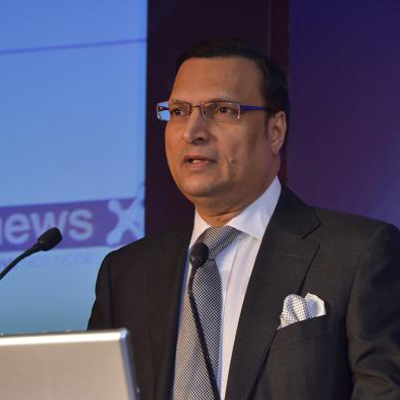
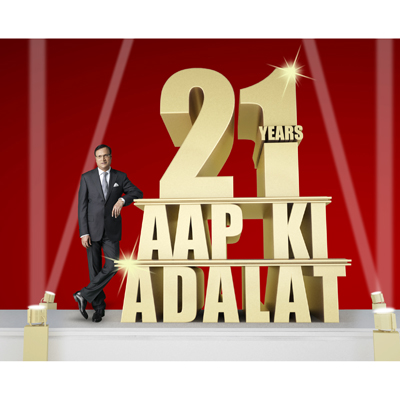
    MUMBAI: From the power corridors of Delhi to the glamorous Mumbai, there is a most definite flutter over the news of a mega event being hosted by India TV to celebrate the 21 glorious years India’s longest running Television show Aap Ki Adalat with Rajat Sharma.
     
    To commemorate the legendary milestone for the show, a cult in its own, India TV is organizing a never before and dazzling event on 2nd December. Country’s topmost leaders including the President & the Prime Minister, most celebrated Bollywood Stars including the three Khans, most celebrated Sports Icons including top Cricketers, Country’s top Business leaders, top Spiritual Gurus and Country’s Apex Bureaucrats & Administrators for the first time come together under one roof.
     
    In the Indian electronic media industry, the names Rajat Sharma and Aap Ki Adalat have been synonymous since 1993, when the first show was telecast. The show in its lifetime has broken all possible records in the history of Indian news television, and still continues to dominate the rating charts.
     
    Ritu Dhawan, MD & CEO, India TV said, “Words would be redundant if we try to sum-up the glorious journey of Aap Ki Adalat, equally redundant would be an attempt to word the glory of the celebration plan.” “I am sure that every bit will be loved by both who will be present for the ceremony & those who will get to watch this on their TV sets.” She added.
     
    In the last two decades, this top show that has enviably featured almost all top names of their times till date. During the celebration most of the personalities who featured in Aap Ki Adalat in its journey are expected to grace this mega event, making it the biggest & brightest such gathering of contemporary times.
     
    India’s Premier GEC Star Plus has also decided to be part of the celebrations and the event will be simulcast on both the channels – India TV and Star Plus on a 7th December at 10 PM.  Cineyug, one of India’s premier event management companies will be managing the evening.


  • Modi encourages use of social media for his Mann ki Baat broadcasts

    Modi encourages use of social media for his Mann ki Baat broadcasts

    NEW DELHI: Prime Minister Narendra Modi, who has won acclaim for his monthly ‘Mann ki Baat’ broadcasts on All India Radio, wants people to use social media to tell him about their views and experiences on dealing with the menace of drugs for his next broadcast.

     
    Modi said the link of the MyGov Open Forum for sharing comments, ideas, views and past work by NGOs in the area is http://mygov.in/groupissue/tackling-the-drug-menace-in-india/show .


    In a series of Tweets, he said: “If you have a personal experience and don`t want to share it in public, please write to me directly, using the hashtag #MannKiBaat at http://pmindia.gov.in/en/interact-with-honble-pm/”.


    In order to enable people without access to internet to communicate with him, the Prime Minister has invited people to write to him at: Mann Ki Baat, Akashvani, Sansad Marg, New Delhi.

     
    Those wanting to link can go to #PMonAIR. During the broadcast, those who are on the internet can also log on to newsonair.com for the live streaming.


  • BBC’S World debate to tackle Prime Minister Modi’s first 100 days in power

    BBC’S World debate to tackle Prime Minister Modi’s first 100 days in power

    MUMBAI: BBC World News will be turning the spotlight on India’s new government as the channel presents its World Debate programme from the World Economic Forum in Delhi.

    With the title ‘Modi’s India: Free, Fair and Prosperous?’ a panel representing the Indian government, the business community and Indian civil society will be discussing Narendra Modi’s economic policy, his government’s performance after more than 100 days in power and the challenges ahead.

    Presenter NikGowing will be moderating the Debate in front of a live audience, as guests including Sunil Bharti Mittal, CEO of Bharti Enterprises and political and social activist Aruna Roy consider whether India can secure long-term economic growth whilst reducing inequality and poverty and upholding political and individual freedoms.

    The debate will be recorded at WEF on Thursday, 6th November.  NikGowing will take questions from the floor in Delhi and from the BBC World News audience around the world via the channel’s Facebook page and on Twitter – #bbcworlddebate.

    Viewers can then catch ‘The World Debate – Modi’s India: Free, Fair and Prosperous?’ on BBC World News on Saturday 8th November at 2.40 pm IST and on Sunday 9th November at 7.40 am and 8.40 pm IST.


  • NBA and IBF to approach govt bodies regarding broadcasting woes

    NBA and IBF to approach govt bodies regarding broadcasting woes

    MUMBAI: The broadcasting industry of India has been facing several issues right from carriage fees to the imposition of the ad cap. In order to reduce the burden on the broadcasters, the Indian Broadcasting Foundation (IBF) and the News Broadcasters Association (NBA) have now decided to unite and present their views to the highest authorities in India.  


    India TV chairman and editor in chief Rajat Sharma who is also the NBA president and the IBF vice president of strategic affairs, said that the two bodies will meet the Prime Minister Narendra Modi, the Finance Minister Arun Jaitley and the Information and Broadcasting Minister Prakash Javadekar to make them aware about the growing cancer called carriage fees. ”We will also show a revenue model that MSOs can adopt so that we don’t become dependent on carriage fees,” said Sharma.    


    Regarding ad cap he said that they will show the ministers the kind of revenue loss the channels will incur if the 10+2 minute ad cap is implemented. The case is currently being fought by the NBA in the Delhi High Court.  “We will request for the 12 minute advertising cap to be removed from the licencing conditions,” he said. The NBA president added that no channel, be it a news channel or a GEC, wants to show more than five minutes of advertising but the revenue model forces them to do so. “None of us want to compromise on programming,” he said.


    The new ratings system that will be applicable once BARC India starts its operations, should be transparent, he said. ”Till the time these issues are not addressed, the industry will keep suffering,” he opined.   


    While speaking to indiantelevision.com, Sharma said that the meeting is expected to happen in the next few days.


    Sharma was addressing a keynote at the Seventh Indian News Television Summit, organised by indiantelevision.com where he discussed the role of a news channel and the challenges and hurdles that they face.

  • PM to give second radio broadcast on 2 November, last broadcast beamed by 270 FM channels

    PM to give second radio broadcast on 2 November, last broadcast beamed by 270 FM channels

    NEW DELHI: In an effort to fulfill his promise of sharing his thoughts with the people through All India Radio at least twice a month, Prime Minister Narendra Modi’s next ‘Mann ki Baat’ broadcast will be on 2 November.


    “Looking forward to the 2nd “Mann Ki Baat” radio programme on Sunday 2nd November 2014 at 11AM,” the Prime Minister tweeted. 

    “Once again, I invite you to share thoughts, comments and examples of good governance initiatives that have left an impression on your mind,” the Prime Minister added. 

    An Open Forum has been created on MyGov.in where ideas and thoughts for the radio programme can be shared.


    Meanwhile, AIR director general F Sheheryar told indiantelevision.com that 270 private and AIR FM channels all over the country had carried the broadcast earlier this month, apart from almost all the television news channels. The address in Hindi was also streamed live on several websites. It is learnt that the broadcast was accessible to 91 per cent of the population.


    In his address on 4 October, Modi had announced that he will talk to the nation at least on two Sundays every month via radio, since that was the only medium that reached everyone including the farmers.


    In his first radio address titled Mann Ki baat on the occasion of Vijaya Dashami, he had called upon people to regularly send him their views through the social media as he had received many constructive suggestions in the past few weeks. 


    He had said AIR helped him get connected with the maximum number of people and with those who have no access to TV. “I am really happy to be talking to you on the radio. I can reach all of you through radio, especially our poor, the villages. Today is the start. In future too I will keep talking to you on the radio. It will be on a Sunday at 11:00 am,” he said.

  • Facebook to join hands with Indian government

    Facebook to join hands with Indian government

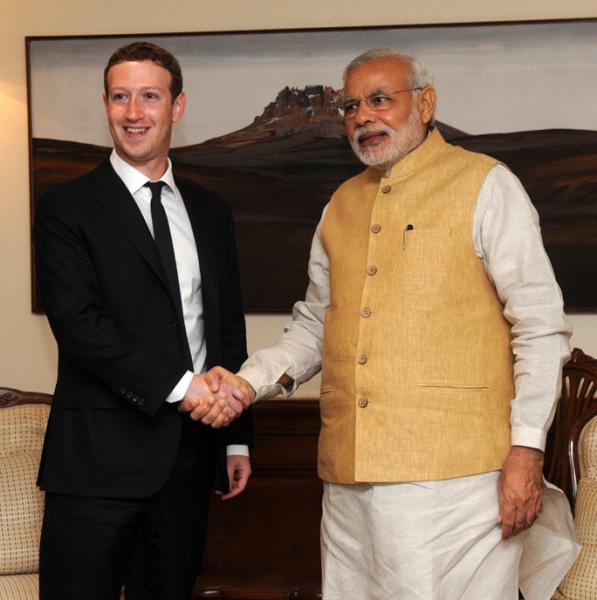
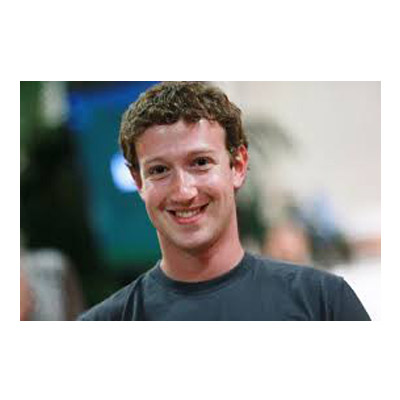
    MUMBAI: After swooning the nation with his ideas to enhance the internet connectivity in India in the Internet.org summit, Facebook founder Mark Zuckerberg, who was in the country on a two-day visit, met Prime Minister Narendra Modi on 10 October.

    Soon after the meeting, the PM tweeted, “It was wonderful meeting Facebook CEO Mark Zuckerberg. We discussed a wide range of issues.”

    The discussion included an array of topics revolving around the innovative use of Facebook as a platform to engage with a large audience in the service of humanity; from helping in the digital India campaign to fighting terrorism using social media.

    “I spoke to him about Swachh Bharat Mission. Zuckerberg shared that Facebook would assist the Government of India in the Clean India mobile application. This will surely give an impetus to Swachh Bharat Mission. “

    “Zuckerberg is excited about Digital India initiative. I requested him to identify certain areas where Facebook can help us in that. I also requested Zuckerberg to identify how Facebook can help promote India’s rich tourist potential across the world,” Modi posted on his Facebook page.

    They also talked about the Digital India initiative. A statement on Modi’s website said, “Zuckerberg said that he is extremely excited about the Digital India initiative of the Government of India. Prime Minister Shri Modi asked him to identify some domains of Digital India where Facebook can get involved and help.”

    The Prime Minister appealed to Facebook co-founder to look at how to enhance Internet literacy along with Internet connectivity.

    Adding to the same, Zuckerberg stated that Facebook wants to work with the Government of India in the fields of healthcare, education and provide a gamut of services to the people.

    He further added that Facebook will also help in the creation of the Clean India Mobile App and that it would be launched soon. This would give a strong impetus to the Swachh Bharat Mission.

    In the meeting, PM also pointed out that lots of terrorist elements are using social media platforms to recruit members, according to an official statement.
    “This is unfortunate and we need to think of the role the social media can play to stop terror,” Modi said.

    Earlier in the day, the Facebook co-founder also met Information Technology Minister Ravi Shankar Prasad as part of the Centre’s ambitious Digital India plan which seeks to expand internet access across the nation.

    “Mark’s interest in India impressed me. Facebook wants to work with the Digital India program and the Indian govt is happy to support them in their launch of internet.org,” Prasad said.

    “He has shown profound interest to involve Facebook in the Digital India program and in broadband distribution, e-Health, e-Education etc. Really there is a great scope to work together. His idea to promote entrepreneurship among Indians in the field of IT was truly remarkable,” he posted on his Facebook page.

    They also spoke about the National Optical Fiber Network (NOFN) project during their meeting which aims to connect 2.5 lakh village panchayats through high-speed broadband by 2017.

    Prasad said that he believes there exists a great opportunity for Facebook to harness the vast potential of Indian entrepreneurs in retailing of internet connectivity to the masses by involving local entrepreneurs. Government would extend all cooperation to Facebook in this endeavor.

    He proposed that Facebook could contribute to India’s Rs 21,000-crore NOFN project on last-mile connectivity.

    Zuckerberg also spoke of alternate technology such as drones and satellite communications playing a critical part in this last-mile linkage.

    “India could be the first country in which Facebook deploys drones to provide broadband connectivity in remote and inaccessible areas, with CEO Mark Zuckerberg proposing a pilot project to bridge this digital divide during his meeting,” the IT Minister added.

    Facebook’s Connectivity Lab is actively developing large, inexpensive, solar-powered drones that will be able to fly for years at a time, the division’s engineering director Yael Maguire announced earlier this year. These unmanned vehicles will be about the size of a Boeing 747 but weigh only as much as four car tyres while serving as large connectivity hubs.

    The drones would fly at a height of 60,000 to 90,000 feet above the ground, far above commercial jetliners and at a level where they wouldn’t be affected by the weather, effectively making them invisible.

    In order to continuously provide Wi-Fi coverage, they would be powered by the sun, Maguire had said, adding that these could be tested in the US as early as next year.

    On 9 October, while addressing media persons, Zuckerberg had said that Facebook is working extensively in rural India to enhance connectivity. “Internet.org  is an effort to bring basic Internet services to all”, he added. The pilot project of Facebook has already helped to connect more than 3 million people with this program.  “If we can connect people over here, we can help bring this rich Indian culture to the world.”

    Stressing on the importance of connectivity, Zuckerberg had said while India has about 243 million Internet users and have 100 million plus Facebook users, there are over a billion people in the country who do not have access to the net.

    The 30-year-old billionaire is the third high-profile head of a US-based tech firm to visit India in the last few weeks, after Satya Nadella of Microsoft and Jeff Bezos of Amazon.
     

  • Facebook is working extensively in rural India to enhance connectivity, says Mark Zuckerberg

    Facebook is working extensively in rural India to enhance connectivity, says Mark Zuckerberg

    MUMBAI: Stressing on the importance of enhancing internet connectivity in India, Facebook  founder and CEO Mark Zuckerberg today said, “Connectivity can’t be restricted to just the rich and powerful. Cost of internet access has to be made affordable.”


    The Facebook CEO is in India on a two-day visit and was speaking at the first summit for Internet.org, an organisation led by Facebook.


    Mark Zuckerberg has said that he would meet PM Narendra Modi on 10 October to discuss connecting Indian villages to the internet, and Facebook’s role in doing so.


    Pitching for free ‘basic net access’, Zuckerberg reckoned that it should be like dialing 911 in the US or 100 here in India. “There needs to be a 911 for the internet. We’ve been working with operators to offer free basic Internet for everyone, to break down the social barriers. With this model, we’ve already helped people connect 3 million people.”


    “Connectivity is a human right. We want to build an internet that works for all,” he added.


    The 30-year old also announced that Facebook will fund apps and services in local Indian languages for women, students and farmers.


    He pointed out that only about a third of people in the world had access to the Internet – 243 million in India and a recent survey showed that 69 percent of people in India said they didn’t know why it would be useful for them.


    The biggest barrier, he said, was that “lots of people who have never experienced the internet don’t know why they need it.”


    He also added that lack of relevant local language content is why most Indians don’t use internet and Facebook is working extensively in rural India to enhance connectivity.


    “Facebook is focusing on content in local languages. It is crucial to internet penetration in Asia, especially India,” said the 30-year-old billionaire. “80 per cent of content on the internet is just in 10 languages, while there are 22 official languages in India; 65 per cent of people use Facebook in a language other than English, including 10 Indian languages.”


    Zuckerberg stated that the next generation has the opportunity to bring the world to India and India to the world. The whole world being robbed of creativity and ideas because so many people in India are not online yet, he further said.


    He further revealed that Facebook has launched a new contest to develop local apps for farmers and social services in local languages with a $1 million fund dedicated for it.


    “We’re also going to extend a program called FB Start,” he added, “which provides $40,000 (Rs 25 lakh approximately) to developers who build and develop apps in these categories,” he added.


    Praising India, Zuckerberg credited it for ‘making leaps in revolutions that changed the world’. “Inventions have changed the world throughout history. ’Mangalyaan’ is a huge achievement for India,” he said.


    The CEO is of the opinion that lowering data costs by operators is not a sustainable solution. “Mobile operators invest a lot of money, lowering costs is not easy,” he said. “Infrastructure is the biggest barrier to internet, then technical issues. Language barriers are huge impediments to the internet,” he added.


    “Connected people have better access to technology, education and jobs. When people are connected, accomplishments are easy,” Zuckerberg said.


    Internet.org aims to make internet access affordable for people acrossthe globe. Focused on enabling the next five billion people without internet access to come online, the founding members of the project include Facebook, Ericsson, MediaTek, Nokia, Opera, Qualcomm and Samsung.


    The partners are collaborating on developing lower-cost, higher-quality smartphones and deploying internet access in under-served communities.


    Zuckerberg’s visit comes three months after Sheryl Sandberg, COO of the social networking giant, visited India which is Facebook’s second biggest market. She also met Modi, who has effectively used social networking during his election campaign and later even in governance.


    Zuckerberg is the third high profile CEO of a US-based corporation, after Amazon’s Jeff Bezos and Microsoft’s Satya Nadella, to visit India in last few days.

  • The line between supporters and fanatics has blurred, says Dilip Cherian

    The line between supporters and fanatics has blurred, says Dilip Cherian

    To quell the raging Rajdeep reaction, it seems PM Modi moved swiftly by getting a story out that emissary Adani called to say sorry! While its right or wrong, true or false arguments prevail, Rajdeep became a symbol of something, a fabulous place for any TV journo to be, brand enhancing and truly a victory for Image Managers on either side.


    But then, it’s still sad, that it’s not only Hong Kong’s protestors, who are not the ones taking to the streets. The Modi lovers at Madison Square Garden sadly had closet protestors amidst them too! Clearly, this is also the season for violent expressions of distaste and distrust, and Rajdeep Sardesai was just unlucky to be a kind of lightning rod. Provocations and partisan videos aside, clearly something was very wrong amongst those gathered to greet and preen for Modi in New York City that fateful day. And its best, it’s now put to rest!


    But a basic malaise seems to have spread even further and Modi may not quite know yet. On a live television channel in New Delhi a former diplomat commenting on the excitement over Modi’s US visit lapsed into the totally unparliamentary word of “tuttoo” to describe Manmohan Singh’s relationship with the United States. A shocked anchor groaned visibly on screen, other guests were similarly aghast, but apologies were not quite forthcoming! The regrettable Rajdeep incident, too, had several up in arms against the treatment meted out to Rajdeep, but, significantly, many others who have been defending the mob’s actions as well. And it’s good that Modi’s minders put their word out too – in a manner of speaking. Clearly, the line between supporters and fanatics has blurred considerably even as the line between the “us” versus “them” perception has deepened and widened.


    Clearly, between the protestors in Hong Kong facing the wrath of an obdurate Chinese administration and the voices that seem to assume that Modi would support them in a similarly enthusiastic manner, the message that comes through visibly on television screens in a variety of ways is of a new aggression, a new violence, and that unholy suspicion that silencing the enemy is probably what the New Age mantra seems to have become.


    (These are purely personal views of India’s image guru, Dilip Cherian who is also the consulting partner at Perfect Relations and a former editor of Business India and of the Observer newspapers. He is a columnist and business analyst and indiantelevision.com does not subscribe to these views.)

  • PM Modi to broadcast his ‘Mann ki Baat’ through All India Radio

    PM Modi to broadcast his ‘Mann ki Baat’ through All India Radio

    NEW DELHI: After his visit to the United Nations where he expounded his world view, Prime Minister Narendra Modi will now share his ‘Mann ki Baat’ with the nation through All India Radio on 3 October.


    Announcing it on Twitter, Modi said, “Received many ideas & suggestions for my forthcoming Radio programme. Have decided to hold the first programme on 3rd October at 11:00 AM.”


    The broadcast can also be carried by any private radio or television channel wanting to carry it.


    The broadcast will be carried simultaneously by AIR in different modes and channels including medium wave, shortwave, FM network, Vividh Bharati and local radio stations. This broadcast will thus be available to 99.2 per cent population of India. 


    Doordarshan has also been requested to carry the audio of this programme with suitable visuals and footages. 


    Regional language versions of the broadcast will be aired in the regional network of AIR at 8.00 pm on the same day. This is to ensure dissemination of the massage to the largest possible audience. 


    The Prime Minister will share his thoughts on a variety of issues. A separate Open Forum has been created on MyGov for citizens to share their comments for the forthcoming radio programme.

  • Govt of India joins hands with Google for a ‘Digital India’

    Govt of India joins hands with Google for a ‘Digital India’

    MUMBAI: Working towards the Prime Minister Narendra Modi’s vision for a digital India, the Government of India has partnered with the online giant Google.


    Announcing the initiative Department of Information Technology secretary RS Sharma said, “The Digital India programme has been launched with the vision of transforming India into a digitally empowered society and knowledge economy. It can bring India at par with other developed countries.”


    “I’m happy Google is coming forward to roll out initiatives that will contribute to the Digital India vision. I’m sure others will come forward and join this movement.”


    As a part of the plan, Google is going to run a number of campaigns in collaboration with the Indian government. Google would also develop a mobile application for the Prime Minister’s Office (PMO) aiming to bring the PMO to every citizen. The app will be developed through a contest to be soon launched by Google and MyGov, the citizen engagement platform of the government.


    According to Google, the motive behind the contest is to showcase that ‘Indians can build a world class app’.


     Google would also build a multi-language ecosystem on the web to help the government transition into the increasingly ‘mobile’ India.


    In a bid to promote the digital empowerment of citizens, the company will push programmes like Helping Women get Online and getting Indian SMEs Online. This will also continue to map and photograph heritage and culture sites to bring them online.


    Additionally, to encourage digital literacy and internet safety, Google will introduce curriculums for schools, officials and elected representatives.


     Google India vice president and managing director Rajan Anandan added, “India is already home to the third largest number of internet users globally with 245 million users as of June 2014.  We are on track to become the second largest user market by 2015 and a 500 million-user market by 2016. Yet, there are more than a billion people who will need to be brought online for India to realise the vision of a digitally connected, knowledge economy. Prime Minister Modi’s Digital India programme will play a transformational role in achieving this.”