Tag: Prime Minister Narendra Modi

  • “God has ordained that I should continue to work till 2047”, PM Modi tells Rajat Sharma

    “God has ordained that I should continue to work till 2047”, PM Modi tells Rajat Sharma

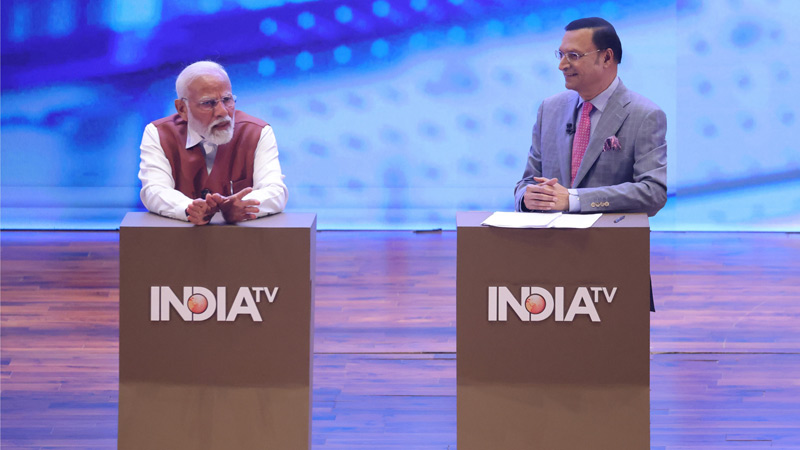
    Mumbai: Brimming with confidence, Prime Minister Narendra Modi said, “I believe God has ordained that I should work 24×7 till 2047 to achieve the aim of a Viksit Bharat (Developed India).”  

    He was replying to questions from Rajat Sharma at ‘Salaam India’ show, that telecasted on 23rd May at 9 pm on India TV.  

    Modi said: “I feel, God Almighty has sent me for a special purpose. God has sent me to achieve the objective of a Viksit Bharat by 2047. God is showing me the path, God is giving me the energy. I am fully confident I will achieve that target by 2047 and until that target is achieved, God will not call me back  (Jab Tak Poora Nahin Hota, Mujhe Parmatma Waapas Nahin Bulayenge). I do not have any other place in this world now excdept this.”  Modi is presently 74 years old.  

    Modi said, “400 Paar” is a slogan not coined by BJP, but by the people. “We were already 400 in strength in Parliament during the last five years, given the support that we got from other parties. Any child who gets 95 per cent marks will naturally strive for a higher target.”

    LEVEL-PLAYING FIELD

    Modi hit out at Congress and other opposition parties for complaining that they have not been given a level-playing field in this election. He reminded how the then Chief Election Commissioner (T.N. Seshan) postponed polling across the country in 1991 for 22 days after Congress leader Rajiv Gandhi was assassinated in Sriperumbudur on May 21, 1991, when only one round of polling was over. Elections were postponed till mid-June and voting finally took place on June 12 and 15.

    “Was that a level-playing field?”, asked PM Modi. He said, “Normally, when a candidate dies, election in that constituency is countermanded, but in 1991, election across the country was postponed and polling resumed only after tthe funeral of the departed leader was widely publicized”.  

    “The same person (T.N.Seshan), after retirement, fought against our party president ( L K Advani) in Gandhinagar in 1999 on a Congress ticket”, Modi said.  

    Asked why two serving chief ministers (in Delhi and Jharkhand) were jailed when election process was on, Modi replied: “We did not send them to jail. The courts sent the two chief ministers to jail. We do not have the power to send somebody to jail or keep anybody in jail. Courts have the powers. Look at what Supreme Court said in the ex-Jharkhand CM (Hemant Soren)’s case. Look at what Delhi High Court said about ex-minister (Manish Sisodia) in money laundering case.  People have seen huge loads of cash in crores seized by Enforcement Directorate. All of us should honour ED for seizing Rs 2200 crores in cash, which can be filled up in at least 70 tempos, while during 10-years of UPA rule, ED had seized onlty Rs 34 lakh cash which can be stuffed in a school bag.”  

    Modi hit out at the Aam Aadmi Party government in Delhi liquor case, saying : “They wanted to spoil the lives of children by opening liquor outlets near schools, offered one liquor bottle free for every bottle sold, because they were getting commission on the number of bottles sold…Let me make this very clear. I won the 2014 elections only because I had promised to take action against the corrupt. I was elected only because of that. Big leaders used to get away away scot-free. I do not run this government for getting nice editorials or good TV headlines. My government works to stamp out corruption.”

    PAKISTAN  

    On Pakistan’s allegation about Indian hand behind “targeted assassinations by unknown killers” of terrorists in that country, Modi replied: ” That is not the issue. I know, people of Pakistan are nowadays worried. I also know that I am the root cause of their worries (Main Jaanta Hoon Unki Pareshani Ka Kaaran Main Hoon). But I also know that some people in our own country are also worried.  Woh rote Rahen Samajh Me Aa Sakta Hai, Yahan Waale Kyun rote hain, Main Samajh Nahin Sakta Hoon (I can understand when they weep, but I cannot understand why our people weep).”

    Modi cited example of how “the leader of a respected party, that ruled out country for 60 years, and during whose rule 26/11 Mumbai attacks took place, once alleged that it was not Pakistani terrorist Ajmal Kasab and his men, but our own people who killed our own countrymen. This is really saddening. How can such a leader give statement in favour of Pakistan and Ajmal Kasab? My head hangs in shame whenever I hear such remark. I feel pained.”

    On Mani Shankar Aiyar’s remark that India should accord respect to Pakistan because it has atom bombs, Modi, in a light-hearted manner replied: “Taaqat Main Khud Pakistan Jaake Check Karke Aaya Hoon (I’ve myself gone to Pakistan and checked their power). I landed in Lahore without any security checks, and one of their TV reporters was saying Hai Allah, Modi has landed in Pakistan without any visa. Yes this was in their live debates. Main Kyun Nahin Ja Sakta, Woh Mera Desh Tha Kizi Zamaane Mein (Why can’t I do, Pakistan was part of our country at one time)”

    On one Shiv Sena (UBT) leader predicting that Modi may send trainload of devotees to the new Ram temple in Ayodhya before elections and Pakistan may blow up the train, leading to riots and making Modi’s election easier, Modi replied: “Why can’t journalists go and ask that leader, why he is not taking medicines or get a medical check-up done. Was any train blown up? Did riots take place? He should get his diseased mindset checked.”

  • PM Modi launches 5G services in India

    PM Modi launches 5G services in India

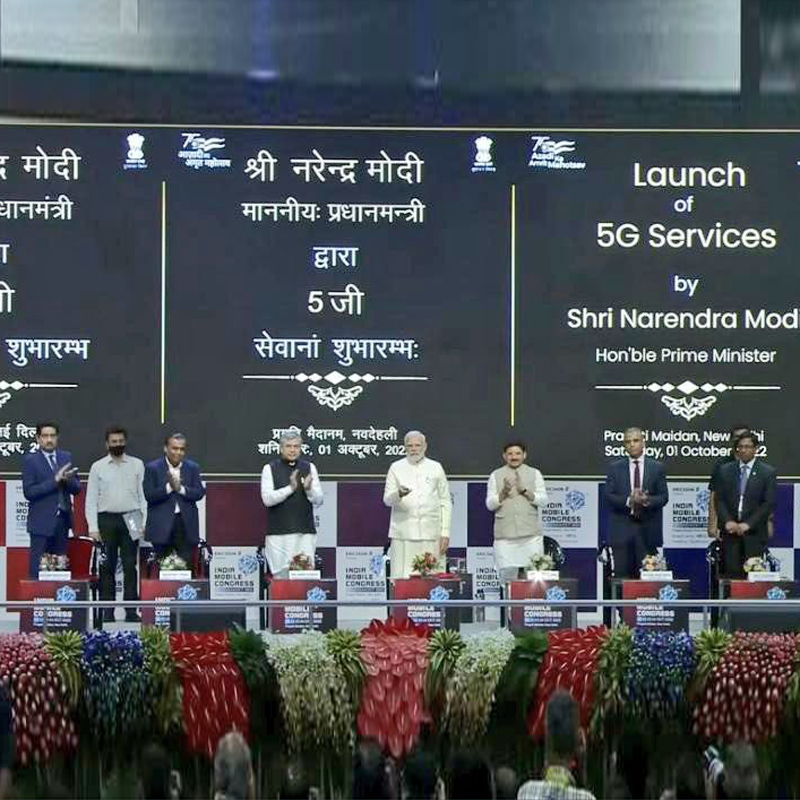
    Mumbai: On Saturday, prime minister Narendra Modi launched 5G services in India at the India Mobile Congress in New Delhi.

    At the launch, while addressing the nation, Modi said that 5G technology will revolutionise the telecom sector and that it is a historic day for India in the twenty-first century. “The launch of 5G is a gift from the telecom industry to 130 crore Indians. It is a step toward a new era in the country, and is the beginning of infinite opportunities.”

    He emphasised how digital India’s success is based on four pillars, including the cost of a device, digital connectivity, data costs, and the digital first approach.

    Over the next few years, the services will gradually expand to cover the entire country. The fifth generation (5G) service, capable of supporting ultra-high-speed internet, is expected to open up new economic opportunities and societal benefits, serving as a transformative force in Indian society.

    Also read: Reliance Jio to roll out 5G services in major cities by Diwali

    “Earlier, the cost of one GB of data was about Rs 300. It has come down to about Rs 10 per GB now. On average, a person in India consumes 14 GB per month. This would have cost about Rs 4,200 per month but costs Rs 125-150. It’s the efforts of the government that led to this,” he added.

    Speaking further, Modi said, “With developments in technology and telecom, India will lead the industry’s 4.0 revolution. This is not the decade of India, but the century of India.”

    At the event, Modi was accompanied by telecom minister Ashwini Vaishnaw, junior telecom minister Devusinh Chauhan, and Reliance Industries chairman Mukesh Ambani, Bharti Enterprises founder & chairman Sunil Bharti Mittal, and Aditya Birla Group chairman Kumar Manglam Birla.

    After officially opening the show, Modi visited pavilions set up by several telecom carriers and technology providers to get a first-hand look at what 5G is capable of. He began at the Reliance Jio booths.

    Reliance chairman Mukesh Ambani thanked the prime minister for inspiring the vision of a developed nation by 2047. “Every action and policy of the government is skillfully crafted to propel India towards that goal. Steps taken to fast-track India’s march into the 5G era provide compelling proof of our prime minister’s determination.”

    He narrated the possibilities of 5G in key areas like education, education, and climate change, etc. “Your leadership has raised India’s prestige, profile, and power globally like never before. In today’s fast-changing world, there will be no stopping a resurgent India from soaring to the top,” Ambani concluded.

    Bharti Enterprise chairman Sunil Bharti Mittal remarked that the launch of 5G is the beginning of a new era and since it is happening during “Azadi Ka Amrit Mahotsav,” it makes it even more special. “With the efforts of the prime minister, this will usher in new energy in the country. We are fortunate to have a leader in the prime minister who understands technology very well and has deployed it to the development of the country in an unmatched manner,” he noted.

    Mittal further said that it will open up a sea of opportunities for people, especially in our rural areas. He recalled the PM’s initiatives in the fields of infrastructure and technology from his Gujarat CM days. He said that during the pandemic, traffic shifted to villages and homes and the country’s heartbeat did not stop even for a second. Credit for that goes to the digital vision. He also praised the audacity and achievement of the vision of “Make in India.” “Along with “Digital India,” the prime minister also took forward the “Start-up India” campaign and, soon enough, India started producing unicorns,” Shri Mittal added. “With the advent of 5G, I’m sure that the country will add many more unicorns to the world.”

    Aditya Birla Group Chairman Kumar Mangalam Birla called the advent of 5G a transformational event that proves India’s prowess on the global stage and reiterates the role of telecom technology as the bedrock of India’s growth. He thanked Modi for his vision and leadership for a generational leap in technology that has resulted in India’s making a mark on the global stage. He also thanked the PM for his inspirational role in supporting the telecom industry during the ongoing pandemic and for the path-breaking telecom reforms in the industry.

    Birla said that the launch of 5G marks the beginning of an exciting journey for India. “We will see limitless potential for 5G development and use cases in the years to come,” he added.

    Reliance Jio connected a teacher from a school in Mumbai with students in three different locations in Maharashtra, Gujarat, and Odisha.

    The Vodafone Idea test case demonstrated the safety of workers in an under-construction tunnel of the Delhi Metro through the creation of a ‘Digital-Twin’ of the tunnel on the dias.

    In the Airtel demo, students from Dankaur, Uttar Pradesh, witnessed a lively and immersive educational experience to learn about the solar system with the help of virtual reality (VR) and augmented reality (AR).

  • “Swaraj is one of the most difficult shows we have worked on”: Contiloe Pictures’ Founder & CEO Abhimanyu Singh

    “Swaraj is one of the most difficult shows we have worked on”: Contiloe Pictures’ Founder & CEO Abhimanyu Singh

    Mumbai: ‘Swaraj – Bharat ke Swatantrata Sangram ki Samagra Gatha’, an Indian historical TV serial that aired on DD National channel has been eye-grabbing since its launch. The show that telecasted on India’s 75th Independence Day has potentially captured viewers’ attention for its storytelling and production work. The 75-episode mega serial was endorsed by Prime Minister Narendra Modi and focuses on the contribution of the freedom fighters and unsung heroes of the freedom struggle.

    It is an attempt by Doordarshan to bring alive the tales of courage of over 550 freedom fighters on television. Swaraj will tell stories and bring to focus contributions of heroes such as Rani Abbakka, Bakshi Jagabandhu, Tirot Sing, Sidhu Murmu and Kanhu Murmu, Shivappa Nayaka, Kanhoji Angre, Rani Gaidinliu, Tilka Majhi, Rani Lakshmibai, Maharaj Shivaji, Tatya Tope, Madam Bhikaji Kama, and more.

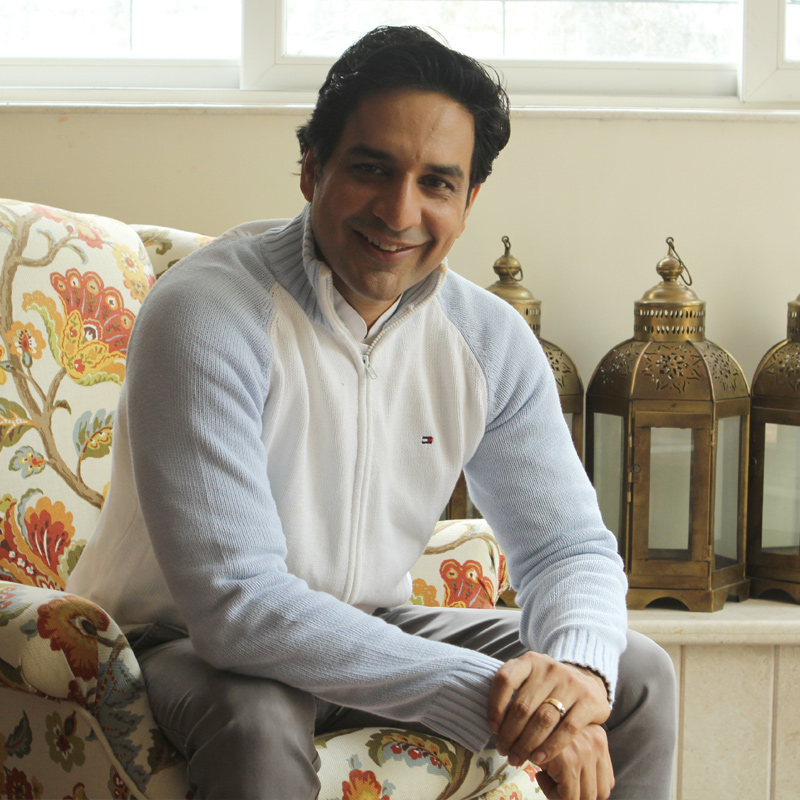
    The show has been ideated by Contiloe Pictures’ Founder & CEO Abhimanyu Singh, who mainly produces Hindi-language television shows. His passion for storytelling kick-started two decades ago and has, over the years, created some stellar shows across genres including history, crime, horror, thriller, events, formats, comedies, animation, and mini-series, managing to constantly keep audiences engaged, ensuring they were interested in his style of storytelling and giving them enough reason to watch his shows. He has successfully made a place for himself in the media & entertainment industry and has received accolades for his work like “Mahayoddha Rama” & his debut digital franchise “State of Siege”. Deeply rooted in bringing out in-depth stories, he has successfully produced over 100 TV shows under his banner, including independent shows for Doordarshan, two feature films and two OTT projects so far and continues to focus on large productions.

    Contiloe has produced historical shows like Chakravartin Ashoka Samrat, Bharat Ka Veer Putra – Maharana Pratap, Taj 21 Sarfarosh – Saragarhi 1897, Ek Veer Stree ki Kahaani… Jhansi Ki Rani and mythological shows like Sankat Mochan Mahabali Hanumaan, Vighnaharta Ganesha, Yashomati Maiyya Ke Nandlala as well as digital series under his ‘State of Siege’ franchise, of which season three is in the making.

    In an exclusive conversation with Indiantelevision.com, Singh shared insights about his shows and deliberated views on the challenges, responses from the audiences and further talked about his upcoming shows at length.

    Edited Excerpts:

    On the response that Swaraj received from the audience

    Abhimanyu: So far, the audience response has been fantastic. People are aware of the invasions that occurred in India but they are unaware of the specifics. It’s both informative and fascinating for the audience to learn about how the western invasion of India began and how it all culminated with our Independence in 1947.

    On showcasing Swaraj on popular OTT platforms

    Abhimanyu: The government is already interested in showing it on over-the-top (OTT) platforms. Prasar Bharati has recently made a move to invite digital partners, which will help the show to reach a potential audience.

    On the making of the show

    Abhimanyu: The procedure began at the beginning of 2021. It’s a lengthy process from research and scripting to shooting. It’s been a year and a half, and I believe the project will continue for at least another year. Researching and producing 75 episodes for the audience is a time-consuming process.

    On the challenges of producing the show

    Abhimanyu: The biggest challenge is that we have to produce 75 different stories. It’s not just one story that I’ve been running for a year and a half; it’s 75 different stories. So, preparing, researching, casting, and creating the mood is extremely difficult. Without a doubt, Swaraj is one of the most difficult shows that we have worked on.

    It’s a responsibility and it’s a challenge, but we have a very strong, historical guidance, and a team of great researchers. You are telling 450 years of history. It spans across such a vast historical length. The enemies are constantly changing (From the 1st episode to the 75th episode, viewers will see freedom fighters fighting different characters), the invasions and heroes are constantly changing.

    There is a tonne of work to be done on a single episode, including casting, changing the looks, changing the costumes, and more. I believe that has been the most difficult aspect in terms of ensuring that sensitivities and sensibilities are taken care of.

    We have been doing history-based shows for 15 years, and we know what we should be careful of. The challenge emerges from the time period (historic) and the nature of the time more than anything else.

    On the show’s shooting & locations

    Abhimanyu: We are using various sets –  changing, retaining and repurposing all of them. Apart from that, we have shot in a variety of other locations as and when the need arose – whether it’s Delhi, Haryana and North East because the freedom struggle occurred throughout India, along with a lot of visual effects in various locations, and set extensions.

    On prime minister Narendra Modi’s views about the show

    Abhimanyu: To see the Prime Minister watching your episode is a very good experience. The Prime Minister, the Home Minister, the Information & Broadcasting Minister and the entire Council of Ministers were invited to watch the episode. It is only the beginning. This journey will continue for another year and a half. So I strive to create a show that makes a difference, a show that tells our story to our people and the rest of the world.

    On the launching of India@75

    Abhimanyu: More than strategically for me, it’s a very good gesture on the part of the Government. Making  such a good show, which educates people about our history and releasing it on the 75th celebration. After India has completed 75 years of independence, people are getting to know more about India and its freedom fights – the credit should be given to the Government.

    On dubbing of the show in nine different languages

    Abhimanyu: A lot of our content is being dubbed. Hanuman and Ganesha have both been dubbed in all of the southern languages, and they have done exceptionally well. Culturally, we are one. As far as our consumers are concerned, they are diverse. It’s one country. So, dubbing in various languages makes it easier for people to understand and helps us reach out to a wider audience. It’s not such a difficult task. We work with a lot of dubbing partners who are experts in their respective languages.

    On his views on TV vs OTT

    Abhimanyu: In my opinion, both will coexist but whether television will continue to exist in its current form is debatable. You have a younger audience that is not watching content on television sets. But your older audiences will continue to watch television on TV sets. However, television is now also being consumed as a ‘catch-up television’ on digital mobile phones.

    When I was doing Ashoka six-seven years ago, I noticed that many people were watching Ashoka on their mobile phones rather than on television. So, you saw the disruption in consumer behaviour 10 years ago, and obviously, that has changed and gotten faster with the pandemic and introduction of 4G, which increased it further, and with 5G especially, it will change once again.

    So, while there will undoubtedly be some disruption, television will continue to exist. But in what and in which form I don’t know; you may see television being consumed on mobile phones and iPads. There will be change but when that will occur, how quickly it will occur, or where that inflection point (a curve of viewership will change for TV) will occur,

    On the future shows

    Abhimanyu: We are in the third part of the State of Siege, it’s going to be better. It’s going to capture a fantastic anti-insurgency operation that happened recently. We’re also working on a rather big historical (untitled) in the digital space. We have focused on two things – like all storytellers, we’re working on a nice story. And then the whole idea is to create another one or two franchises in a year. So that we were making substantial content and ensuring that we kept the viewers entertained.

    So, we’ll be working on different aspects. One is obviously, in our digital space. Our sister company Illusion Reality Studioz has increased its footprint too, not only in visual effects and animation but also now lots of stuff that we’re doing in the meta space. It is something that is keeping us extremely busy. Learning a very new space really interests us as storytellers. We’re exploring how we can use the Metaverse as well for storytelling.

  • #9pm9mins sees lowest-ever viewership since 2015

    #9pm9mins sees lowest-ever viewership since 2015

    MUMBAI: Prime minister Narendra Modi’s addresses to the citizens of India have been keenly watched in the last few weeks. Even as his address on 24 March, announcing the 21-day nationwide lockdown, got the highest ever views, his subsequent address on 3 April led to a low point for TV viewership.

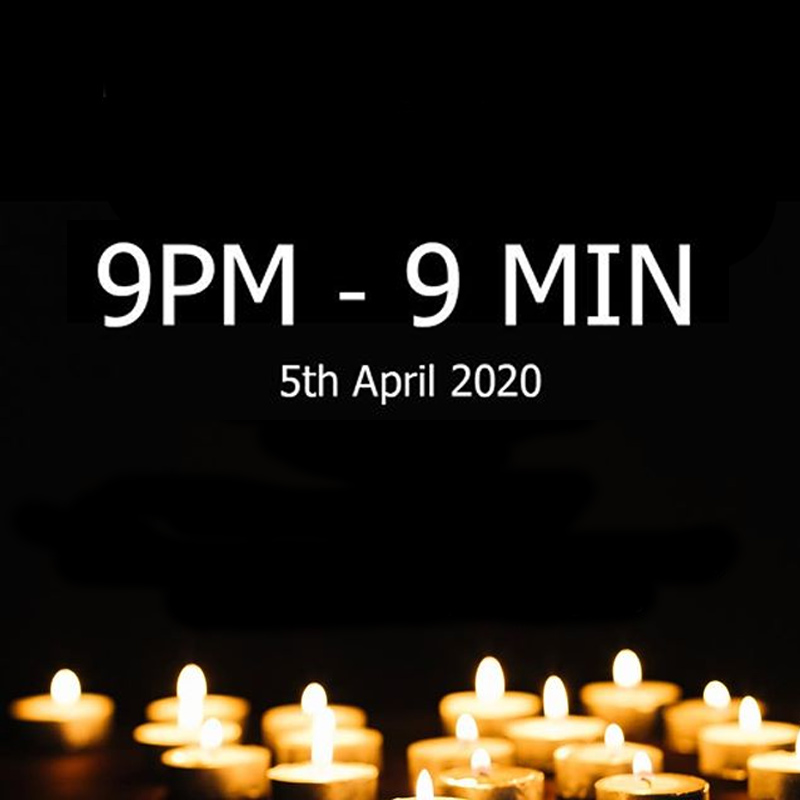
    On 3 April, PM Modi had urged people to demonstrate a collective will to fight COVID-19 by switching off all lights at home and lighting a lamp, candle or turning on the mobile phones’ flashlight on 5 April, Sunday, at 9 pm for nine minutes.

    The third edition of BARC-Nielsen report studying viewership trends during lock says that TV viewership dropped by 60 per cent during these 9 minutes as compared to previous weeks. Additionally, the viewership during these nine minutes was the lowest ever since 2015.

    “The decline started by 8.53 pm and came back to current trends only after 9.30 pm,” adds the report. 9 pm is considered as a primetime, even for a Sunday and so the viewership dip is staggering.

    The latest address of PM Modi failed to achieve traction the way the first two addresses announcing Janta Curfew and 21-day lockdown, did.

    “The prime minister’s 11-minute video message on #9PM9Minutes garnered over 1024.5 million viewing minutes. The Janta Curfew address (19 March) and 21-day lockdown (24 March) announcement achieved 1275.3 million and 3862.9 million viewing minutes respectively. Both the addresses were telecast for at least 30 minutes on almost all news channels..

    As the media and entertainment industry has stopped generating fresh content, the only genre being kept under essential services – news channels – is able to show and update viewers about the pandemic with new content. This has helped news broadcasters to gain viewership exponentially by over 250 per cent for the third week straight, as per the report.

    It is observed that viewers watch news on TV first thing post waking up and also sign off their day either by watching news or movies. 

  • MakeMyTrip’s ‘MyIndiaMyTrips’ supports PM’s vision to boost domestic tourism

    MakeMyTrip’s ‘MyIndiaMyTrips’ supports PM’s vision to boost domestic tourism

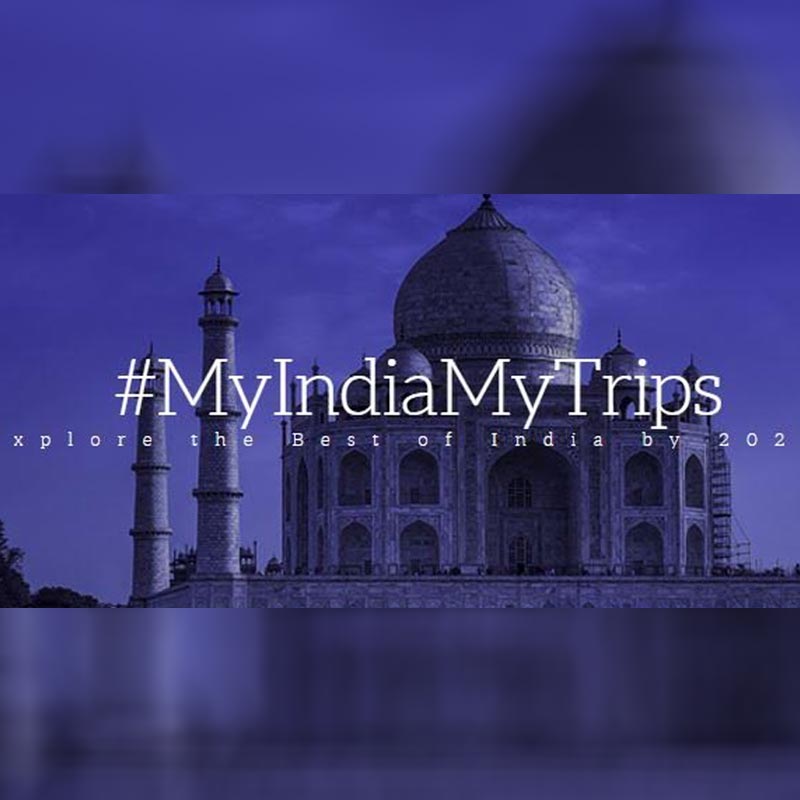
    MUMBAI: MakeMyTrip, India’s leading online travel company, today, rolled-out its digital campaign #MyIndiaMyTrips to inspire and assist Indian travellers to plan their travel and explore the best of India. In line with the Prime Minister Narendra Modi’s appeal to all Indians to visit at least 15 destinations in the next three years within India, the campaign has been conceptualised to make it intuitive for Indians to book their travel per their interest.

    MakeMyTrip’s digital campaign has been thematically designed to address varied interests of Indian travellers. Promoted through social media platforms like Instagram, Facebook and Twitter which are the first port of travel inspiration for young Indians and a specially curated microsite, travel choices have been categorised under heritage & history, nature escapades, wildlife, pilgrimages, and festivals & culture to make decision-making easy. The campaign #MyIndiaMyTrips celebrates country’s cultural heritage, rich architectural brilliance, and natural landscapes covering close to 100 destinations of interest for travellers.

    Commenting on the new digital campaign, MakeMyTrip group chief marketing officer Sunil Suresh said, “With its beautiful natural landscapes, rich cultural diversity, 7500 kilometre coastline and a multitude of cuisines, customs and art that changes every few hundred kilometres – there is no dearth of places to visit as a tourist in India. #MyIndiaMyTrips is a concerted effort to inspire, encourage and assist more and more Indians to explore their own country as per our Prime Minister's appeal during his Independence Day address to the nation.”

    Now travellers, from couples to family, from solo travellers to adventure seekers can choose from specially curated easy-to-book holiday packages across categories. The new microsite on MakeMyTrip website is the knowledge hub of domestic destinations, detailing out places with things to see, local activities, food and events in places like Khajuraho, Hampi, Konark, Kumbhalgarh, Gokarna, Varkala, Shillong, Kaziranga, Ranthambore, Ajmer Sharif and Rameswaram among others. #MyIndiaMyTrips will focus on driving engagement amongst India’s digital natives through aspirational content on the various wonders and charms of the country.

  • ISRO launches into space GSAT-9 & India’s S. Asian space diplomacy

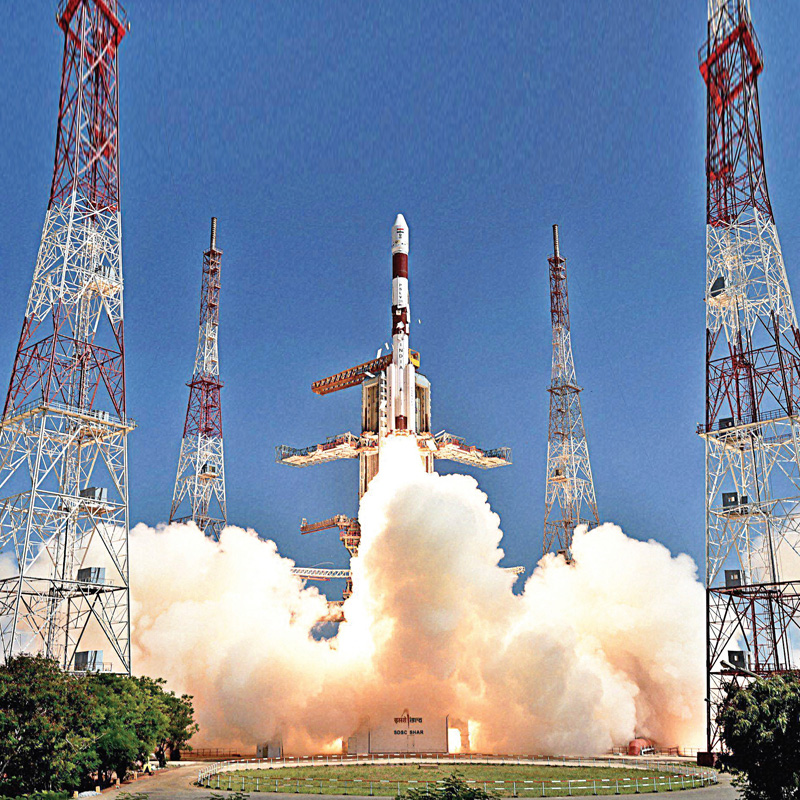
    MUMBAI: Prime Minister Modi’s Rs 450 crore (Rs. 4,500 million) Asian space diplomacy took flight today with the launch of South Asia Satellite GSAT-9 by Indian Space and Research Organization (ISRO) on Friday. Pakistan is not participating in this initiative.

    The satellite, when it finally gets commissioned, would provide services specific to individual countries as per their own needs and priorities as also common services. Each country would be allocated one transponder each. The South Asian nations that would benefit from this Indian initiative include Afghanistan, Bangladesh, Bhutan, Maldives and Nepal.     

    The South Asia Satellite has 12-KU band transponders, which India’s neighbors can utilize to increase communications. However, the on-ground infrastructure for the usage of satellite capacity will have to be built by each respective country, though, according to an official government statement, India is willing to help them do that too.   

    According to a report in the Economic Times newspaper, each of the participating South Asian nation could benefit up to USD 1.5 billion over the 12-year lifespan of GSAT-9.

    The satellite will facilitate DTH television, VSAT links, tele-education, telemedicine and disaster management support. It will provide critical communication links in times of disasters such as earthquakes, cyclones, floods, and tsunamis.

    Congratulating ISRO for the development and launch of the satellite, PM Modi, while conferring with the heads of participating nations via video conference, said, “As governments, our most important task is to secure growth, development and peace for our people and communities. And, I am convinced that when we join hands and mutually share the fruits of knowledge, technology and growth, we can speed up our development and prosperity.” 

    The vehicle is designed to inject 2- 2.5 ton class of satellites into space. The overall length of GSLV-F09 is 49.1 m. GSLV-F09 was launched on May 5, 2017 from the Second Launch Pad (SLP) at Satish Dhawan Space Centre SHAR (SDSC SHAR), Sriharikota, the space port of India.

    GSLV-F09 vehicle configuration, including the CUS, is similar to the ones successfully flown during the previous three missions — GSLV-D5, D6 and F05 — in January 2014, August 2015 and September 2016, respectively. GSLV-D5 and D6 successfully placed two communication satellites, GSAT-14 and GSAT-6, while GSLV-F05 placed India’s weather satellite INSAT-3DR in the intended GTOs.
    Also Read:

    ISRO’s ‘South Asia Satellite’ to carry 12 ku-band transponders

    ISRO world record in 104-satellite launches on a single flight


  • ISRO to launch 103 satellites early Feb

    ISRO to launch 103 satellites early Feb

    NEW DELHI: Indian Space and Research Organisation (ISRO) will launch a record 103 satellites in one go using its workhorse PSLV-C37 in the first week of February, while the prime minister Narendra Modi’s pet South Asian satellite project will take off in March. Majority of the satellites (almost 100) set for launch in February are for foreign nations, including the U.S. and Germany.

    “We are making a century by launching over 100 satellites at one go,” a PTI report quoted S Somnath, Director of the Liquid Propulsion Systems Centre of the ISRO, as saying yesterday. The space agency had earlier planned a launch of 83 satellites in the last week of January, of which 80 were foreign. But with the addition of 20 more foreign satellites, the launch was delayed by a week and will now take place in first week of February, Somnath said.

    He, however, did not specify the number of countries that would launch its satellites in this mission, but said the list includes countries like the US and Germany. “These will be 100 micro-small satellites, which will be launched using a PSLV (Polar Satellite Launch Vehicle) – C37. The weight of the payload will be 1350 kgs, of which 500-600 kgs will be the satellite’s weight,” Somnath added in the PTI report.

    The launch will be a major feat in country’s space history as no exercise on this scale has been attempted before. Last year, ISRO launched 22 satellites at a go and this launch will have almost five times the number of crafts. The South Asian satellite will be a part of GSAT-9, which will be launched in March this year, said ISRO Associate Director M Nageshwara Rao.

    The communication satellite was to be launched in December 2016, but was slightly delayed as some other satellites are to be launched before that. PTI quoted unnamed sources saying talks with Afghanistan to have the country on-board for the project is in its final stages.

    Envisaged as a gift to its neighbours, the project, earlier known as SAARC satellite, faced stiff resistance from Pakistan. The neighbouring country wanted it to be launched under the aegis of the South Asian regional forum. It later backed out of the project. Apart from India, the satellite will benefit Sri Lanka, Maldives, Bangladesh, Nepal and Bhutan.

  • ISRO to launch 103 satellites early Feb

    ISRO to launch 103 satellites early Feb

    NEW DELHI: Indian Space and Research Organisation (ISRO) will launch a record 103 satellites in one go using its workhorse PSLV-C37 in the first week of February, while the prime minister Narendra Modi’s pet South Asian satellite project will take off in March. Majority of the satellites (almost 100) set for launch in February are for foreign nations, including the U.S. and Germany.

    “We are making a century by launching over 100 satellites at one go,” a PTI report quoted S Somnath, Director of the Liquid Propulsion Systems Centre of the ISRO, as saying yesterday. The space agency had earlier planned a launch of 83 satellites in the last week of January, of which 80 were foreign. But with the addition of 20 more foreign satellites, the launch was delayed by a week and will now take place in first week of February, Somnath said.

    He, however, did not specify the number of countries that would launch its satellites in this mission, but said the list includes countries like the US and Germany. “These will be 100 micro-small satellites, which will be launched using a PSLV (Polar Satellite Launch Vehicle) – C37. The weight of the payload will be 1350 kgs, of which 500-600 kgs will be the satellite’s weight,” Somnath added in the PTI report.

    The launch will be a major feat in country’s space history as no exercise on this scale has been attempted before. Last year, ISRO launched 22 satellites at a go and this launch will have almost five times the number of crafts. The South Asian satellite will be a part of GSAT-9, which will be launched in March this year, said ISRO Associate Director M Nageshwara Rao.

    The communication satellite was to be launched in December 2016, but was slightly delayed as some other satellites are to be launched before that. PTI quoted unnamed sources saying talks with Afghanistan to have the country on-board for the project is in its final stages.

    Envisaged as a gift to its neighbours, the project, earlier known as SAARC satellite, faced stiff resistance from Pakistan. The neighbouring country wanted it to be launched under the aegis of the South Asian regional forum. It later backed out of the project. Apart from India, the satellite will benefit Sri Lanka, Maldives, Bangladesh, Nepal and Bhutan.

  • MAM 2016: When marketing, advertising hopped on to Digital India

    MAM 2016: When marketing, advertising hopped on to Digital India

    ‘Live streaming’, ‘Video on demand’, ‘data crunching’, ‘branded content’, ‘geo-targeting’, ‘digital measurement’, ‘native advertising’, ‘programmatic’, ‘digitisation’, ‘demonetisation’….2016 has generated enough buzzwords for the Indian marketer. So much so that it is hard to place one’s finger on that one thing that defined 2016’s marketing trends. Whatever be that theme, 2016 was definitely a year of disruption.

    Certainly it was disruptions galore. Disruption in how the audience consumes content (Hotstar, Netflix anyone?); disruption in how TV is viewed with major push towards digitisation; disruption in what content advertisers pay for (HUL’s Brooke Bond Red Label and the Six Pack Band, Tata Tiago driving TVF’s Tripling); disruption in media planning and buying (Amagi’s Mix); disruption in how we use money (payment banks and e-wallets) and finally disruption in pricing.

    One prime differentiator for brands this year was pricing or even no- pricing! The year started with the popular debate on Net Neutrality sparked by Airtel Zero and Facebook’s internet.org. Both had ambitious plans to provide internet across India at zero cost to preferential consumers. These projects couldn’t take off without blessings from TRAI, but differential pricing was also a major weapon used by OTT players in their race to be India’s primary SVOD service.

    Not to mention Baba Ramdev-pioneered Patanjali Ayurveda that gave global and incumbent Indian FMCG giants sleepless nights with its highly competitive pricing, even taking over other major advertiser by setting aside Rs 300 crore or Rs. 3 billion in ad spends. The nationalistic flavour that dominated the year further added to the brand’s marketing success.

    Patanjali wasn’t the only brand that cashed in on India’s new found nationalism in 2016. Another good example is Bajaj V, Bajaj Automobile’s latest launch in the 150 cc category, a part of steel used in which came from the now-decommissioned Indian navy’s warship INS Vikrant. The long-running and innovative marketing campaign, conceptualised and experimented with long-form content by Leo Burnett, picked up several medals in this year’s awards season.

    Nationalism aside, one of the major disruptors that the Indian marketers had to keep up with in 2016 was the Indian government itself. With some 60-odd policy changes throughout the year across various sectors, with remarkable execution time, the government kept the nation — and the markers — on their toes. Demonetisation of high value currency notes being the latest. While one would expect government and its departments to take several months to act on a single policy change, the PM Modi-led government remained exceptionally pro- active throughout 2016 — some critics dubbed it extremely destructive, but that’s another story — including the Star-Up India initiative that would further pump out a new breed of digital brands by 2017.

    ‘Marketing isn’t magic. There is science to it.’ This famous quote by Hubspot’s social media scientist and award winning marketer Dan Zarrella was felt strongly in 2016. Marketing in India saw a major facelift with increasing stress on technology. Whether it was the rise of messenger apps over social media, FB opening its door to easy and convenient live streaming, chat bots fronting the direct marketing initiatives by new age services, drones becoming the messengers of communication, media agencies putting more emphasis on data procurement and trend mapping through new tools, or AR/VR changing the ball game altogether…. ‘martech’ has taken a leap of faith worth a few decades in just a year. And for once, India wasn’t lagging at the tail end of this disruption. In some cases it was actually in the eye of the storm.

    Social media and technology giant Facebook recently announced India as its second most important market after the US and has in fact invested heavily in several India- only initiatives for both its users and brands. The result is that several brands, which were solely dependent on YouTube for the ‘digital video’ aspect of their marketing mix are now taking Facebook seriously. Although YouTube remains the market leader in digital video ad spends, 2016 Facebook has drawn significant attention from brands thanks to the advanced targeting options and different format options it offers with its video service (360 degree, live video, etc). Given the major setbacks that Facebook faced in this market, first with internet.org and then its mistake with measurement figures, this positive acceptance by brands was a major plus.

    2016 also saw several major Indian brands dabbling in Virtual Reality. Tata Motor’s virtual desk drive through mass distributed Google cardboards is a classic example. While innovations brought freshness in the sector, it has only set the stage for a more substantial use of VR/AR for marketing in 2017.

    When it comes to the start-ups and e-commerce world, the general trend was that of austerity. With cash crunch in the investment world and investors asking to recheck acquisition costs and several start-ups nearing their re-evaluation period, many companies saw themselves moving from GMVs to NPS to measure their value. With their burn rates going down, ecommerce giants couldn’t continue their marketing blitzkrieg as they did in 2015.

    While 2016 remained loyal to the ad spend estimates, third quarter saw a major fall in advertising spends across mediums following marketing budget cuts in major FMCG brands in the aftermath of demonetisation. Advertising was the first sector to be impacted due to this government move. Though the effect was felt across the whole medium, cut in television advertising spends accounted to almost Rs 600 crore (Rs. 6 billion) — some estimates put it as high as 2500 crore or Rs 250 billion. Print and out of home were the second most impacted segments. At the cost of over-generalising, the industry has seen a drop of almost 25 per cent in advertising spends in the current quarter. Advertising is also likely to be the last sector to return to normalcy as long as brands continue to treat it as expenditure and not an investment.

    Though comparatively digital advertising suffered less due to demonetisation, the digital video saw a major setback, while SEO and other forms of digital advertising managed to stay afloat. Nonetheless, it is imperative that most major agencies would revise their advertising forecast for 2016- 2017 estimates factoring in demonetisation.

    It goes without saying that digital became one of the primary mediums of advertising for brands in 2016 with traditional agencies planning major account with the ‘digital first’ as a concept. The rapidly growing digital advertising spends got a major boost as social media planning became a buzzword. Industry experts and senior planners are hopeful that this trend will continue through 2017 with the availability of cheaper and faster data across India. The ongoing dialogue of a cashless economy saw digital brands such as payment banks and e-wallets emerge as a major spender. The government’s push towards cashless transaction of money is most likely to give rise to a new breed of digital brands, which is good news for the digital advertising world.

    However, television continued to be the most preferred medium; especially with brands going after maximum reach and engagement. Television in India proved its efficiency as an advertising medium, thus ruling ad spends. But, major media management agencies such as GroupM and Dentsu Aegis Network are moving towards ‘video planning and buying’. Being platform-agnostic is the way forward.

    Overall, 2016 started with a good pace but slowed down for the advertising world towards the second quarter. The industry took a major hit in the third quarter and is yet to recover from the demon(etisation) bit. While media gurus are bullish on long-term effects of demonetisation, they don’t have high hopes of the industry returning to normalcy anytime before the end of the financial year.

    While the advertising world awaits ‘achhe din’ (a period of prosperity) in 2017, it bid adieu to 2016, the year when marketing and advertising leap-frogged into ‘Digital India’.

  • MAM 2016: When marketing, advertising hopped on to Digital India

    MAM 2016: When marketing, advertising hopped on to Digital India

    ‘Live streaming’, ‘Video on demand’, ‘data crunching’, ‘branded content’, ‘geo-targeting’, ‘digital measurement’, ‘native advertising’, ‘programmatic’, ‘digitisation’, ‘demonetisation’….2016 has generated enough buzzwords for the Indian marketer. So much so that it is hard to place one’s finger on that one thing that defined 2016’s marketing trends. Whatever be that theme, 2016 was definitely a year of disruption.

    Certainly it was disruptions galore. Disruption in how the audience consumes content (Hotstar, Netflix anyone?); disruption in how TV is viewed with major push towards digitisation; disruption in what content advertisers pay for (HUL’s Brooke Bond Red Label and the Six Pack Band, Tata Tiago driving TVF’s Tripling); disruption in media planning and buying (Amagi’s Mix); disruption in how we use money (payment banks and e-wallets) and finally disruption in pricing.

    One prime differentiator for brands this year was pricing or even no- pricing! The year started with the popular debate on Net Neutrality sparked by Airtel Zero and Facebook’s internet.org. Both had ambitious plans to provide internet across India at zero cost to preferential consumers. These projects couldn’t take off without blessings from TRAI, but differential pricing was also a major weapon used by OTT players in their race to be India’s primary SVOD service.

    Not to mention Baba Ramdev-pioneered Patanjali Ayurveda that gave global and incumbent Indian FMCG giants sleepless nights with its highly competitive pricing, even taking over other major advertiser by setting aside Rs 300 crore or Rs. 3 billion in ad spends. The nationalistic flavour that dominated the year further added to the brand’s marketing success.

    Patanjali wasn’t the only brand that cashed in on India’s new found nationalism in 2016. Another good example is Bajaj V, Bajaj Automobile’s latest launch in the 150 cc category, a part of steel used in which came from the now-decommissioned Indian navy’s warship INS Vikrant. The long-running and innovative marketing campaign, conceptualised and experimented with long-form content by Leo Burnett, picked up several medals in this year’s awards season.

    Nationalism aside, one of the major disruptors that the Indian marketers had to keep up with in 2016 was the Indian government itself. With some 60-odd policy changes throughout the year across various sectors, with remarkable execution time, the government kept the nation — and the markers — on their toes. Demonetisation of high value currency notes being the latest. While one would expect government and its departments to take several months to act on a single policy change, the PM Modi-led government remained exceptionally pro- active throughout 2016 — some critics dubbed it extremely destructive, but that’s another story — including the Star-Up India initiative that would further pump out a new breed of digital brands by 2017.

    ‘Marketing isn’t magic. There is science to it.’ This famous quote by Hubspot’s social media scientist and award winning marketer Dan Zarrella was felt strongly in 2016. Marketing in India saw a major facelift with increasing stress on technology. Whether it was the rise of messenger apps over social media, FB opening its door to easy and convenient live streaming, chat bots fronting the direct marketing initiatives by new age services, drones becoming the messengers of communication, media agencies putting more emphasis on data procurement and trend mapping through new tools, or AR/VR changing the ball game altogether…. ‘martech’ has taken a leap of faith worth a few decades in just a year. And for once, India wasn’t lagging at the tail end of this disruption. In some cases it was actually in the eye of the storm.

    Social media and technology giant Facebook recently announced India as its second most important market after the US and has in fact invested heavily in several India- only initiatives for both its users and brands. The result is that several brands, which were solely dependent on YouTube for the ‘digital video’ aspect of their marketing mix are now taking Facebook seriously. Although YouTube remains the market leader in digital video ad spends, 2016 Facebook has drawn significant attention from brands thanks to the advanced targeting options and different format options it offers with its video service (360 degree, live video, etc). Given the major setbacks that Facebook faced in this market, first with internet.org and then its mistake with measurement figures, this positive acceptance by brands was a major plus.

    2016 also saw several major Indian brands dabbling in Virtual Reality. Tata Motor’s virtual desk drive through mass distributed Google cardboards is a classic example. While innovations brought freshness in the sector, it has only set the stage for a more substantial use of VR/AR for marketing in 2017.

    When it comes to the start-ups and e-commerce world, the general trend was that of austerity. With cash crunch in the investment world and investors asking to recheck acquisition costs and several start-ups nearing their re-evaluation period, many companies saw themselves moving from GMVs to NPS to measure their value. With their burn rates going down, ecommerce giants couldn’t continue their marketing blitzkrieg as they did in 2015.

    While 2016 remained loyal to the ad spend estimates, third quarter saw a major fall in advertising spends across mediums following marketing budget cuts in major FMCG brands in the aftermath of demonetisation. Advertising was the first sector to be impacted due to this government move. Though the effect was felt across the whole medium, cut in television advertising spends accounted to almost Rs 600 crore (Rs. 6 billion) — some estimates put it as high as 2500 crore or Rs 250 billion. Print and out of home were the second most impacted segments. At the cost of over-generalising, the industry has seen a drop of almost 25 per cent in advertising spends in the current quarter. Advertising is also likely to be the last sector to return to normalcy as long as brands continue to treat it as expenditure and not an investment.

    Though comparatively digital advertising suffered less due to demonetisation, the digital video saw a major setback, while SEO and other forms of digital advertising managed to stay afloat. Nonetheless, it is imperative that most major agencies would revise their advertising forecast for 2016- 2017 estimates factoring in demonetisation.

    It goes without saying that digital became one of the primary mediums of advertising for brands in 2016 with traditional agencies planning major account with the ‘digital first’ as a concept. The rapidly growing digital advertising spends got a major boost as social media planning became a buzzword. Industry experts and senior planners are hopeful that this trend will continue through 2017 with the availability of cheaper and faster data across India. The ongoing dialogue of a cashless economy saw digital brands such as payment banks and e-wallets emerge as a major spender. The government’s push towards cashless transaction of money is most likely to give rise to a new breed of digital brands, which is good news for the digital advertising world.

    However, television continued to be the most preferred medium; especially with brands going after maximum reach and engagement. Television in India proved its efficiency as an advertising medium, thus ruling ad spends. But, major media management agencies such as GroupM and Dentsu Aegis Network are moving towards ‘video planning and buying’. Being platform-agnostic is the way forward.

    Overall, 2016 started with a good pace but slowed down for the advertising world towards the second quarter. The industry took a major hit in the third quarter and is yet to recover from the demon(etisation) bit. While media gurus are bullish on long-term effects of demonetisation, they don’t have high hopes of the industry returning to normalcy anytime before the end of the financial year.

    While the advertising world awaits ‘achhe din’ (a period of prosperity) in 2017, it bid adieu to 2016, the year when marketing and advertising leap-frogged into ‘Digital India’.