Tag: pricing

  • Netflix faces strong headwinds due to slowdown in revenue growth

    Netflix faces strong headwinds due to slowdown in revenue growth

    Mumbai: On Tuesday, Netflix reported a loss of almost 1 million subscribers during the spring amid soaring inflation that’s squeezing household budgets while the company faced tougher competition from rivals including HBO Max and Disney+.

    However, the drop was not nearly as high as the two million cancellations that had been forecast. Nonetheless, Netflix co-CEO Reed Hastings didn’t try to minimize things during a Tuesday conference call about the results. “It’s tough losing a million subscribers and calling it a success,” he said.

    Netflix was probably spared from deeper losses by the ongoing popularity of Stranger Things, its science fiction/horror series that debuted in 2016. Stranger Things 4 is the second-most-popular TV series on Netflix, drawing more than 1.3 billion hours of watch time on the platform in its first 28 days, according to the company.

    Despite the downturn, Netflix still earned $1.4 billion, or $3.20 per share during the quarter, a 6 per cent increase from the same time last year. Revenue rose 9 per cent from the same time last year to nearly $8 billion. Netflix’s stock price had previously plunged by nearly 70 percent in the last year, wiping out about $180 billion in shareholder wealth.

    Netflix is taking steps to decrease costs and bump revenue. The company has been cutting costs with employee and contract worker lay-offs in such areas as marketing and social media. In April, the company announced a crack-down on subscriber password sharing.

    To attract and retain subscribers, the company began branching out last year by adding free video games to its streaming service and is also reportedly exploring live-streaming content, such as comedy specials. In addition, Netflix has taken another step toward putting together a cheaper, ad-supported subscriber option when it announced it will team up with Microsoft to deliver the commercials.

    “We have some headwinds right now and we are navigating through them,” Netflix co-CEO Ted Sarandos said at the end of Tuesday’s conference call. “We’ve seen entertainment formats come and go, we’ve seen entertainment business models come and go, and we have managed to grow through all of them, though all kinds of economic conditions and through all levels of competition.”

    Last year, Netflix India made a bold move in slashing prices across its four subscription tiers, notably cutting its popular ‘Basic’ plan by a huge 60 per cent, reducing it from $6.24 (Rs 499) a month to just $2.49 ( Rs 199).

    While the company didn’t state a reason at the time for the price cut, Netflix India’s vice president of content Monika Shergill told the entertainment news portal Deadline that the strategic move was made in a bid to open up the service to a broader range of audiences across the Indian market.

    Six months down the line, Shergill says the pricing cut is “working very well for us, and it’s brought in a whole new set of audiences,” enabling Netflix India to prioritize subscriber growth at a time when the company had begun to ramp up its licensing and original programming slate beyond Hindi and English-language content. “It’s a very different pricing model,” she says of the Indian streaming market, adding that most local competitors work on annual plans with the benefit of big discounts from telco partners.

    “For us, our revision of the pricing was very well-timed with our content strategy and the new slate we were rolling out. We were very clear that when we started programming for a broader set of audiences that we would need to increase access and the pricing was a very important part of it,” said Shergill.

    After Netflix’s better-than-expected second-quarter earnings on Tuesday, the company’s shares continued their recent upturn as Wall Street analysts had differing opinions on the takeaway from the report. After weeks of worry, investors took a brief sigh of relief. However, sceptics point out that the loss was the biggest in any quarter in the company’s 25-year history.

    In a bold move to woo back subscribers and attract new ones, Netflix will stream the action thriller, The Gray Man this weekend after a limited release in theatres. The film cost a reported $200 million, the most expensive movie in Netflix’s history.


  • ZEEL CMO Prathyusha Agarwal on TRAI tariff order, channel pricing and content strategy

    ZEEL CMO Prathyusha Agarwal on TRAI tariff order, channel pricing and content strategy

    MUMBAI: Just 10 days away from D-Day, Zee Entertainment Enterprises Ltd (ZEEL) has embarked on a mission to educate and enlighten consumers about the new Telecom Regulatory Authority of India (TRAI) tariff order and how it will benefit them.

    Till now, packs focused on family viewing and bundled channels keeping everyone in mind. Now, it has launched a new multimedia multi-stakeholder communication initiative ‘Channels Ka Chunaav 2019’.

    Talking to media, ZEEL CMO Prathyusha Agarwal said rather than looking at it as a multimedia campaign their approach is in the form of a behavioural change. While in terms of choosing channels broadcast sector had a very low involvement from consumers, the scenario is going to change soon as TRAI has put the power in the hands of consumers. Over a period of time, consumers will gradually start to evaluate what they are paying for. Explaining the structural change across the value chain, Agarwal spoke about ZEEL’s initiatives as well as the new regime’s impact on the industry.

    On the new behavioural change program

    We did a lot of work. We have done price modelling and consumer research in terms of path-to-purchase. The biggest worry is if they will end up compromising someone’s need in the family because budget remains the same. Is that a reality? Not necessarily true. Because once they start doing the exercise, they will realise that they are able to reallocate to the ones which they want. The entire behavioural insight focuses on the variety of needs of each family member and how to meet that demand.

    The other one we have realised while doing this is that TV is seen as a family asset. So, when they are titrating it, the optimisation happens on the person fulfilling the needs of the family and hence the pricing of the bouquet is based on which is optimised for everyday entertainment needs. This is the monthly fee someone is willing to shell out that has been optimised for the everyday needs of everybody in the family. This is the ZEE approach and the behavioural campaign.

    On readiness of DPOs

    The DTH guys have systems in place and DTH consumers are already equipped with this. In terms of LCOs, it’s not as if every LCO is unprepared. I met an LCO who had his own app which he would look at for collecting payments and what he is giving to consumers. I met another LCO who did not have a clue. People who are already attuned to viewers’ demand will be the first movers and gainers. The rest of the mass majority will follow after that. Those who haven’t taken technological support are still empowering their salesmen.

    On protests from LCOs

    Every time there’s a change, there will be protests. First, they will ignore things, and then they will be listening and gearing up for action. I don’t think anybody is not wanting to do. Moreover, many times education and understanding help in a big way. Things will fall into place in the 29th-5th cycle when they go to collect money. By 25-26th of this month, they have to take the call.

    On the change of pricing model

    Currently, based on the pricing modelling that has been done, our pricing has been put by ZEEL which we believe is the right demand-led pricing. This is the channel which has a certain love from its viewers hence certain pricing has been fixed. It will get titrated because it was never an open market pricing. Earlier it was always a fixed bundle or fixed fee which is never a true representation of value.

    On the change in subscription cost for consumers

    The narrative is about reallocation, not increase. There might be or might not be an increase. India is a country where we always have a habit of trading up for what we want and trading down what we don’t need. So that is going to play out even in this sector. They will reallocate their monthly budget. If it does not fall in their budget they are going to shell that incremental money for what they really love. For consumers paying Rs 350, it’s going to be in the budget. Among those paying Rs 200, a little bit of reallocation and titration will happen.

    On whether channel price will be relooked if SC strikes down 15 per cent cap

    In TV ecosystem, now subscription pricing becomes an open market variable and hence you need to be ready not just when regulator intervenes but you have to be thinking about it at a conscious variable and hence be geared for it. Your consumer understanding of what is demand-led pricing will keep you in a good state in the long run. Obviously what the regulator is saying will make you go back and look at pricing. But even otherwise, we are really looking at it as the first pricing that has gone out. There is a behavioural change and there is a certain feedback loop that will happen from consumers saying what I am willing to pay for you. That will take six months to settle down. We will do continuous research.

    Impact on advertising revenue

    It’s a virtuous cycle. Brands which have the strength, pull and reach are going to actually benefit because the reach will keep going up. Because consumers will pick and choose, the reach will keep galloping and hence advertising revenues will go up. Where the product is not good, obviously you will not anyway get advertising revenues for it because there’s no reach. If it’s an open market, your offering and its quality will make you stand in a good state in both places. Till now there’s an artificial not knowing whether your product is doing well or not from the subscription side, now it will get opened up.

    Content strategy

    You never had random content being pushed doing well. When they don’t work, we shut those channels. So any good broadcaster who is committed to good content offering has always evaluated if it is performing well. You had the reach numbers to tell you if it’s catching eyes or not. It isn’t as if because of the new regime people will start evaluating their content. The good thing is there will be feedback on what is being pulled or consumed which will refine your strategy.

  • Sanjay Gupta on executing the new tariff regime, Star India’s strategy and channel pricing

    Sanjay Gupta on executing the new tariff regime, Star India’s strategy and channel pricing

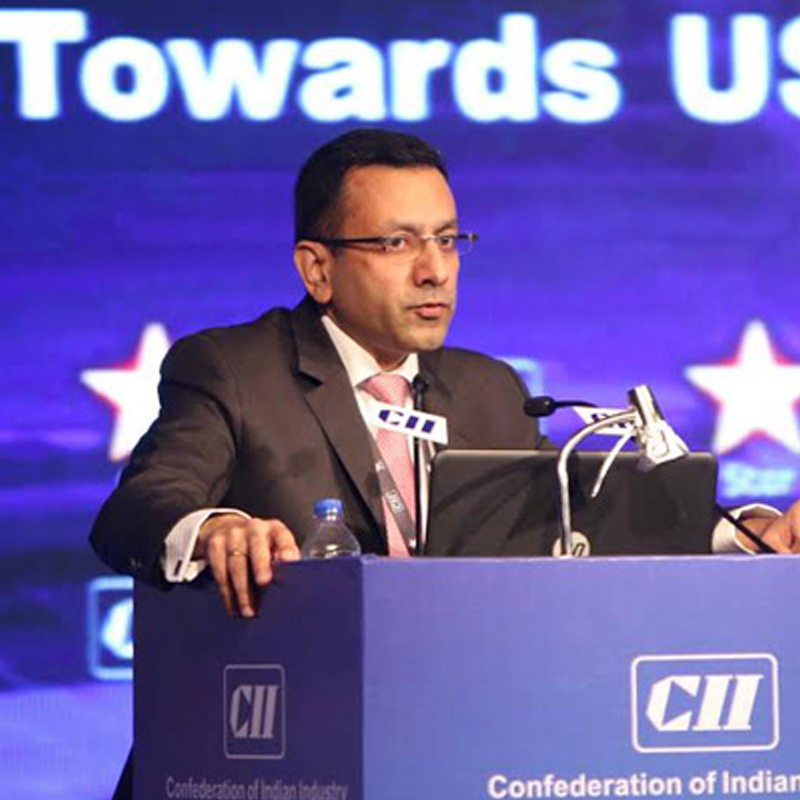
    MUMBAI: Star India MD Sanjay Gupta is a veteran of many high-stake battles. The one he’s currently involved in could be long drawn, unpredictable, unlike anything he’s encountered before and potentially his toughest in a while. However, as India’s broadcast bosses put their heads down to implement TRAI’s new tariff regime, Gupta and Star seem to be first off the blocks. Over the weekend, the network unleashed a nation-wide, multi-media and multi-starrer campaign to educate the consumers across about the radical changes.

    While Star fought the TRAI order tooth and nail in India’s top court, Gupta and team deserve full marks for the sheer scale and speed at which they seem to have got things moving after an unfavourable ruling on 30 October. Gupta says his team at Star is ‘excited’ and sees the new tariff regime as an ‘opportunity’. More power in the hands of the consumer and transparency in the value are the two major highlights as India’s broadcast sector undergoes a facelift, he feels.

    That’s not all. Gupta also articulated his views on Star India’s strategy, channel pricing, disruption in the value chain, the SLP filed by the TRAI in the SC, its implications and more as he fielded wide-ranging questions on a balmy Monday morning on the 37thfloor of Star House.

    On the tariff order’s impact

    The biggest change the tariff order is making is bringing transparency into the whole system of how content gets created to how content gets bought. The biggest change you’re going to see is the transparency, which is existent in almost every industry. It is the biggest shift this industry could have asked for and is great value from a consumer point of view. 

    On preparedness of the system 

    I think people will learn. Over the next two-four weeks, it’ll be an intense learning experience. The good thing in this country is people learn very well quickly. The biggest change in this tariff order is the transparency and power to the consumer.

    On Star India’s strategy

    Our strategy has been in delivering great value to consumers. You know that we invest in making marquee content. Be it our channels in drama, movie, sports, National Geographic or any other content that we deal with. And the question that we ask ourselves is how do we ensure that we provide great value to our consumer through our pricing. We offer content in every geography – be the drama we create with Star Plus and Star Bharat in Hindi, Asianet in Malayalam, Star Vijay in Tamil, we add movies to it in each of the markets, National Geographic – which has some of the best infotainment content to consumers – and on top of it sports. What we are trying to do is make the price affordable to ensure that every consumer has access to this content. Not only do they have power but it is power at a great value from a Star bouquet point of view.

    On channel pricing

    The reason we started the communication early, at Star and IBF, is to let the consumers know that a change is happening. I think it requires a lot of education and communication for people to talk to. To my mind, it’s critical and important. And we wanted to begin early, as early as practically possible. Our price is not led by sports but it is also regionally decided. So, we have a different price in Tamil Nadu as compared to Bengal. Depending on what we think is the strength of our bouquet and the quality of content we are offering. So there is differential pricing like in any business that you decide it regionally and locally. We have a strong channel in Asianet, we have a much weaker channel in Vijay. So we are trying to ensure that consumers get dramatic value in each geography.

    For content with mass requirement, we have tried to make it as cheap as possible within the constraints of the investment we make in each of the businesses.

    On weaker channels

    As I said, the real big change is the power to consumers. They have a choice to decide. Less performing channels cannot come to consumers if they don’t like it. The business will be forced to perform better and better to meet consumer expectations.

    On viewership and ad revenue

    If the channels are powerful and the consumers want you, they will take that option. I think the real question is – Are the channels and content powerful enough? Great content will get viewership. It will force everyone to up their game in terms of the kind of content they offer.

    On TRAI’s SLP in SC

    It is up to the court to decide that. I think now as an SLP is in SC, whenever it gets picked up, the courts will decide. I don’t have a view beyond that. But at this moment, the current ruling is that there is no discount cap. It may change going forward depending on the SC ruling.

    In case the court has a new ruling that discounts have changed, pricing needs to change, both a-la-carte and bouquet pricing in that case, because the distance between them has to be only 15 per cent. I think we are still awaiting the court’s decision and if we need to adapt to it, then we’ll adapt to it. But there will be a shift again in pricing if that comes through.

    On whether distribution chain is ready

    I think we will know closer to time. It is possible that they are all not ready at one time and at that point in time TRAI will have to take a view whether they’ll give more time for people to transit. For now, 29 December is the deadline and we are following the TRAI deadline fully in our intent, in our communication and our effort on ground. In the last few months, we have invested aggressively both in putting together our communication, putting up our pricing on the website, training our teams internally because this is such a massive change. All our internal teams need to get prepared too because this has never been done before. It requires a complete re-understanding within the organisation and briefing our partners.

    On potential change in pricing

    Pricing once defined will remain the same. This is the pricing we have published. People can change their pricing but once consumers pick it up, it applies for the next one year. You can’t change it then. This will also bring about discipline in the industry.

    On the impact on advertisers

    I don’t have a firsthand view on it. But I think this will mean some challenges in implementation. A massive shift of this kind brings out a bit of chaos in the beginning. But I think when I look back – when we went from analogue to digital there were similar concerns, and personally, I carry that worry more than anyone else. But if you look back, it happened more smoothly than what all of us anticipated. Given the enterprise of our partners and consumers, we find solutions to difficult problems quickly. So I think this transition will be a little chaotic but hopefully, it will settle down in a few weeks.

    On disruption in distribution chain

    Consumers are used to buying everything else on MRP and choosing. So, they are used to it across business and categories. It is a big shift for people who deliver content to them, i.e., all of us and distributors – both DTH and cable. I think I personally feel all of them have been working hard over the last few months to prepare.

    On readiness of DPOs

    I think DTH is ready in any case because they do this for a living. DTH covers around 60 million homes. They are fully ready. I think cable is ready from a technology point of view. I think from a people point of view they are getting ready. They have been working hard to get ready. I do hope that given the value this is going to unleash, given the power to consumer this is going to provide, our consumers will really come forward and adopt it and force the transition to happen quickly and smoothly.

    On nature of agreements with DPOs

    Now the nature of agreements is simple – there is no long term agreement. You offer your RIO, which is offered by all content owners on the website. People can download and sign it. Basis the number of consumers that you get every month and the price that you set, you get paid. So it’s a fully transparent way of working for everyone. There is nothing like a long-term agreement anymore.

    On how content will be offered to consumers 

    I think DPOs will decide that. But we are offering to every DPO a-la-carte content and bouquet content both. It’s the same price to DTH and cable. It’s a transparent price to all. They can now choose to make their own bouquets by using a-la-carte channels or they can combine bouquets of different broadcasters. I think that’s the strategy each distributor will define on its own. The interesting thing will be from a consumer point of view, you’ll know everything – what’s the a-la-carte price for a channel, what’s the DPO bouquet and what’s the content bouquet. This kind of transparency has never existed in content business ever before.

    On impact on content offering

    Low performing channels will be under pressure. It will put pressure on content to be better and better. Hence, everybody will have to invest in quality to ensure your channels become better. Content has to work well.

    On consumer awareness

    We have launched a big campaign across eight languages. We are doing a big digital push led by Hotstar and digital assets outside. We are trying to make a very simple communication, at both IBF and Star, to simply explain to consumers what is the change. I’m sure all DPOs and channels are investing equally. The amount of communication consumers will see on this front will be quite significant. So I think communication will be a big draw for both the distribution industry and the content industry in the next few weeks.

    On the relationship between broadcasters and distributors

    One big change that is happening is (and that is the power of the TRAI ruling) that pricing is the same for all distribution partners. There is no difference. It’s equitable and it’s transparent, which means more trust. I think this should help drive a much better and a deeper partnership with the distributors.

    On measuring viewership

    As consumers shift, each of them won’t behave the same way. Each distributor won’t behave the same way. Some of the challenges on measurement would be the sampling, which is an important backbone of any measurement, might go for a toss. Because there are 180 million homes measured through 40 thousand boxes. So if there is chaos in 10 thousand boxes, the ratings may not reflect. Hence the IBF made a request (to not release viewership data for two months) to BARC. Now the BARC board has to decide what the next step should be.

  • TRAI gives more time to stakeholders to comment on its order relating to pricing of STBs

    TRAI gives more time to stakeholders to comment on its order relating to pricing of STBs

    NEW DELHI: The Telecom Regulatory Authority of India (TRAI) has extended till 3 May, views of stakeholders on its draft tariff orders prescribing standard tariff package for set top boxes in digital addressable cable TV systems (DAS) and consumer premises equipments (CPE) for direct-to-home (DTH) services.

    The previous date was 26 April and the extension is on the request of the stakeholders.

    Under the order, the standard tariff packages for STB/CPE on rental basis are to be offered mandatorily by DTH and cable TV operators.

    The Tariff Order also assumes significance as it attempts for the first time to give inter-operability to consumers of DTH players. The authority is of the view that the interests of the consumers can be largely protected through the provision for commercial interoperability of STB. The commercial interoperability provides an exit option for a subscriber in case he/she wishes to change the operator for any reason.

    Accordingly, in the relevant Regulations/Tariff orders of TRAI, it has been mandated that the operators of Digital Addressable Cable TV Systems and DTH operators shall give an option to every subscriber to procure the STB either on outright purchase basis or hire purchase basis or rental basis, or in accordance with the scheme, if any, prescribed by the authority.

    While interoperability is available to customers of LCOs, TRAI observed that in case of DTH services, ‘the predominant DAS platforms at the moment, the schemes for CPEs offered to the subscribers by the DTH operators, have wide variations and at times are such that no viable exit option is available to the subscribers. Instead the consumer has to re-invest in new hardware in case of migration from a particular operator or platform. The same may also hold well in case of the upcoming Digital Addressable Cable TV Systems.‘

    Standard Tariff Package for STBs for DAS has been worked out. In addition to offering the STB as per the Standard Tariff Package prescribed by the Authority, the operators are free to offer their own schemes for supply of STB to its subscribers in accordance with the existing Regulations/Tariff Orders and the subscribers shall have option to choose from the Standard Tariff Package prescribed by the Authority and the alternative schemes offered by the operators.

    The Standard Tariff Package for Cable TV operators has been worked out on the basis of the following facts and figures as provided by the Industry stakeholders/ Associations:-

    a) The total cost of STB has been taken as Rs 1750.
    b) Life span of STB has been taken as five years.
    c) The residual value has been taken as nil.
    d) Rental per month is based on cost of STB on Equated Monthly Installment (EMI) Basis @15 per cent per annum (@1.25per cent per month) for a period of sixty months.

    The Standard Tariff Package for DTH operators has been worked out on the basis of the following facts and figures as provided by Industry stakeholders/ Associations;

    a) The total cost of CPE has been taken as Rs 2250.
    b) Life span of CPE has been taken as five years.
    c) The residual value has been taken as nil.
    d) Rental per month is based on cost of CPE on Equated Monthly Installment (EMI) Basis @15 per cent per annum (@1.25 per cent per month) for a period of sixty months.

    The authority has also noted that no monthly rentals will be payable after the period of five years and the Customer Premises Equipment (CPE) will become the property of the subscriber (except smart card/viewing card) after the expiry of five years. An amount equal to the sum of security deposit to be refunded per month and interest per month on balance security deposit has been adjusted in Rent per month per CPE. The Full amount of security deposit stands adjusted in a period of five years.

    Up to five years, on returning of the CPE, the Security Deposit shall be refunded, provided that the CPE is not tampered with.

    In case of un-installation/discontinuance of service before the last day of the month, balance security deposit shown as refundable at the end of that month will be refunded on return of CPE.

    No repair or maintenance charges would be levied by DTH operator on the subscriber, towards repair or maintenance of CPE up to the period of five years from activation of the same. The subscriber, however, shall be liable to pay repair and maintenance charges from sixth year onwards.

    No installation charges or re-installation charges (except in case of shifting of connection) or activation charges or smartcard/viewing card charges is to be levied by the DTH operator on the subscriber.