Tag: Press Information Bureau

  • PIB fact check unit exposes fake news in 134 videos on 12 YouTube channels

    PIB fact check unit exposes fake news in 134 videos on 12 YouTube channels

    Mumbai: The Press Information Bureau (PIB) has announced it had uncovered fake news spread through 134 videos across 12 YouTube channels, which collectively have several lakh subscribers.

    PIB’s fact checking unit revealed that these YouTube channels disseminated videos with misleading claims, including payouts of Rs 51,000 for wedding expenses, benefits totaling Rs 2.5 lakh for ration card holders, and false information about Covid vaccines.

    The videos were hosted by channels such as NitiGyan4U, KLOnlineStudy, Sarkari Khabar 21, Media Tak, NewsWave_429, and onlinejobRK, among others.

    One video thumbnail from the YouTube channel “onlinejobRk” falsely claimed that prime minister Narendra Modi announced Jan Dhan account owners would receive Rs 10,000 after his win in the 2024 General Elections. The PIB Fact Check Unit debunked this claim on X, warning people to beware of fake news.

    Another YouTube channel, AM News YT, falsely claimed that the Chief Justice of India had taken away the elections from Modi.

    Similarly, a thumbnail from “NewsWave_429” falsely asserted that the Supreme Court had declared Prime Minister Modi’s defeat. The PIB fact check confirmed on X that no such statement had been made by the Supreme Court of India.

  • Comment: MIB’s botched whip on fake news akin to testing waters

    Comment: MIB’s botched whip on fake news akin to testing waters

    With the scourge of fake news rampant globally, any attempt to counter it is always a welcome move. And just for that India’s Minister of Information and Broadcasting Smriti Irani cannot be faulted even if such a view is radical and would be open to severe criticism-as it was in India over the last few days with a large section of civil society coming down like a ton of bricks on the minister’s assertions on guidelines for TV and print media journalists that proposed punitive penalties for breaching some undefined norms.

    However, the wording of the press statement put out by the government’s PR arm, Press Information Bureau, on behalf of MIB is what raises questions.

    First, the government statements were aimed at “regulating” fake news and not look at avenues to arrest their spread or, as the homoeopathy strand of medicine would do, go to the root cause of the ailment. The intent becomes clear: the aim was not really to find a solution to fake news in the true sense.

    Second, the timing of the guidelines, which were aimed at handing out harsh penalties to government accredited journalists from the print and electronic media, rings some more alarm bells. Though the present BJP-led government’s official five-year tenure ends mid-2019, it is widely expected that the general elections would be held before the tenure comes to an end officially—as is mostly done, but then this government has been known to break many times tested norms-if not as early as late 2018.

    On both these counts, the honourable MIB minister was found wanting and her move was widely dubbed as nothing but an initiative to gag the news media critical of the present government. That the prime minister himself had to step in to order a rollback of the MIB diktat a day later, as officially being stated, is a story in itself.

    Let’s forget for once what some of the journalistic organisations had to say in criticism of the MIB move to cancel accreditation of journalists found peddling fake news, though the definition of fake news was not elaborated, nor was the fact as to why just on a complaint from practically anybody a journalist, whose antecedents are verified by the government annually for security reasons, will be put in the hall of shame even if it’s for varied period of time.

    Two organisations, the Press Council of India (PCI) and the News Broadcasters Association of India (NBA), made responsible to decide whether the complaint on fake news was genuine or not (according to the government statement) have not much legal standing or bandwidth to do so. While the PCI is a (toothless) watchdog for the print medium, the NBA’s self-regulatory mechanism for member-TV news channels hasn’t always worked.

    Now let’s try analysing what could have prompted such a move by MIB-a move that was unveiled seemingly without taking into confidence the PM and his office.

    It’s a known fact in India, in sharp contrast to other global markets, that a TV news channel here is started, more often than not, to flaunt one’s status symbol and increase the owner’s powers (both politically and financially) rather than being a pure journalistic means. That is not saying there are no exceptions to the rule and India has some very fine and professional news channels, which daily go through the grind of living up to the high standards of journalism. But, what explains the fact that 25-30 per cent of the total 900-odd permitted TV channels in India would fall in the news and current affairs genre? And they come in all shapes, sizes and languages. If the big guns of the news and current affairs genre mostly have scarlet bottom lines, it goes without saying that the smaller news channels are barely churning out revenue. No other country in the world has so many TV news channels.

    In a year that will lead to general elections-a period after the elections are announced is when cacophony on TV news channels start peaking-clamping down on news outlets cannot be considered a bad strategy; especially when one is not used to hear criticism. Artificial barriers become natural armours. Putting on hold future permission to TV channels by the MIB till a new policy on uplink/downlink is put in place after regulator TRAI’s recommendations is one such clampdown. But then trying to gag the news media as a whole need to be thought out and well orchestrated instead of merely announcing one evening some guidelines under the garb of attempting to regulate fake news.

    And why regulate fake news? Does that mean some fake news could have been allowed, while filtering out the more damaging ones? More importantly, why target those journalists for fake news who are accredited by the government? Did that mean that non-accredited journalists, which are in huge numbers, would have been allowed to dabble in fake news? Considering most news websites and many online ventures that pretend to deal in news but hand out mostly tainted views are not accredited with the government, either at the federal or State level, the question arises whether they would have been allowed to peddle fake news? In India, fake news is more rampant on social media platforms and little known online ventures than in mainstream media.

    But Ms. Irani and her set of advisors again cannot be faulted to try regulating the news media. From the days of the infamous Emergency unleashed by then Prime Minister Indira Gandhi in the mid-70s to her son Rajiv Gandhi in the late 1980s and few other successive governments of post-independent, India has tried to muzzle at some time or other the not-so-perfect-yet-a-vibrant media of the country. Not only such moves have backfired, including the dark days of the Emergency, but in many cases the then governments had to beat a retreat in the face of stiff opposition to any such move. So much so, folklore in the complex realm of Indian politics says that all governments that tried to regulate media in any form bit the dust and were booted out of power.

    In the mid to late 1990s, just before the first NDA government came to power under Prime Minister A B Vajpayee, the then government had tried to bring in Parliament a Broadcasting Bill, envisaging wide-ranging limits to media businesses, including cross-media restrictions of ownerships. That government didn’t remain in power to see through the proposed legislation. However, that didn’t stop other governments, including the Congress-led coalitions that ruled for 10 years after 2004, to attempt limiting media independence. Manish Tiwari, a former MIB minister in 2013, had famously proposed a common examination for journalists as the minister thought media personnel were not qualified enough.

    Cut to 2018. The storm may have blown over for the time being, but for the media to sit back and relax could be dangerous. Simply because the present government is unlike any those in the past. To take satisfaction from an explanation that the PM was totally unaware of one of his minister’s moves to gag the media could be a bad strategy for the media industry. The government was just testing the waters.

    Also Read :

    PMO directs MIB to withdraw guidelines on fake news

    MIB nod to TV channels on hold till TRAI uplink, downlink suggestions

    Smriti Irani tweets industry body advisory urging restraint by TV news channels

  • MIB issues stringent norms on fake news in TV & print media

    MIB issues stringent norms on fake news in TV & print media

    NEW DELHI: Even as the government announced amendments in the guidelines for accreditation of print and electronic or TV journalists outlining punishments for breaches on account of fake news, the intention is being termed by stakeholders as debatably honourable but an indirect way to muzzle media freedom.

    On Monday, the Ministry of Information and Broadcasting (MIB) issued a statement stating that noticing increasing instances of fake news in various mediums, including print and electronic, the guidelines for accreditation of journalists have been amended with penalties and punishment factored in.

    “On receiving any complaints of instances of fake news, the same would get referred to the Press Council of India (PCI) if it pertains to print media and to News Broadcasters Association (NBA) of India if it relates to electronic media for determination of the news item being fake or not,” the MIB statement said, adding the process would be completed within 15 days.

    Once the complaint is registered for determination of fake news, the correspondent/journalist who created and/or propagated the fake news will, if accredited with the government, have the accreditation suspended till such time the determination regarding the fake news is made by the regulating agencies.

    The Accreditation Committee of the Press Information Bureau (PIB, the government’s PR arm), which consists of representatives of both PCI and NBA, shall be consulted for validation of any accreditation request of any news media agency. The punishment for peddling fake news ranges from suspension of accreditation for a period of six months in the case of first violation to permanent cancellation on third violation.

    While examining the requests seeking accreditation, the regulatory agencies will examine whether the ‘Norms of Journalistic Conduct’ and ‘Code of Ethics and Broadcasting Standards’ prescribed by the PCI and NBA, respectively are adhered to by journalists as part of their functioning. It would be obligatory for journalists to abide by these guidelines, the government statement said.

    However, a section of the news media dubbed the government move as an indirect way to muzzle media freedom in the run-up to the general elections in the country either in late 2018 or early 2019. A meeting of various journalists’ organisations is likely to be held on Tuesday in the capital to take stock of the situation.

    The present BJP-led government in New Delhi completes its five-year term mid-2019.  

    ALSO READ:

    MIB nod to TV channels on hold till TRAI uplink, downlink suggestions

  • NDTV restructures biz & newsroom amidst reports of layoffs

    NEW DELHI: Buffeted by allegations of tax evasion and money laundering, which are being contested in appeal tribunals, one of India’s first private sector TV news organization NDTV has said it is reorganizing newsroom set-up and resources available to adapt to changing technologies like MoJo or mobile journalism.

    Stating that the restructuring was “not just about cost-cutting”, the Prannoy Roy-family promoted NDTV in a statement on Monday said, “Like other news broadcasters around the world, NDTV is reorganizing its newsroom and resources to focus on mobile journalism. NDTV has always been an early adapter of new technology and we are the first major network in India whose reporters are all trained in using mobile phones to shoot stories.”

    The statement comes amidst media reports that NDTV has handed pink slips to about 70 staffers, comprising mostly technical personnel and camerapersons. Outlook magazine, quoting unnamed sources, in a report on its website said on Monday that the number of “retrenched staff is likely to be between 60 and 70 of which around 35 camerapersons have been made redundant with the introduction of high-grade smartphones”.

    It must be clarified here that Indiantelevision.com could not independently verify or confirm the news on staff being laid off at NDTV.

    However, NDTV’s official statement, also given to the Bombay Stock Exchange (BSE), on Monday dropped ample hints about retrenchment of staffers owing to funds crunch.

    “This (the restructuring of business and newsroom ops to rely on MoJo) is not just about cost-cutting, though that is certainly, for us, like any other responsible business, an important factor in operations. Mobile journalism means reports are lightning-quick and much more efficiently produced, a priority for any news company,” NDTV said.

    Pointing out it would be “irresponsible” to viewers and shareholders, apart from being “archaic” to maintain decades-old templates of how to shoot and edit, NDTV defended itself on collateral damages of restructuring.

    “NDTV has long been valued for its commitment to its employees — our record on attrition across more than 20 years is testament to this and spoken of across the industry. We have ensured fair compensation for those employees affected by our restructuring,” the company stressed.

    Dwelling on the need to revamp, NDTV clarified like all businesses, broadcasting models too change and evolve and, hence, the “need to restructure” and keep pace with the digital world of journalism.

    What does MoJo mean? Live camera crews for coverage of finance minister Arun Jaitley’s briefing at Delhi’s Press Information Bureau, for example, have been replaced by a single reporter. The reporter doubles up as a journalist and cameraperson using high-end mobile phones and modern mobile networks to connect with the studio via Skype and other such similar services to cover the event or do a PTC (piece to camera, a TV jargon to explain when a TV news journalist comes on camera to report an event and answer queries from the studio).

    The news of retrenchment and business restructuring comes close on the heel of news that a tax tribunal had, reportedly, upheld claims made by the tax department on taxes not paid by NDTV, which has, however, contested the claims saying it was witch-hunt unleashed by the Modi government for standing up to media arm-twisting.

    “The court cases (relating to tax evasion) that are an attempt to punish NDTV for its award-winning objective journalism do not influence how we run and operate our newsroom. The emphasis on restructuring is rooted in the broader financial climate, our commitment to controlling costs and, most importantly, our move to consolidate on our core business, quality news content,” the statement said.

    ALSO READ:

    Tribunal upholds tax demand, NDTV intends to challenge order

    NDTV gets slapped with higher tax dues notice

    NDTV issues response to govt charges


  • Rathore urges govt. officials to aggressively use social media

    Rathore urges govt. officials to aggressively use social media

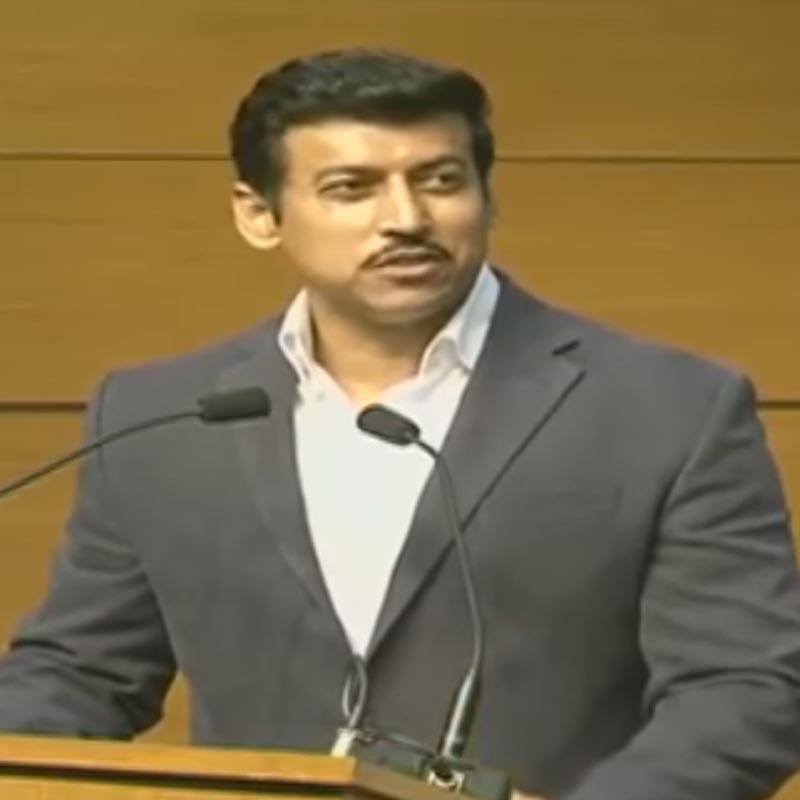
    NEW DELHI: Taking a cue from Prime Minister Modi’s effective use of social media, Minister of State for Information and Broadcasting (MIB) Rajyavardhan Rathore’s message to his officials is use social media aggressively for disseminating information on government.

    “We need to open up. Typically, governments have been with iron curtains all around. But today time is changing, so we first need to change our mindset,” A PTI report quoted Rathore as saying today.

    The junior MIB minister was inaugurating a workshop for government officials in Press Information Bureau (PIB) on how to use Facebook more effectively for communication.

    PIB is the public relations division of the government and its official under a director-general are entrusted with disseminating information on government initiatives. 

    Addressing PIB officials, the PTI report states, Rathore advised that the process of how information is shared from decision makers to disseminators needs to get faster and social media can play a key role as it not only shapes debates on TV but also public opinion.

    According to the minister, “You cannot hide information in today’s world. You have to share that information. The idea is to send the right kind of content that people can engage with.” 

    Pointing out that often incorrect information regarding ministries and government departments goes on social media,  Rathore advised that on such occasions the correct facts should be provided.

    “That is the time you could get to the social media and correct that information. People are hungry for information,” Rathore is said to have opined as per the PTI report.

    The minister compared old and present times regarding communications. He said had it been older times pigeons would have to used for communicating and the head of PIB would have had maximum number of pigeons, hinting at the amount of communication that a government undertakes as part of its outreach programme.

    A lot of people dismiss social media, saying the debate going on there is “junk”, he said but emphasised that this very debate shapes what is reported on television and in the print media.

    “It is shaping your mind when you sit on the dining table during dinner time and do your discussions,” he is quoted as having said.

    The minister pointed out that 85 per cent of federal ministers were on Facebook and 80 per cent ministries already have verified FB accounts.

    Referring to PM Modi’s love for technology and effective use of social media, Rathore says the “coach has shown the way and it is now for the athelets to act.”

    Interestingly when Rathore was questioned on Twitter for this government support to a private enterprise (Facebook) as being strange, the minister tweeted back saying: “Yes, but all communication tools, public/ private need to be utilised for empowering & enhancing outreach.”

    Facebook executives were present on the occasion.

  • Rathore urges govt. officials to aggressively use social media

    Rathore urges govt. officials to aggressively use social media

    NEW DELHI: Taking a cue from Prime Minister Modi’s effective use of social media, Minister of State for Information and Broadcasting (MIB) Rajyavardhan Rathore’s message to his officials is use social media aggressively for disseminating information on government.

    “We need to open up. Typically, governments have been with iron curtains all around. But today time is changing, so we first need to change our mindset,” A PTI report quoted Rathore as saying today.

    The junior MIB minister was inaugurating a workshop for government officials in Press Information Bureau (PIB) on how to use Facebook more effectively for communication.

    PIB is the public relations division of the government and its official under a director-general are entrusted with disseminating information on government initiatives. 

    Addressing PIB officials, the PTI report states, Rathore advised that the process of how information is shared from decision makers to disseminators needs to get faster and social media can play a key role as it not only shapes debates on TV but also public opinion.

    According to the minister, “You cannot hide information in today’s world. You have to share that information. The idea is to send the right kind of content that people can engage with.” 

    Pointing out that often incorrect information regarding ministries and government departments goes on social media,  Rathore advised that on such occasions the correct facts should be provided.

    “That is the time you could get to the social media and correct that information. People are hungry for information,” Rathore is said to have opined as per the PTI report.

    The minister compared old and present times regarding communications. He said had it been older times pigeons would have to used for communicating and the head of PIB would have had maximum number of pigeons, hinting at the amount of communication that a government undertakes as part of its outreach programme.

    A lot of people dismiss social media, saying the debate going on there is “junk”, he said but emphasised that this very debate shapes what is reported on television and in the print media.

    “It is shaping your mind when you sit on the dining table during dinner time and do your discussions,” he is quoted as having said.

    The minister pointed out that 85 per cent of federal ministers were on Facebook and 80 per cent ministries already have verified FB accounts.

    Referring to PM Modi’s love for technology and effective use of social media, Rathore says the “coach has shown the way and it is now for the athelets to act.”

    Interestingly when Rathore was questioned on Twitter for this government support to a private enterprise (Facebook) as being strange, the minister tweeted back saying: “Yes, but all communication tools, public/ private need to be utilised for empowering & enhancing outreach.”

    Facebook executives were present on the occasion.

  • Media can transform rural poor’s life by providing info on central scheme: Rathore

    Media can transform rural poor’s life by providing info on central scheme: Rathore

    NEW DELHI: Minister of State for Information and Broadcasting Rajyavardhan Rathore has said that media can transform the lives of the people living in rural areas by providing information about welfare schemes.


    He said that the emergence of internet and social media has brought about an information revolution in the country. He underlined that there is need to build capacities of rural journalists for establishing better reach to the people in rural areas. 


    He stated this in a message read out at the opening of a one-day Regional Media Conference organized by the Press Information Bureau (PIB) on strengthening information dissemination on Government policies and programmes in rural areas at Jobner near Jaipur this week.


    About 70 regional journalists including stringers of newspapers and news channels participated in the one-day conference.


    One of the major objectives of the conference was receiving feedback from journalists working in rural areas on their information needs. During the interactive sessions, the participants wanted more interactions of this kind in the future and wanted a mechanism for enhanced information flow from PIB on central government schemes to rural journalists.


    In his keynote address, senior journalist Yashwant Vyas said that rural journalists have a major role in highlighting issues of local importance on which they should report fearlessly. Senior journalists Rajendra Boda, Pratap Rao, Ashok Chaturvedi and Shakti Singh addressed journalists on issues including role of different media in effective information flow in rural areas. A session on the role of media in disaster management was conducted by Bijendra Singh, who is officer on Special Duty of the State Disaster Management Department of Rajasthan. 


    The participants were also given orientation on the role of new/social media in information dissemination.

  • I&B Ministry makes senior-level transfers of Indian Information Service Officers in media units

    I&B Ministry makes senior-level transfers of Indian Information Service Officers in media units

    NEW DELHI: As part of several senior-level transfers in the media units of the Information and Broadcasting Ministry (I&B Ministry), Indian Information Service officer of the 1993 batch R C Joshi has been transferred as Director in the Directorate of Advertising and Visual Publicity.


    Joshi replaces Y K Baweja who is being moved to take his position as director (Media and Communications) in the Press Information Bureau (PIB).


    Chitra Gupta, who is currently assistant director (Media and Communications) at PIB in Guwahati, will join as assistant director in DAVP in Kolkata. Additionally, she will also hold charge of Doordarshan Kendra in Kolkata.


    S Mathias, who is presently additional director general (news) in the News Services Division of All India Radio, will also work on ‘loan basis’ for Doordarshan News till further orders.


     M S Rajnikanth, who is currently deputy director (News) in Doordarshan News in Delhi is being moved to Bangalore as director (M & C) in PIB.


    A K Srivastava, on repatriation from the deputation post as comptroller and auditor general will move as deputy director in the Indian Institute of Mass Communications as assistant professor.


    Pragya Paliwal Gaur, director under order of posting after her services were surrendered by the Health Ministry, will move as Director (M&C) in PIB.


    Vijay Kumar, who is presently director (M&C) in PIB Patna, is moving as director in the Publications Division in Delhi.


    H Rehman and K K Pant, both deputy director (M&C) in PIB, Delhi, are being moved as deputy director DPR (Defence) and deputy director (News) in DD News in Delhi respectively.  


    Pravin Kavi, assistant director (News) in All India Radio in Lucknow is to take Rehman’s place in PIB.


    N C Juyal, assistant director (News) in DD News, will be the assistant director (M&C) in PIB.

  • Noronha becomes DG of Field Publicity as I&B Ministry announces top-level changes

    Noronha becomes DG of Field Publicity as I&B Ministry announces top-level changes

    NEW DELHI: K Ganesan is being posted as the new director general of the Directorate of Advertising and Visual Publicity in the Information & Broadcasting (I&B) Ministry in place of G Mohanty, who has sought voluntary retirement.


    Mohan C Handak takes the place of Ganesan as press registrar as the Registrar of Newspapers in India (RNI).


    A P F Noronha will take place of Chandak as Director General of the Directorate of Field Publicity. Noronha was until now Director General (Media and Communications) in the Press Information Bureau (PIB) and also Officer on Special Duty in the Information & Broadcasting Ministry.


    All these officers are senior officers of the Indian Information Service.