Tag: Press Council of India

  • Should the Press Council govern TV and Internet?

    Should the Press Council govern TV and Internet?

    MUMBAI: Is there a need to create a Media Council of India? We already have the Broadcast Complaints Council of India (BCCI) and the News Broadcasters Association and the Broadcast Editors Association (BEA) which act as the conscience keepers of the entertainment channels and of the news broadcasters respectively.


    But CK Prasad chief of the nearly 50 year old Press Council of India  (PCI) believes its ambit needs to be extended to cover television and the internet. 
    Speaking on the occasion of National Press Day the retired chief justice today said  “It is necessary for society and government to recognise that the noble objectives behind setting up the Council can never fully be realised if its activities are restricted to the print media…. the Council as a body made up of different groups of informed stakeholders, is best placed to play such a regulatory role.”


    He added that suggestions to give the PCI more teeth have been made in the past but it has not been followed up with legislative changes. “It must possess the powers to tackle aberrations by the press to ensure that members maintain the highest professional standards. In the absence of such powers, the Council is forced to act more on the basis of moral persuasion than legal persuasion.”


    “Our democracy and our media have evolved significantly… legislation has kept pace with developments in other areas vital for the functioning of our democracy such as electoral reforms, attempts to update the Press Council Act to bring it in tune with contemporary realities have until now only been academic exercises,” he pointed out.


    He stated that the PCI gets its funding through private sources as annual subscriptions from registered newspaper organisations and as grants from government. This needs to be relooked at. The government’s share of this needs to go down while the print media’s share needs to go up to ensure its autonomy in a new media dynamic.

     

  • Govt. rules out task force to investigate attacks on mediapersons

    Govt. rules out task force to investigate attacks on mediapersons

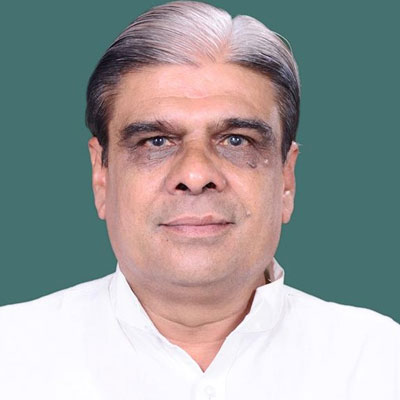
    NEW DELHI: Even as he ruled out a special task force to investigate the attack on journalists, Minister of State for Home Haribhai Parathibhai Chaudhary told the Parliament today that the National Crime Records Bureau (NCRB) had started collecting data on attack on media persons under grievous hurt since 2014. 


    Data on murder of journalists is not maintained separately. According to available data, a total of 113 cases were registered and 30 persons were arrested for attacks on mediapersons (grievous hurt) during 2014. 

    Chaudhary said that the Home Ministry had not received the report on “Safety of Journalists” from the Press Council of India. 


    The provision of security to an individual is primarily the responsibility of the State Government in whose jurisdiction such individual ordinarily resides. Security is provided strictly on the basis of threat assessment made by the Security Agencies. There is no separate categorization of protectees for journalists/media persons, although individual journalists/media persons are also among those who apply for security cover.

  • Issue on surrogate advertising of liquor brands in print media pending  with I&B Ministry

    Issue on surrogate advertising of liquor brands in print media pending with I&B Ministry

    NEW DELHI: There have been nine complaints including four in the electronic media since 2011 relating to advertisements of tobacco and liquor, Parliament was told today.

     
    Minister of State for Information and Broadcasting Rajyavardhan Singh Rathore said warnings were issued to two channels – ET Now and Star Cricket in 2012 and an advisory was issued to FTV in January last year, all relating to liquor advertisements.

     
    In the fourth case, the advertisement being aired on several channels in 2011 was taken off after an advisory by the Advertising Standards Council of India.

     
    While four cases were closed by the Press Council of India with regard to the print advertisements, one matter relating to surrogate advertisements has been under the consideration of the government since March 2013.

     
    The Press Council of India has formulated ‘Norms of Journalistic Conduct’ for adherence by the media and the relevant norm 36(ii) relating to ‘Advertisements’ prescribes that no advertisement shall be published, which promotes directly or indirectly production, sale or consumption of cigarettes, tobacco products, wine, alcohol, liquor and other intoxicants. The PCI takes cognizance, suo motu or on complaints, of the contents in print media which are in violation of the ‘Norms of Journalistic Conduct’.


    In so far as private satellite TV channels are concerned, all advertisements telecast on such channels are regulated in accordance with the Advertising Code prescribed in Rule 7 of the Cable Television Network Rules, 1994. As per Rule 7(2)(viii)(A) thereof, no direct or indirect advertisements of liquor or tobacco products are permissible on TV channels. The detailed provisions of the Rule are available on Ministry of Information and Broadcasting website www.mib.nic.in.


    An Inter-Ministerial Monitoring Committee has been constituted in the Ministry of Consumer Affairs, Food and Public Distribution to monitor misleading advertisements appearing in print and other outdoor media.


  • EC issues detailed guidelines for forthcoming state assembly polls

    EC issues detailed guidelines for forthcoming state assembly polls

    NEW DELHI: Even as the Model Code has come into effect for the elections to the Jharkhand and Jammu and Kashmir assemblies, the Election Commission today prohibited conduct of Exit poll and dissemination of their results during the period mentioned therein, that is, from the hour fixed for commencement of polls in the first phase and half hour after the time fixed for close of poll for the last phase in all the States.

     
    The directive was issued under Section 126A of the Representation of Peoples Act 1951 and Section 133 A of the J&K R.P. Act, 1957.

     
    The Commission reiterated that the TV/Radio channels and cable networks should ensure that the contents of the programme telecast/broadcast/displayed by them during the period of 48 hours referred to in Section 126 of R.P. Act 1951 and Section 133 of J&K R.P. Act, 1957 do not contain any material, including views/appeals by panelists/participants that may be construed as promoting/prejudicing the prospect of any particular party or candidate(s) or influencing/affecting the result of the election. This among other things includes display of results of any opinion poll and of standard debates, analysis, visuals and sound-bytes.
     

    At the outset, the Commission said there are sometimes allegations of violation of the provisions of Section 126 of the RP Act 1951 by TV channels in the telecast of their panel discussions/debates and other news and current affairs programmes. The Commission said it has clarified in the past that Section 126 prohibits displaying any election matter by means of television or similar apparatus during the period of 48 hours ending with the hour fixed for conclusion of poll in a constituency.

     
    “Election matter” has been defined in that Section as any matter intended or calculated to influence or affect the result of an election. Violation of the aforesaid provisions of Section 126 is punishable with imprisonment upto a period of two years, or with fine or both.

     
    During the period not covered by Section 126 or Section 126A, of R.P. Act, 1951 and Section 133 and 133 A of J&K R.P. Act 1957 concerned TV/Radio/Cable/FM channels are free to approach the state/district/local authorities for necessary permission for conducting any broadcast related events which must also conform to the provisions of the model code of conduct and the programme code laid down by the Information and Broadcasting Ministry under the Cable TV Networks (Regulation) Act 1995 with regard to decency, maintenance of communal harmony, etc. They are also required to stay within the provisions of Commission’s guidelines dated 27 August 2012 regarding paid news and related matters. Concerned Chief Electoral Officer/District Election Officer will take into account all relevant aspects including the law and order situation while extending such permission.

     
    The Commission also drew attention of the media to the guidelines issued by the Press Council of India and the News Broadcasting Standards Authority with regard to elections.


  • Law Commission to complete recommendation on paid news soon

    Law Commission to complete recommendation on paid news soon

    NEW DELHI: The Law Commission is expected to complete its recommendations relating to paid news during election soon. It is currently studying the laws related to election laws in entirety.


    Information and Broadcasting Ministry sources tell indiantelevision.com that recommendations for changes in laws relating to the Press Council of India and the Cable TV Networks (Regulation) Act would be taken up after a consultation with the Election Commission.


    Furthermore, based on the recommendations of the standing committee on Information Technology, inclusion of provisions in the ‘Press and Registration of Books and Publications Bill’ to check the incidents of paid news are being examined. 


    The Press Council of India has formulated ‘Norms of Journalistic Conduct’ to be adhered by the media. These norms prescribe that advertisements should be clearly demarcated from news by printing disclaimers. As far as news is concerned, it must always carry a credit line and should be set in a typeface that would distinguish it from advertisements. The council has also drawn up a set of guidelines that are applicable to financial journalism and also on reporting of elections.


    So far as electronic media is concerned, all private satellite TV channels are required to adhere to the Programme & Advertising Codes prescribed under Cable Television Networks (Regulation) Act, 1995 and the rules framed there under. 

  • Bring electronic, online media under ambit of a body: Markandey Katju

    Bring electronic, online media under ambit of a body: Markandey Katju

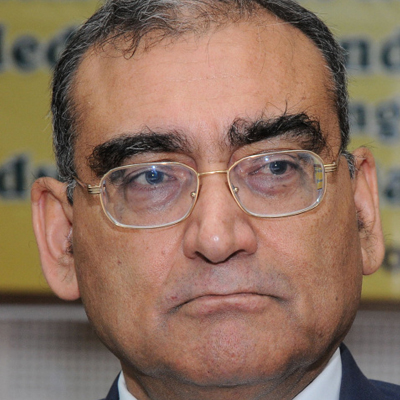
    NEW DELHI: Press Council of India chairperson Justice Markandey Katju has again said that electronic as well as online media should be brought under the ambit of a body.

    “The scope of Press Council of India (PCI) should be expanded by including the electronic media into its ambit,” Katju told reporters after chairing the PCI meeting in Panaji.

    “The Press Council of India Act is dated 1966 when there was no television. Now there is a huge influence of television in our life. We have recommended that electronic media should also be brought under the ambit of the PCI,” he said.


    It can be recalled that the Press Council of India Act was passed again in 1978 with some changes after Indira Gandhi had repealed it during the National Emergency in 1975.

    Katju said that online media be also brought under the purview of the PCI which now covers only print media.

    He also reiterated his demand for more powers to the Council. “The Parliamentary committee has also recommended that the PCI should have more powers. Currently, recommendations of the Parliamentary committee are under consideration,” Katju said.

    He added that with the inclusion of electronic media, the number of members on PCI can also be increased thus giving proper representation to the newly-included sector.

    “Right now there are 20 members from print. We can include 20 more from the electronic media,” Katju said.


    Responding to a query, he said that the Council should be a regulatory body and not the controlling one. “I am against the controls. I am in favour of regulations. No freedom is absolute. Regulations have to be there,” Katju concluded. 

  • Allahabad HC asks government to form statutory forum for complaints against electronic media

    Allahabad HC asks government to form statutory forum for complaints against electronic media

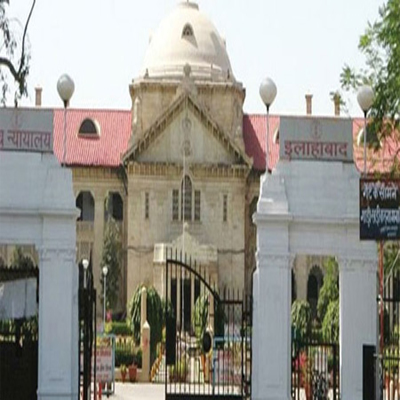
    NEW DELHI: The Allahabad High Court has said that the government needs to provide a statutory forum for electronic-media where people can both approach and ventilate their grievances.


    In the petition filed by social activist Dr Nutan Thakur, Justice Devi Prasad Singh and Justice Ashok Pal Singh of the Lucknow bench said for any misconduct committed by the print media statutory forum is available in the form of Press Council of India but no such forum is available for the electronic media.


    The court felt that no such statutory forum is available and this does not seem to be proper in a country which is run by the rule of law and governed by the democratic polity and hence the union needs to provide statutory forum for electronic-media.

    The order said electronic media immediately affects peoples’ mind and it is well established that paid news items are often used by the media, which is an instance of abuse of power. Hence, prima facie electronic media should also be regulated and supervised by a statutory autonomous forum like the Press Council and the government should have provided some statutory forum to redress the grievance of the news items or other items of the electronic media.

    The order said electronic media immediately affects peoples’ mind and it is well established that paid news items are often used by the media, which is an instance of abuse of power. Hence, prima facie electronic media should also be regulated and supervised by a statutory autonomous forum like the Press Council and the government should have provided some statutory forum to redress the grievance of the news items or other items of the electronic media.


    The court directed the government to file an affidavit bringing on record its stand on this issue, within four weeks.


    The petition had been filed against the Information and Broadcasting Ministry and the News Broadcasters Association.

    The court noted: ‘Though prima facie against the decision taken by the non-statutory body, the writ petition seems to be not maintainable but we are of the view that keeping in view the public importance of the question raised by the petitioner in person for creation of some statutory forum where the people may address their grievance, the writ petition is admitted.’ 

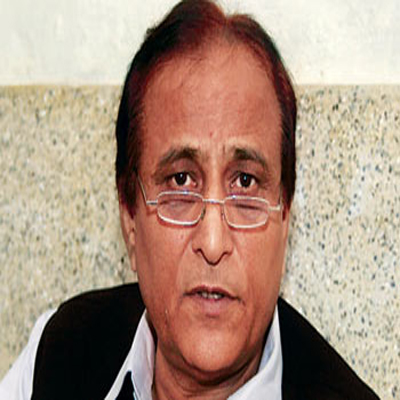
  • Enquiry by PCI begins in Azam Khan whipping statement

    Enquiry by PCI begins in Azam Khan whipping statement

    NEW DELHI: The Press Council of India has started its enquiry into the complaints relating to senior Uttar Pradesh Minister Azam Khan’s whipping statement on bureaucracy by asking the editors of the newspapers to explain their side of the story.


    Azam Khan had allegedly said in a meeting in Samajwadi Party office at Lucknow on 30 January 2013 that the officers understand only the language of whipping, but the next day his official statement came that such media reports were baseless and had been done to tarnish his image and that of his government.


    In view of the credibility of Media, social activist Dr Nutan Thakur had requested PCI Chairman Justice Markandey Katju to conduct a detailed enquiry in the matter so as to bring the truth of whether the initial media reports regarding his whipping statements are correct or not, which will also clarify the situation about his later denials.