Tag: Press Council of India

  • Vikatan website blocked; MD B Srinivasan to take legal action if he fails to get block removed

    Vikatan website blocked; MD B Srinivasan to take legal action if he fails to get block removed

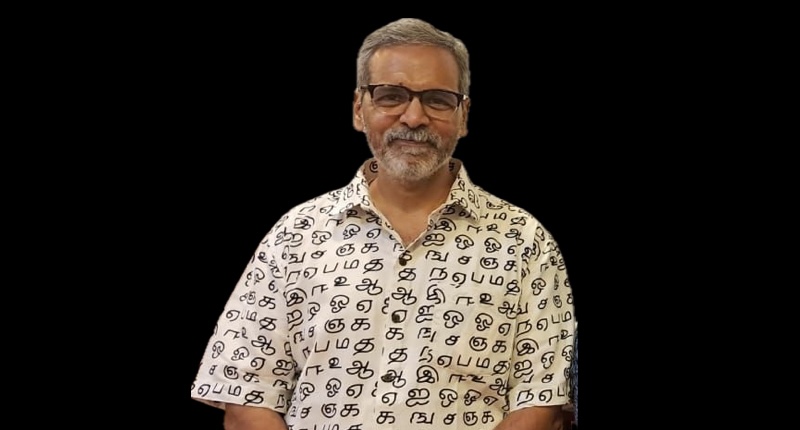
    MUMBAI: Tamil media publication Vikatan managing director B Srinivasan was a little taken aback when on 15 February his website became inaccessible to him and the 80 lakh readers who access it daily. A notice displayed on the home page said the website had been blocked  as per the direction of law enforcement agencies. 

    On what grounds? 

    Well, the publication had put out what it considered a harmless political satirical cartoon on 10 February, which depicted prime minister Modi in chains alongside US president Trump . This apparently upset BJP Tamil Nadu president K Annamalai who filed a formal complaint with the ministry of information & broadcasting (MIB) and the Press Council of India, claiming the cartoon was objectionable on 15 February. 

    By 6:00 PM that evening, Vikatan’s website became inaccessible to many users, though the organisation received no immediate explanation for the outage.Since then, the website either has taken forever to open or when it does, it says it is an insecure website and a security risk. 

    The 99-year-old publication, which has a history of standing up to government pressure, promptly sought clarification from the ministry of electronics and information technology (MeitY) and the National Informatics Centre (NIC) regarding the domain blockage. Officials from the Press Bureau of India also visited Vikatan’s registered office to enquire about the print availability of Vikatan Plus, which was confirmed to be a digital-only publication.

    The MIB subsequently informed Vikatan about an upcoming inter-departmental committee meeting under the IT Rules, 2021, scheduled for 20 February to review the blocking of content. While granting Vikatan until this date to prepare their response, the ministry maintained that the emergency blocking orders would remain in effect.

    Vikatan has stated it will present its case at the hearing and is prepared to pursue legal action if the decision conflicts with press freedom principles. The publication cited its long history of speaking truth to power, noting previous instances of government action, including being shut down by the British in 1942 and having its editor imprisoned in 1987.

    The case has drawn significant attention as it may set a crucial precedent for media freedom in India, with Vikatan emphasising the need for transparency in actions against media houses.

    The blocking has drawn widespread condemnation from political leaders across party lines. Tamil Nadu chief minister M.K. Stalin, along with prominent figures including MDMK general secretary Vaiko, actor Kamal Haasan, and author Arundhati Roy, have denounced the action as an attack on press freedom.

    Said: Srinivasan  “For over a century, Vikatan has been a steadfast advocate for freedom of expression and has consistently upheld journalistic integrity.”

  • Budget 2022: I&B ministry allocation slashed to Rs 3980.77 crore in FY23

    Budget 2022: I&B ministry allocation slashed to Rs 3980.77 crore in FY23

    Mumbai: The Union Budget 2022 has earmarked a total sum of Rs 3980.77 crore for the ministry of information and broadcasting in the fiscal year 2022-23. This amounts to a decrease of Rs 90 crore from last year.

    With the exception of the Press Council of India that saw an increase of Rs 7 crore, up from Rs 20 crore in FY22 to Rs 27 crore for FY 23, the budgets for all other autonomous bodies under the MIB were slashed.

    Allocation for Prasar Bharati’s declined to Rs 2,555.29 crore from Rs 2,640.11 crore in the last financial year. The same was the case with The Films and Television Institute of India (from Rs 58.48 crore last year to Rs 55.39 crore this year), the Indian Institute of Mass Communication (from Rs 65 crore to Rs 52 crore), Children’s Film Society of India and the Satyajit Ray Film and Television Institute.

    Allocation for broadcasting under the social services head has also gone down from Rs 2,921.11 crore to Rs 2,839.29 crore. There was also a reduction in the budget for ‘information and publicity’ from Rs 971.26 crore to Rs 942.04 crore.

    ‘Information and publicity’ covers establishment expenditure of media units in the country such as the Bureau of Outreach and Communication, Press Information Bureau, Publications Division, New Media Wing, Registrar of Newspapers for India (RNI), Films Division, National Film Archive of India, Electronic Media Monitoring Centre and others.

    Hailing the budget as “beneficial”, information and broadcasting minister Anurag Thakur said that it is a blueprint to fulfil the hopes and aspirations of a new India in the 100th year of its independence.

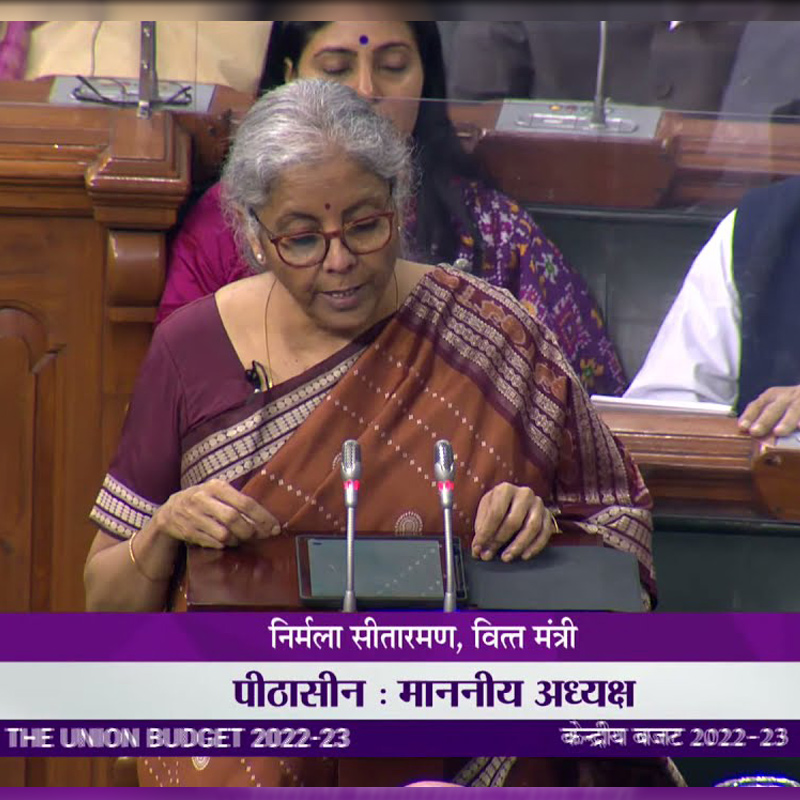
    The annual budget for 2022-23 was presented by finance minister Nirmala Sitharaman in Parliament on Tuesday.

  • Editors Guild of India, PCI condemn attack on Arnab Goswami

    Editors Guild of India, PCI condemn attack on Arnab Goswami

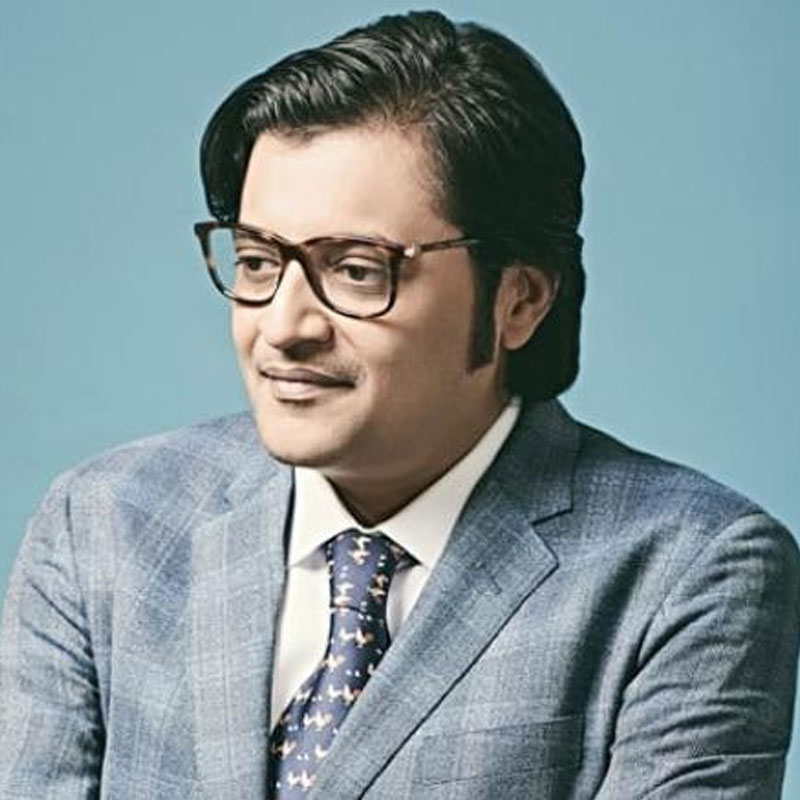
    MUMBAI: The Editors Guild of India (EGI) and Press Council of India (PCI) have strongly condemned the alleged attack on Republic TV’s editor-in-chief Arnab Goswami and his wife Samyabrata Ray by two people on a bike late Wednesday night, 22 April.

    EGI in its statement said: “Any physical attack, instigation for hate or verbal abuse hurled against any journalist is a reprehensible act. The freedom to express one’s views or report facts without any fear or intimidation whatsoever is the most fundamental tenet of journalism.”

    The guild has asked the Mumbai police to book those who had attacked the editor and his wife.

    Goswami, during a live debate show on Monday, resigned from the membership of EGI while discussing the Palghar lynching incident. He accused EGI of promoting fake news by a few media outlets and keeping mum on the recent lynching in Maharashtra’s Palghar district.

    PCI, condemning the attack on Goswami and his wife, said: “Every citizen in the country including a journalist has the right to express their opinion which may not be palatable to many but this does not give anybody the authority to strangulate such voice.”

     “Violence is not the answer even against bad journalism,” it said and urged the state government to apprehend the perpetrators of the crime and bring them to justice immediately.

    “While taking suo motu cognisance in the matter, the PCI’s chairman has directed the government of Maharashtra, through the chief secretary and commissioner of police, Mumbai to submit a report on the facts of the case at the earliest,” the statement reads.

  • Comment: MIB’s botched whip on fake news akin to testing waters

    Comment: MIB’s botched whip on fake news akin to testing waters

    With the scourge of fake news rampant globally, any attempt to counter it is always a welcome move. And just for that India’s Minister of Information and Broadcasting Smriti Irani cannot be faulted even if such a view is radical and would be open to severe criticism-as it was in India over the last few days with a large section of civil society coming down like a ton of bricks on the minister’s assertions on guidelines for TV and print media journalists that proposed punitive penalties for breaching some undefined norms.

    However, the wording of the press statement put out by the government’s PR arm, Press Information Bureau, on behalf of MIB is what raises questions.

    First, the government statements were aimed at “regulating” fake news and not look at avenues to arrest their spread or, as the homoeopathy strand of medicine would do, go to the root cause of the ailment. The intent becomes clear: the aim was not really to find a solution to fake news in the true sense.

    Second, the timing of the guidelines, which were aimed at handing out harsh penalties to government accredited journalists from the print and electronic media, rings some more alarm bells. Though the present BJP-led government’s official five-year tenure ends mid-2019, it is widely expected that the general elections would be held before the tenure comes to an end officially—as is mostly done, but then this government has been known to break many times tested norms-if not as early as late 2018.

    On both these counts, the honourable MIB minister was found wanting and her move was widely dubbed as nothing but an initiative to gag the news media critical of the present government. That the prime minister himself had to step in to order a rollback of the MIB diktat a day later, as officially being stated, is a story in itself.

    Let’s forget for once what some of the journalistic organisations had to say in criticism of the MIB move to cancel accreditation of journalists found peddling fake news, though the definition of fake news was not elaborated, nor was the fact as to why just on a complaint from practically anybody a journalist, whose antecedents are verified by the government annually for security reasons, will be put in the hall of shame even if it’s for varied period of time.

    Two organisations, the Press Council of India (PCI) and the News Broadcasters Association of India (NBA), made responsible to decide whether the complaint on fake news was genuine or not (according to the government statement) have not much legal standing or bandwidth to do so. While the PCI is a (toothless) watchdog for the print medium, the NBA’s self-regulatory mechanism for member-TV news channels hasn’t always worked.

    Now let’s try analysing what could have prompted such a move by MIB-a move that was unveiled seemingly without taking into confidence the PM and his office.

    It’s a known fact in India, in sharp contrast to other global markets, that a TV news channel here is started, more often than not, to flaunt one’s status symbol and increase the owner’s powers (both politically and financially) rather than being a pure journalistic means. That is not saying there are no exceptions to the rule and India has some very fine and professional news channels, which daily go through the grind of living up to the high standards of journalism. But, what explains the fact that 25-30 per cent of the total 900-odd permitted TV channels in India would fall in the news and current affairs genre? And they come in all shapes, sizes and languages. If the big guns of the news and current affairs genre mostly have scarlet bottom lines, it goes without saying that the smaller news channels are barely churning out revenue. No other country in the world has so many TV news channels.

    In a year that will lead to general elections-a period after the elections are announced is when cacophony on TV news channels start peaking-clamping down on news outlets cannot be considered a bad strategy; especially when one is not used to hear criticism. Artificial barriers become natural armours. Putting on hold future permission to TV channels by the MIB till a new policy on uplink/downlink is put in place after regulator TRAI’s recommendations is one such clampdown. But then trying to gag the news media as a whole need to be thought out and well orchestrated instead of merely announcing one evening some guidelines under the garb of attempting to regulate fake news.

    And why regulate fake news? Does that mean some fake news could have been allowed, while filtering out the more damaging ones? More importantly, why target those journalists for fake news who are accredited by the government? Did that mean that non-accredited journalists, which are in huge numbers, would have been allowed to dabble in fake news? Considering most news websites and many online ventures that pretend to deal in news but hand out mostly tainted views are not accredited with the government, either at the federal or State level, the question arises whether they would have been allowed to peddle fake news? In India, fake news is more rampant on social media platforms and little known online ventures than in mainstream media.

    But Ms. Irani and her set of advisors again cannot be faulted to try regulating the news media. From the days of the infamous Emergency unleashed by then Prime Minister Indira Gandhi in the mid-70s to her son Rajiv Gandhi in the late 1980s and few other successive governments of post-independent, India has tried to muzzle at some time or other the not-so-perfect-yet-a-vibrant media of the country. Not only such moves have backfired, including the dark days of the Emergency, but in many cases the then governments had to beat a retreat in the face of stiff opposition to any such move. So much so, folklore in the complex realm of Indian politics says that all governments that tried to regulate media in any form bit the dust and were booted out of power.

    In the mid to late 1990s, just before the first NDA government came to power under Prime Minister A B Vajpayee, the then government had tried to bring in Parliament a Broadcasting Bill, envisaging wide-ranging limits to media businesses, including cross-media restrictions of ownerships. That government didn’t remain in power to see through the proposed legislation. However, that didn’t stop other governments, including the Congress-led coalitions that ruled for 10 years after 2004, to attempt limiting media independence. Manish Tiwari, a former MIB minister in 2013, had famously proposed a common examination for journalists as the minister thought media personnel were not qualified enough.

    Cut to 2018. The storm may have blown over for the time being, but for the media to sit back and relax could be dangerous. Simply because the present government is unlike any those in the past. To take satisfaction from an explanation that the PM was totally unaware of one of his minister’s moves to gag the media could be a bad strategy for the media industry. The government was just testing the waters.

    Also Read :

    PMO directs MIB to withdraw guidelines on fake news

    MIB nod to TV channels on hold till TRAI uplink, downlink suggestions

    Smriti Irani tweets industry body advisory urging restraint by TV news channels
  • PMO directs MIB to withdraw guidelines on fake news

    PMO directs MIB to withdraw guidelines on fake news

    MUMBAI: The Prime Minister’s Office (PMO) has ordered the withdrawal of guidelines to crack down on journalists responsible for distributing fake news, a senior government official said today.

    “The prime minister has directed that the press statement regarding fake news be withdrawn and the matter be addressed in the Press Council of India,” a senior official in Modi’s office told news agency Reuters. No reason was given.

    On Monday, the Ministry of Information and Broadcasting (MIB) had issued a statement stating that noticing increasing instances of fake news in various mediums, including print and electronic, the guidelines for accreditation of journalists have been amended with penalties and punishment factored in.

    “On receiving any complaints of instances of fake news, the same would get referred to the Press Council of India (PCI) if it pertains to print media and to News Broadcasters Association (NBA) of India if it relates to electronic media for determination of the news item being fake or not,” the MIB statement had said, adding that the process would be completed within 15 days.

    Even as the government announced amendments in the guidelines for accreditation of print and electronic or TV journalists outlining punishments for breaches on account of fake news, the intention was termed by stakeholders as debatably honourable but an indirect way to muzzle media freedom.

    Welcoming the decision, News Broadcasters Association has issued a statement. The move has been lauded for letting industry bodies such as NBA and Press Council of India(PCI) to decide all Fake News related issues as it was proposed by Smriti Irani earlier.

    Also Read: MIB issues stringent norms on fake news in TV & print media

  • MIB issues stringent norms on fake news in TV & print media

    MIB issues stringent norms on fake news in TV & print media

    NEW DELHI: Even as the government announced amendments in the guidelines for accreditation of print and electronic or TV journalists outlining punishments for breaches on account of fake news, the intention is being termed by stakeholders as debatably honourable but an indirect way to muzzle media freedom.

    On Monday, the Ministry of Information and Broadcasting (MIB) issued a statement stating that noticing increasing instances of fake news in various mediums, including print and electronic, the guidelines for accreditation of journalists have been amended with penalties and punishment factored in.

    “On receiving any complaints of instances of fake news, the same would get referred to the Press Council of India (PCI) if it pertains to print media and to News Broadcasters Association (NBA) of India if it relates to electronic media for determination of the news item being fake or not,” the MIB statement said, adding the process would be completed within 15 days.

    Once the complaint is registered for determination of fake news, the correspondent/journalist who created and/or propagated the fake news will, if accredited with the government, have the accreditation suspended till such time the determination regarding the fake news is made by the regulating agencies.

    The Accreditation Committee of the Press Information Bureau (PIB, the government’s PR arm), which consists of representatives of both PCI and NBA, shall be consulted for validation of any accreditation request of any news media agency. The punishment for peddling fake news ranges from suspension of accreditation for a period of six months in the case of first violation to permanent cancellation on third violation.

    While examining the requests seeking accreditation, the regulatory agencies will examine whether the ‘Norms of Journalistic Conduct’ and ‘Code of Ethics and Broadcasting Standards’ prescribed by the PCI and NBA, respectively are adhered to by journalists as part of their functioning. It would be obligatory for journalists to abide by these guidelines, the government statement said.

    However, a section of the news media dubbed the government move as an indirect way to muzzle media freedom in the run-up to the general elections in the country either in late 2018 or early 2019. A meeting of various journalists’ organisations is likely to be held on Tuesday in the capital to take stock of the situation.

    The present BJP-led government in New Delhi completes its five-year term mid-2019.  

    ALSO READ:

    MIB nod to TV channels on hold till TRAI uplink, downlink suggestions

  • Action taken in 75 complaints of violations by TV channels in last three years, Govt not considering independent mechanism

    Action taken in 75 complaints of violations by TV channels in last three years, Govt not considering independent mechanism

    NEW DELHI: The Government has reiterated that there is no proposal under consideration of the Information and Broadcasting Ministry for an independent broadcasting media authority/separate mechanism in the country for complaints relating to media

    I and B Minister Arun Jaitley told Parliament that the adequate provisions in the form of various Acts / Rules / Regulations/ Guidelines already exist with regard to print and electronic Media.

    He also referred to the Inter-Ministerial Committee for TV channels, self-regulatory bodies Broadcasting Content Complaints Council (BCCC) headed by retired Judge Mukul Mudgal for general entertainment channels, the News Broadcasting Standards Authority for news television channels, the Consumer Complaints Council (CCC) of the Advertising Standards Council of India (ASCI), and the Press Council of India for print media.

    The BCCC took action in a total of 5036 cases between 2013 and 2015, while the NBSA took action in 1464 complaints between 2012-13 and 2014-15.  

    Thus BCCC had 2298 complaints in 2015, 1791 in 2014 and 947 in 2014. The NBSA -had 110 complaints in 2014-15, 1143 in 2013-14, and 216 in 2012-13  

    Action was taken in 75 complaints relating to violation of Programme or Advertising Codes for Television channels, while the Press council of India heard 521 complaints between 2012-13 and 2015-16.

  • Action taken in 75 complaints of violations by TV channels in last three years, Govt not considering independent mechanism

    Action taken in 75 complaints of violations by TV channels in last three years, Govt not considering independent mechanism

    NEW DELHI: The Government has reiterated that there is no proposal under consideration of the Information and Broadcasting Ministry for an independent broadcasting media authority/separate mechanism in the country for complaints relating to media

    I and B Minister Arun Jaitley told Parliament that the adequate provisions in the form of various Acts / Rules / Regulations/ Guidelines already exist with regard to print and electronic Media.

    He also referred to the Inter-Ministerial Committee for TV channels, self-regulatory bodies Broadcasting Content Complaints Council (BCCC) headed by retired Judge Mukul Mudgal for general entertainment channels, the News Broadcasting Standards Authority for news television channels, the Consumer Complaints Council (CCC) of the Advertising Standards Council of India (ASCI), and the Press Council of India for print media.

    The BCCC took action in a total of 5036 cases between 2013 and 2015, while the NBSA took action in 1464 complaints between 2012-13 and 2014-15.  

    Thus BCCC had 2298 complaints in 2015, 1791 in 2014 and 947 in 2014. The NBSA -had 110 complaints in 2014-15, 1143 in 2013-14, and 216 in 2012-13  

    Action was taken in 75 complaints relating to violation of Programme or Advertising Codes for Television channels, while the Press council of India heard 521 complaints between 2012-13 and 2015-16.

  • Media protests on streets; Press Council of India demands police report on attacks on scribes

    Media protests on streets; Press Council of India demands police report on attacks on scribes

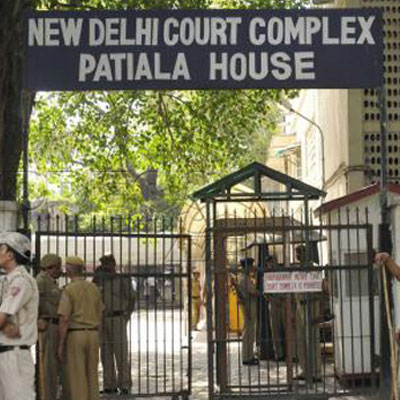
    NEW DELHI: Reiterating that attacks on journalists discharging their professional duties was not acceptable, the Press Council of India has sought a report from the Delhi Police regarding the assault on media persons in the Patiala House Court complex.

    “Our view is that attack on journalists doing professional work is not at all acceptable. I have sought a report today,” PCI chairperson Justice (retd) C K Prasad said.

    The events at Patiala House court resulted in a massive outrage and top editors of national media and hundreds of journalists yesterday demonstrated on the streets demanding action against those involved in beating up members of their fraternity in police presence and sought Supreme Court’s intervention in protecting freedom of speech.

    The journalists shouting slogans against the Modi Government and Delhi Police marched from Press Club of India to the Supreme Court and submitted a memorandum to its Registrar seeking cancellation of licences of lawyers involved in the assault.

    Earlier both the News Broadcasters Association and the Delhi Union of Journalists have issued statements condemning the attacks.

  • Media protests on streets; Press Council of India demands police report on attacks on scribes

    Media protests on streets; Press Council of India demands police report on attacks on scribes

    NEW DELHI: Reiterating that attacks on journalists discharging their professional duties was not acceptable, the Press Council of India has sought a report from the Delhi Police regarding the assault on media persons in the Patiala House Court complex.

    “Our view is that attack on journalists doing professional work is not at all acceptable. I have sought a report today,” PCI chairperson Justice (retd) C K Prasad said.

    The events at Patiala House court resulted in a massive outrage and top editors of national media and hundreds of journalists yesterday demonstrated on the streets demanding action against those involved in beating up members of their fraternity in police presence and sought Supreme Court’s intervention in protecting freedom of speech.

    The journalists shouting slogans against the Modi Government and Delhi Police marched from Press Club of India to the Supreme Court and submitted a memorandum to its Registrar seeking cancellation of licences of lawyers involved in the assault.

    Earlier both the News Broadcasters Association and the Delhi Union of Journalists have issued statements condemning the attacks.