Tag: Press Council

  • Ad self-certification: Industry requests MIB to postpone implementation

    Ad self-certification: Industry requests MIB to postpone implementation

    Mumbai: For most in the media industry, 18 June appears to be a very ominous day. Four days from now, agencies and brands will have to ensure that every advertisement – whether created for print, internet, radio or for TV – is put through a process of self-certification with the portals https://new.broadcastingseva.gov.in or https://presscouncil.gov.in.

    In fact, so stressed are they with the impending date that the Indian Society of Advertisers (ISA) has petitioned the ministry of information and broadcasting to postponed the self certification process as, citing issues such as delays in uploading to the portals..

    In a letter to the MIB secretary Sanjay Jaju on 12 June, ISA chairman Sanjiv Kataria has expressed the industry’s support to the initiative, but has asked for deferment of the date until the supreme  court hears their concerns about the latter’s order passed on 7 May 2024. The ministry has made it mandatory for advertisers/agencies to self certify  ads, and for publisher/broadcasters s to ensure they collect the certificates before publishing or telecasting any ads from clients.

    Kataria in his letter has pointed out to issues such as a lack of security for the uploads, lagging, slow uploads, challenges in OTP generation, file size limitation of 1 MB for every creatve, signing authority for each creative, duration of validity of the certification, whether every language version,  social media message, tweet, reel, AFP, brand integration needs to be certified – among many other areas where there is a lack of clarity. Please see attachment with this story for the issues raised by the ISA.

    Urgent Request to Postpone Implementation of Self-Declaration Process

    Industry veterans have welcomed the move by the supreme court and the MIB to self certify ads and marketing communications. Says former ad executive and former CEO of Star India Peter Mukerjea: “The industry brought this on themselves by some advertisers making wild, inaccurate , insane, irresponsible claims about all kinds of stuff – agencies not following an ethical or moral standard, creatives making a mockery of features including sometimes potentially life threatening behaviour and chucking in celebs to popularise the messaging ! (Eg SRK driving a  car like a nut case in and out of  lanes and so on, not to mention Patanjali and any number of such ) . ASCI turned a blind eye and is almost irrelevant. Personally Im glad this speed breaker has been put in place to reawaken society to ‘responsible communication’ at multiple levels. Sadly they’ve left out ‘outdoor’ ! ( I’m sure it will get added ).  Well done Honble SC. “

    The ISA was awaiting the MIB’s response at the time of writing of this report.

  • NBA, DUJ condemn AAP’s remarks about media

    NBA, DUJ condemn AAP’s remarks about media

    NEW DELHI: The News Broadcasters Association (NBA) has expressed shock at what it described as ‘the unverified and objectionable’ allegations being made by Aam Aadmi Party leader Arvind Kejriwal and his associates against news television channels. The leaders of AAP have been alleging that news channels have been “paid” by rival political parties to drive their agenda in the run up to the general elections.


    NBA has reminded Kejriwal and his associates that the electronic media is independent and is discharging its responsibilities in a fair, transparent and balanced manner and urged AAP not to hurl unsubstantiated and unverified charges at the electronic media.


    NBA requested Arvind Kejriwal, the convener of AAP, to immediately refrain from making such preposterous allegations failing which NBA members would be forced to reconsider coverage of the activities of the Aam Aadmi Party.


    The Ethics Council of the Delhi Union of Journalists also condemned both repeated vile sniping against select media channels and the equally venomous threats to select media by the AAP.


    It said the DUJ is deeply concerned at the falling standards of objectivity in media coverage of the current elections by some TV channels, working on the assumption that they are key players in deciding who will rule the country.


    Sensationalism and hype are very evident these days in election reporting, particularly in coverage by television channels and other electronic media. Attempts to influence and manipulate the media through various means are also in evidence.


    The DUJ said: “As journalists, we cannot condone the AAP Party’s strong language against the media in various papers on 15 March but we also recognise that the media itself loses credibility if it carries paid news and biased views. Hence we demand an impartial inquiry by the Election Commission into the allegations made into the election coverage so far.”  


    The Press Council too must objectively examine the election coverage to detect any irregularities rather than just issue guidelines which these days are not followed.


    The DUJ further demanded that the Election Commission conduct an impartial inquiry into the ostensibly objective election polls being flashed by various media. The allegations of manipulation of poll results on behalf of various political parties need to be addressed.


    The DUJ added that the economic crisis has made the media, particularly the electronic media, vulnerable to influence from big advertisers. It is well known that the election propaganda budgets of the two main political parties are enormous and that much of this money is being fuelled into the media, whether in the form of advertising or otherwise. Some other parties also have substantial budgets for media campaigns. The spate of government advertising over the past months has been clearly aimed at influencing the voting patterns in favour of the ruling party.  The increasing ownership of media by powerful corporate houses is also adversely influencing the media’s objectivity.          


    DUJ president Sujata Madhok and General Secretary S K Pande said: “We uphold the right of all journalists to report news and views freely and fearlessly. We call for greater vigilance within the media to ensure that the highest standards of professionalism prevail.”

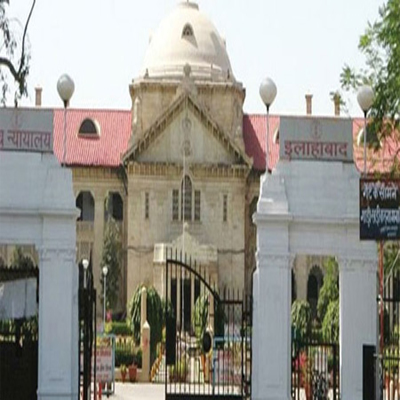
  • Allahabad HC asks government to form statutory forum for complaints against electronic media

    Allahabad HC asks government to form statutory forum for complaints against electronic media

    NEW DELHI: The Allahabad High Court has said that the government needs to provide a statutory forum for electronic-media where people can both approach and ventilate their grievances.


    In the petition filed by social activist Dr Nutan Thakur, Justice Devi Prasad Singh and Justice Ashok Pal Singh of the Lucknow bench said for any misconduct committed by the print media statutory forum is available in the form of Press Council of India but no such forum is available for the electronic media.


    The court felt that no such statutory forum is available and this does not seem to be proper in a country which is run by the rule of law and governed by the democratic polity and hence the union needs to provide statutory forum for electronic-media.

    The order said electronic media immediately affects peoples’ mind and it is well established that paid news items are often used by the media, which is an instance of abuse of power. Hence, prima facie electronic media should also be regulated and supervised by a statutory autonomous forum like the Press Council and the government should have provided some statutory forum to redress the grievance of the news items or other items of the electronic media.

    The order said electronic media immediately affects peoples’ mind and it is well established that paid news items are often used by the media, which is an instance of abuse of power. Hence, prima facie electronic media should also be regulated and supervised by a statutory autonomous forum like the Press Council and the government should have provided some statutory forum to redress the grievance of the news items or other items of the electronic media.


    The court directed the government to file an affidavit bringing on record its stand on this issue, within four weeks.


    The petition had been filed against the Information and Broadcasting Ministry and the News Broadcasters Association.

    The court noted: ‘Though prima facie against the decision taken by the non-statutory body, the writ petition seems to be not maintainable but we are of the view that keeping in view the public importance of the question raised by the petitioner in person for creation of some statutory forum where the people may address their grievance, the writ petition is admitted.’ 

  • Press Council chief wants TV to be under its ambit

    Press Council chief wants TV to be under its ambit

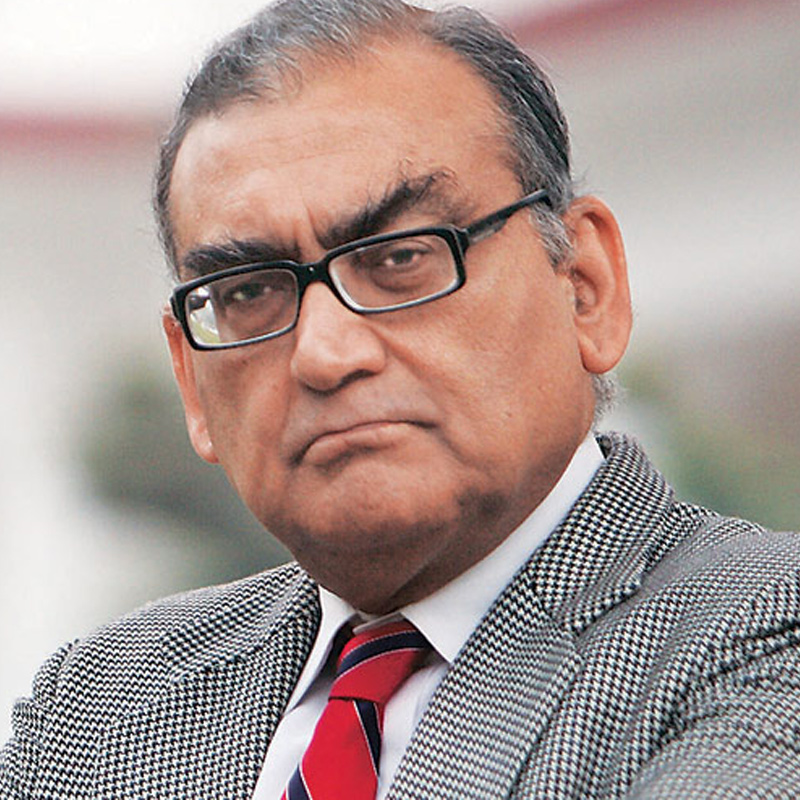
    NEW DELHI: Justice Markandey Katju, the new chairman of the Press Council of India, has urged Prime Minister Manmohan Singh that the electronic media should be brought under the purview of the Council.

    Reiterating a demand made over a decade earlier that the Press Council of India should be renamed Media Council of India, he has also sought more penal powers, though, he said these powers would be used sparingly.

    He has received a reply from the PMO that the matter is “under consideration”, and it is learnt that the letter has been forwarded to the Information and Broadcasting Ministry for comment. 
       
          
    The former Supreme Court judge has also asked the union government to defer its move to amend the rules relating to renewal of license for TV news channels for violating the Broadcasting Code.

    Among other things, he wants powers to stop government advertisements and powers to suspend the licence of a news media for some time if it behaves in an ‘obnoxious‘ manner.

    In an informal chat with newspersons, he said he had also met Opposition leader Sushma Swaraj who felt that there could be a “consensus” on the demands.

    Asked if this would not mean a threat to the freedom of the media, he said, “Everybody is accountable in a democracy. No freedom is absolute. Every freedom is subject to reasonable restrictions.”

    He expressed the view that TV debates were frivolous, and there was no discipline among panellists. He candidly said he had a very poor opinion of the media.

    But “harsh measures” against the media should be resorted to only in extreme situations.

    He wanted the Council to discuss the issue relating to renewal of licences of news channels.

    Meanwhile, the the 71-page report of the Press Council Committee of Paranjoy Guha Thakurta and Sreenivas Reddy on paid news had been uploaded on the website of the PCI following the directions of the Central Information Commission. But the Council had added the disclaimer that it had rejected the report. 

  • Press Council accepts Sebi mandate for stake disclosure by media firms under private treaties

    Press Council accepts Sebi mandate for stake disclosure by media firms under private treaties

    MUMBAI: In a bid to safeguard journalistic standards, the Press Council of India has accepted some suggestions made by the Securities and Exchange Board of India (Sebi) that make it mandatory for media companies to disclose any interest or stake in the corporate sector under the garb of ‘Private Treaties’. 

    The Press Council said that the media companies should make disclosures regarding stakes held by them in the news report/ article/ editorial in newspapers/television relating to the company in which the media group holds such stake.

    The Press Council also said that disclosures on percentage of stakes held by media groups in various companies under such ‘Private Treaties’ be made on their websites.

    Any other disclosures relating to such agreements such as any nominee of the media group on the Board of Directors of the company, any management control or other details which may be required to be disclosed and which may be a potential conflict of interest for media group, should also be mandatorily disclosed, it said.

    India’s stock market regulator, Sebi, had taken a note of the practice of some media groups to enter into agreements with companies. Sebi observed that typically such arrangements are with companies which are listed or which proposes to come out with public offerings.

    “These, in general, entail a company giving stake in it (shares, warrants, bonds etc.) in return for media coverage through advertisements, news reports, advertorials etc. in the print or electronic media,” Sebi said.

    Taking the situation seriously, Sebi felt that such agreements may give rise to conflict of interest and may, therefore, result in dilution of the independence of press. “This may consequently compromise the nature, quality and content of the news/editorials relating to such companies. Needless to say, biased and motivated dissemination of information, guided by commercial considerations can potentially mislead investors in the securities market. Such journalism would not be in the interest of securities market,” Sebi said.

    In a statement on its site, Sebi said, “Given its legal mandate to protect the interest of investors, Sebi felt that such brand building strategies of media groups, without appropriate and adequate disclosures may not be in the interest of investors and financial markets. There are prescribed norms of journalistic conduct that require journalists to disclose any interest that they may have in the company about which they are reporting.”

    However, the Sebi note mentioned that there are no equivalent requirements in the case of media companies holding a stake in the company which is being reported or covered.

    “This news does not impact valuations but does increase the credibility of business news reporting manifold. It is a very important and necessary step taken by Sebi and accepted by the Press Council of India. This will ensure that large media groups who have scores of investments do not use their media platform for personal gains and the integrity of news reporting is maintained,” a research analyst said.

  • Press Council wants larger ambit to deal with paid news

    Press Council wants larger ambit to deal with paid news

    NEW DELHI: The Press Council of India has demanded that it should be reconstituted with members from the electronic and other media if it has to check the paid news syndrome.

    In its report dated 30 July, the PCI also wanted the Press Council of India Act 1978 to be amended to give it more powers to make its recommendations binding, and for empowering it to adjudicate the complaints of paid news and give final judgment in the matter.

    Parliament was informed by Information and Broadcasting Minister Ambika Soni that the Representation of the People’s Act 1951 should be amended to make incidence of paid news a punishable electoral malpractice.

    It has recommended that the Election Commission should set up a special cell for action against complaints about paid news.

    While recommending self-regulation by the media to check the menace, the PCI said the guidelines drawn up by it earlier on coverage of elections should be adhered to by the media organisations.

    Voters should be educated to enable them to differentiate between paid news items from genuine news, and there should be awareness generation amongst the stakeholders.

    At the outset, the Council has defined paid news as “any news or analysis appearing in any media (print and electronic) for a price in cash or kind as consideration.”

  • Press Council report on paid news syndrome next week

    Press Council report on paid news syndrome next week

    NEW DELHI: Minister of State for Information and Broadcasting C M Jatua has assured Parliament that the government will take action to tackle the problem of paid news based on the recommendations of the Press Council of India.

    The Council is expected to firm up its views on the malaise of paid news syndrome by the end of this month, as it is expected to meet on 26 April to discuss the issue.

    According to Information and Broadcasting Ministry sources, the Sub-Committee set up by the Council to study the malaise has already finalised and given its report to the Council.

    The Sub-Committee had also met representatives of the Indian Newspapers Society and the Indian Language Newspapers Association. Meetings were also held in Mumbai and Hyderabad apart from Delhi to meet stakeholders. The representatives of the Andhra Pradesh Union of Working Journalists named six newspapers, carrying numerous paid news stories.

    The Sub-Committee was set up following a drive launched by the Editors Guild of India against paid news in December 2009.

    In a meeting, representatives of the Election Commission had asked the Council to define what constituted “paid news” so that expenditure incurred by the political parties and the candidates can be made accountable.

  • News as trivial pursuit

    News as trivial pursuit

    We have been rising to majestic heights in our indignation over the proposed Broadcast Bill. Control us? The mature, responsible, credible Indian media? Curtail our freedom? Nonsense! And then we are outed by the police. A fake ‘sting operation’ by Live India (née Janmat) TV ‘exposed’ Delhi schoolteacher Uma Khurana supplying schoolgirls for prostitution. A lynch mob attacked Uma and the police clapped her in jail. The drama was dutifully recorded by the media. Uma was swiftly sacked. A week later, we hear that she had been framed.


    How shocking, said the media, but it’s an exception. We still don’t need your content code, thanks, we know what’s best. Keep your blipping Broadcast Bill away from us.


    However, voluntary self-regulation is tricky. Maybe the Press Council of India should be expanded to include TV and radio and given some teeth – dentures would do – to effectively regulate the media. For as a mortified media professional I have to admit that this scam is not an isolated example of the media’s bad behaviour. Our determined move from news as information to news as entertainment has blurred both our vision and the once inviolable line between reality and drama. Now we offer gossip, titillation, trivia and unreal aspirations as news, brushing aside boring issues of social concern, trampling sensitivities, infringing privacy, tossing aside ethics and humanity in our effort to be the hottest honey-trap available.


    Media as a trivial pursuit erodes public trust
    _______________****__________________

    Take some big stories of the recent past: Uma is framed, ex-model Gitanjali is re-discovered as a beggar, athlete Santhi Sounderajan apparently attempts suicide, freed Sanjay Dutt goes to Vaishno Devi, freed Salman Khan goes home, and MPs and journalists continue to pick bones with Ronen Sen’s ‘headless chicken’. Meanwhile, floods claim almost 700 lives and affect millions in Bihar, and displace over 70 lakh in Assam; farmers continue to kill themselves in Maharashtra, Andhra Pradesh, Karnataka and Kerala. We gave them short, customary coverage like brief, dutiful visits to elderly aunts, and returned quickly to our riveting game of trivial pursuits.


    Unfortunately, the freedoms we enjoy are for our role in educating and informing our audience, for helping them make informed choices that sustain democracy. Media as a trivial pursuit erodes public trust.


    We urgently need self-regulation by a representative body like the Press Council to get back to being a responsible and ethical media
    _____****_____

    And Live India’s scam is not even journalism, it is a criminal act of misrepresentation, using media as a weapon for personal vendetta, fabricating footage to wilfully defame and destroy a victim and incite violence. It doesn’t merit another debate on sting operations, this was not one. It needs to be dealt with as a crime.


    But the other examples represent bad journalism. Former model Geetanjali Nagpal is spotted begging in Delhi. Instantly, she is headline news, portrayed as a drug addict. The media rips the last vestige of dignity off the unfortunate woman, invading her privacy, sensationalising, offering details of her private life, presenting speculation as fact. She turns out to be mentally ill, not an addict. We cannot look beyond gossip value, cannot discuss larger issues of mental health, social security or homelessness. (We have an estimated 18 million street kids, plus possibly as many adults as street dwellers, but they aren’t sexy enough.)


    Santhi Sounderajan’s attempted suicide is gossip, too. Headlined as ‘Tainted athlete’ or ‘Sex-test failed athlete’ Santhi’s identity as an excellent sportsperson is erased by that of a curiosity of unspecified gender. After her failed gender test robbed her of her silver medal at the Asian Games last year, our media had shown no sensitivity. Even now, we don’t go beyond the curiosity factor to look at the third sex’s lack of rights and opportunities.


    Ronen Sen’s fowl story illustrates irresponsible journalism again. Getting your source into trouble for the sake of a delicious quote harms the atmosphere of trust and openness essential for constructive journalism. And then, larger issues of strategic partnership were obfuscated as we lost our head over a chicken. It didn’t help citizens to take informed decisions on the nuclear issue. Such frivolous frenzy reduces democratic decision-making to taking sides based on ignorance and muscle-flexing. Besides, it showed an embarrassing ignorance of English idiom. ‘Running around like a headless chicken’ means thoughtless rushing about; it doesn’t imply you’re a chicken. Like ‘as cool as a cucumber’ doesn’t accuse you of being a cucumber.


    Leading you through an exciting maze of trivia and gossip, the media confuses your priorities. So when a lowly constable hugs Sanjay Dutt he is instantly suspended, but no action is initiated against the policemen and politicians accused in the Bombay riots even after 14 years.


    We are losing our grip. We urgently need self-regulation by a representative body like the Press Council to get back to being a responsible and ethical media. We cannot protect our own freedoms unless we protect the freedoms and rights of others.


    (The Author is Editor, The Little Magazine. She can be reached at sen@littlemag.com)


    This article was first published in DNA (Daily News & Analysis) on 11 September 2007.


    (The views expressed here are those of the author and Indiantelevision.com need not necessarily subscribe to the same)