Tag: Press

  • There is a high demand for scripted content on OTT platforms currently: Sameer Gogate

    There is a high demand for scripted content on OTT platforms currently: Sameer Gogate

    Mumbai: BBC Studios, the production arm of BBC group, has emerged as the preferred partner for over-the-top (OTT) platforms to create premium shows. It has partnered with OTT platform Zee5 for its latest release The Broken News directed by Vinay Waikul and starring Sonali Bendre, Jaideep Ahlawat and Shriya Pilgaonkar. “The demand for scripted content on OTT platforms is extremely high right now and we’ve been servicing that demand,” remarks BBC Studios general manager Sameer Gogate.

    BBC Studios has gotten off to a strong start to the year with its Disney+ Hotstar series Rudra: The Edge of Darkness marking Ajay Devgn’s OTT debut. Now, it is backing Sonali Bendre’s OTT debut with The Broken News. The studio first partnered with Zee5 for the Telugu-language thriller Gaalivaana directed by Sharan Koppisetty and starring Sai Kumar and Radhika Sarathkumar. The studio will continue its association with Zee5 by building its slate of Hindi originals across genres.

    In terms of new projects, the studio is working with Amazon Prime Video for an unnamed project and Voot for Kaisi Yeh Yaariaan season four which has begun filming. It is also expecting the release of Hotstar Special Criminal Justice season three in the coming months.

    “We’ve got a fairly busy slate this year and there are a few more projects I can’t announce yet because the OTT platform would like to announce it first,” says Gogate. He reveals that the studio is working on another project with Disney Star.

    After a silent period in the TV production space, the studio is returning to work on a upcoming dance reality show. While the studio is mostly working on OTT projects, Gogate expects this trend could change in the next couple of years.  

    The Broken News is based on a UK series called Press, created and written by Mike Bartlett. While the original show was written for print media, BBC Studios India adapted the format for the broadcast news industry. “The show (The Broken News) highlights the role of the news producer who is the earpiece of the news editor. There’s a lot of work that went into the writing in terms of visiting news studios, meeting with anchors and catching up with news reports. The story is a reflection of what’s happening in society and thankfully when we pitched it to Zee5, they took it up right away,” recalls Gogate.

    In the past, BBC has created the shows What The Love Netflix and Sons of the Soil for Prime Video. It has also worked on Out of Love seasons one and two for Disney+ Hotstar. As subscription driven streamers increase investments in original content in India, they’re on the lookout for production partners who can deliver premium shows that can help them differentiate from the clutter.

    “By virtue of being a studio with a strong lineage and brand, we’ve been able to put up big productions that have been successful,” says Gogate. “I’m fortunate to have an experienced team that can mount big shows and handle that pressure which helps me sell more content to OTT platforms.”

    Gogate is keen to work with all the subscription OTT platforms in the country including players like SonyLIV, Netflix, HBO Max and Lionsgate Play.

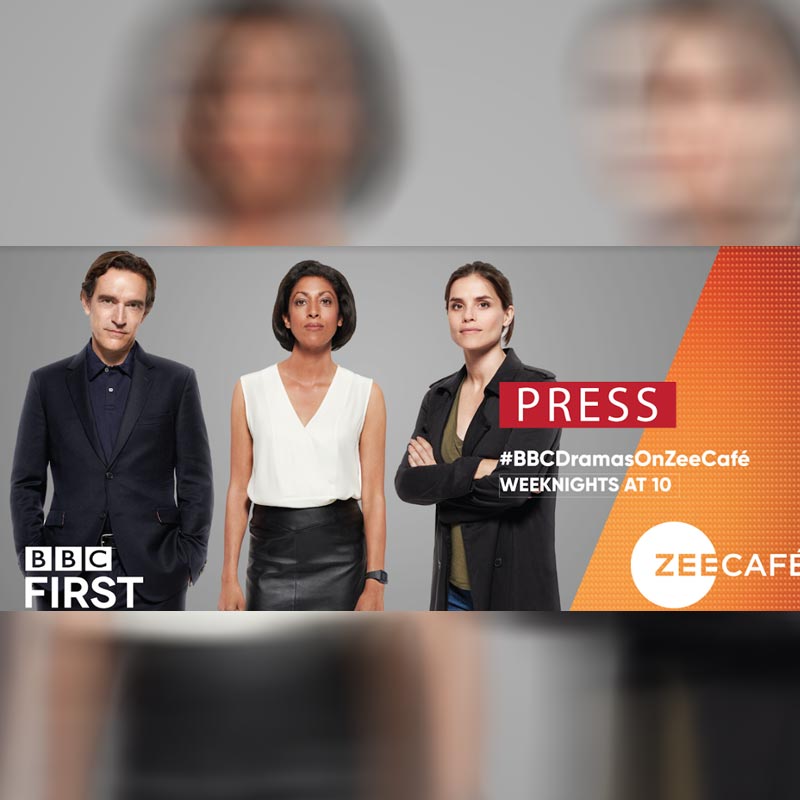
  • Witness the cut-throat rivalry between two media houses with the BBC First drama ‘Press’

    Witness the cut-throat rivalry between two media houses with the BBC First drama ‘Press’

    MUMBAI: A story of two media companies conflicting about whether news is entertainment or the path to seek out truth, Press is a drama series about by-the-book journalists and journalism; the atmosphere promises to be electrifying. It is an immersive story that gives you an exclusive peak behind the veil of journalists and their quirks. One that many of us have been waiting for!

    Watch Press only on Zee Café from 17th September at 10.

    Highlights of the show:

    A stellar depiction of the cut-throat rivalry behind the news of the day
    A cross between old-fashioned journalism and digital revolution in a compelling plot
    An edgy drama series of left-leaning broadsheet that battles a sensational tabloid to break the real stories
    IMDB: 7.3

  • Government has no intentions to impose any regulations on the media: Javadekar

    Government has no intentions to impose any regulations on the media: Javadekar

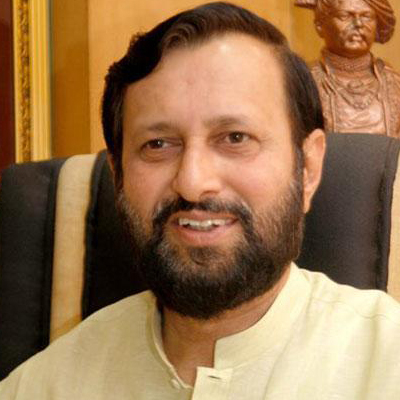
    NEW DELHI: Newly appointed Information and Broadcasting Minister Prakash Javadekar said today that freedom of the press is the cornerstone of a democracy and his first aim in his new portfolio will be to find ways to strengthen this freedom.


    Speaking soon after taking charge of his portfolio, the Minister said that the media and politicians must work together to highlight the problems of the people and bring them before the government.


    Describing himself as ‘just a soldier’, he said he had always stood for freedom of the press and had suffered a 16-month imprisonment during the national emergency in 1975 in this fight as he belongs to a family of journalists.


    Noting that the press has conducted itself in a responsible manner and set up self-regulatory bodies, he said the government would not impose any regulations on the fourth estate.


    The media in its present form gives a ‘rainbow of choices’ and even dissent has its own place in a democratic system of functioning. Constructive criticism is therefore welcome.


    Asked about the frictions with Prasar Bharati, Javadekar said he had not had time to study the issues yet but would like to work in partnership with all the autonomous media units including Prasar Bharati.


    He said in reply to a question that he did not agree with his immediate predecessor that there was no need for an Information and Broadcasting Ministry in the present context.


    Referring to social media, he said that while it presently came under the Information Technology Act, but he would study it and see how it can be helped. He said he would meet all the officials of the Ministry, understand the issues involved and then make some suggestions to the Prime Minister.


    Soon after meeting the media, he met senior officials of the Ministry and also media units, apart from Prasar Bharati CEO Jawhar Sircar and Director of Film Festivals Shankar Mohan.


    Contrary to expectations, Prime Minister Narendra Modi has not upgraded the post of Information and Broadcasting to cabinet rank.


    Like his immediate predecessor Manish Tewari, Javadekar will be a Minister of State with independent charge of Information and Broadcasting Ministry. (He has also been given charge of Environment and Parliamentary Affairs). However, he has ample experience as far as dealing with the media and its problems are concerned, since he like Tewari has served as party spokesperson for the past few years.


    Javedekar has also been one of the nominated members from Parliament to the Press Council of India and hence has dealt with media issues such as paid news. A member of the Rajya Sabha from MaharashtraJavadekar was born in Pune on 30 January 1951 and became associated with the Akhil Bharatiya Vidyarthi Parishad in his young days.


    He commenced his professional life as an employee in the Bank of Maharashtra for 10 years from 1971 to 1981 and also worked in the Rural Development Department.


    His father Keshav Krishna Javadekar was a senior leader of Hindu Maha Sabha who worked as joint editor of Marathi Daily started by Lokmanya Tilak – Kesari before having stints with some other newspapers like Tarun Bharat and Kaal as journalist. He still occasionally writes his thoughts in some newspapers.


    Javadekar has been president of GLOBE India (Global Legislators Organisation for Balanced Environment); In-charge BJP Economic Forum and Cells related to Economy; President, NOINO (National Organisation of Insurance Officers) and president, KCKU (Khadi Commission Karmachari Union).


    As a member of Parliament, he has served as member of the Press Council of India; the Public Accounts Committee; Standing Committee on Human Resources and Development; Consultative Committee for Ministry of Power; Committee on Subordinate Legislation and Committee on Wakf.


    He has earlier served as executive president of the State Planning Board in Maharashtra (1995–1999); been a  member of the Maharashtra Legislative Council from Pune Division Graduate Constituency for 12 years from 1990; chairman of the Task Force on IT in Maharashtra (1977–1999) and chairman of the Working Group on ‘IT for Masses’ of the central government.


    He has also led a delegation to Boston to negotiate Media Lab Asia Project in 2000.

  • Cable TV digitisation: Parliamentary standing committee meets TV trade in Mumbai

    Cable TV digitisation: Parliamentary standing committee meets TV trade in Mumbai

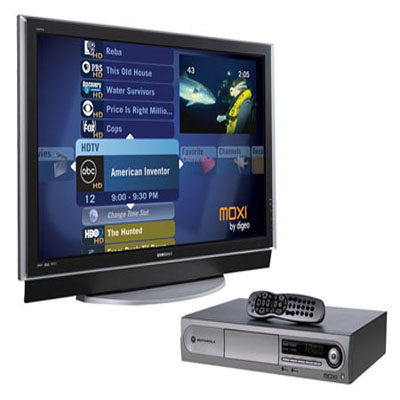
    MUMBAI: There’s been a lot of press and media coverage about the process of cable TV digitisation over the past year or so. Most of it stated has been a mixed bag with opinions about its progress swinging from disastrous to a fabulous rollout. Hence, the political class decided to find out on their own what digitisation has meant for the industry.


    The parliamentary standing committee on information technology – headed by Rao Bhirendra Singh – has been making a whistle stop tour of different regions where digitisation has been implemented. 22 October 2013 saw it landing in Mumbai. Prior to this, it has had stopovers in Rajkot and Ahmedabad as well.


    The various constituents of the TV ecosystem were summoned to update the committee on the pace of digitisation and their individual specific concerns. “Phase I and II have been completed,” says a government representative. “The committee wanted to be apprised of the learnings from the first two phases by the various players and their preparedness for the next round of digitisation which is slated to be completed by December 2014.”


    Each of the players had meetings in camera with the committee and presented their positions. First, the last mile cable operators (LCOs) or last mile operators (LMOs). The Maharashtra Cable Operators Association (MCOF) and Cable Operators and Distributors Association (CODA) represented the LMOs and spoke about the issues faced by them.


    Among the concerns they raised were the fact that they had put in physical labour repeatedly during the process of delivering and installing set top boxes. They stated that it is the LCO which bears the brunt of the cable TV viewer’s ire when channels are switched off by the MSOs. But they were optimisitic about their role in phase III and phase IV.


    “Our representatives said that we want to be active players in these phases and we are happy to know that the government seems to be intent on having a clear way forward,” says a cable TV operator.


    The main bugbear raised by the national and local MSOs – Hathway, DEN, Siti Cable and InCable, apart from others – was the issue of entertainment tax. (Maharashtra and Uttar Pradesh have the highest rates.) Their demand: that the LMOs should be made responsible for collecting and paying this levy. Earlier, in the analogue regime, it was the MSOs who had to carry the burden and it is crippling them.


    Says an executive from a leading MSO: “Once the billing system is in place in a digitised India, LCOs can collect the tax and pay it and give the remainder amount to MSOs.”


    However, an LMO says a better option would be “splitting of bills between MSO and LMO and LMO to subscriber to avoid double taxation for the TV subscriber.”


    Broadcasters and aggregators – represented by the  NBA (News Broadcasters Association), a representative from Sony Entertainment Television, Indiacast, MediaPro and TheOneAlliance. The aggregators strangely stayed mum, while broadcasters harped on the usual complaints of carriage fees, lack of subscription revenues and the heavy dependence on advertising. The conversation also drifted to talks about content on television and how channels need to be careful about their content. “This is a major issue as there is no clarity about how the viewer and broadcaster are going to get value out of digitisation. If there is no elbow room for channelising of money for broadcasters then how are they going to focus on better content,” says a broadcasting industry representative.


    More such meetings are being planned according to industry sources. “Finally, we will prepare a report and submit it to the parliament for review,” says a source close to the committee.


    Hopefully, their reports and inputs will make things easier for all concerned as India’s cable TV ecosystem gears up for its most challenging phase – that of rolling out almost 80 million boxes in small towns and rural India.
    (Inputs from Meghna Sharma and Seema Singh)

  • TRAI recommendations on accreditation of rating agencies accepted: Tewari

    TRAI recommendations on accreditation of rating agencies accepted: Tewari

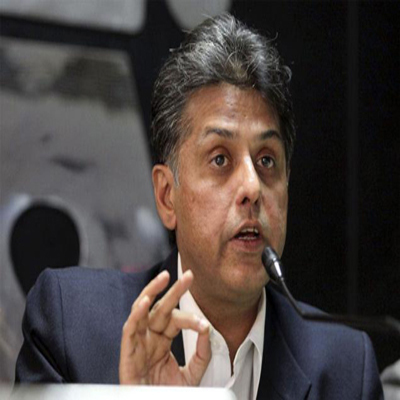
    NEW DELHI: Even as the industry body Broadcast Audience Research Council (BARC) is struggling with its teething problems, the Information and Broadcasting Ministry (I &B) has accepted view of the Telecom Regulatory of India (TRAI) that the minimum number of homes that a rating agency should measure should be 20,000 within six months of the guidelines coming into force, after which the number should be increased by 10,000 every year to reach 50,000.


    Minister Manish Tewari has said that his Ministry would place these guidelines before the union cabinet, a note for which has already been circulated. The Ministry had earlier asked the regulator to provide its guidelines on the issue, after which TRAI had in September released its recommendations including a condition that they be notified within two months.


    He said most recommendations had been “more or less accepted.” “Once we have the cabinet approval, we will notify the guidelines,” he added. Interestingly, Tewari, during his speech, also touched upon the dispute on whether the foreign direct investment should be raised for the print media.  While the Press Council of India (PCI) had submitted its recommendations that the current levels of FDI in print media should be maintained, the Indian Newspaper Society (INS) had favoured raising the limit to 49 per cent. “We are trying to build a political consensus after all media is a sensitive area,” Tewari said.


    The TV audience measurement mechanism has been a subject of controversy in the past with many channels expressing dissatisfaction with TAM ratings.


    Tewari said the amendments to the Press and Registration Books Act were already on the Ministry website and stakeholders’ had sought fresh consultations on issues including ‘paid news’, which had been slated for Tuesday.


    Replying to a question related to setting up of a National Gaming and Animation Centre in Mohali in Punjab, Tewari said there was a problem as it was intended to be a Public-Private Partnership (PPP) but the private sector had not responded.


    He said government was considering a plan to set up the institute with Japanese assistance. Tewari said bills to give special status to Film and Television Institute of India (FTII) and Satyajit Ray Film and TV Institute had been sent to the Law Ministry. He said another proposal to give the status of ‘institute of national importance’ to the Indian Institute of Mass Communication was by and large ready.

  • Reproduce newspapers in electronic form: I&B Ministry

    Reproduce newspapers in electronic form: I&B Ministry

    NEW DELHI: The government intends to bring ‘reproduction of any newspaper in electronic form’ within the ambit of the Press and Registration of Books Act.


    In the amendments proposed to the PRB Act, the Information and Broadcasting Ministry (I&B) has also proposed inclusion of a section which says ‘paid news’ means publishing any news or analysis in the publication for a price in cash or kind as consideration.


    The amendments, which have been placed on the website of the ministry, also says that ‘facsimile edition’ of a publication means an exact replica in full or in part of the original edition of a foreign publication ‘in so far as the contents concerned and may not include title’, subject to the condition that any page is not published in part.


    The government also proposes to establish a Press and Registration Appellate Board to be constituted by the central government, by notification in the official gazette, consisting of a chairperson and another member, to be nominated by the Press Council of India, established under section 4 of the Press Council Act 1978 from among its members.


    It says any dispute relating to registration of newspapers or publications would be referred to a ‘specified appellate authority’ that may be prescribed by the central government.


    Under the amendments, publication means newspapers, magazines, journals or newsletters printed periodically and published in India ‘including its reproduction in electronic form or any syndication, facsimile edition, and Indian editions of periodicals published outside India.’


    While noting that the Press Registrar General will consider all applications of new titles ‘as soon as practicable’, the amendment says an application for a title may be rejected if it is ‘same or similar to that of a known foreign publication’, subject to the proviso that ‘the same or similar title shall not be rejected if the Indian entity seeking the title has a tie-up with the owners of the title of such a foreign publication’.


    The amendment further says that no publication shall be printed and published in India except with the prior approval of the central government granted if such publication is owned by or has investment from any individual who is not an Indian citizen or foreign unincorporated body of individuals or body corporate incorporated under the law of any country other than India.


    Furthermore, the Press Registrar General may reject, after giving the person concerned an opportunity of showing cause against the action proposed to be taken, and holding an inquiry into the matter, if he is satisfied that the publication mentioned in the declaration is found indulging or having indulged in the practice of ‘paid news’, on the basis of adjudication by the Press Council of India or any other quasi-judicial/judicial authority. Till a decision is taken, the Press Registrar General may suspend the publication of such publication.


    Furthermore, any person aggrieved by an order of a specified authority refusing to authenticate a declaration under section 10 or cancelling a declaration under section 19 (l) (a) to (d) may appeal within 60 days from the date on which such order is communicated to him to the Press and Registration Appellate Board and may entertain an appeal after the expiry of the said period, if it is satisfied that the appellant was prevented by sufficient cause from appealing on time.


    The Appellate Board may, after calling for the records from the specified authority and after making such further inquiries as it thinks fit, confirm, modify or set aside the order appealed against. The decision of the Appellate Board shall be final in respect of provisions given in sub section 19(1) (a) to (d).


    Any person aggrieved by an order of the specified authority for suspension of publication under the provision of section 19(1)(e) will still be free to approach a court of law.


    In case of change of name or place of press, a fresh declaration will not be necessary if this information is given to the specified authority within five days.


    It shall be the duty of the publisher, and owner in the absence of the publisher, of every publication ‘to furnish details of the advertisement revenue of the publication as and when asked for.


    Whoever prints or publishes any book or publication otherwise than in conformity with the provision of section 3 will have to explain the reasons for this and to complete the formalities as specified in this section.


    In its penal provision, the government has said that any contravention of sub-section (1) will invite a fine not exceeding Rs 5,000 in addition to suspension of the publication for a period of 30 days.


    Furthermore, whoever owns any press, other than in conformity with the provision of section 4 will have to explain for such activity and to complete the formalities as specified in that section. For contravention of sub section (1), the person shall be liable to a fine not exceeding Rs 5,000 in addition to sealing of the printing press for a period of 30 days.


    The amendment says that ‘In particular and without prejudice to the generality of the foregoing power’ such rules may provide for all or any of the following matters, namely: the period of suspension of the declaration under sub-section (i) of section 19 , and the manner of filing appeals to the specified appellate authority under sub-section (1) of section 20.

  • Darpan Press likely to takeover Ekdin

    Darpan Press likely to takeover Ekdin

    KOLKATA: City-based Chakra Group which runs a daily broadsheet newspaper ‘Ekdin’ from Kolkata, plans to sell the newspaper to Darpan Press, a highly placed media industry source said.

    “Ekdin will be sold again,” the source exclusively told to indiantelevision.com today.
    It should be noted that veteran journalist Suman Chattopadhyay was the founder and the first editor of the newspaper Ekidn. But after Chattopadhyay joined Ei Samay, the Bengali daily by Times group, the daily was being purchased by Chakra Group, he added.

    Publisher and editor Partha Chakraborty could not be contacted even after repeated attempts.

    The newspaper is published from Kolkata, Durgapur and Siliguri.

    As per the distribution department of the broadsheet, the circulation of Ekdin is around one lakh at present.
    Ekdin readers said the content of the newspaper is top-notch and it covers almost all the sections but sometimes it covers too much of state political news to make the administration happy. “However one month ago, it was the only Bengali daily which emphasised to a great extent on business news also,” he said.