Tag: president

  • Srinivasan Swamy re-elected as IAA president

    Srinivasan Swamy re-elected as IAA president

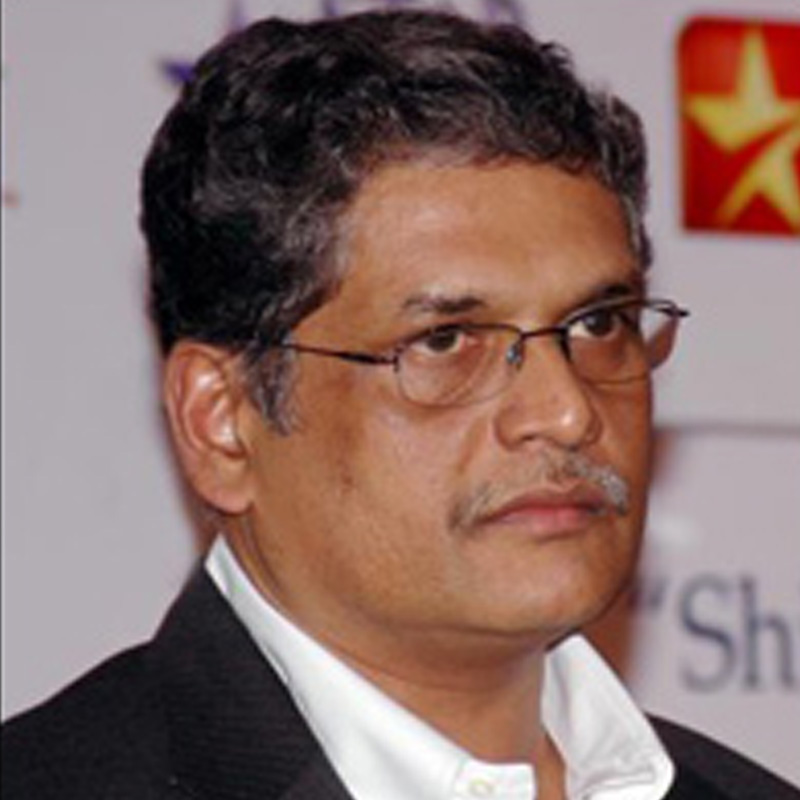
    MUMBAI: R K Swamy BBDO chairman and managing director Srinivasan Swamy has been re-elected as president of India chapter of International Advertising Association (IAA). The announcement was made at the annual general meeting held on 25 September in Mumbai.

    Apart from this, Hungama Digital Media Entertainment MD and CEO Neeraj Roy has been elected as vice president. Jaya Advertising chairman Jaideep Gandhi and HBO India MD Monica Tata have also been re-elected as treasurer and secretary respectively for the year 2013-14.

    “IAA India was on an over-drive in 2012-13 under the leadership of Srinivasan Swamy” said IAA VP & area director Asia Pacific Pradeep Guha.

    “I am happy I was at the helm at IAA when many new initiatives were planned and unfolded. I had a great team who executed much of these programmes with élan. As we move forward, our aim at IAA India is to be seen by IAA Global as the most vibrant of all IAA chapters worldwide. I am sure that recognition is not far,” said Swamy.

    Swamy was co-opted onto the global IAA board in May this year as VP- development, Asia Pacific, as an acknowledgement of the initiatives that were undertaken in the first six months of his presidentship in India.

    The other members of the new managing committee are: Pradeep Guha, Pheroza Bilimoria, Kaushik Roy, Sam Balsara, Raj Nayak, Ramesh Narayan, M G Parameswaran, M V Shreyams Kumar, Kunal Lalani, Avinash Pandey, Arunabh Dassharma, Neville Taraporewalla, Partho Das Gupta, Rajesh Kejriwal and Abhishek Karnani, Manish Advani, Janak Sarda, Vishakha Singh, C V L Srinivas and Atit Mehta.

  • NBA elections conclude; K V L Narayan Rao continues as president

    NBA elections conclude; K V L Narayan Rao continues as president

    MUMBAI: Results of the just concluded elections to News Broadcasters Association (NBA) are out. NDTV executive vice chairperson K V L Narayan Rao retains his post as president for the year 2013-14, making it his fourth term in office after succeeding DEN Founder Sameer Manchanda in 2010.

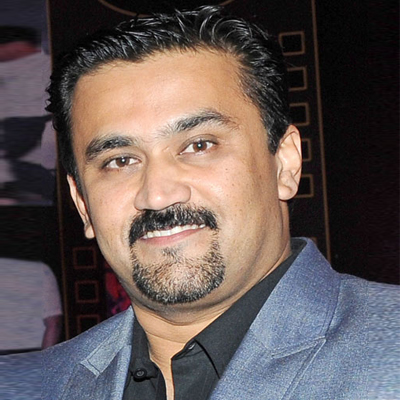
    Similarly, MCCS CEO Ashok Venkataramani, who heads the channels ABP News, ABP Majha and ABP Ananda, continues to be Vice President of the association.

    However, Network 18 Group CEO B Saikumar, touted as India’s youngest entrepreneur, has taken over from his predecessor – TV Today’s Anil Mehra – as treasurer.

    However, it isn’t going to be a smooth ride for Rao. “It is not just an appointment. It is responsibility as well. I hope that I will be able to deliver what the industry wants,” says Rao.

    Efforts are on to convince the TRAI and the government to understand their dilemma with respect to the ad cap that has been stayed by a TDSAT order till 11 November. Other problems news channels are grappling with include carriage fees, DAVP rates, and self regulation of content.

    Meanwhile, TV Today’s new representative is Ashish Bagga as Mehra has decided to step down from the NBA. Other members include Independent News Services chairman Rajat Sharma, Times TV Network CEO Sunil Lulla, Zee News CEO Alok Agrawal, TV Today Network director Ashish Bagga, News 24 Chairperson Anurradha Prasad.

  • Discovery’s Hollinger to step down in June 2014

    Discovery’s Hollinger to step down in June 2014

    MUMBAI: For many broadcast vets in Asia, Mark Hollinger is a familiar face. The president & CEO of Discovery Networks International has pushed growth for the network outside of the US, especially in Europe and Asia in its early days of expansion globally. Come June 2014, Hollinger will no longer be winging it to Asia on Discovery business. The reason: he has decided not to renew his contract with the network when in it expires mid next year.

    The 20 plus year old Discovery veteran informed president and CEO David Zaslav of his decision last week, the network says. What prompted him to do so was the fact that he is tired of the many air miles his job demands in countries in times zones out of kilter with the US (more than 150 days each year for the past several years). Hollinger added that he wants to spend more time staying rooted in Uncle Sam and with family.

    Hollinger joined Discovery in 1991 as Vice-President & Deputy General Counsel. In 1994, he was named Acting General Manager for Discovery Channel Asia. Based in Hong Kong, he was responsible for overseeing and coordinating all activities related to the operation and launch of the flagship network in Asia.

    Hollinger today oversees the strategic development and daily operations for a division that distributes 42 entertainment brands, in 45 languages, to more than 1.6 billion cumulative subscribers in 224 countries and territories across Europe, the Middle East, Africa, Asia-Pacific and Latin America.

    In 2012 and 2013, Hollinger oversaw the expansion Discovery’s international operations with the acquisitions of Takhayal Entertainment and its affiliated companies in Dubai and Egypt, including its flagship TV network, Fatafeat, the No 1 food network in the Middle East; Switchover Media in Italy and its portfolio of four free-to-air channels and one pay-TV channel, making Discovery the third largest broadcaster in the country; and the largest transaction in Discovery’s history with SBS Nordics, a top-three portfolio of television brands across Denmark, Norway, Sweden and Finland that feature leading nonfiction content, locally produced entertainment programs, sports and the best scripted series and movies from major studios. Hollinger also engineered the investment of a 20 per cent stake in TF1’s Eurosport, a top destination for live sporting action for viewers across Europe and Asia-Pacific.

    Said Zaslav: “Mark is a consummate professional and amazing leader who has made a huge impact on all of us at Discovery Communications over the 23 years he has been at the company, and I am so grateful for his contributions, leadership and unwavering integrity.”

    Discovery Communications announced that it would be looking for a successor for Hollinger immediately.

  • TheOneAlliance elevates Makarand Palekar to executive VP – sales & strategy

    TheOneAlliance elevates Makarand Palekar to executive VP – sales & strategy

    MUMBAI: TheOneAlliance (TOA) has elevated Makarand Palekaras to executive VP – sales and strategy for its joint venture network TheOneAlliance – MSMD.

    With over 17 years of multi-brand experience, Makarand in an earlier stint was Sr. VP sales and strategy. His association with MSMD has been for over three years and in his stint with MSMD, Makarand has shown extreme commitment and dedication and played an essential role in shaping the organisation’s prospects. Before joining TheOneAlliance he was heading sales at ESPN-Star Sports since its inception.
    Makarand Palekar looks forward for a challenging role and hopes to live up to the company’s expectations by delivering the business objectives

    Commenting on the promotion TheOneAlliance president Rajesh Kaul said, “It gives me immense pleasure and pride to announce that the board has, very rightly, decided to promote Makarand Palekar to one of the highest levels in the corporate arena. Palekar’s move to the EVP level is a clear indication that he has been instrumental in taking TheOneAlliance to the height where it is today. He has played an important role in growing revenues and contributing to the success for the company.”

    Commenting on his elevation, Makarand Palekar said, “I am extremely delighted that TheOneAlliance-MSMD has given me this opportunity in the new role. I am proud to be associated with the strongest joint venture in the distribution industry which has a bouquet of the premium channels. I am looking forward for a challenging role and hope I can live up to the company’s expectations by delivering the business objectives.”

  • Jeff Daniels tweets ‘The Newsroom’ returning for season 3 on HBO

    Jeff Daniels tweets ‘The Newsroom’ returning for season 3 on HBO

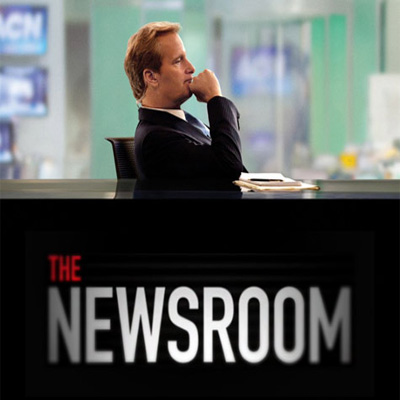
    MUMBAI: The ACN News Night team will be back for another season. On Tuesday night, Jeff Daniels tweeted that The Newsroom has been picked up by HBO. “It’s official. #Newsroom coming back for a Season 3,” the actor, who plays anchor Will McAvoy, tweeted.

    The news comes a month after HBO programming president Michael Lombardo noted publicly that he’d be “shocked” if the series didn’t return. The hold-up has been creator Aaron Sorkin, who will need to pen the Steve Jobs film script before turning his attention back to Newsroom.

    The Sorkin creation, set behind the scenes at a cable news show, will have no shortage of news events to cover in a third season, including the Newtown School shooting (December 2012) and the Boston Marathon massacre (April 2013). The series’ second, which started airing from 14 July, will end with a two-parter taking place on election night on 15 September.

  • LinOpinion enters into JV with leading international PR firm, GolinHarris

    LinOpinion enters into JV with leading international PR firm, GolinHarris

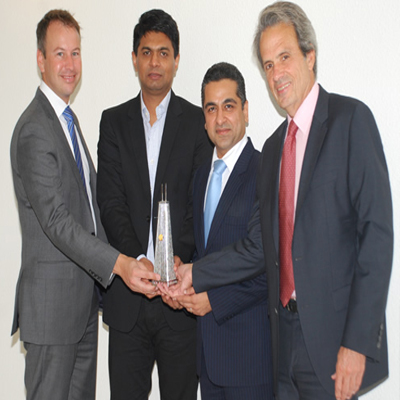
    MUMBAI: LinOpinion – the PR division of Lowe Lintas & Partners India and GolinHarris have jointly announced their coming together under a joint venture (JV) agreement, intended to bring clients into India’s new integrated communications services with a focus on providing the deepest insights, the boldest ideas and the broadest engagement across both traditional and digital channels. Under the agreement each partner has an equal stake and the entity will now be known as LinOpinion-GolinHarris.

    Lowe Lintas & Partners CEO Joseph George said “LinOpinion, with its large portfolio of blue-chip clients, is one of the fastest growing business units within Lowe Lintas & Partners India.  And GolinHarris, a company that has revolutionised the way PR agencies work world over. While I am very excited with our mutual obsession with building brands, I am also convinced that their inputs, influence and involvement will not just help us scale up our operations in India, but also transform our PR offering to be more differentiated and better placed to respond to the ever evolving media environment and engagement dynamics.”

    “We have enormous respect and admiration for LinOpinion and the Lowe Lintas & Partners Group. Their current client portfolio and professional staff are best-in-class.  This partnership will formalise our long association with them and will take things to the next level,” said GolinHarris CEO Fred Cook.

    “The timing could not be better as PR is evolving and so is the communications market in India.  I believe there is great potential hereand I look forward to helping expand the range of services we will offer our clients in India through our award-winning technology, training and talent.”  added GolinHarris president Jonathan Hughes.

    “LinOpinion has had an excellent run so far. But the market is evolving and clients are ready for something new. We have restructured our service model and have made significant investments to strengthen the team with vertical heads. We are very excited to partner with GolinHarris. The LinOpinion-Golin Harris JV will offer our existing clients and new prospects a differentiated service, with a greater focus on quality and measurable results. We intend to scale this business significantly in the next few years.” said Lowe Lintas & Partners executive director Ameer Ismail.

  • Hathway ropes in K V Anand as president – digital platforms

    Hathway ropes in K V Anand as president – digital platforms

    MUMBAI: Hathway Cable & Datacom Limited has appointed former Tata Sky chief service officer (CSO) K V Anand as president – digital platforms.

    Anand will be part of core senior management team and will work across functions like revenue enhancement, subscriber management, CRM capability and leveraging infrastructure across cable and broadband platforms.

    “We are very excited with the opportunities and challenges that will come our way during our transition from a wholesale business to a retail consumer business. We welcome K V Anand who will be part of the core senior management team at Hathway and will work across functions to develop strategies for Revenue Enhancement, Subscriber management, CRM capability and leveraging our infrastructure across Cable and Broadband platforms to introduce new products, services and enhancing customer experience as we begin our journey to be a customer centric organisation,” says Hathway Cable and Datacom MD and CEO Jagdish Kumar.

    Anand comes with rich and varied experience spanning 18 years in the Media/Pay Television industry where he held senior positions in Star TV across Asia and Middle East regions, a short stint at BSkyB in the UK and a long stint at Tata Sky.

    His expertise straddles strategy, design, execution and delivery across all Customer Facing functions relating to CRM, Products /Services management, Billing & Subscriber management, Consumer marketing, Field Services and IT.

    K V Anand was part of the core start-up team that launched Tata Sky‘s DTH service and held the position of CSO at Tata Sky prior to joining Hathway.

  • Challenger channels are emerging in South India – By Star India president (South) Jagdish Kumar

    Challenger channels are emerging in South India – By Star India president (South) Jagdish Kumar

    2009 began ominously with dark clouds looming in the aftermath of the meltdown of financial markets in the US. In the midst of this turbulence, Star India was on the verge of concluding a very significant and strategic deal in its history – the acquisition of Asianet channels in South India.

    Having worked on the deal negotiations and complicated regulatory processes for over a year, it was frustrating to hear many doomsday prophets questioning the rationale for making large investments in an under developed media market when businesses across the world were experiencing a severe liquidity crunch. Conventional wisdom said corporate USA will conserve cash and any new investment proposal will either be deferred or cancelled.

    However defying conventional wisdom, we just got the deal done! Star India‘s long term commitment to the media market in India was reinforced when on 9 January 2009 Star network‘s footprint expanded to cover all of South India with the acquisition of channels in Malayalam, Kannada and Telugu. This step from Star truly represents the adage: when the going gets tough, the tough get going! There was never a doubt in any of our minds that the value we derived from acquiring Asianet far out-weighed the price we paid for it.

    Hence while most media companies in India started 2009 with either downscaling/terminating of operations or approaching the market with hesitation and extreme caution, Star started the year with renewed vigour and hope. With its expanded footprint over non-Hindi regional language markets, Star is currently the biggest television network in India with access to 130 million viewers.

    South India is home to 45 per cent of the cable & satellite homes in India. The region is witnessing tremendous economic progress with per capita incomes far higher than the national average. For various reasons, Star had been guilty of ignoring the South Indian market with the exception of Tamil Nadu where its Tamil language channel Vijay TV has been delighting Tamil viewers with innovative content. The network of channels in Star‘s current portfolio consists of a mix of businesses at varying positions in each of the markets:

    In Malayalam, Asianet is the leading channel

    In Tamil, Star Vijay is a challenger channel with its own distinctive brand

    In Kannada, Suvarna is fighting a close battle with the leading channels

    In Telugu, Sitara is still taking baby steps.

    What have we learnt from 2009?

    When one looks back at the year gone by, there are 5 themes which strike out:

    1. South India is not one market; it consists of numerous distinct markets:
    Each of the language markets in Kannada, Malayalam, Tamil and Telugu have distinctive characteristics which sets them apart from each other significantly. Even within the main language markets, there are internal differences which cannot be ignored by television broadcasters.

    Karnataka is a good example to illustrate the multi-faceted features of the market. Besides Kannada language speakers, Karnataka is also home to people who speak Coorgi, Tulu and Konkani. Each of these languages is spoken by people who are proud of their own long history and culture. Furthermore parts of Karnataka in northern, eastern and southern borders of the state have a large populace who are influenced by Marathi, Telugu and Tamil respectively. The capital city Bengaluru has developed into a microcosm of India with people from all over the nation making it their home. Kannada language speakers are a minority in Bangalore.

    Television broadcasters have to factor in the diversity of the market in all their programming and marketing decisions. It is perilous to consider the market as homogenous.

    2. Content needs constant innovation with a blend of tradition and contemporariness:
    The significant earning and consuming populace of the region (25 years and above) are people who grew up in the traditional and conservative environment of the 1980s and 1990s. At the same time they are also modern and contemporary in their attitudes which come along with the economic prosperity the region is experiencing. Television viewers who are entertained by religious/mythological content are also equally captivated by a talk show which is anchored by a transgender host.

    Television broadcasters have to master the art of being a jack of all trades and master of none.

    3. It‘s distribution, distribution and distribution:
    South Indian states have always had the highest penetration of cable & satellite homes in India. With increasing importance of the tier 2 and tier 3 towns, distribution presents immense challenges.

    Each of the regional markets in the South have numerous competing local channels which are backed by political interest and local businessmen. This has created a huge demand and supply mis-match for analogue cable bandwidth. While the distribution market is trending towards consolidation, it is still characterized by territory wars between the major multi-system operators (MSOs). Local cable operators (LCOs) are offered television signals either free or with huge discounts. Such predatory pricing by competing MSOs results in blockage of subscription revenues at the LCO level. In order to compensate for lack of subscription revenues, MSOs are forced to charge exorbitant prices for carriage and placement.

    Television broadcasters face huge challenges in getting distribution. The pay TV market is fraught with risks associated with poor cash collections.

    4. Today’s leader could be tomorrow’s challenger:
    For a long period of time, each of the markets had a dominant leader and a there was a huge distance between the leader and second ranked channels. The Sun network channels dominate the markets in Tamil Nadu, Andhra Pradesh and Karnataka and the Kerala market is dominated by Asianet.

    With the proliferation of channels in each of the markets, the gap between the leader and the challengers is decreasing. With the exception of Tamil Nadu where Sun TV continues to maintain a massive lead over the next best channel, the other markets are witnessing healthy competition in the leadership stakes. Incumbent leading channels in non-Tamil markets are experiencing viewer fatigue with long running fiction serials and audiences are willing to experiment with fresh concepts.

    Television broadcasters have to plan “disruption” in programming and scheduling in order to make inroads into the market. The audience is ready for the next big idea.

    5. Movies can make or break channels:
    South India has a prolific movie industry. 70 per cent of the annual production of approximately 1000 movies in India is produced in South Indian languages. Movies constitute more than 50 per cent of the GRPs of most of the channels. All major networks in South India have created entry barriers by acquiring movie libraries on a long term basis.

    Movies are an essential weapon in a broadcaster’s armoury. Movies are extensively used to attract audiences; thwart competition; promote programming and boost ratings.

    Crystal gazing into 2010

    2010 promises to be an exciting year for the Star network in South India. We are looking forward to strengthening our presence in South India. The challenges in 2010 for television channels in South India will be the following:

    1. Diversified distribution due to the increased penetration of digital boxes (cable and DTH):
    Increasing penetration of digital boxes by DTH players led by Sun Direct will provide numerous opportunities for television channels to reach their audiences. This will open avenues for content providers to monetize niche content. Competition from DTH players is also driving cable networks to install digital boxes to cable subscribers. The surge in addressability by the penetration of cable and DTH digital boxes augurs well for television channels.

    2. Shorter lifecycle of programs and increasing churn of audiences:
    Television audiences are becoming increasingly impatient and the days of long running serials are coming to an end. The market is waiting to see freshness and innovation in content. Television channels have to constantly look to renew their offerings.

    3. MSOs will start consolidating and reduction of territory wars in cable:
    MSOs are entering a period where their equity masters (private and public) are pursuing positive cash flows. Hence the era of easy money availability for network acquisition/operations will come to an end. This implies that MSOs will have to consolidate and entrench themselves deeper into their own territories rather than encroach on other MSOs‘ territories.

    4. Talent wars:
    Good talent in all aspects of the television business will be scarce. Finding and retaining talent will make the difference between leaders and challengers.

  • MediaCom South Asia president Jasmin Sohrabji

    MediaCom South Asia president Jasmin Sohrabji

    The Indian media industry today boasts of some powerful and intelligent women who have, through their incessant hard work and grit, found their place under the sun. In the second of the series – Ms. Media: 25 Women Who Matter – we tried to find out what MediaCom South Asia president Jasmin Sohrabji is all about and what it took her to get to the top!

    Jasmin has been in the industry for the last 16 years and is looked upon as “one of the most brilliant media professionals the industry has had in a long long time.” She is one of the members of Tam India’s Joint Industry Body (JIB) Committee, which advises Tam on corrections and also guide them about the placement of samples in newer areas.

    Sporting an MA in Economics and an MBA, this double postgraduate joined Trikaya Grey (now Grey worldwide) in 1989 after a short stint with Contract. Within Grey, she was sent to Bangalore in 1996 to set up the media department after the agency won the Wrigley account. Under her guidance MediaCom was launched in September 1996. The lady then packed her bags and was off to Indonesia to head the MediaCom operation there, where she worked on clients like Proctor & Gamble (P&G), GlaxoSmithKlien (GSK) and British American Tobacco (BAT).

    After a year, Jas (as she’s popularly called in the industry) zoomed off to New York to work on MediaCom clients – P&G and GSK – in the US. There she was also instrumental in training the US, South American, Eastern Europe and Asian markets on MediaCom’s proprietary optimiser tool – Maxis.

    Jasmin returned to Indian soil in 1999 and now heads MediaCom South Asia as president along with co-president Harish Shriyan. In addition to MediaCom South Asia (Bangladesh and Sri Lanka), Jasmin was also responsible for the P&G planning for the P&G AAI GBU including nine Asian countries.

    Her mantra for always being ahead of the others in this game is research. Today, MediaCom is known for its extensive research and has also won a lot of laurels through awards. In an environment where television ratings drive most decisions that media planners and buyers make, Jasmin has made it a point to go beyond mere ratings and churn out addressable solutions for the agency’s clients through extensive research. It’s no wonder that MediaCom has been consistently winning the Emvies for their research papers.

    Credit goes to her for giving the media industry two landmark research papers. The first one is TeleOsmosis, which is a paper on light TV viewers, which was a first for India. This research is an important input into TV optimisation and has won a Silver at the Emvies. What’s more, light TV viewer planning has become part of the media planning norm. Her second paper demonstrated the impact of multiple TV sets penetration on television viewing and therefore television planning and optimising. This paper – set2view – won three awards at the Emvies last year — the Gold for Best Media Research; the Grand Emvie for the best entry across all categories and the Tam cash award for Best TV Research.

    We asked this MediaCom loyalist, (who only dresses in black), whether she would be game to shift to an entirely new profession for the challenge of it. “I totally love what I do, but if a challenge comes my way I would be open to consider. But it’s not really about the challenge, the work content has to interest me! There are some sectors that are extremely challenging, but don’t interest me in the least. The business has to engage me before I engage the consumer,” she confidently replies.

    Being in the media industry for close to 16 years, Jasmin has a keen eye on what the future holds for the television and media industry. “The future will get more and more consumer focused, where on the one hand non-traditional touch points will be sought to effectively address the consumers, while on the other hand television planning will get further sophisticated in its attempt to not just reach out to numbers, but reach relevant quality consumers. Studies such as multi-set analysis on viewing impact will become more the order of the day, than just ratings. What’s leading these trends are new genres, new programming formats and new transmission formats!” says Jasmin.

    A no-nonsense woman, Jasmin is keen on making the media industry attractive enough to bring in talent from across sectors. “Our industry is shrinking in its talent pool and we need fresh blood and a fresh perspective,” she opines.

    Another thing on her agenda is to elevate the media agency function in the country to its justified remunerative status.

    Her mantra in life is to work hard and shop hard! “If you’re not going to spend it, why earn it! To many it’s ‘work hard, party hard,’ for me it’s ‘work hard, shop hard’,” Jasmin confides.

    What has the industry taught her? “I have been in this agency for 16 years and one thing this place has taught me is that hard work and loyalty are valued and will help me face any challenge,” says she.

    To her, Grey is her family and will always remain close to her heart! And when she needs to get away from work, her favourite pastime is “S&S” aka “Spa & Shopping”! “My work has always given me travel opportunities and I don’t really need to ‘get away’ from work, I just need to mix work with some pleasure,” says Jasmin. She loves to shop in New York and Paris.

    When asked what her strengths and weaknesses are, she says, “Media planning is my strength and shoes are my weakness! On a more serious note, I believe my strength is my ability to nurture and motivate my people. My weakness is my inability to easily accept people who do not fit into my benchmarks of ‘good’ human beings. I try to put people into ‘black’ or ‘white’ compartments where in reality there are only shades of gray. It’s the one fault I have always been pulled up for, and it’s the one mistake I keep making.”

    Jasmin is known among her colleagues as a person who loves to give career advice. “I believe I am very philanthropic with regard to career counseling as well as career planning for both current and past employees who have worked with me in any capacity. So there are many people in whose prayers and blessings I would always be present. Apart from this, I am also involved with CRY (Child Relief and You) but at a very base level.”

    In this day and age when it doesn’t take much to lure talent from one company to the other, Jasmin has stayed on with MediaCom for 16 years, which in itself is commendable for a person her stature. “One should enjoy the work one does. It’s not enough to be successful; it’s important to enjoy doing so. The means to success should be as enjoyable as success itself. Hard work and loyalty pays and the reason why I am where I am today is because after 16 years, I am just as passionate about what I do,” signs off the lady.