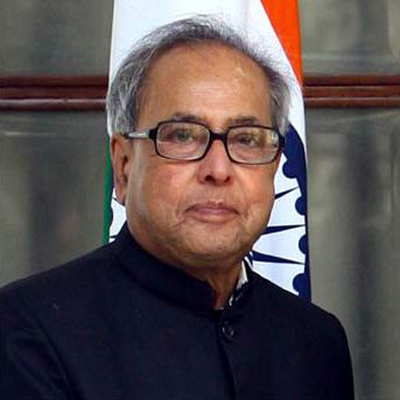
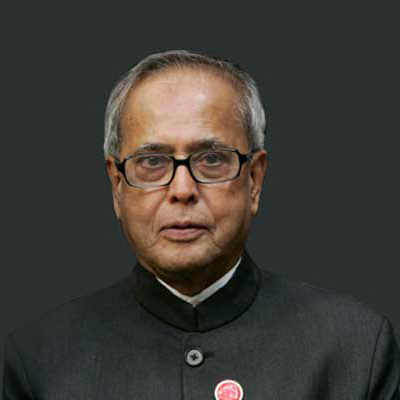
Tag: President Pranab Mukherjee

  • MS Sathyu gets Fellowship, Ustad Iqbal Ahmed Khan among Sangeet Nataka Akademi awardees

    MS Sathyu gets Fellowship, Ustad Iqbal Ahmed Khan among Sangeet Nataka Akademi awardees

    NEW DELHI: Veteran filmmaker M S Sathyu and musicians Vijay Kumar Kichlu, Tulsidas Vasant Borkar, and SR Janakiraman were awarded the fellowship of the Sangeet Natak Akademi for 2014 from President Pranab Mukherjee here.

    Hindustani classical singer Ashwini Bhide Deshpande, flautist Ronu Majumdar, and tabla player Nayan Ghosh were among nine persons awarded for their contribution to music. 


    Others awarded for music were: Hindustani vocalists Iqbal Ahmed Khan and Nath Neralkar, Carnatic vocalist R Santhanagopalan, Carnatic instrumental (thavil) exponent Thiruvalaputhur T A Kaliamurthy, Sukanya Ramgopal for Ghatam, and Dwaram Durga Prasad Rao for violin.


    Awards were also given for folk music to Puran Shah Koti (traditional Punjabi), Abdul Shah Hafiz of Jammu and Kashmir, and Thanga Darlong of Tripura.


    Awards were also presented for theatre and various classical dance forms.   


    Meanwhile, a delegation of artistes from the Akademi called on the Prime Minister Narendra Modi today. Pt. Birju Maharaj, Pt. Vishwamohan Bhatt, Pt. Ajoy Chakravarty, Ms Aruna Sairam and Atul Tiwari were part of the delegation. Akademi Chairman Shekhar Sen was also present.


    The purpose of the meeting was not disclosed, but comes against the backdrop of artistes returning their awards to protest ‘growing intolerance.’

  • I&B asks TV channels to carry DD’s sign language interpretation of I-Day celebrations

    I&B asks TV channels to carry DD’s sign language interpretation of I-Day celebrations

    NEW DELHI: President Pranab Mukherjee will address the nation tomorrow (14 August) at 7 pm on the eve of Independence Day.


    The broadcast will be carried live on all major channels of Doordarshan including DD National, DD News; and regional channels; and all major channels of All India Radio in the national hook-up including Indraprastha and its FM channels.


    This will be followed both on DD and AIR by Hindi translations and later the regional language translations from respective regional channels.


    The broadcast of Prime Minister Narendra Modi’s address to the nation from the ramparts of Red Fort on 15 August will commence at 7.05 am both on DD channels and All India Radio.


    Later, DD will also telecast the report of celebrations in other parts of the country. DD News will carry an analysis of the announcements made by Modi.


    Meanwhile, Information and Broadcasting Ministry has asked all television channels carrying reports of the Independence Day celebrations to access free of cost the simultaneous commentary through sign language for the hearing impaired being carried by Doordarshan.


    The Ministry said it had been getting requests from members of the civil society to facilitate access to people with hearing impairment to the telecast of the Independence Day Ceremony and commentary accompanied with sign language interpretation on TV channels so that such people can be part of the ceremony.


    The advisory said all TV channels interested in carrying the live telecast of the Independence Day ceremony and commentary may carry the signals of DD News with sign language interpretation so that people with hearing impairment can also enjoy the telecast of Indian Independence Day celebrations.

  • President urges film industry to look beyond markets & nurture human values

    President urges film industry to look beyond markets & nurture human values

    NEW DELHI: President Pranab Mukherjee has urged the film industry to look beyond markets and work together to help “nurture universal human values, which draw on our rich civilizational heritage that celebrates diversity and nurtures inclusiveness.”


    In this context, he quoted the late filmmaker Ritwik Ghatak and said ‘Cinema is no art for me. It is only a means to the end of serving my people.’


    The President was giving away the 62nd National Film Awards for 2014 at a function at Vigyan Bhavan yesterday.


    Mukherjee said the advent of digitisation and modern technologies “do not mean that we lose touch with the grass roots. Our content has to be our strength as it is entrenched sharply in our vibrant cultural milieu. Cinema in India crosses all boundaries of region, caste, creed and religion. It reflects the immense diversity of our nation, which is home to different cultures, religions and languages. It shows the confluence of modernity as well as tradition as well as our ancient past and billion aspirations for the future.”


    Mukherjee said cinema has been an integral part of Indian culture and entertainment from the days of Dadasaheb Phalke’s Raja Harish Chandra of 1913, the first film made in India. Indian cinema transcends national boundaries and is a powerful purveyor of ideas and values that impact the consciousness of millions of people. Indian movies not only showcase the multicultural diversity of the country but are also a tribute to its linguistic richness. They are a national treasure and our country’s “soft power” in the true sense of the term, forging international ties and navigating global horizons with ease.


    The Dadasaheb Phalke award to veteran Shashi Kapoor will be presented to him in a special function in Mumbai in view of his ill-health.


    Mukherji said, “We live in a rapidly changing world to which the film industry will have to adjust and adapt. Technology has brought down the costs of production and expanded the mechanisms of dissemination. Still cameras and cell phones that record video can be now edited on a home computer and uploaded on the net. Promotion and marketing of films have now taken on a new avatar with substantial marketing happening on social media – news of a good film now spreads quicker on twitter than by word of mouth. I also understand 2014 saw the launch of four film and entertainment focused investment funds.”


    He added that India is likely to soon embrace a completely digital ecosystem, which would help us connect with even larger numbers transcending geographical and cultural barriers. The President also urged the film industry to look beyond markets and work together to help nurture universal human values that draw on India’s rich civilizational heritage that celebrates diversity and nurtures inclusiveness. He congratulated all the Awardees for their contributions in various fields of cinema.


    The President said that the Government was taking a number of steps for strengthening and promoting Indian cinema and the film industry. The Government is planning to set up a National Centre of Excellence for Animation, Gaming, and Visual Effects. A National Film Heritage Mission is to be undertaken by the National Film Archives of India for conservation/preservation, restoration and digitization of films made in the country. The Government also proposes to set up a Film Facilitation Unit, which will act as a facilitation point for filmmakers and production houses from foreign countries to enable them come to India and shoot their films in India.”


    Information and Broadcasting Minister Arun Jaitley said Indian cinema had come a long way since its birth over a century ago. It has forayed into new avenues and innovated both in form as well as content. The production of cinema in various languages and dialects has taken this art form into new areas-geographically as well as socially.


    He added that the changing social mores and aspirations also found its voice in this medium. The medium witnessed the triumph of the spirit of liberation and empowerment of women-centric themes on the Silver Screen. Social values have influenced our cinema and similarly our cinemas have had a great impact on our social values.


    The Minister said, “Cinema is also a component of India’s soft power abroad. We lead the world average in terms of number of movies produced each year. Indian movies have found increasing acceptance in the international fora. Government is committed to take all possible measures towards the overall growth of the film industry – towards its even spread across the country and not restricted to certain pockets. Keeping this approach in mind, Government is keen to set up a Film & Television Institute in the North Eastern Region for the benefit of the young creative minds from that region.”


    Jaitley said the saga of Indian cinema has been that of a spirit of entrepreneurship. Experimentation and innovation with new themes in form, content and technology have always been employed by creative movie makers of India. The times to come would witness disruption of familiar paradigm due to rapid strides in technology and its increasing presence in the space of our daily lives.


    In his welcome address, secretary Bimal Julka said the Ministry had taken several initiatives in the film sector aimed at protecting, restoring and preserving our invaluable film heritage using the best available technology. Julka also said that in addition to the innate creativity of the film professionals, the continued growth is being experienced in large measure due to increasing systematisation of production processes, wider releases across an increasing number of screens, particularly multiplexes, aggressive promotion, as well as speedy adoption of emerging digital technologies, he added.


    The highlight of the function was the live musical performance of Sukhwinder Singh and Uttara Unnikrishnan.


    A total of 45 Awards were given in the Feature film category and 21 in the non-Feature Film category. Three awards were given to Best Writing on Cinema.


    The Award for the Best Feature Film was given to Court (Marathi, Hindi, Gujarati & English) produced by Zoo Entertainment Pvt. Ltd. and directed by Chaitanya Tamhane. Asha Jaoar Majhe (Bengali) directed by Aditya Vikram Sengupta and producer: F.O.R Films Pvt. Ltd. received the Indira Gandhi Award for Best Debut Film of a Director. The Award for the Best Popular Film providing Wholesome Entertainment was given to Mary Kom (Hindi) produced by Viacom 18 Motion Pictures and directed by Omung Kumar.


    The Award for the Best Director has been conferred on Srijit Mukherji for the Film Chotushkone (Bengali). The Award for the Best Actor was conferred on Vijay for the film Nanu Avanalla Avalu (Kannada) and the Award for the Best Actress was conferred on Kangana Ranaut for the film, Queen (Hindi). The award for the Best Children’s Film was shared by Kaakkaa Muttai (Tamil) and Elizabeth Ekadashi (Marathi). Master J. Vignesh & master Ramesh shared the Award for Best Child Artist for Kaakkaa Muttai (Tamil).


    The Award for the Best Music direction (songs) was conferred on Vishal Bhardwaj for Haider (Hindi) and the award for the best music direction (Background Score) was given to Gopi Sunder for Nineteen Eighty Three (Malayalam). The award for the best lyrics was conferred on NA. Muthukumar for the song Azhagu from the film Saivam (Tamil). A special jury award has been conferred on Bhaurao Karhade for the film Khwada (Marathi). The award for the best choreography has been conferred on Sudesh Adhana for the film Haider (Hindi).
  • President Pranab Mukherjee outlines Govt’s policy initiatives in electronic media & IT

    President Pranab Mukherjee outlines Govt’s policy initiatives in electronic media & IT

    NEW DELHI: President Pranab Mukherjee has said that the government is committed to deeper penetration of electronic media in remote and distant areas. In his address to the joint sitting of Parliament at the start of the Budget Session, he said auctions will be conducted for 135 vacant channels in 69 existing cities of FM Phase-II as part of first batch of FM Phase-Ill.


    In an hour-long speech that outlined the policies of the government, he said that this would also facilitate migration of FM Phase-II to FM Phase-Ill.


    Mukherjee said that this will take private FM radio to cities having population of more than 100,000 and border towns of Jammu and Kashmir, North-eastern region and island territories in a phased manner.


    He said the government had envisioned an ambitious umbrella programme, Digital India, to prepare the country for technology based transformation and citizen centric transparent governance with service orientation. Aadhar based attendance system and Jeevan Praman, Aadhar based Digital Life Certificate Portal, had shown that innovative use of technology can make enormous difference.


    Measures were being taken to accomplish digital inclusion in rural areas, small towns, north-east and other remote areas, opening up immense job opportunities in these areas. Promoting manufacturing of electronic goods has been an area of thrust, he added.


    According to him, the government was committed to using space technology and its applications in governance, social and economic development and resource management. A satellite was to be launched shortly for the use of SAARC countries to foster greater partnership and development of South Asian Region.


    In this context, he referred to Mangalyaan, which had been placed in the Mars Orbit on 24 September, 2014, making India the first country to do so in the first attempt. The country also successfully launched the first experimental flight of GSLV Mark-Ill on 19 December, 2014, which will enable launch of heavier satellites in the near future.


    The Government had taken major initiatives for improving ‘Ease of Doing Business’ through simplification and rationalization of existing rules and procedures, Mukherjee said. Leveraging IT and use of modern technologies is a key strategy. Single window in a Hub-Spoke model is being made a reality.


    He said Maximum Governance, Minimum Government was the guiding principle and with an aim to take governance to the doorstep of the poorest of the poor in remotest areas, focus is on simplification of official procedures and reducing the decision-making levels in government by leveraging technology. The system of Group of Ministers has been dispensed with, and emphasis is on swift decision-making. While introducing stricter and sterner measures to deal with corruption; effort is being made to ensure that sufficient safeguards are in place to protect bona fide decisions taken in public interest and to inspire confidence in the civil service.


    The government was firmly committed to engage people in the process of governance and policy-making. A new initiative My Gov Online Platform has been launched. This platform has ensured public participation in decision-making and ideation of various national flagship programmes like Swachh Bharat Mission, Namami Gange, Pradhan Mantri Jan Dhan Yojana and NITI Aayog.


    The Government had formulated the National Sports Talent Search Scheme for encouraging sporting talent amongst children in the age group of 8 to 12 through National Sports Development Fund and Target Olympic Podium.