Tag: Premjeet Sodhi

  • WPP OpenDoor beefs up measurement & analytics  with addition of Premjeet Sodhi

    WPP OpenDoor beefs up measurement & analytics with addition of Premjeet Sodhi

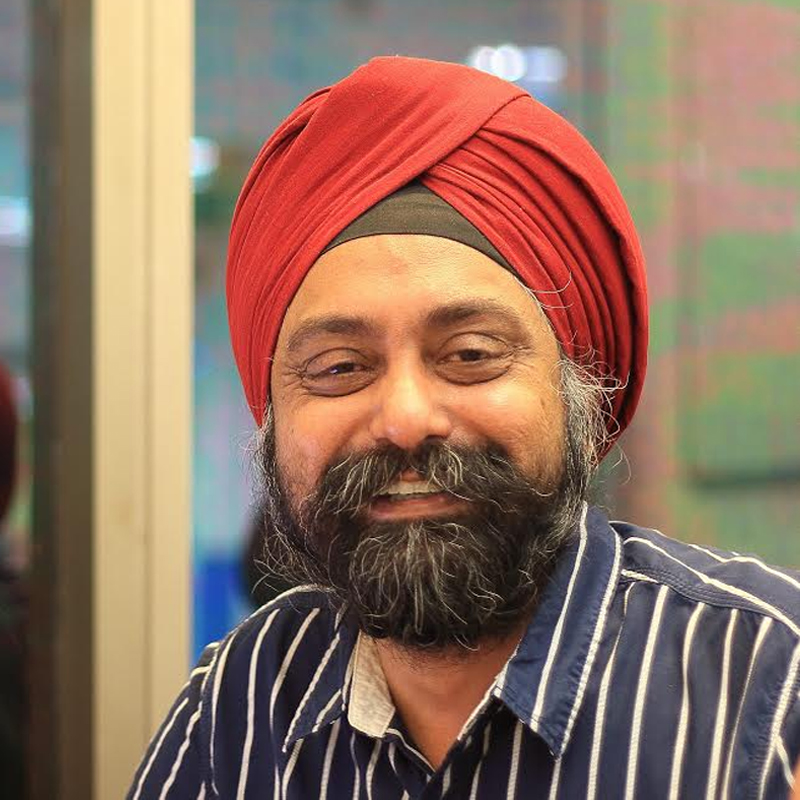
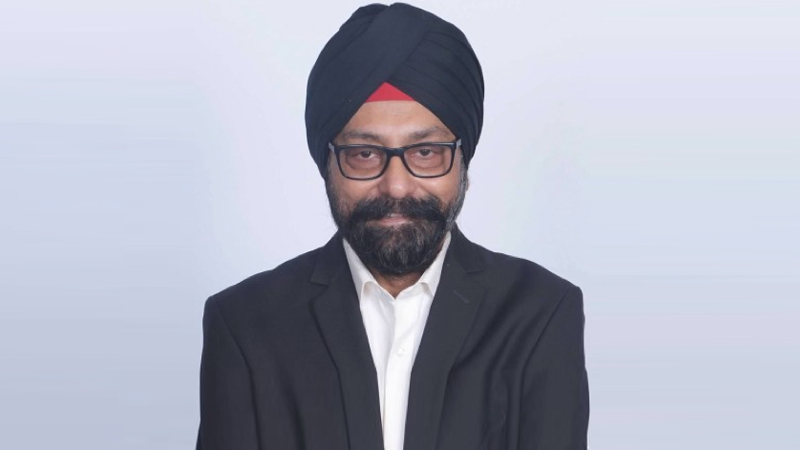
    MUMBAI: WPP OpenDoor – the specialised unit within WPP for Amazon – is seeing a lot of heavyweight names from within the group being added to it. The latest to be roped in  is Premjeet Sodhi who has been appointed as its global lead measurement & analytics based in New York.

    Sodhi, who was the chief strategy officer at Wavemaker India until 2023, was plucked and planted in Wavemaker, New York as global lead measurement & analytics and has been based in the Big Apple since then. He has been with the WPP group agencies from 2018, starting with Mindshare Fulcrum as senior vice-president and then moving to Wavemaker India as chief growth officer in 2020.

    Sodhi was with Lintas Media group from November 2002, rising to become its president in June 2010 from where  he was picked to be the chief operating officer of Initiative Media for six years and three months till March 2018.

    The BE in electronics and post graduate diploma holder in rural management began his career in Gujarat State Financial Services as deputy manager from 1996-98, moving on to become research director at ICRG Mudra for two years from 1998. He was appointed at GM technical in the Media Research Users Council from 1999-2001. He also hard a short spell  of a year as a team member of Ogilvy Outreach from 2000-2001.

  • It is time for Good News Today

    It is time for Good News Today

    Mumbai: Over the last year, people across the world have faced unprecedented challenges caused by the pandemic. All through this, television served as a window into the world, providing news of everyday events happening across the globe. The coverage across news channels documented the unsurmountable toll that the pandemic took on every aspect of our lives.

    Amid the gloom, there were stories of human sacrifice, hardships, and challenges that inspired people to step up and help others. Stories of Good Samaritans who delivered food to patients kept under isolation and mobilised oxygen supply to those who needed it the most. There were human-interest stories of dhabas that had been deserted during the pandemic and bounced back with the support of their ardent patrons.

    For the longest time, coverage of politics has taken precedence over other subjects for news channels. At a time, when the country is limping back to some sort of normalcy, perhaps it is these stories, that need to be told more than ever.

    “The trend in news media worldwide is to have a strong point of view and take a ‘stance’ in the country’s social-political scenario. That’s a classic way to get more eyeballs from the constituency the stance represents,” said renowned ad sales trainer and Marcom advisor to challenge brands, Shripad Kulkarni.

    There has always been a debate between giving what the audience wants over what you think they need. However, the chase for higher TRPs has led news channels into a rush for ‘breaking news’ and ‘sensationalist headlines’. Experts concur that over a long term, the content of news channels is largely responsible for attracting/ repelling audiences.

    The focus on negative stories also tends to create a bias towards a certain kind of worldview. Swedish statistician Hans Rosling demonstrated through tests that people believe the world is poorer, unhealthier, more dangerous than it actually is. He attributes this bias not to random chance but to a one-sided view of the world that is depicted in the media.

    “In-depth coverage and over the top coverage are not the same thing. There is a point by which too much becomes way too much. Honestly, I think Dilip Kumar (referring to his death) deserved more bandwidth than Raj Kundra – the young people need to know more about his story, from many different angles,” opined Social Access Communications’ founder Lynn De Souza.

    While the news genre continues to play the role of incremental reach builder/ frequency driver as per the structure of different markets, experts highlight that the recent changes in the news ecosystem have somehow diluted its attractiveness. Also, it is this nature of engagement with the news channels that the advertisers are also re-evaluating. 

    “Undeniably, content associations deliver the maximum value for advertisers but, the uncertain nature of content has made advertisers wary of associating with news as sponsors or as on-screen associates,” said Wavemaker India, chief strategy officer, Premjeet Sodhi, emphasising the need for more “regionalisation and localisation” in news coverage, as well as a need to appreciate the changes in mindsets of the small town/ rural consumers with their increased access to media.”

    In the era of the “attention economy,” each channel has created its own unique way of bringing news to the consumers and that may impact the viewers’ choice of channels. Maybe, it’s time, they explore good news as that differentiating factor to connect with their audiences.

    This also explains why the latest launch of channels like Good News from The India Today group offers a chance for the TV news genre to reinvent itself to bridge this widening gap. This also augurs well for brands and advertisers who are keen to invest in the news genre for maximum returns on value.

    “The ultimate product is the content and it is for the news channels to re-discover and re-define News and built their own unique approach to delivering news and analysis. And, this is something that has been done by these very channels in the past. The consumers’ expectations have changed; the market dynamics have changed and the news channels have to tune their strategic direction to the new reality,” added Sodhi.

    The latest example of that has been the coverage of India’s historic feat at the 2020 Tokyo Olympics. Stories that uplifted the morale of the nation in tough times, and gave them something to cheer about. It also drew attention towards the dreams and aspirations of Young India. There were so many backstories not just about Indian athletes but other treasured moments like the first joint gold that has not been properly featured on most of the news channels.

    “With respect to ROI for brands and advertisers, I think TV news is the genre that gives maximum return on value. News works out much more effectively because you can have a lot of frequency- and even in terms of CPR efficiency, nothing can come close to news so far. The only downside perhaps, is that a lot of planners think that you have reached stagnancy with the news. But we have experimented in the past that if you take the right path and expand your choice you can get an optimum reach with news,” says a senior media planner.

  • ‘Positive Provocation’ guiding the road for Premjeet Sodhi as chief strategy officer at Wavemaker India

    ‘Positive Provocation’ guiding the road for Premjeet Sodhi as chief strategy officer at Wavemaker India

    NEW DELHI: Things have changed significantly since Premjeet Sodhi first ventured into the media planning and marketing industry. Strategy has undergone a sea change – from sitting on the periphery of television planning to becoming integral to defining what the media tasks would be – pushing creativity into action rather than the other way around. Being a part of the process on behalf of many brands and agencies, Sodhi has witnessed this shift first-hand.

    Now, as he takes on the mantle of chief strategy officer at Wavemaker India, just six months after being made the chief growth officer, he is all set to further the role of strategy in the brand’s creative process. In an exclusive conversation with indiantelevision.com, Sodhi talks all about his new position, his plans for the agency, and his journey within the industry. 

    It was within only a few months of him joining the agency as chief growth officer that Sodhi was handed over the responsibilities of the chief strategy officer at Wavemaker India. “Things are changing rapidly these days. We are now working more closely to the media product and this role allows me to engage closely with the teams and build outputs for clients. So, the transition was made keeping that in mind,” he said, adding that he’s very much enjoying his new, engaging duties.

    Congratulating his successor to the position of chief growth officer, he said: “Kishan (Kumar MS) has taken over the role and that comes so naturally to him. He is already doing a fabulous job.” 

    For Sodhi, his initial focus is on promoting the Wavemaker operating system and deploying their approach of ‘Positive Provocation’ deep within the market.

    “Positive provocation is a recently rolled out proposition for us at Wavemaker India, consisting of various tools, frameworks, and an operating system behind it. The idea is not of disruption, as many agencies claim to do today to rebuild a brand. In fact, it is about provoking a brand to move positively in a productive fashion towards adding additional value to the system. So, it is all about asking the right questions, seeking out various aspects for growth, and arriving at the right strategy,” he elaborated. 

    Read more news on Wavemaker India 

    Positive provocation is the proprietary Wavemaker tool made up of three core aspects: Unlock, Transform, and Maximise. ‘Unlock’ caters to tools that offer complete precision in digital media audit across the full gamut of platforms the client is present on – be it e-commerce, or search, or social. The tools unlock areas for immediate growth of clients and are already doing pretty well for the agency. 

    With ‘transform,’ the agency helps clients in their classic strategy and comms planning using elements of measurement and analytics to chart out the best ways to use storytelling and related techniques. 

    ‘Maximise’ aims to provide cutting-edge tools on how to deliver media plans that are integrated across platforms. It builds attribution as a key factor in the whole media planning and strategizing process. 

    To implement these plans, Sodhi is working on a leadership style that allows the people to lead. “I work on a reverse pyramid formula; the team leads and I am there to support them at the backend and take the flak when something goes wrong. The job that I do is of an enabler in the team. I have a very open-door and casual style of working.”

    His motivation comes from the likes of Roda Mehta, Lynn de Souza, and Shashi Sinha, under whom he has worked for several years. 

    “I learned a lot under Roda Mehta. She was a perfectionist, very hard working lady and inspired me a lot. Lynn de Souza’s working style was where she got everyone together, encouraging people to deliver their best; and then there was Shashi Sinha, I was his subordinate before joining Mindshare Fulcrum. His leadership style was very casual and friendly. He drove everybody to raise the quality of the product. So, these are the people who have really shaped who I am today,” he shared. 

    Sodhi also gave a nod to his former colleagues at Mindshare, and credited friend and guru Suresh Balakrishna for teaching him how to manage day-to-day business during his stint at Lintas Media Group.

    “Amin Lakhani, Prasanth Kumar, and Parthasarathy Mandayam; though I worked with them for just two years, they inspired me a lot,” he said. 

    Sodhi had anticipated that taking up a new role in the middle of lockdown would be quite challenging. But luckily for him, the transition was eased by a warm and cooperative staff. “It was quite an experience for me. I have always been a people’s person and have realised that personal interaction within the team yields the best results. Right now, one needs to make an extra effort for that personal interaction but I am blessed with a team that is really supportive and welcoming. So, it has been a smooth landing for me,” he signed off. 

  • Wavemaker India announces key leadership changes

    Wavemaker India announces key leadership changes

    NEW DELHI: In a major rejig, Wavemaker India has announced changes in executive leadership roles.

    Kishan Kumar MS

    Kishan Kumar MS is elevated and has taken on a larger role as chief growth officer.  Along with his new mandate, Kumar continues to lead Wavemaker South businesses across Bangalore, Chennai, Kerala and Hyderabad. Kishan has been with Wavemaker for the last 14 years and has played an instrumental role in building Wavemaker as one of the biggest media agencies in South India. Kishan’s vast experience across categories clubbed with his passion and innovation for brand building; make him well-suited to take on the new role.    

    Premjeet Sodhi

    Premjeet Sodhi transitions into chief strategy officer from his earlier profile of chief growth officer. Sodhi had joined Wavemaker in April this year after a 2-year stint with Mindshare Fulcrum as the agency head. He has rich experience of over 25 years spanning across many leading agencies where he has managed clients like Amazon, Reckitt, Kraft Heinz, Infoedge, and many more. His understanding of evolving media and managing core client capabilities will continue to be a great contributor to his new role.

    Vishal Jacob

    Vishal Jacob returns to Wavemaker India as chief digital officer after close to 2 years with GroupM as a principal consultant – change planning & transformation. Jacob has been in the GroupM ecosystem for over 14 years and has played a key role in anchoring the digital initiatives at Wavemaker and GroupM. He is also an author and a certified executive coach with a keen interest in behavioural sciences. His rich experience across brands, industries and markets will further propel Wavemaker’s leadership position in the digital space.

    Sandeep Pandey

    Sandeep Pandey, who leads product and strategy has been elevated as global head of analytics where he will be driving Wavemaker’s global practice on analytics. Sandeep has been with GroupM for the last 15 years in leadership positions across APAC markets. Sandeep came on board with Wavemaker in 2014 as Asia Pacific head of marketing effectiveness. Pandey has served clients in automotive, pharma, banking, consumer goods, food & beverages, technology and other industries across India, Singapore, Australia, China, Malaysia, Japan, and other key markets in the Asia Pacific. He will continue to be based out of Gurgaon as he transitions into his global role.

    Wavemaker CEO south Asia Ajay Gupte said, “This has been an extraordinary year that has challenged us in many ways. These changes are designed to enhance our position and enable us to drive continuous growth for our clients, teams and other stakeholders. I am excited about these changes and look forward to creating some positive disruptions in the near future”.

  • Mindshare Fulcrum upgrades skillset for HUL’s integrated mandate

    Mindshare Fulcrum upgrades skillset for HUL’s integrated mandate

    MUMBAI: Handling the complete integrated media mandate for the largest advertiser in the country is surely something that most agencies aspire to achieve. Imagine the glory of WPP’s Mindshare Fulcrum  when it was awarded  the digital media mandate of Hindustan Unilever Ltd in August last year. From 1 January 2019, the agency has also become the integrated media buying partner for the company and has been working closely with HUL to leverage this in a mutually beneficial setup.

    As revealed by Mindshare India president, client leadership Amin Lakhani, the agency has been conducting intensive training programs for its teams at Mindshare Fulcrum for the past three months, equipping them with all the skillsets required to run a successful integrated media campaign. “Every person working at Fulcrum is going to contribute to this entire integrated media mandate. We did a mega talent program; right from acquiring specialists wherever we need one,” he said.

    Mindshare CEO South Asia, Africa, and MENA Prasanth Kumar added, “From the last 90 days, there has been a long, strenuous digital training, as well as, integrated training for our people is being organised. We have been looking at an integrated purpose and thus introduced a number of programs, intensified training, and brought in a perspective from HUL itself, along with best practices across the world. There has been a lot of learning we have taken from HUL. The team keeps a close look at all the activities we are taking up.”

    Mindshare Fulcrum senior vice president Premjeet Sodhi mentioned, “Right from the beginning, it was clear to us that whatever brand we are working with, we have to work in an integrated fashion. It was, in fact, the desire of the team. That was the outlook that we had and the whole training program had been designed according to that. We developed the digital aspect for the current team through rigorous training. That happened in two stages: first instilling a mindset into each employee that one can manage all parts of the media, and second developing the required skillsets, which was rather easier.”

    Highlighting the key aspects around which the training was scheduled, Amin noted the ever so important video, voice, and vernacular. He noted that it is not only digital that is at the core of Fulcrum’s future strategies towards HUL but the team is looking at providing the “best possible media solution” irrespective of the platform it will be put on.

    He added, “We followed bottoms-up approach, keeping the customer at the heart of everything. We decoded the consumer; we decoded the consumer behavior and patterns, and then developed the relevant skillsets. It was a phase of discovery for the whole team.”

    Speaking on HUL's perspective of the integrated planning, Unilever general manager- Media (South Asia) GauravJeet Singh said, “We are constantly looking at the key levers of what will drive our messaging rather than what will drive our business. First of all, we need to increasingly look at the effectiveness of media deployment. Secondly, data is becoming very critical. And with that happening, you need to have people who have deep skills in utilising this data effectively to drive brand growth.”

    Highlighting the changing paradigms of the media industry following events like demonetisation, GST, and the latest being the tariff regime, GauravJeet added, “The biggest learning for us has been that it is a highly evolving industry. You just can’t take things for granted in terms of media deployment. You need to be super agile, fine-tuning your efforts on a yearly and monthly basis. Every single medium is important to grow. Also, the consumer is evolving. We, at HUL, have quarterly been changing our parameters based on readings of what the consumer behaviour is at a particular moment of time and how it is changing.”

  • Brooke Bond Red Label, Star Sports join cricket stalwarts after 22 years

    Brooke Bond Red Label, Star Sports join cricket stalwarts after 22 years

    MUMBAI: The India versus Pakistan match in 1996, a knockout clash, had all the makings of a classic. Pakistan opener Aamer Sohail had hammered Venkatesh Prasad for four to the square boundary and brashly signaled the bowler to fetch the ball. The two legends were back to bond after 22 years and melt their differences over a cup of Brooke Bond Red Label tea, and the event was broadcast live on Star Sports on 19 September 2018.

    Minshare Fulcrum South Asia SVP Premjeet Sodhi said, “The idea of getting the two stalwarts from the two most rivalrous cricketing nations of the world to sit down relive and probably share a laugh over a cup of tea made for a great initiative for Red Label tea, a brand that has always stood for breaking barriers.”

    Mindshare Fulcrum Content+ VP Ajay Mehta said, “No one has seen Aamer Sohail and Venkatesh Prasad together after that electrifying match of 1996. To get them back after 22 years and that too in a live match between India and Pakistan, reliving the moment, this time over a different cup is sweet… isn’t it?”

    Hindustan Unilever VP tea and foods Shiva Krishnamurthy said, “Brooke Bond Red Label’s purpose is to help people find common ground over a cup of tea. The India-Pakistan Asia Cup match is the perfect occasion for Venkatesh Prasad and Aamer Sohail to come together over a tasty cup of Brooke Bond Red Label and chat about their epic exchange at the 1996 World Cup Quarter Final.”

    Teaser: https://www.facebook.com/RedLabelChai/videos/334339387111350/?__xts__[0]=68.ARAeCqwrRJrgqjdhiTmjJtx_WQK9B4sp2yd_soEzCH3N2pDDIdhtUybWEJYASu21lwyX6Op12wZnHEVuQcl6Sn9hoIzBOYWZRkfWk8hpbfnaNWzvFxEaFOJwr_HJpLAWRiMf8YmXT-qsuK2-u1DDtCOyZuDeYyOgbqLrbC7b69KaD2Q6m3yn&__tn__=-R

    Segment: https://www.facebook.com/starsportsindia/videos/530760327346384/?hc_ref=ARS_547lInXoW_q9X-p0UdIpcD76s45sXWM4arZq20BF19pFScxr5a-NMjtRsSFdoKU

  • Mindshare South Asia announces agency restructuring, key appointments

    Mindshare South Asia announces agency restructuring, key appointments

    MUMBAI: Media agency Mindshare has announced an organisation restructure that mirrors the agency’s ambition to become collaborative in client success and navigate its marketing agenda with intelligence and agility.

    After the tremendous success of team Fulcrum in delivering client delight and industry accolades, Amin Lakhani is elevated and has taken on a larger role as president of client leadership at Mindshare India. In his new role, Lakhani is responsible to further strengthen client relationships and drive client growth in a cross media market. He will manage core client capabilities across all offices in the country. During his 14 years at GroupM and Mindshare, Lakhani has grown from strength to strength and will continue to be a key growth contributor in the new role. 

    Anita Kotwani with her unique brand of leadership at Mindshare West has ensured remarkable growth of all business teams in the region. Her continued success and motivation are evident from the number of accolades and the stream of client appreciation her teams have acquired year after year. 

    Given Mindshare’s emphasis on growth through diversification, Kotwani has been promoted to senior vice president, responsible for new business development across the market. In addition to this, she will also drive Horizontality, and work closely with the larger marketing ecosystem. 

    As Lakhani transitions into his new role, Premjeet Sodhi will join Mindshare South Asia as senior vice president at Mindshare Fulcrum, South Asia, and will lead. In his current assignment, Sodhi is the COO at Initiative/ BPN, part of the IPG group, where he handles strategy and new business development for the company. He manages clients such as Amazon, Reckitt, Gionee, Kraft Heinz, Infoedge and Bajaj Auto. With a passion for brands, Sodhi has kept pace with the evolving media space and has contributed immensely in various leadership roles. His new role is effective March 2018. 

    Mindshare South Asia CEO Prasanth Kumar says, “As we enter 2018, we are accelerating transformation which is true to our DNA. We are clear on our strategic priorities, strengthening our connections with a growing universe of clients, consumers, brands and partners in the marketing ecosystem. To be able to do so, we now have the leadership and structure within our organisation to continue our path to greater success, and our renewed focus on creating a disruptive Mindshare with speed, provocation, teamwork.” 

  • A new formula to ‘Engross’

    The biggest threat for advertisers is rapidly climbing as the rate of ‘ad avoidance’ crosses the 70 per cent threshold across all media, among both active and passive avoiders. What’s more alarming is the fact that ad avoidance is higher in rural India than in urban areas.

    As this trend is expected to go even higher, Intellect, a part of the Lintas Media Group in association with Hansa Research Group released the findings of a study titled ‘Engross, a media engagement and ad avoidance study.’

    Lintas India Pvt. Ltd director media services Lynn de Souza addressed a gathering of media planners, owners and clients, alerting them of the implications of this growing menace for the industry.

    “We have all been battling with ad avoidance for a while,” says de Souza. “What we certainly didn’t expect were such high avoidance levels, even in rural areas, and even on the internet. That is clearly a reflection of the consumer’s overall disapproval of the enormously high and growing ad clutter levels and is an issue that media owners should seriously take on board. In an attempt to reduce per unit prices they often simply increase the inventory on offer in an ad sales package, which results in high clutter, and high avoidance of the very ads they are trying to get more of!”

    What emerged as a result of the findings, de Souza said, was not that this group of ‘heavy media consumers’ disliked advertisements altogether, but instead they choose to avoid the growing clutter that they perceive to be dominating the media landscape. Encompassing all mass media including TV, radio, newspapers, magazines, outdoor and internet, her advice to fellow media experts, was that flooding the environment with an overdose of brands will ultimately lead the consumer to turn away from advertisements.

    With specific reference to television, this will pose a big ‘risk’ to the so-called burgeoning branded entertainment industry, which is just beginning to bear fruit in India. What’s more, the changing technological media environment will aid passive ad avoiders to quickly become active in doing the same.

    Spanning two months, October and November, Intellect engaged Hansa Research to update its biannual ad avoidance measures. This year the study included an understanding of how various consumer segments engage themselves with different genres of mass media, including sport, news, movies, education, fashion, serials etc.

    Besides narrowing in on an urban sample size of 1,073 respondents (SEC A, 15-40 year olds, students, housewives, working people) across Mumbai, Delhi, Chennai and Hyderabad, the study also captured the behaviour of the rural audiences. The Bharat Barometer (Intellect’s joint venture with ITC’s e chaupal network) was used to estimate the same measures by contacting 892 people in rural UP, Maharashtra and AP. These included 606 e chaupal Sanchalaks and 286 rural women.

    On having conceived the study, Initiative senior vice president Premjeet Sodhi said, “We are still discovering new nuggets of information each time we analyse the findings. This study is directly applicable to the media planning needs of our various clients who focus on the key youth, housewife, and working segments, and also provides us with data on the ‘upper market’ rural audiences which the industry has never had at such a detailed level earlier.”

    Focusing on two verticals within the framework of a consumer’s media interaction – content and ambient design. The former drives engagement while the latter generates avoidance which has greatly risen from last year across media. Based on the content vertical, the study highlighted the degree of engagement taking four main factors – Content, Relevance, Interactivity and Personalisation (CRIP score). Thus, Intellect has devised 305 CRIP scores across 61 genres and five target groups to be used by media planners to improve media selection.

    Speaking about the method used to administer the study, Intellect associate VP Julius Augustine says, “The most important part of the study was the development of the statements that would measure engagement across the four parameters of content, relevance, interactivity and personalization (CRIP).

    “We needed to measure engagement not just at the media but also at the genre level. Hence, part of the questionnaire was self administered, guided by the interviewer. The respondent had to place all the genres simultaneously on an engagement scale at the same time for each statement separately. Hence, if needed, the respondent could go back and change his ratings as each new medium was presented (For example, he began to compare news on TV with news in dailies) till he had rated all genres to his or her satisfaction.”

    Using the CRIP score which is synonymous with engagement, Engross concluded that the more engaging the content the lower the ad avoidance (except for magazines). More specifically, the more consumers are engaged with a particular genre, the less likely are they to avoid ads in that genre.

    Some of the findings also revealed data that would provide a ray of hope for the umpteen news channels, as news on television has emerged as more engaging than in newspapers.

    However, the biggest challenge for advertisers comes from ‘student’ consumers, as regardless of the degree of engagement with a particular genre, the level of ad avoidance remains high.

    In this day and age when media clutter is commonplace and every brand attempts to adopt newer ways to ‘break through that clutter,’ the essence of creating engaging content somehow gets displaced. All in all the core aim of seducing the consumer also gets blurred!