Tag: premiumisation

  • Hindustan Unilever lathers up growth in FY’25 with a five per cent profit shine

    Hindustan Unilever lathers up growth in FY’25 with a five per cent profit shine

    MUMBAI:Hindustan Unilever Limited (HUL) has managed to keep its balance sheet gleaming, reporting a five per cent jump in profit after tax to Rs 10,644 crore for FY’25, even as topline growth remained modest at two per cent. 

    The year’s big soap opera? A slick pivot to premiumisation, digital demand drivers, and a hard scrub of its product portfolio.

    For the March quarter (MQ’25), HUL clocked an underlying sales growth (USG) of 3 per cent, with volumes up two per cent. The FMCG major’s EBITDA margin stood at 23.1 per cent, slipping 30 basis points year-on-year, largely due to higher investments in innovation and future-facing channels. PAT for the quarter rose four per cent to Rs 2,497 crore.

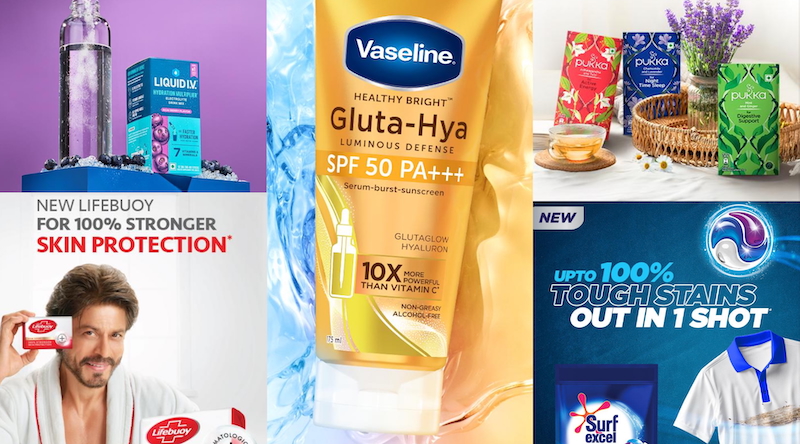
    The home care division sparkled, with mid-single digit volume growth buoyed by strong performance in fabric conditioners and a renewed push on premium liquids like Surf Excel Smart Shots. Liquids, in fact, are the brand’s current crush – the portfolio grew in double digits and is now being democratised with new formats and price points.

    Beauty & wellbeing rose three per cent with hair care flexing double-digit volume muscle. Despite softness in mass skin care, the segment rode high on emerging channels and product launches like Liquid IV hydration sachets and summer-targeted sun care under Lakme and Vaseline.

    The personal care vertical delivered three per cent USG despite a slight volume dip. Skin cleansing lathered up high-single digit growth in the non-hygiene segment, while Closeup ventured into whitening territory with its ‘White Now’ range. Lifebuoy took centre stage at the Maha Kumbh with a refreshed ‘skin protection’ pitch.

    Food sales slipped one per cent, thanks to a drag in nutrition drinks, still reeling from pricing resets and category challenges. But there was flavour elsewhere – tea and coffee brewed growth, while ice cream melted hearts with double-digit volume gains and indulgent launches like Magnum Pistachio.

    CEO Rohit Jawa highlighted a year of “competitive performance” driven by “portfolio transformation, premiumisation and digital-first growth”. Big moves included the Minimalist acquisition, Pureit exit, and ice cream demerger approval. HUL also declared a hefty Rs 53 per share dividend (including a special Rs 10) – a total payout of Rs 12,453 crore.

    Looking ahead, the company expects demand to warm up in FY’26. With commodities stabilising, HUL is betting on low-single digit price growth and a volume-led playbook to deliver double-digit EPS growth.

    While volume may not have exploded, HUL’s strategic polish, from digital detours to premium suds, helped it stay competitive, confident, and cash-rich. Not bad for a company that just turned 90.
  • ITC profit rises eight per cent as revenue hits Rs 18,953 crore in Q3 FY25

    ITC profit rises eight per cent as revenue hits Rs 18,953 crore in Q3 FY25

    MUMBAI: ITC has wrapped up the third quarter of FY25 on a strong note, delivering an eight per cent year-on-year (YoY) growth in gross revenue to Rs 18,953 crore, despite facing inflationary headwinds. The company’s diversified portfolio—spanning FMCG, agri-business, cigarettes, and paper—helped offset rising input costs in wheat, edible oil, and tobacco.

    The cigarette segment, ITC’s profit engine, recorded an 8.1 per cent YoY rise in net revenue, with segment profit before interest and tax (PBIT) up 4.1 per cent, aided by strategic portfolio interventions and premium offerings. FMCG (excluding cigarettes) grew four per cent YoY, driven by atta, spices, frozen snacks, and personal care products. The agri-business segment surged 9.7 per cent, powered by leaf tobacco and value-added agri exports, lifting PBIT by a robust 21.6 per cent.

    ITC’s paper and packaging business remained under pressure due to low-priced Chinese and Indonesian imports and rising domestic wood prices, though portfolio expansion and export growth provided some relief. Meanwhile, the recently demerged hotels business delivered its best-ever quarterly performance, with a 14.6 per cent YoY revenue jump to Rs 922 crore and a 43.4 per cent rise in PBT to Rs 302 crore, driven by weddings, retail, and F&B. The Hotels business was officially demerged into ITC Hotels Limited (ITCHL) with effect from 1st January 2025 and is now reported as ‘Discontinued Operations’ in line with Indian Accounting Standards.

    EBITDA for the quarter rose 3 per cent YoY, with a 4.5 per cent increase excluding the paper segment. Profit before tax (PBT) before exceptional items stood at Rs 6,847 crore, while profit after tax (PAT) reached Rs 5,638 crore. Earnings per share (EPS) for the quarter stood at Rs 4.51.

    The board has recommended an interim dividend of Rs 6.50 per share, reinforcing ITC’s strong shareholder returns. Looking ahead, the company remains optimistic, banking on premiumisation, strategic cost management, and sustained investments in emerging growth segments.

  • Q3 FY 2025: Hindustan Unilever Ltd & the art of growing steadily

    Q3 FY 2025: Hindustan Unilever Ltd & the art of growing steadily

    MUMBAI:  India’s leading FMCG company Hindustan Unilever Limited (HUL) has reported steady financial results for the third quarter (Q3) and the nine-month period ended 31 December 2024. With a strategic focus on premiumisation, innovation, and cost optimisation, HUL demonstrated resilience amidst market challenges and rising input costs.

    Q3 2025 ended 31 December 2024, saw HUL record a total income of Rs 16,050 crore, a 1.7 per cent  increase from Rs 15,781 crore in the same quarter of the previous year. Its revenue from operations stood at Rs 15,559 crore, driven by solid performances in  the home care and food categories. Profit before exceptional items and tax remained steady at Rs 3,474 crore even as net profit rose 2.1 per cent to Rs 2,989 crore as against Rs 2,925 crore in Q3 2024. 

    Operating expenses were well-managed at Rs 12,576 crore, indicating efficient cost control. Home care vertical was a stellar performer with revenue climbing Rs 5,739 crore, with segment profit at Rs 1,086 crore, underscoring its role as a key growth driver. The beauty and well being vertical also saw revenues swelling to Rs Rs 3,556 crore, although profits declined slightly to Rs 1,018 crore due to higher input costs. And the food segment was a steady performer awith revenue at Rs 3,745 crore and proft as Rs 755 crore. 
    Ice-cream business
    On a nine month basis, HUL’s total income reached Rs 48,159 crore, up 1.9 per cent  from Rs 47,266 crore in the corresponding period of the previous year. Revenue from operations stood at Rs 46,759 crore, showcasing steady consumer demand. Profit before tax grew to Rs 11,053 crore, while net profit increased by 6.1 per cent  to Rs 8,196 crore. The home care category recorded a nine month revenue of Rs 17,143 crore, supported by premiumisation and product innovation. The beauty & well being vertical generated Rs 10,258 crore, benefiting from a focus on personal care products while the foods tranche delivered consistent revenue of Rs 11,398 crore, reflecting effective competitive pricing strategies. 

    During the quarter, HUL split its beauty & personal care division into two new segments—beauty & wellbeing and personal care—to enhance strategic focus and operational efficiency. Prudent management of raw material costs and advertising expenditure helped mitigate the impact of rising input costs and currency fluctuations.  A continued shift towards premium product offerings in home care and beauty & wellbeing bolstered overall performance. 

    Additionally, it got clearance from its board  (based on the recommendation of the independent and audit committees) to dissect the ice-cream business from HUL and fuse it with its wholly owned subsidiary Kwality Wall’s (India) Ltd. Following this, Kwality Walls will issue shares to all the HUL shareholders in a 1:1 ratio.. The ice-cream business had a turnover of Rs 1,595 crore in the year ended 31 March, 2024, that is 2.7 per cent of HUL’s turnover, and it has some great brands in Cornetto, Magnum and Kwality Walls. The demerger creates a leading ice-cream company listed on the stock exchange which will be given wings to fly with a separate managed allowed to focus on its growth. 

    The demerger followed a decision by Hindustan Unilever’s parent company in the UK to carve out its ice-cream business into a separate company. The rationale behind this separation was that in ice-cream has a different operating model, including differentiated infrastructure for supply and distribution, capital allocation needs, distinct channel landscape and go- to-market strategy. minimalist

    HUL also announced that it has agreed to acquire  90.5 per cent of the Rs 500 crore turnover  Uprising Science Pvt Ltd – which is behind the Minimalist hair care and skin care products range.  The HUL board agreed to a price tag of Rs 2,670 crore at a pre-money enterprise valuation of Rs  2,955 crore (and a primary infusion of Rs  45 crore) for the acquisition of the shares from  the sellers which include co-founders Mohit Kumar Yadav and . Rahul Yadav,  Peak XV Partners Venture Investments VII, Surge Ventures II, and Twenty Nine Capital Partners (General Partner). The transaction is expected to be completed in Q1 of FY 2026. Following that, HUL will acquire the remaining 9.5 per cent of Uprising’s  equity within two years.

    Minimalist will join the portfolio of brands in HUL’s  beauty & wellbeing division led by executive director Harman Dhillon. The current Minimalist team led by Mohit and Rahul will continue to operate the business in collaboration with HUL.