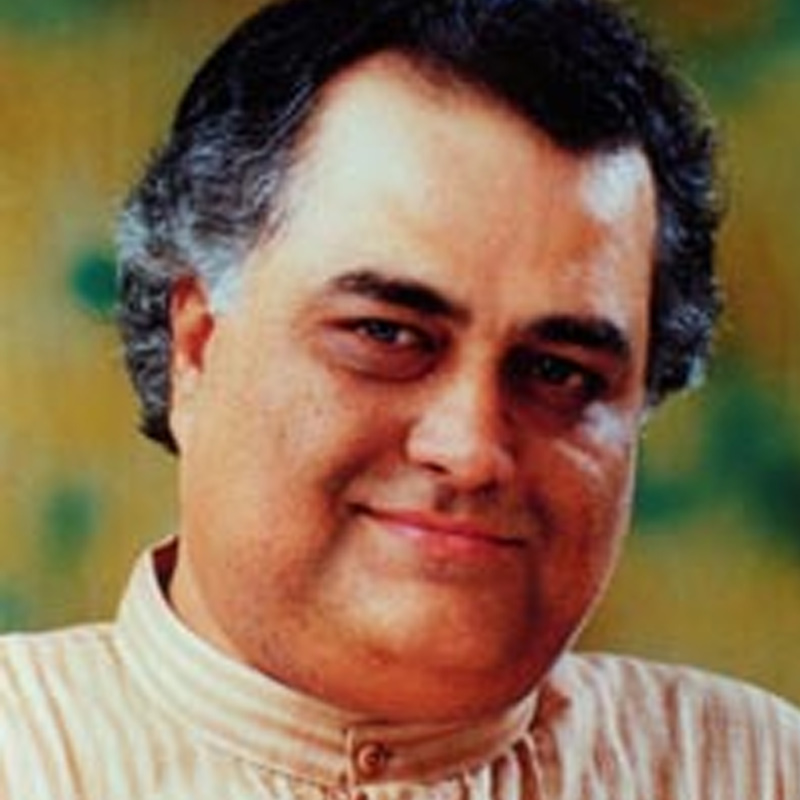
Tag: Prem Kishen

  • Are directors getting a raw deal on Indian television?

    Are directors getting a raw deal on Indian television?

    Directors on Indian television have a long list of complaints. ‘Blame it on the production houses and the channels’, seems to be the majority viewpoint. Are they justified? Indiatelevision.com attempts to analyze:

    1) Directors complain that people are unaware of who wields the megaphone even if their programme is popular.

    Kahiin To Hoga director Anil Kumar says, “In films, the director is given a lot of importance in the publicity campaign of the show. This does not happen in serials. As a result, he does not get any recognition if and when his hard work bears fruit.”

    But BAG Films Mumbai head Rajesh Chaddha argues, “Why do these directors forget that they get films to direct very soon, if they have done a bit of television? Plus they get sufficient money.”

    Kahiin To Hoga director Anil Kumar

    2) Directors gripe about scripts that habitually arrive past deadline, generating perpetual anxiety – and no one has been able to do much about it, they say.

    A director directing a daily for a leading channel on account of anonymity, offered, “We are ready to roll. But where is the script? Creative think, writers write and directors direct. And when creative and writers don‘t do their job on time, why is the director expected to direct on time? Directors have to control scores of people, an enormous amount of equipment, trucks, vans, casting and locations. It‘s a huge strategic undertaking. And if you have no script, you simply cannot operate. Sometimes, I think the creative, writers, et al, who are late, do not fully grasp what the ramifications of that tardiness really are.”

    “If the script comes late, we have to extend our working hours, because the channel takes no excuses, if the channel wants a cassette by evening, they have to have it. We directors have to face the music. Today‘s actors who become known faces in a short span of time become too big for their boots even before you have blinked. Even before he/she arrives on the sets, he/she calls up to know when exactly I would call pack-up for the day! These actors are pampered by the higher-ups, else they wouldn‘t crib and create ugly scenes when their demands of an early pack-up are not met with, or inculcate attitude which smacks of needless pride,” rues Kumar.

    Cinevistaas chairman Prem Kishen

    Cinevistaas chairman Prem Kishen quite agrees, “Why only directors? Even music directors and editors could do a better job is scripts are written and cleared in time. The directors who are finding this environment a lot stressful do have a valid point. It‘s a vicious cycle, really. Blame it on the constant monitoring that is done on every programme.”

    3) Directors lament that they should be involved in the storyline.

    Actor director Anant Mahadevan

    Actor director Anant Mahadevan (who directed Devi until recently) fumes, “I know of a channel official who said that he wants to show the bahu in an uncrumpled saree getting up in the morning and offering a cup of tea to her husband. I demand to know that why the head honchos of channels do not invite the really creative guys like Sai Paranjpe, Aziz Mirza, Ramesh Sippy, et al, who churned out some of the most memorable stuff in the past. I know for a fact that all these guys are still fit and bursting with ideas. But the head honchos feel that the their work is old-fashioned and does not click anymore. Actually, they don‘t want these

    Kahaanii lambi chaudi…

    seniors because they would invariably have an opinion in the way the story takes shape. Who are they fooling that the public wants to see the same shows again and again plus a 20-year leap, that too without a single white strand in the protagonist‘s hair? Recently I was walking in Vaishnodevi with Sakshi Tanwar and a big group of people came running to her and asked when Kahaanii Ghar Ghar Kii was going to end. The doomsday of Indian television is not far.”

    Balaji Telefilms creative head Ekta Kapoor who apparently believes in the TRPs her shows register, questions, “The whole game is run by TRPs. Atleast my shows are not dragging. If they were dragging, how would they have consistently achieved such fantastic TRPs?”

    Soap queen Ekta Kapoor

    Another man waiting to voice his complaint is Qaeed Kuwajerwala, director of Saara Akaash, “Gone are the days when the producer had the rights for every show and made the best utilisation of the services available, so that his product had a good re-sale value. Today, the channel has become the King and the producer has no option but to toe the line and take a cut commission if the serial can deliver an asked TRP. You have more characters and more scenes packed in today than you did a decade ago. Today, time is most important on television. A good director is not one who bothers about the skill and the craft of his art, but rather one who does not demand too much space and moulds himself according to the present scenario where he is ruled by at least seven to eight people involved with the show who are superior to him in designation and maybe status too.”

    Executors? “Actually. Today‘s TV directors are mere executors,” says Imtiaz Punjabi who directed Choodiyan but later shifted to films, “If the executor, sorry, the director is slow, more so-called directors are employed for the same show – without giving thought to the fact that there will be a marked change in the flavour plus there could be continuity jerks as well. Believe me, the actors who worked with me – like Juhi Parmar, Rohit Bakshi, Manav Gohil, Shraddha Nigam – call up to say that they miss someone explaining to them what should be done and how it should be done, they say that directors just tell them to give less expression and more expression but not which expression.” Adding a personal experience he said, “I was directing a show for a big production house, but was told to do things which did not convince me. I felt suffocated. I sensed that I was dragging myself to work. I left it. The fault lay with the production house. In fact, the channel saw my point of view but the production house did not. There is so much of creative space given to a director in films.”

    In literal sense, Punjabi means that TV directors have been reduced to being robots who have to churn out quantity first and quality later!

    However, Kapoor believes that film direction and TV direction are two different ball games. She explains, “Our TV directors have needlessly started thinking like film directors. Film direction comprises story telling and execution. TV direction comprises only execution. The story telling is in the hands of the creative. And this is not something that is happening in India only.”

    “The growth of a TV director is always recognised by the production house. If he is replaced, there must be a genuine reason. And it is wrong to believe that if and when they‘re replaced, the TRPs do not change – both ways. And who says that execution does not involve creativity?” she added.

    Star India senior vice president Deepak Sehgal

    Star India senior vice president Deepak Sehgal believes, “TV directors have a much more challenging job than film directors. Unlike films, there is no scale, no mounted songs, no control over the audio, plus a large amount of inputs by the production house and the channel. It‘s just a question of rising to the occasion.”

    On the other hand, Chaddha feels that directors who are downcast are not making efforts to rise to the occasion. He claims that production houses and channels do allow the liberty of innovations and improvisations if the director is an established one. “I think the speed factor may be disallowing them from experimenting beyond a certain limit but that‘s the way things are likely to remain, with dailies being in vogue more than the weeklies,” he says.

    4) Directors hate it if some other director is summoned to shoot a few portions of their show, which seems to be becoming a common phenomena these days..

    Says Kumar, “A director or two are roped in from somewhere to speed up the process. And if the TRPs go down thereafter, the original director is the first one to be pulled up! Pray, what does a fly-by-night director know what all has happened in the serial so far, what the original characters are, what their body language should be, how loud/soft they should be…?”

    BAG Films Mumbai head Rajesh Chaddha

    Candidly speaking, Kumar means that directors are freelancers and not members of the family and the director is the first on the menu to be eaten – alive if necessary! Has the scenario been reduced to: One director holds the baton of directorship, but he is meant to run for a certain distance before he hands over the piece of wood to somebody else, who then runs for a few yards more and does the same?

    Solutions? Most directors are not optimistic on this front.

    Qaeed Kuwajerwala – Director of Saara Akaash

    Kuwajerwala would prefer to resign to the infrastructure available. “A discussion to this problem is healthy, but I don‘t think that this problem has a solution. Every TV directors must stop giving vent to his feelings and difference of opinion, if he wants to remain as a part of the serial. He should not question whatever he has been told to carry out. If he does, he should get ready to be replaced. There are enough substitutes that can be found for him. Today, creativity for a director in Indian television is how he/she manages to salvage him/herself.”

    Sanjivani- A Medical Boon director Kaushik Ghatak is not upbeat either. Replaced from Kyunki Saas Bhi Kabhi Bahu Thi once upon a time (which he prefers not talking about), he does not sit on the side his fraternity does. He has perhaps learnt his lesson. He offers, “A director is no more the sole captain of the ship in television. Time and energy should not be wasted in understanding that the entertainment media has become a collaborated effort. The producer and the channel are involved in high stakes. If a TV director claims that he is the sole captain of the ship, he should not forget that the producer and the channel together make the ship itself!”

    Sanjivani- A Medical Boon director Kaushik Ghatak

    Punjabi, however, feels that India must follow the Western formula, “Shoot for six months before going on air. While the show is on air, concentrate on the script and the shooting for the next six moths. That way, the director can really use his expertise to convert an average product into a brilliant one,” but quickly laments, “We want to milk the cow continuously without realising that she‘ll soon go dry. Believe me, many directors are asked not to sit at the edit table! They are told ‘shoot kar ke do, edit ki parvah mat karo, yadi humko achcha nahin laga to hum reshoot karva lenge.” (Shoot and see, don‘t worry about the edit. If we don‘t like we will have a reshoot.)

    Mahadevan sighs, “Every TV director must sign a contract with the producer that he will not be replaced for a particular amount of episodes. If he is thrown out before the contract expires, like they do abroad, he will be allowed to go away taking the script with him.”

    Kumar, sounding terribly peeved, is not looking for solutions, “I feel that I should start switch over to directing films. I directed a film called Kucch To Hai for Balaji Films, but since another director had done a part of it before me, I did not get the freedom I would have loved to have. I don‘t mind starting off on a lower note with good producers; I have some wonderful scripts which I am confident would click at the box-office.”

    Add this to the other problems which TV directors claim they face – inability to get the desired cast, added production time due to inadequate preparation, inadequate rehearsal time with actors, cost overruns due to production inefficiency, negative impact on the quality of the production and, last but far from least, negative impact on a director‘s reputation.

    Is it a problem that might not go away and, in fact, appears only to be growing worse? Kishen endorses, “It is a problem. But there is light at the end of every dark tunnel. A day will come when directors will stop complaining.”

    Or, is it not a problem at all? It‘s a coffee-toffee argument really.

    On date, the directors on Indian television would do well to remember the age-old saying ‘When the going gets tough, the tough get going.‘

  • Cinevistaas’ looks at different pastures

    Cinevistaas’ looks at different pastures

    MUMBAI: Reinventing is the key word. And Cinevistaas’ is up and raring to go. Besides the usual share of sitcoms, soaps and thrillers, the production house has few surprises in store for the year ahead.

    Amongst the production house portfolio for the year 2004 are two shows for Star Plus. A reality based one hour weekly show and a romantic weekly Kya Dil Ne Kahaa starring Amar Upadhyay. That apart the production house has set up an event management company, Dynamic Fusion.

    When contacted Cinevistaas chairman Prem Kishen informed, “We have another show coming up on Sony in ’04; it will be a daily soap.”

    Latest, Sahara is getting ready to launch two Cinevistaas shows – a weekly comedy show Jaroorat Hai, Jaroorat Hai starring Farida Jalal, Sushmita Mukherjee, Sumit Raghavan, Gaurav Khera and the daily Saathiya – Pyaar Ka Naya Ehsaas starring Amar Upadhyay, Sanjit Bedi, Shraddha Nigam).

    Come April and Cinevistaas’ first show for ’04 will debut on Sony. The serial titled Sakshi stars Mouli Ganguly in the title role. Recently, Ganguly opted out of Kaahin Kissii Roz saying that she was bored of straitjacket roles and wanted to experiment.

    Samir Soni (of A Mouthful Of Sky fame), who recently in news thanks to his debut in Sony Entertainment Television’s aggressively marketed Jassi Jaissi Koi Nahin as the new man in Jassi’s (Mona Singh) life, will play the male lead in Sakshi.

    After having succeeded with the one -hour weekly format with Sanjivani (Gurdip Kohli, Mihir Mishra, Rupali Ganguly, Mohnish Behl) on Star Plus, Cinevistaas have worked out the same format for this show.

    Kishen was skeptical to spill out the details about the new shows. “We had a show ready for a particular channel, but were shocked to see someone else come up with a similar story before us on that same channel,” he lamented.

    Speaking about the event management company Dynamic Fusion, Kishen informed, “Talat Aziz is the managing director of this company. Also on board is Louis Banks. They will be joined by Ustad Rashid Khan. These three will co-ordinate musical events, when some other industry singers like Sonu Nigam, Hariharan are likely to join in.”

    Meanwhile, Cinevistaas film Garv starring Salman Khan, Shilpa Shetty, Amrish Puri and Anupam Kher is ready. Kishen tells us, “We committed a blunder by releasing Sshhh… during Ramzan. This time, I am not releasing my film before the elections are over and done with. The film was earlier scheduled for April, but will now release in May.” Garv is being touted as the most expensive Salman Khan film till date.

  • “DD needs to understand that the channel-producer relationship is equivalent to that of husband-wife. Both need each other”: Prem Kishen Television and film producer

    “DD needs to understand that the channel-producer relationship is equivalent to that of husband-wife. Both need each other”: Prem Kishen Television and film producer

    Son of one of Bollywood's earliest superstars Prem Nath, Cinevistaas chairman Prem Kishen began his career as an assistant director to showman Raj Kapoor and Vijay Anand, then switched to acting in the mid 1970s. Although he did a few super-hit films like Jaan Haazir Haiand Dulhan Wohi Jo Piya Man Bhaye, in which he played the lead, Prem Kishen quit acting, "because," he explains, "due to my initial training in filmmaking, I was more inclined towards production and the creative aspects of filmmaking."

    To begin with, he set up Cinevista Ads in l982. Over the next three years, the company made more than 250 ad campaigns and several corporate films. In 1985, Doordarshan invited tenders from independent producers for serials for which they were required to pay the telecast fee in exchange for free commercial time. Prem Kishen was one of the first seven producers to apply. His proposal to create a series of 21 internationally renowned short stories into 28 episodes was accepted by DD. Katha Sagar was born, Cinevista had branched out into television programming and, as the cliché goes, the rest is history.

    Katha Sagar was followed by Zindagi, Rishta, Merry Go Round and Gul Gulshan Gulfam, which was the highest rated programme on Doordarshan in l990 and which also gave a lot of credibility to Cinevista. The next programme from Cinevista – Junoon – established it as a premier soap production house as the serial ran for five years and 510 episodes and also set a record for the longest running programme during prime time on Doordarshan. More shows followed – Saahil, Ghuta', Hindustani, Jaane Bhi Do Paro, Nehle Pe Dehla, Noorjehan… the list is long- and Cinevista came into the reckoning as a leading software production company.

    Today, he is concentrating on filmmaking but TV software remains a soft corner with him. An interview by Vickey Lalwani:

    A little about your early days in television?
    It's been a long time and I guess you know most of it, but I must tell you that most people who I knew were surprised that I was foraying into television. In those days, television was looked down upon. But I didn't take them seriously.

    Why?
    Simple. I foresaw tremendous growth for commercial television in India. I was confident that within a decade, TV would emerge as an entertainment giant. Satellite TV came to India in 1992 and within a few years, so many satellite channels were launched that the Indian cable galaxy became overcrowded, resulting in a wide spectrum of programming and a vast choice for viewers to select from. I had been proved right.
    You have been a strong DD loyalist, but of late…
    (interrupts) I know what you are saying. It has been a pure business decision. I am a programmer in the business of television. As a production house and content provider, we have to grow and keep pace with the rapid growth of television and cater to the huge demand for software created by satellite channels. It didn't make any sense in sticking to DD alone.
    "Our prime focus will be to create shows which will become channel drivers because that's what the channels are looking for"

    Tell us about the studio.
    It's a one-stop studio in Kanjurmarg. It has become an obsession. I want to bring back the old golden era of filmmaking. This structure is being done to centralise the operations, the studios would house all the facilities under a single roof and have shooting floors as well. The ex-director general of Bombay Doordarshan, Mr Gurunath, is our CEO. We have been at it, since one year. It won't be long when I convert my dream into reality. Believe me, when it's all ready, no studio in Mumbai will have so many facilities. It would be one of a kind. To tell you the truth, we went public so as to collect funds for our studio.

    Something more about Cinevista from your side before I get specific?
    We have created an in-house team of writers, directors and technicians, we are looking forward to a high per cent growth in software generation over the next two years, cutting across all genres and time bands. But our prime focus will be to create shows which will become channel drivers because that's what the channels are looking for.

    Why did you produce 'Sshhh… Koi Hai' and 'Krishna Arjun' in co-production with Contiloe Films?
    Co-ventures are the need of the hour. Big production houses need good individual talent to make specialized programming in various genres. Co-productions are a part of our expansion and growth."

    Let's talk about CAS. What would be the impact of CAS on production houses?
    It would be impulsive to conclude anything before it is actually and fully implemented. I am a man who welcomes technologies, studies them and then decides whether they're good or bad. But even otherwise, there's no point in cribbing about a bit here and a bit there. I would happily accept it soon and want to move ahead with the times. Let me go back to what I said earlier. Wasn't I one of the first guys who embraced the technology of television? And today, am I not having the last laugh? Today, big film banners and actors are desperate to enter the TV industry.

    But you are moving back to films?
    I am not moving 'back' to films. I am moving 'on' to films. We came to a point on Indian television, where we could not grow anymore. My parents belonged to the industry. My uncles did. I am just touching upon my grassroots. Please do not draw your own conclusions. Cinevista would still continue to do serials.

    Have you considered the risk involved in today's times when most films bite the dust?
    I have never called myself the son of Prem Nath and Bina Rai. I am the son of the film industry. Let there be a huge risk. I want to die with my boots on. At this stage of my life, I want to do whatever pleases me. If I itch to make films, which I do, I would do it at any cost.

    "There is a big scope to market films on TV, provided it's done in a professional manner. We are not even clear on the main prime slots which would be offered"

    CAS again, but changing it slightly. What would be the impact of CAS on viewers?
    The viewers would benefit in the sense that they would not get to see any trash. The content would be solid. Channels would be averse to 'kaam chaloing' (mediocre) stuff and the production houses would have to work doubly hard in order to make a mark and be accepted. So, I guess that answers you earlier question too-What would be the impact of CAS on production houses? (smiles).

    Would DD benefit?
    It would, provided it gets good producers. Presently, we are off DD (shrugs his shoulders).

    Why?
    DD knocked us out on the serial Knockout and we are terribly annoyed. Earlier, they had accepted the proposal and we had gone ahead and made it. Just two days before the telecast, they had the cheek to tell us that Knockout could not be aired. As a measure of protest, we pulled out all our shows from DD. Actually, many producers have pulled out their shows from DD. DD needs to understand that the channel-producer relationship is equivalent to that of husband-wife. Both need each other.

    What was DD's objection to 'Knockout'?
    They said it was gambling. But it was just a game show, on the lines of Kaun Banega Crorepati. We lost a substantial amount. If they had objections or reservations, why keep them till the eleventh hour?

    What have been the revenues given by Cinevista to DD?
    We have unarguably been the highest revenue givers to DD. Hence, negotiations between us have begun. We may be working together soon. It's a give-n-take relationship, I hope you understand. Through Junoon and Jai Mata Di essentially, DD earned a lot. However, later, due to the Knockout problem, we withdrew it and put it up on Star.

    DD has changed its policies for producers. Right?
    Right, but nothing concrete has been given to us as yet. We'll have to play the waiting game. A lot of things, they're saying, but a lot of that is still unclear. There is a big scope to market films on TV, provided it's done in a professional manner. We are not even clear on the main prime slots which would be offered.

    "Get inspired, but please don't copy it from frame to frame"

    Do DD producers get funding from venture capitalists?
    Yes, surely.

    Why do you think that DD is erring? What is the malaise in DD?
    There 'is' a malaise. And they need to pull up their socks, otherwise they're losing out a lot. Apparently, they don't have sufficiently competent personnel.

    Are you making shows as per the channels' demand?
    Depends. It's a joint venture. You can't discount what the channels want and don't want.

    Does Cinevista have any programme on DD's affiliated up-country channels?
    Initially, we had- Ranchi, Bhubaneshwar… But as I told you, we have withdrawn our entire stuff from DD.

    Any plans for making telefilms?
    Today, there is no market for telefilms. Sponsors feel they don't get enough mileage, so things are quite bleak on that front.

    Do you draw a line while budgeting?
    Not really. We are quite flexible. No wonder many of our serials have been sold off to new channels. Our old serials give us revenue, even today. Like we have sold lots of stuff to Zee, Star and Sahara when they had just begun.

    Content is getting diluted on television. Agree or disagree?
    Agree. This is simply because a lot of filmmakers who do not have an iota of idea of how serials should be made, have forayed into television. A lot of 'kachra' has come in. Even 'paanwallahs' and 'bidiwallahs' are trying to enter television.

    Five major brands that have supported you thick and thin?
    Bajaj, Videocon, Brittania, Dabur, Tatas.

    But don't you think you could have got more advertising support?
    The other day, I was with Mr Godrej. He informed me that their latest policy says that 'they need to enter more shows but with lesser footage time and money'. So I guess we've enjoyed the best period. No complaints.

    Pray, why have you converted 'Sanjivani- A Medical Boon' into a 'saas bahu' type?
    Yes, I quite agree. But that has been done purely with respect to the feedback we've received. People want it that way. Tell me, who watches maximum television? Women. They want to see 'nok jhonk', 'chugli'….. If you see carefully, the medical element is still there, it has not disappeared totally.

    Back to your films. What happened to the Salman Khan starrer you announced sometime back?
    It's a big canvas film- Salman Khan, Shilpa Shetty, Kulbushan Kharbanda, Farida Jalal, Shivaji Satam, Amrish Puri, Sadashiv Amrapurkar and Akanksha, my daughter. It's titled Satyamev Jayate, Salman play an honest cop. It will be shot, once we are through Sshhh…. After we announced the Salman starrer, we decided to make a quickie first. Unfortunately, even this one got delayed due to Tanisha and Dino's accident.

    What's happening to Akanksha's career?
    Well, she is certainly open to good work. But she would not like to indulge in body exposure and bold themes. The other day she refused a Gordhan Tanwani flick, because the role required her to do lots of unnecessary kissing scenes.

    There was another film you'd announced, but it didn't take off at all?
    That's shelved, for the time being at least. Amir Hussain Raza had written the script and he was supposed to direct it. But the man did not seem to know what filmmaking is all about. So we nipped the project in the bud. We could not give it to some other director as the script was not ours but Raza's.

    Are you pushing your directors from TV serials into films?
    Nothing like that. We promote talent, not friendships and relations. Sshhh… is being directed by Pawan Kaul who brilliantly directed the conceptual episodes of our serial Sshhh… Koi Hai.Satyamev Jayate is directed by Puneet Issar (the guy who badly injured the big B on the sets ofCoolie) who beautifully directed Jai Mata Di and Hindustani for us. We are also going to give theSanjivani director, Kaushik, a film to direct in the near future; he is a very skilled guy. Importantly, we are open to outside directors and script-writers as well.

    You are open to outsiders, but what if some outsider cons you by plagiarising?
    So now you are indirectly asking me my opinion on the Karishma… fiasco. Well, here it is. Get inspired, but please don't copy it frame to frame.

    What are the opportunities on television?
    Can a 50-year old man or woman make it in films? No, they cannot. I think I have answered your question! (smiles).

    Highlights of the first half of 2003?
    Stock results might not paint a rosy picture but the market is down all over. Our studio, the two films on hand, can certainly be termed as our highlights.

  • Cinevistaas goes solo into feature film venture

    Cinevistaas goes solo into feature film venture

    MUMBAI: TV software company Cinevistaas, which burnt its fingers with Yeh Mohabbat Hai, a joint venture with film producer Umesh Mehra, is going solo for its next feature film.

    Cinevistaas’ maiden independent feature film will star Salman Khan, Shilpa Shetty and Arbaaz Khan.The story is pro-cop and is set in Mumbai. It also represents actor Punit Issar’s first directorial effort. The film will be ready for release in March 2003.

    Cinevistaas’ co founder Prem Kishen’s daughter Akanksha, who starred in Yeh Mohabbat Hai and will be cast in a ‘pivotal and emotional role’ in the as yet untitled new venture. Yeh Mohabbat Hai, a low budget film released in February 2002, did not set the registers ringing.

    Speaking on the venture MD Cinevistaas Sunil Mehta said, ” It has been 20 years since Cinevistaas first made its foray into the ever growing world of advertsing, entertainment and television. Our foray into features is not only well time but also a natural progression for a company which wishes to turn itself into an entertainment conglomerate. ” Anu Malik has scored the music.

  • “We intend having three to four serials on each satellite channel”

    “We intend having three to four serials on each satellite channel”

    Prem Kishen, along with Sunil Mehta, started the TV production house, Cinevistaas, nearly 17 years ago. After producing scores of successful serials – including the hugely popular Gul Gulshan Gulfaam and Junoon and the current hits – Sanjivaniand Sshh… Koi Hai, they have now expanded into a new area of business.

    Cinevistaas has recently acquired a huge studio at Kanjur Marg in suburban Mumbai. The duo plans to spruce it up with the best facilities and make it a state of the art shooting experience that can be availed of even by Hollywood.Cinevistaas also plans to get into full-fledged production of feature films.

    In a tete-a-tete with indiantelevision.com correspondent Amar, Prem Kishen talks at length about the company’s future plans. Excerpts –

    Can you tell us more about the new studio that you have acquired  at Kanjur Marg?
    Yes, we have just acquired this state of the art studio spread across five acres in Kanjur Marg. Basically, we were planning to acquire this space for quite some time. In fact, the basic objective of our public issue was setting up this studio. It’s just that it took us a long time to finalise the location. This would be a one of its kind studio with all facilities and departments – lighting, cameras, the art department, the sets and planks and the best production facilities under one roof. Besides, it will have the largest shooting floor in India. In fact, the facilities we plan to provide are exemplary so much so that we even hope to have people from Hollywood coming in and shooting here in the future. Obviously, we have made a huge investment in it and also expect to reap rich profits.

    What has been your investment and what profits do you expect vis-a-vis the investments?
    I wouldn’t like to disclose the figures and this is also because I consider myself only a creative person and don’t bother myself with financial details.

    “I believe that mergers and partnerships are the way to grow in present times

    Of late, Cinevistaas has been producing a lot of programmes as co-productions with Contiloe and now withKaarnik.  Does Cinevistaas need co-productions?
    I believe that mergers and partnerships are the way to grow in present times. We all have our limitations as far as our creative faculties are concerned and I feel it is only right to involve other people who have bright ideas but do not have adequate resources.  In principle, I am open to partnerships with anybody.

    But what is your agreement with Contiloe or Kaarnik?
    I wouldn’t like to go into the intricacies except that we have divided work areas between us depending on our strengths and of course, we share profits as well.

    Which genres appeal to you?
    Personally, I’m open to all genres as long as I can create a good product and have no specific favourites. Over the years, we have excelled in almost every genre – costume drama, comedy, drama, thrillers and in the future, plan to cater to every possible genre.

    On what basis do you choose a channel?
    We are open to any channel. The only criterion is the deal offered by the channel at a given point of time.

    Cinevistaas has also ventured into film production. Can you elaborate on your plans as far as film production goes?
    Well, we plan to develop into an all-pervasive production house, well diversified into serials, feature films, corporate and ad-films and music. So, in future we plan to take up several movies in the same way as we do serials. But I can’t comment on when these movies would go on the floors, as a lot would depend on the market conditions.

    Our first movie, Yeh Mohabbat Hai was a co-production with Eagle Films. Our second movie, an independent project and for which we have signed Salman Khan, will go on the floors very soon.

    “Yeh Mohabbat Hai’s unimpressive
    performance had dealt
    us a bit of a setback
    but we are already
    on our way
    to recovery

    How do you divide responsibilities with your partner, Sunil Mehta?
    Sunil concentrates on the finance and scripting of our serials, while I look after the execution of projects.

    Sunil’s and your sons are also actively involved with the company. Are they being groomed to take over the reins of the company?
    Well, yes, you can say that. Sanjivani is my son Siddharth Malhotra’s baby and he is involved with it in every possible way, whereas Sunil’s son Uday Singh looks after Ssshh Koi Hai…. Sunil’s other son, Vijay Singh is looking after our film production business. They are capable boys and have handled their respective projects superbly. Obviously, they are going to play a significant role in shaping Cinevistaas’ future.

    Does Cinevistaas not plan to put programmes on DD again like SABe TV did?
    It’s true that Doordarshan used to be a major strategic ally for us some two years ago. But right now, we are locked in a court battle with them for canceling the telecast of our game show Knockout just days before it was scheduled to start. Till the matter is sub judice, I would not like to talk about any future association that we might get into with DD.

    In spite of being an early starter and having been in the business for nearly 17 years, Cinevistaas has not really matched the success of a Balaji or UTV as far as the programming volumes is concerned. Where has it failed?
    I don’t think we have failed anywhere. In fact, our performance has been the most consistent for a production house that has been in the business for so long. It’s just that at present we have fewer programmes on air, but this phase will soon change. Actually, our movie Yeh Mohabbat Hai’s unimpressive performance had dealt us a bit of a setback but we are already on our way to recovery. In the next few weeks, we will have a daily soap on air even though I would not like to talk about it right now.

    How do you see things shaping up for Cinevistaas in the near future?
    I see ourselves progressing on all fronts. We intend having three to four serials on each of the satellite channels. At least one movie – the one with Salman, will go on the floors. Besides, we expect to complete the installation of all facilities in this studio, which we have acquired. In fact we are already in talks with a couple of Hollywood producers to utilize our studio and when that happens, it will be a major achievement for us.

  • “We intend having three to four serials on each satellite channel” : Prem Kishen

    “We intend having three to four serials on each satellite channel” : Prem Kishen

    Prem Kishen, along with Sunil Mehta, started the TV production house, Cinevistaas, nearly 17 years ago. After producing scores of successful serials – including the hugely popular Gul Gulshan Gulfaam and Junoon and the current hits – Sanjivani Sshh Koi Hai, they have now expanded into a new area of business.

    Cinevistaas has recently acquired a huge studio at KanjurMarg in suburban Mumbai. The duo plans to spruce it up with the best facilities and make it a state of the art shooting experience that can be availed of even by Hollywood.Cinevistaas also plans to get into full-fledged production of feature films.

    In an interview with indiantelevision.com correspondent Amar, Prem Kishen talks at length about the company’ s future plans. Excerpts –

    Can you tell us more about the new studio that you have acquired at Kanjur Marg?
    Yes, we have just acquired this state of the art studio spread across five acres in Kanjur Marg. Basically, we were planning to acquire this space for quite some time. In fact, the basic objective of our public issue was setting up this studio. It’s just that it took us a long time to finalise the location. This would be a one of its kind studio with all facilities and departments – lighting, cameras, the art department, the sets and planks and the best production facilities under one roof. Besides, it will have the largest shooting floor in India. In fact, the facilities we plan to provide are exemplary, so much so that we even hope to have people from Hollywood coming in and shooting here in the future. Obviously, we have made a huge investment in it and also expect to reap rich profits.
     
    What has been your investment and what profits do you expect vis-a-vis the investments?
    I wouldn’ t like to disclose the figures and this is also because I consider myself only a creative person and don’t bother myself with financial details.
     
    “I believe that mergers and partnerships are the way to grow in present times”  
     
    Of late, Cinevistaas has been producing a lot of programmes as co-productions with Contiloe and now with Kaarnik. Does Cinevistaas need co-productions?
    I believe that mergers and partnerships are the way to grow in present times. We all have our limitations as far as our creative faculties are concerned and I feel it is only right to involve other people who have bright ideas but do not have adequate resources. In principle, I am open to partnerships with anybody.
     
    But what is your agreement with Contiloe or Kaarnik?
    I wouldn’t like to go into the intricacies except that we have divided work areas between us depending on our strengths and of course, we share profits as well.
     
    Which genres appeal to you?
    Personally, I’m open to all genres as long as I can create a good product and have no specific favourites. Over the years, we have excelled in almost every genre – costume drama, comedy, drama, thrillers and in the future, plan to cater to every possible genre.
     
    On what basis do you choose a channel?
    We are open to any channel. The only criterion is the deal offered by the channel at a given point of time.
     
    Cinevistaas has also ventured into film production. Can you elaborate on your plans as far as film production goes?
    Well, we plan to develop into an all-pervasive production house, well diversified into serials, feature films, corporate and ad-films and music. So, in future we plan to take up several movies in the same way as we do serials. But I can’t comment on when these movies would go on the floors, as a lot would depend on the market conditions.
     
    Our first movie,Yeh Mohabbat Hai was a co-production with Eagle Films. Our second movie, an independent project and for which we have signed Salman Khan, will go on the floors very soon.
     
    “Yeh Mohabbat Hai’s unimpressive
    performance had dealt
    us a bit of a setback
    but we are already
    on our way
    to recovery”
     
     
    How do you divide responsibilities with your partner, Sunil Mehta?
    Sunil concentrates on the finance and scripting of our serials, while I look after the execution of projects.
     
    Sunil’s and your sons are also actively involved with the company. Are they being groomed to take over the reins of the company?
    Well, yes, you can say that. Sanjivani is my son Siddharth Malhotra’s baby and he is involved with it in every possible way, whereas Sunil’s son Uday Singh looks after Ssshh Koi Hai… Sunil’s other son, Vijay Singh is looking after our film production business. They are capable boys and have handled their respective projects superbly. Obviously, they are going to play a significant role in shaping Cinevistaas’ future.
     
    Does Cinevistaas not plan to put programmes on DD again like SABe TV did?
    It’s true that Doordarshan used to be a major strategic ally for us some two years ago. But right now, we are locked in a court battle with them for canceling the telecast of our game show Knockout just days before it was scheduled to start. Till the matter is sub judice, I would not like to talk about any future association that we might get into with DD.
     
    In spite of being an early starter and having been in the business for nearly 17 years,Cinevistaas has not really matched the success of a Balaji or UTV as far as the programming volumes is concerned. Where has it failed?
    I don’t think we have failed anywhere. In fact, our performance has been the most consistent for a production house that has been in the business for so long. It’s just that at present we have fewer programmes on air, but this phase will soon change. Actually, our movie Yeh Mohabbat Hai’s unimpressive performance had dealt us a bit of a setback but we are already on our way to recovery. In the next few weeks, we will have a daily soap on air even though I would not like to talk about it right now.
     
    How do you see things shaping up for Cinevistaas in the near future?
    I see ourselves progressing on all fronts. We intend having three to four serials on each of the satellite channels. At least one movie – the one with Salman, will go on the floors. Besides, we expect to complete the installation of all facilities in this studio, which we have acquired. In fact we are already in talks with a couple of Hollywood producers to utilize our studio and when that happens, it will be a major achievement for us.