Tag: Prem Kamath

  • The movers and shakers of 2014

    The movers and shakers of 2014

    To achieve something, one needs to let go of something, 2014 saw many stalwarts of the media and entertainment sector taking that leap.

    From being bitten by the entrepreneur bug to grabbing on to better opportunities, the industry saw a number of movements. Some of these created a stir while others went down as “regular” developments. Nonetheless, Indiantelevision.com lists down some of the major movers and shakers of the years…


    Ajay Bhalwankar: He is a man who can be credited to providing valuable programming inputs across content on various channels. The year 2014 was like a shuffling battle for Bhalwankar. After spending almost 19 years with Zee Entertainment Group, with his last stint as programming head at Zee TV for six years, he joined Sony Entertainment Television (SET) on 7 April, 2014 as chief creative officer. Now in SET, he provides creative leadership and direction for the channel, and leads the programming and OAP (on-air-promotions) teams. Spanning various roles of creating, writing, programming, producing and directing entertainment content, he is an industry veteran with over 20 years of experience.

    Ajay Trigunayat: TTN English entertainment channels, Romedy Now and Movies Now CEO Ajay Trigunayat quit the network this year. With M K Anand taking over as TTN CEO and business functions being centralised, Trigunayat moved out. Before joining TTN, he was in the Middle East in an entrepreneurial capacity, and had been the business head of the Zee English Channels bouquet, and put in stints at Lintas, Contract and Rediffusion and at Pepsi in a sales role.

    Ajit Thakur: In a shocking development, the man credited for Life OK’s success story, Ajit Thakur decided to call it quits from the network. It was in July this year that he was given an additional charge of managing the network’s youth entertainment channel, Channel V. Currently he is serving his notice period and his last day in the organisation will be February, 2015.

    Abhijit Avasthi: An engineer by education, Abhijit Avasthi was the right-hand man of India’s ad guru Piyush Pandey. After spending more than 10 years at Ogilvy, he finally decided to hang his boots to pursue what he loves the most.

    However, according to reports, Avasthi is likely to set up his own creative agency, a move that he has been contemplating for a while.

    Alok Agarwal: Zee Media CEO Alok Agarwal ended his one and a half years stint at the network to take charge as Network18 group COO.


    Bharat Ranga: Since 1998, he had been an invaluable member of the Zee Entertainment Enterprises Ltd (Zeel) family. After a 16-year stint with the network, he bid adieu in the month of October to explore new avenues. While at Zeel, he moved across functions and domains seamlessly, from sales to business head to being the international business head and then, the chief content and creative head for the organisation, he has been instrumental in making Zee’s content an unforgettable one for the audiences. His last project – Zindagi is getting critical acclaim from the masses.

    Dilip Venkatraman and Savvy Venkatraman: ITV Network, which owns and operates news channels NewsX and India News, appointed former CNN IBN and IBN7 CEO Dilip Venkatraman as group COO of strategy and business development. Meanwhile, Savvy joined the network as group chief marketing officer.


    KV Sridhar: After 17 long years Leo Burnett India chief creative officer, Pops, moved on to join SapientNitro, an interactive marketing, creative design and technology services agency. The movement did create a stir in the industry with many questions being raised on who can fill his shoes. Rajdeepak Das joined the agency as chief creative officer, soon afterwards.

    MK Anand: The former Disney UTV Media Networks MD MK Anand took over as the new MD and CEO of Times Television Network (TTN), stepping into Sunil Lulla’s shoes.  Anand had previously worked at The Times of India group for nearly 19 years, beginning first with the print business for 14 years and later on with the television business at Zoom from 2004 to 2009. He was the managing director for Disney UTV Media Networks till December 2013. The move saw functions like HR, finance, distribution being centralised and direct reportage to Anand.   

    N P Singh: The industry was treated with a good surprise at the beginning of 2014, when in a major development Multi Screen Media (MSM) promoted its COO N P Singh as the new CEO. He replaced Man Jit Singh who was designated as non-executive chairman and moved to Los Angeles (LA).


    Namit Sharma: From a creative background to a broadcast space, it was a challenge for former Wizcraft head for television business Namit Sharma. It was in early February when the news of former programming head Ajay Bhalwankar quitting and Sharma stepping into his shoes came to light. From directing fiction shows at Cinevistaas to film production and script writing at Yash Raj and handling events and non-fiction properties at Wizcraft International Entertainment, Sharma has done it all. As the programming head of the channel, he has brought some best creative ideas to the table.

    Nagesh Chhabria: IndusInd Media Communications Limited (IMCL) CEO Nagesh Chhabria too was seen hanging his boot this year. Chhabria later bought 50 per cent stake in Mumbai-based Bhawani Rajesh Cable & Digitech Services through his company Bhima Riddhi Digital Services (BRDS). He also signed an agreement with Atlas Consolidated LLC – a joint venture between Greenwich Equity Partners and Jagran Infra-Projects led by Sanjiv Mohan Gupta – to create a national MSO with about $200 million being pumped into it.

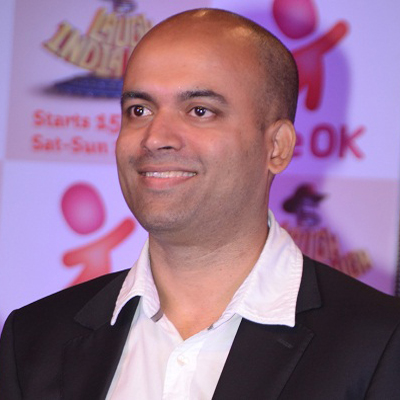
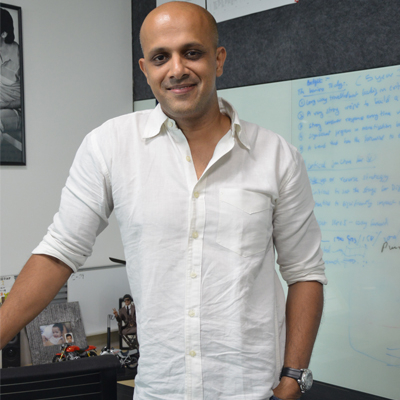
    Prem Kamath: The industry was shaken after former Channel V head and Star Pravah general manager decided to quit from Star for better opportunities at A+E Networks as deputy managing director, Asia Pacific. Associated with Star Network since 2007, Kamath had been heading Channel V for more than four years. Seeing his capability, he was given an additional responsibility at Star Network to head Star Pravah in 2013.

    Pradeep Hejmadi: With more than 18 years of well-rounded experience in the Indian media industry spanning media sales, media planning and buying, consumer research, business planning and product development, he is the man with multi-dimensional understanding of the media business. Former TAM Media Research senior vice-president Pradeep Hejmadi quit the organisation to join Zee Entertainment Enterprises Ltd (Zeel) as business head in the month of June. At TAM, he was responsible for revenue generation, client management, new business development and new product development and changed the working dynamics of the TV industry.

    Pratap Bose: Omnicom-owned DDB Mudra witnessed a sudden churn at the top, early this year when DDB Mudra Group COO Pratap Bose resigned from the agency after a six-year stint.

    The exit, who was looking to take over the top job, came after group chief executive officer and managing director Madhukar Kamath was given a four-year extension.

    Raghav Bahl: Network18 founder and chairman Raghav Bahl, sold his baby to RIL chairman and MD Mukesh Ambani for a whopping Rs 4000 crore. What followed this was an upheaval of sorts, as one by one, the main pillars of the company began to fall. As soon as the meeting concluded between Bahl and the management of Network18, departures began which included group CEO B Sai Kumar, COO Ajay Chacko, CNN-IBN deputy editor Sagarika Ghose, IBN Network editor in chief Rajdeep Sardesai, Network18 Media CEO Sanjay Dua, Network18 digital CEO Durga Raghunath, Network 18 CFO RDS Binni Bawa and deputy foreign affairs editor Suhasini Haidar.

    Rajdeep Sardesai: It was in July this year that after nine long years, the face of IBN18 and editor-in-chief Rajdeep Sardesai decided to move on from the network. He later on joined the India Today group as consulting editor. Further, penning his expertise of writing, in November he launched his book – ‘2014: The Election That Changed India’. The book tracks the story of the 16th Lok Sabha elections with a media insider’s view. It was in the same month when deputy editor at CNN-IBN Sagarika Ghose too bid adieu to the Network18 group and joined Times of India as consulting editor. 

    Rajesh Iyer: Associated with the channel since its inception, Colors marketing head Rajesh Iyer has been one of the many behind the success of popular shows like Khatron Ke Khiladi, India’s Got Talent, Jhalak Dikhhla Jaa and Bigg Boss. Iyer quit Colors in March to join Zee Entertainment Enterprises Ltd (Zeel) as its business head, new initiatives, Hindi broadcast. With more than 13 years of experience in marketing and business segment, he aims to create some thrilling benchmarks in the industry.

    Ravi Mansukhani: The year 2014 saw the ending of the seven year innings from IndusInd Media & Communications Ltd. (IMCL) managing director Ravi Mansukhani, who decided to step down from his position. It was said that Mansukhani had expressed the desire to relinquish his services, which was accepted by the board of directors in the board meeting held on 31 January. His next move is yet unknown.

    Sameer Nair: He has donned numerous hats. From selling space in Yellow pages to being a member of a political party, Sameer Nair has had a volatile career. It was in July this year when the former Star India CEO joined Ekta Kapoor’s Balaji Telefilms as Group CEO.


    S N Sharma: In what can be described as the biggest setback was the resignation of DEN Networks CEO SN Sharma, who was one of the founding members of the multi system operator. Sharma’s vision of growth through consolidation and digitisation had laid the foundation for the company. He has also spearheaded DEN’s rapid growth with his visionary leadership and unparalleled execution abilities. He has also been the driving force behind taking the company into the digital era.

    Suhasni Haider: In a major development, CNN-IBN deputy foreign affairs editor and prime time anchor Suhasini Haidar bid adieu to the organisation in May this year. To focus on long-format journalism, she joined The Hindu as its diplomatic editor. 


    Sunil Lulla: A 30-year media and communication veteran, Sunil Lulla made headlines in July when he decided to move on from Bennett Coleman & Co. Ltd. After almost 10 years with BCCL, Lulla, joined WPP-owned Grey Group as chairman and MD for Grey Group India.
    His joining the advertising industry was homecoming as he had started his career in one.
    However, his appointment led to Grey Group India president and CEO Jishnu Sen moving on from the network.

    Tony D’silva: With Ravi Mansukhani stepping down, IMCL saw a new MD and CEO in Tony D’silva, who was earlier the president of Hinduja Ventures Limited (HVL) and was overlooking its upcoming Headend InThe Sky (HITS) project. D’silva was given additional responsibilities as Group CEO-Media of HVL, and MD and CEO of IMCL.  

    TS Panesar: Star India EVP for distribution TS Panesar, who was entrusted with the responsibility of handling distribution for national DTH and digital addressable systems (DAS) earlier in 2014 when the JV between Star and Zee- MediaPro was broken, quit.  He later joined MSO Hathway Cable & Datacom as head-video business.  

    Vikram Mehra: After spending close to 10 long years at one of the leading DTH companies in India, Vikram Mehra, the chief commercial officer of Tata Sky moved on to Saregama, this year. While at Tata Sky, he was responsible for subscription revenue management, churn management, brand marketing, new product development, consumer analytics, interactive service operations, consumer research and PR, he is handling the digital platform for Saregama.

    Vikram Sakhuja: It was in October that GroupM announced the appointment of Lindsay Pattison as global CEO of Maxus, the post held by Vikram Sakhuja. Till date his next move in the group hasn’t been decided, but he is expected to take up a global role at parent firm GroupM.


    Vivek Srivastava: It came as a surprise when the news of former Colors commercial and digital head Vivek Srivastava quitting, shot the mailers. His extensive background in research, awareness of new media and over a decade in the broadcast industry contributed to maintaining the robust presence of all Colors brands in the digital space and managing the overall costs for the brand.  He headed to Times Television Network (TTN) in the month of October as senior vice-president and head of the English Entertainment Cluster, which includes premium channels like Movies Now and Romedy Now.

    (The names are in alphabetical order)


  • Ajit Thakur takes charge of Channel V

    Ajit Thakur takes charge of Channel V

    Updated: 12:30


    MUMBAI: It was in early June when the news broke that Star India executive vice-president and general manager Prem Kamath – who heads Channel V and Star Pravah was quitting. As reported first by indiantelevision.com, Kamath will move to A+E Networks. Currently, Kamath is serving his notice period which ends this month.

     
    Now, highly placed sources within the network have confirmed that the man who has led Life OK to soar on  the ratings chart, Ajit Thakur, has been given the additional charge of managing Channel V. Sources also confimed that Thakur has taken charge a week ago. However, Thakur himself was unavailable to comment on the development. 


    It is quite probable that another professional will be roped in to look after Star Pravah.

     
    The talented professional, Thakur, has been with Star India since August 2011 and has since seen the overhaul of the then Star One to a Hindi GEC which today ranks amongst the top three in the country. Prior to that, he was with Sony Entertainment Television as programming head, Balaji Telefilms with its motion picture unit and with UTV’s production arm.

     
    An IIM Lucknow graduate and a Coca-Cola India and a Hindustan Lever alumnus, Thakur had nurtured creative ambitions from the early days in his career but drifted into corporate life before being spotted and hired by Ronnie Screwvala for his production house seven years back. 


  • Prem Kamath to join A+E Networks, Singapore

    Prem Kamath to join A+E Networks, Singapore

    MUMBAI:  Earlier today, news emerged that Star India executive vice-present and general manager Prem Kamath – who heads Channel V and Star Pravah – was quitting India’s leading network. No announcement came in as to where he was headed. 


    A while ago we wrote that he was headed for a position in south east Asia or at one of the other three major broadcast networks in India.  Now, sources have revealed that our first conjecture was right: that Kamath is indeed headed to Singapore and is taking up a regional role at A+E Networks.


    A+E Networks runs The History Channel, Lifetime, bio, Crime Investigation Networks and H2 channels in the Asia Pacific region.


    Kamath confirmed his exit to indiantelevision.com but he was mum about his shift to A+E Networks.


    He will continue to be with Star India at least for another couple of months.


    Kamath joined Star India in May 2007 as vice-president marketing for the network.  In 2009, he was elevated to the role of executive vice president and general manager Channel V. In 2013, he was given additional role of general manager of Star India’s Marathi general entertainment channel Star Pravah.  Prior to joining Star India, Kamath was associate vice president at Leo Burnett. He served the agency from 1999 to April 2007.

  • Prem Kamath resigns from Star India

    Prem Kamath resigns from Star India

    MUMBAI: He had two of Star India’s prime channels under his charge: Channel V and Star Pravah. Last week Star India executive vice-president and general manager, Prem Kamath, called it quits and put in his papers.


    Kamath confirmed this to  indiantelevision.com,  though he was travelling. But he did not divulge where he is headed. However, sources close to him say that he is likely to continue to be in the television industry. The buzz is that he is likely to take up an overseas assignment in south east Asia or that he could be joining one of the other three major Indian broadcast networks.


    Keep watching this space for further updates.


    Suffice to say that Kamath will continue to be in Channel V until his notice period expires in a couple of months.


    Kamath joined Star India in May 2007 as vice-president marketing for the network.


    In 2009, he was elevated to the role of executive vice president and general manager Channel V. In 2013, he was given additional role of general manager of Star India’s Marathi general entertainment channel Star Pravah.


    Prior to joining Star India, Kamath was associate vice president at Leo Burnett. He served the agency from 1999 to April 2007.

  • Want to woo youngsters? Depend on youth channels

    Want to woo youngsters? Depend on youth channels

    MUMBAI: In-branding is not unusual today as we see superstars selling the brands they endorse even in their films. Remember Chennai Express and how Shah Rukh Khan endorsed the features of the new Nokia mobile (of which he is also a brand ambassador) in the film. And if you thought it was just him, then you are wrong. Hrithik Roshan starrer Krrish 3 had a host of FMCG products being promoted through the movie. 


    The phenomenon has not spared the small screen as well. Right from the brands to film stars, the small screen has become a popular destination for promotion. However, this time around there is a twist.


    With the nation gearing for the upcoming elections, the political parties are doing all that they can to get voters to get inked. This election season the parties are finding innovative ways to connect with the audiences, especially the youth. And if you watch Channel V India, a youth entertainment channel, you would know what we are hinting at.


    The main characters of various shows on the channel can be seen talking about how prices have risen in the past years or how it is the time to bring change. This, while a ticker/astrix runs with BJP’s symbol and message.


     The political parties – Congress and Bharatiya Janta Party (BJP) – both in their mission to woo the first-time voters are now targeting youth channels.


    “Youth channels are the best way to catch the attention of first-time voters and since we are using different strategies, we thought of trying this as well,” says a source from the media agency handling BJP’s mandate.


    The source goes on to say that it is a “different” way to reach our audience. And, one will see a lot of astrixs and L- shaped advertisements on various GECs as well as news channels till the elections commence.


    While BJPs in-branding campaign on shows started last week, the Congress had bought ad-spots on Channel V I almost a month back.


    Channel V, itself, through various initiatives, is encouraging youngsters to go out and vote. “This doesn’t mean we support a particular party over the other. These are just commercial deals which we sign with agencies handling the parties. There is no association with any party,” clarifies Channel V India, GM & channel head Prem Kamath.


    So, the next time you tune in to shows like Sadda Haq or Dil Dosti Dance, on Channel V, do not miss out on the message from the lead characters to go out and vote.

  • Channel V gets bigger, better, post refresh

    Channel V gets bigger, better, post refresh

    MUMBAI: “As politically incorrect as it sounds, may we just say we’re kicked,” says Channel V EVP and general manager Prem Kamath


    In an interview with indiantelevision.com, Kamath expresses happiness at the way things have shaped up for the channel after its two big refreshes.


    The first happened in July 2012, when Channel V repositioned itself as a youth general entertainment channel with a focus on reality.


    The second, on 25 November, 2013, when it came up with a cool new logo, a tagline ‘Correct Hai’ and four new shows i.e. Paanch: Don’t Get Mad Get Even, It’s Complicated, Confessions of an Indian Teenager (finite) and Sadaa Haq (daily).


    “The response has been huge, both in terms of viewership and what we have managed to achieve in the market. Specifically in terms of numbers, after the last refresh, we have seen 52 per cent growth, that too within three weeks of it, which is unprecedented within the category in my mind,” he says.


    Channel V is now a good 40-50 per cent bigger than its nearest competitor, courtesy breakout hits like Sadaa Haq and Paanch. Within a week of launching these shows, the channel witnessed 14.3 TVM vis-a-vis Bindaas’s 11.1 TVM and MTV’s 8.5 TVM, going by TAM week 48 ratings. It recorded a 42 per cent growth in just one week.


    With increased ratings came advertisers. “Yes, more than the sheer number of advertisers, I think, for channels like us, where revenues are directly linked to ratings as we have a lot of clients on CPRP deals, a jump in ratings almost immediately results in an upswing in monetization as well,” says Kamath.


    This included advertisers targeting a slightly older age group. “So, even advertisers targeting a slightly older age group started coming on board in a significant departure from earlier times,” he says.


    Unlike other TV channels which divide content into weekdays and weekends with weekdays focussing on dailies and weekends on one or two episodes, Channel V took a very different approach and started doing bi-weeklies.


    “We understood clearly that given the nature of the audience and their viewing habits, this group of viewers tends to be fickle and gets bored rather quickly. It is not interested in watching the same story drawn out over a period of one year or two and a half years which is what dailies typically do,” Kamath goes on to explain.


    So, three of the four new shows were bi-weeklies, running for two episodes a week and for a finite period. From the beginning, they were conceptualized as shows with 52 episodes that would run for 26 weeks, period. The entire script too was fleshed out before taking the first shot.


    “This innovation and scheduling has worked tremendously for us. Paanch has been a breakout hit. Sadaa Haq has been a daily format, but again within the daily format, we were clear that it is a one-year story line and it begins and concludes within a year and within a year, you will see Sadaa Haq being replaced as well,” he says.


    In week 2-5, Channel V reported an average 12,640 TVTs compared to Bindaas’s 8,946 TVTs and MTV’s 6,367 TVTs. In week 6 of TAM ratings, Channel V scored 2,691 TVTs, whereas Bindaas got 1,321 TVTs and MTV stood at 1,216 TVTs. “It’s been Channel V vs. Channel V, what with MTV and Bindaas less than half the break TVT ratings,” says Kamath.


    What’s more, Channel V was in the lead with audiences in the age group of 15 to 34 years in week 8 of TAM ratings (Channel V 17,738 TVTs; Bindaas 13,535 TVTs; MTV 10,194 TVTs and 9XM 8,657 TVTs).


    According to Kamath, bi-weeklies have multiple advantages. “They let us tap into producers who would have otherwise not come on television. Because it is finite project, people are willing to come on-board because it does not take up their entire lives, which a daily tends to do,” he says, adding the ability to experiment with more concepts and genres as another advantage.


    Paanch is a taut revenge thriller which we won’t be able to pull off on a daily basis and continuously. It has multiple advantages and lets us tap into newer concepts and newer genres as well as newer talent, which is why it is working well for us.”


    Bi-weeklies have worked so well for the channel that ironically, the feedback has been to make them dailies. “Unfortunately, we can’t,” asserts Kamath. “The nature of the show is such that it is not possible for us to produce this quality of content, with this quality of writing and this pace of narration if it becomes a daily. And then, there will always be a compromise we will have to make.”


    Road ahead

    Once Confessions of the Indian Teenager ends, it will be replaced with another bi-weekly drama. In April, the channel plans to launch two more shows, but Kamath refused to divulge details.


    “It is a little early to talk about these shows, but within a couple of weeks’ time, we will be in a position to talk about them. But around the first or second week of April, you will see two new shows being launched,” he says.


    Going forward, the channel is planning on creating something called E-IndiaFest, reason being IndiaFest zonals usually start around November and conclude by Jan or Feb leaving nothing on the plate between February and November.


    “There is a set of things we are planning which people can compete in but can do online. Because we have so far been operating on formats which are essentially dailies, the season break never tends to happen. These are continuous shows that are run aground once ratings stop. But it is something that we now have the option of doing. So with Paanch for example, we are already beginning to script the second season,” he explains.


    There are plans to air the second season of the show, a year later or maybe earlier, depending on how it is scheduled.


    “For us, it is the process of continuously adding programming. At present, the channel produces four slots a day and plans to add more in the coming months. Towards the end of May, you might see us opening a fifth slot. Getting it into the next fiscal, the plan is to add more slots to it,” he reveals.


    “We are clear that the direction we are going in is fairly stronger and the kind of traction we have got is huge. But we also know that probably in order for us to really break out in the larger leagues and for us to become a full-fledged GEC in our own right, we will need much higher levels of the show programming. That is the process we have consciously undertaken, one step at a time. So, even when we re-launched three years back, we started with one show a week and the channel has slowly built up from there to the point that it is today,” Kamath signs off.

  • TV turning bold?

    TV turning bold?

    MUMBAI: Two years ago, the television premiere of Ekta Kapoor’s The Dirty Picture became a magnet for controversy, when at the nth hour the Information & Broadcasting Ministry banned Sony Entertainment Television from airing the film before 11pm, citing its adult content and sexual innuendo as reason.

    While the movie did eventually premiere on SET at 8pm, it was only after four months, and with as many as 56 cuts advised by the Censor Board for Film Certification (CBFC).

    In sharp contrast, the world television premiere of Sanjay Leela Bhansali’s Goliyon Ki Raasleela Ram-Leela on the same channel in February was a bit of a pushover.

    No reservations were raised by the government and the movie was aired during primetime and without any cuts. What’s more, the film garnered 8,900 TVTs and helped SET make it to the top four channels after struggling at the bottom for 20 weeks.

    One can see a similar trend with some of the current TV shows. Remember Ekta Kapoor’s show Bade Achche Lagte Hain? An intimate scene between the serial’s lead actors Sakshi Tanwar and Ram Kapoor was aired.

    So, is Indian television becoming bold or has the audience come of age to accept more and more of such content. We spoke to a cross-section of industry to find out.

    “It is not really so much about TV getting bolder as much as acceptance for this kind of content. The audience is becoming a lot more mature to accept it. It is not something you can say is limited only to GECs; it is across the board. It is largely media-driven than anything else. The awareness has gone up and there is so much international content that we are consuming that it doesn’t seem so odd,” said Lodestar UM vice-president Deepak Netram.

    “We consume the same kind of content in so many different places that it is really not alarming. At the same time, there is some amount of dissonance in the conservative mindset, which has always been there. I don’t think there is a dramatic shift; it is something that has been happening gradually over a period of time.”

    Unlike Netram, Sony Max EVP and business head Neeraj Vyas said he wouldn’t have gone ahead and aired the whole movie without cuts the way SET did. “A Ram-Leela kind of movie cannot be watched when you are with your family. When it comes to Max, I will ensure that I cut at least 10 minutes of the movie,” he said.

    Star India’s attitude has been completely different to that of SET. An upcoming episode of the celebrity chat show Koffee with Karan featuring Freida Pinto and Nargis Fakhri turned out so steamy that Star World decided to serve the ‘adults only’ brew at11pm instead of the usual 9pm slot.

    “Staying within the IBF guidelines, we didn’t want to air the episode before 11 pm. The alternative would have been to edit out a lot of the conversation, which we chose not to do. The episode is worth staying up late for,” said Star India content head, English GECs Rasika Tyagi.

    At the same time, Star Plus, another channel within the Star Network, remains unapologetic about airing an adult-themed show Ishq Kills every Sunday at 10pm. Interestingly, the very same channel telecast adult-themed shows such as Maryada – Aakhir Kab Tak and Kaali – Ek Agnipariksha during late primetime back in 2010.

    Meanwhile, a channel like Channel V, a lot of whose content tends to be edgy, maintains a fairly high standard of self regulation of censorship.

    “A lot of the content that we do tends to be edgy. If you look at Heroes or Gumraah, they are fairly edgy subjects. But a lot depends on how you actually create them and also on how you plan and execute. While Heroes by the nature of the subject is quite edgy, we feel it is a topic which needs to be discussed and spoken about. And the way we treat it does not really sensationalize it and does not make it difficult to watch with the family. Therefore, that is really the yardstick that we apply. The topics and subjects might be edgy, but we definitely don’t want to make them sensational,” said Channel V (designation) Channel V general manager and EVP Prem Kamath.

    “Everyone runs their own code of self regulation mechanisms and it depends on what the internal mechanism is allowing them to do. There is an overall body – the BCCCI, which puts down guidelines. If you speak about Channel V or even the Star network channels, we hold a fairly high standard of self regulation of censorship.”

    According to Kamath, there is a strong social responsibility. “If it’s a family viewing channel, there is a certain kind of content you can put out during the regular hours, and if we feel any content is pushing the envelope of boldness and is not suitable for general viewing, we push it to a time slot which is probably late night. Or a lot of times, we don’t air it at all. So, I don’t think there is one brush that paints all the channels, it’s different for different channels,” he said.

  • Channel V celebrates the real Heroes

    Channel V celebrates the real Heroes

    MUMBAI: Come February 23rd and new heroes will be born. Channel V, the country’s number one youth GEC, is coming up with a new show that shares stories of sexual assault and in the process instills fear in the accused and the feeling of strength in the victims. Simply called Heroes, the new show produced by Endemol India, not only makes the youth aware of the hazards in the society but also shows means and methods to bolster themselves and combat such situations.


    Heroes is a re-enacted drama series based on the incidents of sexual assault which happens in various places such as hospitals, offices, schools and colleges and happens to people of different social strata, different gender and different age. The show will contain narration by the victims and the actual incidents faced by them will be recreated in the same episode.


    Each 60-minute story will bring one sexual assault story to light from the point of view of the victims. From the time when they were being harassed to that threshold moment when they could not take it anymore and fought back. These stories will celebrate the fearlessness of the people fighting against the many social institutions trying to bring them down. Finally what will emerge are the real Heroes of our society, of our country.


    Says Prem Kamath, EVP & GM-Channel V, “The new motto of our channel has been ‘V Correct Hai’ and what can be more correct than a show like Heroes. Sexual assault happens in our society every day in some form and a show like this will make people more cautious and also empower them against all the forces at play. The show reiterates our belief in the philosophy that the abuse will stop when the silence does.


    On creating a format that deals with real life issues such as sexual harassment, Deepak Dhar, Director and CEO, Endemol India says, “We are determined to create a show for the audiences and get them to take notice of this unspoken yet massive plague like issue which women in India face on a daily basis. The format competently tackles the behavior and addresses the education barrier which is lacking. ‘HEROES’ is also an ode to the women whom have shown the courage to walk out of such thorny affairs with their head held high.”


    Starting 23rd Feb, 2014 watch Heroes, every Sunday at 7pm only on Channel V.

  • ‘We are building India’s first Youth GEC, slot by slot’ : Channel [V] and Star Pravah EVP & GM PREM KAMATH

    ‘We are building India’s first Youth GEC, slot by slot’ : Channel [V] and Star Pravah EVP & GM PREM KAMATH

    From an international music channel in its early days to a Bollywood music driven one to a youth oriented entertainment offering. That’s the path that the Star Network owned Channel [V] has taken. Its last overhaul in July 2012 has reaped rich dividends with shows such as Gumrah and The Buddy Project generating loyal viewership apart from pocketing awards. The prestigious Indian Telly Awards, 2013 recognised the shows by bestowing the Best youth non-fiction and the best youth fiction show awards respectively.

    The man who has been piloting the Channel [V] ship through this latest journey is Captain (pun intended) Prem Kamath. A former advertising executive with stints in Enterprise Nexus and Chaitra Leo Burnett, Kamath spent a short period as marketing head of Star India before being assigned the task of heading Channel [V] and giving it direction in 2009. His successful reengineering of the channel last year led to him being given additional charge of Marathi channel Star Pravah.

    Last week he announced that he was rejigging Channel [V] once again with a new logo, new packaging and a slate of new shows.

    Indiantelevision.com’s Disha Shah caught up with Kamath for a tete a tete to understand from the man himself what is it that is working with Channel [V], where does he see it going and, finally, sundry industry issues.

    Excerpts:

    Please define the Channel [V] viewer in terms of demographics and pyschographics?

    In terms of demographics, I think the way TAM is structured, we define it as 15-24 ABC, but I don’t think that is necessarily a homogenous group. So, internally, we operate through a psychographic definition of youth. And for us, we define youth as a period between childhood and the time you gain economic independence. It means you are no longer a child and you have not started earning on your own and that life stage is what we define as ‘Youth Life stage’. Because we believe that life stage brings in a whole set of unique issues, attitudes and experiences that are common for those between 15 and 24 years of age. And this is that mindset we really try to talk to.

     What is the differentiator for the channel?

    The biggest differentiator for us is that we are far more rooted and far better connected to the youth than most other channels. We have a far deeper understanding of the youth and a finger on the pulse of the audience and that’s fairly evident from the fact that whatever the kind of programming we do, other channels start picking up two to three years down the line. We did Gumrah 3 three years back, and now you find Bindaas doing a show which is very similar, you find MTV Webbed doing something very similar, which are all slices of what we did. We do believe that our understanding of what the audience wants and how the audience behaves is far sharper and deeper than most of the people out there. I don’t mean just television brands, but brands in general and I think it’s that strength we try to leverage while creating programming and content. That’s really what is behind our success more than anything else.

    What have been the channel’s achievements over the past years?

    I came on-board in February 2009 and we did our first re-launch in August 2009, where we introduced a host of new shows and started reducing the amount of music. In those days, we used to get 8 or 9 GRPs and we were ninth or tenth on the list of youth music channels. And today, we are a 45 to 50 GRPs channel so it’s a five to six fold growth in terms of market share and revenue also. So, in terms of our run, the last four years have been extremely good. We have charted a new direction for the channel. For the channel, it was an experiment that we undertook at that point of time, but it is something that has paid off extremely well for us. We are at a stage today, where we are clear we have a foundation to build India’s first truly large mass youth general entertainment channel. And that is what we are building slot by slot.

    What circumstance forced Channel [V] rethink its raison de’etre?

    We were playing music videos at that point of time and there was a time, when people used to tune into television to find out what’s new in music. And I think that time changed several years back with the advent of the Internet, where people had multiple means of consuming music.

    The relevance of television for accessing music has gone down dramatically. I don’t think anyone tunes into television to find out what’s new in music.

    So, that was the first point where we said that if we want to be a youth channel, we have to widen our scope beyond just music, and that is where we started our journey. The second aspect is music is a commodity. It is the same content that all the 18 other music channels of the market have access to and there is no such differentiation. And thirdly, music cannot create appointment viewing, which is very critical if the channel has to monetize its audience through an advertiser.  

    All of these pointed us in that direction that if we have to become a relevant youth’s channel, we have to go beyond music into creating our own proprietary shows.

    What was the feedback that you got from viewers after the change from music to reality shows?

    The first feedback we got was a lot of hate mails from old channel viewers saying: Why are you stopping music? Why are you abandoning music and why is Channel [V] selling out music etc. But I think the kind of response we have got from our new viewers has been phenomenal. So the five-fold growth in the market share does not happen unless there is an old host of people embracing you for the new direction. And it’s a change that had to be made and we have moved forward. Now the real job for us is to build on this, consolidate on the good and solid start that we have had and go towards building something substantially larger.

    What have you learnt about your audience? Considering you have been at the helm for about four years now?

    One of the big things that we have learnt is how quickly the audience changes. How quickly the tastes change. And that is in sharp contrast to how shows run on GECs. That is something we have learnt along the way as well. We always had programs that did well for us. With the current run of shows, we have extended it to more than we should have. So the replacements that we are doing right now, in retrospect, we should have done four to six months ago. So that is something we have learnt and it has reflected in our demonstrating that we are now going with finite series. So we have series that will end in six months. We are forcing ourselves to end them after six months and we will put something new even if these shows are successful. So, all our programs are designed that way. That’s been one of the biggest learning. The other learning is connected to what I believe makes us strong, which is that we need to have a very sharp understanding of our TG. Unless we dig really deep to get a sense of the audience, we will never be able to create something which is relevant to them.

    The youth is a fickle audience with a short attention span. How do you keep them engaged?

    One of the things that reflect in our content is that these are all finite shows. They are two days a week, not even daily, and they last only six months. This allows us a story pace which is faster, lets us do things a lot more unpredictable where we don’t have to drag storylines and don’t have to just fill in six days a week. That lets us keep shows tighter, crisper, more unpredictable and therefore, more dramatic. The other aspect we engage youth through is social media. We keep them engaged through a lot of contests, questions and a whole set of engagement activities. This has been one of the areas that have worked well for us. This is revenue where we keep things fresh by doing different things on a daily basis.


    We also believe that a large part of the country is youth that is either not watching television or is watching whatever is there on television for want of a better option. And that’s the gap that we are trying to service…

    What shows are working on the channel?

    Gumrah – End of Innocence has been the big show for us. Dil Dosti Dance (D3) has always been the highest rated show since we have launched. Apart from that, Buddy Project has also been decent for us. Therefore, these are the shows that will continue, along with the four new shows that we are launching. At present, the channel is getting around 10 to 12,000 TVTs on a weekly basis.

    How many hours of fresh programming do you air currently?

    We currently run about 10-hours of programming a week, apart from the movie content that we do.

    What role does research play to help you stay connected with the audiences?

    Like I said, our entire body of work is based on fairly extensive and on-going research. All the shows come forth from specific consumer insights. And they start with the brief that is based on the consumer insights and shows are developed in and around them. So we engage with our consumers on a continuous and on-going basis.

    What future do you foresee for the channel in a digitized India? Do you expect a second and third youth channel being launched under the Channel [V] brand?

    I think as we go more and more into digitization, it will be critical for the channels to differentiate themselves sharply. The only channels that will survive are the ones that have a very sharp differentiation and those that can very well service whichever segment that they define their audience is. And that is what we are clearly doing.

    We are very clear that we are a youth channel; we believe that there is a great potential and great market for youth-centric content. We also believe that a large part of the country is youth that is either not watching television or is watching whatever is there on television for want of a better option. And that’s the gap that we are trying to service. Sometimes, digitization is great for channels like us, which are highly differentiated and it will only drive more and more demand for us.

    As far as the second part of your question, I think it’s too early for that. We are still laying the foundation of something that can be significantly larger than what it is. Overall in the market, there are youth who contribute about 3,000 GRPs if I use the old metrics. And even a ten per cent share out of that is a 300 GRP channel, so I think from 50, we still have a long way to go before we have maximized the potential of the channel that we have right now.

    Who do you feel is your competitor?

    I don’t think there is anyone who is doing what we are doing today. Both Bindaas and MTV or any of the others have 75 per cent of their content as music. We are cast in the mould of a general entertainment channel because we are running our own shows and our FPCs are in that fashion. There is no other entertainment channel which airs 24 hours youth entertainment shows. In that sense, we are fairly unique. But I do believe that sooner or later, there will be more players who will start doing exactly what we are doing.

     Is creative talent which understands youth programming as an issue today?

    No. It is a challenge. Most of the talents that are in the market today are geared towards creating content for GECs because that has been the lion’s share of entertainment so far. We are trying to source new people, we are getting people who write teen fiction to start writing for television; a couple of our writers are first-time writers on a couple of shows, who are writing for television for the first time but who have been bestselling authors. Some of the shows that are pitched to us have not come from production houses but have come from creative directors. So, we are improvising on the content eco-system as well, because there isn’t much talent available to cater to youth entertainment specifically.

    Are there enough production houses which understand youth content?  Are there any name you’d like to mention?

    Yes, it’s just the same. For example, we were doing Buddy Project with Sunshine Productions – Seema and Sudhir Sharma and two of our bi-weeklies have been done by them. So, Sunshine Productions is the one who we work with closely. Balaji Productions didGumraah for us, so our new show Teen Confessions is done by them.  So, there are some people like these we have worked in the past who we were very happy with and are doing more shows with. There are some producers who are established in the industry. So, we work with different people and we develop a certain sense of comfort. Moreover, we are constantly on the lookout and the quest for newer people and producers who will come into this world.

    Have you managed to get higher rates with the reduction in the air-time?

    Yes, we have absolutely. So this is not being just with the reduction in the air time, this is been the on-going process ever since we have re-launched, and our performance has been in an up spring. Like I said, our market share has gone up five times in the last four years; this rate increase has been on-going process since then. On a periodic basis with all our clients we revise our rates.


    Most of the talents that are in the market today are geared towards creating content for GECs, so we are improvising on the content eco-system as well, because there isn’t much talent available to cater to youth entertainment specifically…

    Are you encouraging branded entertainment and advertisement programming integration? How?

    On both we have a simple premise. We are very happy to do branded entertainment, as long as the entertainment quotient of it is not lost out. As much the brand part of it, the entertainment part of it also matters a lot to us. As long as it is entertaining for the viewers, is the concept both of us the client and us believe will be really entertaining we are very happy to explore it. The issue with the branded entertainment in the country today is that most people want to make it an advertorial. And that is something which is not okay with us because primarily our responsibility is to entertain our viewers. And we believe that if the viewers are not entertained even the brands purpose is not solved.

    Moreover, we do immense amount of integration for almost all of our shows. We have integrations; we give almost all our shows sponsors mileage within the show. We believe that this is very valid and very relevant way of building our brand for the clients and this is something we do on our on-going business.

    How strong is the distribution of the channel? How many homes do you reach?

    In a week we reach out to 1.2 crore people in our age group (youth), so that will be around five crores in a month.

    What has the impact of digitisation phase I and phase II been on Channel [V]?

    For us it has been good. Overall there is a rationalising of general television numbers, but I believe that digitisation gives us the opportunity to reach far more homes than before. The inherent advantage that in the cable system provider legacy brands goes away a bit and it gives an equal opportunity for people to sample and stand out like us. So I think it was a very positive outcome.

    How do you see the aggregators scenario evolving? Will they disappear or stay? 

    On the cable side, it is very difficult to put a prediction on that right now. Obviously there is a role for everybody to be playing and I believe that in a longer term people who innovate and add significant value to consumer’s life will have a clear module. And about broadcasters, as long as their shows are relevant and as long as shows are entertaining. Eventually people are consuming content whether it’s on television or across mediums, and as producers of content as long as that content is relevant and entertaining, they will have a very robust module.

  • Channel [V] refreshes itself; new shows, new packaging

    Channel [V] refreshes itself; new shows, new packaging

    MUMBAI: When things are going well, change to take them to another level, is a leitmotif that many an innovator follows. The Star India network owned Channel [V] seems to be going the same route. In July 2012, it revamped itself as a youth general entertainment channel with a focus on reality. That worked reasonably well for it. 17 months later it is all ready for another rejig: there’s a new cool logo with the tagline “Correct Hai”, new packaging and even a new programming line up.

    Channel [V] has undergone many a revamp over the past few years, probably such is the requirement of the audience which is its core viewer – the youth. The purpose of the current reinvention: engage even better with them.

    The logo has the same [V] brand but on a band-aid like patch being peeled off with “All New” above it. The tag line is even more interesting: one of the ‘Rs’ in the Correct is reversed while the Hai is in the Hindi script. Obviously, the idea is to speak the language of the youth and there is a hint of irreverence in its approach even while keeping middle class sensibilities in mind.

    Says Channel [V] EVP & general manager Prem Kamath: “The baseline reflects us – what we call the brand character. It also states, ‘Politically incorrect and emotionally correct. The new shows that we have created reflect the baseline and have been developed around the same theme.”

    Slated to air from 25 November, the four new shows Kamath is referring to will have limited runs and straddle the programming genres of comedy, drama, thriller and reality.

    Sadda Haq produced by Yash Patnaik’s Beyond Dreams is slated to air six days a week at 6.30 pm and is the story of Sanyukta Agrawal, a young Delhi girl who challenges the patriarchal world and breaks the stereotypes!

    Sudhir and Seema Sharma’s Sunshine Productions is the producer of Paanch: Don’t Get Mad Get Even and It’s Complicated. The first is the story 18-year-old Roshni, a shy girl who enters a college in Mumbai to ‘right some wrongs’ and airs Wednesday and Thursday from 6 to 6.30 pm while the second is about three young couples who deal with their relationship problems and will air on Friday-Saturday at the same time slot.

    Confessions of an Indian Teenager, from the Balaji Telefilms stable, features the young Vaibhav Sharma who shares the day to day concerns of the youth – once again from 6 to 6.30 pm on Mondays and Tuesdays.

    The new shows are slated to replace Crazy Super Ishq and Suvreen Guggal – Topper of the year – both of which had quite some traction with Channel [V] viewers but had probably reached their end of life.

    Prem Kamath is taking Channel [V] to another youth GEC level.

    “We firmly believe that both variety and periodic change are very essential if you have to stay connected to the youngsters,” explains Kamath. “The change in logo and introduction of new programmes are reflective of that. Over the years, we have realised that youngsters need variety, refreshment and change. The need for it is significantly higher for a youth-centric channel than for regular GECs or other channels.”

    Kamath says there is a great deal of emphasis in Channel [V] to get the right shows, right stories in; it’s not just about coming up with new packaging alone. “Even before the first shot, we had the complete story penned down,” he points out. “Nobody watches your channel just because of packaging and its graphics. People watch a channel when it has a lot of content and variety. It adds freshness and newness to the channel.”

    “We are talking to young audiences and we are creating a youth general entertainment channel. We firmly believe that there is a huge market for youth centric shows and that most of the GECs lack variety. We are trying to create a viable option,” he adds.

    Estimates are that around Rs 5 crore has been kept aside to communicate the all new Channel [V] to viewers. Television, some outdoors, some print and a heck of a lot of online activity is being brought into play. It’s official facebook page has been buzzing with teaser activity since earlier this month. Promos of the new shows and teasers around the revamp, have been keeping the comments and likes coming. With 3.1 million likes, that’s a large audience that’s been engaged. Then probing social issues have been raised which have got this community interacting.

    Questions like:
    * Young children made to do hard labour for long hours. Kya yeh Correct Hai ?
    * Some people marry and get to know their partners. Or some want to know their partners and then marry. Hence they “LIVE IN CorrectHai?
    * Katrina Hindi bole toh cool. Main Hindi bolu to uncool. Kya yeh CorrectHai?

    Divya Radhakrishnan feels that the channel has taken the right move.

    Eight films of 15 seconds each have been created and “we will be uploading them only after launching the new look on 25 November. We believe that once people see the brand films, they should switch on to Channel V and see a completely refreshed channel,” reveals Kamath.

    He points out that online promotions are a big part of the marketing campaign. “The idea is to get as many video views of the promos as we can. Once the viewers sample the change being offered, they will understand that it is very different from the kind of shows they have been watching. We are hoping some of our videos to go viral as well. Our objective is to try and introduce the maximum number of people to the new offerings through the audio-visual medium.”

    Many a brand has hopped on board as advertisers on Channel [V] since the relaunch last year: Pepsi, Coco-Cola, Airtel, Nokia, Blackberry, Deodorants, two-wheelers and among others.

    Media veterans are already offering kudos to Kamath and his team on the new look. Says Helios Media’s boss Divya Radhakrishnan: “Every channel has to re-establish itself to look vibrant and young. For a youth channel, it needs to be done more often and they have done the right thing. You need to keep re-orienting yourself time and again so that the viewers don’t get bored.”

    Now it’s over to the fickle and rapidly evolving youth to prove her right.