Tag: Preeti Mamgain

  • SWA’s ‘Sab Khairiyat?’ highlights need for mental health support in writing community

    SWA’s ‘Sab Khairiyat?’ highlights need for mental health support in writing community

    Mumbai: The Screenwriters Association (SWA), a collective voice for the rights and welfare of screenwriters, recently hosted ‘Sab Khairiyat?’, a discussion focusing on seeking mental health support as writers and their challenges. Moderated by the renowned screenwriter Anjum Rajabali, the session brought together esteemed screenwriters Preeti Mamgain, Ishani Banerjee, Mitesh Shah, and Adhiraj Sharma to share their personal experiences and insights.

    The session highlighted the often-overlooked mental health struggles that screenwriters face, including isolation, loneliness, the stress of meeting deadlines, and anxiety due to financial insecurity. With about 50 per cent of screenwriters enrolled in screenwriting courses seeking psychiatric help, the discussion aimed to break the taboo around the need for mental health support within the creative community and dispelling the image of the tortured artist. It also focused on the collective bargaining for the fundamental rights of writers.

    Anjum Rajabali elaborated on the concept of losing oneself in the passion for writing, often abandoning reality to immerse in their fictional worlds. He discussed the dual nature of writers’ psyches, swinging between feelings of godliness and servitude, which fuels their creativity. He emphasized, “Writers have to ‘bleed on the page,’ as temporary loss of self-identity while being deeply invested in characters yields powerful results. Self-doubt is an inevitable part of the creative process and writers must embrace this journey to succeed.”

    Adding further, Mitesh Shah, said, “I prefer observing my characters from a third-person perspective, which helps me grow as a writer and person. For me, achieving material success did not equate to happiness, which led me to take breaks to enjoy life.” He shared his experiences with burnout, having taken on extensive work in television writing.

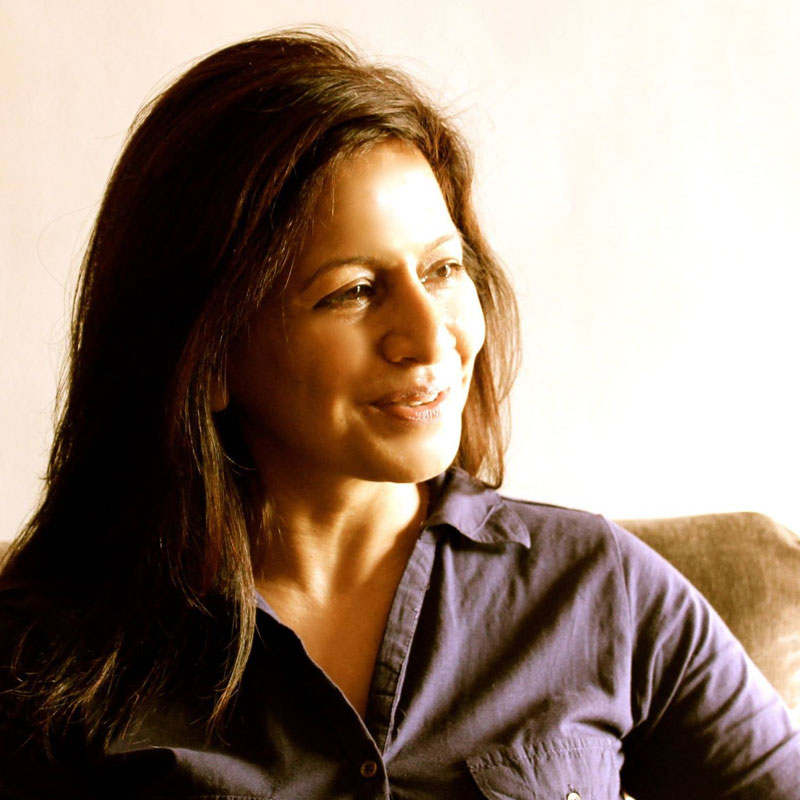
    President of the Screenwriter’s Association of India, Preeti Mamgain, opened up about how passion can turn into possessiveness when writers become deeply attached to the characters they create. She spoke about how letting go of her ideas and characters, especially when facing initial rejection, was extremely challenging. Learning to collaborate and accept changes to her work was traumatic but ultimately beneficial.

    Adhiraj Sharma spoke about his initial desire to create his own world through writing, only to realize that even in this space, complete control was unattainable. He discussed how writing became a way to escape the real world, but as guidelines and rules came in, he found that even in his own world, he couldn’t be a god. He also highlighted the mental toll of becoming a “creative machine” in the advertising industry.

    Ishani Banerjee discussed the cathartic nature of writing, where distress in characters elicits empathy from the audience. She believes that writers are merely vessels for the stories that demand to be told. She also spoke about how the interplay of distress in characters and the empathy it evokes in the audience makes the whole experience profoundly cathartic.

    The event highlighted the inherent strength in safeguarding writers’ rights and ensuring fair treatment through the collective bargaining of fundamental rights. It emphasized how solidarity and support can help bring about a profound sense of security among writers and keep anxiety at bay. By nurturing dialogue, enhancing awareness, and staunchly advocating for writers’ mental well-being, the event marked a significant stride toward a more robust, equitable future for the industry.

    Few highlights-

    1. Passion turns into possessiveness when writers create their own world in their stories. For Preeti, letting go of the idea of the characters of her stories or facing initial rejection was an extremely difficult challenge.

    2. Storytelling serves as a therapeutic outlet for writers, providing a means for self-expression and introspection amidst moments of self-doubt and existential questioning.

    3. Writers have a complex relationship with their craft which can also take a toll on their mental health. From navigating the fine line between godlike control and submission to the page, to the therapeutic role, writing can play in resolving personal turmoil.

    4. External factors, such as societal upheavals and personal challenges, impact the creative process, highlighting the symbiotic relationship between the writer’s craft and the world around them.

    5. Writers shed light on the importance of maintaining a balance between personal struggles and their passion for storytelling and the harsh realities of the industry, revealing the delicate interplay between creativity and pragmatism.
  • Good writing is about the soul, not success: Preeti Mamgain

    Good writing is about the soul, not success: Preeti Mamgain

    The Screenwriters Association (SWA) held its first peer-judging awards show earlier this month. The awards were given in various categories and were judged by senior writers from the industry. Indiantelevision.com – which has been a regular partner of the SWA – got into short conversations via email with some of the winners, asking them specific questions about their victory as well as what they put into the craft of writing. We are happy to present you the first of the winners: veteran actor and scripter Preeti Mamgain, who took home the best dialogue award for TV drama.

    Preeti has been behind well-known series such as Jassi Jaisi Koi Nahin, Jab Love Hua, Saara Akaash, Ek Chutki Aasmaan, and Phir Subah Hogi. Apart from this, she has appeared in front of the camera for shows such as Banegi Apni Baat, Saans, Kanyadaan, Waaris, Haadsaa, Left Right Left, Kitty Party playing character roles.

    In this conversation, however, we restricted ourselves to her penning skills. Read on to get insights from one of the better talents in TV.

    On what made her entry a winning one and what went into its writing.

    If I was to say it in two words, it was – trust and freedom. I received the award for best dialogue (TV drama), but it was also a show which I developed, so I was involved from the very inception. Writing on TV is a collaborative process, but that can also be the reason for 'bad writing'. However, when the collaboration and support is constructive, when the writer is given freedom to express and create, then he/she takes onus for their work, and that's when the best writing happens. Mere Dad ki Dulhan was a baby that I gave birth to, and I was allowed to nurture it and help it grow. 

    With the risk of sounding immodest, I would say the strength of my writing in this show was being able to truthfully capture the story world, and convey the emotions and reactions of the characters in a unique and entertaining manner. This involved immersing myself into every character's inner world, understanding how each of them feel, think and operate, and then bring out their most captivating aspects.

    On the characters in the show and the nuances she brought in.

    It is a simple story, with complex emotions, so the strength in the writing came from the authenticity of characters and emotions. I was very sure from the start that I'll stay true to the story and characters that I had set up, keep everything believable and real, and yet find fresh perspectives to the journeys the characters go on. This reflected in everything, right down to the dialogue. I treated the characters as real people, and tried to convey their real emotions and reactions through my words. The nuancing was not forced. It emerged naturally from the unique elements in the characters themselves. For instance, Amber Sharma is a man who hates the world, and loves his daughter with the same insane passion. His dialogue reflects his derision towards people, and seeing everything from the POV of his protectiveness towards his daughter. He calls her boss "Yamdoot" because the guy always comes with bad news, and takes Niya away from him. While Niya's dialogue reflects her irreverent love for her Dad.

    On her journey in the screenwriting trade.

    It's been a very, very long journey. I'm a bachelor in Fine Arts from College of Art, Delhi. I trained in commercial art, and worked as a computer graphics artist in the beginning of my career. I was also actively involved in theatre. Writing is something that came naturally because I grew up in a home where literature was held in great regard. My mother was a Hindi teacher, which is why I always had respect and fascination for the written word. When I came to Mumbai, about 20 years ago, I had no plans of becoming a professional writer. But I was surrounded by wonderful writers, directors and actors, and being a very curious person, it led to a lot of self-learning. I used to write scripts, for no one in particular, and then would pester my friends for feedback. I'm surprised they tolerate me LOL.

    My first break happened almost accidently, when two of my short stories got selected by a TV channel, for a show which aired a series of episodic stories. After that, there was no looking back. I had found my true passion – writing for the screen. It was literally love at first sight, and it has sustained over the years. Whether I fight with my writing, struggle with it, sometimes walk out on it, but I always go back to it. Because deep down I know that it's the best and the longest long-term relationship of my life! 

    On authenticity and the lengths she will go to achieve that.

    Authenticity in writing can be viewed from two aspects – authenticity of ideas, and authenticity in the writing itself. Both, according  to me, are critical. Authentic ideas are rare to come by. Most times we see a re-churning of what is already out there. As a writer, we must strive for authenticity by drawing on personal experience, knowledge and awareness of the world we live in. We are creators, so our quest should always be to put out unique and inspiring content. 

    When it comes to authenticity of writing, it's important that we stay true to our content. Screenwriting is such a powerful medium because we have direct access to people's hearts and minds. It's our responsibility to bring authentically to our writing – in terms of characters, time, thought-processes. We need to put in that hard work, otherwise we are being unjust to our own ideas.  Good writing is about the soul, it cannot be driven by success, commercial or otherwise.

    On whether industry is as invested in screenwriting and writers as it should be.

    No it's not. In our industry, currently, a writer has the status of a brick-layer. We lay the bricks, but then comes plaster, paint, lights and decor. And somewhere in that process, the brick-layer is side-lined, the house is taken over, and by the time the house gets ready, everyone has forgotten that some credit is due to the brick-layer as well. 

    Having said that, there has been a change in the last decade. It's being felt by at least a few people that writing is the foundation of any screen content. You cannot make good content with bad writing. The result is, that we're seeing some good content coming up in all mediums – TV, web and film. But is there more investment in writing – commercial, credit-wise or status-wise? Well… I feel it's still a long way to go before writers get what they really deserve.