Tag: Preet Dhupar

  • IKEA India on boards Murali Iyer as chief financial officer

    IKEA India on boards Murali Iyer as chief financial officer

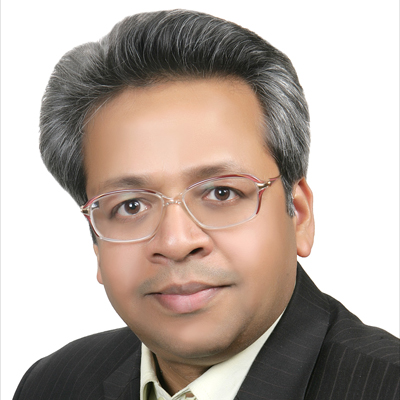
    Mumbai: Swedish home furnishings retailer IKEA has appointed Murali Iyer as its new chief financial officer for its India business. He will be part of the IKEA India leadership team reporting to the CEO and chief sustainability officer Susanne Pulverer.

    Murali takes over from Preet Dhupar who has moved into a global role within Ingka group which is the parent company of IKEA.

    In the new role of chief financial officer, Murali will lead IKEA India’s CFO function with purpose towards profit, leading the finance controlling, business navigation, legal, tax, customs, and business risk & compliance teams.

    Murali brings with him over 22 years of successful track record in financial leadership, having worked with the Volvo Group in India and Sweden in multiple roles. With a keen business acumen and curiosity to learn, his experience across geographies and cultures has enabled businesses to overcome challenges for an inclusive growth.

    Commenting on his appointment Murali Iyer, said, “I am excited to begin my journey in IKEA India and contribute to its ongoing growth journey. We are focusing on our priority markets and building a strong home furnishings foundation through our omnichannel expansion to be more accessible, affordable, and sustainable for the many people.”

  • BBC Global News appoints Naveen Jhunjhunwala as India COO

    BBC Global News appoints Naveen Jhunjhunwala as India COO

    MUMBAI: Last month, indiantelevision.com broke the news that BBC Global News India COO Preet Dhupar had decided to move out of her 14 year stint with the company. Now, the global broadcaster has found a person to fill the space in Naveen Jhunjhunwala.


    Jhunjhunwala was previously with Turner International India for 15 years as vice president for corporate finance and administration, looking after the financial functions for distribution, ad sales and marketing of CNN International, Cartoon Network, POGO and HBO in India, Pakistan, Sri Lanka, Maldives, Bangladesh, Nepal and Bhutan.


    Speaking on his new role Jhunjhunwala said, “I am delighted to be joining the BBC. I am looking forward to taking up my new role and to being part of the talented team at one of the world’s most renowned news operations. The BBC is an iconic brand and carries a special position for the Indian audience and in today’s dynamic market place, with digitisation, growing online penetration and the BBC’s special focus on India, it has exceptional potential for growth in both television and online space.”


    At Turner, he helped launch the company’s India operatons including the CN subscription business, launch of new channels like HBO, POGO and WB. He also helped set up the Zee Turner distribution JV, including MediaPro as well as CNN-IBN. Prior to Turner, he was with Ernst & Young in New Delhi.


    The role of COO for India was created last year to better organise the company’s business operations in a growing Indian market. Apart from looking at finance, Jhunjhunwala will also be responsible for determining BBC’s commercial priorities and targets for news across the country as well as ad revenue, content distribution and audience growth.


    “I’m pleased to welcome Naveen on board at such an exciting time for the BBC’s news interests in India.  Naveen brings with him a wealth of experience and will be a real asset to the BBC, building on the successful work to date of our teams in Delhi and Mumbai,” said BBC Global News CEO Jim Egan.


    “India is a country we are proud to have been broadcasting to and from for more than seven decades and we remain committed to our audiences here. We have featured India in two dedicated programming seasons on BBC World News already this year, have recently launched a new Indian edition of bbc.com/mobile and are mid-way through our most comprehensive coverage ever of the Indian general election. I am sure Naveen will be invaluable as we work to develop even further in this exciting and dynamic market,” he added.


    Naveen will take up his position in Delhi on 1 May. He replaces Preet Dhupar who left the organisation earlier this month.

  • Preet Dhupar to quit BBC Global News

    Preet Dhupar to quit BBC Global News

    MUMBAI: With elections just around the corner and one of the world’s renowned news channels BBC Global News promising to provide in depth news regarding India during the elections, comes a news that BBC Global News chief operating officer for India Preet Dhupar has decided to quit the organisation.


    Confirming the news to indiantelevision.com, Dhupar says, “Yes I have decided to leave but I’m around in BBC for some time.”


    BBC too has confirmed the news and revealed that the management is currently looking for a suitable replacement for Dhupar.


    Dhupar has been associated with BBC for 14 years. She joined the channel in 2000 as director of finance and operations and was elevated to COO in 2013.

  • India-A hotbed for news channels

    India-A hotbed for news channels

    “To improve is to change, to be perfect is to change often.” This quote from Winston Churchill is in my opinion the best way to describe 2013 for the Indian television market scenario and BBC Global News, the parent company of BBC World News and bbc.com.

    Let’s first take a broad look at the changes in the Indian market.  While regulation forced the industry to adopt digitisation, it is commendable that the industry responded and today MSOs have had around 70 to 80 per cent success in seeding STBs in phase I and phase II. Digitisation has happened and is progressing – but at the moment that is only the technical side. Addressability remains a concern. But large changes such as this in markets as humongous and diverse as India are bound to take time. Our outlook is positive and we are hoping that once business models start to take shape, this change will be positive for all stakeholders. But there is no doubt that traditional models are being disrupted. The cable industry will have to look at differentiation, quality of service and value added services to drive revenue growth. The capacity constraint that drove carriage revenues is likely to moderate with digitization. There is demand for niche content. New launches are happening in the super-niche format. The demand for Pay-TV is growing with increase in the availability of premium content. Consumers are willing to pay for HD content. Cable operators have also started offering HD-enabled STBs.

    The other major change is the pattern of consumption of content. Viewing has become personal with the consumer demanding and expecting flexibility in terms of timing, volume of content consumed and place of consumption. Increasing mobile & broadband penetrations and affordability of smarter devices are offering alternative digital distribution platforms. Consumption of live TV on-the-go and catch up TV is on the rise.  All these are very positive changes that signal well for the robust growth of the industry.

    It has also been a year of evolution for BBC Global News. We moved into state of the art brand new studios in the heart of Central London in what is easily the world’s largest and most advanced newsroom. Both in anticipation and in response to audience trends, we have successfully converged our news operations to deliver the best multimedia, multi platform international news. Our improved look on TV, our website, our apps – all these make for a greatly enhanced experience for the consumer. Our new brand campaign ‘Live the Story’ is not just an advertising tool, it is an ethos for the way we approach content and we want to reinforce that message in the market. It is in recognition of this ethos that World News America received an Emmy award for “Best continuing coverage of a news story” for Ian Pannell and Paul Wood’s reports from Syria. And among our many editorial highlights was the 100 women season with Mishal Husain’s exclusive interview with Malala featuring not just on BBC World News but across all BBC platforms domestic and international. Indeed one of the catalysts for 100 Women was the Delhi gang rape attack in December last year.

    It is great to see the audience responding to us. In India, BBC World News has maintained its status as the leading international English news channel among the country’s affluent, influential opinion leaders, business decision makers and frequent international travellers, according to the latest Ipsos PAX survey. BBC World News also beats India’s domestic news channels to take the number one spot amongst the highly desirable, upscale audience.  BBC Global News, including BBC World News and bbc.com is the only news brand across TV, online and mobile to show quarter on quarter growth. Social media is equally important for us to improve our engagement and we continue to achieve important audience milestones on Twitter. @bbcworld now has more than 5 million followers and @bbcbreaking has passed the 8 million follower mark.

    As economics and politics in India become even more interesting with the country entering election mode, we have just announced a season of programmes focusing on India to air in February 2014. India Direct will delve behind the headlines to bring audiences insight on our country as we strive to be significant player on the global stage. The India Direct season will give BBC audiences around the world the opportunity to see everyday life in India. Through programmes like Fast TrackOne Square Mile and Working Lives, the BBC’s unrivalled network of journalists explore the issues faced by people here – from the economic opportunities and challenges to living life at every level of society; from its traditions and history to future plans and innovations.  We are looking forward to what promises to be a really insightful coverage of India. We also hope to bring an international perspective to the coverage of the elections. As the world focuses on India, our journalists will also showcase India to the rest of the world with our global coverage.

    The world of media and journalism is very dynamic and India is a vibrant market. We believe that the changes in the media landscape are all positive; we ourselves are steadily progressing in tandem with global trends and certainly have a very positive outlook for India. We believe that the market respects and appreciates our content and that our ability to provide superior international news content on multiple platforms will differentiate us and keep us growing.

    (Preet Dhupar is BBC Global News COO for India. The views expressed in the above article are the author’s personal views)

  • News should be a ‘paid’ asset

    News should be a ‘paid’ asset

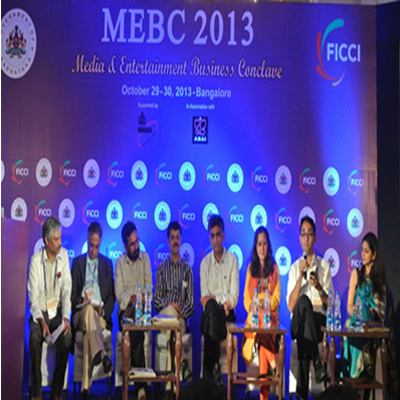
    BENGALURU: Whether it’s the political battle that’s unraveling in the country, or it’s a terrorist attack, news always interests people. But is news as interesting as a gossip piece about a celebrity? This and a lot of other points were raised at the first day of the FICCI MEBC (Media and Entertainment Business Conclave) that saw a session that discussed the news genre. The discussion brought up several points including viewership data, content that is being broadcast and the current situation of the genre as a whole.

    The panellists included BBC World News India COO Preet Dhupar, Udayvani group editor Ravi Hegde, Suvarna News editor Anantha Chinivar, Former CNN IBN journalist Veeraraghav, columnist Aakar Patel, NDTV resident editor Maya Sharma and IIM Bangalore dean Dr S Raghunath. The session was moderated by journalist Prakash Belawadi.

    After the entire discussion, the panelists concluded that the genre relies heavily on advertising, thus restricting the kind of content that can be produced. At the same time, viewership data such as TAM (Television Audience Measurement) is needed because advertisers depend on such data to pool their money where they want to. “Producing news is expensive and that is why all channels have panel discussions in their primetime slot. It is cheaper than sending an OB van to some far off place and spend huge amount,” said Sharma. 

    Another point brought up during the discussion was about “sensationalising news”. The reason why many times news is sensationalised is because entertainment is more prominent than news. So, news journalists need to adapt to the entertainment form of style in order to grab eyeballs. But at the same time just getting viewers will not help because everyone is also looking for credibility of news, including the people watching it and the ones dispersing the news. Channels keep a close watch on other channels to know what they are reporting.

    However, Hegde differed as he remarked that “media was not entertainment but a serious job”. Hegde, who comes from a print background, said that it’s a newspaper’s job to clear the confusion that channels have created the previous night for the viewers.


    Talking about the revenue generated through advertising, Hegde said that most of the advertisements to newspapers come for the editions in the metros, making it difficult to distribute papers in the rural areas.

    To this, Chinivar pointed that in order to beat entertainment news, the need to sensationalise news comes up.

    Columnist Patel thinks that the standard of journalism in India is poor because of lack of good training and low salaries.

    Veeraghav brought to fore the speculative nature of the Indian viewers that the channels have to continuously face. He remarked how many people question news channels’ nature to delve into the future, but they always want to know the future not what has happened. “If I tell a viewer that elections are going to happen, the first thing he will ask me is can you tell me who is going to win?” he said.

    Although many channels have taken a strong stand against the TAM accusing it of fudging data to benefit advertisers, all the panellists agreed that there needs to be some kind of tracking to know the viewership for channels and newspapers because it is ultimately a business.

    The fact that news is free is what makes it so volatile. “When you have to pay for your news, it will be taken seriously and that’s when the kind of news you get will also become better,” said Sharma. With digitisation coming in, they hope that some system will come in to place to help them get more revenues. News will become a paid asset in the future. “As long as news is free you cannot live without TAM or IRS,” Veerraghav ended.

  • News should be a paid asset

    News should be a paid asset

    BENGALURU: Whether it’s the political battle that’s unraveling in the country, or it’s a terrorist attack, news always interests people. But is news as interesting as a gossip piece about a celebrity? This and a lot of other points were raised at the first day of the FICCI MEBC (Media and Entertainment Business Conclave) that saw a session that discussed the news genre. The discussion brought up several points including viewership data, content that is being broadcast and the current situation of the genre as a whole.


    The panellists included BBC World News India COO Preet Dhupar, Udayvani group editor Ravi Hegde, Suvarna News editor Anantha Chinivar, Former CNN IBN journalist Veeraraghav, columnist Aakar Patel, NDTV resident editor Maya Sharma and IIM Bangalore dean Dr S Raghunath. The session was moderated by journalist Prakash Belawadi.


    After the entire discussion, the panelists concluded that the genre relies heavily on advertising, thus restricting the kind of content that can be produced. At the same time, viewership data such as TAM (Television Audience Measurement) is needed because advertisers depend on such data to pool their money where they want to. “Producing news is expensive and that is why all channels have panel discussions in their primetime slot. It is cheaper than sending an OB van to some far off place and spend huge amount,” said Sharma.


    Another point brought up during the discussion was about “sensationalising news”. The reason why many times news is sensationalised is because entertainment is more prominent than news. So, news journalists need to adapt to the entertainment form of style in order to grab eyeballs. But at the same time just getting viewers will not help because everyone is also looking for credibility of news, including the people watching it and the ones dispersing the news. Channels keep a close watch on other channels to know what they are reporting.


    However, Hegde differed as he remarked that “media was not entertainment but a serious job”. Hegde, who comes from a print background, said that it’s a newspaper’s job to clear the confusion that channels have created the previous night for the viewers.


    Talking about the revenue generated through advertising, Hegde said that most of the advertisements to newspapers come for the editions in the metros, making it difficult to distribute papers in the rural areas.


    To this, Chinivar pointed that in order to beat entertainment news, the need to sensationalise news comes up.


    Columnist Patel thinks that the standard of journalism in India is poor because of lack of good training and low salaries.


    Veeraghav brought to fore the speculative nature of the Indian viewers that the channels have to continuously face. He remarked how many people question news channels’ nature to delve into the future, but they always want to know the future not what has happened. “If I tell a viewer that elections are going to happen, the first thing he will ask me is can you tell me who is going to win?” he said.


    Although many channels have taken a strong stand against the TAM accusing it of fudging data to benefit advertisers, all the panellists agreed that there needs to be some kind of tracking to know the viewership for channels and newspapers because it is ultimately a business.


    The fact that news is free is what makes it so volatile. “When you have to pay for your news, it will be taken seriously and that’s when the kind of news you get will also become better,” said Sharma. With digitisation coming in, they hope that some system will come in to place to help them get more revenues. News will become a paid asset in the future. “As long as news is free you cannot live without TAM or IRS,” Veerraghav ended.