Tag: PRB

  • Draft bill proposes to regulate digital news media

    Draft bill proposes to regulate digital news media

    MUMBAI: The Ministry of Information & Broadcasting (MIB) has proposed changes to the archaic, colonial-era Press and Registration of Books (PRB) Act, 1867, which will make it mandatory for digital news sites to register themselves with the Registrar of Newspapers of India in “such manner and giving such particulars as may be prescribed”.

    Section 18 of the provisions of the draft Registration of Press and Periodical (RPP) Bill, 2019 – released by the MIB for consultations – stipulates: “The publishers of news on Digital Media shall register themselves with the Registrar of Newspapers of India in such manner and giving such particulars as may be prescribed.”

    The draft bill, if accepted, will bring digital news under the gambit of regulation as currently no news website in India has to “register” with the government or follow any regulations other than what are normally applicable for any form of speech or expression.

    The bill defines news on digital media as "news in digitised format that can be transmitted over the internet, computer or mobile networks and includes text, audio, video and graphics".

    Notably, this is the second attempt by the Narendera Modi government to bring, hitherto, freewheeling digital news media under some sort of regulation. Earlier in August, the Union cabinet said it was introducing a 26 per cent cap on foreign direct investment for news websites subjecting to official approval on a case by case basis.

    Rules for government advertisement

    Besides, the draft bill would enable the central and the state governments to frame appropriate rules and regulations to regulate the criteria and conditions for issuing government advertisements in newspapers, accreditation of newspapers and such other facilities for newspapers.

    The process of title and registration of periodicals including newspapers is proposed to be effected centrally by the Press Registrar General as a simultaneous process, the draft bill says.

    Editors to be Indian citizens

    The bill also makes it mandatory for editors to be Indian citizens. It defines editor as “an individual, whether called editor, chief editor, group editor or editor-in-chief or by any other name called, being a citizen of India and is ordinarily resident in India responsible for the selection and finalization of the content of a periodical".

    Ban on persons who have “done anything against the security of the state”

    Another notable feature in the draft bill, that is raising some concerns, is that the bill enables the government to ban any individual who have “done anything against the security of the state” from bringing any publication. As such, the phrase “done anything against the security of the state” is ambiguous and open-ended.

    The ministry has sought comments on the draft bill, released earlier this week, from stakeholders over the next 30 days.

  • No proposal to bring news portals under PRB or PCI Acts

    NEW DELHI: The Information and Broadcasting Ministry is not considering making the provisions of Press and Registration of Books (PRB) Act 1867 and Press Council of India Act 1978 applicable to the news portals as these Acts are meant to govern print media sector only.

    Parliament was informed by Minister of State for I and B Rajyavardhan Rathore that according to the Allocation of Business Rules, the Electronics and Information Technology Ministry (MEITY) has been tasked to administer Information Technology Act 2000, under which the digital newspapers or news-disseminating portals fall.

    Rathore said the Government had formulated new guidelines for Central Government advertisements on websites. The policy of Directorate of Advertising and Visual Publicity has been made effective from 24 May 2016 for releasing government advertisements on online platform (such as Google, Yahoo etc.).

    The policy sets out criteria for empanelment of suitable agencies and Rate fixation for advertisements on websites. The new Policy is available on the DAVP website under the heading ‘Electronic/New Media’ sub-heading ‘New Media Policy guidelines for empanelment and rate fixation for Central Govt. Advertisements’.

    The PRB Act is applicable to printed newspapers only and not to online newspapers. Similarly, PCI Act only deals with news items of printed newspapers / journals etc.

    Also Read:

    http://www.indiantelevision.com/television/tv-channels/news-broadcasting/network18s-news18com-re-branded-as-pradeshcom-160204

    http://www.indiantelevision.com/headlines/y2k13/mar/mar32.php

  • Tewari reaffirms his support for extension of ad cap implementation

    Tewari reaffirms his support for extension of ad cap implementation

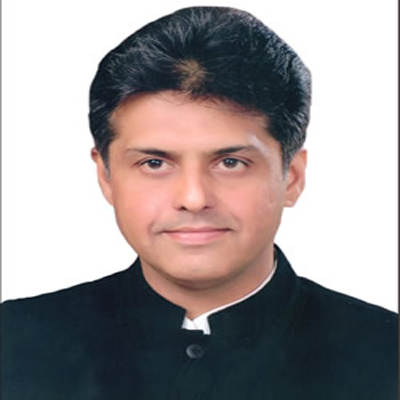
    NEW DELHI: The news channels have found a big supporter to push their demand for an extension in the implementation of ad cap. And this comes from none other than Information and Broadcasting Minister Manish Tewari himself. In a statement made today, the minister has reinstated his support for the news channels and asked the Telecom Regulatory Authority of India (TRAI) to extend the time frame for news channels to implement the 12 minute ad-cap.


    “TRAI can give the news channels an extension at least till the final phase of digitisation is complete,” said Tewari who was addressing a symposium on News Media Education in India organised by CMS Academy at the India International Centre in New Delhi.


    “The regulator can seriously look into some of the issues which the news channels have raised and see if they can give them a road map which is synchronous with digitisation, so that we can have a seamless implementation of both digitisation and the statutory remit.”

    Tewari questions if we have freedom of the press or freedom of the owner of the press


    Tewari commented that apart from protecting consumer interest, TRAI should also look at the industry situation so that downsizing does not become the rule rather than the exception. He said manufacturing Set Top Boxes (STBs) “is not rocket science” and digitisation has been a “huge missed opportunity” for the medium and small scale industry. He said Indian industry should utilise the opportunity of providing STBs for third and fourth phase of digitisation.


    The minister in his address not only spoke in the favour of the news channels but also took a dig at the current media scenario. Commenting on last week’s lay off by a television news channel and the legal recourse against the Wage Board recommendations for the print media by one of the promoters he said, “Media is a business today.”


    Tewari also said that there was a need to reflect on whether it is a business as defined under the Indian constitution or any other activity – a “question germane to the media.” He was referring to over 300 job cuts that include some of the well known names, in a news channel last week.


    The minister said the rights of the citizens and the rights of the media barons “fall in different tracks with the twain not destined to meet.”


    Describing the question as a classic chicken and egg situation, Tewari commented that the “Conundrum bedevilling the media landscape today in India is – Do we have freedom of the press or freedom of the owner of the press?” He hoped media professionals would “introspect” on the issue.


    Commenting on the challenges faced by the print, broadcasting and new media (internet) he said, “The challenges are unique, distinct and require different treatment.” He further stated that it was time for the print media, which has more or less tried to keep rates low over the years, to “reflect and rationalise tariffs.”


    He said the heavily advertisement-dependent model of newspapers was “not the way forward” and called for “serious introspection” in the print media on how far the advertisement model can sustain them.


    On the broadcasting sector, he said of the 798-odd channels, 415 are news channels, and they too are “hugely” dependant on advertisements for revenue. “This has led to addiction of sensationalism, manufactured anger and media trials,” the minister added. The situation leads to violation of privacy and that the issue needs to be addressed.


    Tewari also said his ministry had sent a proposal to the law ministry to incorporate provisions against paid news in the Press and Registration of Books (PRB) Act, providing for penal provisions. He said it was proposed that paid news would be made an offence which would have provisions of penalty and suspension of license.


    He said the media industry should consider holding a common exam for journalists, on the lines of that conducted by the Bar Council, after which they could be given licence to pursue the profession.


    “A good starting point would be that rather than prescribing a curriculum which is then standardised across institutions, possibly the media industry could think about at least having a common exam.”


    Tewari said there were good institutions to train journalists, but there were also “fly-by-night” operators in the media education sector “Professionals from diverse fields would not resent the idea of a common exam.”


    Press Council of India Chairperson Justice (Retd) Markandey Katju had earlier raised the demand for minimum qualifications for journalists.