Tag: Praveen Sinha

  • NBA, Sony Six and Jabong.com partner to expand NBA JAM in India

    NBA, Sony Six and Jabong.com partner to expand NBA JAM in India

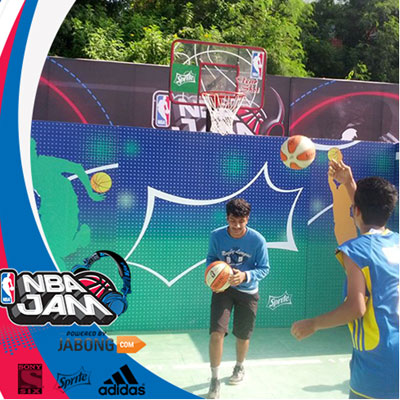
    MUMBAI: National Basketball Association (NBA) and Sony Six have come together yet again for the second edition of NBA JAM in India. Powered by Jabong.com, the touring sports event which last year visited only four cities will be travelling four times that number now- Yes, 16 cities!


    The event which will take place from 22 September to 6 December 2014 features a 3-on-3 tournament format with more than 3,000 teams and more than 600 colleges participating. NBA talent, including a legend, dance team and mascot, will travel to select cities to engage fans.


    NBA India managing director Yannick Colaco said, “Through this edition of NBA JAM, we look forward to bringing the NBA experience to college students and youth in these 16 cities. From the largest ever 3-on-3 tournament ever held in India to shooting and graffiti competitions, I know sports fans across India will be excited to participate.”

    Six will telecast important highlights and the finals of JAM. Sony Six business head Prasana Krishnan said, “We take immense pride in partnering with the NBA in bringing the second season of NBA JAM to India. With a remarkable format, NBA JAM will not only boost basketball participation in the country, but also strengthen the footprint of sports and drive viewership for NBA programmes available exclusively on Six.”


    The 3-on-3 national tournament, part of NBA 3X events will be conducted in 14 countries and 52 cities this year and will include divisions for both men and women aged 16-24. 


    The event will be divided into four zones with four cities in each zone. The winning team from each city will play the winning teams within their zone for the chance to compete in the national finals, which will take place in Pune. 


    Jabong.com, the new powered by partner for the property, has started an online event registration and a microsite www.Jabong.com/nbajam.  At each of the venues the e-commerce platform will create an NBA store in experience zone which will feature the latest NBA merchandise and exciting games for youngsters.

    Sprite which is the official beverage partner will use its digital programme; ‘Sprite Till I Die’ to engage with students. This includes the ‘Sprite Graffiti Challenge’ where artists can upload their work on www.spritetillidie.com to take part in ‘Sprite Till I Die Art’ competition.


    The official outfit partner Adidas, will provide players with jerseys for the tournament.  In addition, Adidas will bring back the ‘Adidas Hoopstars’ a shooting competition to find the best shooter in each city who will earn Adidas basketball gear.


    Jabong.com founder and MD Praveen Sinha informed, “Following our association with the NBA that started earlier this year, we have seen a great response from our customers who are fashion and sports-oriented.  We are yet again elated to join the NBA for these events, which again give us an opportunity to showcase how Jabong is contributing to the basketball enthusiasts in the country and increasing awareness of the sport. We extend our full support to the NBA’s initiative.”


    The event will feature a variety of exciting contests to engage students such as: ‘Jabong.com NBA College Ambassador’ programme – as part of this programme, Jabong and the NBA are looking for the biggest NBA fan in each city.  Fans in each city can register to be a part of the contest by posting an image of themselves on the NBA India Facebook page and Twitter using the #JabongNBAicon. Participants that generate the most likes and retweets will win in their respective city.  Winners from each city will receive exclusive NBA merchandise and be entered into a national competition to find India’s biggest NBA ambassador. 

    ‘Jabong.com Internship Challenge’ – Through this, the e-commerce platform will provide one talented student with the opportunity to intern at the company’s headquarters in Gurgoan.  To qualify, participants in each city can submit an application on Jabong.com.  The 16 city winners will interview with Jabong’s senior management, after which one winner will receive a three-month internship.

    Besides these two programmes, head-to-head dance and war of the DJ competitions will take place at each venue, allowing students to showcase their skills.

    As reported first by indiantelevision.com, Six aired a record 14 games per week during the 2013-14 season, up from four the previous season.  More than 50 million viewers tuned into NBA programmes during the season, with an average per game viewership increase of 300 per cent year over year, according to the channel.


  • Jabong expects up to 1000 orders a day from ‘Next-Door’ service in a year

    Jabong expects up to 1000 orders a day from ‘Next-Door’ service in a year

    MUMBAI: With logistics one of the biggest challenges in the country, physical delivery of products is not feasible in a number of villages and rural communities. Coming up with a solution to the concern and an opportunity to increase its consumer base, one of India’s biggest fashion retailers, Jabong.com has come up with a new ‘Next-Door’ service.


    The service will enable customers to pick up their order at the nearest coffee shop, petrol station or tour operator. The trial for the pickup service is going to start soon in 39 towns, including Murshidabad in West Bengal, Chandausi in UP, Dahod in Gujarat and Udhampur in Jammu and Kashmir.


    Talking about the new initiative, Jabong’s cofounder and managing director Praveen Sinha says, “This will open channels for the consumers in the rural areas. The pilot for the pickup service will be launched in 469 pincodes and 114 pickup points.”


    Piloting the most extensive initiative of its kind by an Indian company, the Delhi-based online fashion retailer, Jabong.com gets about 55 per cent of its revenue from non-metro centres and Sinha expects a double digit contribution in sales from this new scheme once the services scale up.


    “We are expecting about 20 orders a day in the first round of the service while anticipating it to go up to 200-1000 orders a day within a year,” he adds.


    While the revenue model for the new collaboration is still undecided, Sinha said that it is most likely to be a mixture of giving some per cent out of the revenue to the partners or on the number of orders it receives. It will find a balance between the two so that no one is at a loss.


    With 700 per cent growth in mobile usage, Jabong is banking more on the smart phone users in the non-metro regions for the success of this new venture. At Jabong, mobile users now contribute 25 per cent of its orders and Sinha expects it to cross 50 per cent in the next five years.


    Even though Jabong declined to share financial details about the partnership Sinha reckons, “The company is growing 100 per cent year-on-year and was valued at $26 million in the month of December 2013.”


    Since e-commerce in India is still booming, 60-65 per cent of its customers use the cash on delivery (COD) mode of payment and according to the co-founder, it will still be open to the customers in the pickup service launched by them.


    E-commerce sector companies are now beginning to experiment with newer techniques, mergers and acquisitions. While companies like Flipkart-Myntra are already in collaboration, Jabong is not currently looking at any mergers or acquisitions but is not closed to the idea.


    E-commerce space in India has been growing like gangbusters with an annual growth rate of 56 per cent. Over the past four to five years, competition from online retailers such as Flipkart (in books, music and electronics) and Myntra and Jabong (in apparel) has hurt physical retailers. Commenting on the advancing E-commerce industry, Sinha states, “Indian e-commerce space will increase up to eight times by 2018-2020 to $30 billion.”

  • E-commerce gives thumbs up to Budget 2014

    E-commerce gives thumbs up to Budget 2014

    MUMBAI: The e-commerce sector is a happy lot. Finance Minister Arun Jaitley in his maiden budget announced that manufacturing units will be allowed to sell their products through retail including e-commerce platforms without any additional approval.


    This paves path for the foreign direct investment (FDI) in the manufacturing sector.


    Foreign consumer brands with manufacturing units in the country have been piggybacking on the online retailers’ potential growth which is currently estimated to be at $3.2 billion.


    PwC India technology leader Sandeep Ladda says, “Liberalisation of FDI in e-commerce sector will provide much-needed certainty to foreign players and to a sector that has the promise to provide increased commerce and generate employment in the country. This will also provide boost to the sector and create healthy competition so as to benefit all the constituents in the ecosystem – consumers, government, e-commerce players, and retailers in general.”


    While the Department of Industrial Policy & Promotion (DIPP) is keen on opening e-commerce to FDI, as was made abundantly clear in the meeting with industry stakeholders, they were also clear that they needed to understand how FDI would help boost manufacturing.


    American Swan CEO and director Anurag Rajpal says, “A more robust online retail sector will spur manufacturing and help an economic revival. India currently does not allow global online retailers from selling goods directly to customers but allows them to own 100 per cent of a marketplace business, where third-party suppliers can use their platform. Both Amazon and eBay use such a platform to operate in the country.”


    Amazon India, which recently launched its first TVC in the country during IPL 7 and promises delivery on the same day, feels that FM’s announcement is a positive statement of intent for the e-commerce industry. “It recognises the role of e-commerce companies in the growth of manufacturing sector. Following this statement, we are hopeful of a more positive and liberalised policy on e-commerce in the near future aimed to help grow the manufacturing industry,” says a spokesperson from the e-retailer.


    One of the biggest players of this space in the country, Flipkart co-founder and CEO Sachin Bansal thinks this is a forward looking budget and hopes to see results over time. “The focus on giving a fillip to infrastructure and skill development is very encouraging. The fact that we could see a GST roll out by the end of the year is very positive and will augur well for all sectors. The attention to facilitating entrepreneurship and the allocation towards the National Rural Internet and Technology Mission is an extremely positive move, as collectively they provide the opportunity for both individuals as well as businesses to go digital,” he opines.


    Brands feel that the move will give a push to the manufacturing sector, and will also encourage foreign companies to set up manufacturing facilities in India.


    Currently, India allows wholly-owned overseas subsidiaries in single-brand retailers that sell products under a single label through physical stores such as Zara, Panasonic or Marks & Spencer. However, the catch is that they have to get clearance from Foreign Investment Promotion Board (FIPB) and produce 30 per cent of their products within the country.


    Moreover, other announcements in the budget too signal a positive way for the online sector. More internet penetration and connection in the rural areas, increase in logistics because of increase in railway freight and decrease in excise duties on shoes, apparel etc bring in good news for the portals.


    Jabong’s co-founder & MD Praveen Sinha feels that though it is still unclear that how increase in service tax on online advertising will impact the sector, one will have to wait and watch how these announcements will be implemented. 

  • Jabong partners with Humpty Sharma ki Dulhania

    Jabong partners with Humpty Sharma ki Dulhania

    MUMBAI: Jabong, partners with the new upbeat movie by Karan Johar under Dharma Production – Humpty Sharma Ki Dulhania. A part of the tie-up, Jabong  will unveil an exclusive collection defining the new age fashion exuding elan, a range inspired by the movie and the looks of the lead star cast – Bollywood’s new heartthrobs  – Varun Dhawan  playing Humpty Sharma and Alia Bhatt playing Kavya Pratap at Crown Plaza, Okhla in Delhi.

    Jabong founder and managing director Praveen Sinha said, “We are highly elated to launch this stylish and chic Humpty Sharma Ki Dulhania collection on Jabong. We are only growing strength to strength in the e-commerce sector, and this collaboration exemplifies the stature we hold in the market. When such magnum opus brand names show an inclination in getting associated with us, it exudes nothing, but power of e commerce and Jabong. The fashion industry draws heavily from Bollywood; we at Jabong cater to such eclectic needs of people. From international apparel honchos to the classic Bollywood fashion parade, Jabong.com now has everything under one roof.”

    Dharma Productions marketing head Siddharth Kadam said, “Movies and shopping are the two experiences people of India not only enjoy but also celebrate. Witnessing the boom in online retail, such associations are going to become more popular with a Bollywood style collection inspired by the movies. There is a huge market of young, fashionable buyers wanting to dress like film stars. We are happy to partner with Jabong for our film Humpty Sharma ki Dhulhania.”

    Bottomline Media managing director Tanaaz Bhatia said, “Our association with Jabong.com goes far back and it has been a wonderful experience to work with them. We believe the Humpty Sharma collection will create a new trend amongst the youth especially after the movie is proving to be a hit already! We look forward to create many such associations with Jabong.com and our upcoming films.”

    Click here for event pictures

  • Jabong WOWs customers, stays ahead of the ‘pack’

    Jabong WOWs customers, stays ahead of the ‘pack’

    MUMBAI: According to the IAMAI, digital commerce grew by 33 per cent to Rs 62, 967 crore last year vis-a-vis Rs 47, 349 crore in 2012. With increasing internet penetration, e-commerce growth is only headed north.

    While it is becoming routine for a growing number of people to shop online, what is the clincher that makes consumers decide in favour of one e-retailer over the other? The answer lies in innovation and re-invention; qualities that Jabong.com claims to specialise in.   

    For starters, marketing, operations and all other critical components of Jabong are well integrated with social media in keeping with the company’s mantra: to create superlative customer experiences every time.

    Significantly, the approach to social media is “to be open-source.” “This affects the way we engage, the tonality and the words we use. Also, it has created a culture of being proactive rather than reactive. We are glad it’s been appreciated by our customers,” says Jabong’s co-founder and MD Praveen Sinha.

    Secondly, the online retailer is high on EQ (emotional quotient). It understands that when a customer buys from Jabong, it’s not just a product that has been ordered but there are emotions attached to the purchase. According to Sinha, this aspect has a deep impact on Jabong’s culture of creating customer WOW.

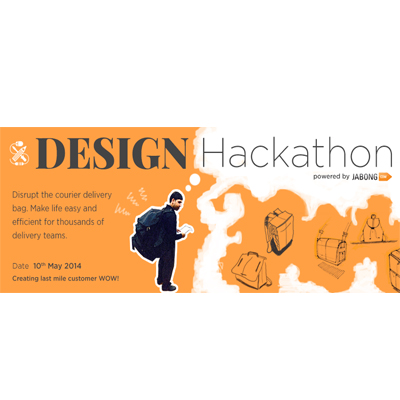
    Thirdly, all comments, suggestions and complaints are taken very seriously. A case in point is the Jabong design hack which is the result of a seemingly innocuous tweet sent to all major e-commerce companies by a gentleman from Bangalore. Jabong took up the gauntlet and initiated a design hack-a-thon where sundry designers and even orthopaedics sat together and brain-stormed to turn the somewhat bulky courier container used by the e-retailer into a hip, easy-to-carry delivery bag. “The intention was to host some brilliant minds at our headquarters in Gurgaon and come up with interesting solutions to the challenge. The focus was on the solution, which was to make the courier delivery bag easy to carry, efficient, lighter (if possible) and fashionable. Jabong will now work with the winning team to build a prototype,” says Sinha.

    Courier services have had to evolve in the last 2-3 years for serving e-commerce. The fast turn-around-times, different sized packages, time scheduling of deliveries, cash collection on delivery and increasing service expectations at the doorstep are aspects attached to the delivery part, which was not an expectation pre e-commerce. All these are very recent and every delivery company is currently focusing on them and improving.

    The process was completed in four stages. In the first stage, participants tried to better understand the challenge. The second stage had a lot of research going into finding a solution for the human body to carry weight while doing less work. The third stage saw the teams engage in design thinking and lean prototyping to come up with three designs. The last stage was a feasibility check, after which, the most practical solution was presented. A core parameter was to re-design the bag at a price competitive to the existing cost. Indeed, Jabong will work along with the winners to come up with a prototype in three months. Sinha informs that 25 people participated in the activity that was judged by Jabong operations director Pratik Gupta, MIT Media Labs innovator Anirudh Sharma, and GoJavas COO Vijay Ghadge.

    Two teams won with team one comprising a biker (Gourav Gupta), an engine designer (Abhikaran Singh), a food enthusiast (Rakshit Kerni), an artist (Sahil Bindra) and IshanPadgotra from JagritiYatra. Whereas team two was made up by a student (Mohd Salman), a professional from a startup (Sameer Malik) and a user experience designer (Arunesh Moudgil).

    If Jabong can think of improving on something as minor as its courier bag, even if it is in response to a consumer complaint that says a lot about how seriously the brand takes its consumers.

  • Expect an inflexion point soon, says Jabong’s Praveen Sinha

    Expect an inflexion point soon, says Jabong’s Praveen Sinha

    MUMBAI: With our increasingly frenetic lives, especially in metros and towns, more and more people are opting to shop online instead of tiring themselves out at stores and malls.


    No wonder online retail is booming business with an e-commerce website going live almost every other day. That these portals often make little or no profit and are forced to raise funds to stay alive is a separate story. 


    The journey of Jabong.com – the Indian fashion and lifestyle e-commerce site co-founded by Praveen Sinha, Arun Chandra Mohan, Manu Jain and Mukul Bafana in January 2012 – is no different.


    One of the most visited e-commerce sites during the Great Online Shopping Festival 2013, reportedly, Jabong is currently raising a fresh round of equity funding, estimated at $100 million, of which it has received $27.5 million from British development finance institution CDC. Just last month, another online retailer, Myntra.com, raised $50 million through equity funding.


    While Jabong co-founder and MD, Sinha, refused to comment on raising funds, he spoke of where the company and the business of e-commerce is headed in an interview to indiantelevision.com.


    Excerpts…


    How would you think Jabong.com fared in 2013?


    The year was pretty good; in terms of growth and health, the financial and operational matrix, and when it comes to revenue. We saw twice the growth and almost thrice the revenue last year.


    The interesting insight is that in 2013, we saw more than 50 per cent purchases from consumers from cities other than the top four metros. Secondly, the combination of social media and mobile worked in our favour as both play the role of influencer and act as enablers for people to buy online. So, for us, these platforms have become more important. And with a good balance between payment options, we didn’t see a significant change/imbalance in terms of cash-on-delivery (COD) or online payment. As we grow, the percentage of online buyers is increasing, though not significantly, and that shows trust is building among people and they are putting more faith in us.


    Where do you see the company going in 2014?


    Similar growth is obvious. I think there will be an inflexion point, where we will see even more growth than what we are seeing today. I’m not sure whether that point will come in 2014 or 2015 and the reason I’m saying so is because the growth which I’m referring to will only happen in the fashion and apparel categories.


    These categories have the highest demand, followed by electronics. That said, if you compare India with other countries, there is a huge gap between where we are and where we need to be.


    For example in telecom, when we started, we had least penetrated landline numbers but with the onset of mobile, we saw good penetration. Now, it is really high. So, if we compare e-commerce to telecom penetration, e-commerce will see a huge jump. Internet penetration and usage for retailing is around 15-20 per cent in India while in other countries, it is up to 40-60 per cent. Therefore, the gap will be filled up though we don’t know if it will happen this year or next year or year-on-year.


    The e-commerce business has changed drastically over the years. What are the reasons behind the changes? How big is the industry now?


    There are multiple reasons for the change. Firstly, it is trust. There is a history to why people didn’t trust. E-commerce is not very new in the country; there were a few players already in the market but the quality of products wasn’t right, delivery was an issue, so was pricing. People were not happy with the experience. Secondly, there has been an increase in the number of people online. Thirdly, the players, especially new entrants, wanted to build on trust so they came up with return policy, COD. Fourthly, it was not only about selling unknown or luxury brands which only a few people knew about, but also popular brands. Assortment build was huge. It is now value for money. People are now getting a good choice and at a lower price. It is a win-win situation for the customers.


    Another point is about the infrastructure where logistics have evolved; some companies have built their own logistics to have better payment options. Also, brands are ready as they are getting more space. For instance, a brand with a presence in 40-60 cities would reach say 6,000 cities at one go through e-commerce.


    Do you see e-commerce companies cutting across age-groups or will they continue to target the youth?


    By the next generation, e-commerce will cut cross all ages. The internet is new, so most of the internet population is made up of people in the age group of 15-35 years. This age group is very comfortable using technology while the older generation spends more time online checking emails rather than buying. However, this will change over time and people will shift from just content to purchasing as well.


    Will too much competition benefit or harm the industry as companies have special discounts to lure customers?


    If you don’t give discounts, how do you make profit? Globally too, there are a lot of e-commerce companies but very few have scaled up. It’s not that these don’t give discounts.


    Both the offline and online worlds have their pros and cons. A strong plus point of the online world is that we don’t have to open up a high-end physical infrastructure. So, you don’t have high rentals and high operation costs. Also, you don’t have limited period of service. All these factors allow us to have savings.


    What e-commerce companies do is they give out that saving to customers as discounts so that the whole sector grows. Even today, the sector is not even one per cent of the economy. Even in the case of developed countries like the US and developing ones like China, this was the model followed before it became profitable.


    Which period of the year is best for Jabong.com? What makes it the best?


    There is no best season for us. We create our own throughout the year. It is mostly occasion-based, for example Diwali, Valentine’s Day etc. but we create our own occasions and repeat the patterns.