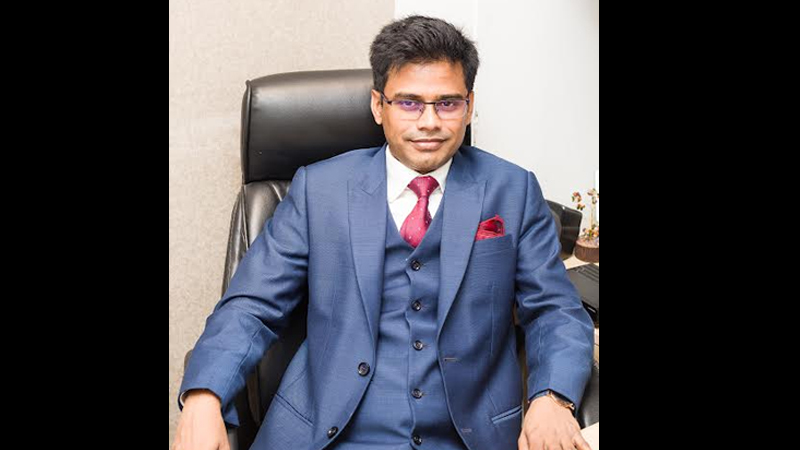
Tag: Prateek Kumar

  • Singapore is a strategic location for our expansion – Prateek Kumar

    Singapore is a strategic location for our expansion – Prateek Kumar

    Mumbai: Visionary entrepreneurship is not just vital for establishing a business setup but making a strong position in the eyes of the clientele. Yield goodwill is a long-term process with anticipation of the right marketing mix. A proactive approach is not just eye-catching but astonishes sustainability in the brand market. On different parameters about technology and transformation, we discussed with NeoNiche founder and CEO Prateek Kumar to know his perspective.

    Indiantelevision.com exclusively speaks with Prateek Kumar on data security, data integration, communication methods, marketing mix, differential clientele services in a dynamic environment whether it is AI, technology, metaverse, future prediction, and his visions.

    Here are excerpts –

    On ISO certification in 360 degree marketing –

    NeoNiche is not only ISO Certified in Data Security and Quality assurance but also is SOC2 and GDPR Compliant. All kinds of certifications hold significant importance for a “Full Services” and “Marketing Product Company” as they foster quality, credibility, efficiency, and responsibility. It aligns with the demands of a dynamic and interconnected business environment, contributing to the overall success and sustainability of a company and the Customers it serves.

    On differential services in NeoNiche agency –

    NeoNiche is “Digital First: full services agency where we merge creativity with technology. Our data-driven insights, A Partnership network across major global locations, Our International Branch in Singapore, and our extensive domestic network across India help us increase our “Speed to Market”

    NeoNiche is known for offering a wide array of services beyond traditional Marketing offerings, Marketing Automation, Managed Marketing Services, Outsourced CMO, Influencer Marketing, Performance Marketing, Data-driven insights, Content Studio, Experiential Marketing, and consultancy services. This diversified portfolio allows NeoNiche to provide comprehensive solutions to clients, integrating various aspects of marketing and communication strategies. We don’t believe in the “One Size Fits All” philosophy and have different offerings for Large B2B enterprises, SMEs, and startups.

    NeoNiche places importance on building strong and enduring relationships with its clients. A client-centric approach involves understanding the unique needs of each client and tailoring solutions to meet their specific goals. This focus on client satisfaction and partnership can set WPP apart in the competitive landscape.

    On AI in  advertising and its inclusive role of transformation in digital agencies –

    Yes, AI has a transformative impact on Marketing agencies’ digital services, particularly in the realm of inclusive advertising. Including Targeted Advertising, Content Creation and Optimisation, Language Translation and localization, Better Customer Insights and Analytics Chatbots for Customer Interaction, and Inclusive Representation as AI image analytics can align products with gender, ethnicity, and demographics. By leveraging AI technologies, agencies can create more personalised, representative, and effective advertising campaigns that resonate with a broad and diverse audience.

    On NeoNiche Strategical expansion in the Singapore Market –

    Different markets have different characteristics even in India different States react to a particular Marketing Stimulus in different ways our Growth and metamorphosis from “Marketing services Organization” to “Marketing Product and Services organization” as NeoNiche is catering to Enterprise in B2B marketing in a huge way be it our offerings like “NeoFlo”, “ Nsync”, “B2B Digital Marketing Services”, “Community Building”, “Managed Marketing Services” or more traditional “Experiential Marketing Services”

    Singapore is a strategic location for our expansion as Its proximity to major markets in the region, such as China, India, and other Southeast Asian countries, can provide logistical advantages for businesses. due to its dynamic business environment, strong infrastructure, and pro-business government policies. The city-state’s reputation as a regional hub for technology, finance, and innovation aligns perfectly with our growing clientele and our vision for future growth. Additionally, Singapore’s diverse talent pool and multicultural society provide us with the resources and expertise to effectively serve our clients across the Asia-Pacific and ANZ regions.

    On strike balance with affordability and quality including ROI –

    Balancing affordability and quality is a common challenge in any industry, but it’s crucial for success. Since we are no longer just an “Experiential Marketing” or an “Event Company” as we have long moved to a space where we have moved from a “Marketing services Organization” to a “Marketing Product and Services organization” this gives us a “Full Services Capability”; Our Products and Solutions provide deep insights and generates ROI on Every project that we undertake.

    On a journey to become an entrepreneur –

    NeoNiche was started with the single dream of bridging the gap between the marketers and the understanding of his/her hired agency. We started with the single aim to reinforce the relationship between the company & customers, brand & buyers, and product & prospects, by creating experiences, delivered in real-time across multiple platforms of Social, Digital, and on-ground Event experiences. While We embarked on this journey with our team, we realised this was only possible if we truly cared about people who mattered to us, our team, families, Our Suppliers, our customers, the society that we live in, and the law of the land.

    On generalisation of creativity-focused business –

    The proliferation of digital marketing agencies worldwide does indicate a significant trend in the business landscape. While the widespread presence of these agencies may suggest a generalisation of creativity-focused businesses, it’s important to recognise that not all digital marketing agencies operate in the same way or prioritise creativity equally.

    Digital marketing agencies serve a variety of purposes, and their services can range from basic advertising and social media management to more specialised areas like search engine optimization (SEO), content marketing, and data analytics. The level of creativity involved often depends on the specific goals of the client and the nature of the services provided. Also, consolidation always happens in any industry, remember the Dotcom boom of the early 2000s only the one that creates real value for customers to thrive and grow.

    On anticipation of industry performance in upcoming financial years –

    The pace of technological innovation is expected to continue, with advancements in areas like artificial intelligence, quantum computing, 5G, and the Internet of Things (IoT). Industries that effectively integrate and leverage these technologies may experience significant growth. As environmental concerns continue to rise, there’s a growing emphasis on sustainable practices. Industries involved in renewable energy, eco-friendly products, and sustainable technologies may see increased demand. Economic landscapes can impact industries differently. Global economic trends, trade policies, and geopolitical events may influence the growth and development of various sectors including Marketing.

    With the increasing digitisation of businesses and daily life, the importance of cybersecurity is expected to grow. Industries dealing with cybersecurity solutions and services may experience increased demand.

    Automation and AI adoption are likely to increase across industries, impacting jobs and processes. Industries that effectively integrate these technologies may enhance efficiency and productivity. While this is my guess it is important to note that unexpected events, such as global crises, technological breakthroughs, regulatory changes, or geopolitical shifts, can significantly alter industry trajectories.

    On the suitability of metaverse in the Indian continent –

    The metaverse offers various economic and business opportunities, ranging from virtual commerce to immersive experiences. Indian businesses could explore these opportunities, especially in sectors like gaming, e-commerce, education, and entertainment. It is important to note that the success of the metaverse relies heavily on robust digital infrastructure and widespread internet connectivity. India has been making strides in improving digital infrastructure, including the expansion of broadband access. The continued growth in this area would positively influence the adoption and success of metaverse technologies.

    It is also important to note that the adoption and success of the metaverse are influenced by a complex interplay of technological, cultural, economic, and regulatory factors. As the concept continues to evolve, ongoing developments in these areas will shape its impact on the Indian technology landscape.

    On over-dependency on AI and the quantum of work –

    While generative AI has the potential to revolutionize the media industry by improving efficiency and creativity, it’s essential to approach its adoption with caution. A thoughtful and balanced integration of AI, combined with human oversight, is crucial to harness the benefits while mitigating potential drawbacks. Regulatory frameworks and ethical guidelines can help guide the responsible use of AI in the media sector.

    On future objectives plans of NeoNiche  –

    NeoNiche has embarked on a transformative journey from being an Indian Experiential Marketing company to a global one, we strive to bring the richness of our heritage and a dynamic approach. We are mastering brand experiences in the vibrant Indian market, our vision extends beyond borders. As we evolve into a Global Full full-service marketing entity, our goal is to craft narratives that transcend cultures, break barriers, and inspire positive change.

  • Revolutionising ecommerce: How technology is stepping up in the game

    Revolutionising ecommerce: How technology is stepping up in the game

    NEW DELHI: Ecommerce businesses are having a field time, reaping the benefits of an otherwise massive calamity. More and more people are getting online for shopping everything from grocery to apparel, to automobile, to precious jewellery resulting in a massive jump in their numbers. However, it has also paved the way for the requirement of modifying their business models, amplifying the user experiences, and marrying the offline experiences with online shopping. 

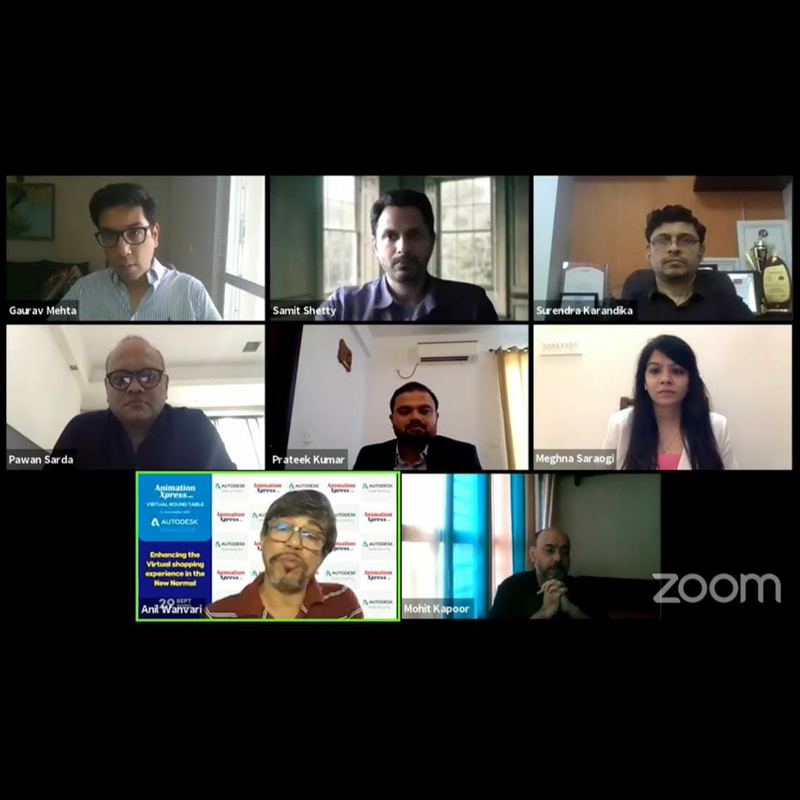
    In a recent panel discussion on “Enhancing the Virtual shopping experience in the New Normal" organised by AnimationXpress.com in association with Autodesk, Indiantelevision.com founder, CEO, and editor-in-chief Anil Wanvari discussed with the leading industry experts their experiences and strategies for ushering in the new era of e-commerce and online shopping that has customer interest at the centre of it and is driven by life-like experiences. Sitting on the panel were Jio VP – advertising and innovations Mohit Kapoor, Future Group group CMO (marketing, digital, and e-commerce) Pawan Sarda, CarDekho, Gaadi & Zigwheels CMO Gaurav Mehta, Vedant Fashions Pvt.Ltd. (Manyavar) head – global ecommerce Prateek Kumar, mirrAR byStyleDotMe co-founder and CEO Meghna Saraogi, Prorigo Software Pvt. Ltd (Jewelfie) founder-CEO Surendra Karandikar, and Autodesk India sr.technical sales specialist, M&E Samit Shetty. 

    The Whole New World of Opportunities

    All the panellists were delighted to agree that Covid-2019 has created a very positive atmosphere for the online retailers and associated businesses who are helping them in curating exciting virtual experiences. 

    Read more news on e-commerce 

    Kumar shared that he was surprised to witness a 350-400 per cent jump in Manyavar’s online sales during the lockdown. “If I talk about pre-covid times, we were already recording a 200 per cent y.o.y growth on our brands. To my surprise, when the lockdown ensued in March and in the following months, we recorded a 400 per cent jump in our online sales. And it was all for pre-paid orders. So it was quite interesting for me to see that people are buying online during the pandemic too.” 

    And this growth in online retailing and shopping isn’t only limited to tier1 cities and metros but goes deep down within the nooks and corners of the country. 

    Saraogi noted, “We are working with around 225 jewellers across the country and I am not only talking about the big brands. There are jewellers who are sitting in tier 3-tier 4 cities, where an aeroplane won’t land, but they are digitising their shopping experience.” 

    Creating Immersive Experiences 

    All the categories which are selling online are now busy in evolving their businesses to offer immersive, real-like experiences to customers online. They agree that the fear associated with the virus is not going away anytime soon and more people are going to explore and buy products online, therefore they are trying to offer as advanced as possible AI, VR, and MR shopping experience to the consumers. Here are the few top trends that the panel highlighted: 

    Digitising Trials 

    Mehta quipped, “While auto-buying and car-buying was already a very digitised function, which we have been noticing for the past few years, in the last six months we have witnessed a number of new users coming on-board. They are looking for as real and as close to natural look and feel of a product as they can get. So, we are investing a lot of time and effort in sharing 360-degree views of the car, along with more raw experiences like how the door opens, how the engine sounds, etc. Whatever can be digitized is being digitized.”

    He added that a lot of focus is put on personalisation of the vehicles for the consumers too, so one can put in place the filters regarding various aspects and functionalities of the sort of vehicle they are looking for and see in options only the relevant results. 3D imaging is also playing a big role.  

    Sarogi pointed out that they personally observed 3D imagery creating a lot of problems for them in terms of offering a smooth user experience, therefore for the time being they have moved to 2D images of products. However, a great emphasis is on facial recognition technology that puts the jewellery right in place and a person can experience it how they will look like wearing it in real life. “We are creating exciting co-shopping experiences too, where you can get on a video call, do screen sharing and show others what the jewellery is looking like on you.”

    Kumar highlighted, “We launched our own app a few weeks ago. Apart from that, we are offering WhatsApp video call options to our customers who can get assistance for shopping just like they get into physical stories. Another thing that we tried was getting chatbots on our sites. And we are seeing around 2000 people interacting with those bots on a daily basis. In fact, 90 per cent of our queries come from those chatbots.” 

    WhatsApp to the rescue 

    While WhatsApp might be dealing with its own shares of problems when it comes to the privacy of chats, it has surely turned out to be one of the favourite tools for online businesses. Not just Manyavar, but other brands have also invested in WhatsApp video calling options and other shopping tools to ease out the process for customers. 

    Kapoor noted, “India has around 60-62 million SMEs and around 30-32 million Kirana stores. When we talk about real-life experiences or 3D imaging, etc., these models won’t work for them. You do not need to see the 3D image of your grocery. They require a whole different model of ecommerce. “We (Jio) have one model, in which we are working with Facebook right now; opening up shopping within WhatsApp and getting on board the small merchants.”

    He added that the firm is working on a number of direct-to-consumer models wherein the focus on simplifying the experience as much as possible. “You can share a handwritten list of your grocery with us in a photo, and we will get it delivered.” 

    Reshaping Offline Stores

    The whole going online business will not necessarily mean that offline brick-and-mortar shops will go irrelevant and non-existent. In fact, the idea is to turn them into exhibition centres for experiences and then the purchases can be made online. 

    Kapoor shared his personal experience of shopping a bicycle from Decathalon wherein he was allowed to test the bicycles in physical stores, but he eventually had to place the order online. 

    Sarda elaborated, “I think stores can really up their capacity in terms of doing businesses if we put another layer of digital on top of it. We can see stores typically as exhibition centres. It will have to be constrained in terms of the number of people who can go inside but I see it as a large opportunity.”

    How Technolgy Firms Are Helping

    There is as much as backend work required to create seamless online shopping experience as much as you see online. Therefore, technical firms and partners are surely playing a key role in assisting online businesses in making shopping a truly immersive and gratifying experience for consumers. 

    Shetty noted, “When it comes to 3D experiences, the smallest of factors like lighting impact the overall experience of a consumer. When it comes to the artist who is working on it, rendering is a big issue; it takes a lot of time. Therefore, the creator might lose patience and just give up on the project and might not try more variants. We are working on specific pain-points like that. We now have GPU rendering, which is an integral part of Autodesk that makes the job simpler, cutting the time significantly.”

    It is also allowing them to make 3D models more real with more apt textures, colours, and backgrounds. 

    Apart from that, they are working hard on collaborative technologies like Shotgun that allows various stakeholders to interact easily on creative projects that can accelerate the approval processes as well. “All this delivers a good ROI to not just us but also to businesses.” 

    Karandikar added that going ahead, there is a lot of constant innovation happening in the technology industry and tools like voice are going to be the next big thing. He suggested that apparel brands can also innovate on aspects like creating life-size mannequins based on a customer’s measurement to give them a real feel of how the product will actually look on them. 

  • Industry leaders to discuss tips on enhancing virtual shopping experience in new normal

    Industry leaders to discuss tips on enhancing virtual shopping experience in new normal

    NEW DELHI: It’s no new news that the impact of Covid2019 has been massive on digitisation and virtual properties. With people stuck at home, everything from studies to work, to shopping has moved online and this has given the e-commerce industry a once-in-a-lifetime opportunity to get new consumers on board and hook them to their apps and websites.  

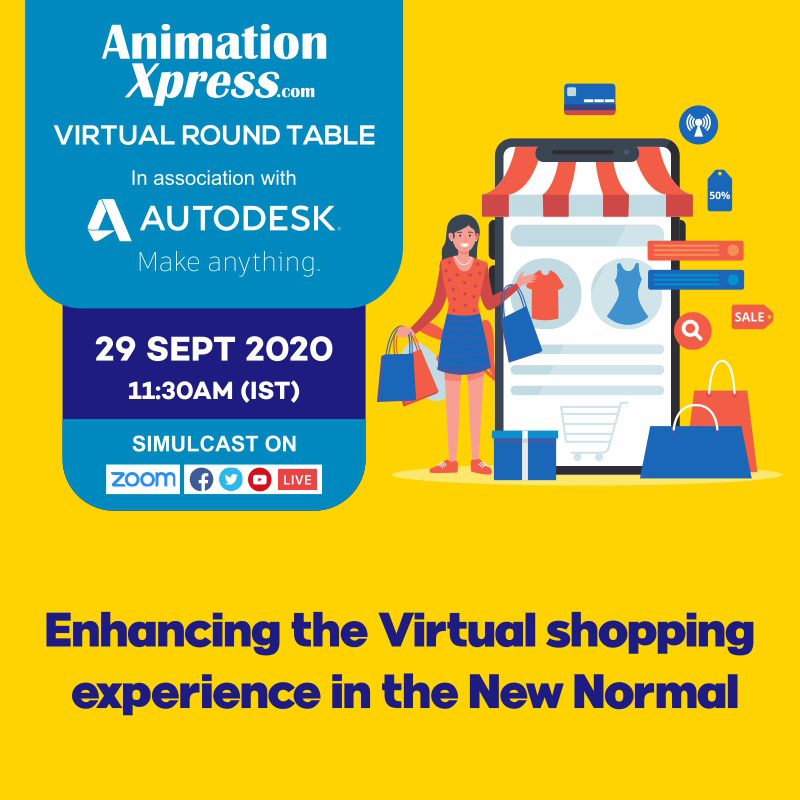
    To discuss how the e-commerce industry is dealing with the overwhelming growth and interest in their business from all stakeholders, what are the best practices they are incorporating, how are they modifying their sales strategies, and how are they working to enhance customer experience, an excellent panel of industry experts will be getting live on Indiantelevision.com on Tuesday morning at 11:30 am, in a virtual roundtable discussion on “Enhancing the Virtual shopping experience in the New Normal” with our founder, CEO, and editor-in-chief Anil Wanvari.  

    The roundtable is organised by AnimationXpress.com in association with Autodesk.

    Watch our previous webinars

    The speakers for the roundtable are: Jio VP – advertising and innovations Mohit Kapoor; Future Group group CMO (marketing, digital, and e-commerce) Pawan Sarda; CarDekho, Gaadi & Zigwheels CMO Gaurav Mehta; Vedant Fashions (Manyavar) head – global e-commerce Prateek Kumar; mirrAR byStyleDotMe co-founder and CEO Meghna Saraogi; Prorigo Software (Jewelfie) founder-CEO Surendra Karandikar, and Autodesk India sr.technical sales specialist, M&E Samit Shetty.  

    The webinar will be simulcast live on our website and social media handles on Tuesday, 29 September, 11.30 am.  

    You can register here.


  • 10 marketing trends the banking industry can’t ignore

    10 marketing trends the banking industry can’t ignore

    The banking industry is undergoing a massive transformation. Structural, technological data, artificial intelligence and digitisation are changing the dynamics in the world of finance. As a result, marketing in the banking and finance industry has also become more digitised and data-driven. Here are the 10 experiential marketing trends for the banking industry.

     1.      Mobile Banking

    Consumers are frequently seeking information and transactions online and on the go. With smartphones and better connectivity, banking is done on mobile phones. This implies that the bank’s online presence should have a mobile-friendly interface. Moreover, a mobile banking app should not merely be a tool for net banking. Mobile banking apps need to add more value to the consumer’s life through budget tracker built-in, non-intrusive product messaging. Therefore, in-app marketing is an opportunity that can’t be missed.  

    2.      Personalisation

    Consumers expect personalisation in content and service experience. They expect to be treated as an individual and not as a representative of a segment. The Accenture Digital Banking report says that around 33 per cent of customers are ready to end business dealings that lack any personalisation. Advancement in technology makes this possible. To ensure top of the mind recall for customers, ‘Hyper Relevance’ is the key.   

    3.      Chats

    Millennials and Generation Z prefer texting /chats as a mode of communication over emails. It's predicted that chatbots will contribute about 80% of business to consumer communication in the next 5 years. Chatbots, Facebook messaging, Webchats and WhatsApp messaging as a marketing tool, is primed to be vital for enhanced consumer experience.

    4.      Data-driven communication and experience

    Marketing now is backed by data, not just guesses. Analytics and data can help in creating a detailed profile and predict behaviour ranging from attentions spans to purchase potential. This implies that marketing will boast of better reach and response. Contextual aware-Artificial Intelligence backed advertising and communication will matter. It will also be important to keep the message real.

    5.      Omnichannel experiences

    Crafted omnichannel experiences that enhance the customer’s journey across channels is becoming important. Seamless, personalised and engaging multi-channel communication is what will retain consumers for a brand. Brands now need to reach out to consumers to build offline and online relations by exploring all avenues.

    6.      Video is vital

    Video consumption continues to grow. As videos are ranked higher in search, they should be harnessed to communicate with consumers.  A Deloitte Banking Report mentions that digital self-service and virtual video meetings have the potential to improve branch walk-ins. Explainer videos, testimonials, recommendations, product or trend reviews, expert vlogs, video campaigns, etc will be an integral part of marketing plans.

    7.      Voice search ready

    The next banking query may be done by voice search apps. A recent study predicts that by 2020, half of all searches will be voice-based. Making SEO voice ready requires a different strategy. Conversation-style content that focuses on how, when, where and why will play a key role for voice-based search functionalities. Additionally, this means the implementation of different tonality and designing of marketing communication from visual to a dialogue process.

    8.      Staying Social

    Banking brands will increase their presence on social media. It can be used to promote financial awareness, talk about digital banking benefits and even do follow-ups. Social media will continue to help consumers connect with the brand. Social media will be used to educate and engage the next generation of consumers -generation Z.

    9.  Content that connects

    Information fatigue is a reality. To improve the endowment effect in consumer’s minds, content that connects at the human level will stand out. Compelling content and communication across the channel which enriches consumer’s experience will be preferred.

    10.  Café-branches

    The Deloitte Banking Report mentions an interesting thing – there is a 31 per cent likelihood of increased branch use if the branches have a Café vibe. Plugin facility, freedom to work from the branch and relaxed atmosphere will change the way banking is perceived – something that most of the banking branches may not offer now.

    Digitisation, data, and technology are pushing marketing towards new and greater possibilities. Marketing for the banking industry will increasingly become a mix of data, analytics and technology – all with a real human touch.

    (The author is MD & CEO, NeoNiche Integrated Solutions. The views expressed are his own and Indiantelevision.com may not subscribe to them.)

  • WhatsApp ads to test targeted marketing, user readiness and data security

    WhatsApp ads to test targeted marketing, user readiness and data security

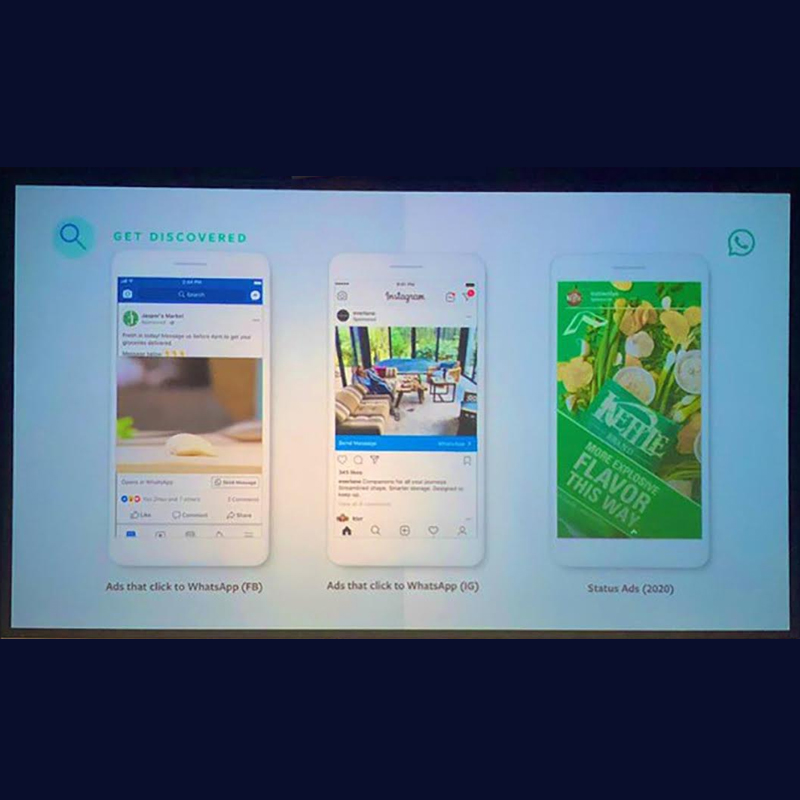
    MUMBAI: Ever since Facebook acquired WhatsApp, people have been expecting the popular chatting app to move towards an ad-based model. Recently, a tweet from an attendee at the Facebook Marketing Summit Rotterdam confirmed that WhatsApp intends to launch ads soon in the status/stories section and will also be connected to its sister sites like Instagram and Facebook.

    This started a fresh conversation around two major topics; are the users ready and what about data security on an ‘encrypted platform’? Indiantelevision.com interacted with some marketing and digital experts and sought answers to these two very pressing questions.

    While users on all social media platforms have become used to seeing ads, a similar pattern on WhatsApp is difficult to follow. As it is a more personalised platform used for chats with close peers, unlike the Facebooks and Instagrams of the world, which people use to follow a global base of users who might not be directly related to them, introducing ads will seem like an intrusion in the personal space.

    ADOHM chief executive officer Kuldeep Chaudhary says, “While the content consuming pattern in the audience is evolving and they are getting used to seeing ads on multiple platforms, having ads on WhatsApp may not be welcomed easily. The reason being WhatsApp has a very large user base in the masses, for whom ads will be an intrusion. This step will see a similar reaction like how it was during the initial days of YouTube ads. While platforms need to take this step from a revenue perspective, audiences are not yet ready for the move as from consumer point of view it is another bombardment from advertisers.”

    Vertoz founder and CEO Ashish Shah also advises brands to be cautious. “Ads showing up on WhatsApp might be looked upon as an intrusion into the users’ private space, considering the highly personal and very private environment of this communication tool. It is imperative for brands to ensure that the ads are non-intrusive in nature and do not irk off the users or disturb their privacy.”

    Though feature ads are going to be a new addition to the chatting platform, WhatsApp has already been active in giving some brands a chance to interact directly with the consumers. Be it delivering e-tickets like MakeMyTrip and BookMyShow do, or sharing timely updates of order deliveries like Ajio does, many brands are active on the platform to offer their customers a more personalised and seamless experience.

    Havas managing director Mohit Joshi notes, “Currently WhatsApp is a great space for two-way communication between the consumer and the brand. Marketers are creating WhatsApp brand profiles and then integrating them with their product/service offering across verticals. Many brands like MakeMyTrip, Ixigo and Milap have already started using this platform as a substitute/addition to email/SMS to connect with consumers once they have interacted with their platform. Currently, there is merit in using the platform more from an ‘owned media’ standpoint.”

    However, any of these activities do not rely directly on the data from the app. But with advertisements from sources that are not connected to the users coming in place, a huge pile of data and information will be required by the advertisers to create a targeted reach. Users, in the past, have moved away from platforms like parent Facebook after cases of data breaches came to light.

    NeoNiche Integrated Solutions Pvt Ltd MD and CEO Prateek Kumar mentions, “WhatsApp has always tried to ensure security between users for their conversations with end-to-end encryption being introduced in 2016. The announcement of ads on the platform seemed inevitable but the true extent of targeted marketing will only be realised after the full release. However, the extent of data shared with companies is probably the most contentious issue in this scenario.”

    Also, getting data out of an encrypted platform seems quite impossible. Carat SVP Mayank Bhatnagar says, “Right now, it (ads on WhatsApp) is just to drive the reach. I will not forward my tickets to anyone else, and thus there is no engagement parameter in place. It is just to help consumers. Once they open the full-fledged advertising solutions, it will be helpful in garnering that reach but I am not sure how will they measure the engagement.”

    However, Chaudhary states that Facebook can access keywords from WhatsApp chats despite encryption being in place. “In spite of the fact that WhatsApp states that they cannot access users’ data due to end-to-end encryption but in order to run targeted ads, access to data specific to individuals is required. Security researchers have pointed out that even with encryption in place, it will be possible for Facebook to derive keywords from people’s messages and use them to impose an ad-targeting model on the app. These ads will be showcased on WhatsApp stories and in-message advertising for WhatsApp business accounts.”

    Kumar further shares, “It seems more likely that while chatting with other users, WhatsApp will showcase ads of particular brands that might be most relevant to you depending on the topic of conversation or particular keywords. One of the best-case scenarios for users would be if sponsored ads were only displayed after the use of keywords or syntax based content to drive clicks where individual, demographic and chat-based data would not be shared. However, understanding the growing prominence of target marketing and its effectiveness in the digital world, the on-ground scenario may differ greatly.”

    Another way to access relevant data could be through telecom companies, as shared by RK Swamy BBDO president and director Sangeetha N. She notes, “Telecom companies do provide data based on gender, age, make of phone, average billing per month, location, post-paid/pre-paid, etc. While we’ve used this data in the past to send out SMS’es, we can surely use the same data to send out WhatsApp messages.”

    Shah vouches on the importance of programmatic methodology to drive successful ads on WhatsApp as he notes, “WhatsApp can build the users’ profile using the information gathered directly from the platform and elsewhere. If WhatsApp is using programmatic advertising, then it will be the smart choice for these requirements. Programmatic advertising uses Data Management Platforms (DMPs) that help advertisers to analyse, process and structure the user’s data. DMPs can be used to get relevant audience profiles and to deliver personalised and relevant ads to them. Further, using the different targeting options like interest-based targeting, behavioural targeting, contextual targeting and many more, advertisers can deliver relevant and targeted ads to their customers on platforms like WhatsApp.”

  • Riyaz Khambati joins the Operations Management team at NeoNiche Integrated Solutions

    Riyaz Khambati joins the Operations Management team at NeoNiche Integrated Solutions

    National : NeoNiche Integrated Solutions Pvt Ltd. appoints Riyaz Khambati to lead their event operations team. He will be working conjointly with the senior management at NeoNiche and handle overall operations.

    Riyaz is best known for his unmatched expertise in operations and has spearheaded multiple projects in Event Management companies like Percept, Seventy Seven Entertainment, Messe Group, Symphony Events, Wizcraft and Encompass. He has been instrumental in designing customised experiences for brands like Vodafone, Morgan Stanley, and Cosmopolitan.

    Speaking on Riyaz's appointment, Mr. Prateek Kumar, CEO & MD, NeoNiche Integrated Solutions says, "When it comes to operations, it is pivotal to consider all aspects of an event and the intermingling effect each element would have on one another. Over the years, Riyaz has been exposed to numerous events across the globe. He understands the most complex intricacies involved in creating a deeply personal and memorable experience. With his expertise, Riyaz will take our organisation to new heights”

    Commenting on his appointment, Riyaz says, "What drew me towards NeoNiche is their uniqueness in executing experiential events and creating memorable experiences for their clients. When it comes to event operations we agree on a similar strategy that leads to exponential growth. With this appointment, I accept a challenge to grow with a young company indulging in the only passion I have – Event Operations!”

    Prateek adds, “Riyaz is a strategic hire. I am well aware that, when passion and commitment meet opportunity, the result would be transformational for the event experiences that we create”

    During his career, Riyaz has perfected his understanding of the craft in Production, Logistics, and Resource Management.