Tag: Prashant Panday

  • hypergro.ai secures Rs seven crore funding: Leading the charge in AI-driven digital marketing revolution

    hypergro.ai secures Rs seven crore funding: Leading the charge in AI-driven digital marketing revolution

    Mumbai: hypergro.ai, a Bangalore- based martech startup, focused on boosting brand revenues and dramatically reducing customer acquisition costs, has announced that it has raised seed funding of Rs seven crore. The round was led by Silverneedle Ventures with participation from Huddle, TDV Partners, HME Ventures, Dholakia Ventures, FiiRE, & prominent angel investors like Arjun Vaidya, Ankit Kedia and Rajesh Sawhney.

    In the current digital landscape, rising Customer Acquisition Costs (CAC) are eating up large parts of budgets without delivering expected returns. This problem is made worse by poor Return on Ad Spend (ROAS); even with huge investments in various ads. This combination of challenges has brands stuck in a cycle of high spending with low results, making steady growth hard to achieve.

    With hypergro.ai, brands can reverse this trend by using its state-of-the-art platform that harnesses the raw power of user-generated content (UGC) and couples it with cutting-edge artificial intelligence. This revolutionary synergy not only simplifies the customer acquisition trajectory but also offers brands a potent tool that’s both cost-effective and resonant with modern audiences.

    On the fundraising, Silverneedle Ventures partner Prashant Panday said, “Hypergro.ai attacks the biggest challenge facing consumer marketing companies – rising CACs. We at Silverneedle Ventures believe strongly in the power of technology in general and AI in particular. We are proud to lead this round and repose confidence in the  dynamic founders of the company.”

    The startup was founded in the year 2022 by Rituraj Biswas (CEO), Neha Soman (CBO), Abhijeet Kumar (CTO), and Arijit Mukhopadhyay (CPTO). With roots embedded in platforms like ShareChat and Glance, their collective insight into the digital domain is profound. Biswasj spearheads the product, focusing on innovation and keeping our solutions fresh and ahead of the competition. Kumar, hailing from IIT Roorkee, and Mukhopadhyay, a proud product of IIT Delhi, together constitute the tech-driven backbone. Meanwhile, Soman, leveraging her vast marketing expertise and hands-on experience as a YouTube creator, infuses the team with a distinct content-centric insight.

    “At hypergro, we’re not merely witnessing the future – we’re crafting it. By merging the power of AI with the authenticity of UGC, we’re redefining the dynamics of business-customer interactions. Our mission is to make this groundbreaking shift both transformational and available to everyone,” stated Biswas.

    A substantial slice of this financial boost will be channeled to hypergro’s core – its AI capabilities. This encompasses in-depth data exploration, refining predictive algorithms, and polishing automation to offer clients unparalleled results.  As hypergro scales its operations, it will need to expand its teams. The funds will be used to attract top talents in areas such as AI and machine learning, tech, product, sales and marketing. Moreover, the company is setting its sights on new markets and is poised to make its innovative solutions accessible to a broader spectrum of businesses.

    With businesses steadily gravitating online, they are poised to cater to a booming market, predicted to soar to an astronomical $3.1 billion by 2024 in India alone. Nestled at the pivotal crossroads of digital advertising and UGC, hypergro is the torchbearer in these swift-scaling sectors.

  • hypergro.ai secures Rs seven crore funding: Leading the charge in AI-driven digital marketing revolution

    hypergro.ai secures Rs seven crore funding: Leading the charge in AI-driven digital marketing revolution

    Mumbai: hypergro.ai, a Bangalore- based martech startup, focused on boosting brand revenues and dramatically reducing customer acquisition costs, has announced that it has raised seed funding of Rs seven crore. The round was led by Silverneedle Ventures with participation from Huddle, TDV Partners, HME Ventures, Dholakia Ventures, FiiRE, & prominent angel investors like Arjun Vaidya, Ankit Kedia and Rajesh Sawhney.

    In the current digital landscape, rising Customer Acquisition Costs (CAC) are eating up large parts of budgets without delivering expected returns. This problem is made worse by poor Return on Ad Spend (ROAS); even with huge investments in various ads. This combination of challenges has brands stuck in a cycle of high spending with low results, making steady growth hard to achieve.

    With hypergro.ai, brands can reverse this trend by using its state-of-the-art platform that harnesses the raw power of user-generated content (UGC) and couples it with cutting-edge artificial intelligence. This revolutionary synergy not only simplifies the customer acquisition trajectory but also offers brands a potent tool that’s both cost-effective and resonant with modern audiences.

    On the fundraising, Silverneedle Ventures partner Prashant Panday said, “Hypergro.ai attacks the biggest challenge facing consumer marketing companies – rising CACs. We at Silverneedle Ventures believe strongly in the power of technology in general and AI in particular. We are proud to lead this round and repose confidence in the  dynamic founders of the company.”

    The startup was founded in the year 2022 by Rituraj Biswas (CEO), Neha Soman (CBO), Abhijeet Kumar (CTO), and Arijit Mukhopadhyay (CPTO). With roots embedded in platforms like ShareChat and Glance, their collective insight into the digital domain is profound. Biswasj spearheads the product, focusing on innovation and keeping our solutions fresh and ahead of the competition. Kumar, hailing from IIT Roorkee, and Mukhopadhyay, a proud product of IIT Delhi, together constitute the tech-driven backbone. Meanwhile, Soman, leveraging her vast marketing expertise and hands-on experience as a YouTube creator, infuses the team with a distinct content-centric insight.

    “At hypergro, we’re not merely witnessing the future – we’re crafting it. By merging the power of AI with the authenticity of UGC, we’re redefining the dynamics of business-customer interactions. Our mission is to make this groundbreaking shift both transformational and available to everyone,” stated Biswas.

    A substantial slice of this financial boost will be channeled to hypergro’s core – its AI capabilities. This encompasses in-depth data exploration, refining predictive algorithms, and polishing automation to offer clients unparalleled results.  As hypergro scales its operations, it will need to expand its teams. The funds will be used to attract top talents in areas such as AI and machine learning, tech, product, sales and marketing. Moreover, the company is setting its sights on new markets and is poised to make its innovative solutions accessible to a broader spectrum of businesses.

    With businesses steadily gravitating online, they are poised to cater to a booming market, predicted to soar to an astronomical $3.1 billion by 2024 in India alone. Nestled at the pivotal crossroads of digital advertising and UGC, hypergro is the torchbearer in these swift-scaling sectors.

  • Mirchi rebrands Mirchi Scribbled to Mirchi Mehfil

    Mirchi rebrands Mirchi Scribbled to Mirchi Mehfil

    Mumbai: Music and entertainment company Mirchi has announced the relaunch of its spoken word and storytelling platform Mirchi Scribbled as Mirchi Mehfil, in a bid to pave the way for the art of the spoken word in mainstream entertainment.

    “Mirchi will now not only showcase a variety of storytelling art forms across India but also provide a platform to emerging and established storytellers and spoken word artists,” it said in a statement on Tuesday.

    With more than five million views and 53 million impressions, Mirchi Scribbled showcased exceptional talent from the performance poetry community that resonated with the Indian audience. Mirchi Mehfil, to be hosted on YouTube and Instagram, aims to tap into a wider audience set with diverse content across shayari, poems, spoken word and storytelling through live performances, on-ground and online events, open mics, curated shows, podcasts, and other formats, said the company.

    “Mirchi always strives to provide entertainment through its multi-platform and multi-format content hub, thereby enabling and creating an ecosystem for talented individuals across art forms,” said Mirchi  MD and CEO Prashant Panday. “Through Mirchi Scribbled we have built a large community of spoken word artists with a huge, ever-growing subscriber base. Through this property, we aim to build a platform for budding niche artists and amplify their voice in mainstream entertainment.”

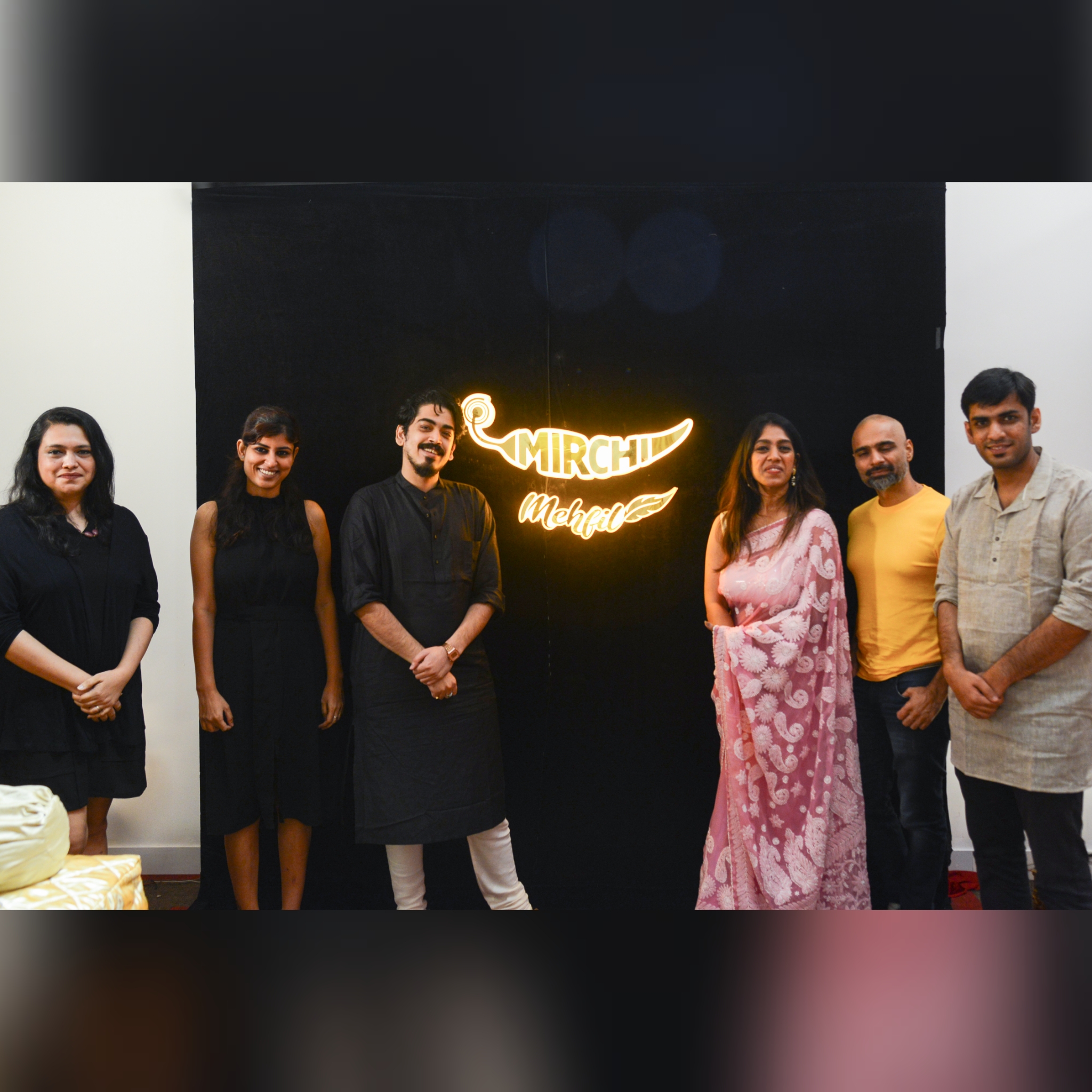
    The brand marked the relaunch at Mirchi Studios, Mumbai with a power-packed line-up of performances by artists like Divy Sharma, Harsha Agrawal, Arti Jain, and Parth Vasani, giving consumers a sneak peek into the content that will be available on the relaunched platform. Hosted by RJ Tashi, the event saw the unveiling of Mirchi Mehfil’s logo in the presence of eminent Bollywood lyricist and poet Manoj Muntashir.

    “Mirchi Mehfil is indeed a wonderful initiative, especially for artists in smaller towns who don’t have access to platforms,” said Muntashir. “With the extensive reach that Mirchi brings to the table and its connection with a wide audience base, Mirchi Mehfil will prove to be a boon for artists and literature enthusiasts across the country.”

  • Digital products drive Mirchi’s 30% sequential revenue growth in Q2

    Digital products drive Mirchi’s 30% sequential revenue growth in Q2

    MUMBAI: Entertainment Network (India) Ltd, FM radio channel Radio Mirchi, announced results for the quarter ended 30 September 2020.

    The company reported 30 per cent sequential revenue growth to Rs 47.0 crores in the second quarter, led by core radio which grew by 132 per cent and digital products which grew by 67 per cent. The company’s solutions business, which includes digital, accounted for 27 per cent of Q2 revenues, with gross margins of 53 per cent. Compared to a year ago however, revenues were down 59 per cent on account of Covid2019.

    The company cut costs drastically during the quarter. Direct variable costs (DVC), related toon-ground events and activations, fell by 63 per cent. Overall operating costs, including DVC reduced by 35 per cent over the same quarter last year.

    EBITDA loss during the quarter was Rs 6.2 crores, lower than the Rs 26 crores in the June quarter.Net loss for the quarter was Rs 23.7 crores, lower than the Rs 36.6 crores in June quarter. Balance sheet remains strong with cash reserves of Rs 240.8crores as on 30 September 2020.

    ENIL MD & CEO Prashant Panday said, “With the lockdowns gradually lifting in the second quarter, we saw a strong sequential growth in overall revenues during the period. The festive  season  of  the  year  has  begun  with  gusto  and  we  see  revenue  performance  improving further in the second half. Smart cost management will see strong positive EBITDA in the second half, with a likelihood of positive growth of last year. We remain confident about all our products –radio, solutions and digital in the months to come”.

  • ENIL income from outside India grows as other numbers plummet in first quarter

    ENIL income from outside India grows as other numbers plummet in first quarter

    BENGALURU: Indian private FM player Entertainment Network (India) Ltd (ENIL), which runs the Mirchi brand radio network in India, reported 71.7 percent fall in consolidated Total Income from Operations (TIO) for the quarter ended 30 June 2020 (Q1 2021, quarter or period under review) as compared to the corresponding year ago quarter (Q1 2020). The company reported consolidated revenue of Rs 38.46 crore for the quarter as compared to Rs 130.52 crore in the corresponding quarter of the previous fiscal. Quarter-on-quarter (q-o-q), revenue in Q 2021 also fell 75.3 percent from Rs 149.63 crore in Q4 2020.

    Break up of operating revenue from India was Rs 27.28 for Q1 2021, which was 78.9 percent lower y-o-y than the Rs 129.41 crore in Q1 2020 and was 81.2 percent lower q-o-q than Rs 145.02 crore in the immediate trailing quarter Q4 2020.

    Operating revenue from outside India in Q1 2021 almost quadrupled (increased 271.7 percent) y-o-y to Rs 11.18 percent (29.1 percent of operating revenue) from Rs 3.01 crore (2.3 percent of operating revenue) in Q1 2020 and increased 60.4 percent q-o-q from Rs 6.82 crore (4.5 percent of operating revenue) in Q4 2020.

    ENIL reported a consolidated loss of Rs 12.18 crore for Q1 2021 as compared to a profit after tax (PAT) of Rs 2.64 crore in Q1 2020 and a lower loss of Rs 1.60 crore in Q4 2020.

    ENIL’s consolidated Earnings before Interest, Depreciation, Taxes and Amortisation (EBITDA, operating profit or operating loss) for Q1 2020 was a loss of Rs 25.94 crore as compared to operating profit of Rs 33.06 crore (25 percent of operating revenue) in Q1 2020 and an operating profit of Rs 22.99 crore (15.1 percent of operating revenue) in the immediate trailing quarter.

    Let us look at the other numbers reported by ENIL

    ENIL total expense (TE) in Q1 2020 reduced 26.9 percent y-o-y to Rs 94.41 crore from Rs 129.19 crore in Q1 2020, and fell 41.2 percent q-o-q from Rs 160.42 crore in Q4 2020.

    Production expense for the period under review declined 52.7 percent y-o-y to Rs 13.60 crore from Rs 28.77 crore in Q 2020 and fell 73.9 percent q-o-q from Rs 52.04 crore in Q4 2020.

    License fee in Q1 2021 was 12 percent lower y-o-y at Rs 7.87 crore crore as compared to Rs 8.95 crore in the corresponding year ago quarter and fell 14 percent q-o-q from Rs 9.15 crore in the immediate trailing quarter Q4 2020.

    Employee Benefit Expense (EBE) in Q1 2021 at Rs 26.30 crore fell 25.9 percent y-o-y from Rs 35.49 crore in Q1 2020 and declined 17 percent q-o-q from Rs 31.68 crore (20.7 percent of TIO).

    Finance costs in Q1 2020 declined 3 percent y-o-y to Rs 4.72 crore from Rs 4.86 crore in Q1 2020 and was almost flat (increased 0.4 percent) from Rs 4.70 crore in Q4 2020.

    Other expenses in Q1 2021 at Rs 16.64 crore declined 35.4 percent y-o-y from Rs 26.15 crore in Q1 2020 and were 53.8 percent lower q-o-q from Rs 35.97 crore in Q4 2020).

    Note: The unit of currency in this report is the Indian rupee – Rs (also conventionally represented by INR). The Indian numbering system or the Vedic numbering system has been used to denote money values. The basic conversion to the international norm would be:

    (a) 100,00,000 = 100 lakh = 10,000,000 = 10 million = 1 crore.

    (b) 10,000 lakh = 100 crore = 1 arab = 1 billion.

  • FM Radio revenues witness seasonal slump in Q4-16, Q1-17

    FM Radio revenues witness seasonal slump in Q4-16, Q1-17

    BENGALURU: Generally the Indian private FM industry witnesses a quarter-over-quarter (q-o-q) advertisement (ad) revenue slump in the first quarter of every year (Q1, quarter ended 30 June), which may sometimes carry over to the second quarter (Q2, quarter ended 30 September) of the fiscal. Since fiscal 2014, the industry has also seen fourth quarter (Q4, quarter ended 31 March) revenue slumps. Continuing the trend, private FM in India has seen a drop in revenue for quarters ended 31 March 2016 (Q4-16) and 30 June 2016 (Q1-17). As mentioned above trend was noticed Q4-14 and Q1-15 onwards, when the country held general elections and political parties used this so very local medium to garner votes.

    As per data released by the Telecom Regulatory Authority of India (TRAI), for Q1-17, 244 radio stations had consolidated ad revenues of Rs 468.08 crore, down 9.81 percent q-o-q as compared to the Rs 514.75 crore reported by 242 stations in Q4-16. The last quarter of the previous fiscal also saw ad revenue decline of 4.35 percent from Rs 533.70 crore reported for its immediate quarter that ended on 31 December 2015 (Q3-15).

    Please refer to Figure A below for FM Radio Ad Revenue over a five year plus period spanning a 21 quarter period starting with the quarter ended 30 June 2011 (Q1-12) until the quarter ended 30 September 2016 (Q1-17) as per TRAI data. The amounts are in Rs crore and rounded off to the nearest decimal place.

    public://f1.jpg

    As is obvious from the red dots on the chartabove, Q1-12, Q1-13, Q1-14, Q1-15, Q1-16 and Q1-17 have all seen q-o-q revenue drops, as have Q4-14, Q4-15 and as mentioned above- Q4-16.

    Figure B below shows the q-o-q and year-over-year FM Radio Ad revenue trends. Generally y-o-y, revenues have been higher across all quarters in the period under consideration in this report, except for Q3-12 that saw a y-o-y ad revenue decline. For Q3-11, TRAI Indicator Reports mentioned ad revenue of Rs 284.88 crore from 227 radio stations or an average revenue of Rs 1.25 crore per station, as compared to ad revenue per station of Rs 1.20 crore for Q3-12.

    public://f2.jpg

    Conclusion

    Overall, despite the year-end andnew fiscal drops, ad revenues as well as ad revenues per station show a linear increasing trend as more and more advertisers have begun to understand the value proposition this very local medium with a pan-India footprint can offer. Further, the third quarter of the fiscal (Q3, quarter ended 31 December) is also the festival quarter of the year in India – a sweet quarter as far as the radio industry is concerned. The industry should see revenues rising in Q3-17.

     A few of the companies such as JagranPrakashan that has large networks like Radio City and Entertainment Network India Limited (ENIL) which has the Radio Mirchi network in the country have already started operations of the new stations that they obtained in the FM Phase 3 auctions. The revenue of the new stations acquired in phase 3 auctions by other players such as Reliance Broadcast Network Limited (RBNL, Big FM) and HT Media Limited (Hindustan Times fame, Fever FM) if/once they start operations this fiscal, the radio industry should report substantial revenue increases. Profitability may take a hit initially, but over time that too is bound to change for the better.

    Results for the quarter ended 30 September 2016 of companies whose financials are within the public domain can at the most be termed a mixed bag. While ENIL has reported a growth in revenue, its profit after tax – both on a y-o-y and a q-o-q basis have been hit with a70.3 percent y-o-y decline and a51.7 percent q-o-q decline.

    ENIL won 17 stations in Phase 3 auctions and has launched 4 new stations in Q2-17 – at Chandigarh, Ahmedabad, Surat and Jaipur. Earlier the company had launched Bengaluru, Guwahati, Hyderabad and Kochi stations. Bengaluru wasRadio Mirchi’s first launch in the second frequencies network.

    However, ENIL managing director and CEO Prashant Panday is upbeat. In ENIL’s Q2-17 results press release he said, “We have stepped up marketing spends and early research indicates that we have made a strong start and in fact have become leaders in key markets. I am confident this will translate into a stronger business in the years ahead!”

    Note:The unit of currency in this report is the Indian rupee – Rs (also conventionally represented by INR).The Indian numbering system or the Vedic numbering system has been used to denote money values. The basic conversion to the international norm would be:

    (a) 100,00,000 = 100 lakh = 10,000,000 = 10 million = 1 crore.

    (b) 10,000 lakh = 100 crore = 1 arab = 1 billion.


  • FM Radio revenues witness seasonal slump in Q4-16, Q1-17

    FM Radio revenues witness seasonal slump in Q4-16, Q1-17

    BENGALURU: Generally the Indian private FM industry witnesses a quarter-over-quarter (q-o-q) advertisement (ad) revenue slump in the first quarter of every year (Q1, quarter ended 30 June), which may sometimes carry over to the second quarter (Q2, quarter ended 30 September) of the fiscal. Since fiscal 2014, the industry has also seen fourth quarter (Q4, quarter ended 31 March) revenue slumps. Continuing the trend, private FM in India has seen a drop in revenue for quarters ended 31 March 2016 (Q4-16) and 30 June 2016 (Q1-17). As mentioned above trend was noticed Q4-14 and Q1-15 onwards, when the country held general elections and political parties used this so very local medium to garner votes.

    As per data released by the Telecom Regulatory Authority of India (TRAI), for Q1-17, 244 radio stations had consolidated ad revenues of Rs 468.08 crore, down 9.81 percent q-o-q as compared to the Rs 514.75 crore reported by 242 stations in Q4-16. The last quarter of the previous fiscal also saw ad revenue decline of 4.35 percent from Rs 533.70 crore reported for its immediate quarter that ended on 31 December 2015 (Q3-15).

    Please refer to Figure A below for FM Radio Ad Revenue over a five year plus period spanning a 21 quarter period starting with the quarter ended 30 June 2011 (Q1-12) until the quarter ended 30 September 2016 (Q1-17) as per TRAI data. The amounts are in Rs crore and rounded off to the nearest decimal place.

    public://f1.jpg

    As is obvious from the red dots on the chartabove, Q1-12, Q1-13, Q1-14, Q1-15, Q1-16 and Q1-17 have all seen q-o-q revenue drops, as have Q4-14, Q4-15 and as mentioned above- Q4-16.

    Figure B below shows the q-o-q and year-over-year FM Radio Ad revenue trends. Generally y-o-y, revenues have been higher across all quarters in the period under consideration in this report, except for Q3-12 that saw a y-o-y ad revenue decline. For Q3-11, TRAI Indicator Reports mentioned ad revenue of Rs 284.88 crore from 227 radio stations or an average revenue of Rs 1.25 crore per station, as compared to ad revenue per station of Rs 1.20 crore for Q3-12.

    public://f2.jpg

    Conclusion

    Overall, despite the year-end andnew fiscal drops, ad revenues as well as ad revenues per station show a linear increasing trend as more and more advertisers have begun to understand the value proposition this very local medium with a pan-India footprint can offer. Further, the third quarter of the fiscal (Q3, quarter ended 31 December) is also the festival quarter of the year in India – a sweet quarter as far as the radio industry is concerned. The industry should see revenues rising in Q3-17.

     A few of the companies such as JagranPrakashan that has large networks like Radio City and Entertainment Network India Limited (ENIL) which has the Radio Mirchi network in the country have already started operations of the new stations that they obtained in the FM Phase 3 auctions. The revenue of the new stations acquired in phase 3 auctions by other players such as Reliance Broadcast Network Limited (RBNL, Big FM) and HT Media Limited (Hindustan Times fame, Fever FM) if/once they start operations this fiscal, the radio industry should report substantial revenue increases. Profitability may take a hit initially, but over time that too is bound to change for the better.

    Results for the quarter ended 30 September 2016 of companies whose financials are within the public domain can at the most be termed a mixed bag. While ENIL has reported a growth in revenue, its profit after tax – both on a y-o-y and a q-o-q basis have been hit with a70.3 percent y-o-y decline and a51.7 percent q-o-q decline.

    ENIL won 17 stations in Phase 3 auctions and has launched 4 new stations in Q2-17 – at Chandigarh, Ahmedabad, Surat and Jaipur. Earlier the company had launched Bengaluru, Guwahati, Hyderabad and Kochi stations. Bengaluru wasRadio Mirchi’s first launch in the second frequencies network.

    However, ENIL managing director and CEO Prashant Panday is upbeat. In ENIL’s Q2-17 results press release he said, “We have stepped up marketing spends and early research indicates that we have made a strong start and in fact have become leaders in key markets. I am confident this will translate into a stronger business in the years ahead!”

    Note:The unit of currency in this report is the Indian rupee – Rs (also conventionally represented by INR).The Indian numbering system or the Vedic numbering system has been used to denote money values. The basic conversion to the international norm would be:

    (a) 100,00,000 = 100 lakh = 10,000,000 = 10 million = 1 crore.

    (b) 10,000 lakh = 100 crore = 1 arab = 1 billion.


  • Q2-17: Radio Mirchi revenue up 11.5 per cent

    Q2-17: Radio Mirchi revenue up 11.5 per cent

    BENGALURU: Indian private FM player Entertainment Network (India) Limited (ENIL), which runs the Mirchi brand radio network in India,  reported 11.5 per cent increase in total Income from operations (TIO) for the quarter ended 30 September 2016 (Q2-17, current quarter). The company reported consolidated revenue of Rs 129.65 crore for the current quarter as compared to Rs 116.27 crore in the corresponding quarter of the previous fiscal. Quarter-on-quarter (q-o-q), revenue in Q2-17 also increased 17.1 per cent from Rs 110.76 crore in Q1-17.

    The company’s consolidated profit after tax (PAT) in Q2-17 declined by 70.3 per cent year-over-year (y-o-y) to Rs 8.05 crore (16.2 per cent margin) as compared to Rs 27.14 crore (23.3 per cent margin) and declined 51.7 per cent q-o-q from Rs 16.66 crore (15 per cent margin).

    Company Speak

    Commenting on the results, ENIL managing director and chief executive officer, Prashant Panday said, “It’s been a busy quarter for us! We are in the midst of many exciting launches; of core brand Mirchi in cities like Chandigarh, Guwahati and Kochi and our second brand, Mirchi Love in Ahmedabad, Surat, Jaipur and Lucknow. We are offering new innovative content and recruiting existing and new listeners. We have stepped up marketing spends and early research indicates that we have made a strong start and in fact have become leaders in key markets. I am confident this will translate into a stronger business in the years ahead!”

    A look at the other numbers reported by Radio Mirchi

    ENIL’s consolidated Earnings before Interest, Depreciation, Taxes and Amortisation (EBIDTA, operating profit) for Q2-17 declined 39 per cent y-o-y to Rs 23.13 crore (17.8 per cent margin)  from Rs 37.94 crore (32.6 per cent margin) and declined 21.4 per cent q-o-q from Q1-17 at Rs 29.44 crore (26.6 per cent margin).

    ENIL total expense (TE) in Q2-17 increased 36.1 per cent y-o-y to Rs 120.50 crore (92.9 per cent of TIO) from Rs 88.57 crore (76.2 per cent of TIO), and increased 34.2 per cent q-o-q from Rs 89.79 crore (81.1 per cent of TIO).

    Programming and royalty expenses in the current quarter increased 42.9 per cent y-o-y to Rs 6.03 crore (4.6 per cent of TIO) from Rs 34.22 crore (3.6 per cent of TIO and increased 14.6 perc ent q-o-q from Rs 5.26 crore (4.7 per cent of TIO).

    License fee in Q2-17 increased 6.1 per cent y-o-y to Rs 8.31 crore (6.4 per cent of TIO) from Rs 7.83 crore (6.7 per cent of TIO) and increased 20.9 per cent q-o-q from Rs 6.87 crore (6.2 per cent of TIO).

    Employee Benefit Expense (EBE) in Q2-17 at Rs 26.86 crore (20.7 per cent of TIO) increased 21.7 per cent y-o-y from Rs 22.08 crore (19.0 per cent of TIO) and increased 6.6 per cent q-o-q from Rs 25.20 crore (22.8 per cent of TIO).

    Marketing expense in Q2-17 at Rs 32.58 crore (25.1 per cent of TIO) more than doubled (2.1 times) y-o-y and q-o-q from Rs 15.47 crore (13.3 per cent of TIO) and from Rs 11.29 crore (11.1  per cent of TIO) respectively.

    Other expenses in Q2-17 at Rs 32.73 crore (25.3 per cent of TIO) increased 13.9 per cent y-o-y from Rs 28.73 crore (24.7 per cent of TIO), and increased 14 per cent q-o-q from Rs 28.71 crore (25.9 per cent of TIO).

    ENIL won 17 stations in Phase 3 auctions and has launched four new stations in the current quarter – at Chandigarh, Ahmedabad, Surat and Jaipur. Earlier the company had launched Bengaluru, Guwahati, Hyderabad and Kochi stations. Bengaluru was Radio Mirchi’s first launch in the second frequencies network.

    Note: The unit of currency in this report is the Indian rupee – Rs (also conventionally represented by INR). The Indian numbering system or the Vedic numbering system has been used to denote money values. The basic conversion to the international norm would be:

    (a) 100,00,000 = 100 lakh = 10,000,000 = 10 million = 1 crore.

    (b) 10,000 lakh = 100 crore = 1 arab = 1 billion.

  • Q2-17: Radio Mirchi revenue up 11.5 per cent

    Q2-17: Radio Mirchi revenue up 11.5 per cent

    BENGALURU: Indian private FM player Entertainment Network (India) Limited (ENIL), which runs the Mirchi brand radio network in India,  reported 11.5 per cent increase in total Income from operations (TIO) for the quarter ended 30 September 2016 (Q2-17, current quarter). The company reported consolidated revenue of Rs 129.65 crore for the current quarter as compared to Rs 116.27 crore in the corresponding quarter of the previous fiscal. Quarter-on-quarter (q-o-q), revenue in Q2-17 also increased 17.1 per cent from Rs 110.76 crore in Q1-17.

    The company’s consolidated profit after tax (PAT) in Q2-17 declined by 70.3 per cent year-over-year (y-o-y) to Rs 8.05 crore (16.2 per cent margin) as compared to Rs 27.14 crore (23.3 per cent margin) and declined 51.7 per cent q-o-q from Rs 16.66 crore (15 per cent margin).

    Company Speak

    Commenting on the results, ENIL managing director and chief executive officer, Prashant Panday said, “It’s been a busy quarter for us! We are in the midst of many exciting launches; of core brand Mirchi in cities like Chandigarh, Guwahati and Kochi and our second brand, Mirchi Love in Ahmedabad, Surat, Jaipur and Lucknow. We are offering new innovative content and recruiting existing and new listeners. We have stepped up marketing spends and early research indicates that we have made a strong start and in fact have become leaders in key markets. I am confident this will translate into a stronger business in the years ahead!”

    A look at the other numbers reported by Radio Mirchi

    ENIL’s consolidated Earnings before Interest, Depreciation, Taxes and Amortisation (EBIDTA, operating profit) for Q2-17 declined 39 per cent y-o-y to Rs 23.13 crore (17.8 per cent margin)  from Rs 37.94 crore (32.6 per cent margin) and declined 21.4 per cent q-o-q from Q1-17 at Rs 29.44 crore (26.6 per cent margin).

    ENIL total expense (TE) in Q2-17 increased 36.1 per cent y-o-y to Rs 120.50 crore (92.9 per cent of TIO) from Rs 88.57 crore (76.2 per cent of TIO), and increased 34.2 per cent q-o-q from Rs 89.79 crore (81.1 per cent of TIO).

    Programming and royalty expenses in the current quarter increased 42.9 per cent y-o-y to Rs 6.03 crore (4.6 per cent of TIO) from Rs 34.22 crore (3.6 per cent of TIO and increased 14.6 perc ent q-o-q from Rs 5.26 crore (4.7 per cent of TIO).

    License fee in Q2-17 increased 6.1 per cent y-o-y to Rs 8.31 crore (6.4 per cent of TIO) from Rs 7.83 crore (6.7 per cent of TIO) and increased 20.9 per cent q-o-q from Rs 6.87 crore (6.2 per cent of TIO).

    Employee Benefit Expense (EBE) in Q2-17 at Rs 26.86 crore (20.7 per cent of TIO) increased 21.7 per cent y-o-y from Rs 22.08 crore (19.0 per cent of TIO) and increased 6.6 per cent q-o-q from Rs 25.20 crore (22.8 per cent of TIO).

    Marketing expense in Q2-17 at Rs 32.58 crore (25.1 per cent of TIO) more than doubled (2.1 times) y-o-y and q-o-q from Rs 15.47 crore (13.3 per cent of TIO) and from Rs 11.29 crore (11.1  per cent of TIO) respectively.

    Other expenses in Q2-17 at Rs 32.73 crore (25.3 per cent of TIO) increased 13.9 per cent y-o-y from Rs 28.73 crore (24.7 per cent of TIO), and increased 14 per cent q-o-q from Rs 28.71 crore (25.9 per cent of TIO).

    ENIL won 17 stations in Phase 3 auctions and has launched four new stations in the current quarter – at Chandigarh, Ahmedabad, Surat and Jaipur. Earlier the company had launched Bengaluru, Guwahati, Hyderabad and Kochi stations. Bengaluru was Radio Mirchi’s first launch in the second frequencies network.

    Note: The unit of currency in this report is the Indian rupee – Rs (also conventionally represented by INR). The Indian numbering system or the Vedic numbering system has been used to denote money values. The basic conversion to the international norm would be:

    (a) 100,00,000 = 100 lakh = 10,000,000 = 10 million = 1 crore.

    (b) 10,000 lakh = 100 crore = 1 arab = 1 billion.

  • FY-16: Radio Mirchi revenue up 16 percent, crosses Rs 500 crore

    FY-16: Radio Mirchi revenue up 16 percent, crosses Rs 500 crore

    BENGALURU: Indian private FM player Entertainment Network (India) Limited (ENIL), which runs the Radio Mirchi radio network in India,  reported 16 percent increase in Total Income from Operations (TIO) for the year ended 31 March 2015 (FY-16, current year). Annual revenue crossed Rs 500 crore for the first time in FY-16. The company reported consolidated revenue of Rs 508.61 crore for the current year as compared to Rs 434.48 crore in the previous fiscal.

    Note: (1) The unit of currency in this report is the Indian rupee – Rs (also conventionally represented by INR). The Indian numbering system or the Vedic numbering system has been used to denote money values. The basic conversion to the international norm would be:
    (a) 100,00,000 = 100 lakh = 10,000,000 = 10 million = 1 crore.
    (b) 10,000 lakh = 100 crore = 1 arab = 1 billion.
    (2) The numbers in this report are consolidated unless stated otherwise. Consolidated quarterly numbers for the quarter ended 31 March 2016 (Q4-16) have been arrived at by deducting the company’s reported consolidated numbers for the nine month period ended 31 December 2015 (9M-16) from its reported consolidated numbers for FY-16.

    The company’s consolidated profit after tax (PAT) in FY-16 declined sightly by 5.7 percent to Rs 99.99 crore (19.7 percent PAT margin) as compared to Rs 105.98 crore (24.2 percent PAT margin). ENIL’s board of directors has recommended a dividend of Re.1 per equity share of face value of Rs 10 each.

    Commenting on the results, ENIL CEO Prashant Panday said, “Rs 500 crores is an important milestone in any media company’s life and I am happy we’ve crossed that! We’re now working on launching our 2nd channel in every major city in the country, as well as entering new markets like Chandigarh, Kochi and Guwahati for the first time with brand Mirchi. We look forward to a very exciting next 5-years.”

    Consolidated TIO for the quarter ended 31 March 2016 (Q4-16, current quarter) increased 18.3 percent year-over-year (y-o-y) to Rs 147.20 crore from Rs 124.43 crore and increased 2.5 percent quarter-over-quarter (q-o-q) from Rs 143.56 crore in Q3-16.

    Consolidated PAT in Q4-16 declined 21 percent y-o-y to Rs 20.15 crore (13.7 percent PAT margin) as compared to Rs 25.49 crore (20.5 percent PAT margin) and declined 25.3 percent q-o-q from Rs 26.99 crore (18.8 percent PAT margin).

    Let us look at the other numbers reported by Radio Mirchi

    ENIL’s consolidated Earnings before Interest, Depreciation, Taxes and Amortisation (EBIDTA) for FY-16 increased 9.7 percent to Rs 159.35 crore (31.3 percent EBIDTA margin) from Rs 145.25 crore (33.1 percent EBIDTA margin). EBIDTA in Q4-16 at Rs 38.53 crore (26.2 percent EBIDTA margin) increased 11.6 percent y-o-y from Rs 34.53 crore (27.7 percent EBIDTA margin), but declined 22.5 percent q-o-q from Rs 49.74 crore (34.6 percent EBIDTA margin).

    ENIL total expense (TE) in FY-16 increased 18.2 percent to Rs 385.54 crore (75.8 percent of TIO) from Rs 326.10 crore (74.4 percent of TIO) in FY-15.  TE in Q4-2016 at Rs 117.57 crore (79.9 percent of TIO) increased 19.8 percent y-o-y as compared to Rs 102.74 crore (71.6 percent of TIO) and increased 14.4 percent q-o-q from Rs 102.74 crore (71.6 percent of TIO).

    ENIL paid 20.2 per cent higher license fee in FY-16 at Rs 26.19 crore (5.1 percent of TIO) as compared to Rs 21.79 crore (5 percent of TIO) in FY-15. License fee in Q4-2016 increased 5.7 percent y-o-y to Rs 6.37 crore (4.3 percent of TIO) as compared to Rs 6.03 crore (4.8 percent of TIO), but declined 7.2 percent q-o-q from Rs 6.87 crore (4.8 percent of TIO) in Q3-16. 

    The company’s marketing expense in FY-16 increased 31.7 percent to Rs 99.74 crore (19.6 percent of TIO) from Rs 75.76 crore (17.3 percent of TIO) in FY-15. Marketing expense in Q4-2016 at Rs 41.21 crore (28 percent of TIO) increased 30.5 percent y-o-y from Rs 31.57 crore (25.4 percent of TIO) and increased 29.7 percent q-o-q from Rs 31.78 crore (22.1 percent of TIO).

    The company’s programming and royalty expenses in the current year increased 16.8 percent to Rs 17.86 crore (3.5 percent of TIO) from Rs 15.28 crore (3.5 percent of TIO) in FY-15. Programming and royalty expenses in the current quarter increased 20.3 percent y-o-y to Rs 5.09 crore (3.5 percent of TIO)  from Rs 4.23 crore (3.4 percent of TIO) 6.8 percent q-o-q from Rs 4.77 crore (3.3 percent of TIO) in Q3-16.

    Employee Benefit Expense (EBE) in FY-16 increased 13 percent to Rs 93.53 crore (18.4 percent of TIO) from Rs 82.76 crore (18.9 percent of TIO) in the previous year. EBE in Q4-16 at Rs 25.06 crore (17 percent of TIO) increased 19.4 percent y-o-y from Rs 20.98 crore (16.9 percent of TIO) and increased 1.4 percent q-o-q from Rs 24.70 crore (17.2 percent of TIO).

    Other expenses in FY-16 increased 14.6 percent to Rs 111.95 crore (22 percent of TIO) from Rs 97.64 crore (22.3 percent of TIO) in FY-15. Other expenses in Q4-16 at Rs 30.94 crore (21 percent of TIO) increased 14.2 percent y-o-y from Rs 27.08 (21.8 percent of TIO) and increased 20.3 percent q-o-q from Rs 25.72 crore (17.9 percent of TIO).

    ENIL won 17 stations in Phase 3 auctions and has launched Bengaluru, Guwahati and Kochi stations. Bengaluru is Radio Mirchi’s first launch in the second frequencies network.

    Radio Mirchi with Delhi International Airport (P) Limited (DIAL) has launched ‘Mirchi T3’ radio at Terminal 3 of Delhi Airport. With Mirchi T3, Radio Mirchi looks to cater to the niche group of premium listeners who frequent India’s premier airport.