Tag: Prashant Narayanan

  • Phobia….Learn a new word!  Fredrick…..Who?

    Phobia….Learn a new word! Fredrick…..Who?

    Waiting…Film without an end!

    Once upon a time, many filmmakers out of a film institute took films shown to them as a part of the syllabus too seriously and decided to emulate a Fellini or a Bergman or a Truffaut. Most of these aspirants made films with NFDC backing but found no exposure towards which end, the Government built a small capacity cinema just to promote such film by the name of Akashwani in South Mumbai.

    What is different now is that, people with resources make such odd films which have little or nothing to do with films or entertainment as we know. Fortunately for such films, we have an oversupply of multi-screen cinemas with huge gaps to fill between two major commercial films. The last two months, for example, had no film that would provide sustenance to these screens for even the opening three days.
     
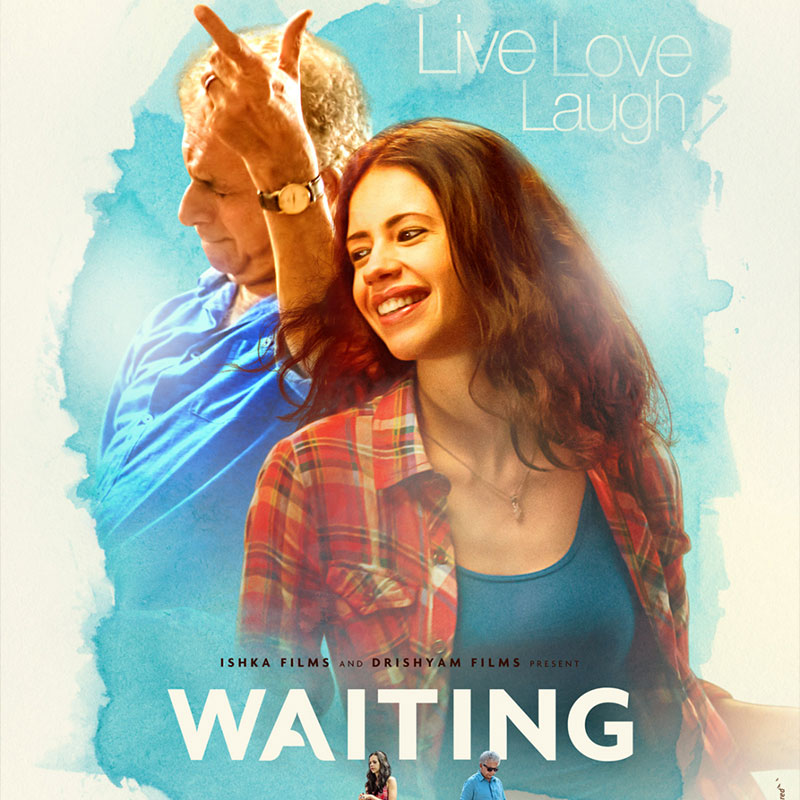
    Waiting is one such film which boasts of Naseeruddin Shah in the lead thus proffering some expectations. But, again, the film, its story idea, is an obsession of some individual with resources.

    Naseeruddin spends his days and nights at a posh Cochin hospital where his comatose wife, Suhasini Manirathnam, is lying under observation. It has been eight months and Naseeruddin has become a sort of an expert on his wife’s ailment. He expects best from the doctors at the hospital, who think his wife is beyond help. Also, Naseeruddin, a professor, is running out of money! Naseeruddin also has a thing to confess to his wife and, if for nothing else, wants her to regain consciousness for once just for him to make his confession!

    public://maxresdefault_0.jpg

    This is when Kalki Koechlin enters the scene. Out on an assignment in Cochin, Kalki’s husband, Arjun Mathur, has met with a serious accident. He is in a vegetative state with no chance of survival. Both become friends, become a mutual support system, but both see a conspiracy in the hospital’s decisions.

    Actually, both may be miserable and feel helpless but, somehow, both find the time and the inclination to celebrate, play music, dance and generally enjoy. All this at Naseeruddin’s house where he also confesses to transgression.
    In such a film, the writers and makers usually spend days discussing the conclusion of the story but never agree on one. Here too, the conclusion is left to the viewer. In case the viewer cares by now!


    Producers: Priti Gupta, Manish Mundra.
    Director: Anu Menon.
    Cast: Naseeruddin Shah, Kalki Koechlin, Arjun Mathur, Rajat Kapoor, Suhasini Maniratnam, Rajeev Ravindranathan.
     

    Phobia….Learn a new word!

    public://maxresdefault (1).jpg

    Renowned makers like Raj Kapoor, B R Chopra, and many others did indulge at times in films with themes way different from the mainstream entertainers they made. RK’s Jagte Raho, Boot Polish; BR’s Kanoon, Ittefaq and so on were nowhere near regular commercial films. Some worked, some did not, but, in most cases, they were a piece from life.

    Phobia is a film dealing with a girl afflicted with Agoraphobia which is a fear or crowded places, open spaces or any sort of exposure. A subject not easy to identify with. In such a story, when the protagonist suffers due to her ailment, those around her as in family, friends and others reaching out to help also suffer. And, when such a case is brought to a cinema as a film, the audience suffers too.

    Radhika Apte is diagnosed with Agoraphobia. She shares her house with her sister and her child. Balancing her time between her job, child and Radhika becomes an ordeal for the sister. Radhika’s friend cum silent lover, Satyadeep Mishra, volunteers to help her. He borrows a friend’s house and puts up Radhika there. Here she need not face the crowds, keep to herself and try to regain her confidence. Mishra would look her up from time to time.

    Here, the agoraphobia takes the turn for the worst. There are no crowds, no one other than her whatsoever, now Radhika is scared of loneliness. It seems a girl lived there before her who has vanished without picking her bags and clothes or paying rent. She had a thing going with a neighbouring guy who, Radhika thinks, has killed her, Radhika keeps seeing her in her sleep as well as waking hours. The phobia finds an extension in horror.

    On its way to tackle Radhika’s problems, Phobia creates some mildly funny situations and some subtle comedy. It is some relief considering the theme provides nothing to regale. The fun lasts for a while, as, at the end, the film resorts to gore and unnecessary violence.

    What does not work, however, is Radhika’s character sketched as out rightly selfish and ingrate. Whatever the film’s length, it needs drastic trimming. The film has one good song in the beginning. It is a Radhika film all along and she puts in a commendable performance. Satyadeep does his bit with conviction. Ankur Vikal is good. The girl next door, Yashaswani, is a natural.

    Producer: Viki Rajani.
    Director: Pawan Kirplani.
    Cast: Radhika Apte, Satyadeep Mishra, Ankur Vikal, Yashswani Dayama.
     
     
    Fredrick…..Who?

    public://Fredrick-2016-Hindi-Movie-Mp3-Songs-Download-Free.jpg

    Fredrick, if simply put, is a film about childhood romance. If you really care to know and learn more, it is about a childhood romance about gay couple in their teens. The thing is that, here, a deprived lover takes recourse to violence. Does a passive gay lover become so violent if deprived? Towards this end, Fredrick, the film assumes all kinds of angles. Except for the initial few minutes till the concluding few, it sticks to being an investigative story about a drug lord cum pimp and his cabal dominating the scenic township of Mussoorie.

    Avinash Dhyani is a sleuth belonging to the IB (Intelligence Bureau) married to Tulna Butalia, who is qualified but stopped short of joining the IB! Dhyani’s sister, on a trip to Mussoorie, has vanished from there. Sensing some foul play, Dhyani and Tulna decide to go to Mussoorie and follow the lead from where his sister was last seen.

    The serene and beautifully snow-clad Mussourie spews red blood as a local don’s goons let loose a reign of blood and gore; run a ring of flesh trade and drugs. The ringmaster of the whole violent show is one Fredrick, played by Prashant Narayanan.

    Dhyani and Tulna arrive as a honeymoon couple and soon they are approached in the same fashion as Dhyani’s sister was. They are drugged and while Dhyani is left to fend for himself, Tulna has been kidnapped.  Since the couple had come prepared for all eventualities Dhyani tracks down Tulna’s location. The game of chasing starts till Dhyani comes face to face with the dreaded don Prashant.

    Prashant’s men are spread all over including in the police force. He thinks nothing of killing his distractors, so why has he not killed Dhyani so far? That has a link with Fredrick’s early youth: he sees in Dhyani the gay partner he lost in his teens.

    The film takes the subject of gay relationships and blends it with crime which is not to say it is different from other such films. In fact, the flesh trade theme went out of fashion long before the 20th century began.

    The direction is clichéd and, except for outdoor locales, the film bears a 1960s look with gaudy sets. Musically, the film has a fair score. Editing is weak. While Dhyani and Tulna are okay, Prashant impresses with his rich and booming voice.
     
    Producer: Manish Kalaria.
    Director: Rajesh Butalia.
    Cast: Prashant Narayanan, Avinash Tyagi, Tulna Butalia.

  • Phobia….Learn a new word!  Fredrick…..Who?

    Phobia….Learn a new word! Fredrick…..Who?

    Waiting…Film without an end!

    Once upon a time, many filmmakers out of a film institute took films shown to them as a part of the syllabus too seriously and decided to emulate a Fellini or a Bergman or a Truffaut. Most of these aspirants made films with NFDC backing but found no exposure towards which end, the Government built a small capacity cinema just to promote such film by the name of Akashwani in South Mumbai.

    What is different now is that, people with resources make such odd films which have little or nothing to do with films or entertainment as we know. Fortunately for such films, we have an oversupply of multi-screen cinemas with huge gaps to fill between two major commercial films. The last two months, for example, had no film that would provide sustenance to these screens for even the opening three days.
     
    Waiting is one such film which boasts of Naseeruddin Shah in the lead thus proffering some expectations. But, again, the film, its story idea, is an obsession of some individual with resources.

    Naseeruddin spends his days and nights at a posh Cochin hospital where his comatose wife, Suhasini Manirathnam, is lying under observation. It has been eight months and Naseeruddin has become a sort of an expert on his wife’s ailment. He expects best from the doctors at the hospital, who think his wife is beyond help. Also, Naseeruddin, a professor, is running out of money! Naseeruddin also has a thing to confess to his wife and, if for nothing else, wants her to regain consciousness for once just for him to make his confession!

    public://maxresdefault_0.jpg

    This is when Kalki Koechlin enters the scene. Out on an assignment in Cochin, Kalki’s husband, Arjun Mathur, has met with a serious accident. He is in a vegetative state with no chance of survival. Both become friends, become a mutual support system, but both see a conspiracy in the hospital’s decisions.

    Actually, both may be miserable and feel helpless but, somehow, both find the time and the inclination to celebrate, play music, dance and generally enjoy. All this at Naseeruddin’s house where he also confesses to transgression.
    In such a film, the writers and makers usually spend days discussing the conclusion of the story but never agree on one. Here too, the conclusion is left to the viewer. In case the viewer cares by now!


    Producers: Priti Gupta, Manish Mundra.
    Director: Anu Menon.
    Cast: Naseeruddin Shah, Kalki Koechlin, Arjun Mathur, Rajat Kapoor, Suhasini Maniratnam, Rajeev Ravindranathan.
     

    Phobia….Learn a new word!

    public://maxresdefault (1).jpg

    Renowned makers like Raj Kapoor, B R Chopra, and many others did indulge at times in films with themes way different from the mainstream entertainers they made. RK’s Jagte Raho, Boot Polish; BR’s Kanoon, Ittefaq and so on were nowhere near regular commercial films. Some worked, some did not, but, in most cases, they were a piece from life.

    Phobia is a film dealing with a girl afflicted with Agoraphobia which is a fear or crowded places, open spaces or any sort of exposure. A subject not easy to identify with. In such a story, when the protagonist suffers due to her ailment, those around her as in family, friends and others reaching out to help also suffer. And, when such a case is brought to a cinema as a film, the audience suffers too.

    Radhika Apte is diagnosed with Agoraphobia. She shares her house with her sister and her child. Balancing her time between her job, child and Radhika becomes an ordeal for the sister. Radhika’s friend cum silent lover, Satyadeep Mishra, volunteers to help her. He borrows a friend’s house and puts up Radhika there. Here she need not face the crowds, keep to herself and try to regain her confidence. Mishra would look her up from time to time.

    Here, the agoraphobia takes the turn for the worst. There are no crowds, no one other than her whatsoever, now Radhika is scared of loneliness. It seems a girl lived there before her who has vanished without picking her bags and clothes or paying rent. She had a thing going with a neighbouring guy who, Radhika thinks, has killed her, Radhika keeps seeing her in her sleep as well as waking hours. The phobia finds an extension in horror.

    On its way to tackle Radhika’s problems, Phobia creates some mildly funny situations and some subtle comedy. It is some relief considering the theme provides nothing to regale. The fun lasts for a while, as, at the end, the film resorts to gore and unnecessary violence.

    What does not work, however, is Radhika’s character sketched as out rightly selfish and ingrate. Whatever the film’s length, it needs drastic trimming. The film has one good song in the beginning. It is a Radhika film all along and she puts in a commendable performance. Satyadeep does his bit with conviction. Ankur Vikal is good. The girl next door, Yashaswani, is a natural.

    Producer: Viki Rajani.
    Director: Pawan Kirplani.
    Cast: Radhika Apte, Satyadeep Mishra, Ankur Vikal, Yashswani Dayama.
     
     
    Fredrick…..Who?

    public://Fredrick-2016-Hindi-Movie-Mp3-Songs-Download-Free.jpg

    Fredrick, if simply put, is a film about childhood romance. If you really care to know and learn more, it is about a childhood romance about gay couple in their teens. The thing is that, here, a deprived lover takes recourse to violence. Does a passive gay lover become so violent if deprived? Towards this end, Fredrick, the film assumes all kinds of angles. Except for the initial few minutes till the concluding few, it sticks to being an investigative story about a drug lord cum pimp and his cabal dominating the scenic township of Mussoorie.

    Avinash Dhyani is a sleuth belonging to the IB (Intelligence Bureau) married to Tulna Butalia, who is qualified but stopped short of joining the IB! Dhyani’s sister, on a trip to Mussoorie, has vanished from there. Sensing some foul play, Dhyani and Tulna decide to go to Mussoorie and follow the lead from where his sister was last seen.

    The serene and beautifully snow-clad Mussourie spews red blood as a local don’s goons let loose a reign of blood and gore; run a ring of flesh trade and drugs. The ringmaster of the whole violent show is one Fredrick, played by Prashant Narayanan.

    Dhyani and Tulna arrive as a honeymoon couple and soon they are approached in the same fashion as Dhyani’s sister was. They are drugged and while Dhyani is left to fend for himself, Tulna has been kidnapped.  Since the couple had come prepared for all eventualities Dhyani tracks down Tulna’s location. The game of chasing starts till Dhyani comes face to face with the dreaded don Prashant.

    Prashant’s men are spread all over including in the police force. He thinks nothing of killing his distractors, so why has he not killed Dhyani so far? That has a link with Fredrick’s early youth: he sees in Dhyani the gay partner he lost in his teens.

    The film takes the subject of gay relationships and blends it with crime which is not to say it is different from other such films. In fact, the flesh trade theme went out of fashion long before the 20th century began.

    The direction is clichéd and, except for outdoor locales, the film bears a 1960s look with gaudy sets. Musically, the film has a fair score. Editing is weak. While Dhyani and Tulna are okay, Prashant impresses with his rich and booming voice.
     
    Producer: Manish Kalaria.
    Director: Rajesh Butalia.
    Cast: Prashant Narayanan, Avinash Tyagi, Tulna Butalia.

  • Dhishkiyaon: Dhishki..yawn

    Dhishkiyaon: Dhishki..yawn

    MUMBAI: Looking at Dhishkiyaon, it is more than obvious that the writer director of this film, Sanamjit Talwar has been fed on a diet of 1970s films of Mumbai underworld. The all-time classic Deewaar set a trend that many makers have tried to emulate. Everything about Dhishkiyaon is copybook: it’s set in the Mumbai underworld of the Koliwada beaches and deals mainly with smuggling and the role of the police. And, like in many filmy underworlds, there are layers to the operatives so that the fight can continue and the main don can be taken up in the end like the favourite food item reserved till last.

    Harman Baweja is a well-behaved kid being brought up by his father, having lost his mother at five. His father has little time for him but advises him to follow the Gandhian path. Harman is the victim of a school bully who beats him up and humiliates him every day. But he also has close friends in a girl and a boy. Fed up of the class bully, the child Harman decides to give supari to a local gangster, Prakash Narayanan, because he has been told that Prakash can handle anybody. Prakash takes a fancy to the kid and tells him that the only way to stop the bully is to give it back to him. Prakash and Harman are now inseparable and next thing you know, Harman has grown up and is a member of Prakash’s gang.

    Prakash, as Harman learns soon, is not the ultimate don. He answers to another don, Sumit Nijhwan. And then there is another don, Rajesh Vivek, who is liquidating all his assets and clearing out of the game, though he doesn’t explain why. Harman wants to steal his computer and through that the loot from Vivek’s assets. However, his plan is hijacked by Sumit. There has been a killing in the process of stealing the computer. Vivek’s accountant as well as Harman’s mentor, Prakash, is killed. Harman is made an offer to either take a bullet or take the rap for the killings. For Harman, it is necessary to stay alive to avenge Prakash’s death.

    Producers: Sunil Lulla, Shilpa Shetty.

    Director: SanamjitTalwar.

    Cast: Sunny Deol, Harman Baweja, Ayesha Khanna, Prashant Narayanan, Aditya Pancholi, Anand Tiwari, Rajit Kapoor, in item number Shilpa Shetty.

    While in jail, Harman meets Sunny Deol, a Haryanvi. Both while away their time playing snakes and ladders, which Sunny also uses to teach his philosophies of life and survival to Harman. Once out of jail, both team up and, under the guidance of Sunny, Harman plans his revenge on Sumit. Harman impresses Sumit and gains his confidence despite opposition from Sumit’s right hand man, Anand Tiwari. He also cultivates the policeman, Aditya Panscholi. With the screen so crowded, it is time to eliminate some people. Finally, it is between Harman, Tiwari and Sumit.

    The film starts with Harman narrating his life story to Sunny in first person with some flashbacks. This continues almost till interval. It is a poor use of the visual medium of film. There is no background to Sunny’s character. He is larger than life because of his public image as a toughie. Sadly, the same can’t be said of the villains who are unknown faces without any image and don’t help Harman’s character grow. The script is patchy and the scenes that inspired the writer have been thrown in piecemeal. Dialogue is good at places. Musically, one song is hummable. A little trimming would have helped.

    While Sunny and Aditya stay true to their style of acting, Harman is limited by his expressions. Prakash is very good. Sumit is okay. Tiwari grossly overacts.

    Dhishkiyaon is a lost cause and will find it tough to see through even the weekend.

    Youngistaan: No Politics Please

    Political stories either blended with family sagas or with romance, whichever way, don’t usually work in mainstream Hindi cinema except for the odd one, like the antiestablishment Inquilaab (1984) or South remake Nayak (2001), both of which barely managed to scrape through. The one which went on to become a classic is Aandhi (1975). Against this, the list of flops is long. Even rarer are political films about young people in politics. Before the recent Rajneeti (2010) the last film one remembers of a young man (Prosenjit) going into politics with an agenda was Aandhiyan (1990), with the only attraction of this film being the return of Mumtaz to Hindi cinema. While Nayak and Inquilaab with Anil Kapoor and Amitabh Bachchan, respectively, in the lead had some star power, Aandhiyan lacked on that count, a problem that Youngistaan suffers from to a great degree.

    Producer: Vashu Bhagnani.

    Director: Syed Ahmad Afzal.

    Cast: Jackky Bhagnani, Neha Sharma, Farooq Sheikh, Boman Irani, Kayoze Irani, Meeta Vasisht.

    Jackky Bhagnani is a young easygoing guy enjoying life with his steady girlfriend, Neha Sharma. His life is all about fun and games, parties and romance. That he is the son of the powerful PM of India, Boman Irani, hardly touches his life as he is gallivanting in far away Japan. That is until, one day suddenly, Boman is no more and Jackky is called upon to fill in his father’s shoes until the elections, which are due soon. At 28, he is the youngest PM of a vast country, straight from a life of luxury to no-frills political showmanship, from denims to kurtas.

    Now instead of his friends, he is surrounded by his political ‘friends’ of whom he is never sure. There is no life or privacy with his lady love anymore. In fact, his love life with a live-in girlfriend is out of sync with the political traditions; they are not supposed to do these things openly! He also has another problem. His partner, Neha, is not in favour of him taking up politics, least of all his father’s responsibilities. And there is, of course, the game of wits with other politicians.

    Inspired from the Telugu film Leader, Youngistan could have been a subject worth trying in a regional language but not in Hindi where, in politics, even those in 40s are considered young! Also, it is not as simple as taking over a kingdom. This makes the theme seem implausible and farfetched. Also, there is too much of real politics happening in the electronic media nowadays what with general elections around the corner. Direction is fair. Musically, the film has a couple of good numbers. Jackky manages a passable act. Neha is okay. The one worth watching the film for is Farooq Sheikh, this being the great artiste’s last film.

    Youngistan has had a poor opening with no audience-no show at many cinemas.

    O Teri: No Teri

    Jaane Bhi Do Yaaro is a cult classic meant to be enjoyed again and again, not to be blatantly copied; never. O Teri is just that, an attempt to present, what the makers think, is a contemporary version of the Kundan Shah classic. In the bargain, the producers also waste the goodwill earned with their last production, Bodyguard. It could have been better utilized.

    Pulkit Samrat and Bilal Amrohi are greenhorn TV news reporters working as a team as well as living under same roof in Delhi. They have no sense of newsworthiness and their boss, Sarah-Jane Dias, is exasperated with the duo. She wanted scams and other such big news. Finally, she sacks them. What is worse, Pulkit is besotted by Sarah. The film’s tempo is set with the murder of a police detective who has managed to expose a scandal by Anupam Kher and was about to go public with it. He has been shot and then run over by a speeding car. Strings are pulled to have it declared an accidental death. The killers, however, fail to dispose the cop’s corpse safely and dump it in Pulkit’s Fiat car.

    Producers: Alvira Agnihotri, Atul Agnihotri.

    Director: Umesh Bist.

    Cast: Pulkit Samrat, Bilal Amrohi, Sarah-Jane Dias, Anupam Kher, Mandira Bedi, Vijay Raaz, Manoj Pahwa and Salman Khan in a cameo.

    Excited, the duo informs Sarah, who asks them to bring the body to her studio. (That is the kind of film this is where a news editor expects a corpse ferried around town and delivered at her doorstep.) However, when Sarah comes along to the car park to see the body, it is missing. The duo gets an earful. As both argue over a foot over bridge, the bridge, newly built, starts coming apart. The scandal is at hand and happening with the duo being right in the middle of the happenings. Bilal puts his Handycam to use. But, these are blundering boys and never get anything right. When they go to Sarah to show her the live coverage of the collapsing bridge, the disc is corrupted!

    While the CD may not have copied the whole shoot, it does manage to shoot the stolen corpse of the cop buried under the bridge debris. The boys are back in action. The charade goes on ad nauseam as just about everybody is on the villains’ side and gangs up against the two. However, the makers’ don’t let up on the greed for a happy ending.

    There are good films at times and there are bad films most of the time but, O Teri vies for the slot of a very, very bad film. It has no script, no coherence, no logic and no appeal of any kind. The presence of any director is suspect. Songs are forced in to take the film to an acceptable length which adds to the viewers’ tedium. Dialogue is banal. As for its two lead men, while Pulkit fails, making an effort, Bilal can’t act to save his life. Sarah lacks presence. Vijay Raaz is getting more irritable with every film he does. Anupam Kher is a caricature while Manoj Pahwa is okay in an undefined role. Salman Khan’s cameo song in the end titles may see few if any still around in the hall to watch it.

    For a film with thanks to Salim Khan and Salman Khan among others in its credit titles, O Teri is an example of gross waste of resources, financial as well as personal relations.