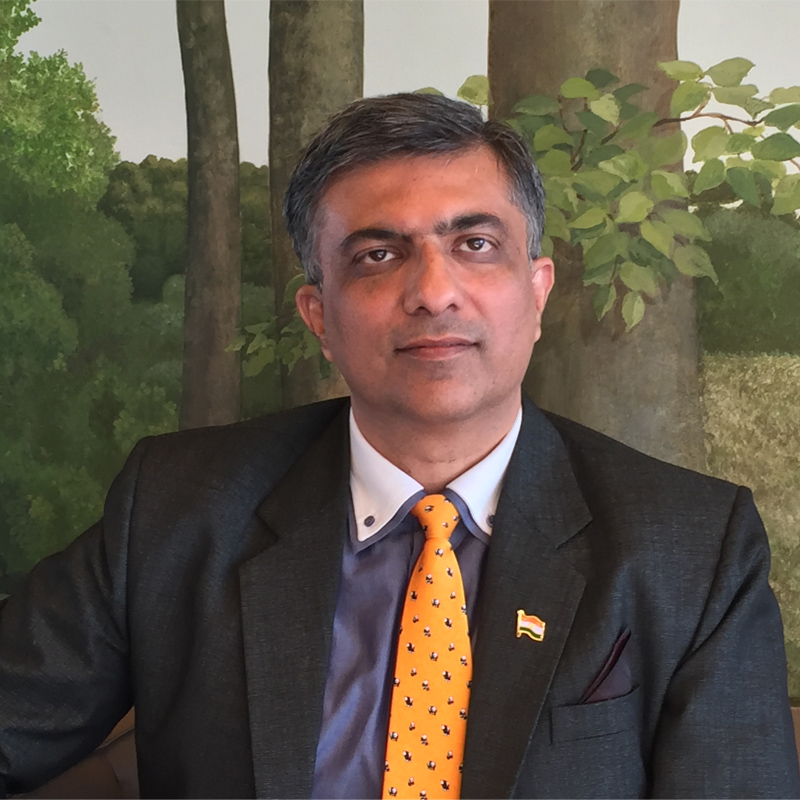
Tag: Prashant Modi

  • Mindshare announces senior management appointments

    Mindshare announces senior management appointments

    MUMBAI: Mindshare has announced two major leadership appointments to its leadership structure in Asia Pacific.  

    The first is the elevation of Prashant Modi to Asia Pacific COO. Modi, who was previously chief commercial officer for Mindshare in Asia Pacific, will take on the broader responsibility of managing the Singapore hub and working with Mindshare Asia Pacific CEO Amrita Randhawa on future-proofing the overall company structure and offering. 

    Modi has been with the agency and GroupM for over 16 years working across both GroupM and Mindshare in its India and regional office in Singapore. Modi is widely credited within the agency as a key reason for the company’s consistent delivery across the region. 

    Randhawa said, “There are few people who care about our people and our company as much as Prashant. He is the beating heart of Mindshare and one of our absolutely finest minds. I am delighted that this role is going to give him the canvas he deserves to make an even bigger impact on our organisation and on our people.”

    Speaking on his elevation, Modi said, “16 years with Mindshare and it still is a dream place to work with great colleagues and clients. Mindshare has always provided a very open atmosphere to fuel personal growth and I am looking forward to continuing to contribute to our achievements and growing our business further.” 

    The second appointment is that of Rohan Lightfoot as chief growth officer of Mindshare Asia Pacific. His role is focused on developing high growth opportunities for new and existing clients with an emphasis on new products, innovation and digitization. Lightfoot has over 20 years’ experience, across the region based out of Singapore and in China, US and UK. Most recently he was with Isobar working on clients such as Pernod Ricard, Adidas, Yum!, Unilever and Coca Cola.

    Speaking on Lightfoot’s appointment Randhawa said, “Rohan’s been on my must-hire list for years! He is uniquely placed having spent solid time in China, having a blend of creative, media and digital craft experience as well as working on some of the region’s biggest accounts. He understands the changes that the agency needs to deliver in order to continue to be a valued partner for our clients.”

    Speaking on the move to Mindshare Lightfoot said, “I am so excited to be taking on this new role. It’s a perfect fit for my experiences and passions in my career. The breadth and depth of capability at Mindshare is staggering. The challenge of keeping the world’s leading media agency always ahead was impossible to turn down. I’m already loving being part of the team that Amrita is building.”

  • FICCI keen on IPR awareness & enforcement to encourage innovation

    FICCI keen on IPR awareness & enforcement to encourage innovation

    NEW DELHI: Department of Industrial Policy & Promotion joint secretary Rajiv Aggarwal has said India’s IP framework was in the midst of a paradigm shift following the announcement of the National IPR Policy.

    Chairing a session on India’s IPR Policy: A Roadmap to Robust IP Ecosystem in India in a meet organized by FICCI, he said while the Department was spearheading the overall policy, specific recommendations listed in the policy were being taken up for action by concerned ministries and departments.

    He elaborated on the initiatives undertaken by DIPP and the Cell for IPR Promotion and Commercialisation (CIPAM) set up by the Government to implement the seven objectives which formed the basis of the National IPR Policy, besides bringing forth the industry’s role in ensuring the effective roll-out of these initiatives.

    FICCI, in its drive to spur growth in the Indian industry, specially manufacturing, organised in association with the International Chamber of Commerce (ICC) India, the International Conference on ‘IP: Key Enabler to Growth & Innovation’ here.

    FICCI IPR Committee chairman Narendra Sabharwal who is the former convener of Think Tank on IPR Policy and former deputy director-gneral in World Intellectual Property Organisation (WIPO) said that FICCI had a particular interest in supporting and encouraging innovation for the benefit of industry and economic growth. Consequently, FICCI was working with all stakeholders towards creating awareness about IP, its adequate enforcement, besides ensuring the effective implementation of India’s National IPR Policy recommendations.

    He said India’s IP policy gives IP the prominence it deserves as it is for the first time that IP has been brought into the mainstream of the growth process. He underlined the need to raise awareness amongst businesses on how to use IP as a tool to raise competitiveness and foster growth. While the IP policy provides the overall direction, the rest of the economic and social policies need to be tweaked to bring them in sync with the IP policy.

    Sabharwal enumerated the objectives of the IP policy as promotion and awareness of IP issue, generation of IP, legal and legislative framework, administration and management, commercialisation of IP, enforcement and adjudication and creation of human capital.

    He recommended that all industries and businesses should undertake a baseline IP survey to assess where we are and how do we move forward. He also suggested that there was need for a study on the economic contribution of IP such as a copyright-related industries survey on contribution of GDP.

    ICC Commission on Intellectual Property chairman David J Koris underlined the need of creating an ecosystem that nurtured and promoted intellectual property to fulfill its potential as a tool to spur innovation and creativity, and economic growth.

    Through its awareness-raising and advocacy initiatives, the Commission on Intellectual Property promotes the positive role of the IP system, gives guidance on how the system can be made more efficient and cost effective, helps policy makers adapt the system to new challenges, and promotes the use of IP as a business tool. It also actively contributes on issues arising from the areas of interface between intellectual property and other areas, such as the digital environment and the Internet, the environment, health, development, and competition policy.

    Koris said that for meaningful support to countries in the markets where they operate, the key imperatives were: uniform belief in the rule of law, good regulations and laws and focus on infrastructure.

    He said IP is a key driving force for growth in many companies and economies today, as the different types of intangible assets of a business are becoming increasingly important and valuable in relation to its tangible assets. The IP Commission produces publications and organizes events to support the ICC network of business organizations and chambers of commerce in their efforts to help companies use the IP system to increase their competitiveness.

    ICC India president Prashant Modi highlighted the important role of intellectual property in promoting innovation and technology diffusion, and the way technologies were disseminated in different sectors and countries globally. He observed that IP was a dynamic and constantly evolving field, which was closely tied to technological, economic, political and social changes, and the vital role that intellectual property rights (IPRs) – copyrights, patents, trademarks and similar rights upon which the lion’s share of creative and innovative products and services relied – had in helping the economies of developed and developing countries all over the world grow.

    Dr. K. S. Kardam, senior joint controller of patents and designs at Indian Patent Office, observed that, in the recent years, India was paying increasing attention to facilitate the ease of doing business in the country. With the significance of IPR as a foremost enabler now being increasingly recognized, the government was making efforts to address the concerns that the industry had in conducting business in India, and to work with the industry and other stakeholders to identify solutions towards further enhancing India’s business landscape.

    ICC India vice president Subhrakant Panda said protection of IP rights had become more important than ever following the new economic reforms initiatives introduced by the government. Innovation, he said, was the cornerstone of economic development and emphasised that India had a robust IP regime and a strong judicial system for recourse for settlement of disputes.

    The delegates at the conference deliberated on important developments in intellectual property like India’s recently announced National IPR Policy and the subsequent initiatives undertaken by the government e.g. setting up the Cell for IPR Promotion and Commercialisation (CIPAM) to oversee the implement the policy recommendations, besides bringing froth Industry’s views and perspective on these initiatives.

    Discussions also focussed on other IP-specific issues including constraints that India was facing on account of Counterfeiting and Piracy and the sustained actions needed among the stakeholders to effectively combat this global threat; the concerns of industry in areas such as CRI Guidelines, TRAI Regulations for broadcasting sector, issues with regard to SEP & FRAND terms – among other.

    One of the conference sessions was dedicated to a comparative outlook of India’s IP ecosystem vis-a-vis other jurisdictions, where the panelists undertook an assessment of where India stood on IP matters in comparison to the global standards and practices, whether India could incorporate certain relevant international IP best practices and where the country should be positioning to figure in the emerging global IP framework.

    The Conference brought together a number of leading policy makers, professionals, government officials and IP expert from India and from across the globe. A number of members of the International Chamber of Commerce (ICC) attending the ICC IP Commission meeting in India also participated in the conference, both as speakers and delegates.

  • FICCI keen on IPR awareness & enforcement to encourage innovation

    FICCI keen on IPR awareness & enforcement to encourage innovation

    NEW DELHI: Department of Industrial Policy & Promotion joint secretary Rajiv Aggarwal has said India’s IP framework was in the midst of a paradigm shift following the announcement of the National IPR Policy.

    Chairing a session on India’s IPR Policy: A Roadmap to Robust IP Ecosystem in India in a meet organized by FICCI, he said while the Department was spearheading the overall policy, specific recommendations listed in the policy were being taken up for action by concerned ministries and departments.

    He elaborated on the initiatives undertaken by DIPP and the Cell for IPR Promotion and Commercialisation (CIPAM) set up by the Government to implement the seven objectives which formed the basis of the National IPR Policy, besides bringing forth the industry’s role in ensuring the effective roll-out of these initiatives.

    FICCI, in its drive to spur growth in the Indian industry, specially manufacturing, organised in association with the International Chamber of Commerce (ICC) India, the International Conference on ‘IP: Key Enabler to Growth & Innovation’ here.

    FICCI IPR Committee chairman Narendra Sabharwal who is the former convener of Think Tank on IPR Policy and former deputy director-gneral in World Intellectual Property Organisation (WIPO) said that FICCI had a particular interest in supporting and encouraging innovation for the benefit of industry and economic growth. Consequently, FICCI was working with all stakeholders towards creating awareness about IP, its adequate enforcement, besides ensuring the effective implementation of India’s National IPR Policy recommendations.

    He said India’s IP policy gives IP the prominence it deserves as it is for the first time that IP has been brought into the mainstream of the growth process. He underlined the need to raise awareness amongst businesses on how to use IP as a tool to raise competitiveness and foster growth. While the IP policy provides the overall direction, the rest of the economic and social policies need to be tweaked to bring them in sync with the IP policy.

    Sabharwal enumerated the objectives of the IP policy as promotion and awareness of IP issue, generation of IP, legal and legislative framework, administration and management, commercialisation of IP, enforcement and adjudication and creation of human capital.

    He recommended that all industries and businesses should undertake a baseline IP survey to assess where we are and how do we move forward. He also suggested that there was need for a study on the economic contribution of IP such as a copyright-related industries survey on contribution of GDP.

    ICC Commission on Intellectual Property chairman David J Koris underlined the need of creating an ecosystem that nurtured and promoted intellectual property to fulfill its potential as a tool to spur innovation and creativity, and economic growth.

    Through its awareness-raising and advocacy initiatives, the Commission on Intellectual Property promotes the positive role of the IP system, gives guidance on how the system can be made more efficient and cost effective, helps policy makers adapt the system to new challenges, and promotes the use of IP as a business tool. It also actively contributes on issues arising from the areas of interface between intellectual property and other areas, such as the digital environment and the Internet, the environment, health, development, and competition policy.

    Koris said that for meaningful support to countries in the markets where they operate, the key imperatives were: uniform belief in the rule of law, good regulations and laws and focus on infrastructure.

    He said IP is a key driving force for growth in many companies and economies today, as the different types of intangible assets of a business are becoming increasingly important and valuable in relation to its tangible assets. The IP Commission produces publications and organizes events to support the ICC network of business organizations and chambers of commerce in their efforts to help companies use the IP system to increase their competitiveness.

    ICC India president Prashant Modi highlighted the important role of intellectual property in promoting innovation and technology diffusion, and the way technologies were disseminated in different sectors and countries globally. He observed that IP was a dynamic and constantly evolving field, which was closely tied to technological, economic, political and social changes, and the vital role that intellectual property rights (IPRs) – copyrights, patents, trademarks and similar rights upon which the lion’s share of creative and innovative products and services relied – had in helping the economies of developed and developing countries all over the world grow.

    Dr. K. S. Kardam, senior joint controller of patents and designs at Indian Patent Office, observed that, in the recent years, India was paying increasing attention to facilitate the ease of doing business in the country. With the significance of IPR as a foremost enabler now being increasingly recognized, the government was making efforts to address the concerns that the industry had in conducting business in India, and to work with the industry and other stakeholders to identify solutions towards further enhancing India’s business landscape.

    ICC India vice president Subhrakant Panda said protection of IP rights had become more important than ever following the new economic reforms initiatives introduced by the government. Innovation, he said, was the cornerstone of economic development and emphasised that India had a robust IP regime and a strong judicial system for recourse for settlement of disputes.

    The delegates at the conference deliberated on important developments in intellectual property like India’s recently announced National IPR Policy and the subsequent initiatives undertaken by the government e.g. setting up the Cell for IPR Promotion and Commercialisation (CIPAM) to oversee the implement the policy recommendations, besides bringing froth Industry’s views and perspective on these initiatives.

    Discussions also focussed on other IP-specific issues including constraints that India was facing on account of Counterfeiting and Piracy and the sustained actions needed among the stakeholders to effectively combat this global threat; the concerns of industry in areas such as CRI Guidelines, TRAI Regulations for broadcasting sector, issues with regard to SEP & FRAND terms – among other.

    One of the conference sessions was dedicated to a comparative outlook of India’s IP ecosystem vis-a-vis other jurisdictions, where the panelists undertook an assessment of where India stood on IP matters in comparison to the global standards and practices, whether India could incorporate certain relevant international IP best practices and where the country should be positioning to figure in the emerging global IP framework.

    The Conference brought together a number of leading policy makers, professionals, government officials and IP expert from India and from across the globe. A number of members of the International Chamber of Commerce (ICC) attending the ICC IP Commission meeting in India also participated in the conference, both as speakers and delegates.