Tag: Prashant Khanna

  • IBC 2025 brings the future of media to Amsterdam

    IBC 2025 brings the future of media to Amsterdam

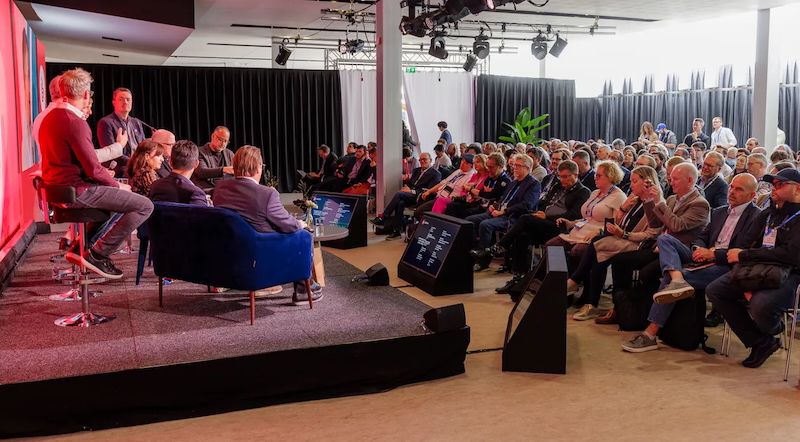
    AMSTERDAM: Amsterdam’s RAI convention centre will become the global capital of media and technology from 12–15 September when IBC 2025 opens its doors to broadcasters, streamers, studios and tech firms from around the world.

    The show will run 10:30–18:00 on opening day, 09:30–18:00 across the weekend and close at 16:00 on Monday. Organisers have built the edition around the theme of innovation, with a newly minted Future Tech hub in Hall 14. Here visitors can test emerging tools such as artificial intelligence, cloud-native production workflows, augmented reality, virtual sets, immersive audio-visual formats and sustainability-driven hardware.

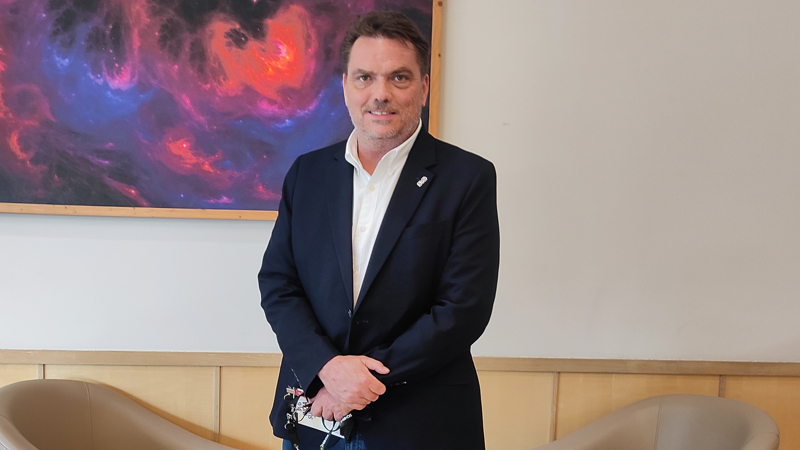
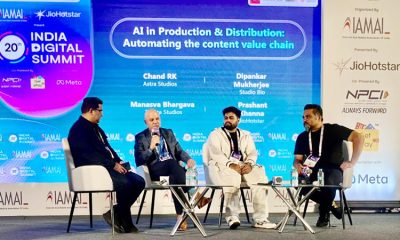
    A three-day conference, from 12–14 September, features more than 300 speakers drawn from major broadcasters, global streaming platforms, technology vendors and creative studios. Panels will probe platform evolution, revenue models, AI integration and the next wave of interactive storytelling. JioStar’s Prashant Khanna is one of the headlined speakers being featured at IBC this year. 

    Elsewhere, the IBC Innovation Awards will celebrate cutting-edge deployments, while the Accelerator Media Innovation Programme offers collaborative trials of experimental tech. Free-to-attend theatres and showcase stages promise continual demos and debate on content delivery, rights management, talent development and the fast-changing business landscape.

    Beyond the exhibition floor, organisers are pitching IBC 2025 as a working laboratory: a place where engineers, producers and executives can handle new kit, swap ideas and chart the next phase of global media transformation.

  • APOS 2025: How JioStar turns sports into co-creation, not just consumption

    APOS 2025: How JioStar turns sports into co-creation, not just consumption

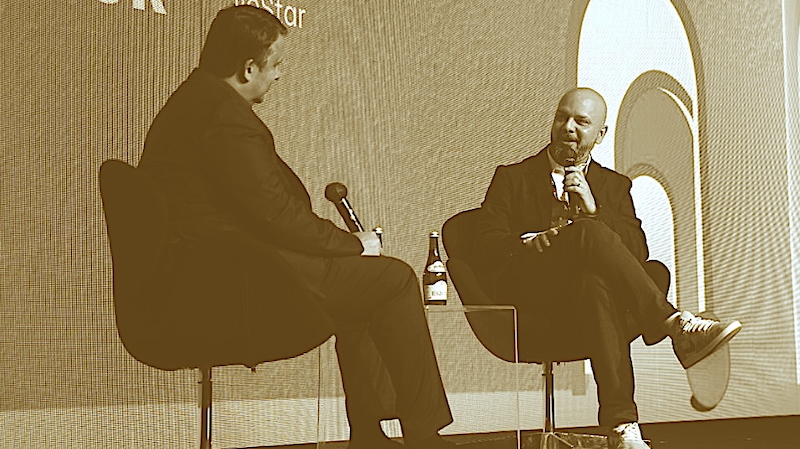
    BALI:  JioStar is no longer content with just broadcasting sport—it’s rewriting the production storybook altogether. Speaking at APOS 2025 in Bali, JioStar head of sports production services & technology Prashant Khanna laid out a bold vision: India as the epicentre of global sports innovation.

    “We don’t just see ourselves as broadcasters or production partners,” Khanna said during a high-energy fireside chat. “We’re in the business of helping India create iconic sporting memories.”

    Khanna spotlighted JioStar’s end-to-end reimagining of the sports viewing experience—infused with tech, empathy, and staggering interactivity. Think sign-language feeds, descriptive audio for the visually impaired, vertical videos, motion-capture-powered kids’ streams, and multi-cam toggles.

    “The modern fan doesn’t want to just watch—they want to co-create,” Khanna stressed. “Millions are producing their own version of the game in real time. That’s the expectation.”

    A major catalyst behind this transformation? Starlab, JioStar’s in-house innovation unit that’s quietly building a cloud-native production stack in collaboration with AWS, creators, and start-ups. The result: hyper-personalised, scalable, and immersive experiences beamed across devices in formats fans choose.

    Khanna also highlighted JioStar’s deep investment in talent pipelines through its partnership with the Indian Institute of Creative Technologies—a government-led effort to skill the next generation in sports and live production.

    “It’s not just about what audiences see today. It’s about who shapes that experience tomorrow,” he said.
    Citing the recently concluded 18th season of the IPL as a “turning point,” Khanna revealed the company’s key takeaway: audiences don’t want passive content anymore.

    ““It’s been an eye-opener every single time, but this year, our biggest learning was how deeply involved the consumer is. They no longer want to passively consume what you’re serving them—they want to be part of shaping how the game unfolds over those 4–5 hours.”

    “We saw this play out every day for 2.5 months, through a variety of formats and platforms. Whether it was widescreen or vertical video, Sunday cohort feeds, or kids’ IPs brought to life through motion capture, the engagement was constant. It reinforced that delivering the game in a way fans understand and love is no longer optional-it’s essential,” he said.

    With India firmly on the front foot, JioStar’s playbook proves one thing: the future of sport is no longer just played. It’s produced, personalised, and powered by fans.

  • Star Sports wins four awards at SportsPro Summit Madrid

    Star Sports wins four awards at SportsPro Summit Madrid

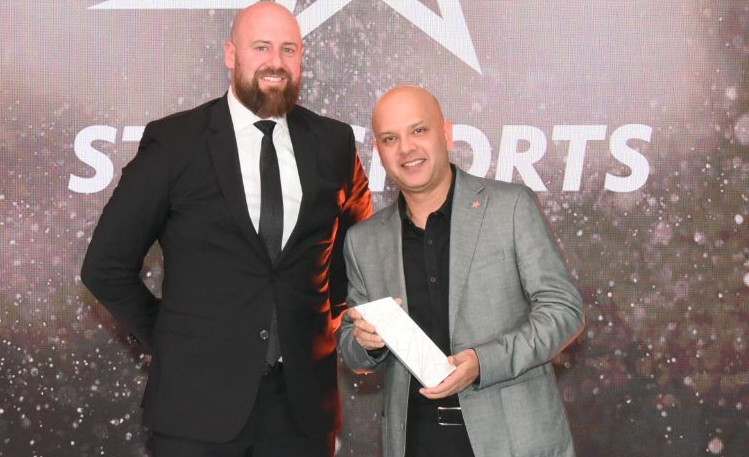
    MUMBAI: JioStar head – sports production services to all consumer functions & production technology Prashant Khanna is over the moon. Just last week, Disney Star India was handed out four awards at SportsPro Summit in Madrid. All under his watch as head of the innovation lab at Disney Star prior to the network’s merger with Viacom18.

    Amongst the awards that it won included:

    * Platform of the Year – network – Gold: 
    A record-breaking year for Disney Star Sports: sky-high viewership and cutting-edge technologies

    *  Innovation of the Year – Gold: 
    Disney Star and ICC introduce “MaxView” for 800m+ mobile friendly cricket audience in India –

    * Best Use of AI – bronze: 
    Star Sports used AI to translate international cricketers’ commentary into Indian regional languages

    *  Best Marketing Strategy – Gold
    Hotstar for its  marketing strategy which has driven awareness, engagement and consumption of sports content on an OTT platform.

    “What a year for Star Sports it has been! Being recognised on a world stage along side the sports industry stalwarts is a testament of this team and our amazing partners in ICC, BCCI and other boards and leagues that allow us to push boundaries every time across our platforms (lnear and digital),” said PK (as he is known to colleagues) on Linkedin. 

  • Mike Davies charts Fox Sports’ production & broadcast future!

    Mike Davies charts Fox Sports’ production & broadcast future!

    Mumbai: The Sports Video Group, admirably known as “SVG”, was formed in 2006 to support the professional community that relies on video, audio, and broadband technologies to produce and distribute sports content. Formed in the U.S, the organisation has expanded to include a European division and also has hosted events in Australia, Japan, and Singapore.

    Their aim is to advance the creation, production, and distribution of sports content along with providing knowledge for the growing community of sports video professionals working for broadcast and broadband organisations, schools and leagues, followed by facilitating a dialogue with manufacturers, suppliers and technology developers that improves the quality and profitability of sports programming.

    Star Sports hosted the SVG Summit in Mumbai, marking the first time this event was held in India. The event brought together top-level executives from the TV sports production community for a day of networking, tours, panel discussions, technical presentations etc.

    Indiantelevision.com on the sidelines of the event, caught up with Fox Sports, EVP, Technical and Field Operations; SVG U.S., Mike Davies. During this interview, Davies shared some valuable insights ranging from collaborative efforts between the US and Indian ecosystems to the exciting future of production and broadcast.

    Edited excerpts

    On collaborations between the US and India ecosystems playing a role in Fox Sports’ production strategies

    There are a lot of passionate people in India. In fact with Star and Fox, we used to be the same company and would have formal gatherings to collaborate. We would obviously learn a lot from each other. There’s a lot of similarities between cricket and baseball, also a lot of similarities between the studio shows we do. Its really about seeing what has worked, and what hasn’t worked at each other’s network. It’s just about collaboration and sharing. It doesn’t happen without the people like Sanjog and PK, and some of the people on my team. The bottom line is we just get along.

    On balancing traditional broadcasting methods with emerging digital platforms as consumers are switching their preferences from cable TV to OTT services

    Well I think the emerging services can help to support linear and cable offerings in a couple ways. They certainly are more dimensional than it can be donated to a given program or sport, athlete etc. But in terms of live sports on digital, it does allow us to go that much deeper. In the United States, we got college sports like field hockey, softball and different things. Hopefully, those types of sports will become sports that you can watch on linear television in the future.

    On some of the biggest challenges you face in maintaining high-quality production standards across diverse sporting events

    The challenges are basically balancing cost to quality. In general, technology is supplied and hence good methods have been able to achieve them. For instance, we talked a lot about remote productions, cloud productions etc. Applying these technological tools can solve doing programs that commensurate with the audience for which they apply. For instance, a small college basketball game doesn’t get the same production budget as a major league game does. But you’re still able to make it look good and you don’t have things that look great on your network, things that look garbage. They may not have as many cameras that look good because of this kind of technology.

    On data analytics and AI impacting the sports broadcasting, particularly at Fox Sports

    If you talk about what goes on the screen, we at Fox Sports certainly get into the sports analytics, but not at the expense of telling actual stories or drama of what’s going on. We like visuals. We use analytics to form visuals that can help our audience to extract more data points out of the story, but not at the expense of becoming too techie or too statistically oriented. Now that’s not true for everybody, that’s just our take.

    On trends that would shape the future of production and broadcast media

    Well Sanjog said a lot about it during the event and I think this is why we are so aligned. You got several trends in quality meaning high dynamic range in 4k which is a big one. Trends in personalisation, and customisation is that adds something that we could achieve to bring individual fans closer to our sports and being able to constantly evolve to meet the needs of our audience, because if you look at a game, say for example an American football game this season and then you look at one five years ago or ten years ago, you will see all the changes whether be in presentations, graphics etc. Also I think that our audience, especially our younger ones, hopefully can tolerate a little bit of information on screens, a few more quicker cuts or maybe multiple windows replaced on more screens etc, and those were some things which we never even can think about in the last five to ten years.