Tag: Prasar Bharti

  • Prasar Bharati and Radio-Television Slovenia sign a deal

    Prasar Bharati and Radio-Television Slovenia sign a deal

    NEW DELHI: India’s largest broadcasting network, Prasar Bharti has found a potential business partner in Radio-Television Slovenia (RTV SLO). The two got together recently and have agreed to explore further opportunities in potential projects of co-production of programmes along with significant cultural, economic, political, social and festive events in the respective countries.


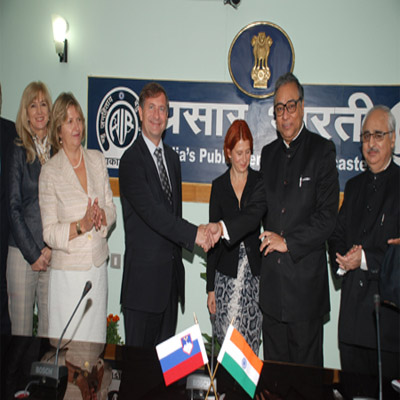
    A Memorandum of Understanding (MOU) for cooperation in the field of broadcasting was signed between Prasar Bharati and RTV SLO. It aims at trading expertise of each of the broadcasters and entails exchange programmes in the fields of culture, education, science, entertainment, sports, and news on their respective networks, besides provision for personnel exchange and training of staff.


    To sign the deal, a high level delegation that included Slovenia led by Deputy Prime Minister and Minister of Foreign Affairs Karl Viktor Erjavec, along with his team of ministers and officials – Mrs. Darja Bavdaz Kuret, Vlasta Vivod, International Department (RTV SLO) Head Suzana Vidas Karoli, and Boris Jelovsek visited Prasar Bharti.  


    The agreement was signed between Karoli and Prasar Bharati Member (Personnel) Brig (Retd.) V.A.M. Hussain.


    In his speech, Erjavec emphasised the importance of the MoU and said: “In today’s world, TV is the medium with the most significant impact in the life of culture, education, science, entertainment, sports, and news. And I am sure this agreement will bring additional opportunities to strengthen so important people-to-people contacts and bring better understanding of our nations. Your contribution to these strengthened people-to-people contacts and better understanding of our nations will also lead to deepening of cooperation in economic, political, scientific, educational and cultural fields. And we thank you for that.”


    The RTV SLO director GM Marko Filli could not attend the meeting, but he sent across a message that was read out by Karoli. He remarked: “Cooperation between media organisations is crucial for their quality work and development of programmes for the public they serve. New technologies are diminishing the distances that used to be a barrier for cooperation. The world is changing in such a way that not only small media organisations can learn and benefit from bigger ones, but also big media organisations are able to discover new ways of working and possibilities of cooperation with the small ones. At the same time the public is interested in the quality and contemporary content of the programmes and not so much of where the content is coming from.”


    In his message, he also emphasised that the exchange of programmes in the fields of culture, education, science, entertainment, sports and news will help us to broaden content offer and make both parties stronger and more influential in their home lands. “I must point out this cooperation is of great importance especially for Slovenian public service and therefore we look forward for this first operational exchange. As the production of programme is depending more and more on technical knowledge, exchange of programme content can be and will be upgraded with exchange of expertise between personnel and providing the training with technical staff. We can learn from each other and certainly we will benefit from each other. The ultimate goal must always be satisfaction of our public,” he said in the message.


    Prasar Bharati CEO Jawhar Sircar pointed out that India has always given importance to friendship with Slovenia. He stressed that cooperation in exchange of programmes, participation in each other’s cultural events are far more effective tools that enrich the knowledge and perception about nations and that Prasar Bharati would strive to reach the heart of Slovenian people through heightened co-operation as envisaged in the MoU.

    This MoU is directed towards developing and strengthening friendly relations between the two countries through an increased co-operation in the field of broadcasting thus enabling the two countries to share their rich cultural heritage that includes a gamut of events and festivals.

  • Prasar Bharati spectrum issue may go to TRAI for final decision

    Prasar Bharati spectrum issue may go to TRAI for final decision

    NEW DELHI: An internal panel of the Department of Telecom (DoT) has recommended that the note from the Information and Broadcasting Ministry seeking exemption from auction for spectrum to be allocated to Prasar Bharti be referred to the Telecom Regulatory Authority of India (TRAI).


    Prasar Bharati said “Spectrum to Prasar Bharti would be allocated on rates fixed by Government of India.”


    Meanwhile, a committee has been set up to examine the conditions for allotment of airwaves through routes other than auction, according to Minister of State for Communications and Information Technology Milind Deora.


    The DoT panel will examine various issues related to allotment and pricing of spectrum, “Including conditions which need to be satisfied in order to adopt auction as the preferred/sole mode of allotment of spectrum, conditions and types of spectrum for which administrative allotment of spectrum should be adopted as the norm,” Deora said in Parliament earlier this week.


    Telecom minister Kapil Sibal had earlier said that adopting auction route every time for allocating spectrum “does not make sense” and that the cabinet would decide on the issue based on the committee’s report.


    It is also learnt that the DoT may seek sector regulator TRAI’s views on the process to be adopted for allocation of spectrum to telecom operators without auction, following the draft recommendation in this regard by its internal committee.


    The last spectrum allocation through administrative process for mobile telephony was done in 2009. But later it was put on hold following series of controversial reports regarding spectrum allocation made in 2008 for 122 2G telecom licenses. Later, the Supreme Court in its judgment on February 2, 2012 cancelled these licenses and asked government to allocate the freed spectrum through auction.


    DoT formed an internal committee to look into conditions where auction cannot be always suitable for spectrum allocation. This is especially in cases like allocation of small amount of airwaves to telecom operators who were earlier allocated 4.4 megahertz of frequencies to bring them in sync with new rules of five Mhz spectrum allocation, or for duration in between their license period of 20 years.


    DoT’s Committee on Allotment/Assignment and Pricing of Spectrum, in its draft report, is learnt to have suggested that the department seek recommendation of TRAI on the matter of spectrum assignment and allocation meant for commercial use without auction. The committee in its report said the reference to TRAI be made on “terms of reference of the committee – conditions which need to be satisfied in order to adopt auction as the preferred or sole mode of allotment/assignment of spectrum for the services.” The committee, however, has suggested that airwaves frequencies allocated to organisations for internal use need not be referred to the sector regulator.

  • TV Today Q1-2014 PAT almost doubles Q4-2013; Radio shows improved results

    TV Today Q1-2014 PAT almost doubles Q4-2013; Radio shows improved results

    BENGALURU: Indian broadcaster TV Today Network Limited (TV Today) reported a PAT of Rs 11.98 crore for Q1-2013, almost double (88.5 per cent higher) than the Rs 6.36 crore profit for Q4-2013. The company had reported a loss of Rs 0.35 crore for Q1-2013.

    Its FM Radio Broadcasting segment (radio) showed improved performance in Q1-2014 as compared to Q1-2013 and Q4-2013. Loss from the radio segment of Rs 2.33 crore was about half (51.2 per cent) of Rs 4.54 crore in Q1-2013 and 15 per cent lower than the loss of Rs 2.74 crore in Q4-2013. Revenue from radio in Q1-2014 at Rs 3.02 crore was higher by 36.6 per cent as compared to the Rs 2.21 crore in Q1-2013 and 14.1 per cent higher than the Rs 2.64 crore in Q4-2013.

    Let us take a look at TV Today‘s other results for Q1-2014

    TV Today‘s net income from operations for Q1-2014 at Rs 88.90 crore increased 25.8 per cent as compared to the Rs 70.64 crore for Q1-2013 and was 5.5 per cent higher than the Rs 84.27 crore for Q4-2013.

    Its profit from operations before other income, finance costs and exceptional items in Q1-2014 at Rs 17.62 crore almost trebled (was 276 per cent up) as compared to the profit of Rs 6.38 crore for Q4-2013. The company had reported a loss from operations before other income, finance costs and exceptional items of Rs 0.49 crore for Q1-2013.

    Exceptional items included the Rs 1.57 crore the company had paid in Q1-2013 to Prasar Bharti and BSNL under protest towards telecast fee and interest thereon (Rs 0.8001 crore) and monitoring charges for foreign satellite (Rs 0.7691 crore) respectively in respect of earlier years

    TV Today‘s overall expense for Q1-2014 was almost flat at Rs 71.27 crore as compared to the Rs 71.13 crore for Q1-2013 and 8.5 per cent lower than the Rs 77.89 crore for Q4-2013.

    The network spent Rs 9.03 crore in Q1-2014 towards production cost, 13 per cent lower than the Rs 10.38 crore for Q4-2013, but 3.8 per cent more than the Rs 8.71 crore for Q1-2013.

    TV Today‘s advertisement, distribution and sales expense at Rs 19.7 crore for Q1-2014 was lower by 9.7 per cent as compared to the Rs 21.81 crore in Q1-2013 and 14.1 per cent lower than the Rs 22.93 crore in Q4-2013.

    TV Today‘s Television broadcasting revenue for Q1-2014 at Rs 85.89 crore was higher by 25.5 per cent as compared to the Rs 68.44 crore for Q1-2013 and 5.2 per cent more than the Rs 81.63 crore for Q4-2013.

    It‘s Television Broadcasting business had a PBIT (Profit before interest and tax) of Rs 21.18 crore for Q1-2014 was almost five times (4.98 times) the Rs4.25 crore for Q1-2013 and was 81.1 per cent higher as compared to the Rs 11.69 crore for Q4-2013.

    TV Today has made a strategic investment of Rs 45.52 crore in Mail Today Newspapers Pvt. Ltd. (Mail Today) for entering into print media. Though Mail Today is in the initail stages of operation and is presently incurring losses, the company is confident of its profitability and consequently of the carrying value of the investment.

    To click here to view the TV Today Financials Report

  • TV Today Q1-2014 PAT almost doubles Q4-2013; Radio shows improved results

    TV Today Q1-2014 PAT almost doubles Q4-2013; Radio shows improved results

    BENGALURU: Indian broadcaster TV Today Network Limited (TV Today) reported a PAT of Rs 11.98 crore for Q1-2013, almost double (88.5 per cent higher) than the Rs 6.36 crore profit for Q4-2013. The company had reported a loss of Rs 0.35 crore for Q1-2013.


    Its FM Radio Broadcasting segment (radio) showed improved performance in Q1-2014 as compared to Q1-2013 and Q4-2013. Loss from the radio segment of Rs 2.33 crore was about half (51.2 per cent) of Rs 4.54 crore in Q1-2013 and 15 per cent lower than the loss of Rs 2.74 crore in Q4-2013. Revenue from radio in Q1-2014 at Rs 3.02 crore was higher by 36.6 per cent as compared to the Rs 2.21 crore in Q1-2013 and 14.1 per cent higher than the Rs 2.64 crore in Q4-2013.


    Let us take a look at TV Today’s other results for Q1-2014


    TV Today’s net income from operations for Q1-2014 at Rs 88.90 crore increased 25.8 per cent as compared to the Rs 70.64 crore for Q1-2013 and was 5.5 per cent higher than the Rs 84.27 crore for Q4-2013.


    Its profit from operations before other income, finance costs and exceptional items in Q1-2014 at Rs 17.62 crore almost trebled (was 276 per cent up) as compared to the profit of Rs 6.38 crore for Q4-2013. The company had reported a loss from operations before other income, finance costs and exceptional items of Rs 0.49 crore for Q1-2013.


    Exceptional items included the Rs 1.57 crore the company had paid in Q1-2013 to Prasar Bharti and BSNL under protest towards telecast fee and interest thereon (Rs 0.8001 crore) and monitoring charges for foreign satellite (Rs 0.7691 crore) respectively in respect of earlier years


    TV Today’s overall expense for Q1-2014 was almost flat at Rs 71.27 crore as compared to the Rs 71.13 crore for Q1-2013 and 8.5 per cent lower than the Rs 77.89 crore for Q4-2013.


    The network spent Rs 9.03 crore in Q1-2014 towards production cost, 13 per cent lower than the Rs 10.38 crore for Q4-2013, but 3.8 per cent more than the Rs 8.71 crore for Q1-2013.


    TV Today’s advertisement, distribution and sales expense at Rs 19.7 crore for Q1-2014 was lower by 9.7 per cent as compared to the Rs 21.81 crore in Q1-2013 and 14.1 per cent lower than the Rs 22.93 crore in Q4-2013.


    TV Today’s Television broadcasting revenue for Q1-2014 at Rs 85.89 crore was higher by 25.5 per cent as compared to the Rs 68.44 crore for Q1-2013 and 5.2 per cent more than the Rs 81.63 crore for Q4-2013.


    It’s Television Broadcasting business had a PBIT (Profit before interest and tax) of Rs 21.18 crore for Q1-2014 was almost five times (4.98 times) the Rs4.25 crore for Q1-2013 and was 81.1 per cent higher as compared to the Rs 11.69 crore for Q4-2013.


    TV Today has made a strategic investment of Rs 45.52 crore in Mail Today Newspapers Pvt. Ltd. (Mail Today) for entering into print media. Though Mail Today is in the initail stages of operation and is presently incurring losses, the company is confident of its profitability and consequently of the carrying value of the investment.

  • NBA working out unified approach on DD Olympics footage issue

    NBA working out unified approach on DD Olympics footage issue

    NEW DELHI: News broadcasters have begun deliberations informally to work out a common strategy to counter the letter received by them from Doordarshan regarding unauthorised use of footage relating to the Beijing Olympics, for which the public broadcaster has sole rights.

    While private channels have to mandatorily share their signals relating to sports events involving India with Doordarshan under a Parliamentary act, there is no such provision for Doordarshan to share its content.

    Sources in the public broadcaster confirmed in answer to a question by indiantelevision.com that it had informally been approached by some sports channels including ESPN and Zee Sports before the games began, but not by news channels.

    The NBA has convened a meeting early next week, to frame a joint response to Prasar Bharti on the issue of payment for Olympic footage.

    The sports editor of a news channel, who didn’t want to be named, said he did not expect anything to come out of the meeting as there was lack of unity among broadcasters.

    Meanwhile, it is understood that some news channels have already agreed to pay the Rs 500 per second demanded by Doordarshan. However, Doordarshan has permitted free footage of up to one minute a day for purposes of news bulletins.

    It is understood that Prasar Bharti is particularly irked by the fact that some news channels broadcast the entire inaugural ceremony live by using their own commentators without any prior agreement.

    DD sources said that all news channels were being monitored and will be sent bills immediately after the games are over.

    Sources in the News Broadcasters Association (NBA) said there would be a united approach to the whole issue, but refused to give details.

    Though no official figures are available for the current Olympics, the public broadcaster’s rates for the 2004 Olympics had been – after an initial high figure – $ 5,000 for up to five hours of footage during the entire games; $ 4,000 for five hours to 25 hours; and $ 3,000 for more than 25 hours.

    The News Access Rules set by DD which was sent out to all networks in India at that time stipulated “The duration of Olympic material used in any one programme should not exceed a total of two minutes. The duration of any one particular Olympic event shall not exceed 30 seconds’.

    However, some satellite channels had later exceeded this time and had also agreed after much argument to pay wherever they exceeded the guidelines.

    According to DD deputy director general – sports Ashok Jailkhani, few channels approached DD, and anyone wanting to use the signals is required to come to an agreement to use the rights as DD has spent a huge amount to buy the rights.

    DD was therefore keeping a close watch on the situation as the signals were being used though no news channel had approached the broadcaster.

  • HC refuses stay on sports telecast ordinance

    HC refuses stay on sports telecast ordinance

    NEW DELHI: The Delhi High Court today refused to stay the operation of the ordinance asking private sports channels to share live feed of cricket and other sports events with public broadcaster Prasar Bharti.

    A division bench headed by Justice Vikramajit Sen adjourned the matter till 15 February for further hearing.

    Senior Counsel Dushyant Dave, appearing for Prasar Bharati, pleaded that the ordinance could only be stayed under extraordinary grounds.

    In any case, he argued, the conditions to share the live feed with the Prasar Bharati was part of the tender documents, and very much known to Nimbus Communications.

    The reply filed by the Government to the petition by Nimbus challenging the Sports Broadcasting (Mandatory Sharing with Prasar Bharti) Ordinance 2007 said it had been made clear to the Board for Control of Cricket in India (BCCI) that any party getting the rights to telecast the matches would have to share the live feed with Doordarshan and All India Radio, the application filed by the government in reply to the private channel contended.

    Additional solicitor general PP Malhotra, appearing for the government, said the petition should be dismissed as it was not the fundamental right of Nimbus, who own Neo Sports channel to monopolise the telecast of cricket matches. In any case, Nimbus should abide by the contract it had signed in February 2006 to share the live feed.

    Terming it as “bad in law”, the petition had said, “The ordinance transgresses the constitutional limits and apart from violating the petitioner’s fundamental rights, it also interferes with the power of the court to review the circular enforcing the private channels to share the feed.”

    On 23 January, in an interim order, the court had allowed Prasar Bharati to download the feed of Nimbus Communications and telecast the India-West Indies ODI series in a delayed transmission of seven minutes on DD and broadcast commentary live on AIR.

    The High Court has decided to merge the hearing of the appeal by Prasar Bharati against this order, and the petition by Nimbus challenging the Ordinance.


  • Tata Sky reaches deal to air India cricket

    Tata Sky reaches deal to air India cricket

    MUMBAI: The Tata Sky DTH platform has reached an agreement with Neo Sports, the channel that has rights to telecast India cricket.

    An immediate fallout of this is the fact that Tata Sky subscribers will get to watch live the third ODI that kicked off in Chennai today and the subsequent matches as well.

    The remaining matches of the series will be available live on Tata Sky and in digital picture quality, a release issued by the DTH service provider states.

    Doordarshan is also showing the matches but with a seven-minute delay. The national broadcaster was allowed to telecast the matches ‘deferred live’ following a Delhi High Court ruling on dispute between Nimbus and Prasar Bharti.
     

  • DD Urdu channel starts beaming

    DD Urdu channel starts beaming

    MUMBAI: Doordarshan’s Urdu channel — DD Urdu — was officially launched on 15 August to coincide with India’s 60th Independence Day.

    With its launch, DD Urdu now becomes the second service after ETV Urdu, managed by the Hyderabad based Eenadu TV, to have a 24-hour channel dedicated to the language.

    DD Urdu was officially launched by Prime Minister Dr Manmohan Singh, who said that with the combined force of globalization and television, which would reach every nook and corner of the world.

    The advent of this channel will strengthen the civilisational foundations of the country and would promote unity, Singh said.

    Urdu is a symbol of rich, cultural and literary mosaic of our country and the new channel would help take this role of Urdu language further forward, he added.

    In a speech laced with poetry and erudition, the PM dwelled on the social and literary achievements of Urdu and celebrated the language’s contribution in the cultural journey of the nation, according to an official release.

    Information & broadcasting minister Priya Ranjan Dasmunsi said the new channel will fulfill the media needs of over 50 million Urdu speaking people in the country. The UPA government is committed to this cause and will provide all support in this regard, Dasmunsi stated.

    Referring to great Urdu poets like Mirza Ghalib, Mir Taqi Mir and Firaq Ghorakpuri, Dasmunsi said that Urdu language and literature have had a deep impact on our culture. “During the freedom struggle, famous Urdu slogans motivated and inspired the youth. Urdu had brought about a new culture and promoted the concept of unity in diversity,” he added.

    In his welcome address, Prasar Bharti chairman MV Kamath described Urdu as a pan Indian language. He said that DD Urdu would preserve and promote the great cultural heritage and literary aspect of this rich language.

    UPA chairperson Sonia Gandhi, several Union ministers, personalities and senior officials of the I&B ministry and Prasar Bharti were present on the occasion.

    DD Urdu channel has been conceived as a heritage channel, which will have segments on entertainment and enrichment for culture and information. It will initially have a daily transmission of seven hours which would subsequently be extended to 24 hours per day.

    It is worth noting here that the British Broadcasting Corporation (BBC), has been scouting for joint venture partners for launching television news channel services in Urdu, beside Hindi, in India.

    Sahara news network, which manages a bouquet of news channels, had also targeted to launch a Urdu news and information channel on 15 August. But, the channel is likely to be on air by the end of the current year.