Tag: Prasar Bharti

  • Bombay HC asks if Mumbai police intends to further probe Republic TV

    Bombay HC asks if Mumbai police intends to further probe Republic TV

    New Delhi: The Bombay high court has sought to know from the Mumbai police if it intends to proceed with the investigation against Republic TV and its editor-in-chief Arnab Goswami, considering that the channel remains a ‘suspect’ on police records, even after filing two chargesheets in connection with the TRP manipulation case.

    A bench of justices S S Shinde and Manish Pitale also directed special public prosecutor (SPP) Shishir Hiray to inform the court about the time required to complete their investigation in the matter.

    "You have been investigating for the last three months. There are two chargesheets, and there seems to be no evidence against them. And this FIR is of October 2020. We are in March 2021," the HC said as per a PTI report. "Why keep the sword hanging on their head? You are not making them an accused also, why so?" asked the bench.

    The court raised this query after noting that the police had claimed to have adequate evidence against Goswami and the channel in the alleged TRP scam, yet they have been named only as 'suspects' in the chargesheets.

    The bench was responding to submissions made by Ashok Mundargi, the counsel for Goswami and ARG Outlier Media, the company that runs Republic TV channels. "They (police) cannot keep investigating forever. If they have some material against us, they have to show us, they cannot keep playing hot and cold," Mundargi said.

    The Mumbai police, however, continued to maintain that they have adequate evidence in the case and that they are still collecting additional evidence. The court said the contention of the petitioners, Goswami and ARG Outlier Media, was that they were always under the fear that some action might be taken against them. The case was adjourned for Thursday.

    ARG Outlier Media Pvt Ltd and Goswami had approached the high court last year alleging that the entire case was malafide and that they have been targeted for Republic TV's reportage in the death of actor Sushant Singh Rajput, and the Palghar lynching case. Early this year, the Mumbai police had filed two affidavits in the case, saying it had not targeted Republic TV or its employees. The police had said its probe was not a result of any political vendetta and that there was evidence to show that Goswami had allegedly connived with senior officials of BARC to rig the TRP of Republic TV.

    The scam had come to light in October last year when BARC lodged a complaint with the Mumbai police through Hansa Research Group, alleging that certain television channels were rigging TRP numbers. Since then, 15 arrests have been made in the case, the most prominent being former BARC CEO Partho Dasgupta, who recently got bail.

    On the sidelines of this controversy, the government had formed a committee under the chairmanship of Prasar Bharti CEO Shashi S Vempati to study any issues related to the television ratings and make recommendations on the way forward for a robust, transparent and accountable rating system in the country. The report was submitted to the ministry of information and broadcasting in January this year.

    On Tuesday, Union minister Prakash Javadekar informed the Rajya Sabha that no specific action has been taken as of yet on the recommendations made in the report submitted the committee. But, appropriate interventions could be considered based on the inputs provided by the committee and recommendations of TRAI.
     

  • DD News English to hire 90 people

    DD News English to hire 90 people

    MUMBAI: DD News English is expanding its workforce and has announced vacancies for around 90 posts including anchors and reporters.

    Out of the posts announced, three are for grade 1 anchor-cum-correspondent, three for grade 2, and 4 for grade 3 in the same department. Apart from that, posts for copy editors, assignment coordinators, and correspondents have also been announced as vacant.

    Public service broadcaster Prasar Bharati released the application forms on its site for several positions on an annual contract basis across the news department for the channel on 24 June. The last date of application is 12 July.

  • DTH subscriber growth see-saws in three quarters of 2018

    DTH subscriber growth see-saws in three quarters of 2018

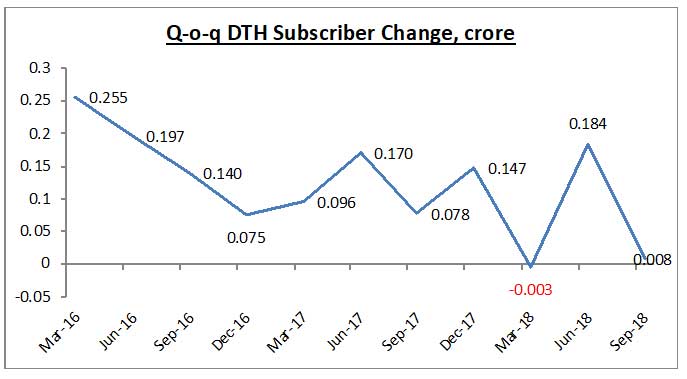
    BENGALURU: Growth of direct to home (DTH) subscriber base of private players in India was the slowest over the last five years for the nine month period ended 30 September 2018 (TQY 2018, TQY period, three quarters of the year under review) as per Telecom Regulatory Authority of India (TRAI). The good news was that the quarter ended 30 June 2108 (Jun-18, last or previous quarter) saw a reversal of fortunes. From a loss of about 30,000 (0.003 crore, 0.3 million, 0.3 lakh) subscribers in the quarter ended 31 March 2018 (Mar-18), DTH subscriber growth was positive 18.4 lakh (0.184 crore, 1.84 million) for the quarter ended 30 June 2018 (Jun-18). However, in the case of the quarter ended 30 September 2018 (Sep-18), subscriber growth has once again nose-dived to just 8,000 subscriber additions. As a matter of fact, the industry has faced one of the worst TQY periods – subscriber growth in TQY-18 was just 1,89,000 (0.0189 crore, 0.189 million) as compared to 3,44,000 (0.0344 crore, 0.344 million) in TQY-17 and 5,92,000 (0.0592 crore, 0.592 million) in TQY-16.

    The figure below shows a q-o-q growth of DTH subscribers between the period Mar-16 and Sep-18.It may be noted that Mar-16 growth of 25.5 lakh (0.255 crore, 2.55 million) is with respect to Dec-15.

    According to TRAI data, the overall private DTH active subscriber base grew by 0.419 crore or 4.19 million (7.8 percent) in calendar year (CY 2017) to 6.756 crore or 67.56 million from 6.256 crore or 62.65 million in CY 2016. Comparatively, in 2016, the overall private DTH active subscriber base grew by 6.67 million or 0.667 crore (11.9 percent) from 55.98 million or 5.598 crore in CY- 2015.

    Please refer to the figure below for the DTH subscriber numbers as per TRAI data:

    The merger between Dish TV and Videocon d2h that was effective since October 2018 has created the largest DTH services company in India and the second largest globally in terms of number of active subscribers. Please refer to the three figures below for approximate market share of the private DTH players in India in CY 2017, CY 2017 and CY 2018:

    It must also be mentioned that the government’s FreeDish DTH service is the largest DTH player by far in terms of subscribers with an estimated 22 million or 2.2 crore subscribers in 2016 as per the KPMG-FICCI Indian Media and Entertainment Industry Report 2017 (KPMG-FICCI M&E Report 2017) titled Media for the Masse: The Future Unfolds. It must however be noted that an exact number for registered or active subscribers is not available since this is a free DTH service. Also, the merger of Videocon d2h with Dish TV will create the largest private television carriage player in India and quite likely the second largest in the world, be it cable, internet television or DTH or any other.

  • MIB proposes to change mandatory sports feed sharing norms

    MIB proposes to change mandatory sports feed sharing norms

     NEW DELHI: In what could have far reaching effects on the financial viability of sports TV channels or streaming platforms, which acquire exlcusive rights for sporting events for the India region spending billions of dollars, the government proposes to amend rules relating to mandatory sharing of feeds of sports of national importance with not only the pubcaster, but with other distribution platforms. Reason for proposed changes: people with less purchasing power should not lose out on the sporting excitement.

    “…viewers, who do not have DD FreeDish [pubcaster Doordarshan’s FTA DTH platform] or Doordarshan’s terrestrial network, are either unable to watch these sporting events of national importance or are compelled to watch these sporting events on highly priced sports channels and, thus, the very objective with which the Parliament had enacted the Sports Act has been defeated,” Ministry of Information and Broadcasting (MIB) said in a notice issued on 17 October 2018, adding that public comments were invited within a month on the changes proposed in the relevant regulation relating to sharing by rights holding private TV channels of broadcasting feed with the pubcaster.

    As per provisions of the Sports Act, the live feed received by Prasar Bharati from the content rights owners or holders is only for the purpose of re-transmission of the said signals on Doordarshan’s own terrestrial and DTH network (DD FreeDish) and not for
    cable operators or other distribution networks. The ad sales is also done by private companies after taking the pubcaster into confidence with the additional ad revenue shared between the rights holding TV channel and DD.

    Though the sports rule was legislated in 2007, the shared signals on DD were sometimes donloaded by distribution platforms from satellite-delivered channels and re-transmitted not only in India but also in some neighbouring countries. Seeing this trend, Star India, which was investing heavily in sports, had moved the courts and in August 2017 got a favourable ruling from the Supreme Court that ruled the shared feed of sporting events of national importance, as mandated by the government, can only be re-transmitted on DD terrestrial network and DD FreeDish to avoid piracy and possible loss of revenue for the rights holder.

    Additonally, private DTH platforms and MSOs/LCOs were barred from showing DD's non-terrestrial channels that re-transmitted the shared feeds after the August 2017 Supreme Court ruling for the duration of the that particular event and it was stressed on also by Prasar Bharati fearing adverse reaction from the apex court.

    Within few  days of the SC ruling favouring the rights holding TV channel or broadcaster and few days before the lucrative IPL cricket rights bids were opened last year, Jawahar Goel, chairman and MD of Dish TV, India's first DTH platform started by the Zee group, raised an alarm on Star's emerging cricket monopoly.
    In a hard-hitting letter, addressed to various Indian government organisations, including MIB, regulator TRAI and the anti-monopoly authority, Goel had alleged that combined with the financial muscle and near-monpoly over cricket for India region, Star's acquistions will impact "every stakeholder in the broadcasting industry, starting from the distributors of  TV channels". Star India finally outplayed other bidders for the IPL rights for the next five years in 2017 by coughing up a whopping $2.4 billion.

    In the light of recent developments in the distribution segment of the Indian broadcast system, MIB's latest move gains importance. So, what's the proposed amendment being sought to be inserted in the 

    Sports Broadcasting Signals (Mandatory Sharing with Prasar Bharti) (Amendment) Bill, 2018?

    The relevant portion of the amendment being proposed for which stakeholders' comments have been invited reads: “No content rights owner or holder and no television or radio broadcasting service provider shall carry a live television broadcast on any cable and/or Direct-to-Home network and/or IPTV and/or terrestrial network or radio commentary broadcast in India of sporting events of national importance, unless it simultaneously shares the live broadcasting signal, without its advertisements, with the Prasar Bharati to enable them to re-transmit the same on its own terrestrial network and Direct-to-Home network and on other television distribution platforms/networks where is it mandatory to broadcast mandatory channels notified by the Union Government under Section 8 of the Cable Television Networks (Regulation) Act, 1995 in such manner and on such terms and conditions as may be specified.”

    At present, Star India and Sony Pictures Networks India — the latter has a partnership with ESPN that got a divorce from Star for sports channels in 2012 — are two networks that own and manage sports channels in India. However, in recent times digital players like Facebook, Reliance Jio, Amazon and Alibaba-controlled Indian digital wallet company PayTM have shown interest and bid for cricket properties in India. Facebook also won the India rights for La Liga football that was streamed free on the digital platform, while being sub-licensed to Sony for normal TV broadcast.

    However, an industry observor pointed out that apart from the fact that the pubcaster's DD FreeDish platform could get further hit financially if the proposed changes are legislated, it was also highlighted  that what could have further spurred the government into action is that after TRAI's new tariff regime kicked in last month, most broadcast companies and TV channel managers converted FTA TV channels into pay channels  depleting further the basic FTA bouquet aimed at people with low purchasing power.

    It would be interesting to watch how this proposed change plays out with stakeholders.

  • DTH subscriber growth slow in first half of 2018

    DTH subscriber growth slow in first half of 2018

    BENGALURU: Growth of direct to home (DTH) subscriber base of private players in India was the slowest in five half-years for the half year ended 30 June 2018 (HY 2018, half year under review) as per Telecom Regulatory Authority of India (TRAI). The good news is that the quarter ended 30 June 2108 saw a reversal of fortunes. From a loss of about 30,000 (0.003 crore, 0.3 million, 0.3 lakh) subscribers in the quarter ended 31 March 2018 (Mar-18), DTH subscriber growth was positive 18.4 lakh (0.184 crore, 1.84 million) for the quarter ended 30 June 2018 (Jun-18, quarter under review).

    The figure below shows a q-o-q growth of DTH subscribers between the period Mar-16 and Jun-18.It may be noted that Mar-16 growth of 25.5 lakh (0.255 crore, 2.55 million) is with respect to Dec-15.

    According to TRAI data, the overall private DTH active subscriber base grew by 0.419 crore or 4.19 million (7.8 percent) in calendar year (CY 2017) to 4.19 million or 67.56 million from 6.256 crore or 62.65 million in CY 2016. Comparatively, in 2016, the overall private DTH active subscriber base grew by 6.67 million or 0.667 crore (11.9 percent) from 55.98 million or 5.598 crore in CY- 2015.

    Please refer to the figure below for the DTH subscriber numbers as per Trai data:

    The merger between Dish TV and Videocon d2h that was effective since October 2018 has created the largest DTH services company in India and the second largest globally in terms of number of active subscribers. Please refer to the three figures below for approximate market share of the private DTH players in India in CY 2017, CY 2017 and CY 2018:

    It must also be mentioned that the government’s FreeDish DTH service is the largest DTH player by far in terms of subscribers with an estimated 22 million or 2.2 crore subscribers in 2016 as per the KPMG-FICCI Indian Media and Entertainment Industry Report 2017 (KPMG-FICCI M&E Report 2017) titled Media for the Masse: The Future Unfolds. It must however be noted that an exact number for registered or active subscribers is not available since this is a free DTH service. Also, the merger of Videocon d2h with Dish TV will create the largest private television carriage player in India and quite likely the second largest in the world, be it cable, internet television or DTH or any other.
     

  • Tata Sky, Airtel DTH gain market share in 2017

    Tata Sky, Airtel DTH gain market share in 2017

    BENGALURU: Tata Sky and Airtel Digital TV (Airtel DTH) have reason to rejoice as they saw market share rise in calendar year 2017 as compared to a year ago. Both saw an increase by one per cent each at the end of December 2017 as compared to at the end of December 2016 according to Telecom Regulatory Authority of India (TRAI) data.

    Tata Sky had 24 per cent market share at the end of 2017 (CY-2017) as compared to 23 per cent at the end of 2016 (CY-2016), while Airtel DTH had 21 per cent share as compared to 23 per cent during the same period. Hence, the market share of Tata Sky and Dish TV, which lost one per cent market share in 2017, was the same. The other player that lost market share was Videocon d2h – its market share fell by a percentage point to 19 per cent in 2017 as compared to 20 per cent in 2016. 

    We had mentioned earlier that the share of the three major players whose numbers are available in the public  domain –(in order of number of subscribers – Dish TV, Airtel DTH and Videocon d2h) has been declining –  from about 65 per cent to 64 per cent in the Jun-Sep17 quarter to an even lower 63 per cent in the Oct- Dec 2017 quarter. 

    Please refer to the market shares of the six private DTH players at the end of 2017 and 2016 according to TRAI data:

    public://pic_1.jpg

    According to TRAI data, the overall private DTH active subscriber base grew by 4.19 million or 0.419 crore (7.8 per cent) in CY-2017 to 67.56 million or 6.756 crore from 62.65 million or 6.256 crore in CY- 2016. Comparatively, in 2016, the overall private DTH active subscriber base grew by 6.67 million or 0.667 crore (11.9 per cent) from 55.98 million or 5.598 crore in CY- 2015.

    As also mentioned by us earlier, quarterly data released by TRAI indicates that the industry added net 2.25 million or 0.225 crore subscribers for the quarter ended 31 December 2017 (Oct-Dec17 quarter), hence the final quarter of CY-2017 accounted for about 46 per cent of the net subscribers added during the year. The Oct-Dec17 quarter had the highest quarter-on-quarter pay-TV DTH subscriber growth in CY- 2017 at 3.45 per cent.

    We’d said that CY-2017 saw muted pay-TV DTH subscriber growth. Those numbers were based on the results declared by the above mentioned three private DTH players.

    It must also be mentioned that the government’s FreeDish DTH service is the largest DTH player by far in terms of subscribers with an estimated 22 million or 2.2 crore subscribers in 2016 as per the KPMG-FICCI Indian Media and Entertainment Industry Report 2017 (KPMG-FICCI M&E Report 2017) titled Media for the Masse: The Future Unfolds. It must however be noted that an exact number for registered or active subscribers is not available since this is a free DTH service. Also, the merger of Videocon d2h with Dish TV has created the largest private television carriage player in India and quite likely the second largest in the world, be it cable, internet television or DTH or any other.

  • Prasar Bharati’s policy on DD Free Dish to be out soon

    Prasar Bharati’s policy on DD Free Dish to be out soon

    MUMBAI: The suspense surrounding Prasar Bharti’s policy on its free direct-to-home (DTH) platform is likely to end soon. The pubcaster has told the Telecom Disputes Settlement and Appellate Tribunal (TDSAT) that it will come out with a new policy for DD Free Dish in a few weeks.

    Prasar Bharti made this submission before the tribunal that is hearing petitions filed by broadcasters against Doordarshan’s decision to scrap slot auctions without putting in place a new policy.

    As a result, Prasar Bharati has finally decided to expedite matters by framing a new policy on DD Free Dish.

    “The respondent – Prasar Bharti submits that the respondent is in the process of taking a policy decision in respect of subject matter of these petitions. It is expected that such decision may be taken within few weeks,” the TDSAT noted in its brief order.

    Following Prasar Bharati’s submission, the tribunal has posted the matter under the same head on 28 May. The tribunal also told Prasar Bharati to bring on record any decision that it takes in the meantime.

    “It appears that pleadings are already complete in these matters and there is no requirement of taking any further evidence. However, if there is any subsequent development, the parties will be at liberty to take required steps,” the TDSAT stated.

    Broadcasters have argued that DD can allow channels to continue on Free Dish on pro-rata basis. They also contended that DD’s decision amounts to discrimination as it has earlier granted continuity to channels on a pro-rata basis.

  • Oct-Dec quarter sees highest pay TV DTH subscriber growth in 2017

    Oct-Dec quarter sees highest pay TV DTH subscriber growth in 2017

    BENGALURU: After the debacle created by demonetisation in November 2016 and then the implementation of the new Goods and Services Tax regime in July 2017, the fortunes of the pay TV direct-to-home (DTH) industry seem to be improving in terms of subscriber addition. Quarterly data released by the Telecom Regulatory Authority of India (TRAI) indicates that the industry added net 22.5 lakh (2.25 million) subscribers for the quarter ended 31 December 2017 (October to December17 quarter). Throughout the calendar year 2017 (CY-2017), the industry had added 49.1 lakh (4.91 million subscribers), hence the final quarter of CY-2017 accounted for about 46 percent of the net subscribers added during the year.The Oct-Dec17 quarter had the highest quarter-on-quarter pay-TV DTH subscriber growth in CY-2017 at 3.45 percent. The number of active pay-TV DTH subscribers in India as per TRAI data as on 31 December 2017 was 675.6 lakh or 67.56 million as compared to 653.1 lakh (65.31 million) in the Jun-Sep17 quarter.

    As mentioned by us earlier, CY-2017 saw muted pay-TV DTH subscriber growth. Those numbers were based on the results declared by three private DTH players whose numbers are available in the public domain. They are: Indian telecom major Bharti Airtel’s Airtel Digital TV (Airtel DTH), the Essel group’s Dish TV and Videocon d2h. The other three private pay-TV players during a part of CY-2017 were Tata Sky, the Sun TV Network’s Sun Direct and Reliance Big TV. It may be noted that Reliance Big TV has been acquired by Pantel Technologies and Veecon Media. Normal operations have to recommence as yet. A number of Big TV customers were acquired by other players and the true status of its operations and current subscriber numbers are still unclear at the time of writing of this paper. Furthermore, the merger of Videocon d2h into Dish TV has been recently concluded, and the combined entity has the second largest pay-TV subscriber base in the world.

    Be that as it may, the share of the three major players in the Oct-Dec17 quarter (in order of number of subscribers–Dish TV, Airtel DTH and Videocon d2h) has been declining from about 65 percent to 64 percent in the Jun-Sep17 quarter to an even lower 63 percent in the Oct-Dec17 quarter. It may be noted that Tata Sky subscriber base could be higher than Airtel’s subscriber base. Tata Sky data is not available in the public domain, and hence this cannot be verified or neglected.

    Besides the six private pay DTH players, Doordarshan’s (DD) FreeDish DTH service is a major player in terms of subscribers with an estimated 2.2 crore as per the numbers available in the public domain. It must, however, be noted that an exact number of registered or active subscribers is not available even with DD since this is a free DTH service.According to an E&Y report titled ‘India’s Free TV’ released in July 2017, among the DTH operators in India DD FreeDish has grown to become the largest with its estimated 2.2 crore subscribers which E&Y predicted could cross 4 crore over the next two to three years.

    Please refer to the figure below for the trends of pay-TV subscribers based on TRAI data and the numbers published by the three players in the public domain. Q-o-q growth for the Jan-Mar16 quarter cannot be compared with the Oct-Dec15 quarter since TRAI changed the way it measured active DTH subscribers in the Jan-Mar16 quarter.

    public://gr_0.jpg

    Also Read :

    DTH adds 14 lakh active subscribers in Q2-17 as per TRAI data

    DTH subscriber growth muted in CY-2017

    DTH subscriber growth down in second quarter

  • DTH subscriber growth muted in CY-2017

    DTH subscriber growth muted in CY-2017

    BENGALURU: DAS, especially phases 3 and 4, was supposed to be a great growth opportunity for television direct-to-home (DTH) service providers. Has that been the case? Not if one were to go by data released by the Telecom Regulatory of India (TRAI) and three of the six private DTH players in India.

    The status quo
         
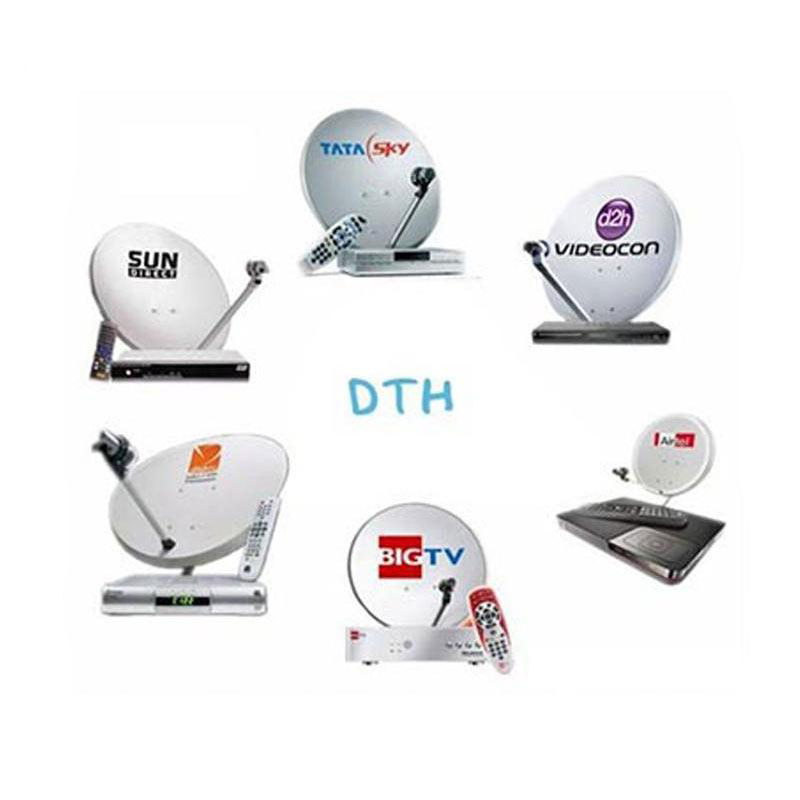
    At present, there are six private pay-TV players (five active in the true sense of the word) and one government free-TV player DD FreeDish. The five players are: Airtel Digital TV or Airtel DTH, Dish TV, Sun Direct, TataSkyand Videocon DTH–the sixth player being Reliance Digital TV or Big TV.

    Reliance Big TV has been acquired by Pantel Technologies and Veecon Media. Normal operations have to recommence as yet. A number of Big TV customers were acquired by other players and the true status of its operations and current subscriber numbers are still unclear at the time of writing.

    Please refer to the figure below for subscriber share of the six private players at the end of 30 September 2017 (Q2-18 or Q2-2108).

    public://11_0.jpg

    DTH subscriber acquisition seems to have petered down in calendar year 2017 (CY2017, 1 January 2017 to 31 December 2017) as compared with CY 2016. Please refer to the chart below for active subscribers addedas per TRAI data until 30 September 2017 (Q2-2018) and data reported by the three private players – Airtel DTH, Dish TV and Videocon d2h until 31 December 2017. It may be noted that these three players had almost 63 percent share of subscribers according to the above-mentioned Dish TV investor presentation.

    The continuous blue curved line in the chart below represents the total number of net active subscribersaddedfor each quarter – this number has been obtained by deducting the number of active subscribers in a quarter from the number of subscribers in the previous quarter. The combined total number of the three subscribers has been obtained by addition of net subscribers added by each of the three players – Airtel DTH, Dish TV and Videocon d2h – as declared by them in their financial/other releases and presentations. Thesecombined subscriber additions are represented by the continuous maroon line in the figure. The broken grey line represents the percentage of the combined net subscriber additions by the three players of the total subscriber additions as per TRAI data.

    public://2_6.jpg

    The chart below indicates the subscriber base of the three players and all private DTH players as per quarterly data released by TRAI. TRAI data for the October-December 2017 quarter has not been released at the time of writing. Subscriber data for each of the three players mentioned below has been obtained from their respective financial releases and presentations. The numbers have been rounded off to the nearest lakh by the author.

    As is obvious, Dish TV is the biggest player in the country in terms of subscribers followed by Airtel DTH and Videocon d2h in that order. It may be noted that Tata Sky subscriber base could be higher than Airtel’s subscriber base. Tata Sky data is not available in the public domain, and hence this cannot be verified.

    public://3_2.jpg

    Overall, the players are faced with declining monthly average revenue per user (ARPU). In absence of complete ARPU data, the author has taken the liberty to calculate ARPUs of each of the three players by using quarterly operating revenue/subscription revenue of the players and dividing it by the subscriber base at the end of that quarter and then calculating the ARPU per month. Similarly, the quarterly operating/subscription revenues of the three players have been added and then divided by the combined subscriber base of the three players at the end of that quarter and then the average monthly average ARPU has been arrived at. In each case calculated ARPU numbers have been rounded off to the nearest rupee.

    The combined four quarter average monthly ARPU of the three players across four quarters of 2017 has declined by Rs 9 to Rs 183 from Rs 192 in CY-2016. Airtel DTH is the premium player – its four quarter average monthly ARPU in 2017 increased by Rs 2 to Rs 230 from Rs 228 in 2017. Dish TV is a value player, its average declined by Rs 18 in 2017 to Rs 143 from Rs 161 in 2016. Videocon d2h four quarter average monthly ARPU in 2017 declined by Rs 9 to Rs 186 from Rs 195 in 2017. It must be reiterated here that the ARPU numbers mentioned in this paper have been calculated by the author and may vary from the actual numbers. The numbers in the graph below are just indicative numbers.

    public://4_1.jpg

    Besides the six private pay DTH players, FreeDish is a major player in terms of subscribers with an estimated 2.2 crore as per the numbers available in the public domain. It must however be noted that an exact number for registered or active subscribers is not available even with DD, since this is a free DTH service. If and when the announced Dish TV Videocon d2h merger happens, the merged entity will probably be one of the largest DTH players in the world in terms of subscriber numbers.

    According to an E&Y report titled ‘India’s Free TV’ released in July 2017, among the DTH operators in India, FreeDish has grown to become the largest with its estimated 2.2 crore subscribers which E&Y predicted could cross 4 crore over the next two to three years.

    A number of reasons can be attributed to this dismal performance–two of the chief ones that have been touted over the recent past by most players in media and entertainment industry are demonetisation in November 2016 and the implementation of the new GST regime. Given that most of India faced a cash crunch for a few months post demonetisation, money spends for entertainment took the least priority for the common man.Subscriber acquisition seems to have picked up in the April-June 2017 quarter, only to be dampened in the July-September 2017 – the quarter in which the new GST regime was implemented. The glitches of the new GST are slowly being ironed out. In the absence of TRAI data for the October-December 2017 quarter, numbers reported by the three players seem to indicate that DTH subscriber acquisition should have improved. Despite this, it seems unlikely that the industry was able to surpass or even match subscriber growth of CY-2016.

    Another important reason could be that DTH is considered a premium service – by all the stakeholders in carriage ecosystem with the resulting perception that procurement as well as monthly subscription will be premium and hence a deterrent for the consumer. While some players such as Dish TV have been making attempts to come up with packages that it perceives should attract the masses, but, results as per TRAI data seem to indicate otherwise. Yes, Dish TV is the largest private player in the country that has come up with different pricing models under different brands, whether unwittingly or not, most of the other players present themselves as premium players and seem to have done little in that direction.

    Also Read :

    DTH’s year of consolidation

    Recalibrating India’s DTH sector after Airtel DTH-Warburg Pincus deal

    Veecon Media acquires Reliance Big TV