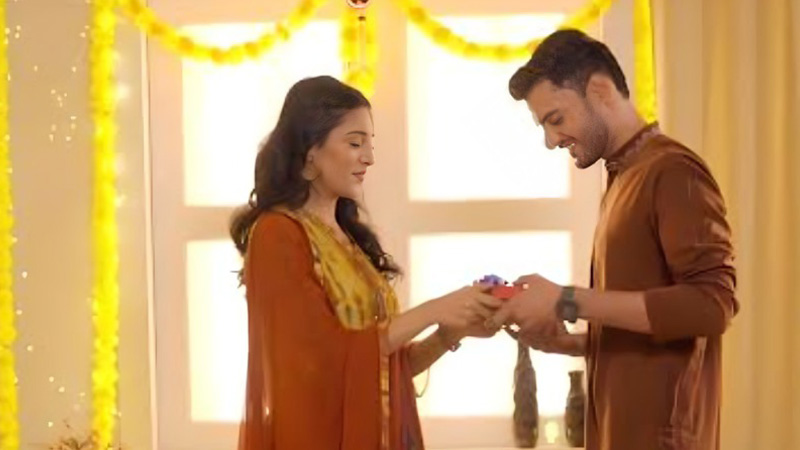
MUMBAI: Some memories never buffer. Waves OTT, India’s national freemium streaming platform powered by Prasar Bharti, is taking viewers down memory lane this festive season with its heartwarming campaign, “Diwali ki Yaadein”. Conceptualised by Creativeland Asia, the film rekindles India’s shared nostalgia through the glow of old screens and the warmth of family bonds.
The campaign tells a tender story of a daughter and her mother separated by distance but united by memory who rediscover their emotional connection through the superhit classics they once watched together. Now streaming on Waves OTT, those timeless shows Fauji, Byomkesh Bakshi, Malgudi Days, and more return as the heartbeat of an era, inviting both long-time fans and first-time viewers to experience their charm anew.
Through this campaign, Waves OTT captures the emotional essence of Diwali as more than a festival of lights, it’s a season of belonging, of sitting together, of laughter echoing through living rooms. The film’s warm, nostalgic tone taps into the collective memory of an India that grew up around a single TV set, waiting eagerly for its favourite evening show to begin.
Crafted with an old-world charm, “Diwali ki Yaadein” shows that while technology has changed how we connect, the emotions remain timeless. Whether it’s Fauji’s youthful energy or Byomkesh Bakshi’s cerebral intrigue, Waves OTT brings back the spirit of Indian storytelling that once defined national evenings.
The campaign extends across social media, with the film streaming on Instagram, Facebook, X, and Youtube, allowing audiences everywhere to join in the collective celebration of India’s television heritage.
By bridging the old with the new, Waves OTT is not just reviving nostalgia, lighting up memories, one classic at a time. Because this Diwali, it’s not just about lights, camera, action, it’s about lights, connection, affection.
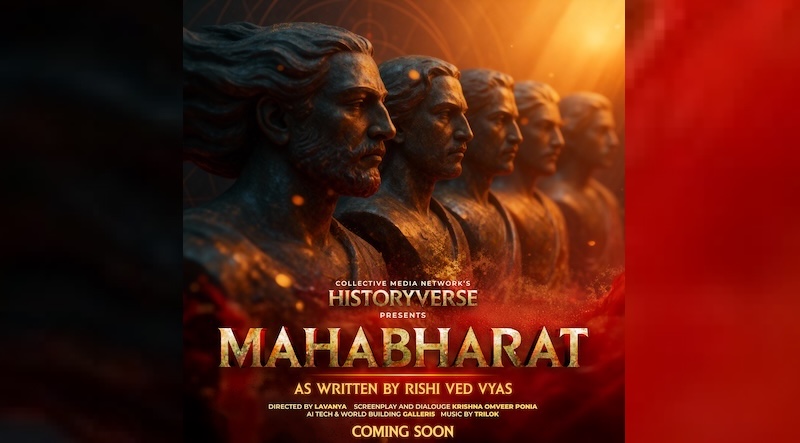
NEW DELHI: India’s most celebrated epic is getting a technological makeover. Collective Media Network’s Historyverse has unveiled an AI-led reimagining of the Mahabharat, set to premiere on Waves OTT on 25 October 2025. Doordarshan will broadcast it every Sunday at 11:00 AM from 2 November 2025.
The collaboration pairs Prasar Bharati’s nationwide reach with the creative firepower of a next-generation media network. Advanced AI tools have been used to reconstruct the epic’s sprawling universe—its characters, battlefields and moral quandaries—with cinematic scale and striking realism.
“Like millions of Indians, I grew up watching the classic Mahabharata on television every Sunday. It was an experience that shaped my imagination and my connection to our culture,” said founder & group chief executive Vijay Subramaniam. “With Mahabharat, our hope is to give today’s generation a similar touchstone that feels as immersive and unifying as it did for us, but told through the possibilities of today’s technology.”
Prasar Bharati chief executive Gaurav Dwivedi noted that the original Mahabharat‘s re-telecast during lockdown reminded viewers how deeply these narratives bind families together. “Partnering on this AI-led reimagining allows audiences to experience one of India’s greatest epics anew—honouring tradition while embracing cutting-edge technology in storytelling.”
Waves, Prasar Bharati’s official OTT platform, has quickly amassed millions of users with its credible, family-friendly and multilingual content. The platform offers video-on-demand, live events and an extensive library of television, radio, audio and magazine programming. The Mahabharat project exemplifies how heritage and innovation can converge to create contemporary narratives that resonate across India and beyond.
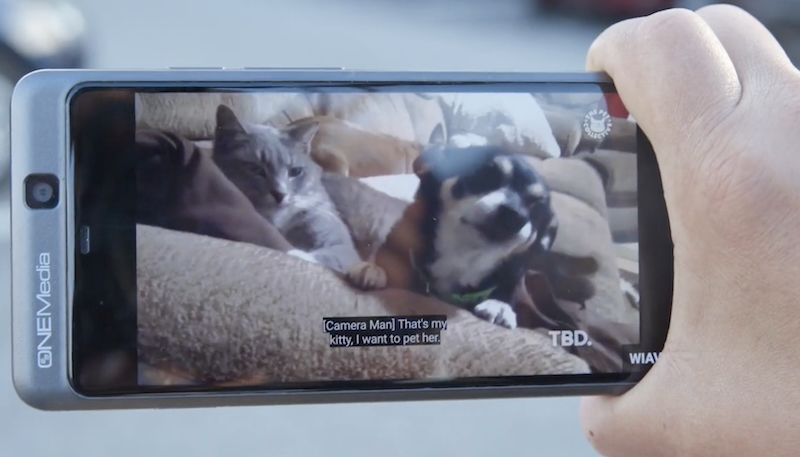
MUMBAI: Say hello to television without the internet. At Waves 2025, India’s flagship World Audio Visual & Entertainment Summit to be held at Jio World Centre in Mumbai, a game-changing coalition of technology players will unveil the roadmap to bring direct-to-mobile (D2M) broadcasting to the fingertips of Indian consumers.
The ambitious push is led by FreeStream Technologies, an IIT Kanpur-incubated deeptech startup, alongside mobile giants Lava International and HMD Global, powered by chipsets and infrastructure from Tejas Networks (formerly Saankhya Labs), with global validation from US-based broadcasting behemoth Sinclair Inc. The tech, hailed as a breakthrough in both communications and accessibility, allows live TV, emergency alerts, educational content, and multimedia programming to be delivered directly to mobile phones via terrestrial broadcast signals — bypassing internet or mobile data altogether.
“This is India’s moment to lead the world in next-gen broadcasting. Lava and HMD are laying the foundation of a robust device ecosystem, and their commitment to scaling up proves D2M is more than a proof of concept — it’s a national opportunity,” said FreeStream Technologies director Sumeet Nindrajog.
Lava, known for its made-in-India ethos, is ensuring that the price-point doesn’t become a hurdle. “Our D2M featurephone design cleverly integrates the modem and apps in a way that keeps costs low — something that has always defined Lava,” said Lava International executive director Sanjeev Agarwal.
HMD — the home of Nokia phones — is matching that energy. “HMD has always been about delivering meaningful innovation. With D2M, we’re enabling consumers to access live content and alerts on their devices, without needing Wi-Fi or mobile data,” said HMD CEO & VP India & APAC. Ravi Kunwar. “This is a global first, and we’re proud to be building it in India.”
Behind the scenes, it’s Tejas Networks’ award-winning SL-3000 D2M chipset — the tech’s beating heart — that makes it all possible. A product of Saankhya Labs (now part of Tejas and the Tata Group), the chip is designed for mobile broadcast reception, even in dense or low-connectivity environments.
“This isn’t just about watching TV — this is about creating a national broadcast backbone that can deliver everything from emergency alerts to targeted education, from CDN offload to next-gen advertising,” said Tejas Networks EVP and co-founder of Saankhya Labs Parag Naik. “It’s an empowerment platform, aligned with PM Modi’s vision of a digitally empowered India and Viksit Bharat.”
Tejas has also built out the full core network platform to support nationwide rollout — integrating both broadcast and broadband layers, a capability rare even by global standards.
From the other side of the Atlantic, Sinclair Inc, a pioneer of ATSC 3.0 — the broadcasting standard enabling D2M — praised India’s swift strides. “The adoption of ATSC 3.0 in affordable mobile devices underscores the foresight of our global investments, and vindicates our ‘mobile-first’ strategy,” said Sinclair Inc president & CEO Chris Ripley. ““India is now in the driver’s seat. Our next focus is B2X — Broadcast to Everything — which will be vital to achieving the goals of 6G and next-gen applications.”
Sinclair’s One Media unit has been working with Indian partners to future-proof mobile broadcasting as a core digital infrastructure. Their role isn’t just investor — they’re co-developers and global evangelists.
Backed by policy momentum and partnerships with Prasar Bharati, the D2M ecosystem has already undergone field trials across live networks. The next step? Nationwide field deployment, with Lava and HMD readying devices for market at scale.
D2M is now not just a tech demonstration — it’s a political, social and commercial opportunity: * To decongest mobile data networks, * To deliver content equitably across rural and urban India, * And to anchor India’s leadership in media-tech manufacturing.
With global standards, Indian R&D, and mass-market readiness coming together, Waves 2025 could well be remembered as the moment India turned its phones into broadcast hubs.
MUMBAI: Leading broadcasters have secured slots in Prasar Bharati’s 85th e-auction for DD Free Dish, with the public broadcaster earning Rs 208.10 crore from eleven slots in the first two days of bidding.
In the premium Bucket A+ category for Hindi general entertainment channels, Zee Anmol led the bidding at Rs 18.60 crore, followed by Star Utsav at Rs 18.25 crore and Big Magic at Rs 17.25 crore. Sony PAL, Colors Rishtey, and Sun Neo secured their slots at Rs 18.55 crore, Rs 18.35 crore, and Rs 18.50 crore respectively.
The movie channel category (Bucket A) saw Star Utsav Movies securing a slot for Rs 16.95 crore, whilst Colors Cineplex Superhits, Sony Wah, and Zee Anmol Cinema followed with bids of Rs 16.50 crore, Rs 16.60 crore, and Rs 16.55 crore respectively.
In the news category (Bucket C), NDTV India, now owned by the Adani Group, secured the first slot for Rs 14.35 crore, followed by Republic Bharat at Rs 14.20 crore. These rates marked a significant drop from last year when news channels paid between Rs 16.35 crore and Rs 18.95 crore.
Notably, several channels including Zee Anmol, Star Utsav, Sony PAL, and Colors Rishtey returned to the platform after a three-year hiatus. The secured slots will be valid from 1 April 2025 to 31 March 2026.
The robust bidding came despite a recent TRAI directive requiring pay-TV channels on DD Free Dish to become free-to-air across all platforms, demonstrating broadcasters’ continued interest in the platform’s extensive rural reach.
(Some of these numbers have been accessed from The Economic Times)
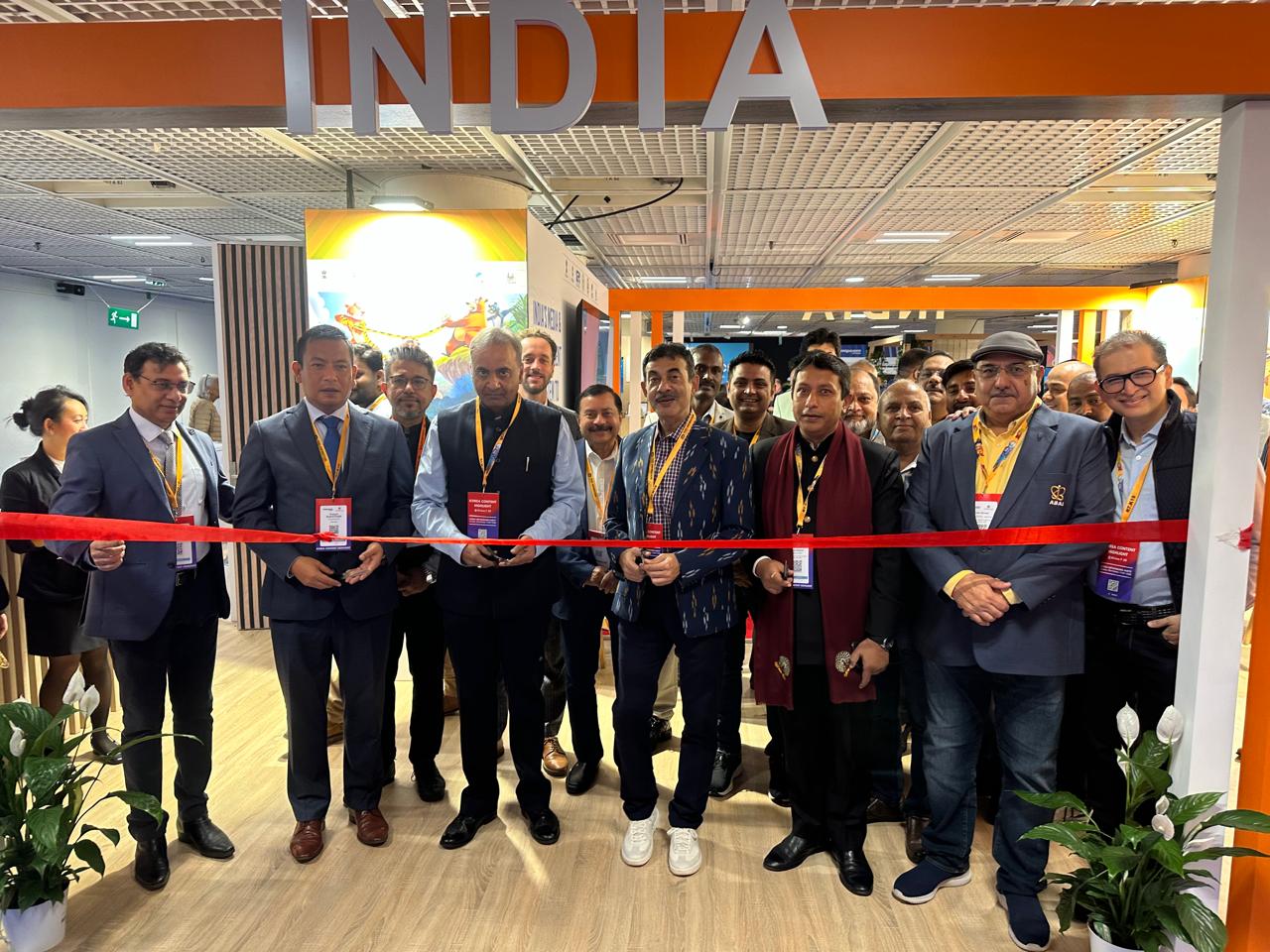
CANNES: It’s sunny and very warm in Cannes on the French Riviera. But inside the famed Palais des Festivals the Indian pavilion put up by the Service Exports Promotion Council (SEPC) along with the ministry of information & broadcasting (MIB) and the ministry of commerce & industry is a hustle-bustle of activity.
It’s almost 9:30 am in the morning and the clock is counting down the minutes as Prasar Bharti CEO Gaurav Dwivedi, Telangana special chief secretary of the industries & commerce (I&C) and information technology (IT) Jayesh Ranjan, counsel general of India in the Indian consulate in Marsielles Rupjyoti Brahma Karjee, SEPC chairman Karan Rathore and director general Abhay Sinha are all geared up to inaugurate the pavilion which is the watering hole for many Indians who have come together to attend the largest and most successful content trading and co-production market globally.
Once the signal is given the four of them cut the ribbon and cheers go around celebrating India’s largest ever presence and pavilion at Mipcom. Close to 235 Indian delegates from 70 or more companies and independent creative professionals have signed up with RX – the organiser of Mipcom – to boost India’s content trade with the world.
“We are delighted to build the platform – with the support of the two ministries – for India’s independent animation and VFX studios, film and TV producers and distribution companies, and media and entertainment service providers at this very vibrant market,” says Sinha. “The MIB’s message is very clear: create in India and make it the content hub of the world. Our role to help achieve that goal and, If possible, crunch the time frame required to get there .”
It is Dwivedi’s first visit to Mipcom and he’s quite gung-ho about the opportunities it provides for the pubcaster to get connected with other public broadcasters, expose DD India, the English news channel, which provides an India view on global and Indian developments to the world. Finally, he is also looking at acquiring all genres of content from domestic Indian content owners and international producers and distributors in preparation for DD’s OTT service which is slated to start streaming next month.
The Indian pavilion is also home to Telangana and Karnataka states. The former is promoting its image tower for the AVGC sector, inviting international companies to come and invest in the state, and to it’s annual gathering of the AVGC confab India Joy. The latter is promoting Karnataka’s AVGC Centre of Excellence and its annual event Bangalore GAFX.
55 other companies registered for Mipcom are also using it as a meeting place with their international clients with who they have either distribution, coproduction, or acquisition relationship.
While the Indian presence is marked by veterans and seasoned animation studio professionals, the youngest exhibitor on the pavilion is 19 year old animation student in Paris Joyce Ahuja who has come armed with all her art work and a small teaser for her animation feature film.
“Mipcom is an awesome place and I am glad to have made up my mind to attend and get feedback on my project so I can make it even more appealing globally,” she says, her eyes gleaming with excitement, despite her aching legs. She has the confidence that her project will attract the right fund providers and partners to help it get off the ground.
Mumbai: Industry watchdog – the Telecom Regulatory Authority of India (TRAI) – has bowled another bouncer at the Indian broadcasting sector by recommending tight – and many say impossible deadlines – deadlines for the Prasar Bharti owned DTH operator DD FreeDish.
In its latest round of recommendations, the TRAI has asked it to stop selling non-addressable set top boxes for DD FreeDish by 1 January 2025. The public service broadcaster has been selling these for more than a decade and more than 45 million homes have them. The regulator has advised DD FreeDish to replace them with indigenously-developed STBs and addressability built in by an organisation such as C-DoT. An additional caveat that has been mentioned is that the boxes should be inter-operable with those of other cable TV netwoks and DTH platforms. It has stated that even private cable TV networks and DTH operators should also take the inter-operable STB route.
The authority has also asked it to start encrypting all private channels on its platform by 1 April 2025, followed by all DD, education, and radio channels within four years.
“This is madness,” said a senior legal counsel at a major broadcasting network. “Does the TRAI know what it is doing? Where are the chips available? The circuits? And inter-operability – which developed market has inter-operable STBs between cable TV and DTH? Each player has his own CAS? I am sure this is going to be challenged very shortly. “
Another broadcasting executive added: “The recommendations make it appear as if the TRAI wanted to placate the DPOs who have been demanding a level playing field between DD and the encrypted platforms. Please check whether DD and Prasar Bharti expected things to go in the direction that TRAI has said. I don’t expect the recommendations to be implemented in my lifetime.”
(Indiantelevision.com had managed to get only the private sector’s viewpoint and had not managed to get through to either TRAI or Prasar Bharti at the time of writing.)
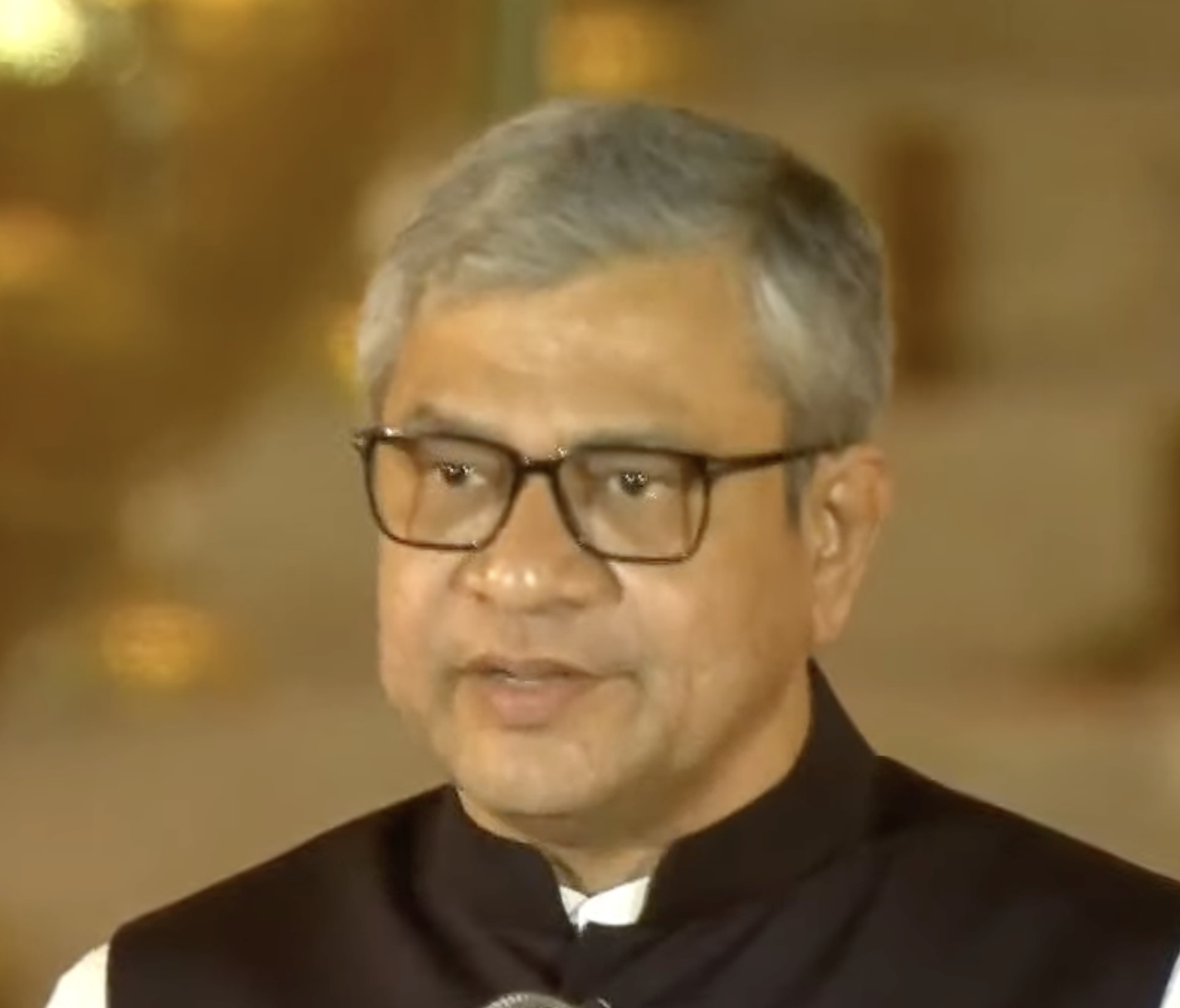
MUMBAI: Ashwini Vaishnaw made his mark in the Modi 2.0 government by holding two portfolios – the minister of electronics and information technology as well as that of the railways. Now a third one has been added to his list of responsibilities: in Modi 3.0 that of the ministry of information and broadcasting in Modi 3.0. He replaces Anurag Thakur who ran the ministry during Modi 2.0, and was kept out of the cabinet, despite winning from his constituency.
Vaishnaw will have his hands full with the various ministries. But there is some overlap between the MeITY and I&B ministry, especially considering that both are concerned with the ballooning video streaming business with around 60-70 apps in operation.
Public pressure has forced the government to regulate the video entertainment streamers, something which MeiTY has done effectively. With the content ecosystem – which is the preserve of the I&B ministry- coming under his supervision, it could well make things easier for him.
The minister will have his work cut out for him: on the one hand, Vaishnaw will have to put in his best efforts to somehow ameliorate the popular perception that the Modi government has been manipulating the media to its own ends, through a carrot and stick approach. Then Prasar Bharti needs some amount of direction going forward, even as Doordarshan needs to be reinvented and modernised in keeping with the needs of modern viewers who are today spoilt for choice. Decisions on viewership monitoring too have to be taken.
MUMBAI: Las Vegas. Normally labelled as Sin City. But in April it was all about the future of entertainment technology with the NAB Show opening with a bang. And what a bang it was. It is a hard knock for those who continue to resist the frenetic pace of technological evolution. One of these is ATSC 3.0 which is coming. Yes, even as it is spreading gradually in the US, it is being planned to come to India. That is if Sankhya Labs, Sinclair Broadcast, Doordarshan and Prasar Bharti succeed in its rollout.
I happened to see some trial broadcasts in the Las Vegas Convention Centre and it was awesome.
At early stages yet, ATSC 3.0 endeavours to wirelessly transmit data, video and audio, over the air without using the traditional terrestrial frequencies or the 4G, 5G or 6G spectrum. Also known as NextGen TV, it is a digital television standard developed by the Advanced Television Systems Committee (ATSC), offering features such as ultra-high-definition video, high-efficiency video coding (HEVC), high dynamic range (HDR), immersive audio, and interactive capabilities.
Sankhya Labs has been working on developing semiconductor solutions and software for ATSC 3.0-enabled devices. These solutions encompass various aspects of ATSC 3.0 technology, including receivers, modulators, demodulators, and related software stacks. Sankhya Labs aims to offer cost-effective and scalable solutions to enable the deployment of ATSC 3.0 infrastructure and consumer devices in India and other markets. Currently, it has developed – and continues to develop – the PCB, the software, the receiver and dongle, and set-top box designs which will then be farmed out for local manufacture.
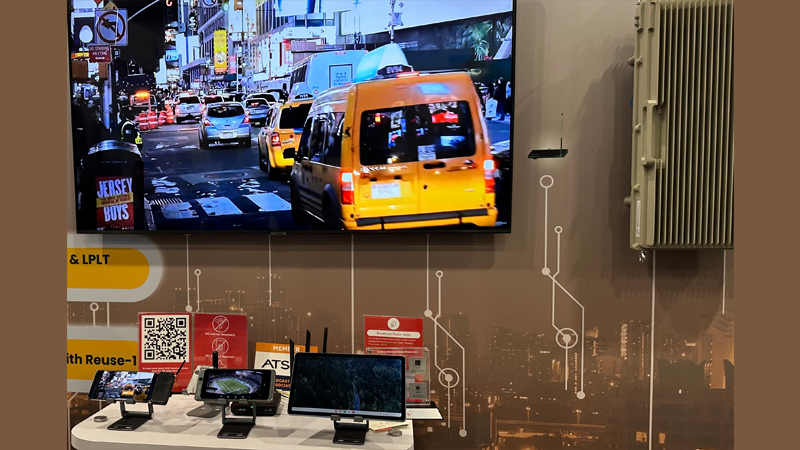
I happened to see the transmitter developed by Sankhya at the NAB Show which will be mounted – when the service is ripe and ready to be rolled out – next to the cellular towers which dot Indian building terraces in urban and rural India. Then there is the dongle (looking like the early device we used to get connected to the internet) which will act as the receiver and can be attached to an ordinary smartphone with basic video capabilities and receive the transmitted video at almost no cost to the customer. (Remember there are more than 500 million smartphone users in this country and even if 10 per cent of them opt for ATSC 3.0 that will be a humungous base of 50 million viewers) For the home, users will have a set-top box (which Sankhya hopes to gradually decrease in size) that will sit next to the TV set to receive the signals for family viewing.
As it does for FreeDish, DD is likely to auction channels to private broadcasters who can reach viewers with another linear service, thus giving traditional TV a new lease on life and advertisers another medium to target the vast masses of television viewers. This is at a time when YouTube video, Instagram reels, free-to-air TV, and streaming services have totally disrupted satellite and cable pay TV services in India with cord-cutters, cord nevers reaching record highs. The streamers need help to retain clever viewers who are sharing passwords as well as churning when they finish watching shows that interest them in one service or another.
How long will ATSC 3.0 take to become a reality? Broadcasters, handset manufacturers, telcos have all blackballed it saying that it is a needless platform that is being created.
But Sankhya Labs and the NextGenTV committee would like it to spread tomorrow itself. Work has been going on for at least the past three to four years and it might take as much time for the government-owned broadcaster to give it a clear green signal. (I’m crossing my fingers DD moves fast once a government is formed at the Centre post the elections or a private company is given the responsibility of spreading ATSC 3.0 services in a public-private partnership.) One can be optimistic and only hope that this exciting technology which can lead to the creation of zillions of local channels monitoring local traffic conditions, weather conditions, long-distance medicine, education, etc etc comes quickly enough.
When it does arrive, it will come with the potential to revolutionise the way we consume our entertainment once again. And oodles of other services.
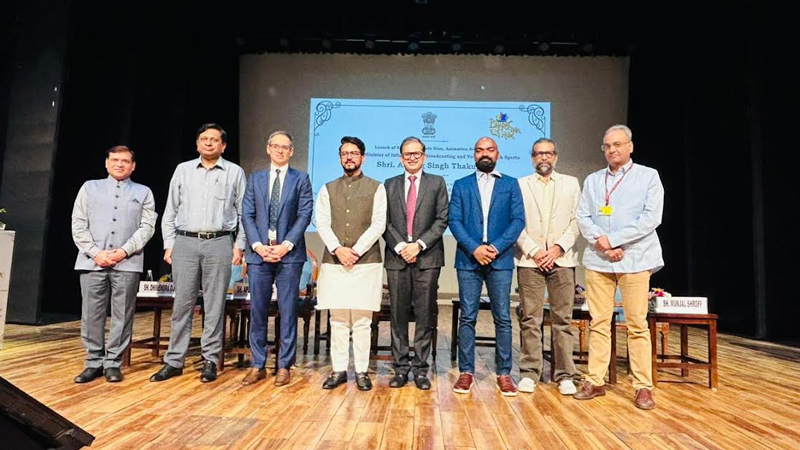
Mumbai: Hon’ble Information and Broadcasting minister and Minister of Sports Shri Anurag Singh Thakur has unveiled the trailer of an enthralling animated series ‘Bharat Hain Hum’ in New Delhi today. The series is being launched on Prime Video, Netflix and Doordarshan, as a part of the Azadi ka Amrit Mahotsav celebrations, dedicated to shedding light on the unsung heroes of India’s freedom struggle. While the names of great freedom fighters of our nation, like Mahatma Gandhi, Veer Savarkar, and Subhash Chandra Bose, are etched into the social consciousness, this series aims to also introduce the nation to lesser-known but equally significant freedom fighters whose contributions were instrumental in India’s path to independence on August 15, 1947. Countless heroic figures, such as Rani Abbakka, Tilka Manjhi, Tirot Singh, Peer Ali, Tatya Tope, Kotwal Dhan Singh, Kunwar Singh (an 80-year-old freedom fighter), Rani Chennamma, Tikendra Jeet Singh, and more, will finally take their rightful place in history through this animated masterpiece.
Crafted by the talented minds of Munjal Shroff and Tilak Shetty, the series will encompass 26 captivating episodes in Season 1, each featuring a 11-minute animated narrative. The series is slated to be premiered on 15 October on Doordarshan, Prime Video and Netflix in 12 Indian and 7 international languages.
Every episode will have popular characters Krish, Trish, and Baltiboy — previously renowned from the acclaimed KTB Movie series, embarking on dialogues that delve into the tales of these unsung heroes. The series produced by the Central Bureau of Communication and Graphiti Studio, is also a tapestry of faiths and unity that transcends religious barriers, unifying the country’s faiths and beliefs. Embracing the diversity of India’s struggle for freedom, the series will journey through different regions, featuring freedom fighters hailing from all across the country.
Speaking about the series, Thakur said, “Azadi Ka Amrit Mahotsav is the vision of Hon’ble Prime Minister Shri Narendra Modi ji. Under his vision, it is our humble endeavour to reignite the nation’s memory and ignite gratitude towards these unsung heroes, who deserve our unwavering admiration and respect. We have a very few heroes that the country has celebrated but there are so many unsung heroes who were not given their due credit in our history. Thirty percent of these heroes are women and these stories will inspire generations to come.”
“We will do a lot more to ensure students and people of our country get to know about these heroes. We will also screen the series in the parliament so that the members can spread the word in their territories,” he added.
Munjal Shroff and Tilak Shetty, co-creators of the series, passionately asserted, “We wanted to revive these tales of patriotism and relentless pursuit of freedom, paying tribute to their remarkable sacrifices, and inspire the children and the youth of India to take pride in our heritage. Animation is the perfect medium to bring alive these glorious tales and make them accessible to the children of our country. Our history often remains confined to the pages of school textbooks, and a knowledge gap exists beyond secondary education. This entertaining and informative series is aimed at every Indian irrespective of age.”
“We are delighted to launch Krish, Trish and Baltiboy – Bharat Hain Hum on Prime Video starting 15th of October. A unique initiative, the series will introduce our next generation to the numerous heroes who played an important role in India’s freedom struggle, and give young viewers in India and across the world, a chance to explore our rich history,” said Prime Video India country director Sushant Sreeram. “We would like to congratulate the Ministry of Information and Broadcasting (MIB), Central Bureau of Communication, and Graphiti Studios for producing this wonderful series. We are excited to be launching the show globally – customers from the U.S., the U.K., Australia, Canada and more than 100 countries will be able to watch Krish, Trish and Baltiboy – Bharat Hai Hum, on Prime Video. Showcasing local stories that celebrate Indian culture and history, was one of the key tenets outlined in the Letter of Engagement between Amazon and MIB, announced earlier this year, and we are glad to take that commitment further with this animated series.”
Also present at the event were Prime Video country head and I & B secretary Sushant Sreeram, Netflix India senior director, general counsel, legal, Sushant Sreeram, Prasar Bharti CEO Kiran Desai, CBC director general Gaurav Diwedi and Dhirendra Ojha.
By encapsulating the forgotten narratives of courage, resilience, and love for the motherland, this series aspires to become a symbol of remembrance and a source of inspiration for future generations. As India celebrates its independence, it is an opportunity for every citizen to pay homage to the untold sacrifices that shaped the destiny of our great nation.
Mumbai: Prasar Bharti’s free direct-to-home (DTH) platform announced the return of two general entertainment channels, Sony Pal and Colors Rishtey, effective from 1 December. The free-to-air platform has unveiled the comeback news of big media giants via a tweet shared on 21 November.
Sony Pal and Colors Rishtey will be available on DD Free Dish platform from 1.12.2022 @prasarbharati
Colors Rishtey and Sony Pal won the 63rd e-auction process, which was conducted on 18 November 2022.
Recently, the public broadcaster has invited applications for allotment of vacant MPEG-2 and MPEG-4 slots of DD Free Dish platform on a pro-rata basis for the period from 1 December 2022 to 31 March 2023.
In April 2022, four big broadcasters—Zee Entertainment Enterprises, Viacom18 Network, Sony Pictures Networks, and Disney Star India—withdrew their flagship channels from bouquets. The decision came in January 2020, when the Telecom Regulatory Authority of India (Trai) announced NTO 2.0, which capped a bouquet channel price at Rs 12 instead of Rs 19 (as per the first NTO).
In order to increase their advertising revenue and gross rating points (GRPs), the broadcasters decided to rejoin the DD Free Dish platform, as it has a lesser number (176+) of TV channels to compete with than private DTH (500+) services.
Earlier, when the big players decided to quit the platform, they were completely aware that they had taken on the risk of losing subscribers and ad revenue through that move. Broadcasters knew that if they did not bring back their channels on the platform, then they may have to shut down these channels, as at present, free users are shifting to DD Free Dish for free entertainment and paid DTHs are moving towards OTT streaming apps.