Tag: Prasar Bharati

  • FTA market rides growth wave amid pandemic

    FTA market rides growth wave amid pandemic

    Mumbai: Riding high on the launch of new channels, the advertising volumes and values of free-to-air (FTA) has grown by 25 to 30 per cent and is estimated to have a share of 25 to 30 per cent of the Rs 30,000 crore of total TV AdEx. This growth coupled with changes in viewership post the pandemic has charted the growth story of the FTA market during the pandemic.

    Out of the 901 licensed private satellite TV channels, 574 are free to air, according to the Telecom Regulatory Authority of India (TRAI). The launch of new channels including Shemaroo MarathiBana, ShemarooTV, Dangal Kannada, Ishara TV, Sun Marathi, Filamchi, Azaad, Dhinchaak, Colors Cineplex Bollywood, Asianet Movies, Filamchi Bhojpuri have grown the advertising share of free TV.

    “The first half of the year has been really good for FTA. The viewership had been very consistent in the early stages of 2021, with the demand peaking in the period before the second wave,” said MediaCom national director Srinivas Rao.

    According to Enterr10 Media Network chief business officer Shrutish Maharaj the FTA genre has grown by 25-30 per cent both in terms of volumes and value. “Had the pandemic and some policy changes not hit the industry, the organic growth had the potential to be much better,” Maharaj added. FTA space has also seen a lot of action with multiple launches in Uttar Pradesh, Bihar, Maharashtra, West Bengal, Punjab etc.

    Earlier only the big broadcasters were able to invest in original programming. However, that has changed over recent time, with a host of original programmes creating a vibrancy on FTA channels. “This is changing because FTA channels are no longer catering only to rural markets where viewers were playing catch-up. They now have significant penetration in urban markets as well,” said Maharaj. Some channels even look at a ratio of 40:60 of original programming to acquired content to be an ideal mix. 

    Traditionally, FTA channels tend to perform well in rural markets and have been mainly supported by FMCG advertisers who may contribute up to 70 per cent of the ad volumes. The reliance on FMCG spends is also believed to have constrained the growth of the FTA channels, as the category is mature.

    Though the FMCG is still the largest spending category on FTA, the dependence of FTA on FMCG has reduced considerably with categories like services, healthcare, education, manufacturing and construction, telecom, media contributing significantly. There has been the advent of new categories and a few others have recorded phenomenal growth.

    Some of these advertisers who came onboard include Amazon, Myntra, Flipkart, BYJU’S, Google, Facebook, indicating a shift towards the FTA audience which is discerning and dependable to drive the next phase of growth for them.

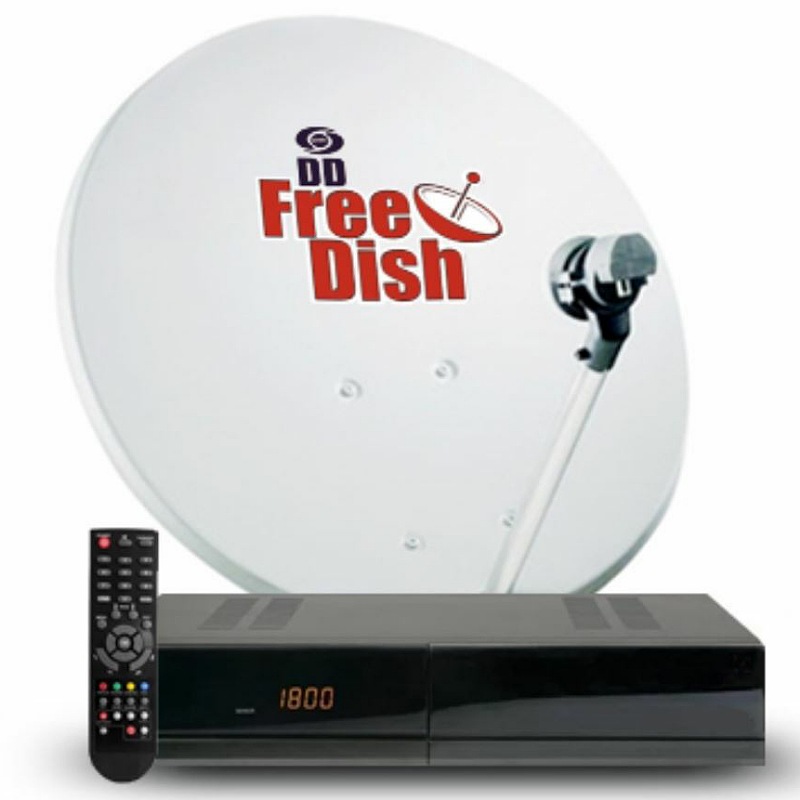
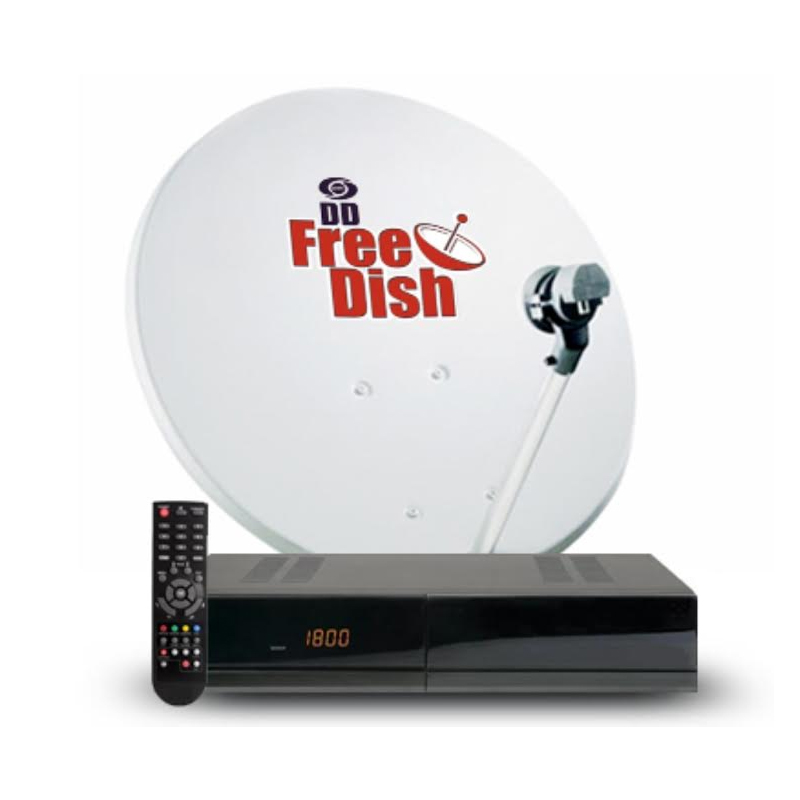
    Since the core audience of FTA channels is mainly from the heartland, most broadcasters try to place their channels on DD Free Dish, the free DTH platform by Prasar Bharati. At a one-time cost of Rs 2,000, any viewer may watch up to 160 channels distributed on the platform at no recurring cost. It is estimated that there are 50 million DD Free Dish set-top-boxes in the country.

    The advantage of being available on DD Free Dish is significant. Hindi general entertainment channel (GEC) The Q grew its client list by six times after launching on the free DTH platform, according to The Q chief executive officer Simran Hoon. “The Q has also not faced any problem of discounted ad rates like other FTA players post launching on DD Free Dish,” she added.

    Depending on the market that FTA channel caters to, viewership may increase up to 50 gross rating points (GRPs) by solely being distributed on the platform.

    “This is because DD Free Dish audience accounts for 30 per cent of the Hindi-speaking market,” pointed out Shemaroo TV, chief operating officer – broadcast business, Sandeep Gupta. “A channel can definitely survive just by being on DD Free Dish and not any other individual platform. It has a significant share of the audience in the core heartland markets such as Uttar Pradesh, Uttarakhand, Madhya Pradesh, Chhattisgarh, Bihar, and Jharkhand.”

    The availability of channels on DD Free Dish also improves the performance of the channel in rural markets drastically, highlight media experts. However, the biggest issue is that the base size of DD Free Dish is low, leading to scale still being low. Hence, the advertiser interest in FTA channels available on DD Free Dish would depend on the markets the brand is targeting,” said MediaCom’s Rao.

    At the end of the third annual e-auction that concluded in February, broadcasters bid as high as Rs 16.5 crore to be on DD Free Dish and Prasar Bharati made Rs 731.34 crore from the sale of 57 MPEG-2 slots.

  • Prasar Bharati concludes 55th e-auction; allots two MPEG-4 slots

    Prasar Bharati concludes 55th e-auction; allots two MPEG-4 slots

    Mumbai: Public broadcaster Prasar Bharati has allotted two vacant MPEG-4 slots for its DD Free Dish DTH platform at the end of the 55th e-auction, held on 23 August.

    The successful bids went to the Hindi news and current affairs channels Vertent Samachar Plus 24X7 and FM News. The channels will be available on the free DTH platform starting from 1 September.

    The slots were allotted as per policy guidelines for allotment of DD Free Dish slots notified on 15 January 2019 and amended on 30 March 2019, 1 November 2019, and 22 February 2021. 

    Only satellite channels licensed by the ministry of information and broadcasting for downlinking in India would be allotted slots on DD Free Dish. The bidding for the MPEG-4 slots was open to all genre (language) channels starting at a reserve price of Rs 65.34 lakh.

    The allotment duration lasts from the period 1 September 2021 till 31 March 2022.

  • Prasar Bharati garners 12.2 million digital views for Tokyo Olympics 2020

    Prasar Bharati garners 12.2 million digital views for Tokyo Olympics 2020

    Mumbai: Prasar Bharati on Friday said it garnered 6.6 million views and 2.6 lakh hours of watch time and 5.6 million views and 1.4 lakh hours of watch time for the Tokyo Olympics 2020 via its YouTube channels DD National and PB Sports, respectively.

    The public service broadcaster brought the games live to the screens of millions of viewers through its broadcasting and digital platforms. It reached households through TV, radio, and smartphones.

    The event was broadcast live every day on DD Sports with supporting coverage on the channels DD National, DD News, and DD India. It was also broadcast on All India Radio (AIR) including all AIR capital stations, FM Rainbow, Digital Radio Mondiale (DRM), and other interested AIR stations. The programming was available on their YouTube channels (DD National and PB Sports), DTH, and NewsOnAir mobile app within the territory of India.  

    “The accessible coverage on DD Sports and All India Radio Sports network was hugely popular among Indians across age-groups, gender, class and regions is evident in the multi-million digital viewership clocked together by multiple YouTube channels and NewsOnAir app of Prasar Bharati,” said the public broadcaster in a statement.

    Prasar Bharati hired 14 sign language artists who presented 240 hours of live coverage of the Tokyo Olympics. For listeners, the broadcaster brought together 16 All India Radio commentators to draw a vivid picture of different Olympic events.

    Apart from live Olympic sporting events, its coverage included live broadcast of opening and closing ceremonies, exclusive virtual conclave with top Indian sports personalities, biographies and success stories of members of the Indian Olympic contingent, and celebrations of their victories across the country.

  • Prasar Bharati invites bids for vacant MPEG-4 slots in 55th e-auction

    Prasar Bharati invites bids for vacant MPEG-4 slots in 55th e-auction

    Mumbai: Prasar Bharati has invited applications for the allotment of vacant MPEG-4 slots of DD Free Dish DTH platform for the period from 1 September 2021 to 31 March 2022 through the 55th e-auction. The e-auction process will be tentatively held on the afternoon of 23 August.

    The bidding process shall be open to all genre (language) channels at a starting reserve price of Rs 65.35 lakh for the period from 1 September 2021 to 31 March 2022.

    The slots will be allotted in accordance with policy guidelines for allotment of DD Free Dish slots, notified on 15 January 2019 and amended vide amendment notified on 30 March 2019, 1 November 2019, and 22 February 2021.

    Only satellite channels licensed by the ministry of information and broadcasting for downlinking in India would be allotted slots on DD Free Dish. Only license holder companies or their authorised distributor partners can apply for allocation of DD Free Dish slots.

    International public broadcasters permitted/registered/licensed by the I&B ministry can also participate in the e-auction.

    In case the applicant company is other than licensee, the document/agreement signed between the license holder company and applicant company authorising the applicant bidder for distribution of the channel and bidding on behalf of the licensee must be admitted.

    Successful bidders shall be required to make payments in five monthly instalments as per the payment schedule prescribed under the policy guidelines, for allotment for DD Free Dish slots. Each instalment will be one fifth of the difference of bid amount and participation fee.

    Participating channels must pay a mandatory non-refundable processing fee of Rs 25,000 and participation fee of Rs 10 lakh. The payment is to be made only through demand draft.

    For unsuccessful bidders the participation fee will be refunded within three weeks after the declaration of the results of e-auction.

    Successful channels will be required to arrange their own IRD box in advance at DTH Earth Station, Todapur, New Delhi, to place their channel on DD Free Dish platform.

    The last date of submission of online application and original demand draft towards participation fee is 23 August by 11 a.m.

  • Prasar Bharati concludes 54th e-auction; adds five new MPEG-2 slots

    Prasar Bharati concludes 54th e-auction; adds five new MPEG-2 slots

    Mumbai: Public broadcaster Prasar Bharati has added five new MPEG-2 slots for its DD Free Dish DTH platform at the end of the 54th e-auction.

    Hindi general entertainment channel (GEC) Ishara TV, teleshopping channel Naaptol, music channel Showbox, Marathi channel Sun Marathi, and Bengali channel Enterr10 Bangla have been successful in acquiring slots. The new channels will be on DD Free Dish platform from 16 August onwards.

    The allotment period for the channels is from 16 August, 2021 to 31 March, 2022 and successful bidders will have to make payment in six monthly instalments, said Prasar Bharti.

    The public service broadcaster had invited applications for the vacant slots on 31 July, which were only open to the satellite channels licensed by the ministry of information and broadcasting for downlinking in India. Only license holder companies or their authorised distributor partners could apply for allocation of DD Free Dish slots.

    Applications for the e-auction were received under five different buckets in accordance with genres/language of channel and their starting reserve price for the allotment period.

    The five buckets C, A+, A, B and D are classified as follows.

    Bucket C – news and current affairs (Hindi), news and current affairs (English) and news and current affairs (Punjabi) channels.

    Bucket A+ – All general entertainment (Hindi) channels.

    Bucket A – All movie (Hindi) channels.

    Bucket B – All music (Hindi), sports (Hindi), GEC (Bhojpuri), movies (Bhojpuri) and teleshopping (Hindi) channels.

    Bucket D – All other remaining genres (language) and teleshopping (regional) channels.

  • PM’s ‘Mann Ki Baat’ generated over Rs 30.80 cr revenue since 2014: I&B ministry

    PM’s ‘Mann Ki Baat’ generated over Rs 30.80 cr revenue since 2014: I&B ministry

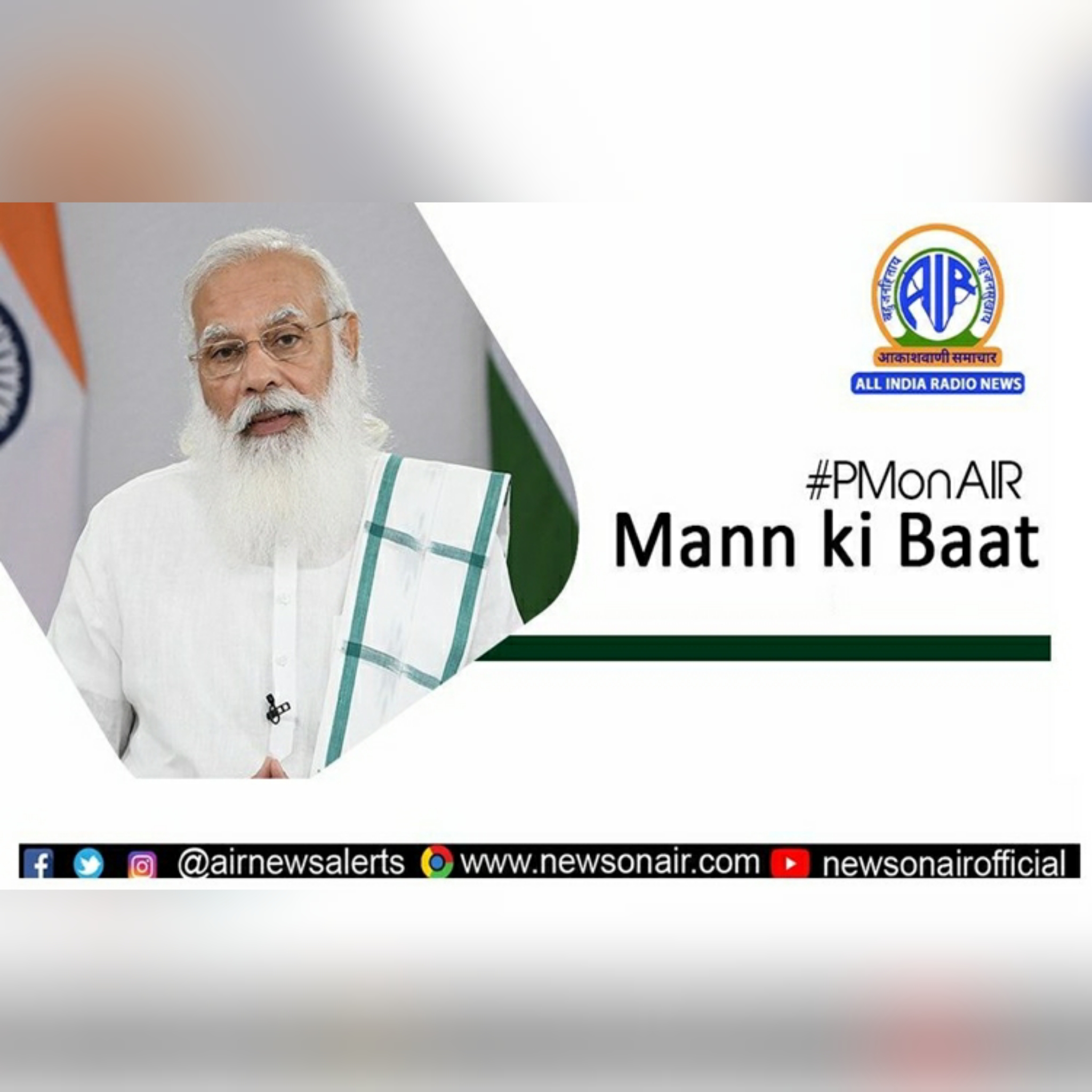
    New Delhi: Prime minister Narendra Modi’s monthly radio show, Mann Ki Baat has generated over Rs 30.80 crore as revenue since it began in 2014, with the highest of over Rs 10.64 crore earned in 2017-18, according to the ministry of information and broadcasting.

    The data was shared by union minister Anurag Thakur in Rajya Sabha on the first day of the monsoon session. Thakur said, 34 DD channels and around 91 private Satellite TV channels broadcast this radio program throughout India. “Mann Ki Baat has achieved 11.8 crore viewership and 14.3 crore reach in 2020. This has created renewed interest and awareness in traditional radio,” he told the Parliament.

    According to data shared by the ministry, the programme fetched Rs 1.16 crore as revenue in 2014-15, which rose to Rs 2.81 crore in 2015-16. The overall revenue crossed Rs 5.14 crore in 2016-17 and reached the highest mark of Rs 10.64 crore in 2017-18. However, the revenue has fallen since then. In 2018-19, it generated Rs 7.47 crore revenue in 2018-19, which came down to Rs 2.56 crore in 2019-20. In the pandemic torn 2020-21, it collected an overall revenue of Rs 1.02 crore, the lowest since 2014.

    The programme is broadcast at 11 am on the last Sunday of each month through various channels of the All India Radio and Doordarshan. Prasar Bharati has broadcast 78 episodes of the programme till date on its AIR and Doordarshan network. It has also undertaken the translation and re-broadcast in 51 languages/dialects, he added.

    As per the audience data measured by the Broadcast Audience Research Council (BARC), the cumulative reach of viewership of the programme has been estimated to range from approximately six crore to 14.35 crore during the period 2018 to 2020.

    “The main objective of ‘Mann Ki Baat’ programme of the prime minister is to reach to the masses across the country through the radio,” said Thakur, “The programme also provides every citizen the opportunity to connect, suggest, and become part of participatory governance through the prime minister’s radio address.”

    The minister said Prasar Bharati produces ‘Mann ki Baat’ leveraging existing in-house resources with no additional expenditure. “In-house staff is leveraged for production and existing translators engaged on assignment basis for language versions,” he added. 

  • DD Free Dish adds six new MPEG-2 slots

    DD Free Dish adds six new MPEG-2 slots

    KOLKATA: Public broadcaster Prasar Bharati's free-to-air DTH platform service DD Free Dish has added six new MPEG-2 slots, on the back of having surpassed an estimated 40 million subscribers.

    The move comes at a time when the platform witnessed a significant jump in the overall sales of MPEG-2 slots at the recently concluded 52nd e-auction of DD Free Dish. It raked in Rs 731.34 crore from the sale of 57 MPEG-2 slots, compared to Rs 594.25 crore collected from the sales of 53 slots in March 2020.

    The third annual e-auction was conducted from 22 February and ended on 27 February. Applications were received for e-auction under six different buckets. 57 channels were allocated slots on various buckets after multiple rounds of robust bidding.

    Prasar Bharati also amended the policy guidelines for DD Free Dish slots in late February. According to the new rules, the reserve price for MPEG-4 slots have been fixed at Rs 50 lakh per annum. Earlier, the reserve price was Rs 5 lakh per annum.

    The amended rules termed ‘Policy guidelines for allotment of slots of DD Free Dish Direct-to-Home Platform to satellite TV channels (Third amendments), 2021’ came into force from 22 February. “Bidding in the e-auction of vacant unreserved MPEG-4 slots will be open to all genre (language) channels at a reserve price of Rs 50.00 Lac/annum,” Prasar Bharati wrote in a notification.

    DD Free Dish earned nearly Rs 10 crore through 53rd e-auction of MPEG-4 slots of DD Free Dish and 11 channels were successfully allocated MPEG-4 slots post the auction. According to estimates, the platform could cross 50 million households by 2025.

  • DD Free Dish now in 40 million households

    DD Free Dish now in 40 million households

    NEW DELHI: Public broadcaster Prasar Bharati's free-to-air DTH platform DD Free Dish has continued its strong growth trajectory and the service’s subscriber base has crossed an estimated 40 million, according to the EY FICCI Media Entertainment Report 2021.

    The growth has been attributed to less expensive television sets, economic issues, launch of the DD Retro Channel and return of big broadcasters to the Free Dish platform, said the ministry of information and broadcasting in a statement. DD Free Dish has also become a second set-top box within the home, used when there are no large events on television in some cases. Free Dish distributors have mentioned year-on-year growth in sales as well as the inability to keep up with demand due to a shortage of China-manufactured chipsets.

    The report also estimates that television households will continue to grow at over five per cent till 2025, driven by connected TVs which could cross 40 million by 2025 and DD Free Dish could cross 50 million.

    The multi-channel free-to-air Direct to Home (DTH) service of Prasar Bharati, presently hosts 161 TV channels including 91 Doordarshan channels (comprising 51 co-branded educational channels), 70 private channels and 48 radio channels. With effect from 1 April, DD Free Dish private TV channel bouquet would comprise of 10 Hindi GEC, 15 Hindi movies, six music, 20 news, eight Bhojpuri, three devotional and two foreign channels.

    It is presently under upgradation and is expected to add another few channels in its bouquet by May 2021. Recently, an online web app was released that aids consumers in finding DD Free Dish set-top box dealers based on their nearest location.

    The recent e-auctions for both MPEG2 and MPEG4 slots on DD Free Dish also saw robust bidding. Prasar Bharati earned nearly Rs 10 crore through the 53rd e-auction of MPEG-4 slots of DD Free Dish and 11 channels were successfully allocated MPEG-4 slots post the auction. "The new highs in individual bids breaching earlier levels in a sign of optimism in the broadcast sector overcoming Covid2019 shock," Prasar Bharti CEO Shashi Shekhar Vempati had said, post the results.

  • DD Free Dish sees robust bidding for MPEG-4 e-auction, 11 channels allocated slots

    DD Free Dish sees robust bidding for MPEG-4 e-auction, 11 channels allocated slots

    KOLKATA: Prasar Bharati has earned nearly Rs 10 crore through the 53rd e-auction of MPEG-4 slots of DD Free Dish. 11 channels were successfully allocated MPEG-4 slots post the auction.

    The 53rd round of e-auctions was dominated by news channels, with 10 out of the 11 slot up for grabs being won by news outlets. The channels that earned the FTA tag this time are: Chardikla Time TV, I Love Pen Studios, India News, India News UP/UK, Jantantra TV, News 18 UP/UK, News 24 Think First, News India 24X7, News State UP/UK, Samay, Sudarshan News.

    The bid values of these channels were in the range of Rs 76 lakh and Rs 1.12 crore.

    “Thankful to all broadcasters who have reposed faith in DD Free Dish platform. The e-auctions for both MPEG-2 and MPEG-4 slots have seen robust bidding and new highs in individual bids breaching earlier levels in a sign of optimism in the broadcast sector overcoming Covid2019 shock,” Prasar Bharati CEO Shashi Shekhar Vempati said.

    The pubcaster recently amended the policy guidelines for DD Free Dish slots. According to new guidelines, the reserve price for MPEG-4 slots have been fixed at Rs 50 lakh per annum. Earlier, the reserve price was Rs 5 lakh per annum.

    The amended rules termed ‘Policy guidelines for allotment of slots of DD Free Dish Direct-to-Home Platform to satellite TV channels (Third amendment) 2021’ came into force from 22 February.

    Under the old rules, the participation fee was at Rs 1.25 lakh which has been revised to Rs 10 lakh. The incremental amount in the auction bids of MPEG-4 slots stands at a minimum of Rs 2 lakh, compared to Rs 10,000 under the old guidelines.

  • Draft National Broadcasting Policy ready for consultation

    Draft National Broadcasting Policy ready for consultation

    NEW DELHI/KOLKATA: A bid to showcase Brand India to the world, more FDI, push for indigenous manufacturing of consumer premises equipment, and self-regulation – these are key propositions of the draft National Broadcasting Policy (NBP), which the government has proposed for the growth of India’s broadcasting sector.

    Stakeholders and policymakers have long felt the need for a comprehensive broadcasting policy to update the existing provisions to meet the newer challenges. Last month, the ministry of information and broadcasting (MIB) had intimated that work on the new policy was in full swing. The draft has now been finalised and shared with Prasar Bharati CEO Shashi Shekhar Vempati and other scientific ministries for further consultations.

    Indiantelevision.com has accessed the draft and here are some of the key takeaways from it:

    Quality content, affordable and accessible to all

    The draft policy aims to incentivise the creation of high quality content which is accessible and affordable to the widest audience possible. This will be done by ramping up local and regional production of broadcast content. DD will be leveraged to promote content that preserves cultural diversity and Indian value system.

    The reach of public broadcaster Prasar Bharati will be maximised across the country. The policy also suggests a review and audit of ‘must provide’ and ‘must carry’ provisions in broadcasting rules and regulations, wherever applicable, to ensure availability of content everywhere. Community radio stations would also get a boost under the new draft policy. They will be able to source news and current affairs content exclusively from AIR to transmit in the local languages. The policy also makes key provisions to ensure that persons with disabilities have access to television programmes. The accessibility standards laid down by MIB will be implemented in this regard.

    It also envisages the setting up of a common independent body for prompt and effective settlement of public grievances for all broadcasting platforms.

    Adoption of state of the art technologies and digital switchover

    In line with the Digital India initiative, the draft policy lays down strategies for wider adoption of digital technologies for terrestrial platforms. This includes phased expansion of digital terrestrial TV (DTT), roll out of a digital radio policy and cutting down costs of digital radio receivers and DTT set top boxes to spur adoption for at least three years. The I&B ministry is also looking to finally open the DTT to the private sector. The policy also aims to achieve complete transition to broadband-ready cable infrastructure by enabling upgradation to fully digital infrastructure and infrastructure sharing among distribution platform operators.

    Pitch for Make in India

    The policy aims to indigenise the production of consumer premises equipment including the set-top boxes, which is heavily import dependent. This will be done by setting up a self-reliant local manufacturing ecosystem. Bureau of Indian Standards (BIS) and other agencies will be roped in to publish the quality benchmark. Measures will also be taken to rationalise the import tariffs and provide preference to domestically manufactured electronic products and mandate increasing deployment of indigenous equipment.

    Infrastructure status to broadcasting

    MIB is prioritising the policies for granting infrastructure status to mass-manufactured equipment and components of broadcasting distribution services. As a part of the initiative, the ministry will prescribe minimum eligibility requirements to bring in parity with other sectors like telecom. Last month, MIB additional secretary Neerja Shekhar had also sought the industry’s support in getting infrastructure status and called on industry bodies like CII to conduct "good periodic surveys and research" on media consumption patterns that would help the ministry in formulating policies.

    Greater FDI in the broadcasting sector

    In its effort to catalyse the growth of the booming broadcasting industry, MIB has been focusing on foreign direct investment (FDI) policies. To attract greater FDI in the sector, it has envisaged creating an investor toolkit explaining the broadcasting supply chain with relevant rules and regulations. It also envisages establishing a liaison cell within the ministry to work on foreign investment-related complexities.

    The ministry is also looking to ease the licensing and permissions regime. It will also review existing governance frameworks for both television and radio segments to ensure time-bound clearances. The policy also suggests review mechanisms for notice, disclosure, reporting of interconnection agreements between broadcasters and distribution platform operators. It will also push liberalisation in extant conditions for mergers and acquisition in the FM radio sector.

    Strengthen self-regulation

    The draft policy also highlighted that self-regulation is emerging as the preferred option for content governance globally and India would make efforts to strengthen it. The ministry is working to amend the old Cable TV Act and revisit content restrictions on live events on radio on the basis of consumer demand and national security considerations.  The policy will also provide statutory recognition to Programme Code and guidelines administered by the Broadcast Content Complaint Council, as well as News Broadcasting Standards Authority.

    Back in December, MIB joint secretary Vikram Sahay had allayed regulatory concerns from digital players by stating that it will not strangulate creative freedom and will be in touch with the industry to iron out a model that is acceptable to all parties. However, the Centre is trying "to ensure that our consumers are protected in all ways" from fake news and other unacceptable content.

    Review the current audience measurement system

    In view of the recent controversy around TV viewership measurement, the policy also plans to review the current system of ratings to improve credibility. It also suggests developing a tool kit on good data practices. It will also look at SoPs for responding to cyber-security incidents for DPOs and audience measurement agencies.

    Expand global footprint of Indian satellites

    Of all the private satellite TV channels, around 70 per cent channels are being uplinked from foreign satellites. MIB is prioritising the matter of migration of Indian broadcasters to Indian satellites in the draft policy. To make this a reality, the ministry will look at rationalising license conditions, incentivising the migration, taking note of the industry’s requirement for Indian satellites’ footprints.

    Taking the public broadcaster beyond Indian territory

    MIB is upbeat about Prasar Bharati’s international expansion with the launch of Doordarshan international channel, strengthening AIR’s external services division. Among other provisions, the ministry is highly focusing on content security and content protection, fostering competition to create the level playing field, catalysing skill upgradation and development to foster better quality content, adapt with new technologies, extending the scope for co-production, student-exchange with foreign countries.