Tag: Prasar Bharati

  • Insat-4C satellite launch fails; Sun’s DTH plans hit

    Insat-4C satellite launch fails; Sun’s DTH plans hit

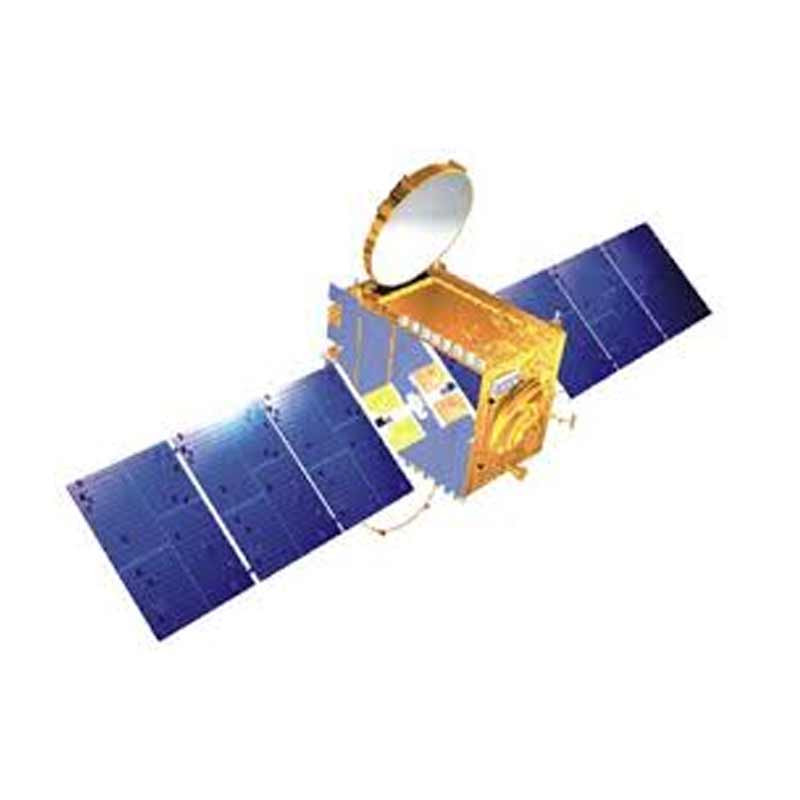
    MUMBAI: India’s attempt to enter the elite “space club” has received a setback. The launch of the country’s first commercial communications satellite from home soil has ended in failure. The GSLV-F02, carrying the state-of-the-art communication satellite Insat-4C, crashed into the Bay of Bengal a short while after lift-off at 5:38 pm from its launch pad at the Satish Dhawan Space Centre (SDSC) SHAR, Sriharikota.

    The launch of the completely indigenous Insat-4C communications satellite on the Geosynchronous Satellite Launch Vehicle (GSLV) was delayed twice before its final failed attempt due to unspecified technical reasons. The launch was originally scheduled for 4:30 pm this evening. 

    The three-stage 414-tonne launch vehicle of the Indian Space Research Organisation (Isro), started under-performing right from the start and veered off its path after travelling a few kilometers into the sky.

    Isro chairman Madhavan Nair admitted the failure of the satellite. “The mishap happened in the first stage of the separation. We have activated and analysed the data and we will get to the bottom of it,” Nair said, adding, “today’s happening is a setback, especially after we had 11 continuous successful launches.”

    Insat-4C, which cost Rs 4 billion, was the second satellite in the Insat-4 series. The first, Insat-4A, was launched in December last year, from the spaceport of Kourou in French Guiana by an Ariane5 vehicle.

    It was for the first time that India’s space agency was putting into orbit a two-tonne class satellite. Equipped with 12 high-powered Ku band transponders (like the earlier Insat-4A), the 2,180 kg spacecraft is designed for a mission life of 10 years. Insat-4C was designed with the capability to broadcast 150 TV channels through the DTH platform.

    If succesful, this mission would have taken India to being one of the five major satellite launch countries in the world. With this failure, Isro’s strategy of taking satellite contracts from other countries has also received a setback.

    As regards the Insat-4 mission, Isro will now have to look ahead to the launch of the third satellite in the series – Insat-4B. The GSLV’s failure will in no way influence that launch however, because Isro will be using the services of Arianespace to launch Insat-4B from Kouru next year.

    The failure of this mission is not just about the challenge it throws up to India’s space ambitions though. Immediately hit will also be Kalanithi Maran’s Sun Group, which had booked space on Insat 4C for its DTH venture Sun Direct.

    At present, DD Direct Plus managed by the pubcaster Prasar Bharati and the Subhash Chandra owned Dish TV are the two operators offering DTH services in the country.

    All the Ku-band transponders on the Insat 4A satellite, meanwhile, have been leased to the Tata-Star consortium, which will soon be launching the Tata Sky DTH service.

    Other than Tata Sky and Sun Direct, there is also Anil Ambani’s DTH venture Reliance Bluemagic, which will be rolling out in due course.
  • Navin Kumar appointed interim CEO of Prasar Bharati

    Navin Kumar appointed interim CEO of Prasar Bharati

    NEW DELHI: Doordarshan director-general Navin Kumar will be the interim CEO of Prasar Bharati till a selection panel zeroes down on a full time candidate for the post being vacated by KS Sarma.

    Sarma served as the CEO of Prasar Bharati, which manages DD and All India Radio, from March 2002 to June 2006. Kumar’s appointment too would be a short one as the government official is slated to revert to his home cadre in August after a stint in New Delhi.

    As Kumar will be functioning as the CEO of Prasar Bharati, senior-most deputy director-general, LD Mandloi, will be the acting DG of Doordarshan.

    Interestingly, before Sarma took over the reins at Prasar Bharati, the then additional secretary in the I&B ministry, Anil Baijal, served as the acting CEO for about 18 months.Chief executive of the publicly funded Prasar Bharati is chosen by a panel headed by the Vice-President of India and comprising the chairman of the Press Council of India and a government nominee.

    Sarma’s over four-year term had its ups and downs, but he is credited with successfully launching DD’s subscription-free DTH service DD Direct+, and steering Prasar Bharati’s annual revenues to over Rs 10 billion for the first time in FY06 ended March 2006.

    It was also during Sarma’s tenure that DD News was relaunched and an in-house marketing team set up to market programmes aired on DD and AIR instead of outsourcing the activity, which, more often than not, ran into legal problems.

    Though Sarma would not like to take much credit for it, but he is said to have successfully lobbied with the ministry to bring about changes in sports broadcasting, which resulted in the downlink law being formulated that makes it mandatory for private broadcasters to share feeds of listed events with the pubcaster.

  • Govt official tipped as interim CEO of Prasar Bharati

    Govt official tipped as interim CEO of Prasar Bharati

    NEW DELHI: With the government yet to decide on a chief executive for pubcaster Prasar Bharati, an information and broadcasting ministry official is slated to take over the reins from the outgoing chief in the interim.

    Additional secretary in the I&B ministry P Singh, a government representative on the board of Prasar Bharati, would be the interim chief of an organization that manages Doordarshan and All India Radio.

    KS Sarma retires from the post of CEO on 30 June after an over four-year tenure, being the longest serving chief executive.Though it is unlikely that Singh would be a permanent appointee, the lack of urgency on the part of the I&B ministry to find a replacement for Sarma could see the government official at the helm of affairs for a longer duration than generally expected.

    Some of the names doing the rounds in the corridors of power as likely candidates to succeed Sarma include former I&B ministry official Vijay Singh and a human resources development ministry official who’s said to be close to I&B minister Priya Ranjan Dasmunsi.Another candidate, SY Querishi, whose name was being bandied round as a likely CEO of Prasar Bharati, was named by the government on Thursday to go to the Election Commission.

    Querishi had served as the director general of Doordarshan during Sushma Swaraj’s tenure as I&B minister in the Bharatiya Janata Party-led coalition government in the early 2000s.

    Considering that the post of CEO of Prasar Bharati — still regarded as an extension of the government propaganda division despite autonomy granted to it some years back — would prove to be both sensitive and crucial for New Delhi with elections scheduled in some states next year, it’s unlikely that Dasmunsi and company will decide in a hurry on a successor to Sarma.

    As the CEO, Sarma has had his ups and downs, but managed to retain his post despite changes in the ministry and the government.
     

  • Deutsche Welle joins hand with DD Direct +

    Deutsche Welle joins hand with DD Direct +

    MUMBAI: In a bid to strengthen its foothold in India, the German pubcaster Deutsche Welle (DW) has enterted into an agreement with DD Direct+, the pubcaster Prasar Bharti managed direct-to-home service to emit its programmes via a DD satellite transponder in India.

    In a statement issued today, DW will be present with DW-TV programmes in English and German, and in future possibly also with radio programmes in English and Hindi or other languages. At present, only the state-financed Doordarshan and one pay platform broadcast via DTH signal, which guarantees a technically brilliant and reliable emission.

    “We are very happy to step up our presence in India”, says Deutsche Welle director strategy, marketing and distribution Guido Baumhauer. “This is a great opportunity for DW television. We have excellent contacts with Prasar Bharati, which runs Doordashan, and we are working together on a number of projects. With Doordashan and DW both being public broadcasters, I’m sure this new cooperation will be a positive experience for all sides.” 

    The release states that the DD Direct+ reaches far more housholds than pay TV and is expected to be the biggest DTH platform in Asia, which opens up a lot of possibilities for the DW regarding regional broadcasting of its programming. Prasar Bharati CEO K S Sarma, actively supported the German bid for the place on DD Direct+.”This is due to DW’s outstanding reputation as an international public broadcaster of high quality”, comments DW general manager Erik Bettermann. “Asia is one of our focus regions. We are happy to expand our market in India, and Doordarshan, as a long-standing player in the Indian media business, is an excellent partner for us.”

    The DD DIRECT+ platform carries 33 free-to-air (FTA) channels, including 19 DD channels, 14 private TV channels and 12 All India Radio (AIR) audio channels and is likely to include more channels in the future. The approximate cost of the equipment to view DD channels is around Rs. 1800/- including Set Top Box, LNB and antena.

  • PMO sets up panel to develop policy paper on radio, TV & digital tech

    PMO sets up panel to develop policy paper on radio, TV & digital tech

    MNEW DELHI: The Prime Minister’s Office (PMO) has set up a committee to develop a policy paper for radio, television and digital technology to be covered under the 11th Five-Year plan.

    The high-profile panel’s first meeting will be held on 21 June. B.A.G Infotainment CEO and convener of Association of Radio Operators in India Rajiv Mishra and Times of India group’s AP Parigi are among the private sector nominees to the working group.

    The following activities will be covered by the newly-constituted group:

    # To suggest approaches for formulation of plans and programmes for radio and TV, keeping in view the emerging trends in technology, convergence issues, IP multimedia and IT-enabled media applications.

    # To recommend measures for optimum expansion of transmission network of radio and TV through appropriate technologies to hitherto uncovered areas.

    # To put in place the basic policy framework, fiscal incentives and workout a mission mode project for moving from analogue transmission to digital transmission before 2015.

    # To develop a mission mode project for implementation mobile media solutions by establishing requisite infrastructure for transmission in, say, 700 MHz band in association with mobile service providers and technology partners.

    # To identify excess spectrum and bandwidth arising through migration to digital transmission and work out strategies for its redeployment/farming.

    # To assess the total investment required in hardware and to suggest measures to stimulate greater private investment in this sector.

    The members of this group also include Prasar Bharati CEO, director-generals of Doordarshan and All India Radio, head of Broadcast Engineering Society of India Ltd, Planning Commission’s advisor of communication and information and IT software industry body Nasscom’s chairman Kiran Karnik.

  • Government mulls USO Fund for Prasar Bharati

    Government mulls USO Fund for Prasar Bharati

    NEW DELHI: Private broadcasters and big MSOs in the country might soon be called to lend a helping hand in the financial restructuring of pubcaster Prasar Bharati.

    According to one of the options relating to funding of Prasar Bharati, suggested by a government panel, a corpus can be created from contributions from the broadcast and cable industry on the lines of the universal service obligation (USO) fund in the telecom sector.

    Five per cent of a private telecom operator’s annual revenues go towards the USO fund, which is used to finance new rural telephony projects identified by the government.

    The panel on Prasar Bharati’s financial restructuring has suggested that private broadcasters and MSOs can be asked to contribute between 5-10 per cent of their annual revenues for a USO fund-type corpus, which can be used to support the over 45,000 workforce of the pubcaster.

    Prasar Bharati, which manages Doordarshan and All India Radio, is in the middle of a debate over ways to augment its earnings.

    This recommendation, along with others in a nearly 300-page report, is being presently studied by a group of ministers (GoM) before the issue is taken to the Union Cabinet for a formal okay.
    The GoM met briefly last week, information and broadcasting minister Priya Ranjan Dasmunsi told Indiantelevision.com. He did not give any time frame on taking the Prasar Bharati matter to the Cabinet.

    However, industry players observe whether there would be increased accountability of Prasar Bharati if a USO fund is created via private sector players’ contribution to partly fund pubcaster’s activities. More importantly, whether the funds would be properly used.

    According to Hindu Business Line, of the Rs 107.53 billion collected by the government from telecom companies in the form of USO fund since its inception in 2002-03, a staggering Rs. 70 billion is yet to be disbursed.

    The newspaper quoted the Telecom Regulatory Authority of India as saying that undisbursed amount is estimated to cross Rs 250 billion by 2010 against a total collection of Rs. 375 billion, which means only 48 per cent of the fund is expected to be utilised for extending telephone services in the rural areas. The numbers assume significance even as the digital divide between rural and urban is ever increasing.

    Meanwhile, letting the pubcaster tap the capital markets and levying a cess on sale of every TV and radio set in the country are amongst some of the other options suggested by the committee on financial rejig of Prasar Bharati.

    Though Prasar Bharati closed FY 2006 with record-breaking revenues of over Rs 12 billion, its expenses are so huge that the government is finding it difficult to bridge the chasm between income and expenditure.

  • DD’s DTH to expand bouquet to 50 channels in June

    DD’s DTH to expand bouquet to 50 channels in June

    MUMBAI: DD Direct Plus, the direct-to-home (DTH) service of Prasar Bharati, will undergo its first phase of expansion in June this year. As per the plans, the number of TV channels on the DTH platform are being ramped up from 33 to 50 while the radio channels will go up from 12 to 20.

    “DD Direct Plus will increase its strength from 33 channels to 50 channels by the end of June this year. The new channels joining the DTH platform will be from Hindi as well as the regional markets,” Doordarshan director general Navin Kumar tells indiantelevision.com. He, however, did not name the new channels which were hopping on to the DTH offering.

    The private broadcasters joining the DD Direct Plus bouquet will be paying Prasar Bharati annual fees of Rs 10 million, according to Kumar. “Prasar Bharati charges the private broadcasters part of DD Direct Plus annual fees of Rs 10 million and this is applicable to even the new channels joining the DTH platform,” Kumar says.

    In the second phase of expansion, DD Direct Plus will add up a further 50 channels to take the total DTH bouquet to 100 by the end of the year.

    What about offering FM radio stations? There is no development yet on DD Direct Plus’ plan to sign FM radio stations, Kumar says. Under the present policy, FM radio stations can operate only within a particular geographical area and cannot have a pan-India presence. This had come as a stumbling block for Prasar Bharati when it planned to offer space to private FM channels in DD Direct Plus.

  • Prasar Bharati financial rejig awaits GoM nod

    Prasar Bharati financial rejig awaits GoM nod

    NEW DELHI: A group of ministers (GoM) looking into a possible financial restructuring of pubcaster Prasar Bharati to boost its revenue generation capacity has said no final decision has been taken on various options.

    On Thursday, Prasar Bharati, which manages Doordarshan and All India Radio, made a presentation to the GoM highlighting its plus and negative points, including possible ways to augment revenue generation that is lagging far behind annual expenses incurred.

    While confirming that a presentation was made to the GoM, Prasar Bharati CEO KS Sarma told indiantelevision.com that it was made clear to him that the ministers would look into the issue before taking the package to the Cabinet for a final approval. Sarma added amongst the many options presented before the GoM were levying a one-time cess on TV and radio sets in the country and tapping the capital market.

    These options, Sarma said, were in line with a report prepared by a panel, headed by information and broadcasting secretary, set up to look into the financial restructuring. The report is now being studied by the GoM.

    Asked whether the GoM and then the government are likely to okay the financial restructuring of Prasar Bharati during his tenure, which ends 30 June 2006, Sarma replied in the negative, hinting that the issue is likely to take more time.

    Amongst the options, as has been reported by indiantelevision.com last year, is also one that envisages the government holding equity in the pubcaster against assets, which will facilitate a capital restructuring of the financially beleaguered Prasar Bharati or Broadcasting Corporation of India.

    A government official added that media reports on financial restructuring of Prasar Bharati were “premature.”

    In the meanwhile, reports on levying a cess on TV and radio sets to give a fillip to Prasar Bharati revenue has almost set the cat the pigeon with stiff opposition coming from consumer electronics manufacturers.

    However, present I&B minister Priya Ranjan Dasmunsi’s predecessor Jaipal Reddy had been against levying a cess on TV and radio sets. His justification: the cost of collecting this cess from all over the country would be more than the actual amount collected.

    British broadcaster BBC is partly funded through this mode where Englanders pay a nominal amount at the time of buying of a TV or radio set. A recent proposal of the Tony Blair government to hike this amount has been widely resisted British citizens.

  • Sarma retires in June; govt. yet to move on replacement

    Sarma retires in June; govt. yet to move on replacement

    NEW DELHI: Indian pubcaster Prasar Bharati would soon be headless unless the government, too busy with other issues like reservation for backward classes in educational institutions, hurries up.

    On 30 June 2006, Prasar Bharati CEO KS Sarma retires after serving an over five-year term that can be easily termed a roller-coaster ride.

    Following Sarma to the revolving door – sooner rather than later – is director-general of Doordarshan Navin Kumar whose term as a bureaucrat in Delhi ends in August. After that he has to revert to his parent state of Bihar.

    Kumar was appointed as the DG of Doordarshan in February of 2005. Prasar Bharati, an autonomous organization, manages pubcasters DD and All India Radio.

    While the CEO of Prasar Bharati is selected by a three-member panel headed by the vice-president of India, the DG is shortlisted by the board of Prasar Bharati that includes the chief executive and chairman.

    The present chairman of Prasar Bharati, veteran journalist MV Kamath, was appointed during the tenure of previous government, headed by the right-wing Bharatiya Janata Party.
    Prasar Bharati sources said that apart from Sarma and Kumar, there were several other senior officials who are on their way out and would have to be replaced.

    Meanwhile Sarma, a veteran of Prasar Bharati (he officiated as the DG of Doordarshan when he was a joint secretary in the I&B ministry in the mid to late 1990s) has seen over five ministers at the information and broadcasting ministry, which controls the purse strings for the publicly funded Prasar Bharati.

    Despite allegations of nepotism during a time when DD used to outsource marketing of big events, including the money-spinning cricket matches involving India, a wily Sarma has come out unscathed.

    It was during Sarma’s tenure as the CEO that DD floated its subscription-free DTH service, which raced ahead of the country’s first pay TV DTH service, Dish TV, in terms of subscribers.

    For the financial year ended march 2006, for the first time Prasar Bharati clocked a gross revenue of Rs 12.38 billion with Doordarshan clocking Rs 9.68 billion and All India Radio 2.7 billion that signified a growth of 67.67 per cent.

    Some of the achievements during Sarma’s tenure included the following:

    1. Increased focus on pro-active in house marketing of properties.
    2. Successful execution of media campaigns on behalf of government departments.
    3. Rationalization of rate cards to suit the changing market conditions.
    4. A strategic shift from Sponsored Programmes to Self Financing Scheme.
    5. Introduction of blockbuster Hindi Feature Films on DD National and marketing them in-house.
    6. Leveraging AIR’s vast network and unprecedented reach.
    7. Narrowcasting programming strategy.
    8. Publicity support for programmes to create awareness, especially among C & S audience.
    9. Improved billing and housekeeping efforts.

  • Prasar Bharati to beef up DD, AIR news operations with fresh recruitments

    Prasar Bharati to beef up DD, AIR news operations with fresh recruitments

    MUMBAI: Prasar Bharati is strengthening its manpower for news coverage in All India Radio (AIR) and Doordarshan. Responding to a written query on the subject, minister of information and broadcasting and Parliamentary affairs P R Dasmunsi said in the Lok Sabha that the Prasar Bharati board had approved the proposal to position Part Time Correspondents (PTC) in all those districts of the country where regular AIR correspondents are not posted.

    According to Dasmunsi, there are about 90 full time correspondents/editors and 419 PTCs posted/positioned across the country and the process of selection of PTCs in respect of remaining 150 districts headquarters is underway.

    “With this, Prasar Bharati will have correspondents in all the district headquarters of the country. Doordarshan News has a network of Stringers who, along with the PTCs of AIR, provides news inputs from various districts in the country. Besides, Doordarshan regular TV correspondents/news reporters are also deployed to gather important news from time to time for inclusion in the news bulletins telecast by Doordarshan,” Dasmunsi said.

    Dasmunsi informed that, AIR and Doordarshan tried to cover all important news events across the country with its limited manpower and support. “Some events in far off places which are not covered due to infrastructure and manpower shortages are covered by subscribing to news agencies,” he said.