Tag: Prasar Bharati

  • Veteran ballet dancer, eminent medico join Prasar Bharati board

    Veteran ballet dancer, eminent medico join Prasar Bharati board

    NEW DELHI: Veteran ballet dancer Mamata Shankar, renowned cardiac surgeon Sunil Kapoor and senior journalist George Verghese have been appointed members of the Prasar Bharati Board with immediate effect.

    The new appointees are part of the six part-time members provided for under the Prasar Bharati (Broadcasting Corporation of India) Act 1990 which was brought into force from September 1997.

    Chaired by senior media expert MV Kamath and executive member BS Lalli, the board includes Chitra Mudgal and Bhupen Hazarika as part-time members.

    Verghese, who has been working with news agency United News of India for the last 35 years, will be on the board for five years.

  • Cabinet clears decks for must provide law

    Cabinet clears decks for must provide law

    NEW DELHI: The Union cabinet today approved the promulgation of an ordinance making it compulsory for private broadcasters to share the feed of sporting events of national importance (read cricket) with the public broadcaster.

    The move comes in the wake of the refusal by India cricket rights holder Nimbus to share the live feed of recently held matches with national broadcaster Doordarshan.

    Additionally, a Bill will be introduced in the coming Session of Parliament to replace the ordinance by an Act of Parliament.

    “The Sports Broadcasting Signals (Mandatory Sharing with Prasar Bharati) Ordinance, 2007 will make it obligatory on every content right owner and TV and Radio broadcasting service provider to share the live telecast signals without its advertisement, for such sporting events as may be prescribed by the Central Government, with the public service broadcasters on such terms and conditions as may be specified,” a posting on the government’s Press Information Bureau website says.

    “This Ordinance would provide access to the largest number of listeners and viewers, on a free to air basis, of sporting events of national importance whether held in India or abroad,” it adds.

    At a briefing this evening, information and broadcasting minister PR Dasmunsi expressed the hope that the ordinance would be notified before the start of the coming India-Sri Lanka series on 8 February, newswire Press Trust of India has reported.

    Nimbus, while welcoming the approval of the ordinance, has threatened to go to court if it would mean telecasting feed on DD’s DTH platform, PTI adds.

    An expert committee has been set up in the I&B ministry to look into the issue of encryption, an official told indiantelevision.com.

    This will have to be sent to the law ministry and their approval procured so that it becomes water tight and face little legal and political challenge, in the court or in Parliament itself, from opposition benches, the official said.

    The Downlinking Guidelines of the government will form the body of the ordinance, though the words will be framed in the form of a statute.

    Sources said that the wording as such is ready and Dasmunsi, who had been incensed with Nimbus getting away with the live telecast of the current ODI series without sharing its live feed with DD, had been the trigger.

    Dasmunsi, however, had to wait to place this with the cabinet and seek its formal announcement. This is what the cabinet today decided: that now there is no option but to go for the harsh measure of promulgating an ordinance.

    The government’s decision will ensure viewers in non-cable houses and radio listeners would receive live feed of Indian team’s one-day matches, wherever it plays. However, for test matches, the government has said live feed would be required only for those matches played in India and highlights would do for the others.

    As a sop to private broadcasters, Dasmunsi has said a technical committee would look into the matter of encrypting the signals being telecast by Doordarshan, which would ensure that the feed is not pirated by broadcasters outside India.

    Earlier in the day, government officials present at the inauguration of the three-day Broadcast Engineering Society Expo 2007 in the capital had told indiantelevision.com that the ministry had come precariously close even earlier to issuing an ordinance ensuring live feed for cricket events in India involving the national team.

    “I think it is because of the court case and ruling on seven minutes delay that the legal experts suggested we don’t go against the ruling, but bring in the bill and settle the issue for once and all, but the anger in the ministry is huge,” a senior official had revealed at the time, naturally asking not to be quoted.

    Giving a not so subtle threat to “broadcasters for not falling in line”, he suggested that this would mean that the minister and the officials may not make it easy for whoever has been hoping for a less ‘draconian’ broadcasting bill.

  • Broadcasting Bill to be fair and open: Dasmunsi

    Broadcasting Bill to be fair and open: Dasmunsi

    NEW DELHI: “Investors in the broadcast sector must realise that the government’s policy is open, and when the (broadcasting) bill is ready, the world will see and realise this,” said information and broadcasting minister PR Dasmunsi at the inauguration of the three-day Broadcast Engineering Society Expo 2007 today.

    Dasmunsi said, “There is a huge potential for development of broadcasting in India and we have a lot of advanced technologies available with us. What we need to have is proper selection of technologies suiting our requirements.”
    I&B secretary SK Arora, in his remarks said that in devising a regulatory framework, the interest of the consumer is foremost in government’s mind. The business models have to suit the large number of our consumers. Policy framework and the business models have to be in sync to cater to the consumer interest, he added.

    Sharing with his audience the excitement of living in this amazing age of broadcasting revolution, he stressed nevertheless that the government would ensure a level playing field for all, and more than that, not allow most of the consumers to be deprived of the benefits of technology. Prices need to be controlled to keep them affordable.

    “We must allow full play of technology, business and management to take shape successfully,” he said, adding, “the regulatory regime is crucial for the success of innovative ideas and products.”

    He had a critique of the government sector too, which, he said, lacked management skills. “The public sector must realise the commercial aspects, and be acutely conscious of working out systems to facilitate innovations and business models to become successful,” Arora held.

    He stressed that the core philosophy of the government was simple: the consumer. “Everyone must keep this in mind,” he added for good measure.

    Prasar Bharati’s experience in introducing newer technologies (TV, FM radio, DTH, now digitalisation and mobile TV) has helped develop the regulatory environment.

    “We have depended on the technological expertise of Prasar Bharati while designing the regulatory regime,” he explained.

    He felt that though the regulatory framework must have adequate provision for segmentation and exploitation of the market by investors, the business models they develop must be appropriate and new technology is carried to the people at affordable prices.

    The inauguration ceremony also saw BES president AS Guin, David Astley, secretary general of AsiaPacific Broadcasting Union, and Roger Crumpton, CEO of International Association of Broadcast Manufacturers address the more than 300 persons attending the function.

    ‘BROADCASTING MULTI-FACETED, MULTI-DIMENSIONAL’

    In his keynote address, Crumpton said that broadcasting is not only a multifaceted affair, as the title for this year’s Expo suggested, but a multidimensional one, in which the engineering challenges were just huge.

    Especially in India, he added, explaining that whereas only 19 per cent of the people in the US and 20 per cent in the UK were under 15, the figure is 35 per cent for India, and with this population the multiplicity of platforms is not important: content is everything.

    “It does not matter on what platform they are accessing it, but they want it where and when they choose and what they choose. This is the young demographics we are dealing with, which is cash-positive and time-negative,” Crumpton said.

    What was important in his speech was that he made presentations of when the first TV sets came and then the first colour TV sets came and it all seemed to people like him, and these are the people who are having to design technologies and content, so this aging generation of experts need to be in synch with the young demographics facing them.

    The challenge is that for this generation, there must be a clear agenda for creation and delivery of content, which will be constantly repurposed in real time, a situation where broadcasting will face this problem. Because there is a paradigm shift from tapes-based programming to file-based one, he explained.

    “There has to be a radical shift,” Crumpton argued, “for training, qualifying and accreditation systems.”

    And he saw a huge opportunity for India. He says this paradigm shift, combined with an ageing skilled workforce in the West has already started creating problems of skill shortages in the globally $11 billion broadcasting market, which is also facing revenue streaming threats from telecom and IPTV.
  • Deferred live on DD: Nimbus to file reply 9 February

    Deferred live on DD: Nimbus to file reply 9 February

    NEW DELHI: The Delhi High Court today issued notice to Nimbus Communications on a petition by Prasar Bharati challenging the order of the single bench last week permitting telecast of the ongoing one-day cricket series with West Indies with a seven-minute deferred telecast.

    A Division Bench of the High Court headed by Chief Justice MK Sharma asked Nimbus, who own Neo Sports channel, to file their reply to the notice by 9 February.
    The petition by Prasar Bharati has contended that the order of the single judge is violative of the principle of equitable justice as it treats viewers of satellite TV differently from those who receive signals terrestrially.

    Earlier on 23 January, Justice SK Kaul had permitted Doordarshan to telecast the matches with a seven-minute deferred telecast. He had, however, permitted All India Radio to broadcast the commentary live.
    The same court had a day later asked Nimbus to deposit Rs 55 million within a week, even as it gave the marketing rights to the former because it had said it could raise almost five times more than competing public broadcaster Prasar Bharati.

    Meanwhile, the rights to market events on AIR’s 69 channels lies with Prasar Bharati, and the court will decide on the revenue sharing ratio on 10 February, when the rest of the contentious issues would also be taken up.

    The court, however, held that though Prasar Bharati could stream the matches thorough its DTH platform, it would not allow any private DTH operator to access that and show the matches.

  • Prasar Bharati moves Delhi HC against deferred live telecast

    Prasar Bharati moves Delhi HC against deferred live telecast

    NEW DELHI: A day after terrestrial broadcaster Doordarshan was granted “deferred live” telecast rights to the ongoing cricket series between India and the West Indies, Prasar Bharati approached the Delhi High Court again on the matter.

    A two-judge bench of the Delhi High Court has listed for tomorrow arguments in the appeal filed by the pubcaster against the order yesterday by a single-judge directing Nimbus, the rights holder for BCCI organized cricket events in India, to give the feed to Doordarshan with a seven-minute time lag.

    Prasar Bharati sources told Indiantelevision.com that the pubcaster’s appeal was based on the validity of the Uplink-Downlink Guidelines issued in November 2005 that perforce allows DD to get the telecast feed. The pubcaster’s argument is that the guidelines are clear that the live feed should be given to both Doordarshan and AIR and that there is “no provision (in the guidelines) for a deferred telecast.”

    Prasar Bharati has contended that viewers in the country cannot be divided into two segments and that there has to be equitable distribution of signals for all viewers, irrespective of whether they are linked to DTH, cable or non cable homes.

  • DD to telecast cricket with 7-minute time lag

    DD to telecast cricket with 7-minute time lag

    NEW DELHI: Millions of viewers who don’t have access to the Nimbus owned Neo Sports can finally heave a sigh of relief. The Delhi High Court has ruled that terrestrial broadcaster Doordarshan can telecast the ongoing cricket series between India and the West Indies “deferred live” with a seven-minute delay.

    Seven minutes on an average comprises two overs bowled on the trot. All India Radio will, however, be allowed to broadcast its commentary live, with no time lag.

    The consensus emerged after the High Court, in its order issued today, ruled that 50 million viewers (who don’t have cable TV access) cannot be denied the right to watch the game.

    The timing of the ruling is critical since it comes a day ahead of the second One-Day International to be played in Cuttack, Orissa. It may be recalled that millions of viewers missed out on the action Sunday that saw India defeating the West Indies in the first ODI that was played at Nagpur.

    While issuing his orders, Justice SK Kaul made it clear that this was an interim ruling and that the final decision about the Sri Lanka series (that follows immediately after the current four-match Pepsi series gets over) will be taken on 8 February.

    On the petition filed by Nimbus yesterday, the court asked Prasar Bharati to file its replies by 29 January, to which Nimbus will have to file its rejoinder by 1 February.

    Nimbus’ counsel argued that it would stand to lose cmmercially if Doordarshan were allowed a live feed and said DD was being adamant despite concessions offered by Neo Sports.

    Reacting to the news, information & broadcasting minister Priyaranjan Dasmunsi welcomed the decision of the court, stating it (the ruling) was only fair considering DD has “96 per cent reach in the country”.

    Nimbus Sports, the rights holders for the BCCI organized cricket events in India that it had acquired for a whopping $ 612 million, had earlier offered to give the feed to Prasar Bharati, but only under certain specific conditions, and these were not acceptable to the pubcaster.

    Nimbus had originally suggested a 15 minute deferred telecast on DD referred ‘as live’. Nimbus also did not agree to DD showing the matches on its DTH platform DD Direct Plus.

    Nimbus had said if at all it shares the feed, the signals would have to be encrypted so that it reached houses only on the terrestrial network and not those that get DD signals through cable TV.

    The talks broke down after Prasar Bharati officials, citing previous government orders and court rulings they claim had gone in their favour, said they should get live feed of the cricket series without any conditions, and that it was also to be shared on DD’s DTH platform.

    Following the breakdown of talks DD officials had gone back to taking the cover of the Uplink-Downlink Guidelines that perforce allow DD to get the telecast feed.

  • Nimbus-DD talks fail, I&B may issue ordinance

    Nimbus-DD talks fail, I&B may issue ordinance

    NEW DELHI: The information and broadcasting ministry is likely to issue an ordinance by the end of the week, making it mandatory for Neo Sports to share its cricket telecast feed with Prasar Bharati.

    Ministry sources told Indiantelevision.com that as the minister Priya Ranjan Dasmunsi was not in Delhi, deliberations on drafting an ordinance can only commence on Tuesday.

    If an ordinance is finalized, it will be sent to the law ministry for clearance and only then referred to the union cabinet for approval. As this process is unlikely to be complete by Thursday when the cabinet meets, a special meeting may be held later to clear the ordinance.

    Negotiations had earlier broken down with Nimbus which owns Neo Sports when the private channel insisted that Doordarshan should either encrypt the channel or show the matches as a deferred telecast. After almost three days of negotiations, Prasar Bharati officials said the conditions set by Nimbus was not in conformity with the uplinking/downlinking guidelines issued by the government.

  • No cricket on DD as Nimbus refuses to buckle

    No cricket on DD as Nimbus refuses to buckle

    MUMBAI: In what is a first on Indian Television, a home cricket series kicked off today without the telecast being available on national broadcaster Doordarshan and All India Radio.

    India’s victorious start to the four-match Pepsi series One-Day International series against the West Indies at Nagpur was not available on terrestrial television as well as on cable homes that did not carry the Nimbus owned Neo Sports channel.

    With talks breaking down yesterday between Prasar Bharati and Nimbus Sports on sharing the live feed, the industry was waiting to see whether the government would push through an ordinance to implement the Downlinking/Uplinking Guidelines issued by the information & broadcasting ministry in November 2005.

    The guidelines make it compulsory for sports telecast rights holder channels to share the live feed of important sporting events with Doordarshan and AIR by entering into a commercial agreement. The terms provide for revenue sharing of 75:25 in favour of the rights holders.
    Nimbus Sports, the rights holders for the BCCI organized cricket events in India, had offered to give the feed to the pubcaster, but only under certain specific conditions, and these were not acceptable to the Prasar Bharati.

    Nimbus suggested a 15 minute deferred telecast on Doordarshan’s terrestrial channel referred ‘as live’. Thus, people having cable TV would get live feed on Neo Sports and those watching DD would see it 15 minutes later.

    Nimbus also did not agree to DD showing the matches on its DTH platform DD Direct Plus.

    NIMBUS READY TO GIVE FEED IF PRASAR BHARATI GIVES COMMITMENT TO ENCRYPT TERRESTRIAL SIGNALS

    Nimbus has said if at all it shares the feed, the signals have to be encrypted so that it reaches houses only on the terrestrial network and not those that get DD signals through cable TV.

    Nimbus today offered a way out of the impasse by declaring it was ready to provide the live feed if Prasar Bharati agreed to encrypt its signals in the next two to three weeks.

    “Till such time as DD puts encryption into place, about 2-3 weeks, Nimbus has offered to provide the live coverage TV signal to DD,” Nimbus chief Harish Thawani has been quoted by Zee News as saying from Mumbai.

    “We are highly committed and want to provide the cricket telecasts on DD also. The ball is in DD`s court,” he said.

    Thawani said Nimbus was insisting on encryption as the satellites used by DD have significant signal dispersion into many neighbouring countries, often as far as the Middle East and Singapore.

    “The growth of sports in any country is substantially dependent on the revenues it gets from sports channels and those revenues would be substantially destroyed if the rights of sports channels are not protected, having a terrible impact on sport itself,” Thawani argued.

    Till now though, Prasar Bharati officials, citing previous government orders and court rulings that they claim have gone in their favour, have been adamant that they should get live feed of the cricket series, without any conditions, and that it also be shared on DD’s DTH platform.

    Following the breakdown of talks DD officials have gone back to taking the cover of the Uplink-Downlink Guidelines that perforce allow DD to get the telecast feed.

    The ball is now really in the government’s court on what its next move will be.

  • Last-ditch attempt on for cricket broadcast on DD, AIR

    Last-ditch attempt on for cricket broadcast on DD, AIR

    NEW DELHI: With talks breaking down between Prasar Bharati and Nimbus Sports on sharing the live feed of the India-West Indies and the India- Sri Lanka ODI series to be played over the next four weeks, the national broadcaster today indicated that it will make a last-ditch attempt in the interest of them viewers to call Nimbus back to the negotiating table.

    Information and broadcasting ministry sources told indiantelevision.com that in case no agreement was reached, the government may issue an ordinance to implement the Downlinking/Uplinking Guidelines issued by the ministry in November 2005.

    The guidelines make it compulsory for sports telecast rights holder channels to share the live feed of important sporting events with Doordarshan and AIR by entering into a commercial agreement. The terms provide for revenue sharing of 75:25 in favour of the rights holders.

    Prasar Bharati said that negotiations which had been going on for two days had broken down in view of new conditions laid down by Nimbus Sports, the rights holders for the BCCI organized cricket events in India, which were unacceptable to the national broadcaster.

    Prasar Bharati and Nimbus Sports had entered into an agreement in February 2006 for telecast of the India –England series. Prasar Bharati had preferred another agreement on similar lines. But the national broadcaster said Nimbus put forward new conditions – which deviated from the Uplinking/Downlinking Guidelines and were unacceptable to Prasar Bharati.

    Nimbus suggested a 15 minute deferred telecast on Doordarshan’s terrestrial channel referred ‘AS LIVE’. Thus, people having Cable TV would get live feed on NEO SPORTS and those watching DD will see it 15 minutes later.

    This proposal was straightaway rejected by Prasar Bharati CEO BS Lalli who said “it is unacceptable to divide the citizens into two categories – one getting to eat freshly baked bread and others stale stuff.”

    “Equity and propriety demands that uniform clean feed of international quality is made available to all viewers,” he added.

    Nimbus also suggested exclusion of Doordarshan’s free-to-air DTH – DD Direct Plus from the live feed sharing agreement. But the Guidelines cover DTH medium as well.

    Prasar Bharati has been demanding sharing of feed to enable universal viewing of cricket matches. Doordarshan’s terrestrial channel – DD National – has three times higher viewership than the number one satellite channel in the country, according to the Indian Readership Survey 2006.

    With no breakthrough, 55 million terrestrial TV homes, DTH households and cable homes without Set Top Boxes in CAS implemented areas will not be able to watch the Indian team in action against the Caribbeans and the Lankans.

    Prasar Bharati had asked Nimbus Sports to at least allow broadcast of commentary on All India Radio to enable millions of radio listeners to catch latest score, but Nimbus said: “If there is no agreement on Television, there can be no agreement on radio either.”

  • India-WI series: DD, Nimbus talks fail; govt looks set to ram through ordinance

    India-WI series: DD, Nimbus talks fail; govt looks set to ram through ordinance

    NEW DELHI: The talks between rights holder Nimbus Sports and Prasar Bharati over sharing of telecast signals of the upcoming India-West Indies cricket series have broken down. And with the government having finalized the provisions of an ordinance on the compulsory sharing of “sporting events of national importance”, the chances of it being promulgated are now high, say government officials.

    The formula Nimbus proposed was that DD agree to a 15-minute delayed telecast transmission beyond Neo Sport’s actual live telecast, saying that DD should use the term “As Live” for their transmission.

    Nimbus also did not agree to DD showing the matches on its DTH platform DD Direct Plus.

    The top official of DD reportedly reacted to the proposal terming it as totally unacceptable. “We cannot have someone having freshly baked bread and others stale stuff,” DD mandarins asserted.

    Nimbus has said if at all it shares the feed, the signals have to be encrypted so that it reaches houses only on the terrestrial network and not those that get DD signals through cable TV.

    However, Prasar Bharati officials, citing previous government orders and court rulings that they claim have gone in their favour, are demanding that they should get live feed of the cricket series, without any conditions, and that it also be shared on DD’s DTH platform.

    Following the breakdown of talks DD officials have gone back to taking the cover of the Uplink-Downlink Guidelines that perforce allow DD to get the telecast feed.

    While officials were hesitant to actually state that the ordinance was on its way, they admitted that it “looks like either tonight or tomorrow it is most likely to be issued”, if Nimbus did not agree to go by the guidelines.

    Prasar Bharati officials also said that the provisions of the Sports Broadcasting Signals (Compulsory Sharing with Prasar Bharati) Bill 2007 has been drafted and if the ordinance comes through, it will be a precursor to the Bill. “If the ordinance comes, they will not be able to flout it,” the officials said.

    Meanwhile, Prasar Bharati officials said that there was little time now to generate the advertisements for the first game, “but we have go the ads lined up. It is just the question of ringing the bell”.

    “Hopefully, there will be a three-day gap between the first and second matches and ads generated by Prasar Bharati can be aired,” the officials said, adding that there were government as well as corporate advertisers lined up.

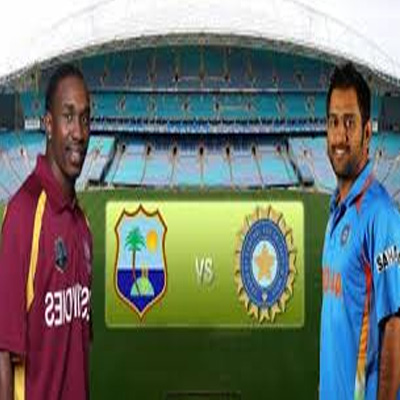
    India and West Indies will play four one-day matches during January 21-31. The series will be followed by Sri Lanka’s tour to India in February.