Tag: Prasar Bharati

  • High Court asks private news channels to adhere to Olympic telecast rules

    High Court asks private news channels to adhere to Olympic telecast rules

    NEW DELHI: The Delhi High Court has asked all private television channels not to violate the guidelines relating to the footage of the ongoing Olympics in Beijing for which the International Olympic Association has given exclusive rights to Prasar Bharati.

    Ms Justice Reva Khetrapal noted that the rules were clear that “private channels shall use the footages upto the specified limit of 10 seconds at a time and two minutes per day in their news programmes”. The court said its ruling related to all news channels including those not represented in court.

    The order came yesterday in response to a petition filed by Prasar Bharati against news channels run by TV India Ltd, NDTV, Times Now, and others, particular in view of telecast of the opening ceremony.

    The public broadcaster has now been asked to file details of the loss it has suffered because of violation by various news channels and claim damages if any.

    The Court has listed the matter to come up for further hearing on 26 August by when Prasar Bharati will also file its affidavit as the Olympics are ending on 24 August.

    A senior Doordarshan official linked to sports coverage told indiantelevision.com that DD had been monitoring the telecast being done by various news channels directly and through TAM. The official said while the sports channels had generally worked out agreements with DD about sharing signals, the news channels had failed to do so.

    DD Counsel Dinkar Kalra told indiantelevision.com that he expects to raise the issue of contempt of court order before the court on 24 August since the news channels have continued to violate yesterday’s order.

    The Television News Access Rules framed by the International Olympics Committee say that when exclusive television rights to broadcast the Olympics are granted by the IOC to any organisation for a particular territory, “no other organisation may broadcast sound or images of any Olympic events including sporting action, opening, closing and medal ceremonies, other activities (including training and interviews) which occur at Olympic venues in that territory”.

    However, the rules say that in appropriate cases, the IOC may agree with rights holders in their particular territories to issue supplemental news access rules for such territories

  • Prasar Bharati warns news channels over unauthorised use of Olympic footage

    Prasar Bharati warns news channels over unauthorised use of Olympic footage

    NEW DELHI: In a latest development, it is being learnt that Prasar Bharati which comprises Doordarshan and All India Radio, as the official broadcaster of the Beijing Olympics in India, has issued a letter to news channels for unauthorised use on Olympic footage from Doordarshan.

    According to the footage sharing law, any channel is free to air 20 seconds of footage of any event borrowed from any other broadcaster.

    The news comes in after Doordarshan made a clear announcement that it would not share the feed for Olympics with any other private broadcaster or news channel.

    Says DD coordinator marketing and sport Sukhjinder Kaur, “We had decided earlier that we will not share the feed for Beijing Olympics this year with any other private broadcaster. We had got several enquires related to sharing of feed but we had made clear before the event had started.”

    At the moment, DD has just issued a letter to all those news channels who have been found guilty of using the footage of Olympics and feels if the situation persist further action will be taken against the news channels.

    Doordarshan deputy director general – sports Ashok Jailkhani adds, “At the moment we have just issued a polite letter to news channels asking them to stop the unauthorised use of Olympic footage as Doordarshan is the official broadcaster of the event. If this practice continues then we will not hesitate to take legal action against those news channels that will be found guilty.”

  • Content Code: MIB places self-regulation guidelines before Court

    Content Code: MIB places self-regulation guidelines before Court

    NEW DELHI: The Ministry of Information & Broadcasting today placed before the Delhi High Court a Self Regulatory Guidelines for the Broadcasting Sector (2008) that proposes a two-tier regulatory set-up to be run entirely by broadcasters, with the key being adherence to the Certification Rules of the Cable Television Network (Regulation) Act, 1995.

    The contentious issue of Content Auditor has been dealt with extensively in the Guidelines, giving the industry the powers they wanted, by removing the clause in the earlier Code that said that the Auditors would have to report issues of non-compliance to the government.

    Now, the Auditors would report violations to the Chief Editor and it would be his responsibility finally on what goes on air.

    The Guideline says that only cases in which the Broadcast Regulatory Authority of India (BRAI) would take action – suo moto or on receiving a complaint – would be violations of the Certification Rules that have repercussions on the security or integrity of the country or contravene restrictions under the Theme 6 (Regulation & Community) or Theme 9 (General Restrictions) of the Certification Rules.

    Also, segment-wise Broadcast Consumer Complaint Committees would have to be set up, which would include separate committees for MSOs (multi-system operators), LCOs (local cable operators), the Indian Broadcasting Foundation (IBF), News Broadcasters Association (NBA), Association for Radio Organisations of India, Community Radio Forum and the Prasar Bharati.

    The BCCCs would have wide-ranging powers, including directions to channels not to telecast programmes or advertisement, “pending discussion”; to edit the advertisement or programme, and order any punitive action “in accordance with the constitution of the BCCC of the relevant segments of the industry”.

    While the First Tier would ensure self-regulation at the BSP level, the Second Tier would be the domain of the industry as a whole.The BCCCs would play their role there, again a new concept ushered in by the Guidelines.

    “At both the tiers, it will be the industry that would regulate itself, which was their demand and so what more can one ask for?” said an MIB official, without wanting to be identified.

    A copy of the Guidelines is exclusively with indiantelevision.com.

    The first tier would be at the Broadcast Service Provider (BSP) level, where each such BSP would have to have its “own internal mechanism to comply with the Rules, for which it may appoint one or more Content Auditor of requisite qualification and experience”.

    Each channel would have to provide details of its Content Auditor/s on its website and channel for information of the public, and the information would have to be notified to the MIB.

    It says: “For the purpose of ensuring compliance, each BSP may develop its own internal guidelines and procedures. However, each BSP shall consult its Content Auditor/s for assigning appropriate categorisation as per the Rules in respect of each programme / advertisement.

    “The Chief Editor of the channel, by whatever designation he is known in the channel shall be responsible for the final decision to accept or modify the guidance given by the Content Auditor”, and shall be “finally responsible for self-regulation and ensure compliance with the Rules”.

    Another new aspect in the Guidelines is to deal with Live and interactive programmes.

    In these, the government felt, that participants’ words or ideas or gestures cannot be edited out, so the Chief Editor would have to satisfy himself that adequate briefing have been given to the participants about the certification norms and indemnify the BSP against any deliberate violations by them.

    An important new aspect that had been a demand of the industry, especially the news channels, has been taken care of, wherein the Guidelines says that while the Content Auditor would bring to the notice of the Chief Editor any violation of the Rules, “The ultimate decision of such a matter shall be the responsibility of the Chief Editor.”

    The second tier would be at the Industry Level, at which the “Central Government or the Broadcast Regulatory Authority of India would appoint industry-segment level organisations to set up their respective Broadcast Consumers Complaint Committees, who would have to deal with and respond to complaints within specific time limits.”

    It is here that the MSOs and LCOs have been empowered for the first time to set up their own BCCCs to deal with programme content complaints from subscribers.

    The list of other industry-segments that would have to set up their own BCCCs include the IBF, NBA, Association of Radio Operators of India, Community Radio Forum and Prasar Bharati.

    The Introduction to the Guidelines says: “These Guidelines set out principles… and ethical practices which shall guide the BSPs on offering programming services…” and also says that “These Guidelines have been drafted to introduce greater specificity …and minimse scope for subjective decision by the regulatory authorities or the BSPs.”

    Since the Guidelines are self-regulatory, which has been a consistent industry demand, the onus, the government says, would be on the BSP when forming a view on the acceptability of any programme.

    The industry demand for watershed timing has been accepted and made progressive, from 8 pm onwards, under the assumption that from that time of the day “parents are expected to share the responsibility of what their children are permitted to watch on TV”.
  • Prasar Bharati gets Rs 3.3 billion loan to set up broadcast centre for Commonwealth Games


    NEW DELHI: Prasar Bharati is to get a loan of Rs 3.26 billion towards setting up an ‘International Broadcasting Centre’ and other facilities as a host broadcaster for the Commonwealth Games 2010.


    This is in addition to the grant-in-aid to the tune of Rs 11.42 billion, according to the Union Budget for 2008-09 presented to Parliament today by Finance Minister P Chidambaram.

    The loan will also be aimed at meeting the capital expenditure of the public service broadcaster.

    In a major decision taken during the presentation of budget for 2000-2001, the then Government had announced that since Prasar Bharati was an autonomous organisation, it would only receive grants-in-aid and loans from the total budget of the Information and Broadcasting ministry.

    This year’s loan is almost two times the revised estimate of Rs 1.67 billion (as against the allocation in the budget of Rs 2.17 billion) in the Budget for 2007-08. Similarly, the grant-in-aid last year was Rs 10.87 billion.

    The total budget allocation for the I&B ministry in the Budget for 2008-09 is Rs 19.10 billion as against Rs 16.10 billion in the revised estimates for 2007-08.

    There is a marginal increase in the allocation for films from Rs 718.5 million in the revised estimates for 2007-08 to Rs 848.5 million in the Budget presented today. In addition, there is an allocation of Rs 46.6 million for film certification. The budgetary allocation for films is aimed at covering the Films Division, the Directorate of Film Festivals that organised national and international film festivals, the Children’s Film Society, India, and the training institutes in Pune and Kolkata.

    The National Films Development Corporation, which recently resumed investment in film production, is to receive a loan of Rs 80 million.

    While the ministry had only used Rs 501.4 million of the budgetary grant of Rs 848 million on advertising and visual publicity during 2007-08, the allocation has been raised to Rs 743.6 million in the new budget.

    Interestingly, the allocation of Rs 358.5 million for Press Information Services includes funds for a subsidy for running India’s news pool desk of non-aligned news agencies pool through the Press Trust of India despite the fact that the news pool has been non-existent for several years.

    Though Chidambaram said the Northeast would continue to receive special attention, the lumpsum provision for projects/schemes for development of the region and Sikkim has come down from the Rs 190.2 million (as against the Rs 205.2 million in the budget for 2007-08) to Rs 179.6 million in the new budget.

    There is a provision of Rs 30 million to the Electronic Media Monitoring Centre for monitoring TV channels and radio stations for violation of programme and advertising codes. The provision in the budget had been Rs 59 million but the EMMC had used only Rs 30 million, according to the revised estimates for 2007-08.

  • NDTV to expand documentary slot from mid-March

    NDTV to expand documentary slot from mid-March

    NEW DELHI: NDTV 24X7, which had commenced a weekly half-hour slot for short films after it entered into a partnership with the Prasar Bharati-supported Public Service Broadcasting Trust (PSBT) last month, has now decided to increase the telecast of documentaries from mid-March.

    At present, NDTV telecasts the short and reality films each week on its flagship channel NDTV 24×7 as part of the series Documentary 24×7, every Thursday at 9:30 pm and repeated on Sundays at 1:30 pm.

    NDTV Producer Gunjan Jain – who recently attended the Mumbai International Film Festival for documentary, short and animation films to scout for good films – told indiantelevision.com that the half-hour and one hour slots may be alternated depending on the length of the films received by the channel for telecast.

    She also clarified that though the initial agreement had been with PSBT, the channel was also prepared to telecast documentaries by other producers. She had seen some good films in Mumbai and submitted her report to the channel.

    According to a PSBT spokesperson, the partnership provides an ideal platform for the exploration of myriad issues that these documentaries deal with, and for enhancing the viewership of powerful and insightful content. The effort will go a long way in creating and encouraging a public culture of documentary appreciation and engagement.

    Renowned filmmaker and PSBT Chairperson Adoor Gopalakrishnan said, “We welcome exposure for the excellent films produced by PSBT on a private commercial channel. With the terrible decline in the standards of commercial television, this is a very praiseworthy effort by NDTV. Our films are produced by independent filmmakers, most of them young, partially funded by Doordarshan. The future for public broadcasting lies in efforts such as these that demonstrate the potential of public-private partnerships.”

    PSBT is a non-profit trust that represents the confluence of energies to foster a shared public culture of broadcasting that is exciting and cutting edge. PSBT’s pioneering work revolves around the creation of independent films that are socially responsive and representative of democratic values. It seeks to situate a new vocabulary and activism at the very heart of broadcasting in India and this endeavour will open up new spaces for engagement with the form and content of documentary films in the mainstream public media.

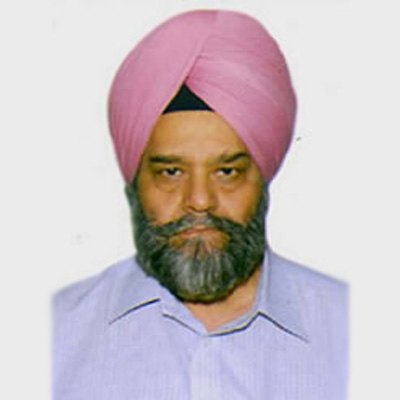
  • ‘We have stepped up work on digitalization for Prasar Bharati’ : Baljit Singh Lalli – Prasar Bharati CEO

    ‘We have stepped up work on digitalization for Prasar Bharati’ : Baljit Singh Lalli – Prasar Bharati CEO

    Baljit Singh Lalli, who took charge as chief executive officer of Prasar Bharati at the end of December 2006, is an Indian Administrative Service officer of the 1971 batch from the Uttar Pradesh cadre with vast administrative and managerial experience spanning over three decades.


    In an interview to indiantelevision.com’s BB Nagpal, Lalli answered various questions relating to the falling revenue of Doordarshan, the cricket telecast rights controversies and other issues.


    Excerpts:

    Doordarshan’s gross revenue fell by about Rs 1300 million to RS 8,182.2 million in 2006-07, as compared to RS 9,469.6 million in 2005-06. But the gross revenue of All India Radio rose marginally by RS 148.2 million to RS 2,836.5 million in the same period. To what do you attribute these losses?
    As you know, Doordarshan has lost around RS 3400 million because it did not have the telecast rights for cricket. If you do not count what we lost because of cricket, the revenues of Doordarshan have actually gone up as far as other programmes go. But we have already made up RS 2 billion. On the other hand, AIR earned just under RS 96.4 million from the World Cup 2007.

    Why is it that Prasar Bharati wakes up so late to bid for the cricket telecast rights and then has to pass a mandatory sharing legislation?
    I cannot answer that because it happened before I joined. But you must understand that the amount for bidding for rights for up to five years is more than what a public broadcaster can afford. As far as the legislation is concerned, it is necessary to understand that the Uplinking and Downlinking Guidelines issued in November 2005 were clear on mandatory sharing of rights for terrestrial showing, but were being violated by the rights holders.

    For a long time, Prasar Bharati has been talking of strengthening its marketing strategy, but the results do not seem to be showing?
    That is not true. As I said, we have made up a lot of the losses caused because of not having telecast rights. We have now taken steps to streamline the marketing procedures. Also, the attempt is to bring in greater synergy between All India Radio and Doordarshan. We have set up a committee and sent out new proposals to our marketing people in Mumbai, Kolkata, Chennai, Guwahati and other places.


    AIR has already made more than five times the projected revenue from cricket. You should also not forget that Prasar Bharati is a public broadcaster and cannot resort to generating revenues the way some other channels can. At the same time, we are now having closer monitoring of the marketing activity, and are also recruiting professionals for the work.

    A Comptroller and Auditor General Report talks of losses on various counts, including arbitrary fixation of advertisement rates for feature films to favour certain filmmakers. How will you ensure proper checks and balances?
    I have not seen the report so far, and in any case it relates to 2004-05. We have now put a new system in place for acquiring films. We will now be able to get the best films at competitive rates, through a policy that will be completely transparent. The films will be selected in good time. The Grading Committee in Doordarshan will then categorise the films as specified in the policy. No individual producer or filmmaker will be shown favours of any kind.

    An Acquisition Policy announced by Doordarshan to acquire quality programmes has reportedly led to scams including submission of duplicate or blank tapes?
    Yes, I am aware of this case. The matter relates to October-November last year when new programmes were being acquired for the DD Urdu Channel. Our internal inquiry showed that around 250 blank tapes had been submitted along with other programmes. A committee of officers in Doordarshan is inquiring into the matter and would be able to identify those guilty and action would be taken, irrespective of whether it is only outside producers or someone within Doordarshan. As no money had been paid to any producers so far, there is no question of any loss of revenue on account of this. I am in principle opposed to acquiring old programmes, and this had been done under a policy announced before I joined.

    But this has already led to an order for transfer of senior officers in Doordarshan who have been in their posts for more than six years?
    That order has nothing to do with the tapes. In fact, I issued that general order separately for transfer at Supervisory levels. And all sections of employees have welcomed it. The section of employees most affected by this, the Programme Staff Association of AIR and DD, has sent me a letter welcoming this decision.

    You had announced earlier that Prasar Bharati would switchover to the Indian satellite Insat-4B by June. Is that work on schedule and how many transponders will you be using?
    Yes, we are shifting DD Direct, the Direct-to-Home service, to the Insat-4B from 1 June. We have been assured by the Indian Space Research Organisation that we will not face any shortage of transponders. We will initially be using five transponders but can ask for more whenever needed.


    The shift from the Netherlands-based NSS 6 will not only mean savings in foreign exchange, but also clarity in picture since the Indian satellite is better placed than the European satellite. Prasar Bharati pays NSS around RS 225 million annually. The initiative was motivated by patriotic instincts. Insat-4B is located in a geostationary orbit of 93.5 degrees East, which is closer to Indian than NSS 6, which is located at 95 degrees East.

    What about the commitment by Isro to Sun TV because of the loss of Insat-4C?
    I am aware of the reported commitment by Isro, but this will not affect DD’s requirement. The Insat-4B has 12 KU band and as many C band transponders for communication and broadcasting services. DD Direct will be able to beam up to 10 channels from each transponder. It presently beams around 32 channels of which 26 are its own, but this number is expected to go up to 50 with private FTA channels becoming available.

    What are you doing to effect a smooth transition to Insat-4B?
    We have held meetings with cable operators, hardware manufacturers and multi system operators to familiarize them with the changes that will have to be made to reach out to 4.8 million viewers of the free-to-air DD Direct. Doordarshan has circulated a four-page brochure to educate viewers and service providers about the changes to be made to their dish antennae and in the set top boxes. Though the service providers will make these changes, this can be done even by subscribers themselves. Each antenna has to be rotated (with the person standing behind the dish antenna) clockwise by 1.5 degrees to the right and tilted up by 1.5 degrees.


    DD’s DTH would be available across five transponders in the KU Band on Insat-4B, on the frequencies 10990, 11070, 11150, 11490 and 11570 MHz on vertical polarisation and a uniform symbol rate of 27500 ksps.

    We have now taken steps to streamline the marketing procedures. Also, the attempt is to bring in greater synergy between All India Radio and Doordarshan

    Will DD Direct continue to be Free-to-air?
    For the present, yes. We do not see it becoming encrypted in the near future.

    The Planning Commission’s Sub-Group on ‘Going Digital’ has recommended that Doordarshan should commence digital terrestrial transmission by the 2010 Commonwealth Games, and should have a phased approach for going digital covering all the seven mega cities by 2011 in the first phase and the rest of the country by 2013.
    Yes, the Report had also recommended a group chaired by me with some private broadcasters like Star, Zee, Sony, Eenadu etc. and their major MSOs to examine an 11-stage process. We will also consider introduction of HDTV in a phased manner starting from Delhi (2008-09), extending it to all the six mega cities to ensure coverage of Commonwealth Games in HDTV format in 2010.


    We have made some proposals which are with the Planning Commission. In fact, this is a major thrust area in the Eleventh Five-Year Plan. I personally met officials of the Planning Commission recently and gave a projection of RS 5000 crore (RS 50 billion).


    Has Prasar Bharati begun working on plans for optimum coverage of the Commonwealth Games?
    Yes. In fact, I have had one meeting with Mr Suresh Kalmadi, President of the Indian Olympic Association and Chairman of the Organising Committee for the Games, and told him we will need financial support for adequate coverage of the Games. I will be meeting him again shortly.

    A Technical Group had been set up to examine Encryption Mandate for DD signals, particularly for cricket telecasts. There appears to be a lot of disagreement among members of the Group on the issue. What is the position about this?
    Yes, the Ministry had set up a Group headed by AIR Director General Brajeshwar Singh to go into the issue. The report of the Group has already been submitted to the Information and Broadcasting Ministry, and perhaps you should be asking the question there. As far as I know, the report was unanimous.

    Prasar Bharati had announced a policy on telecasting series based on Indian Classics. What is the progress on that front?
    The work is going as planned. The Committee met recently and cleared twenty to twenty-five proposals related to Hindi, Punjabi, Bangla, Gujarati and Telugu classics. Filmmakers like MS Sathyu, Gulzar and Muzaffar Ali have been commissioned for some of the classics.

    The concerned Parliamentary Standing Committee has expressed its displeasure over the progress in Digitalisation and building of archives for Prasar Bharati?
    We have stepped up the work on digitalization. We will be able to work even after the Archives are shifted to the Central Production Centre Building in Sirifort Village. This will be done in the next two or three months after DD News shifts to the DD Building in the Mandi House area. Meanwhile, digitalization of broadcasting in the public broadcaster would be completed by 2017. Out of the 64 Doordarshan studio centers, 17 had been fully digitalized while another 30 were partly digitalized.

    DD India is available via Satellite all over the world, but there are few takers even in countries with large Indian population. DD has had to tie up with local cable operators in the United Kingdom recently. What are you doing to popularized Indian channels in other countries?
    Doordarshan has launched two channels DD India and DD News in the United Kingdom with the help of Rayat Television Enterprises Ltd. following an agreement with Prasar Bharati for the distribution of these channels in UK for a period of five years.


    DD India has seven Hindi and six English news bulletins daily, while DD News has 19 English and 24 Hindi news bulletins daily respectively. Although both these satellite channels are free to air and could be seen anywhere in the world, this is the second time that Prasar Bharati has entered into an agreement with a distributor to ensure the channels reach viewers’ homes.


    Prasar Bharati also has a similar arrangement in the United States with companies owned by persons of Indian origin. The aim will also be to reach out in the Middle East, Malaysia, the rest of Europe, Canada and so on, and the broadcaster has invited ‘Expressions of Interest’ from entrepreneurs in these countries.

    Prasar Bharati Act has provision for Broadcasting Council which never came into existence. Will this become redundant under the new Bill that provides for a Regulatory Authority?
    I think you should ask the Ministry to answer that question. I can only tell you that we have urged the Ministry to strengthen our hands, and have asked for extra funds to be invested in public service broadcasting.

    Doordarshan has launched the Digital Video Broadcasting – Handheld (DVB-H) as a Pilot Project in Delhi. What about other cities?
    The Pilot Project is aimed at reaching mobile phones within a radius of 12 kilometers of the Doordarshan television tower on Parliament Street in New Delhi. After watching the outcome of the launch of this service in Delhi, the system will be replicated in Mumbai, Kolkata, and Chennai. The service is initially free to air and the channels available are DD National (DD 1), DD News, DD Bharati, DD Sports, DD Urdu, DD Punjabi, DD Bangla and DD Podhigai. The scheme is ‘vendor neutral’ and any mobile provider with a compatible handset can download the signals and transmit them. I hope the number of channels would be raised to ten to 15 in the next few months.

    There have been promises for increasing a scientific temper in the country through the media. The private channels have not done much, and DD’s efforts in the initial years also appear to have come to a stop?
    That is not true. We recently launched Mike Pandey’s series at an appropriate time, and have commissioned the Bedi Brothers to make a new series. We have finalised an MoU with Vigyan Prasar of the Department of Science and Technology to encourage a scientific temper. Programmes have been made earlier also for Science Channel which is a joint venture of Isro and Vigyan Prasar under Department of Science and Technology (DST). Till August 2006, 60 episodes have been transmitted. The programmes are being transmitted on DD-1 as a 30-minute capsule, and programmes are aimed at children in the age group 12 to 18.

    What specific programmes are being telecast to mark 150 years of the freedom struggle?
    DD has identified a series of programmes from its own archives, like Bharat Ek Khoj by Shyam Benegal based on Jawaharlal Nehru’s The Discovery of India, Swaraj by Manju Singh, and Colours of Freedom by Buddhadeb Dasgupta. DD has also commenced telecast of Dr Girish Karnad’s series Swarajnama.

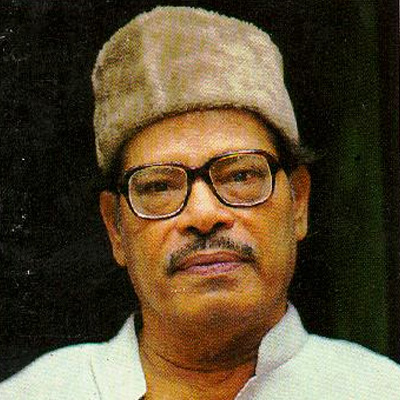
  • Manna Dey sings for Prasar Bharati’s archival collections

    Manna Dey sings for Prasar Bharati’s archival collections

    NEW DELHI: Age has not withered his voice or affected his sense of humour. And though the grey lines are beginning to show, legendary playback singer Manna Dey still shows the same enthusiasm while performing that he had been popular for two decades ago.

    Expectedly, he left the audience entranced as he sang some his most popular numbers here last night at a concert organised by Doordarshan. The entire performance was recorded by Doordarshan for telecast and for being converted with CDs and VCDs as part of the archival collection of Prasar Bharati.

    Apart from the singer, the evening also saw the recitation of poetry by well-known lyricist Gopal Das Neeraj who in fact has also written some of the songs that the 86-year old Manna Dey sang.

    The singer obliged by singing some of Neeraj’s lyrics, including ‘aye bhai, zaraa Dekh ke chalo’ from the film ‘Mera Naam Joker’ made by probably the best showman of Indian cinema, Raj Kapoor, and ‘Aie mere pyaare watan, aie mere bichchde chaman’ from ‘Kabuliwala’ based on the story by Gurudev Rabindranath Tagore and ‘Poochho na kaise maine ran bitaayi’. Both Manna Dey and Neeraj received the National Awards for this song from ‘Mera Naam Joker’.

    The maestro chose to pick his own songs, and though he had a book in front of him with the lyrics written in them, he seldom had need to look down as he got carried away and the words came on their own from the corners of memory.

    Other songs rendered by Manna Dey included ‘Umarya Katti Jaye’, ‘Phul Gendwa Na maaro’, ‘Jeevan se lambe hain jeevan ke raste’, ‘Ai meri Zohra Zabeen tujhe maloom nahin’, and so many others including a Bengali song inspired by a famous coffee house in Kolkata which used to be frequented by artistes and filmmakers like Satyajit Ray.

    He also sang a composition of his favourite music director S D Burman– ‘Piya Maine Kya kiya, hame chhodh ke jayyo na’ and a few verses from ‘Madhushala’ composed by Harivansh Rai Bachchan.

    He was accompanied on the tabla by Indranath Mukherji, Richard Mitra on electric guitar and Mahendra Gokhale on keyboard.

    Manna Dey ‘s soulmate and ”inspiration” of his art Sulochana was also among the audience.Earlier, CEO Prasar Bharati BS Lalli welcomed Manna Dey with a bouquet of flowers and presented him a shawl. Senior officials of Doordarshan and All India Radio were also present.

    Born in 1920 in Kolkata, Manna day learnt the basic nuances of singing from his uncle Krishna Chandra Day and Ustad Dabir Khan. Later, when he came to Mumbai in 1942, he perfected his art under the tutelage of Sachin Dev Burman and under two stalwarts, Ustad Aman Ali Khan and Ustad Abdul Rahman Khan.

  • Bill to replace sports telecast ordinance introduced

    Bill to replace sports telecast ordinance introduced

    NEW DELHI: Introducing a Bill making it mandatory for private broadcasters to share the feed of live telecast of sports events with Prasar Bharati, Information and Broadcasting Minister Priyaranjan Dasmunsi told the Lok Sabha the legislation was aimed at replacing an ordinance promulgated last month in the interest of millions of viewers who had the facility of only terrestrial or free-to-air channels to enjoy live sports events of national and international importance.

    The Sports Broadcasting Signals (Mandatory Sharing with Prasar Bharati) Bill 2007 will have retrospective effect from November 2005 when the Uplinking and Downlinking Guidelines had been issued.

    The Bill is expected to come up for consideration and passing towards the end of next week, after the Lok Sabha finishes discussion on the Motion of Thanks to the President to the Joint Sitting of both Houses on the opening day of the Budget session.

    The ordinance was promulgated after Nimbus Communications refused to share live feed of the India-West Indies one-day series with Doordarshan after the Delhi High Court passed an order for a seven-minute deferred telecast signal to the public broadcaster and live broadcast on All India Radio.

    Dasmunsi, in a statement giving reasons for promulgation of the Ordinance, said the government was only reiterating an earlier order making sharing of live feed of sports events with Doordarshan mandatory.

    The statement of objects and reasons appended to the Bill said the public broadcaster Doordarshan covered 98 per cent of the population and was the only network having terrestrial rights of broadcasting.

    Distribution of broadcasting signals of sporting events of public interest in India is characterised by a few dominant exclusive rights holders or broadcasters and distribution platforms. “The end result is that a large number of listeners and viewers in India, especially those who do not have access to satellite and cable TV and most of which are in rural areas are denied access to these events,” the Bill states.

    Under the Bill, television channels that fail to comply would have to pay a penalty up to Rs 10 million and also face possible revocation or suspension of license. It has also been stipulated that no action of the government would be challenged in any court of law.

    The Guidelines for downlinking of TV channels had been issued on 11 November, 2005 and the Uplinking Guidelines had been issued on 12 December, 2005.

    These Guidelines are already the subject matter of the petition in the Delhi High Court by Nimbus Communications on the Indo-West Indies series telecast.

    Nimbus, which owns Neo Sports channel, had expressed apprehensions that the government may resort to coercive methods for sharing their exclusive feed.

    The Bill provides for a revenue sharing formula between private and public broadcasters. Advertisement sharing between private and the public broadcasters would be in the ratio of 75:25 in case of TV coverage in favour of the rights holder and 50:50 in case of radio coverage.

  • Prasar Bharati grant down, fourfold increase in loans

    NEW DELHI: Even as the grant-in-aid to Prasar Bharati in the budgetary allocations for the Information and Broadcasting Ministry for 2007-2008 has come down, there has been a more than fourfold increase in the loans to the public broadcaster over the current financial year.

    The loan to Prasar Bharati has been fixed at Rs 2,174.4 million as compared to Rs 411.1 million as sanctioned in the Revised Estimates for 2006-07. The grant-in-aid has come down further, from Rs 11,748.2 million in the Revised Estimates for 2006-7 (as compared to the Budgetary allocation of Rs 12,340.7 million) to Rs 10,639.3 million. All this is apart from the investment of Rs 2,174.4 million.
    In keeping with a decision taken with the budget for 2000-01, Prasar Bharati is being funded as a full-fledged autonomous body with effect from April 2000. The grant-in-aid is to cover the gap in resources of Prasar Bharati in meeting its revenue expenditure, while the loans are to finance the capital expenditure.

    The total budgetary allocation for the I&B Ministry for 2007-08 is Rs 16,818.4 million as compared to Rs 16,600 million in the Revised Estimates for 2006-07 (as against a Budgetary allocation of Rs 17,160 million in the Budget).

    While there is no announcement of any new programmes, the Budget document says the allocation of Rs 220.8 million for buildings and machinery includes funds for the multi-storey building of the Films Division in Mumbai, the Phase II building of the National Film Archives of India in Pune, and a mini Media Centre of the Press Information Bureau in Delhi.

  • Govt targets 20 million broadband subscribers by 2010

    Govt targets 20 million broadband subscribers by 2010

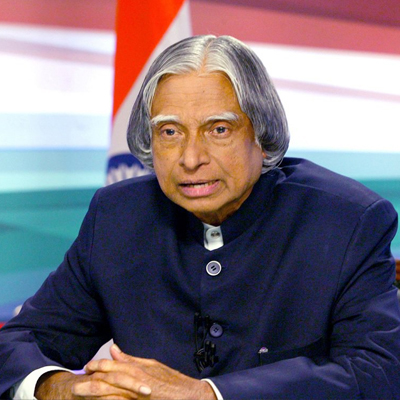
    NEW DELHI: Even as President A P J Abdul Kalam declared that the year 2007 will be the ‘Year of Broadband’, there are plans to increase to more than two-fold the broadband and internet users in the country over the next three years.

    In his address to the joint sitting of both Houses of Parliament on the opening day of the Budget session, Dr Kalam had said yesterday the government was committed to bridging the digital divide by providing broadband coverage throughout the country. ‘Our information technology sector continues to develop and remain globally competitive’.

    According to the Broadband Policy 2004, there were approximately six million internet and three million broadband subscribers in 2005, and this figure is estimated to rise to 18 million and nine million respectively this year. By the year 2010, India hopes to have 40 million internet and 20 million broadband subscribers.

    Plans are on the anvil to provide broadband services in 400 cities and service providers have plans to reach 1000 cities by the end of 2007. These cities include the 63 cities identified under the National Urban Renewal Mission. The real challenge is to connect the remote villages unconnected so far due to various reasons. One of the viable options for providing connectivity is through wireless mode.

    According to the Sub-Group on ‘Going Digital’ set up by the Planning Commission and headed by Rajeeva Ratna Shah, Member Secretary in the Planning Commission and a former Prasar Bharati CEO, introduction of broadband connectivity opens up new market for providing value added services which can be derived from the digitization.

    The Sub-Group noted that penetration of TV is much higher than PC in the industrialized countries, and provides interactive services including internet on TV and TV on internet. These services can potentially benefit especially the ‘information poor’ and thus reduce the information gap in the society, which is an important implication of the convergence.

    Internet on TV can be provided using Out Of Band (OOB) and In Band (IB) structures. In the IB structure the internet is transmitted alongside with the broadcasting signal. Here the characteristics of the broadcasting infrastructures will have a decisive role on the available services.

    It noted that TV on internet which is also known as WEB TV/Cyber TV will be the future of broadcasting. A precondition for the WEB TV to be able to replace digital TV is the transmission capacity at the end users site increases to such level that it can be possible to provide digital TV services. WEB TV needs to be co-evolved with digital TV and act as complementary for delivery of services.

    The Sub-group has accordingly drawn up a roadmap of digitalization through a a phased approach should be taken for going digital covering all the seven mega cities by 2011 in the first phase and the rest of the country by 2013.

    The Sub-Group comprising seventeen members was set up by the Committee on Information, Communication and Entertainment (ICE) that has been examining the larger issue of convergence and advent of modern technology. Members include the secretaries in Information and Broadcasting and Department of Telecommunications, the Prasar Bharati CEO, the Presidents of CETMA, MAIT, NASSCOM, and ISP Association of India, Co-chairman of the FICCI Entertainment Committee, Chairman of the CII Entertainment Committee, Chairman of the Film & Television Producers Guild of India, President of the Cable TV Operators Association, Mr Rajiv Mehrotra who is the Managing Trustee of the Public Service Broadcasting Trust, Mr Virat Bhatia from AT&T Communications Services, Zee Telefilms President Abhijit Saxena, Mr Sameer Rao who is Vice-President in charge of Strategy, Planning & Regulatory in STAR India, and a representative of the Prime Minister’s Office.

    It was also agreed that a group chaired by Mr B S Lalli, the CEO of Prasar Bharati who is also Chairman of the Indian Broadcasting Foundation, and some private broadcasters like Star, Zee, Sony, Eenadu etc. and their major MSOs will examine an eleven-stage process and firm up their sequencing and put the entire process on a “digital upgrade timeline”.

    The Sub-group has accepted a recommendation for an eleven-stage process for laying down the migration path for migration from analogue transmission to digital domain:

    i. Testing, publication and adoption of technical standard for digital terrestrial transmission.

    ii. Publication and adoption of national standards for digital cable television.

    iii. Prasar Bharati’s roll out of transmission conversion from analogue terrestrial to digital terrestrial both for radio (AIR) and Doordarshan (DD).

    iv. Introduction of addressability and conditional access system in cable and satellite TV environment.

    v. Road map and commencement of indigenous production of STBs containing features such as (a) digital analogue convertors for delivery of digital signal at subscribers’ end and (b) conditional access and addressability features.

    vi. Publication and adoption of national digital television standards for manufacture of digital receivers.

    vii. Commencement of indigenous production of digital receivers.

    viii. Commencement of digital terrestrial broadcast in selected cities by Prasar Bharati staring with Delhi by 2010 and covering all areas by 2013 in four steps.

    ix. Commencement of HDTV broadcast for Commonwealth Games 2010 by Prasar Bharati.

    x. Commencements of digital signal delivery at subscribers end in Cable and Satellite (C & S) homes.

    xi. Nationwide switch off of analogue broadcast both for terrestrial and C & S homes (2015).