Tag: Prasar Bharati

  • Government has no intentions to impose any regulations on the media: Javadekar

    Government has no intentions to impose any regulations on the media: Javadekar

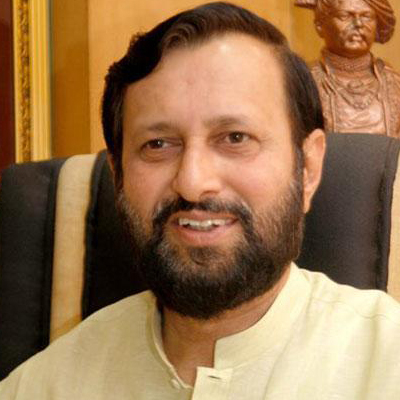
    NEW DELHI: Newly appointed Information and Broadcasting Minister Prakash Javadekar said today that freedom of the press is the cornerstone of a democracy and his first aim in his new portfolio will be to find ways to strengthen this freedom.


    Speaking soon after taking charge of his portfolio, the Minister said that the media and politicians must work together to highlight the problems of the people and bring them before the government.


    Describing himself as ‘just a soldier’, he said he had always stood for freedom of the press and had suffered a 16-month imprisonment during the national emergency in 1975 in this fight as he belongs to a family of journalists.


    Noting that the press has conducted itself in a responsible manner and set up self-regulatory bodies, he said the government would not impose any regulations on the fourth estate.


    The media in its present form gives a ‘rainbow of choices’ and even dissent has its own place in a democratic system of functioning. Constructive criticism is therefore welcome.


    Asked about the frictions with Prasar Bharati, Javadekar said he had not had time to study the issues yet but would like to work in partnership with all the autonomous media units including Prasar Bharati.


    He said in reply to a question that he did not agree with his immediate predecessor that there was no need for an Information and Broadcasting Ministry in the present context.


    Referring to social media, he said that while it presently came under the Information Technology Act, but he would study it and see how it can be helped. He said he would meet all the officials of the Ministry, understand the issues involved and then make some suggestions to the Prime Minister.


    Soon after meeting the media, he met senior officials of the Ministry and also media units, apart from Prasar Bharati CEO Jawhar Sircar and Director of Film Festivals Shankar Mohan.


    Contrary to expectations, Prime Minister Narendra Modi has not upgraded the post of Information and Broadcasting to cabinet rank.


    Like his immediate predecessor Manish Tewari, Javadekar will be a Minister of State with independent charge of Information and Broadcasting Ministry. (He has also been given charge of Environment and Parliamentary Affairs). However, he has ample experience as far as dealing with the media and its problems are concerned, since he like Tewari has served as party spokesperson for the past few years.


    Javedekar has also been one of the nominated members from Parliament to the Press Council of India and hence has dealt with media issues such as paid news. A member of the Rajya Sabha from MaharashtraJavadekar was born in Pune on 30 January 1951 and became associated with the Akhil Bharatiya Vidyarthi Parishad in his young days.


    He commenced his professional life as an employee in the Bank of Maharashtra for 10 years from 1971 to 1981 and also worked in the Rural Development Department.


    His father Keshav Krishna Javadekar was a senior leader of Hindu Maha Sabha who worked as joint editor of Marathi Daily started by Lokmanya Tilak – Kesari before having stints with some other newspapers like Tarun Bharat and Kaal as journalist. He still occasionally writes his thoughts in some newspapers.


    Javadekar has been president of GLOBE India (Global Legislators Organisation for Balanced Environment); In-charge BJP Economic Forum and Cells related to Economy; President, NOINO (National Organisation of Insurance Officers) and president, KCKU (Khadi Commission Karmachari Union).


    As a member of Parliament, he has served as member of the Press Council of India; the Public Accounts Committee; Standing Committee on Human Resources and Development; Consultative Committee for Ministry of Power; Committee on Subordinate Legislation and Committee on Wakf.


    He has earlier served as executive president of the State Planning Board in Maharashtra (1995–1999); been a  member of the Maharashtra Legislative Council from Pune Division Graduate Constituency for 12 years from 1990; chairman of the Task Force on IT in Maharashtra (1977–1999) and chairman of the Working Group on ‘IT for Masses’ of the central government.


    He has also led a delegation to Boston to negotiate Media Lab Asia Project in 2000.

  • Information and Broadcasting: An uphill journey all the way

    Information and Broadcasting: An uphill journey all the way

    NEW DELHI:  For any person who takes over the mantle of the information & broadcasting ministry (MIB), the handling of the portfolio will be full of potholes created by his or her predecessors, primarily because of the failure to take strong decisions.


    By some mischance or deliberate choice, the MIB has remained without a working head since Priya Ranjan Dasmunshi was forced to leave because of sickness. While Ambika Soni did her best to put into operation plans worked out by the ministry’s bureaucrats or the Telecom Regulatory Authority of India (TRAI), both she and her successor Manish Tewari remained primarily spokespersons of the ruling party.


    Perhaps this was not entirely their fault, but that of the party which failed to realise that the ‘Information’ portfolio does not imply giving party inputs or the media which insisted on only raising party issues whenever these two met the members of the fourth estate.


    There is also no gainsaying that the lower priority given to the MIB – from a full-fledged minister with assisting ministers of state to a single minister of state with independent charge – also contributed to this.     


    With the new government in place, the speculation about who the new minister will be and what expectations can be had will be of considerable interest.


    If the government decides to hand over the portfolio to someone who takes interest in the information and broadcasting sector, then the choice zeroes down to a handful of names. But it is clear that politicians of the standing of Sushma Swaraj or Arun Jaitley who have held this portfolio earlier will not go back to it, and Shatrughan Sinha who has earlier served in the government as minister in-charge of two ministries will agree only if made a full-fledged minister and the chances are that he will want a more important portfolio than the MIB.


    Consequently, the choice falls upon someone like Smriti Irani, unless the Bharatiya Janata Party picks on someone from its allies.


    I&B MINISTRY


    It would help the government if the decisions being taken by the MIB are transparent, and the concerned officials are easily accessible to the media which represents the aspirations of the people.


    While it is true that senior ministry officials are generally reluctant to speak during a session of Parliament, there is no reason for their not doing so at other times.


    Perhaps the secretary of the ministry should designate certain officers to be available to the media at certain hours every day, on phone, if not in person.


    PRASAR BHARATI


    Notwithstanding who will hold the portfolio, it is clear that it will be no less than being at the edge of the twin-edged sword. Interestingly, one of these two edges was conceived by the erstwhile Jana Sangh (now BJP) which was then part of Janata Party and L K Advani at the head of this MIB.


    Even as B S Lalli was removed from the post of CEO of Prasar Bharati under a cloud of corruption and mismanagement, his successor Jawhar Sircar has taken up cudgels against the ministry on the ground that the public service broadcaster is an autonomous body.


    On the other hand, the government feels that since it pays the salaries, has waived spectrum fee and given other concessions, and has initiated the laying down of rules and regulations regarding employees, it cannot be wished away and has to have a say in the working of the pubcaster.


    The new incumbent in the ministry will therefore have to work out certain ground rules within the ambit of the Prasar Bharati Act 1990 drawing clear lines about its role. Clearly, autonomy does not mean freedom to do anything, but at the same time lays certain constitutional norms or reasonable restrictions.


    In the light of Article 19(1)(a) about freedom of speech and expression, it becomes abundantly clear that the government should not have any control over the content broadcast by All India Radio or telecast by Doordarshan unless this violates the Reasonable Restrictions laid in the Constitution or the Codes under the Prasar Bharati Act or the Cable Television Networks (Regulation) Act 1995. But it may be difficult to stop the government being the financing agency from interfering in the management of the pubcaster.


    In view of this, it is also clear that the spending of the budget laid aside by the ministry for content creation should be left to DD and AIR without day-to-day monitoring by the ministry.


    Furthermore, there has to be greater transparency and quicker decision-making both by the government and by AIR and more particularly Doordarshan about the programmes it wants to commission or broadcast. It is understood that some proposals from independent producers have been pending in DD for almost a decade.   


    The Sam Pitroda Committee on Prasar Bharati is generally repetitive of the provisions of the Prasar Bharati Act, but may help to speed up some processes. The new Minister will therefore have to immediately hold wide-ranging consultations with all stakeholders and take action on the report.


    There is little doubt that DD and AIR are today broadcasting programmes that no private operator dares to do because of the loss of eyeballs (TRPs).


    DOORDARSHAN


    While Doordarshan has made appreciable progress in terms of popularity in semi-urban or urban areas even as it holds the top spot in rural India, there is urgent need to take steps to market the channel even better. While its programmes have become entertaining even as they serve the public by sending out direct or indirect messages, the general perception is to the contrary.


    DD also needs to bring certain channels that are only known in certain regions to the national level. These include DD Bharati, DD Urdu, DD Kashir, and the DD channels in the north east. Greater facility for dubbing popular serials in Hindi would help in this effort.


    AIR


    The audio wing of Prasar Bharati has been treated in a somewhat step-motherly fashion since DD began to grow. There is urgent need to reverse that by getting more people to tune in to radio just the way they tune in to DD.


    This can clearly be done by bringing All India Radio’s National channel and the popular Vividh Bharati channel onto the FM networks so that it is heard in the same way as private FM channels or FM Gold and FM Rainbow.


    AIR has already spent crores of rupees on creating the basic infrastructure for Digital Radio Mondiale, which can make medium-wave or short wave programmes accessible to listeners. The only lacunae appear to be the absence of reasonably priced receivers, and the reluctance of the present Prasar Bharati CEO to the growth of this medium.


    While manufacturers have come forward to produce reasonably priced receivers for use on mobiles, cars or at home, the Government is pushing ahead its programme for the third phase of FM Radio expansion and this is the right time to pursue as DRM sets are also FM compatible. 


    TELECOM REGULATORY AUTHORITY OF INDIA


    Of late, far too many cases have been going to the Telecom Disputes Settlement and Appellate Tribunal (TDSAT) with relation to broadcasting but the problem has been complicated further by the judgment of the Supreme Court that TRAI regulations should not be adjudicated upon by TDSAT.


    Clearly, there is need for TRAI to pay greater heed to its regulations relating to the broadcasting and cable sectors. But since its primary objective has always been telecom, the government will have to consider whether there is need for a separate Broadcast Regulatory Authority of India (BRAI), something which has been tossed around for the past 15 years.


    Allegations are that broadcasters tend to get the TRAI’s hearing more. But in recent times it has been reaching out to more and more cable TV operators when they come up with a logical discussion and argument flow. Perhaps a new BRAI – also provided for in the proposed Broadcast Services Bill – with clearer objectives may help overcome not only the prejudices that are alleged against TRAI.


    The new body could also look at the high taxation down the line – from that levied on manufacturers, broadcasters, cable and other service operators like DTH and HITS, and the consumers (viewers).


    BARC


    The Broadcast Audience Research Council aimed at replacing the outdated present TAM system needs to be expedited.  This may also help the broadcasting industry overcome the hurdles created by the 12-minute ad cap since it will bring in greater transparency.


    SELF-REGULATION


    Self-regulation is healthy as the TV channels will accept decisions of their own ilk more easily than those dictated by the government. It seems to be working well, and it’s best left like that. Content regulation is any way the MIB’s domain, and it can step in and bang its fist on the table if things get out of hand.

    One option being mentioned is that the Inter-Ministerial Committee of the Information and Broadcasting Ministry be vested with greater powers and also made more broad-based with representatives of more ministries, while permitting some civil society intellectuals apart from representatives of News Broadcasting Services Authority (NBSA), the Broadcasting Content Complaints Council (BCCC) or the Advertising Standards Council of India (ASCI) as ex-officio members.


    Furthermore, all the decisions taken by the NBSA, BCCC or ASCI should be finally whetted by the IMC before being made public. The primary purpose of this move would be to ensure that even channels that are not members of these bodies can be covered if the directive comes from the Ministry’s IMC.


    DIGITAL ACCESS SYSTEM


    There is little doubt that the experience of the first two phases of DAS has shown that around 30-40 per cent of the cities covered are still broadcasting on analogue mode. Clearly, there has to be re-think not only on whether the next two phases should be combined (as planned by the outgoing government) or relaxed into more phases with a greater time span, and on whether the regulations drawn up by TRAI in this regard need to be looked at again, since both the consumers and the cable operators appear unhappy.


    DAVP


    Presently, the DAVP gives advertisements to help small and medium newspapers or to propagandize the programmes of the government. It has also introduced short films for television channels or cinema houses, but the rates it pays to the media have remained almost static, since the increases are more symbolic than actual whenever a new advertising policy is announced. It may be worthwhile for the government to consult all stakeholders including the Press Council, ASCI, Indian Broadcasting Foundation, News Broadcasters Association, the Film Federation of India and other film bodies before bringing out the next advertising policy. The recent move by the Supreme Court of setting up a three-member panel to discuss what constitutes advertising and propaganda will be helpful.


    FM BROADCASTING


    The initiative to allow transmission of AIR news on private FM radio on a as-is-where-is basis is a welcome move, but guidelines can be drawn up to permit discussions on entertainment or sports etc. by the channels themselves.


    Even as the process of the third phase has begun, it should be ensured that while on the one hand it is expedited, and on the other it does not clash with the DRM programme since that would force viewers to buy two different receiver sets.


    Undoubtedly, the third phase will help cover almost the entire country, but it has to be ensured that once the auctions are over, the procedures for clearing the channels should not only be speedy, but the annual fee should be affordable.


    COMMUNITY RADIO


    While the pace of the growth of community radio has not been good, the new programmes to provide finance to prospective entrepreneurs may help.  The introduction of awards for Community Radio has been a welcome step.


    Similarly, All India Radio programmes can be made available either free of cost or on a barter basis to channels that make good programmes.


    FILM INDUSTRY


    Although the film industry was given the status of an industry, little else was done to follow this up with positive action. And although it is one of the highest taxed industries in the country, the government has paid little heed to help filmmakers come up with original work. For this reason, the studio system that ruled the industry till the late fifties appears to be coming back with large corporate producers funding and producing films and independent filmmakers still facing an uphill task to find funds.


    The National Film Development Corporation though led by a dynamic leader Nina Lath Gupta has been constrained by a crunch in funds from the MIB. Gupta totally restructure and reinvented NFDC a few years ago until some distrust from the MIB saw funds drying up last year. It needs to have more money at its disposal, and it should be allowed to live up to its mandate of encouraging independent film makers and build a pipeline of more films every year.


    To overcome Manish Tewari’s view that the Films Division (FD) has outlived its existence, it would be a good idea to convert the FD into both a production body for its own producers and a funding body for independent documentary, animation and short films.  The government has to implement the decision of the Apex Court given almost two decades earlier that film magazines of the FD have to be compulsorily exhibited in cinema houses.


    But perhaps the most important problem is the high taxation by the government which still treats cinema as a service industry under the Shops and Establishment Act which treats lotteries on the same footing. Lower taxes – and abolition of entertainment tax – will not only help filmmakers, but also bring in more entrepreneurs to build cinema houses which have depleted to just around 10,000 for a country which has a population that is much larger.  


    FILM CENSORSHIP


    The Film Certification Guidelines under the Cinematograph Act 1952 were last amended in December 1991. If films have become more lax in showing violence or sex-oriented scenes, it is because society all around has changed and so have the members of the Central Board of Film Certification. It is therefore necessary for the new Minister to ensure that the guidelines reflect the level of acceptance of certain norms in society that were a taboo two or three decades earlier.


    Phew! Undoubtedly, all this presents a daunting task for the government. But good governance is known by what it does, not by what it claims it will do.
  • Manish Tewari’s views on I&B appear to be thinking of a frustrated mind

    Manish Tewari’s views on I&B appear to be thinking of a frustrated mind

    NEW DELHI: It is a well known truism that the administrative arm of the government is not run by politicians but by bureaucrats. And while there have been many cases where a minister had to bow because the bureaucracy in his own ministry did not support him or her, it is only seldom that the politician allows himself to be cowed down.


    One therefore wonders whether the statement by outgoing Minister Manish Tewari that there is no relevance of Information and Broadcasting Ministry (I&B) and that it belongs to ‘an era that is past’ is something that comes out of his own wisdom or his frustration in dealing with an ex-bureaucrat who now heads the public service broadcaster.


    Coming as it does on the eve of the government going out of office, the statement is either way misplaced. It is now open to the new government to decide whether this ministry needs to remain or go.


    And clearly, ‘Broadcasting’ does not mean just Prasar Bharati in a scenario where not only has the radio and television industry grown by leaps and bounds, but needs controls and regulations that only a Ministry can handle.


    At the same time, ‘Information’ does not just mean giving information to the people through the media and goes much beyond to an administrative regulatory role over various media units of the government. If this Ministry has no relevance today, one winders who will monitor the working of these media units!


    Experience of the past decades has shown that the role of the I&B Minister has probably been totally misunderstood by the heads of government. Because the designation says ‘Information’, the government thinks that it has to be led by a person who is well versed with the policies of not only the government but also the ruling party.


    Tewari, therefore, often found himself answering questions about the ruling party rather than his Ministry whenever he was mobbed by the media, particularly electronic media looking for sensational bytes!


    Factually speaking, questions about government policies should have been tackled by the Director General (Media and Communication) in the Press Information Bureau and those about the party by the official party spokespersons speaking in the respective party offices.


    Clearly, the government took ‘Information’ to mean ‘Information and PR’, which is the kind of designation given to ministers holding this charge in the states.


    Actually, the debate over whether one needs an Information and Broadcasting Ministry is not new.


    The issue had also come up about a decade earlier when Sushma Swaraj was in charge of the Ministry.


    At that time, a Group of Ministers had been set up under the chairmanship of the then Finance Minister Yashwant Sinha on the possibility of setting a Convergence Commission and also piloting a convergence bill. This was being considered as it was felt that Broadcasting and Information Technology were gradually merging.


    The issue could not be resolved even after several meetings of the GoM, and the whole thing was put in cold storage because of the change of government in 2004.


    While the then Communication and Information Technology Minister Pramod Mahajan and the then Law Minister Arun Jaitley appeared to be in favour of the Commission, it is understood that it was vehemently opposed by Swaraj.


    The possible reason for this is not far to seek: if a Convergence Commission (which would have also made the Prasar Bharati Act redundant) had been indeed approved, then the chances were that broadcasting ministry would have gone to the IT Minister and Swaraj would have been left with only Information and thus a reduced portfolio in terms of power – something no senior politician can afford to let go.


    As far as the broadcasting side goes, surely Tewari knows there is more to broadcasting than dealing with a former bureaucrat who insists that the government has backed out after creating an autonomous Prasar Bharati, by still keeping most powers to itself.


    The view of Prasar Bharati CEO Jawhar Sircar, who has also chosen the current time to express them in writing in an article in a popular magazine, may have its own merit. And while one could always argue on whether a public service broadcaster almost totally dependent for its existence and funds on the government can expect full autonomy!


    But he has deliberately chosen to air his views about ‘covert control raj’ to coincide with the entry of a new government and as well as the interview of Narendra Modi on Doordarshan. Interestingly, even DD News Director General S M Khan has gone on record to say that the decision to make cuts in the interview had nothing to do with the Ministry and were done internally by DD News staff as they wanted the interview to be more balanced.


    As a matter of fact, one wonders whether Prasar Bharati which was conceived at a time when only Doordarshan and All India Radio existed has a place in a scenario dominated by private radio and TV channels!


    And one can hardly deny that there are very few countries in the world which do not have radio or television channels of their own, and many even own news agencies and newspapers.


    In a country as large in population as India and with a low literacy rate, surely no one can deny that the government needs to have a channel to disseminate information about its programmes, and help people learn about their powers. And there is little gain saying the fact that both Doordarshan and All India Radio are today airing programmes which private channels running after TRPs and advertisers cannot do.


    Tewari’s view therefore about the “inherent redundancy” of the Ministry itself appears redundant.


    Perhaps his views about the Films Division can be judged on the same footing. While the Division has undergone various changes from the weekly news reviews to magazines and now short films, it is also an institution that is doing things no private agency would do and this is also becoming clear from the increasing number of National awards its films have been winning, apart from the fact that it was chosen by the Ministry itself to manage the country’s only Museum on Indian Cinema.


    The fate of private television and film training schools is also well-known as they end up as shops that want to give quick training but charge high fees. In that scenario, both the Film and Television Institute of India and the Satyajit Ray FTII have to remain under the I&B Ministry, though there one can hardly deny that greater participation of the private sector – particularly the film industry and TV channels – would help.


    In fact, Tewari himself had said in November 2012 that ‘however archaic its structure might be, I&B over a period of time seems to have got the nuances fairly right. It is to a very large extent, hands-off. If you were to abolish the ministry, what would you replace it with?’


    Interestingly, Tewari had initiated steps to grant more autonomy to it by constituting the Sam Pitroda Committee.


    Irrespective of which party comes to power, I&B is a subjects that will remain with the central government if there has to be a continuity of policy as far as the media and even freedom of speech and expression is concerned, especially in a country where business houses are waiting to gobble up whatever freedom the media enjoys today.

  • Prasar Bharati’s woes on vacant key positions

    Prasar Bharati’s woes on vacant key positions

    NEW DELHI: The union cabinet has decided to maintain status quo in Prasar Bharati with regard to recruitment of people up to the age of 62 to allow the public broadcaster to fill key positions that have been lying vacant or are likely.


    These include the posts of Member (Finance) who has put in his papers but whose resignation has not yet been accepted, Member (Personnel) whose tenure has ended, and Board Chairperson Mrinal Pande whose tenure is ending on 30 April.


    The cabinet decision came on a proposal by the ministry of information and broadcasting.  


    Interestingly, a group of ministers (GoM) had earlier recommended that the age for these positions be lowered to 55 years and that recommendation has been under the consideration of the government. However, since the tenure of this government is ending and the implementation of GoM recommendations for lowering the age requires an amendment to the Prasar Bharati Act.


    Prasar Bharati CEO Jawhar Sircar told indiantelevision.com that he was unhappy that no steps had been taken to fill important posts, which he feels should have been done before they become vacant.


    Meanwhile, reliable Prasar Bharati sources told indiantelevision.com that a majority of the 1150 critical posts for programme executives, production assistants and duty officers recommended by the GoM had been filled. Prasar Bharati had received clearance early last year for immediately filling up 1150 posts out of the 3452 posts which had been identified as critical and approved by the GoM in June 2009.  


    The pubcaster has not had any senior-level recruitment since it came into being in September 1997, and the sources said that those posts which could not be filled out of these were held up because there is no Prasar Bharati recruitment board.


    The source said steps are being taken to set up the board at the earliest so that the pubcaster does not face such difficulties in future.


    In March last year, the pubcaster had in a notice in ‘Employment News’ notified ‘combined recruitment for the post of programme executive and transmission executive examination’ for 1166 posts to be filled after interviews by the staff selection committee (SSC).


    As of early 2013, there were 1362 vacancies in Group A, 1,584 in Group B, 4863 in Group C and 2272 in group D in All India Radio (AIR). In Doordarshan (DD), 724 posts are vacant in Group A, 1140 in Group B, 2871 in Group C, and 1451 in Group D.


    AIR and DD had total staff strength of 33,800 against a total sanctioned strength of 48,022, leaving a gap of 14,222 posts.


    The most critically affected areas were the programme wing and the news services division (AIR)/DD News.


    The Committee for Information Technology in 2012 regretted that Prasar Bharati had failed to live up to the assurance given by then Prasar Bharati CEO that the recruitment boards for Prasar Bharati would be set up by 31 March 2011.


    It is understood that the union public service commission and SSC had both refused to select for a non-governmental organization, thus creating a new problem for the ministry/Prasar Bharati.


    The Proposal for setting up a Prasar Bharati recruitment board was approved by Prasar Bharati Board on 21 July 2010 and discussed in the ministry and a final proposal was referred to the department of personnel and training (DoPT) on 15 February 2011. DoPT concurred with the proposal in June 2011 and the comments of the department of expenditure (DOE) were also received on 28 September 2011.


    The DoE had requested that a separate proposal be formulated for creation of posts for the secretariat of Prasar Bharati Recruitment Board and also requested for drafting of agreement containing terms and conditions of the members of the board. This had been done and the proposal sent to DoE in February 2012 and then to the law ministry.

  • Broadcasting woes

    Broadcasting woes

    If we are to transform India, a realist or ‘Patelist’ engagement with the rest of the world is what we must implement; engaging the world from strength while recognising reality for what it is, foreswearing hubris and belligerence”, remarked Shiv Shankar Menon during the Patel Memorial Lecture of All India Radio last year. India in effect continues with Sardar Patel appreciation against taking the Kashmir issue to the United Nations and has been successful in averting international manipulation in our internal affairs.  In the recent past, reports appeared in sections of the press that our neighbours are active in rolling controversies and possible resentment for rehabilitating surrendered militants via Nepal. Yasin Bhatkal’s revelation of Nepal remaining the favoured nation for transiting members of the Indian Mujahideen further fuelled diplomatic irritation.


    The most disturbing vilification campaign alleging torture of Nepalese people whipping up local sentiments and a number of FM stations with content paid up by vested interests and mixing attractive Bollywood stuff in Nepal are psy weapons that merit the nation’s intervention. Gorkhas of Nepalese origin have shared triumphs and sorrows battling in all theatres of operations as part of the glorious Indian Army. As of today, there seems to be no coordinated trans-border broadcast policy to air either views or the stand point of the nation. India’s National Public Broadcaster, Prasar Bharati, continues to be sub-optimally utilised.


    After Independence and up to the eighties, the External Services Division of AIR functioned in close coordination with MEA through External Publicity Division with greater interaction between the two keeping in view foreign policy requirements, dynamics of foreign relations, and priorities set from time to time.


    Due to its colonial links with England, AIR entered the domain of external broadcast in 1939 purely as a tool for propaganda for the allies during World War II with service in Pushto language in order to counter German Radio blitzkrieg and complement the efforts of the BBC in this region.  When the theatre of operation expanded to South East Asia and East Asia by 1945, External Services Division had a total of 22 language services.  The importance waned once the War ended, plummeting from 22 to just 10 languages. The capacity of ESD remains to cover 100 countries with coverage of 75% of world population in 16 foreign and 11 Indian languages with a targeted audience of 9 neighbouring countries comfortably.


    But gone are the days of diplomatic bags overflowing with letters addressed by radio audiences from all over the world to External Service Division of AIR. The Urdu Service widely popular among Pakistan and at home is in a state of disarray and listeners’ feedback has become a trickle. Chinese domination in the visual and audio medium is of concern since a substantial Arunachalee tribal population living in East Syong, Tirap, Changlong, Ajnow, Lohit, Upper and Lower Dibang Valleys could access Chinese TV channels of  High Power Transmissions from Chinese territory whereas our own Doordarshan, Itanagar, covers a few kilometres through Low Power Terrestrial Transmission. However there being no impediment to satellite TV through DTH, the case for Set Top Boxes for DD free Dish is indispensable if Prasar Bharati has to prudently cover the North East. It is our national duty to reach inaccessible terrain inhabited by tribal Indians in and around Tawang who witnessed chaotic battle scenes during the 1962 operation and upper reaches near Leh, Ladakh.


    In the changing scenario of popularity of FM channels compared to Medium Wave and Short Wave transmissions, the country needs to shift its primary broadcast to FM radio with relevant content retaining its own and traditionally loyal trans-border audience. There are more than 150 independent Radio Stations operating in Nepal. If India has to retain audience base in Nepal, augmentation of transmission power and number of FM stations is necessary as of yesterday.  As far as Bhutan, English added on to Dzonka could cover the whole population with increased presence of FM.  In times of crisis, it is AIR, BBC or Indian satellite channels which are tuned into in Pakistan for credible news; Maj Gen Mohd Azam Asif of PAK Army observed once, substantiating the relevance of AIR.


    Coverage of regional content, news and current events for external audience could only succeed with local dialect and flavour. There is all round apathy about external radio broadcast of ESD among all stakeholders including MEA, resulting in progressive decline of our broadcast as an instrument of diplomacy relegated to the background, adversely impacting its performance, notwithstanding the historic role played.  It is unfortunate and ironic that our external broadcast is touching the nadir at a time worldwide efforts are on to re-invent the importance of external broadcast expanding and consolidating their position, adopting the newest of technologies including new media to meet the changing realities of international politics.


    Complete dismantling or discontinuation of external broadcast may not be in the larger national interest and may turn out to be throwing the baby with the bucket of water. Credible assessment of external audience indicates decline in short wave and medium wave, suffers clarity due to concrete congestion and sky scrapers in Urban India and the neighbourhood. Simulcasting in FM, web streaming, proliferation in internet and availability in hand held devices would rejuvenate AIR. Unless ESD functions with regular interaction from stakeholders like MEA, MoD, MHA, meeting the needs of foreign policy and priorities, the vast infrastructural wealth of the nation in the hands of Prasar Bharati will continue to be wasted, risking its painful death. The nation has a duty and great opportunity to revisit and formulate an integrated policy on our external broadcast which is in the Government domain.


    (These are purely personal views of the writer and do not represent the official views of Prasar Bharati and indiantelevision.com does not subscribe to these views)

  • “Sahyadri Sanjeevani – feliciating rural medicos”

    “Sahyadri Sanjeevani – feliciating rural medicos”

    MUMBAI: Doordarshan, television network of Prasar Bharati, Broadcasting Corporation of India, launched World’s biggest health campaign ‘Swasth Bharat‘ (Healthy India) supported by the Union Government in 2012.  The audiences welcomed the five-days-a-week telecast of Swasth Bharat program from 30 TV stations which continue to educate, explore and lead a healthy – bright INDIA till today.


     “SAHYADRI SANJEEVANI SANMAN SOHALA” is the brainchild of Shri Mukesh Sharma, Additional DG of DD Sahyadri to felicitate and acknowledge the outstanding work done by the medicos in the rural areas and to the under privileged. DD Sahyadri honors these “COMMUNITY LEADERS” through the visual medium, applauds their dedication and untiring service to the have-nots. Such initiative will encourage/motivate the young medicos to go the rural areas and work for the masses in the villages.


    The Ten Doctors felicited during the SAHYADRI SANJEEVANI SANMAN SOHALA:


    • Dr.Prakash Amte & Dr. Mandakini Amte were honored with the Magsasay Award for “Commnity Leadership” towards their philanthropic work in the form of Lok Biradari Prakalp among the Madia Gonds in Gadchiroli district of Maharashtra. Dr. P. Amte has written Marathi books like “Prakashvata” & “Negal” and believes that his family is passionately engaged in social work, considering that they have been doing it for three generations now.              


    • Dr. Vikas Mahatme & Dr. Sunita Mahatme in 1987 established “Mahatme Eye Bank & Eye Welfare Charitable Trust and is government recognized eye bank with maximum corneal retrieval & usage in Nagpur. What began as his one room, one man operation has now evolved into one of the most extensive charitable ophthalmic hospitals in the country.


    • Dr. Uday Bodhankar a renowned senior pediatrician has been elected as the President of COMHAD(Commonwealth Association for Health & Disability) which links professionals across the commonwealth and advocated prevention of brain damage due to birth asphyxia, childhood blindness, epilepsy. It also runs a joint programme with WHO on early childhood psycho-social development.


    • Dr. Narendra Vaidya developed the first ever Emergency Medical Service in India at Lokmanya Hospital (Pune). He initiated Golden Hour project where the patient met with an accident will be attended in an hour for reducing mortality which saved around 40,000 lives until now. “Rashtriya Ratna” award winner for his contribution towards rescue of earthquake victims at Anjar, Gujrat 2001 and the first orthopedic surgeon to establish a comprehensive spine care centre in PCMC (Pune) area.


    • Dr. Smita & Dr. Ravindr Kolhe (MD) devoted their lives for providing health services to tribal’s especially pregnant women and children’s living in remote. They were also in forefront to create awareness about women’s health, child education, developing food chains, power generation and minimum wages at Melghat region of Vdharbha & Buiragarh in Dharni Taluka, Maharashtra.


    • Dr. Abhay Bang & Dr. Rani Bang have revolutionized healthcare for the poorest and have overseen a programme that has substantially reduced infant mortality rates. They founded SEARCH – a nonprofit organization in Gadchiroli district of Maharashtra which is involved in rural health service/research and have established a tribal friendly hospital with experienced health workers.


    • Dr. Suresh V. Adkar one of the pioneers in creating “ASTITVA” an organization dedicated to the development of disabled. The first Govt. recognized “Sheltered Workshop” was his brainchild which aims at enhancing vocational training, theoretically & practically to the disabled of particular profession.The students, after training, can engage themselves in activities like making envelopes, card board boxes, Book binding, stitching, knitting etc. In group activities, they can make chalks, candles, incense sticks etc. 


    • Dr Rekha Davar, head of obstetrics – gynecology at JJ Hospital and working tremendously for controlling the incidences of babies born with HIV – positivity she is the head of PPTCT which aims to prevent the prenatal transmission of HIV from an HIV infected mother to her newborn.


    • In the Kokan region of Maharashtra lies Mahad, this obscure place is home to Dr. Himmatrao S. Bawaskar, India’s internationally acclaimed physician and a well known authority for his research and treatment for Scorpion poisoning to the patients where healthcare was once non-existent.


    • Dr.Ulhas Wagh has been providing free clinical services by medical camps to the poor and needy people particularly villagers, adivasis who neglect oral health care and can’t afford the dental treatment since last 34 years. He also worked tremendously towards the reduction of HIV/AIDS prevalence among Female sex workers through effective intervention at Indira Nagar, Bhiwandi sex-workers brothel based area since last 15 years.


    SPECIAL MENTION & FELICIATION: In the year 2013 -14 “Shree Siddhivinayak Ganapati Temple Trust” contributed eight crore rupees financial aid for heath related services and towards the upliftment of the underprivileged in 32 districts of Maharashtra. Also a grant of Rs.25000/- to the needy patients suffering from Kidney, Heart and Brain related ailment.


    “SAHYADRI SANJEEVANI SANMAN SOHALA” will telecast on DD Sahyadri Channel on Sunday, 6th April 2014 from 4:00 p.m. onwards and repeat on same day at 10:00p.m.

  • Govt approves Rs 3,500 cr broadcasting infrastructure development plan

    Govt approves Rs 3,500 cr broadcasting infrastructure development plan

    NEW DELHI: Doordarshan will expand the capacity of its free direct-to-home television service DD Direct Plus to 250 channels by 2017.


    The public broadcaster is already working on a plan to increase the number of channels it offers on DD Direct Plus to 97 from 59 channels currently.


    The Cabinet Committee on Economic Affairs has approved a Rs 3,500 crore proposal from the Information and Broadcasting Ministry on the 12th five year plan for All India Radio (AIR) and Doordarshan – Broadcasting Infrastructure and Network Development.
     

    The scheme covers continuing schemes of the 11th Plan and new schemes of the 12th Plan that ends in March 2017. The continuing schemes of AIR and Doordarshan are at different stages of implementation and are scheduled to be completed in phases by 2015-16 by Doordarshan and by 2016-17 by AIR.


    Under the new schemes, eight television terrestrial transmitters are also proposed along the Indo-Nepal border and these are targeted to cover 65 per cent of the population of Nepal.

    This will ensure sustainability of DTH and increase revenue of Prasar Bharati. During the 11th Plan, 40 digital terrestrial transmitters were sanctioned and these are under implementation.


    In the 12th Plan, 23 additional DTTs are proposed to be installed. Provisions have also been made for modernisation of existing equipment /facilities in studios and satellite uplinks which are essential to sustain ongoing activities and also for high definition television (HD TV) studio facilities at Chennai and Kolkata.


    AIR FM expansion at 118 locations besides eight FM broadcasting set ups along the Indo-Nepal border, replacement of old FM transmitters at 77 locations and replace six MW transmitters with FM Transmitters, digitalisation of 29 studios and creation of archival facility at Guwahati are envisaged. Strengthening of training facilities, R&D and introduction of e-Governance with limited application of enterprise resource planning (ERP) are also envisaged in this scheme.

  • 2014-15 Interim Budget: Prasar Bharati gets enhanced grants-in-aid

    2014-15 Interim Budget: Prasar Bharati gets enhanced grants-in-aid

    NEW DELHI: The grants-in-aid for Prasar Bharati has been raised marginally to Rs 2,331.58 crore for 2014-15 from the revised estimates of Rs 2,089.56 crore in 2013-14. There is no separate investment by the government in the pubcaster for the second year in a row.


    In the interim budget (vote-on-account) for 2014-15 presented in Parliament in view of general elections later this year, the government has made a provision of Rs 200 crore from Internal and Extra-budgetary resources for Prasar Bharati and the total plan outlay for broadcasting of Rs 641.58 crore.


    The explanatory memorandum says the grants-in-aid are for meeting the salary and salary-related expenditure of Prasar Bharati. Prasar Bharati sources told indiantelevision.com this had been done to meet the extra expenditure on salaries which has fallen on the shoulders of the Government since all Prasar Bharati employees who were in employment as on 5 October 2007 have been given deemed deputation status.


    The allocation under ‘Secretariat – Social services’ covering centenary of cinema celebrations and digitisation of cable television among other things has gone up to Rs 129.55 crore from revised estimates of Rs 79.72 crore in the current year. Other subjects under this head include the National Film Heritage Mission, anti-piracy measures, promotion of Indian cinema overseas, production of films and documentaries, and setting up a centre of excellence for animation, gaming and visual effects. The explanatory note says Secretariat – Social services also covers expenses on development of community radio, and development support to the north-east as well as Jammu and Kashmir and ‘other identified areas’.


    The total budget of the Information and Broadcasting Ministry has been raised to Rs 3,216 crore for 2014-15 from the revised budget of Rs 2,855.03 crore (against the initial allocation of Rs 3035.65 crore) for the year 2013-14.


    The allocation under the Film Sector has, unlike last year, been increased to Rs 135.81 crore for 2014-15. The budget for the film sector for 2013-14 was Rs 117.17 crore while the revised estimates had put this figure at Rs 116.42 crore. There is an additional outlay of Rs 7.18 crore towards certification of cinematographic films.


    For the fifth year in a row, the government has not announced any investment in the National Film Development Corporation.


    The allocation for Press Information Services which includes grants to the Press Council of India has been marginally increased to Rs 65.44 crore from last year’s revised estimates of Rs 57.56 crore to meet the expenses for the Press Information Bureau, the Press Council of India, and to the Press Trust of India for running the non-aligned countries news pool.


    The allocation to the Electronic Media Monitoring Centre has been increased to Rs 13.75 crore for 2014-15 from the revised estimates of Rs 7.17 crore in 2013-14. The EMMC was set up for monitoring television and radio channels for violation of programme and advertising codes.


    The allocation for advertising and visual publicity has been lowered to Rs 227.37 crore against the revised estimates of Rs 241.6 crore and budget allocation of Rs 239.06 crore for 2013-14, covering expenditure incurred by the Directorate of Advertising and Visual Publicity for publicity campaigns through advertising and other printed materials, as well as through radio, television, exhibitions and other outdoor campaigns.


    Interestingly after several years, the allocation for research and training in mass communication has been doubled to Rs 33.54 crore as against the revised estimates of 15.91 crore and the budgetary allocation of Rs 17.85 crore for 2013-14. This covers the Indian Institute of Mass Communication and the Research and Reference Division of the I and B Ministry which collects and collates basic information on subjects of media interest for providing assistance to the Ministry and to its media units, Indian missions overseas, and newspapers and news agencies.


    There is a major increase in the lump sum provision for projects/schemes for development of North-eastern areas including Sikkim to Rs 90.5 crore for 2014-15. The budgetary allocation had been the same in the 2013-14 but had come down in the revised estimates to Rs 74 crore.

  • Convert DD regional channels into 24-hour channels in Hindi belt: Prasar Bharati

    Convert DD regional channels into 24-hour channels in Hindi belt: Prasar Bharati

    NEW DELHI: Prasar Bharati is in favour of converting some of Doordarshan’s regional channels in the Hindi belt into round-the-clock cable and satellite channels.


    These include Chandigarh, Dehradun, Shimla, Ranchi, Hussar, Raipur, and Jammu regional channels. At present, some of these channels are put on the terrestrial network for around four hours when DD National goes off the National Network. At such times, Delhi’s Doordarshan Kendra transmits its programmes terrestrially.

    Prasar Bharati CEO Jawahar Sircar said at a meeting of the Prasar Bharati Board yesterday that an optimisation committee would study the various aspects related to carrying out of this transition. “The board has given in-principle approval to the scaling up of these channels,” an official said.

    Sircar said turning them into round-the- clock channels would not require much of additional resources.
     

    The Board is also in favour of monetising the excess land available around fifty radio transmitters all over the country that are not being adequately used to generate revenues for Prasar Bharati. (It is understood that the Government has earlier opposed this on the ground that this was public property and also for security reasons.) Prasar Bharati feels this land can be given out to public sector companies or banks as this will not compromise the security aspects.


    Speaking at a World Radio Day function organised by the News Services Division of AIR, Sircar had said yesterday that even the Parliamentary Standing Committee had favoured monetisation of this land.


    The Board also recommended that Doordarshan towers could be utilised all over the country to carry FM radio transmission to strengthen the FM network.

    Earlier Prasar Bharati had turned four Doordarshan channels from part-time to round-the-clock channels in the Hindi heartland states of Bihar, UP, MP and Rajasthan.

    Officials said the Board also favoured putting the historical speeches of national leaders in Prasar Bharati’s archives on the internet. 

  • Pitroda Committee: Prasar Bharati should be free of govt hold

    Pitroda Committee: Prasar Bharati should be free of govt hold

    NEW DELHI:  A high-level committee under veteran technocrat Sam Pitroda set up to review the working of Prasar Bharati has stressed the need for constituting a Parliamentary Committee, as originally envisaged in the Prasar Bharati Act 1990 to ensure that the pubcaster discharges its duties in accordance with the provisions of the Act and Government defined duties.


    In the report submitted today to the Information and Broadcasting (I&B) Minister Manish Tewari, it has recommended reorganisation of the pubcaster Board to make it a professionally managed body and make it more effective in guiding the organisation.


    Noting that Prasar Bharati’s vision must be to become a genuine ‘public broadcaster’ as against a ‘government broadcaster’, Pitroda told a press meet after submission of the report that he would be meeting both Tewari and I&B Secretary Bimal Julka next week to finalise those steps in the report which can be put into effect immediately.


    The report said there is need to bring in complete transfer of ownership and management of assets and Human Resource to Prasar Bharati ‘to make the organisation administratively and financially autonomous of Government’.


    A Regulatory Body has to be set up to ensure public accountability of Prasar Bharati with respect to all content broadcast on its television and radio networks. The Regulatory Body should be a sub-committee of the Prasar Bharati Board.


    Interestingly, the Committee has suggested setting up of Prasar Bharati Connect (PBC) as the third arm of the public service broadcaster, independent of Doordarshan and All India Radio, to expand the social media. PBC should be mandated to manage the various Social Media initiatives of all the wings of Prasar Bharati. It also wants a Social Media Strategy of Prasar Bharati.


    The Committee was set up on 28 January last year and had decided to put in place eleven working groups on different issues and has come out with a report on eight main areas: governance and organisation, funding, human resource, content, technology, archiving, social media and global outreach.


    It has said that in addition to the public broadcasting function, there is a distinct requirement for the State to broadcast messages and accomplishments of public interest which can be met by using existing Public and Private broadcaster infrastructure.


    The Committee suggests amending the 1990 Act where necessary so as to impart genuine and effective autonomy to the organisation.


    Apart from Pitroda, who is Advisor to the Prime Minister of India on Public Information Infrastructure & Innovation and Chairman of the National Innovation Council, the other members of the committee included additional secretary and nominated Prasar Bharati Board member J S Mathur, National Innovation Council member Shekhar Kapur, former I&B Secretary Asha Swarup, Vikram Kaushik who is a business strategist and brand advisor and part-time member on the Prasar Bharati Board; Prof M P Gupta from the Indian Institute of Technology in Delhi, Dr B K Gairola who is Mission Director (e-Governance), and Prasar Bharati CEO Jawhar Sircar who was the Convenor.


    Pitroda said that about 110 persons gave time to the working groups on various issues. There are 26 main recommendations in the two–volume report.


    Referring to Funding, the report says there is need to undertake a professional study to develop a funding mechanism for Prasar Bharati that addresses the need for autonomy with financial accountability. Such a funding model should include government funding, internal resource mobilisation and private investment. There is need to monetise all available archival and other assets of Prasar Bharati as soon as possible to enhance funding, and augment funding of social messaging through cross-subsidising such content through entertainment-led programming and by co-opting industry through their CSR budgets.


    However, Pitroda said in reply to a question that the time of licensing TV or radio sets as was being done around five decades earlier could not be revived as it was an old concept.


    Referring to Human Resource, he said the pubcaster should be enabled with the power to frame rules and regulations for its employees without seeking prior approval of the Government.


    When it was pointed out that a similar announcement has been made several times since 1997 when the Act was operationalised, Sircar said the pubcaster cannot frame its own rules.


    There was need to undertake a comprehensive manpower audit and HR planning exercise to map workforce requirements for the future in line with Prasar Bharati’s mandate.


    It was necessary to supplement manpower audit with a re-deployment plan that addresses training, re-skilling and promotion of existing manpower through an institutionalised modern appraisal system.


    The committee said there was need to create an effective recruitment system to attract the best talent and allow the hiring of skilled professionals, and encourage and initiate steps for absorption of Government employees as fulltime employees of Prasar Bharati, after an appropriate screening process. The ones who remain in Government may be considered for absorption in other departments within the government as is done in other cases.


    Referring to content, he stressed the need to scale up allocation of funds for content generation to 50 per cent of the total expenditure within a period of 5 to 7 years. The Committee wants a review of all existing channels and content of DD and AIR, based on their relevance, output and viability and phase out those where there is sub-optimal utilisation of resources.


    There should be encouragement of outsourcing of content creation to external producers to attract high quality and diverse programming and creation of distinct brand identities for different TV and Radio channels, and define the content strategy for each.


    Referring to technology, the Committee wants expansion of the satellite and digital cable TV operations to meet the obligation of public service broadcasting. There is need to digitalise the present AM radio system to a new digital radio transmission after due evaluation subject to cost and availability of DRM receivers. In the transition period, FM may be expanded according to demand.


    It stressed the need to selectively digitalise terrestrial TV operations based on commercial viability.


    Any further expansion of and investment in digital terrestrial telecast should be suitably evaluated after field reviews and assessment of developments in the telecom sector, it said.


    Interestingly, the Committee wanted involvement of the private sector to expand the broadcasting market with a view to effectively utilise the infrastructure being built by Prasar Bharati to enable faster growth in the receiver ecosystem.


    On archives, it recommended state-of-the-art digital archives for consolidating and preserving DD and AIR’s content: both existing as well as that being currently generated. There is expansion of scope to make it the National Audio-Visual Archives so as to consolidate and support all other government initiatives.


    The Committee wants the creation of dedicated, multi-platform channels for dissemination of Prasar Bharati’s archival products: for both open access and monetisation.


    Referring to global outreach, it wanted the creation of a world-class broadcasting service benchmarked with the best in the world using next-generation opportunities, technologies, business models and strategies.


    When pointed out that DD India was already working as an international channel, Pitroda said the platform should be designed for new media first and then extended to conventional TV.


    There was need to outline an effective content strategy for Prasar Bharati’s global platforms (TV and Radio) focused on projecting the national view rather than the narrow official viewpoint.


    In a covering note to the Minister, the Committee said: “Today, we have a unique window of opportunity to transform our broadcasting service (both All India Radio and Doordarshan) into a cutting-edge platform capable of delivering its commitment to public service in the best possible manner, while keeping pace with the competitive needs of the 21st Century.  However, as our report suggests, this transformation will require a bold, clear vision, a focus on generational change, and new models and approaches in every aspect of the public service broadcaster’s activities.