Tag: Prasar Bharati

  • Vijaya Laxmi Chhabra named interim DG of Doordarshan

    Vijaya Laxmi Chhabra named interim DG of Doordarshan

    MUMBAI: Even before the current Doordarshan director general (DG) Tripurari Sharan’s term comes to an end later this month, a new person who would later take charge has been found.


    Vijaya  Laxmi Chhabra has been named as the interim DG of Doordarshan. She was the former ADG (programmes) in All India Radio and was set to retire in March. She will hold charge till the next DG is found.


    Prasar Bharati sources told indiantelevision.com that the process of appointing a final DG will be undertaken as soon as some of the vacant posts in Prasar Bharati Board are filled.


    Indiantelevision.com had earlier reported that there were nine contenders for the post of DG, one of whom was Chhabra. The other names that featured in list were MIB joint secretary of broadcasting Supriya Sahu, culture ministry joint secretary V Srinivas, Mahesh Joshi, Deepa Chandra, Aparna Vaish, Mukesh Sharma and Lalsonga.


    Doordarshan additional director general Ranjan Thakur was also one of the names proposed for the position, but due to his unavailability, Chhabra will be the DG for a while.

  • DD News to broadcast opening and closing of Commonwealth Games as Ten Sports remains unrelenting

    DD News to broadcast opening and closing of Commonwealth Games as Ten Sports remains unrelenting

    NEW DELHI: Doordarshan News will telecast live the opening of the Commonwealth Games from Glasgow.


    The telecast of the Games being held from 24 July to 4 August will commence at 1.00 am India time.


    Programmes (Live/Highlights) will also be telecast during the Games on DD News.  That apart, All India Radio will carry the live commentary of the opening and closing and events involving Indians.


    Regular Highlight Capsules will be telecast daily by DD News. All events where Indians are taking part will be highlighted with live coverage.


    I&B Ministry secretary Bimal Julka told indiantelevision.com that the Ministry wanted the telecasts on DD News.


    It is learnt that DD Sports and Ten Sports failed to reach an agreement on the issue, and the Ministry issued a show cause notice to Ten Sports on Tuesday evening for declining to share the feed with DD Sports.


    Julka said, “We have recommended to Prasar Bharati to show the games on DD News. The Board was of the opinion that it would be a loss of revenue if sports is telecast on DD National.” 


    He said that the primary news bulletins in the mornings, afternoons and evenings will not be disturbed, unless there is some sporting event involving Indians.

    The Commonwealth Games being held in Glasgow is considered a sports event of national importance, making it mandatory for the rights holder (Ten Sports in this case) to share the broadcast with Prasar Bharati under the Prasar Bharati (Mandatory Sharing of Signals) Act. The sports event is mandated to be carried on the terrestrial network to ensure that viewers who do not have access to cable or DTH services can also view the games. Usually, DD telecasts such events on DD National (which is a terrestrial network) and on DD Sports (available on cable and DTH) after working out an agreement with the rights holder with regard to marketing and revenue sharing. Under the Act, DD gets 25 per cent of the commercial revenue, the rest going to the rights holder. 

    Julka described as an exaggeration estimates by DD revealed that it would incur a loss of Rs 2.5 crore every day, totaling to a loss of Rs 27.50 crore in 11 days if it shifted its regular programming for the Games telecast.

    Giving reasons for not shifting the Games to DD National, sources said around 2.8 million viewers may be affected by shifting DD News from the terrestrial mode for the period of CWG as compared to 115.3 million viewers if the games are shown on DD National. Similarly, DD National earns advertising revenue of about Rs 350 crore compared to Rs 5 crore by DD News which would be adversely affected. 

  • No ideological apartheid or hate in invitations to media by Prasar Bharati: Javadekar

    No ideological apartheid or hate in invitations to media by Prasar Bharati: Javadekar

    NEW DELHI: The Government has emphasised that Prasar Bharati is ‘not overshadowed by ideological apartheid or hate.’


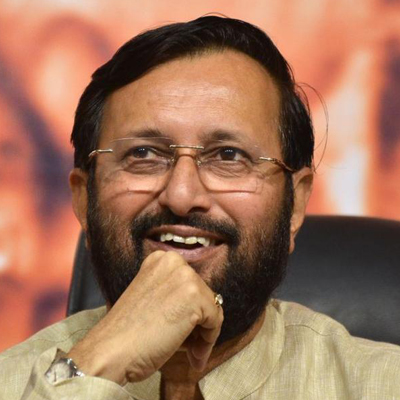
    Responding to a question, Information and Broadcasting Minister Prakash Javadekar said recently that Prasar Bharati carries out the public broadcasting services in a fair and objective manner and does not discriminate on the basis of ideologies.


    He said in Parliament recently that Prasar Bharati has informed the Ministry that no journalist has been decommissioned or debarred by Doordarshan to curtail their independence.


    Prasar Bharati has also said journalists are invited to various programmes according to the requirement of the subject, without any discrimination.


     The Minister made it clear that Prasar Bharati was a statutory autonomous body set up by an Act of Parliament – the Prasar Bharati (Broadcasting Corporation of India) Act 1990 – and “it is not a state run broadcasting network.”

  • Nine aspirants found eligible for post of Doordarshan DG

    Nine aspirants found eligible for post of Doordarshan DG

    NEW DELHI: The process which was started by the previous government to find a successor for Tripurari Sharan whose term as Director General of Doordarshan comes to an end later this month, will not be disturbed by the new government.


    Information and Broadcasting Ministry sources said that a total of nine officials have been found eligible for being considered for the post.


    They include two bureaucrats from different Ministries: Supriya Sahu who is joint secretary (Broadcasting) in the I&B Ministry and V Srinivas who is joint secretary in the Culture Ministry. Both of them are Indian Administrative Service officials.


    The other eligible aspirants are from Prasar Bharati headquarters, All India Radio and Doordarshan. It is learnt that these are: AIR director general F Shahryar, and additional director generals Mahesh Joshi, Deepa Chandra, Aparna Vaish, Mukesh Sharma, Vijayalaxmi Chhabra, and Lalsonga. All these bureaucrats are from the Indian Broadcasting (Programme) Service.   


    Meanwhile, sources in Doordarshan say that additional director general Ranjan Thakur whose term is coming to an end may be asked to take over as interim DG in the event of approval of extension of term by one year. 

  • Govt yet to work out details of Krishi channel, says I&B Ministry

    Govt yet to work out details of Krishi channel, says I&B Ministry

    NEW DELHI: Even as details are being worked out by Prasar Bharati in consultation with the stakeholders for a Krishi (farmer) channel as outlined by the finance minister Arun Jaitley in his budget, no definite timeframe has been fixed for commencement of the channel.


    Information and Broadcasting (I&B) Ministry sources said this will depend on availability of resources and manpower after the details have been worked out. 


    Jaitley had announced in his budget speech on 10 July that a sum of Rs 100 crore would be allocated for this channel. However, the budget for the I&B Ministry shows an allocation of Rs 90 crore for this in the year 2014-15.


    Meanwhile, the Krishi Darshan programmes of Doordarshan are being telecast under the ‘mass media support to agriculture extension’ funded by the Agriculture Ministry focussing on dissemination of modern agricultural techniques by involving experts from various fields like insurance, banking, credit for farmers, state government schemes on agriculture/ fisheries/veterinary science/water and soil conservation/social forestry etc.


    In addition, a recently introduced programme Mera Gaon Connection telecast at prime time on DD National also introduces modern agricultural techniques to the viewers.  


    Meanwhile, Minister of State for Agriculture and Food Processing Industries Sanjeev Kumar Balyan told Parliament that the “mass media support to agricultural extension and focused publicity campaigns has been strengthened to reach out to all farmers including small and marginal.”


    The audio and video spots and success stories are being aired through All India Radio (AIR), Doordarshan and private channels operating at the national and regional level.  


    The other component of the mass media initiative is the use of 96 FM Transmitters of AIR to broadcast area specific agricultural programmes with 30 minutes radio transmission in the evening six days a week. Focused advertisement campaigns which cut across all the divisions of the ministry have been continuing since July 2010.


    The campaigns are being launched through print as well as electronic media to create awareness about the assistance available under various schemes of the Department of Agriculture and Cooperation.

  • FinMin gives Prasar Bharati enhanced grants-in-aid

    FinMin gives Prasar Bharati enhanced grants-in-aid

    NEW DELHI: The grants-in-aid for Prasar Bharati has been raised from the revised estimates of Rs 2089.56 crore in 2013-14 to Rs 2421.58 crore, even as there is no separate investment by the government in the pubcaster for the second year in a row.


    Interestingly, the grants-in-aid for Prasar Bharati had been raised in the interim budget (for four months) by the previous government to Rs 2331.58 crore which remains the same and the only difference is in the addition of Rs 90 crore for Kisan TV.


    In the budget for 2014-15 presented in Parliament, Finance Minister Arun Jaitley has made provision of Rs 200 crore from Internal and Extra-budgetary resources for Prasar Bharati and the total plan outlay for broadcasting is Rs 731.58 crore.


    An explanatory memorandum says that the grants-in-aid is meant for meeting the salary and salary related expenditure. In addition, there is a proposal for Kisan TV for making available information to farmers across the country for which a provision of Rs 100 crore was announced. I&B Ministry secretary Bimal Julka confirmed to indiantelevision.com that the Planning Commission had sent a note about setting aside Rs 100 crore for Kisan TV.


    Expenditure on salaries of Prasar Bharati has fallen on the shoulders of the government since all Prasar Bharati employees who were in employment as on 5 October 2007 have been given deemed deputation status.


    The total budget of the Information and Broadcasting Ministry has been raised to Rs 3316 crore for 2014-15 against the revised budget of Rs 2855.03 crore (against the initial allocation of Rs 3035.65 crore) for the year 2013-14.     


    The budgetary allocations in most sectors have remained the same as proposed by the then Finance Minister P Chidambaram in the interim budget earlier this year on 17 February in view of the forthcoming elections, apart from Kisan TV and some other smaller changes.


    The allocation under ‘Secretariat – Social services’ covering centenary of cinema celebrations and digitisation of cable television among other things has gone up to Rs 126.55 crore as against the revised estimates of Rs 79.72 crore. Other subjects under this head include the National Film Heritage Mission, anti-piracy measures, promotion of Indian cinema overseas, production of films and documentaries, and setting up a centre of excellence for animation, gaming and visual effects. The explanatory note adds that Secretariat – Social services also covers expenses on development of community radio, and development support to the north-east as well as Jammu and Kashmir and ‘other identified areas’. Interestingly, the allocation in this sector is Rs 3 crore less than the proposal by Chidambaram in the interim budget.


    The allocation under the film sector has, unlike last year, been increased to Rs 135.81 crore for 2014-15. The budget for the film sector for 2013-14 was Rs 117.17 crore while the revised estimates had put this figure at Rs 116.42 crore. There is an additional outlay of Rs 7.18 crore towards certification of cinematographic films.


    For the fifth year in a row, the government has not announced any investment in the National Film Development Corporation.


    The allocation for Press Information Services which includes grants to the Press Council of India has been marginally increased to Rs 65.44 crore from last year’s revised estimates of Rs 57.56 crore to meet the expenses for the Press Information Bureau, the Press Council of India, and to the Press Trust of India for running the non-aligned countries news pool.


    The allocation to the Electronic Media Monitoring Centre has been increased substantially to Rs 13.75 crore from the revised estimates of Rs 7.17 crore in 2013-14. The EMMC was set up for monitoring television and radio channels for violation of programme and advertising codes.


    The allocation for advertising and visual publicity has been lowered to Rs 230.37 crore against the revised estimates of Rs 241.6 crore and budget allocation of Rs 239.06 crore for 2013-14, covering expenditure incurred by the Directorate of Advertising and Visual Publicity for publicity campaigns through advertising and other printed materials, as well as through radio, television, exhibitions and other outdoor campaigns. The allocation is thus just Rs 3 crore more than that made by Chidambaram.


    The allocation for research and training in mass communication has been doubled to Rs 33.54 crore (as proposed in the interim budget) as against the revised estimates of Rs 15.91 crore and the budgetary allocation of Rs 17.85 crore for 2013-14. This covers the Indian Institute of Mass Communication and the Research and Reference Division of the I&B Ministry which collects and collates basic information on subjects of media interest for providing assistance to the Ministry and to its media units, Indian missions overseas, and newspapers and news agencies.


    There is a major increase in the lump sum provision for projects/schemes for development of north-eastern areas including Sikkim to Rs 100.5 crore for 2014-15. The budgetary allocation was Rs 90.5 crore in 2013-14 which had come down in the revised estimates to Rs 74 crore.

  • Terrestrial TV to be opened for private participation: Javadekar

    Terrestrial TV to be opened for private participation: Javadekar

    MUMBAI: Is the Modi government likely to pry open terrestrial television to private broadcasters?  Terrestrial TV has been the exclusive turf of public broadcaster Prasar Bharati, apart from a short stint where it leased out a programming block to Ozzie broadcaster Kerry Packer around 12-13 years ago.

    It is quite likely to, if one goes by the response of Information & Broadcasting Minister Prakash Javadekar to a question in the Parliament on 9 July. PTI quotes him as saying that Doordarshan is digitising its analogue terrestrial network.

    “Consequently the number of digitised channels would go up. DD would thereafter be in a position to invite private free-to-air TV channels for meaningful business plan in this regard,” he added.

    This was one of the options provided by the Sam Pitroda committee earlier this year.  The committee had recommended two options: one to totally move the pubcaster to satellite transmission via DD Direct. And, two, to upgrade its analogue terrestrial network to DVBT2 to meet its need to deliver content meeting both national and regional coverage needs.

    The report had recommended that DD could opt for selected use of DVB-T2/DVB-NGH terrestrial  technology in partnership with private players if commercially feasible in order to enhance the capacity of each transmitter to eight to 10 channels.

    The committee, however, had cautioned that DD would have to transform itself into two separate companies handling content creation and managing infrastructure to allow private participation. Additionally, it had added that DD would have to provide a subsidy to increase the affordability of DVBT2/DVB-NGH receivers as they are not readily available at affordable prices in India.

    Even the Telecom Regulatory Authority of India had in 2005 recommended that terrestrial television should be thrown open to private sector participation as is the case in most countries.

  • North east India to get new channel Arun Prabha

    North east India to get new channel Arun Prabha

    MUMBAI: After announcing the new Rs 100 crore 24 hour channel for farmers in the country, Union Finance Minister Arun Jaitley has declared that a new channel will also be launched for the seven sisters in north east India.


    To be called ‘Arun Prabha’, Jaitley said that the channel will highlight the rich culture of the north east. However, he did not specify either the time frame within which it will be launched or the investment that will be put into it.


    Last year, talks were on between the government and the Prasar Bharati for launching an additional channel for NE. Currently, DD North East telecasts programmes in Assamese, English and other regional dialects with various types of programmes. Prasar Bharati CEO Jawhar Sircar had been touring the area last year to find out the feasibility for this channel, subject to government investment.

  • International radio and TV meet in Cuba, India expected to attend

    International radio and TV meet in Cuba, India expected to attend

    NEW DELHI: A large contingent of officials from Prasar Bharati apart from the private industry is expected to attend the Radio and Television Convention Cuba 2014, International Radio and Television Fair and Exhibition in Havana. 


    Organised by the Cuban Institute of Radio and Television, the meet is aimed at targeting executives, producers and specialists to promote the exchange of ideas and views, the collaboration and marketing of TV products, technology and services.


    It will be held from 19 to 24 October at the Havana International Conference Center, Cuba.


    During the Convention, there will be audiovisual presentations, exhibitions, sales and free presentations, aimed at creating a common space of interest for marketing technologies and productions for radio and television.


    With the purpose of updating the knowledge of professionals from both media on the production process, a scientific programme dedicated to the influence of popular radio and television products in the formation of moral values and the defense of peace has been organised, according to Cuban Institute of Radio and Television president Danylo Sirio Lopez.


    The analysis of this subject will tackle the massive and imitative nature, and the extensive consumption of soap operas, as well as the role of sport programmes as an expression of the noble Olympic ideal and the notion that it’s at the stadium and not in the battlefield where nations should face each other.


    For this purpose, a series of workshops, master classes and other theoretical and practical activities will be held, among which there will be this year the Meeting of the Global Net of Stations and Channels in defense of mankind, the International Workshop on Programming for Childhood and Adolescence and the Workshop of Young Radio and Television Creators.


    The Radio and Television Festivals, programme contests and public good spots to award the prizes ‘Sonido paraVer’ for Radio and ‘Cubavision 2014’ for TV will be held to encourage the participation of producers.


    A total of 34 countries with 150 companies participated in the first festival last year.
     

  • Prasar Bharati plans to enter the European market, says Sircar

    Prasar Bharati plans to enter the European market, says Sircar

    NEW DELHI: Prasar Bharati plans to enter the European market in a move to expand its footprint and present the Indian voice to international audiences.

    Prasar Bharati CEO Jawhar Sircar told the Global Media Forum in Bonn that: “Our international forays have been made by private journalism to a small extent. It is time for the public broadcaster to start thinking of collaboration with the best in the market and come out to present the voice of India or the voices of India. In fact that is the reason why I am here.”

    He said the pubcaster was thinking in terms of going in for European penetration.


    Meanwhile, he reiterated his demand for greater freedom to work and said the present government was aware of his views in this regard. “Whatever I have said is there in public discourse. I will not like to rake it up here. This is not the place. My stand or our stand on autonomy, professional autonomy, the autonomy to operate, has been made clear,” he said.

    Sircar, who gave his views on ‘The future of journalism and the role of international broadcasters’ during a session of media summit, held “typical bureaucratic mentality” responsible for people’s perception of Prasar Bharati being a government controlled body.

    “That perception is because all the members of Prasar Bharati are government servants,” he said. “So they carry their mentality with them. I was also a government servant. I told them that I took an oath to remain at arm’s length (with the government) and if I have paid the price for it, why don’t you guys come forward,” he added.

    “There is a spirit in Prasar Bharati. It is not pro-government or anti-government. It is a question of taking up the facts as they come,” he said.

    “As I said a rape has to be reported. But we report not the rape and sensational part, we report the retribution part, the punishment part. That is the important part,” he said.

    Sircar said it is for the nation to make up its mind for bringing in changes to ‘doordarshan’ video service run by Prasar Bharati.

    “We raised the issue (in the conference) of India’s public broadcaster not being international class. Our problem and our identity and our task were completely different – the aim was to hold India together. A very typical country with 24 languages and 600 dialects. Our task was to hold the India together through ‘Vividh Bharati’ (a radio service) through a common discourse, through a common shred experience. We have done that. It is now time for India to move outwards,” he said.


    During the conference, the CEO lauded the role of social media in bringing about the changes in people’s thinking.

    “Social media played a major role in that (crowd sourcing in general elections) aspect. That crowd source views or open views what was later turned out to be one of those instruments that brought majority of people (out to cast their votes in recently concluded general elections),” Sircar added.

    A large number of participants including journalists from many countries took part in this first meet organized by the Deutshe Welle.