Tag: Prasar Bharati

  • Inter-ministerial discussion on Prasar Bharati Recruitment Board complete: Javadekar

    Inter-ministerial discussion on Prasar Bharati Recruitment Board complete: Javadekar

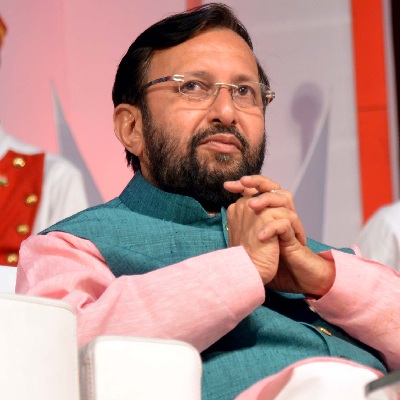
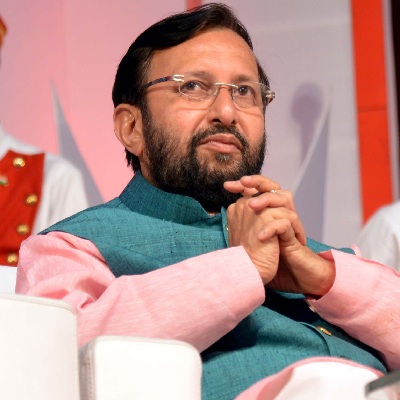
    NEW DELHI: Information and Broadcasting Minister Prakash Javadekar said that the Prasar Bharati recruitment board (PBRB) had not been constituted even though Prasar Bharati came into force in 1997. But now, the inter-ministerial consultation on the issue is complete.


    He said in the Rajya Sabha that the constitution of the PBRB could not be taken up till 2010 due to resistance of employees against absorption in the Prasar Bharati Corporation and consequent uncertainty in the status of employees.


    The Prasar Bharati Act 1990 was amended in January 2012 thereby settling the status of employees of Prasar Bharati.


    Prasar Bharati forwarded a proposal for framing rules of PBRB for approval of Government in July 2010 which was subsequently revised by Prasar Bharati in May 2012.


    The Ministry is in the process of creation of posts of chairperson and members of PBRB. However, he said tentative time for constitution of PBRB could not be given at this stage.

  • AIR introduces toll free number to connect with advertisers

    AIR introduces toll free number to connect with advertisers

    NEW DELHI: In a major initiative to push its commercial revenues, All India Radio is launching a Toll Free – 15102 – to connect with advertisers.


    This first of its kind initiative in a bid to provide a one-stop window for those looking for an easy way to advertise with AIR’s various stations will be launched on Independence Day, 15 August. 

    The toll free number will connect the stations of AIR and it will become faster to answer and tackle the problems encountered by advertisers in reaching the pubcaster.


    It will also provide an avenue for those who want to expand their business but have a limited budget to publicise and indulge in other promotional activities.


    Since AIR has maximum penetration as well as reach at both domestic and international levels, advertisers can gain a lot without spending too much. AIR programmes through its 413 stations and 584 transmitters reach nearly 92 per cent of the country’s area and 99.19 per cent of the total population in 23 languages and 146 dialects.

    Senior Prasar Bharati officials say, “As we are essentially working for the betterment of the country and public at large, our charges are basic and coverage is the best. An advertiser will certainly be better off with this toll free number.”
     

    These officials claim that this was one of the many steps being taken by Prasar Bharati to stay connected with the public and have a more dynamic public face so that they can serve better.

  • Prasar Bharati CEO Sircar’s letter about IIS officers not linked to action on DD News DG

    Prasar Bharati CEO Sircar’s letter about IIS officers not linked to action on DD News DG

    NEW DELHI: The letter by Prasar Bharati CEO Jawhar Sircar seeking greater powers for the public broadcaster in postings of Indian Information Service (IIS) officers was not written in the context of the recent order placing Doordarshan News DG SM Khan on compulsory wait, sources in the pubcaster told indiantelevision.com.


    In fact, the letter was written on the morning of 8 August, whereas the action relating to Khan came late in the evening of the same day.


    Furthermore, the sources said this was an issue raised even earlier by Sircar and was only reiteration of an earlier view.


    It was pointed out that the issues relating to autonomy had already been listed in the Sam Pitroda report. Earlier, there were media reports that the letter to the Information and Broadcasting Ministry was linked to issues such as the allegedly “deliberately edited” pre-poll interview of Narendra Modi.

    The letter said Prasar Bharati has in the past two and a half years made several suggestions for posting and transfer of IIS officers which are still pending decision by the Government.


    Sircar suggested bifurcation by the Ministry of the work on a pro-rata basis and after which, postings of IIS officers to PB could be decided by the Prasar Bharati Board and orders issued, only after informing Ministry.

    “Since we are completely in the dark about career details of the officers, which are readily available in the Ministry’s files, it would be appropriate to share these with Prasar Bharati,” reads the letter.

    Sircar wrote that Prasar Bharati can be held responsible only if it monitors News Division and added that then IIS officers can also accept the fact that they have to work in tandem with Prasar Bharati.


    Sircar reiterated his proposal for a Professional Electronic Media Cadre within the IIS that could be developed by Prasar Bharati, the sources said. 

  • TRAI releases recommendations on media ownership

    TRAI releases recommendations on media ownership

    MUMBAI: The Telecom Regulatory Authority of India (TRAI) has released the much awaited recommendations on media ownership.


    Here are the highlights of the recommendation paper:

    – The news and current affairs genre will be most important and relevant genre in the product market for formulating cross media ownership rules.

    – The relevant geographic market should be defined in terms of the language and the state in which the language is spoken majorly.

    – A combination of  reach and volume of  consumption  metrics should  be used for  computing market shares for  the  television segment. For calculating market shares, the GRP of a channel should be compared with the sum of the GRP ratings of all channels in the market and the market share of an entity would be the sum of the market shares of all channels controlled by it.

    – The    Herfindahl   Hirschman   Index   (HHI)    be    adopted   to    measure concentration in  a media segment in a relevant market.

    – The   cross-media  ownership  rules  be   reviewed three  years  after  the announcement of  the   rules by  the   licensor and  once every   three years thereafter. The  existing entities in  the  media sector which are  in  breach of  the  rules, should be  given  a maximum period of  one  year to  comply with  the  rules.

    – Mergers and  Acquisitions (M&A) in the   media sector will  be  permitted only  to the  extent that the  rule based on  HHI is not  breached.

    As far as vertical integration is concerned, the TRAI sticks to the ones given in the ‘Recommendations on Issues related to  New DTH Licenses’

    The regulator states that six years have passed without any concrete action on its recommendations of 2008 and 2012. It suggests that these be looked at as well.

    – The     entities   (political  bodies,   religious   bodies,   urban,    local, panchayati raj,  and other publicly funded bodies, and Central and state government ministries, departments, companies, undertakings, joint ventures and government-funded entities and affiliates to be barred from entry into broadcasting and TV channel distribution sectors.


    – That in  case permission to  any such  organisations have already been granted an appropriate exit  route is to be provided;

    – That the arm’s length relationship between Prasar Bharati and the government  be   further  strengthened and  that  such measures should ensure  functional independence and  autonomy of  Prasar Bharati

    – That  pending enactment of  any new   legislation  on   broadcasting, specified disqualifications for  the  entities in  (a) above from  entering into broadcasting and/ or TV channel distribution activities should be  implemented  through  executive decision  by  incorporating the disqualifications    into     rules,  regulations and  guidelines as necessary.

    – Even  surrogates of the entities listed above should be  barred from  entry into  broadcasting and TV channel distribution sectors.


    “Advertorials”, or  for  that matter any  content which is paid   for,  a clear disclaimer should be mandated, to  be printed in  bold  letters, stating that the  succeeding content has been   paid   for.  Placing such a disclaimer in fine print will not suffice. Action on advertorials and other material which is paid  for may  be taken immediately.


    On grounds of the inherent conflict of interest, ownership restrictions on corporates entering the media should be seriously considered by the Government and the  regulator. This may entail restricting the  amount  of equity holding/ loans by a corporate in  a media company, viz.,  to comply with  provisions relating to control.

    Editorial   independence   must    be     ensured   through   a   regulatory framework.

    With respect to a ‘media regulator’ it recommends the following:


    – Government should not  regulate the  media


    – There should be single regulatory authority for TV and print mediums


    – The regulatory  body  should  consist  of   eminent  persons  from different walks of life, including the  media. It should be manned predominantly by eminent non-media persons;


    – The  appointments to  the  regulatory body  should be done through a just, fair,  transparent and impartial process;


    – The “media regulator” shall inter alia entertain complaints on “paid news”; “private treaties”; issues related to editorial independence; etc,  investigate the complaints and shall have the power to impose and enforce an appropriate regime of penalties.

    The  Authority also recommends that a commission, perhaps headed by  a retired Supreme Court Judge,  be  set up to  comprehensively examine the various issues relating  to   the  media, including the  role   and  performance of  various existing institutions,  and  the   way   forward.  


    Click here for the recommendation paper

  • E-auction for six DTH slots for DD Free Dish next week

    E-auction for six DTH slots for DD Free Dish next week

    NEW DELHI: The 14th online e-auction for filling up six slots for the direct-to-home (DTH) service of Doordarshan Freedish will be conducted on 11 and 12 August beginning with a reserve price of Rs 3 crore.


    The e-Auction will be conducted by Synise Technologies, Pune on behalf of Prasar Bharati.


    Prasar Bharati CEO Jawhar Sircar said earlier this week that the aim was to reach the target of 97 channels by October-end and 125 by March-end.


    The eligibility terms and conditions including other relevant details for this e-auction are displayed on DD website: www.ddindia.gov.in.


    The participation amount (EMD) is Rs 1.5 crore which will be deposited in advance on or before 11 August by 12:00 noon along with processing fee of Rs 10,000 (Non-refundable) in favour of PB (BCI) Doordarshan Commercial Service, New Delhi.


    Applicants have to deposit a Demand Draft of Rs 5,500 as registration amount (mandatory) favouring Synise Technologies, payable at Pune at the time of submission of the application.


    The applicants must provide their e-mail address, contact numbers and uplink/downlink permission documents received from the concerned ministries, failing which their application will not be entertained in any case.


    The demand drafts of unsuccessful bidders will be returned immediately or within a week after the e-auction process is completed.

  • MSOs, LCOs asked to take DD channels only from C-Band

    MSOs, LCOs asked to take DD channels only from C-Band

    NEW DELHI: Sticking to its promise of ensuring that Doordarshan channels are made available across all cable and DTH platforms, Information and Broadcasting (I&B) Minister Prakash Javadekar has taken the positive step.


    Reiterating that it is mandatory to carry 24 channels of Doordarshan in digital addressable system areas and eight channels in non-DAS areas, the Government today also stressed that it was necessary that all multi-system operators (MSOs) and cable operators to take only C-band signals of Doordarshan channels.  


    In the advisory, the I&B Ministry said that the mandatory carriage had been notified in September 2013.


    However, some MSOs were taking the DD beam from the Ku-band of DD’s DTH service, resulting in inferior quality of transmission of DD channels. Furthermore, some MSOs were not even carrying the mandatory channels, according to Prasar Bharati.


    In this context, the Ministry said Para 3 of the 5 September 2013 notification was clear that only C-band signals had to be taken ‘for retransmission by dish antenna/television Receive of not less than 12 feet diameter, and Yagi antenna, to ensure good quality reception’. 

  • Gov asks Prasar Bharati to work out action plan for implementing Sam Pitroda Committee report: Javadekar

    Gov asks Prasar Bharati to work out action plan for implementing Sam Pitroda Committee report: Javadekar

    NEW DELHI: Prasar Bharati has been asked to prepare an action plan for undertaking the studies/reviews/audits on recommendations of the Sam Pitroda Committee.


    Information and Broadcasting Minister Prakash Javadekar told Parliament today that the pubcaster had been asked to apprise the Ministry about the outcome reports.


    In his reply, the Minister said that the report included recommendation of a study of independent sources of finances of Prasar Bharati.


    Meanwhile, a senior Prasar Bharati official who did not want to be named said that the Ministry should first clarify whether it has accepted or rejected the Pitroda report.


    The Pitroda Committee set up to review the working of Prasar Bharati had in its report in January this year stressed the need for constituting a Parliamentary Committee, as originally envisaged in the Prasar Bharati Act 1990 to ensure that the pubcaster discharges its duties in accordance with the provisions of the Act and Government defined duties.


    In the report submitted to the then Information and Broadcasting Minister Manish Tewari, it had recommended reorganisation of the pubcaster’s Board to make it a professionally managed body and make it more effective in guiding the organisation.


    Pitroda noted that Prasar Bharati’s vision must be to become a genuine ‘public broadcaster’ as against a ‘government broadcaster’.


    The report said there is need to effectively complete transfer of ownership and management of assets and human resource to Prasar Bharati ‘to make the organisation administratively and financially autonomous of government.’


    A regulatory body has to be set up to ensure public accountability of Prasar Bharati with respect to all content broadcast on its television and radio networks. The regulatory body should be a sub-committee of the Prasar Bharati Board.


    Interestingly, the Committee has suggested setting up of Prasar Bharati Connect (PBC) as the third arm of the public service broadcaster, independent of Doordarshan and All India Radio, to expand the social media. PBC should be mandated to manage the various social media initiatives of all the wings of Prasar Bharati. It also wants a social media strategy of Prasar Bharati.


    The Committee was set up on 28 January last year and had decided to set up 11 working groups on different issues and has now come out with a report on eight main areas: governance and organisation, funding, human resource, content, technology, archiving, social media and global outreach.


    It has said that in addition to the public broadcasting function, there is a distinct requirement for the state to broadcast messages and accomplishments of public interest which can be met by using existing public and private broadcaster infrastructure.


    The Committee suggests amending the 1990 Act was necessary so as to impart genuine and effective autonomy to the organisation.


    Apart from Pitroda who is advisor to the Prime Minister of India on Public Information Infrastructure & Innovation and chairman of the National Innovation Council, the other members include additional secretary and nominated Prasar Bharati Board member J S Mathur. National Innovation Council member Shekhar Kapur, former I&B secretary Asha Swarup, Vikram Kaushik who is a business strategist and brand advisor and part-time member on the Prasar Bharati Board; M P Gupta from the Indian Institute of Technology in Delhi, B K Gairola who is mission director (e-Governance) and Prasar Bharati CEO Jawhar Sircar who was the convener.

  • DD to use Hotbird satellite to reach out to Europe, West Asia and North Africa

    DD to use Hotbird satellite to reach out to Europe, West Asia and North Africa

    NEW DELHI: Doordarshan will now be available on the direct-to-home (DTH) platform in the Free-to-Air (FTA) basic pack in the whole of Europe and Arab countries. This, as DD Freedish gets onboard EUTELSAT’s Hotbird-13 B satellite.


    This will help the public broadcaster project India’s viewpoint to the global audience in a cost effective manner. DD will be offered in the basic pack of the DTH service which does not require any individual to either subscribe or pay for viewing the channel.


    This has been made possible with the signing of a memorandum of understanding (MoU) between Prasar Bharati CEO Jawhar Sircar and the German public broadcaster Deutsche Welle (DW) head of distribution (Asia) Dorothee Ulrichs.


    Speaking on the occasion, Sircar said the MoU provided an important platform to position DD’s content globally. The content for the platform would be created based on the consultation with various stakeholders and the taste of the target audience.


    Congratulating Prasar Bharati on the occasion, Culture Secretary Ravindra Singh said the MoU had given an opportunity to project India’s soft power to the world. 


    The offer by DW is on extremely favourable terms and DD India does not even require a licence immediately.  The licence can be obtained within a period of one year if the experiment is successful.


    Placing DD on Hotbird DTH platform will also give it full access to the Middle Eastern GCC countries, where Indians work and reside in large numbers.


    Hotbird-13B is the most chosen satellite by European countries because of its polarity.  It has a reach of 120 million homes in the whole of Europe, Northern Africa and the Middle East. The DTH platform has a total number of 1543 TV channels of which 1117 TV channels are Free-to-Air. 124 English channels are available on this satellite, prominent amongst which are BBC, CNN, CCTV, RT, France24, VOA TV, Euromans, Sky News, Bloomberg TV, Al Jazeera, etc.  


    While Independence Day was initially the target date for launch, it is now expected to be put off to either 15 September which marks the date Doordarshan first began telecast in 1959 or Mahatma Gandhi’s birthday on 2 October as that will give sufficient time to plan the appropriate content.


    Prasar Bharati CEO Jawhar Sircar said that DD currently has a budget of Rs 2 crore to Rs 3 crore per year, for production of programmes, which has to go up and so other Ministries will need to pool in their resources/content for quality shows for the viewership abroad.


    “Programming will be mainly accessed from archival material and current shows, apart from some live and deferred live content,” he added.


    Sircar also admitted that DD India was available on Indian satellites to Europe, but this deal would help overcome the hurdle of getting people to see Doordarshan programmes. He said in India, DD Freedish continues to have the largest reach.


    He said the programming was mostly in English and Hindi, but subtitling may be used where necessary.


    Indian satellites reach around 34 countries, he said.


    He said Australian Broadcasting Corporation was expected to come on board DD Freedish within the next few weeks, and France was proposing to beam to India via an Indian satellite.


    Asked if the private channels which were beaming on the Freedish platform would also be able to reach Europe, he said DD Freedish had separate beams for public service broadcasters.


    Ulriche said there was a possibility that this may lead to co-productions with DD. She denied reports that DW had cut down on its coverage of India. Speaking to indiantelevision.com on the sidelines, Ulriche said DW beamed to the world in four beams: English, German, Arabic and Spanish. Asia was reached through the Asiasat I satellite.


    The five broad areas/regions to be covered are Central Asia, Middle East or West Asia, East Europe, West Europe and North Africa. The content would primarily target different cultures, keeping in mind the different languages of the regions like Turki, Persian, Arabic, French etc and English being reasonably the lingua franca.


    The shows for the target audiences would be decided in consultation with the concerned Ministries who have experience and expertise in the various fields and assessing the cultural and political sensitivities of the areas. A few private series will continue to be broadcast with their own view point of India. 


    Doordarshan has been trying since 1995 to build bridges of communication with Indians living abroad and also trying to showcase its diverse culture, values and rich heritage to the world by launching its first international channel.


    Upon the expansion of this  international channel into 24×7 transmission, Doordarshan signed an agreement with Pan Am SAT (later Intelsat) for achieving global footprint of its international channel in Asia, Africa, Europe and North America by placing it on ‘C’ & ‘KU’ band of IS-10 , IS-906 and G-13 satellites.


    In 2011, the services provided by Intelsat were dispensed with and the ccontract was terminated.


    From March 2011, Doordarshan started availing the service of ISRO’s INSAT-4B in both KU band & C band. However, the inadequacy of not being able to locate any significant global partners to distribute and connect DD to homes overseas continued.


    In the past also DD did make efforts to distribute its international channel in various parts of the world but made little progress in the last mile distribution due to policies which did not permit large scale spending on carriage fees.


    The pubcaster made renewed efforts through Indian missions to distribute its international channel abroad, but it could make little progress in this last mile distribution, because of several reasons. However, significant local partners could not be located to distribute and connect DD to homes overseas continued. 


    Sircar said many stereo type systems need to be broken up and the Public Broadcaster can do better. On the other hand, countries like Japan, Germany, China, Russia, France etc have invested heavily between Rs 4000 crore and Rs 8000 crore to ensure a global reach for its international channels.  
  • DD awaits Prasar Bharati’s nod for a HD channel

    DD awaits Prasar Bharati’s nod for a HD channel

    NEW DELHI: In the era of high definition, Doordarshan, proved its mettle in telecasting in HD mode as early as 2010.


    The pubcaster had then shown the Commonwealth Games held in the national capital in HD feed, even before the other private channels entered the segment.


    Doordarshan is ready to launch a national channel in a parallel HD mode, as per the sources within the pubcaster, but is awaiting a nod from the  Prasar Bharati board.


    Prasar Bharati sources however told indiantelevision.com that the issue of a separate HD channel had not been put up before the board.


    Currently, DD News is telecasting the Commonwealth Games from Glasgow in high definition on its terrestrial transmitters while covering more of the games/events where Indians are participating.


    It is learnt that DD Sports and Ten Sports failed to reach an agreement on the issue, and the Ministry had issued a showcause notice to Ten Sports, last week, for declining to share the feed with DD Sports. Under the The Sports Broadcasting Signals (Mandatory Sharing with Prasar Bharati) Act 2007 as it is considered a sports event of national importance, it is mandatory for the rights holder (Ten Sports, in this case) to share the broadcast with Prasar Bharati.


    The sports event is mandated to be carried on the terrestrial network to ensure that viewers who do not have access to cable or DTH services can also view the games. 

  • Govt admits Pakistan TV signals available in border areas

    Govt admits Pakistan TV signals available in border areas

    NEW DELHI: Even as the government has been claiming for several years that it is giving priority to strengthen its communication towers on the borders to strengthen its signals, the Home Ministry and Prasar Bharati have admitted that the signals/coverage of Pakistan TV is available in the bordering districts of the country.


    However, Information and Broadcasting Minister Prakash Javadekar told Parliament that ‘no complaints have been received during the last three years regarding telecast of Pakistan TV in the bordering districts of the country.’


    He said strengthening of TV coverage of Doordarshan to counter the anti-India propaganda along border areas is an ongoing process. Doordarshan has been assigning priority for expansion of its coverage in the border areas of the country in various expansion plans formulated from time to time. Special packages for expansion and improvement of Doordarshan services in Jammu and Kashmir (J&K) have also been implemented in the past.


    At present, Prasar Bharati has informed that 112 TV transmitters of varying power are functioning in the districts near the Pakistan border.

    Javadekar said that to further strengthen TV coverage in J&K, a scheme was approved in the 11th Plan which includes projects of establishment of five high power TV transmitters in J&K (Kashmir region- 1; Jammu region-1; Ladakh region-1 besides 2 high power transmitters at Rajouri).


    These projects are expected to be completed in phases, in about two years, he added. 


    Meanwhile, DD sources told indiantelevision.com that all areas uncovered by terrestrial transmitters in border areas along with the rest of the country have been provided with multichannel television coverage through Doordarshan’s free-to-air direct-to-home platform Free Dish which can be received anywhere in the country with small sized dish receiver units.


    However, All India Radio and DD terrestrial coverage in the border areas in Jammu and Kashmir is being strengthened with an outlay of Rs 1 billion in the 11th Plan.


    A total of 273 TV transmitters of varying power are presently functioning in the border areas all over the country, DD sources told indiantelevision.com