Tag: Prasar Bharati

  • Prasar Bharati looks for exclusive OTT partner to bring ‘Swaraj’ to global audience

    Prasar Bharati looks for exclusive OTT partner to bring ‘Swaraj’ to global audience

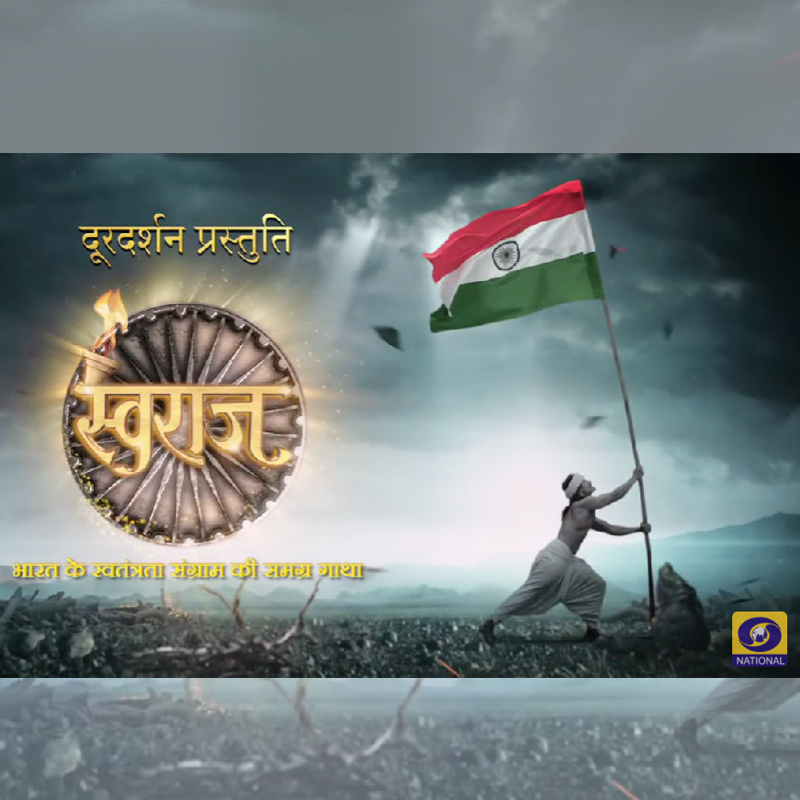
    Mumbai: Prasar Bharati has invited applications from OTT platforms for the exclusive global licence for its programme Swaraj for three-years. The bidding process will be done via e-auction.

    The public broadcaster set the reserve price for 75-episode Hindi programme at Rs 26.25 crore plus GST. Any incremental bid beyond the reserve price must be Rs 5 lakh and multiples thereof. The last date for submission for the applications is 4 August.

    Produced by Contiloe Pictures, the series was announced by minister of information and broadcasting (MIB) Anurag Thakur on 25 July and is scheduled to telecast on Doordarshan network on 14 August on the eve of India’s 75th year of independence.

    The programme commissioned by Prasar Bharati is focused on the unsung heroes and battles of India’s independence all across the country. Originally produced in Hindi, the series will also be dubbed in English and nine other languages including Marathi, Odia, Tamil, Telugu, Malayalam, Kannada, Bengali, Assamese and Gujarati.

    On winning the bid for the programme, the OTT platform shall be authorised to upload and store the series on its server for the purpose of transmitting the programme to audiences via the OTT platform, either free of cost or behind the paywall, as per the terms and conditions of the licence agreement.

    Each episode of the programme will be available on the OTT platform after 48 hours of its first telecast on Doordarshan network.

  • Prasar Bharati has seen a big change in its revenue in the last five years, says former CEO Shashi Shekhar Vempati

    Prasar Bharati has seen a big change in its revenue in the last five years, says former CEO Shashi Shekhar Vempati

    Mumbai: Former Prasar Bharati CEO Shashi Shekhar Vempati joined broadcast journalist and host of ‘Media Dialogues’ on CNBCTV18 Anuradha Sengupta in conversation about his tenure at the public broadcaster recently.

    India’s public broadcaster Prasar Bharati is one of the largest broadcasting organisations in the world that runs a vast terrestrial network in addition to the satellite. During the interview, Vempati noted the changes brought during his tenure including phasing out obsolete technologies, figuring out the manpower roadmap for digital technology, and growing Prasar Bharati’s own media platforms like Free Dish and NewsOnAir app.

    The biggest change at Prasar Bharati

    Vempati highlighted that in the last five years the biggest change at the public broadcaster was the change in its revenue mix. In FY22, the public entity reported that commercial revenues were up by 13 per cent. Historically, the government was the primary source of revenue for the broadcaster via advertising & sponsored content. “What has changed in the last five years is how non-traditional sources of revenue have reduced dependence of government sources of revenue on DD and AIR,” said Vempati.

    “A big component of this reduced dependence is because of DD Free Dish. When I joined as CEO, Free Dish revenue used to be about Rs 270 crore and in the last financial year and this year it has crossed Rs 700 crore and touched Rs 750 crore,” he stated.

    Further adding, “There were hardly any digital revenues five years ago and now digital revenues amount to several crores and are growing fast at almost 30-40 per cent a year.”

    “We also have assets like TV towers that are leased out to private FM broadcasters and telecom operators which generates another Rs 100 crore in terms of revenue,” said Vempati.

    “The revenue growth that you’re seeing is largely contributed by these non-traditional sources of revenue. Interestingly, our radio revenues also saw recovery during Covid so that also contributed to overall growth,” he explained.

    Journey of DD Free Dish

    The public broadcaster’s free-to-air DTH (direct-to-home) platform reaches 43 million homes in India, as per EY (Ernst & Young) estimates and up to 50 million homes, as per Vempati’s personal views. This makes it the largest DTH service provider in the country, more than twice the size of any private DTH player in the country.

    Vempati praised the foresight of the late NDA government under Atal Bihari Vajpayee that they envisioned a platform of this nature. The cabinet gave its approval in 2003-04 with the stipulation that the platform should be self-sustaining and not be a recurring liability to the public broadcaster. It was important to bring private players onto the platform so that it pays for itself.  

    Initially, the placement of private channels happened through a committee process until 2010 when there was a need to make the process more transparent. A Telecom Disputes Settlement and Appellate Tribunal (TDSAT) ruling directed the public broadcaster in 2010 to frame a policy regarding terms and conditions for the broadcast of private channels via its DTH platform.

    The public broadcaster introduced an auction process where private channels had to bid for slots on the Free Dish platform. Over the years, the policy evolved from offering one base price for all broadcasters to offering a differentiated base price based on genre and language of the channel. This move resulted in immense value creation for Prasar Bharati and unlocked the potential of the DD Free Dish platform.

    Free Dish impact on private broadcasters

    There exists a love-hate relationship between private broadcasters and the free DTH platform as they gain access to immense reach, especially in the Hindi heartland, but the trade-off is the subscription revenues from this massive customer base.

    Vempati stated, “The DD Free Dish is only growing especially during the lockdown. The educational channels that were made available on the platform were a huge draw for audiences. The dealers who sell these set-top-boxes (STBs) also reported to us that it is impossible to keep up with the demand.”

    “Now, as we add more languages, the viewership of DD Free Dish is growing beyond the Hindi heartland. The promised 200 educational channels means that Free Dish still has an enormous headroom for growth,” claimed Vempati.

    Vempati observed that DD Free Dish has given rise to competitiveness in the TV broadcast industry where younger channels have been able to challenge the dominance of incumbents. He said, “If you see the Hindi genre, when I look at the ratings, there are several Free Dish channels in the top ten in terms of viewership. Ultimately, the public broadcasters’ purpose is to enable more choice to the consumer.”

    Vempati commented on private broadcasters pulling their flagship channels from DD Free Dish. He said, “This was a consequence of the new tariff order (NTO) regime which had an unintended impact on DD Free Dish. I see it as a transient phenomenon. The big players have other channels and have not completely exited the platform. It is a change that the media sector is going through and I’m hoping that we come out of it and get back on track.”

    Policy framework

    The trends in media consumption have shifted its dominance from traditional devices such as TV and radio to devices such as smartphones & smart TVs. While Vempati was not supportive of regulations in terms of pricing, he said regulations do have a role to play and supported the creation of a media regulatory framework not just for the broadcast sector but all media.

    During Vempati’s tenure, the public broadcaster signed a memorandum of understanding (MoU) with IIT Kanpur to develop direct-to-mobile broadcasting capabilities to reach more than 800 million mobile internet users in the country.

    He said, despite being the largest market for mobile phones, there’s very little standardisation in India. “Look at the emphasis China has put on creating standards. India is making an effort for the first time with 5Gi telecom technology standards. And with direct-to-mobile broadcasting, we have the opportunity to take a leadership position.”  

    Vempati’s run-in with TV ratings

    Another initiative taken by the public broadcaster was to air footage of Ramanand Sagar’s Ramayan on DD Free Dish during the lockdown.

    “When the lockdown was announced we debated on what to do, and I must compliment the PM and Prakash Javadekar (former union minister of information and broadcasting) to come up with the idea that we should air these epics,” recalls Vempati. “They insisted that it should be Ramayan that is aired first as it appeals to such a broad section of society.”

    The oddity was that Doordarshan’s popular shows were not the property of the public broadcaster but sponsored programmes. So, Prasar Bharati reached out to the Sagar family that owned the rights to the programme, the tapes were retrieved and special permission was granted to air the archival footage.

    “I feel this is the first time that the entirety of India has watched Ramayan because the first time it was aired only on the terrestrial network that was available only to a limited part of the country,” said Vempati. “All of India truly watched Ramayan during the lockdown which saw spectacular numbers and for the first time, Doordarshan’s rates were in the lakh plus range. When I look at global numbers apart from the finale of American sitcom M.A.S.H, Ramayan beat the charts!”

    Vempati was also part of the committee instituted by the ministry of information and broadcasting in 2020 tasked with looking into the rigging of TRPs and strengthening the overall ratings measurement system. Speaking about the TV ratings framework, Vempati noted that it was an interesting challenge for the committee and especially since the public broadcaster Prasar Bharati was also a client of Broadcast Audience Research Council (Barc). Addressing the lingering question of whether ratings are robust and credible, Vempati stated, “The important thing to remember is that Barc ratings are sample-based and not objective reality. When you start to infer viewership estimates by Barc as an objective reality that’s when you get into trouble.”

    While the committee made several recommendations to Barc on its corporate governance, technology and processes, ultimately Vempati believes that it is a question of business practices. “In a competitive environment, unless all players respect and adhere to certain business practices, you’ll always question the rating framework. Then it is a question of business culture and competition and ratings cannot solve that problem.”

    “The news genre has very erratic viewing patterns and there was a need to smoothen the fluctuations in the ratings which is why we rolled out the four-week rolling average,” said Vempati. “But business practices such as landing pages are beyond the ability of algorithms to solve. It is a business issue. My advice is that the industry should come to a consensus on how landing page data should be measured or there should be regulatory intervention. For example, a regulatory stipulation that only platform services can be on landing pages.”

    Vempati said that he was proud of being part of phasing out analogue terrestrial TV at the public broadcaster which he believes was one of the biggest reforms during his tenure. This freed up resources for digital and Free Dish and enabled Prasar Bharati to invest in the future.

    An outsider in the bureaucratic environment of Delhi, Vempati noted that his time at Prasar Bharati helped him understand the difficulty and complexity of the challenges in the public sector. He said, “The microcosm of small reforms that we tried to do gave me a sense of the complexity and challenges & better appreciate the job of the PM,” He concluded that the public sector would benefit greatly from having private-sector talent and professionals come in.
  • Prasar Bharati’s DG M K Agarwal gets additional charge as CEO

    Prasar Bharati’s DG M K Agarwal gets additional charge as CEO

    Mumbai: The minister of information and broadcasting Anurag Thakur has approved an additional charge as CEO to Prasar Bharati’s Director General (DG) Mayank Kumar Agarwal. 

    He was previously associated with Doordarshan and Doordarshan News at the public broadcaster.

    Shashi Shekhar Vempati has departed from the public broadcaster. Agarwal’s appointment is effective till the joining of a regular incumbent to the post of CEO or until further orders. 

  • DD India records 8.2 million TV reach over eight weeks: Barc

    DD India records 8.2 million TV reach over eight weeks: Barc

    Mumbai: Prasar Bharati’s English news channel DD India has recorded a reach of 8.2 million on TV over the last eight weeks, as per Broadcast Audience Research Council (Barc). The data was for 15+ audience based on a four week rolling average.

    “In terms of TV reach, DD India is the number one English news channel in the country,” said the statement. “Its closest competitor could manage only around half the reach of DD India. Even the viewership for DD India has witnessed a consistent upward weekly growth, registering a whopping total growth of almost 150 per cent over the last eight weeks.”

    Prasar Bharati also reported that its YouTube subscriber base has grown up to 20 million. Recently, DD Sahyadri News crossed 800K subscribers, followed by DD Sahyadri at 600K, DD Odia at 300K, DD India at 200K and DD Tura at 120K.  Prasar Bharati has more than 190 YouTube channels and its regional channels from the South and North-east are the fastest growing in terms of subscriber base.

    Launched in January 2019, DD India reaches more than 190 countries via satellite, OTT platforms and the NewsOnAir app. The channel through its various programmes offers international viewers India’s perspective on domestic and global developments. Its popular programmes include “India Ideas,” “World Today,” “Indian Diplomacy,” “DD Dialogue” and “News Night.”

  • Viacom18 announces the launch of Sports18 Khel on DD FreeDish

    Viacom18 announces the launch of Sports18 Khel on DD FreeDish

    Mumbai: Viacom18 on Monday announced the launch of Sports18 Khel – its free-to-air (FTA) Hindi channel, available on Prasar Bharati’s DTH service DD FreeDish. The announcement follows closely on the heels of the launch of its pay-TV channel Sports18.

    Sports18 Khel will allow fans to watch their favourite sports in Hindi, including the highlights of the 2021-22 NBA season, Abu Dhabi T10 League, Road Safety World Series, Santosh Trophy, glorious moments of Indian sports and other such offerings, said the statement.

    “Viacom18 secured a slot on DD FreeDish to make sports content easily accessible and expand the consumption of the genre across a wider audience,” says a Viacom18 Sports spokesperson. “Sports18 Khel will offer content relevant to the FTA subscribers across a range of sports in Hindi. This is also an opportunity to funnel a new audience to the pay-TV segment.”

    Effective 25 April, Sports18 Khel will be available on channel #25 on DD FreeDish. Meanwhile, Sports18 SD is available on channel #488 on Tata Play, channel #293 on Airtel Digital TV, on channel #262 on JioTV +, and Sports18 HD on channel #261 JioTV +. Viewers can continue to watch their preferred sports by downloading Viacom18’s premium video-on-demand platform Voot (iOS & Android) and JioTV (iOS & Android).

  • MIB to distribute 1.5 lakh Free Dish in remote areas of J&K

    MIB to distribute 1.5 lakh Free Dish in remote areas of J&K

    Mumbai: The government will distribute 1.5 lakh free dish in far-flung areas of Jammu and Kashmir, the ministry of information and broadcasting secretary Apurva Chandra said on Tuesday during a visit to Kangan Sub Division of J&K to assess the outreach of DD Free Dish in the area.

    The free dish services are proposed in the areas where cable services are unavailable, the government said. The government said that the tendering is under process and will be completed soon.

    The union secretary was accompanied by All India Radio principal director general (news) N. V. Reddy; Doordarshan director general Mayank Agarwal; Press Information Bureau Srinagar additional director general Rajinder Chaudhry, News DDK Srinagar deputy director Qazi Salman and the officers of the district administration.

    Chandra highlighted the importance of providing free-of-cost services to the masses. He said that the service is being distributed in remote areas of Kashmir and its ambit will be increased in the times to come. 

    Chandra also commended Doordarshan Kendra Srinagar for “aptly representing the local culture and traditions through its programmes reaching the people with authentic information.”

    The I&B Secretary also interacted with locals using DD Free Dish at Margund Kangan who shared their feedback about the programmes available on various channels, especially DD Kashir.

    “The scheme will help in keeping the people updated about different developmental initiatives and also inform them about the local as well as national events of importance,” stated a local Abdul Rashid Sheikh.

    DD Free Dish is owned and operated by public service broadcaster Prasar Bharati. It was launched in December 2003 and reaches 43 million households across the country.

  • Trai accommodates Prasar Bharati’s concerns on 5G auctions; overlooks private broadcasters

    Trai accommodates Prasar Bharati’s concerns on 5G auctions; overlooks private broadcasters

    Mumbai: Despite several requests from private broadcasters, the Telecom Regulatory Authority of India (Trai) seems to have overlooked their request in the much-awaited recommendation on the 5G spectrum auction released on Monday. The telecom regulator, however, has accommodated Prasar Bharati’s concerns regarding the auctioning of the 526-582 MHz frequency band being used by Doordarshan for providing terrestrial TV broadcasting.

    The private players had requested for an adequate guard band of 100MHz between the 3300-3670 MHz allocated to 5G and 3700-4200 MHz being used by them in accordance with the international telecommunication union (ITU) norms. 

    Trai has instead recommended the department of telecommunication (DoT) to ask the ministry of information and broadcasting (MIB) to take appropriate action and sensitise the MSOs, DTH operators, and other users to ensure the use of high-quality bandpass filters operating in 3700-4200 MHz range to avoid interference from IMT stations.

    “As the IMT emissions in the 3300-3670 MHz may saturate the low noise block (LNB) of the fixed-satellite service (FSS) earth station which traditionally operates in the 3400-4200 MHz, there is a need to make use of high-quality bandpass filters operating in 3700-4200 MHz range,” a statement issued by Trai said. 

    ALSO READ | Broadcasters huddle up as 5G roll-out plan gathers pace

    Broadcasters claimed to have faced interference on downlink frequencies during the initial 5G trials, following which they raised the issue with the MIB, DoT, and WPC (Wireless Planning and Coordination Wing of DoT), and the Trai. There were apprehensions around potential interference due to the larger C band allocation to 5G and the limited guard band of 30 MHz between the two services.

    “The 526-612 MHz frequency range should not be put in the forthcoming auction,” Trai recommended while stating the following reasons:

    (i)  Band plan(s) for the frequency range 526-612 MHz is yet to be defined by 3GPP/ITU.

    (ii)  Development of ecosystem for IMT in the 526-612 MHz frequency range will take some time.

    (iii)  MIB is using the 526-582 MHz band extensively across the country for TV transmitters.

    The telecom regulator has urged the DoT to come out with a plan for reframing the 526-582 MHz band to be utilised for IMT deployments. “To make 526-582 MHz band available for IMT, DoT should work with MIB to prepare a plan for an early migration from analogue to digital transmission, so that the frequency band from 526-582 MHz can be vacated for IMT services,” it said.

    Prasar Bharati had earlier argued that airwaves in the 526-582 MHz frequency band are required for the expansion and modernisation of its services. The public broadcaster had told Trai that “availability of spectrum is very crucial for planning DD TV Transmitters. Thus, the decision to use frequency band 470-698 for IMT purpose can be taken only after finalisation of terrestrial TV services by Doordarshan or other private broadcasters.”

    “Many analogue, digital-ready and digital terrestrial TV transmitters are operating in the band. Also, digital-ready transmitters are under installation in the union territory of Jammu & Kashmir for which the wireless planning & coordination wing (WPC) has provided for in this band only,” it added.

    The DoT, through its letter dated 13 September 2021, requested Trai to furnish its recommendations on the auction of spectrum in the frequencies identified for international mobile telecommunications (IMT)/5G. The recommendations were sought on the applicable reserve price, band plan, block size, the quantum of spectrum to be auctioned and associated conditions for auction of spectrum in 526-698 MHz, 700 MHz, 800 MHz, 900 MHz, 1800 MHz, 2100 MHz, 2300 MHz, 2500 MHz, 3300-3670 MHz, and 24.25 – 28.5 GHz bands identified for IMT/5G in India.

    Except for 526-698 MHz, Trai has recommended that all available spectrum in the abovementioned bands be put to auction for 5G services.

  • DD Free Dish announces new channel numbers effective 1 April

    DD Free Dish announces new channel numbers effective 1 April

    Mumbai: Prasar Bharati’s free direct-to-home (DTH) platform DD Free Dish has announced the new channel numbers for 167 TV channels and 48 radio channels that will come into effect from 1 April. The TV channels comprise 91 Doordarshan channels including 51 cobranded educational channels and 76 private TV channels.

    The private TV channels bouquet comprises eight Hindi general entertainment channels, 15 Hindi movie channels, six music channels, 22 news channels, 9 Bhojpuri channels, four devotional channels and two foreign channels.

    “The new channel lineup has rendered the DD Free Dish bouquet more diverse and engaging than ever,” said the statement.  

    Chef Sanjeev Kapoor’s dedicated food channel ‘Food Food’ has been added along with a new sports channel ‘MyCam.’

    In the latest e-auction for allotment of MPEG-2 slots of DD Free Dish, 63 channels were successfully allocated slots in various genres. The number of channels on DD Free Dish has also increased under multiple buckets this year. In the news and current affairs category, the number of channels has increased from 11 to 14, while the bucket of Hindi music, Hindi sports, Hindi teleshopping channels, Bhojpuri movies and Bhojpuri GEC has registered growth from 13 to 16.

    “With improved auction processes leading to addition of better quality and quantity of channels in various genres, between 2017 and 2022 alone, the free DTH service of Doordarshan clocked a stellar growth of almost 100 per cent from 22 million in 2017 to 43 million in 2022,” said the statement.

    “DD Free Dish has become the largest DTH platform with a reach of more than 43 million households,” said the statement.

    This year’s FICCI-EY report found that free television continued to grow its base to reach an estimated 43 million subscribers on the back of less expensive TV sets, economic issues, and the addition of new channels to the platform. The report also quoted Free Dish distributors mentioning the year-on-year growth in sales of DD Free Dish set-top-boxes.

    “In stark comparison to 22 million subscribers in 13 years between 2004 and 2017, DD Free Dish’s growth over the last five years stands out,” said the statement. “In just five years between 2017 and 2022, Free Dish has added another 21 million subscribers, taking the total to 43 million.”  

    The DD Free Dish set-top-box can be purchased for a one-time fee of Rs 2000 where the viewer does not have to pay any monthly subscription fee.

  • Lifestyle channel FoodFood to go live on DD Free Dish starting 1 April

    Lifestyle channel FoodFood to go live on DD Free Dish starting 1 April

    Mumbai: Celebrity chef Sanjeev Kapoor’s food and lifestyle channel FoodFood is set to go live on Prasar Bharati’s free-to-air DTH service DD Free Dish from 1 April.

    With this development, FoodFood becomes the only speciality channel to be made available on the largest DTH platform of the country reaching over 40 million households, said the statement. After consolidating its position in the primary and focus markets in India, FoodFood has become a popular choice of channel across International destinations and geographies, the statement added.

    “FoodFood has always been at the forefront of breaking barriers in the industry as the first 24×7 food lifestyle programming and now again being the first to reach rural audiences,” stated Sanjeev Kapoor. “I firmly believe that food is a universal language that breaks all barriers of cultures, races, and borders. With FoodFood, I want to reach as many people as possible looking for relevant content on food to make taste buds tantalised and possibly their lives brighter.”

    FoodFood is currently distributed through Tata Play and leading MSO’s across the country.


  • Free Dish MPEG-2 slots to be allotted on pro-rata basis in 59th e-auction: Prasar Bharati

    Free Dish MPEG-2 slots to be allotted on pro-rata basis in 59th e-auction: Prasar Bharati

    Mumbai: Prasar Bharati has invited applications for allotment of vacant MPEG-2 slots of DD Free Dish DTH platform on a pro-rata basis for the period from 1 April 2022 to 31 March 2023. The e-auction process will be tentatively held on 23 March.

    The TV channels have been categorised into six buckets namely ‘R1,’ ‘A+,’ ‘A,’ ‘B,’ ‘C,’ and ‘D’ in accordance with the genre/language of the channel. Bucket R1 is reserved for devotional i.e, spiritual Aayush channels with a starting pro-rata reserve price set at Rs 20 crore. A+ is reserved for Hindi GEC channels with a reserve price starting at Rs 15.45 crore. Bucket A is reserved for Hindi movie channels with starting reserve price of Rs 13.05 crore. Bucket B is reserved for Hindi music channels, Hindi sports channels, Bhojpuri GEC channels, Bhojpuri movie channels, and Hindi teleshopping channels with a starting reserve price of Rs 11.10 crore. Bucket C is reserved for Hindi, English and Punjabi news and current affairs channels with a starting reserve price of Rs 10.05 crore. Bucket D is reserved for remaining language/genre channels with a reserve price of Rs 7.05 crore.

    Prasar Bharati has said that the e-auction will be bucket-wise starting with the bucket having the highest reserve price i.e, from ‘Bucket R1’, and will progressively go down in the order of reserve price. 

    The e-auction will be conducted in accordance with policy guidelines for allotment of DD Free Dish slots notified on 15 January 2019 and amended from time to time.