Tag: Prasar Bharati

  • DD Gangtok Kendra commences beaming via satellite

    DD Gangtok Kendra commences beaming via satellite

    NEW DELHI: The local programmes from the Gangtok Kendra of Doordarshan were uplinked to satellite on 15 September.


    Doordarshan director general C. Lalrosanga was present on the occasion and welcomed Gangtok to what he called the ‘satellite club’ by coming at par with other Northeastern states.


    The telecast of local programming of DD Gangtok has also been increased by two hours from today, Lalrosanga told Indiantelevision.com in a telephonic message.


    The development comes even as a proposal for separate 24-hour Doordarshan channels for each state in the Northeast is pending with the Information and Broadcasting Ministry.


    Although DD has a 24×7 Northeast channel at present, it covers all the states with the result that not enough time is available to the programming of each state.


    While Prasar Bharati had initially proposed three more channels for the Northeast around two years earlier, this had been revised to one channel per state late last year.


    It was proposed that since Doordarshan had infrastructure worth several hundred crores in each of the states, it would require around Rs 6 – 10 crore for initiating the production of software of these channels. However, it would then require regular funding to keep the channels running.

  • Doordarshan turns 56: Time to celebrate or introspect?

    Doordarshan turns 56: Time to celebrate or introspect?

    NEW DELHI: 15 September, 2015 marks 56 years to the day when Indian public broadcaster Doordarshan (DD) was first launched with an experimental telecast starting in Delhi in 1959 with a small transmitter and a make shift studio.


    The regular daily transmission started in 1965 as a part of All India Radio (AIR) and that’s when DD too began a five-minute news bulletin. The television service was extended to Bombay (now Mumbai) and Amritsar in 1972. Up to 1975, only seven Indian cities had a television service and Doordarshan remained the sole provider of television in India. Krishi Darshan was the first program telecast on Doordarshan. It commenced on 26 January, 1967 and is one of the longest running programs on Indian television.


    Television services were separated from radio on 1 April, 1976. Each office of AIR and DD were placed under the management of two separate director generals (DG) in New Delhi.


    Finally, in 1982, DD came into being as a National Broadcaster. National telecasts were introduced in 1982. In the same year, colour TV was introduced in the Indian market with the live telecast of the Independence Day speech by the then Prime Minister Indira Gandhi on 15 August, 1982, followed by the 1982 Asian Games, which were held in Delhi.


    Since then, DD has seen growth in many ways. Today, DD broadcasts in 17 languages including DD Urdu, and has the country’s only free-to-air (FTA) sports channel. DD Bharati has kept alive the decades-old archives of broadcasting in the country, DD India reaches almost the entire world and is watched by the diaspora, and it also recently launched DD Kisan, which is a dedicated channel for farmers. In addition, DD News – barring a few aberrations – remains one of the most dependable news channels in the country.


    More than five decades down the line, while the numbers have changed with greater reach, little else has and the pubcaster is struggling for viewership. Though it is claimed that DD has the largest viewership in the country since it is a terrestrial network, the fact remains that viewers in the metros and the larger cities generally tend to stay away from Doordarshan, which despite the so-called autonomy is perceived a propagandist channel.


    Today, Doordarshan’s terrestrial coverage is estimated to be available to about 92 per cent of population spread over 81 per cent area of the country. There are 1416 TV transmitters of varying power in the country. However, by the government’s own admission, the percentage of rural viewers who are accessing Doordarshan through its terrestrial network is a mere seven – eight per cent of 170 million TV households.


    The areas uncovered by terrestrial transmitters along with rest of the country have been provided with multichannel TV coverage through Doordarshan’s free to air DTH service FreeDish. Pertinent to note here is that despite claims that its capacity would be raised to accommodate over 100 channels, FreeDish today has a total of 56 channels, of which a majority are DD’s own channels.


    As far as the clause for all platforms to mandatorily show DD channels in the prime band is concerned, very few are doing so and in any case viewers do not bother since they feel attracted to the juicer sagas that most channels put out.


    Even though it has been in the eye of constant criticism, DD has still not been able to ensure that private DTH players or even its own FreeDish carries the name of the programme and a basic summary – something which DTH players do for all the major private broadcasters.


    The British Broadcasting Corporation (BBC) – arguably having the most diverse, exciting and long history – keeps examining and re-examining its role as a pubcaster and independently takes its decisions about changes it wishes to make to reach out to more and more viewers in an era of increasing competition from private broadcasters.


    The BBC, which will be marking its centenary in 2022, has come out with a Green Paper, which examines whether it is failing audiences, whether it should be advertisement-funded or take licence fee as it has been doing, and even whether it should be putting on-air certain shows that have drawn the ire of the general public. Not only that, the document has been made public for viewers to react as it would help decide the pubcaster’s future course.


    In comparison, Doordarshan has failed to make any in-depth study into why it has failed to make a dent in the hearts of the viewers despite its largest geographical reach. Its own Audience Research Unit exists only in name, and with a sample of only 900 homes, TAM does not cover DD adequately. Now that BARC India and TAM have formed a JV to form a meter management company, what DD’s representation in that will be, remains to be seen.


    If BBC has issued a Green Paper, there have been endless reports before Doordarshan became part of the pubcaster Prasar Bharati through an act of Parliament of 1990, which was only half-heartedly notified in 1997. And it had taken the country around 20 years to – at least on paper – notify an autonomous body since the first report on such a body came in the form of the BG Verghese Committee report in 1978, the aftermath of the manner in which the electronic media was controlled by then Prime Minister Indira Gandhi during the National Emergency.


    Sadly, there has been just one report after the pubcaster was operationalised: the Sam Pitroda Committee Report.


    Unfortunately, this report came out with nothing new that was not already being done by the pubcaster or had not been said by the Parliamentary Standing Committee in report after report, year after year.


    The pubcaster’s real test would have been to implement the recommendations given by the Sam Pitroda Committee but that is not the case. This is because the biggest stumbling block to the pubcaster moving ahead is the government, which does not leave it free to move on its own and instead believes in the general principal of he who pays the piper plays the tune.


    If there has been any movement within Prasar Bharati – like the recent appointment of a large number of fresh talent to fill the huge number of vacancies – it has been due to the individual action of the different chief executive officers or chairmen of the Board at different times. 


    What Prasar Bharati needs to do is to take a serious look at the Sam Pitroda Committee recommendations to find out why these were not implemented when they were under consideration much before the Committee came on the scene, and also to radically examine the relationship of Prasar Bharati with the Government or the ruling party.


    However, that is easier said than done, since the pubcaster and particularly Doordarshan continues to be a valuable tool for the government in power.

  • DD Freedish e-auction scheduled on 22 Sept with reserve price of Rs 3.7 crore

    DD Freedish e-auction scheduled on 22 Sept with reserve price of Rs 3.7 crore

    NEW DELHI: Barely six weeks after the last e-auction, Doordarshan will hold the 22nd e-auction for its free-to-air DTH platform Freedish on 22 September in an attempt to touch the target of 112 television channels in the next few months.


    Doordarshan has set a reserve price of Rs 3.7 crore per slot (as in the last few auctions) for the online e-auction, though Indiantelevision.com learnt that the bid amount went up to Rs 4.7 crore in earlier e-auctions.


    In the 21st auction on 12 August, DD Freedish managed to auction six slots for approximately Rs 23.2 crore.


    However, DD sources refused to divulge the number of slots being auctioned to prevent bidders forming consortia to bid or resort to other malpractices.


    Sources also said that while Freedish may be encrypted from Mpeg2 to Mpeg4 shortly to keep a tab on the number of subscribers, it would remain free-to-air.


    The e-auction will be conducted by C1 India Pvt. Ltd., Noida which is also conducting the FM Radio Phase III auctions on behalf of Prasar Bharati.   


    The reserve price in the 15th e-auction was Rs 3 crore and was raised to Rs 3.7 crore in the 16th auction.


    Currently, Freedish has 64 channels including its own channels, and Lok Sabha and Rajya Sabha TV.


    The participation amount (EMD) in the e-auction is Rs 1.5 crore, which has to be deposited in advance before or by 12 noon on 22 September along with the non-refundable processing fee of Rs 10,000 in favour of PB (BCI) Doordarshan Commercial Service, New Delhi.


    Incremental amount for the auction will be Rs 10 lakh and the time for every slot e-auction will be of 15 minutes duration.


    Of the reserve price, Rs 1.1 crore has to be deposited within one month of placement and another Rs 1.1 crore within two months along with service tax of 14 per cent on the bid amount.


    The balance bid amount needs to be deposited within six months, failing which the reserve price will be forfeited.

  • MIB yet to clear DD’s proposal on 24×7 TV channels in all NE states

    MIB yet to clear DD’s proposal on 24×7 TV channels in all NE states

    NEW DELHI: The Ministry of Information and Broadcasting (MIB) is yet to clear a proposal for separate 24-hour Doordarshan (DD) channels for each state in the Northeast.


    Confirming this to Indiantelevision.com, a Prasar Bharati source said that the proposal, which has been gathering dust in the MIB for a fairly long time, had been sent to ensure greater coverage of the seven states in the Northeast.


    Although DD has a 24×7 Northeast channel at present, it covers all the states with the result that not enough time is available to the programming of each state.


    Although Prasar Bharati had initially proposed three more channels for the Northeast around two years ago, this had been revised to one channel per state late last year.


    It was proposed that since DD had infrastructure worth several hundred crores in each of the states, it would require around Rs 6 – 10 crore for initiating the production of software of these channels. However, it would then require regular funding to keep the channels running.


    While a letter had also been sent recently by Prasar Bharati to the Ministry in this regard, the issue is also expected to come up in the meeting of the Board on 7 September.


    This will ensure that the programming of each state gets greater coverage and there is greater understanding in the rest of the country about the art and culture of these states. 


    The source said efforts would be made through the Prasar Bharati Board to push the proposal so that these channels are cleared at the earliest, particularly since the Government is very keen to ensure that the northeast is very much a part of the mainstream.

  • ASCIonline gets 15% complaints registrations via new mobile app

    ASCIonline gets 15% complaints registrations via new mobile app

    MUMBAI: The ASCIonline mobile app, in just two months of launch, has seen a boost in the number of complaints received. Complaints through the mobile app, now contribute to almost 15 per cent of the total number of complaints received by the Advertising Standards Council of India (ASCI).


    The app has surpassed 1000 downloads within just two months since its launch on 17 June, 2015. 


    ASCIonline mobile app facilitates convenient filing of complaints against misleading advertisements. The app has received a 4.0 /5 star rating by users and some positive feedback.


    ASCI chairman Narendra Ambwani said, “ASCI’s priority for the year was improving its reach to    provide a super-fast and convenient access for consumers to lodge complaints and to increase ASCI’s reach across India trickling down to smaller towns.”   


    While the web-based online complaint registration system has been functional for over three years, the mobile app has broken the “reach” barrier. With the dramatic and ever growing increase in smartphone penetration and its use for various transactions, the mobile app has been a great enabler for end consumers. Analysis of complaints received via mobile app is the real “proof of the pudding.”


    “We have received complaints from more than 15 different states and cities like Darjeeling, Thiruwallur, Almora, Bikaner, Jalandhar, Hingoli etc. Not only that, consumers have complained against advertisements from a wide range of sectors such as education, FMCG, healthcare, telecom, e-commerce, durables, automotive, food and beverages, and across media beyond  print and TV, such as website, radio, SMS, emailers, promotional materials, product packaging and app ads,” informed Ambwani.


    For promoting the mobile app, ASCI coined the “SnapItandAppIt” tagline as the app allows one to take a picture of the objectionable ad and send it through the app to ASCI. Social media is being leveraged to create awareness. Prasar Bharati also took note of this mobile app and actively supported this by tweeting about the app. Even industry stalwarts and twitteratis like Google MD Rajan Anandan, RK Swamy BBDO MD SK Swamy, Intradia head catalyst Sanjeev Kotnala, Provacateur director Paritosh Joshi created a buzz, causing a ripple effect.


    With ASCIonline app, the body has engaged thousands of ASCI ambassadors who are ASCI’s eyes and ears and would put a check on erring advertisers and push for “Responsible Advertising.”

  • Road fraught with political & bureaucratic potholes for new MIB secy

    Road fraught with political & bureaucratic potholes for new MIB secy

    For a person taking charge as the head of bureaucracy in any Ministry, perhaps the biggest challenge is to put aside his or her own personal views and get down to translating the decisions of the Government and the Minister into action.


    However, this becomes even more onerous when there are tasks that have to be accomplished within just a few months.


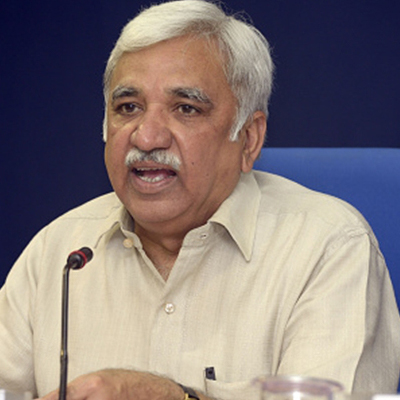
    For senior Indian Administrative Services (IAS) officer Sunil Arora, who is slated to take over as secretary in the Ministry of Information and Broadcasting (MIB) from 1 September, the first major task looming over him is Phase III of the Digital Addressable System (DAS) for Cable TV, which has to be accomplished within four months. 


    Arora is an IAS officer from the Rajasthan cadre of the 1980 batch. His immediate predecessor – Bimal Julka belongs to the 1979 batch from Madhya Pradesh. Julka took over his post in the MIB in July 2013 when Uday Kumar Varma retired.


    DAS PHASE III


    Even though the present government changed the deadlines for the last two phases of DAS, the stakeholders do not appear to be ready for it. There is still a dire shortage of compatible set top boxes (STBS), and there has been little headway despite the incentives offered under the Make in India scheme. Even at present, a large number of local cable operators (LCOs) are having to work with poor quality STBs made in China or other countries. 


    Added to that is the fact that a large number of broadcasters, multi system operators (MSOs), and LCOs still have to work out their agreements – an issue further complicated by the directives of the Telecom Disputes Settlement and Arbitration Tribunal (TDSAT), which wants a re-look at the tariffs.


    It is also a fact that analogue transmission continues in many parts of cities and towns that have gone digital and the Government has failed to get the stay of DAS in Chennai vacated. 


    TRAI


    Although these are issues that the Telecom Regulatory Authority of India (TRAI) is dealing with, all decisions relating to the broadcasting sector can only be effective if there is proper coordination between the regulator and the Ministry. This effectively means there has to be a quick response to any issues that either parties raise to the other, if deadlines have to be met.


    Other issues pending before TRAI relating to broadcasting include the need to reconsider the foreign direct investment (FDI) norms for media, shortage of spectrum, a growing demand by states seeking permissions to start their own television channels despite the TRAI having opined against it twice since 2008. 


    Although broadcasting duties were handed over to TRAI just over a decade back, it is also clear that the Ministry will have to consider whether there is need to form a broadcasting-specific body as TRAI is primarily a body set up for the telecom sector. If the Government decides to continue with TRAI handling both portfolios, the Regulator will be under pressure from the MIB to strengthen its broadcasting team and also ensure greater coordination among officers in both broadcasting and telecom.    


    With convergence of technologies becoming a reality, and with issues of spectrum already bringing telecom and broadcasting together, the National Democratic Alliance (NDA) Government has again begun to talk about convergence and this is bound to gather pace over the next two years.


    SPECTRUM


    Though the Defence Ministry has in principle agreed to hand over some spectrum and swap some other spectrum, the whole process is caught up in bureaucratic wrangles. If the Ministry wants to continue with its policy of ensuring there are no caps on the number of television and FM radio channels or direct-to-home (DTH) and Headend in the Sky (HITS) platforms in the country, the issue of spectrum will need early solution. 


    FM RADIO AUCTION


    The Government is in the midst of the FM Radio e-auction, and is committed to continue the process till all slots in the first stage of Phase III – of 69 cities, which already have FM channels – are completed. With at least 13 cities failing to get even a single bid, the new secretary may have to find ways of either lowering the reserve price for those cities or move those cities to the next stage. 


    The fact that the cumulative winnings from the channels auctioned so far has exceeded the reserve price by more 100 per cent is undoubtedly a matter of great satisfaction, but some cities failing to attract bidders remains to be an irritant.


    AD CAP


    The matter of enforcing the advertising cap of 12 minutes an hour is already before the Courts, but the Ministry may have to do a rethink in the light of the I&B Minister Arun Jaitley having said that he was opposed to ad caps on the print or electronic media, and because the free-to-air channels (most of which are news channels) have already expressed their opposition to this. TRAI had failed to get permission to take action against television channels violating its diktat of the total of 12 minutes of commercial and promotional advertisements every hour, though all broadcasters were asked to keep records of this by the Delhi High Court. 


    SPREAD OF FM RADIO vs DRM


    Even as All India Radio (AIR) has spent crores of rupees on the digitised Digital Radio Mondiale (DRM), Prasar Bharati feels that Frequency Modulation (FM), which is an analogue technology should be promoted until the nation is ready for digital radio sets. The Ministry can resolve this issue only if it can ensure adequate manufacturing at affordable process of DRM sets under the Make in India programme. Until then, this continues to be a thorn in the already dicey relations between the public service broadcaster and the Ministry.


    COMMUNITY RADIO


    More than a decade has elapsed since the introduction of community radio, but the number of operational stations still remain very low. To boost this sector, the Government introduced a new scheme last year for funding community radio, but bureaucratic wrangles continue to hold up the smooth implementation of this scheme. 


    PRASAR BHARATI & THE MINISTRY


    On paper, as per the Prasar Bharati (Broadcasting Corporation of India) Act 1990, it is clear that the pubcaster is autonomous. However, in reality this appears quite contrary.


    On the one hand, as a measure to help the pubcaster, a Group of Ministers had decided that persons employed as on 5 October, 2007 will get the salary and pension from Government funds. However, for employees who joined after that date, Prasar Bharati was left to fend for itself.  


    Since Prasar Bharati is listed as an autonomous company under the Ministry, this means – and it appears so even from the manner in which questions relating to the pubcaster are answered in Parliament – that there is dispute on what real autonomy is.


    Prasar Bharati CEO Jawhar Sircar – a former bureaucrat himself – feels the government does not given him full freedom and there is interference at every level and has said so either in speeches in articles by him or others in the pubcaster.


    While there is generally full autonomy as far as content goes, there are allegedly checks and balances placed by the government in administrative matters. 


    Journalists on the Parliamentary beat are often flabbergasted by the fact that when it suits the Government, a reply will say that the pubcaster is an autonomous body, and yet there are times when the Government has intervened even in appointments in Prasar Bharati.


    FOREIGN DIRECT INVESTMENT


    The TRAI had given its recommendations for an increased FDI in many sectors of the media in a report in July 2013. Although there was some change by the Government earlier this year, it has still not implemented the FDI report of TRAI in full.  


    SECURITY CLEARANCE


    While the Home Ministry has decided it is doing away with security clearance for MSOs, it has not taken a decision as far television channels are concerned. While the issue relating to foreign ownership can be understood, the denial of security clearance to Sun TV continues to flummox everyone in the media.


    It is generally felt that an accused is not guilty till proven, but the Home Ministry and the MIB appear to have decided that the Maran brothers should be denied security clearance despite the fact that the cases against them have no relation to the security of the country, and are in fact an incursion on the freedom of the media. Even the Supreme Court while permitting Sun Group companies to take part in the FM auction said so.


    PAID NEWS


    It is now almost five years since the issue of paid news became the talk of the town. The Press Council of India set up a committee, which even gave recommendations, and a Parliamentary Panel along the Election Commission also wanted some steps to be taken to stop this. However, there has been no tangible action so far in this matter.


    FILM INDUSTRY


    The film industry has been raising similar issues year after year. As far as taxation issues were concerned, it was hoped that the Goods and Services Tax (GST), when implemented will help. But the way the matter is stuck in Parliament forces the industry to just wait and watch.


    Entertainment tax is another issue on which there has been no unanimity and states have different taxes. About a decade earlier a proposal for bringing cinema into the Concurrent List of the Constitution might have solved the problem, but most states opposed the idea. 


    In a country producing around 1000 feature films every year, apart from the large number of films from overseas, India still suffers from an acute shortage of theatres, with the number less than 11,000. With the high rates of ticketing charged by the multiplexes, the average cinegoer is denied the pleasure of seeing a film in a cinema hall. 


    All attempts to curb video piracy appear to have failed because the film industry and the government have failed to work together to curb the menace. This in turn means huge losses for the makers of bold films unless there are big stars to lure the audiences.


    The Film Museum has been in the planning and making for more than a decade, but it does not appear that the Museum planned for 2013 to coincide with a centenary of cinema will see the light of day for at least a couple more years.


    The Film and Television Institute of India (FTII) has been caught in a logjam that just refuses to untangle. The appointment of a Chairperson, who was said to be close to the ruling party, is what triggered the issue, but the continued struggle has led to the police making an entry into the campus in Pune. 


    Clearly, the new MIB secretary has his job cut out for him and will have to tread carefully on the long road ahead – but it is not without political or bureaucratic potholes that can hold up even his best intentions.
     

  • DD India’s Europe transmission uninterrupted by Deutsche Welle contract expiry

    DD India’s Europe transmission uninterrupted by Deutsche Welle contract expiry

    NEW DELHI: With Doordarshan’s contract with German pubcaster Deutsche Welle ending soon, the transmission of DD’s international channel DD India may go off the Hotbird European satellite.


    However, Doordarshan sources told Indiantelevision.com that DD India is available and will continue to be available to European viewers via the INSAT 4B’s connectivity with IS 20 satellite.


    Sources also said that the Prasar Bharati Board was considering various options available apart from IS 20, and will take a decision shortly.


    The agreement with Deutsche Welle was a year-long agreement on barter basis under, which India was using the German pubcaster’s transponder on Hotbird and was transmitting their German channel on an Indian satellite.


    Sources said that the stoppage of use of Hotbird will not mean depriving European viewers of DD India as the IS 20 transmission was on.

  • French pubcaster looks to woo younger audience

    French pubcaster looks to woo younger audience

    NEW DELHI: At a time when Prasar Bharati is embroiled in tussles with the government over autonomy, public service broadcasters like BBC and France’s France Télévisions are working to attract younger audiences. 


    While the BBC had issued a Green Paper not so long ago in this connection, now French public service broadcaster France Télévisions has appointed Delphine Ernotte as its first  woman CEO, who is keen to attract a younger audience.


    Previously head of Orange France, Ernotte is taking control of the reins at the pubcaster, succeeding Rémy Pflimlin. Rodolphe Belmer, former Canal+ executive, has been named as strategy advisor.


    Ernotte has also recruited two executives from TF1 Group. While TMC and NT1 former managing director Caroline Got will handle programming and digital strategy, Germain Dagognet, has been appointed deputy head of news.


    Ernotte and her team aim to find new revenue streams to compensate the loss of advertising income.


    The group, whose global budget amounts to €2.8 billion, has said that it will certainly fail to reach its financial break-even objective at the end of 2015.


    Ernotte aims to accelerate digital and multi-devices development, launch a DTT service or web news channel, and break even.

  • Doordarshan Freedish earns Rs 23.2 crore from 6 channels in 21st e-auction

    Doordarshan Freedish earns Rs 23.2 crore from 6 channels in 21st e-auction

    NEW DELHI: Doordarshan has earned Rs 23.2 crore from the 21st online e-auction of six slots to Indian television channels on its free-to-air DTH platform Freedish. 


    DD’s target is to touch 112 television channels on Freedish over the next few months.


    Against a reserve price of Rs 3.7 crore per slot for the online e-auction, DD earned as much as Rs 4.1 crore from Colors Rishtey, whereas Star Utsav got its slot for Rs 3.9 crore.


    Doordarshan sources told Indiantelevision.com that the other slots went to Zee Anmol, Zee Sangam, Housefull Movies and B4U Music for Rs 3.8 crore each. 


    However, as per information available with this website, the bid amount had gone up to Rs 4.2 crore in one of the earlier e-auctions.


    DD sources also said that while Freedish may be encrypted to keep a tab on the number of subscribers, it would continue to remain free-to-air.


    The e-Auction was conducted by C1 India Pvt. Ltd., Noida on behalf of Prasar Bharati, thus marking a change in the auctioneer.


    The reserve price in the 15th e-auction was Rs 3 crore and was raised to Rs 3.7 crore in the 16th auction.


    The six channels were part of Freedish but had to re-bid as their contract had expired. Consequently, Freedish retains 64 channels including DD’s channels and Lok Sabha and Rajya Sabha TV.


    The participation amount (EMD) in the e-Auction was Rs 1.5 crore, which was deposited in advance along with a non-refundable processing fee of Rs 10,000 in favour of PB (BCI) Doordarshan Commercial Service, New Delhi.


    Incremental amount for the auction was Rs 10 lakh and the time for every slot e-auction was of fifteen minutes duration.


    Of the reserve price, Rs 1.1 crore will be deposited within one month of placement and another Rs 1.1 crore within two months along with service tax of 14 per cent on the bid amount.


    The balance bid amount will be deposited within six months, failing which the reserve price will be forfeited.


    Applicants had to provide details of the Uplink/Downlink permission documents received from the concerned Ministries with the applications to ensure they are not rejected.


  • Prasar Bharati & Digital TV Russia ink alliance to exchange programmes & technology, initiate co-productions

    Prasar Bharati & Digital TV Russia ink alliance to exchange programmes & technology, initiate co-productions

    NEW DELHI: Prasar Bharati and Russia’s top pay television broadcaster Digital TV Russia (DTR) have collaborated on high quality production, marketing and distribution of content related to art, culture, trade and science, research and technology.


    The memorandum of understanding on cooperation between the two broadcasters will also entail joint production and exchange of TV programmes and related services, which will give audiences in both countries an unprecedented access to a rich variety of thematic entertainment and factual content.


    The MoU was signed by Prasar Bharati CEO Jawhar Sircar and DTR representatives Dmitry Mednikov along with Ayuna Badmaeva. Prasar Bharati chairman Surya Prakash was also present.


    The joint productions will particularly be in the areas of music, opera, theatre, film-based programmes, cartoons and animation based on epics of both countries, literary classics, folk tales, science fiction, circus and so on. In addition children’s programmes, tourism promotion, sports and gymnastics will also be covered.


    The MoU will include re-packaging, re-purposing and dubbing popular or iconic TV programmes produced by one party for use by the other party.


    There will be unique exchange of programmes between the two broadcasters and cooperation in research and development for technical modernization and capacity building in the areas of TV programming.


    There will also be cooperation in manpower training by augmenting each other’s training facilities through mutual cooperation. 


    Marketing of each other’s programming will be another area, and this will include the rich archival programmes.


    Digitization of audio-visual materials of rich value for preserving them for posterity by sharing technical and scientific knowhow and best practices is another field of concentration.


    The two broadcasters will cooperate in promoting consumer products and ad sales of respective countries through their TV channels.


    Prakash said the MoU was a natural corollary of the ancient ties between the two countries. He also referred to the fact that Bollywood was the only answer to Hollywood, even though productions in India cost one-tenth of those in Hollywood.


    Jawhar said this partnership will cross-promote each nation’s unique culture and traditions through cooperation in all areas in the media arena. From adaptation of iconic TV programmes in each broadcaster’s library, right up to the sharing of best practices, this coming together will not only benefit viewers in India and Russia, but will also inspire media executives in both countries to explore new and exciting ways of communicating their stories.  


    He added that the tie-up had tremendous potential for developing synergies between the two broadcasters.


    He said, “A new vibrant India looks forward to a robust partnership with Russian Television and Radio, as represented by VGTRK and DTR. India and Russia have a long tradition of mutual respect and have enjoyed decades of meaningful partnership in many industrial, scientific and cultural domains. Through this new MoU, we look forward to a reassertion of our historic bonds and seek to know each other’s country, people and advancements even better. We intend to come even closer through better appreciation of our positions.”


    Russia TV and Radio Deputy CEO Dmitry Mednikov said DTR is committed to developing local content in India for distribution by local players, and will re-invest their revenues into local content. He said, “We are here to launch and build meaningful business in partnership with India’s programmers, content producers’, distribution platforms. Our key principle is to invest into local content production, state-of-the-art technologies and to develop local talents.”


    Answering questions, he said there was no problem about dubbing or sub-titling programmes in English. He also said DTR being a pay channel did not create any problems as it also had some FTA channels. 


    Doordarshan’s Lalrosanga said that this MoU was one of many new initiatives being taken by the public broadcaster.


    Russia’s leading journalists will be in India next month to produce TV programmes on Indian economy, technology and culture. This series will be aired in Russia’s highly rated FTA channels Russia 1 and Russia 24.


    DTR deputy CEO and GM of International Networks Ayuna Badmaeva said, “We provide smart and innovative programs that entertain, educate audiences across all demographics and on all platforms. Our philosophy in creating local brands and local formats ensures that these channels will resonate with the local viewers. Especially with a market like India where there are many regions and languages.” 


    Veena Jain who heads DD News said the channel would like to educate viewers about Russian arts and culture. DD ADG Deepa Chandra who is in charge of the national channel said music and dance always attracted viewers.